
Formal and Informal Channels of Communication Communication Behavior
Formal and Informal Channels of Communication
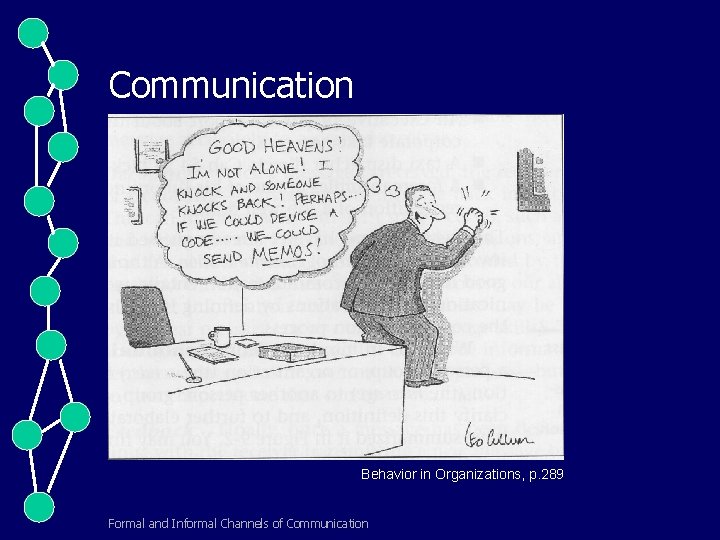
Communication Behavior in Organizations, p. 289 Formal and Informal Channels of Communication
The Role of Communication in Organizations key purposes: n direct action: to get others to behave in desired fashion n achieve coordinated action systematic sharing of information + interpersonal side with the focus on interpersonal relations between people Formal and Informal Channels of Communication
Communication n “the social glue … that continues to keep the organization tied together” “the essence of organization” a key process underlying all aspects of organizational operations properly managing communication processes is central to organizational functioning Behavior in Organizations, p. 289 Formal and Informal Channels of Communication
Organizational Structure: Directing the Flow of Messages Organizational structure: n the formally prescribed pattern of interrelationships existing between the various units of an organization n dictating who may and may not communicate with whom n abstract construction n depicted in Organizational Charts Formal and Informal Channels of Communication
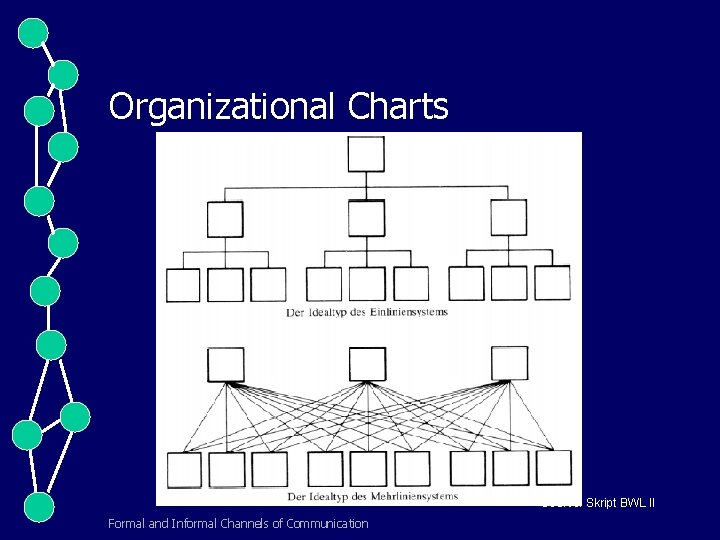
Organizational Charts Source: Skript BWL II Formal and Informal Channels of Communication
Formal Communication n n the process of sharing official information with others who need to know it, according to the prescribed patterns depicted in an organization chart Formal and Informal Channels of Communication
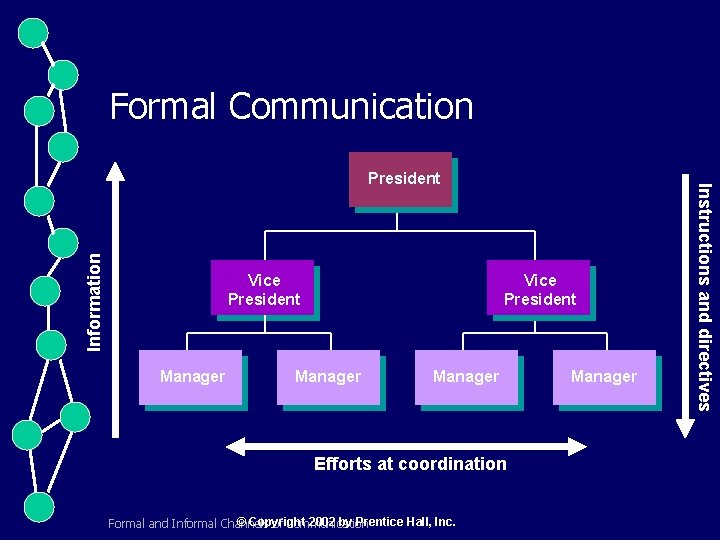
Formal Communication Information Vice President Manager Efforts at coordination © Copyright 2002 by Prentice Hall, Inc. Formal and Informal Channels of Communication Manager Instructions and directives President
Formal Communication n downward communication: n n n upward communication: n n instructions, directions, orders feedback data required to complete projects status reports suggestions for improvement, new ideas horizontal communication: n coordination of cooperation Formal and Informal Channels of Communication
Centralized Networks n One central person n Unequal access to information n Central person is at the “crossroads” of the information flow Formal and Informal Channels of Communication
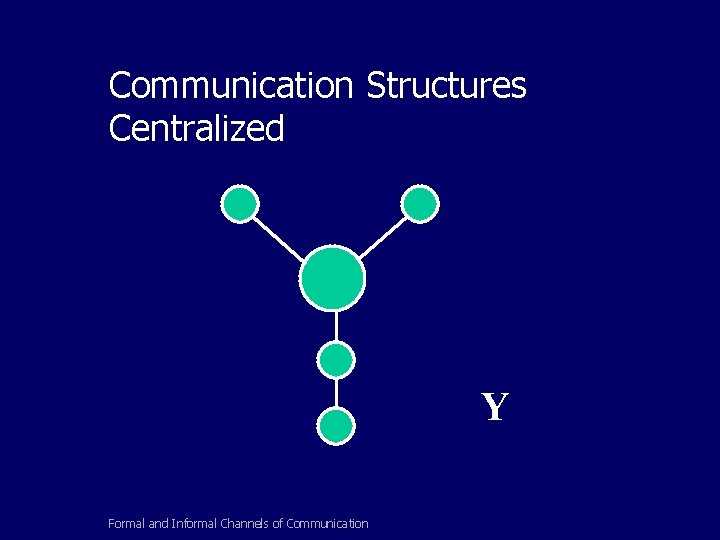
Communication Structures Centralized Y Formal and Informal Channels of Communication
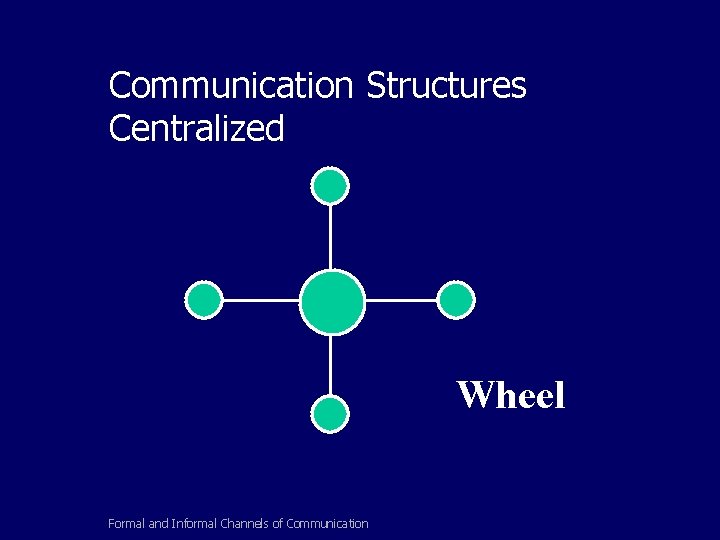
Communication Structures Centralized Wheel Formal and Informal Channels of Communication
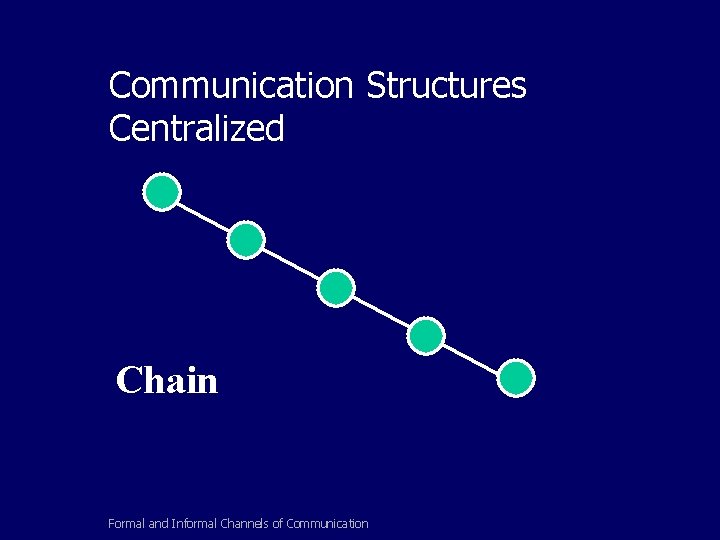
Communication Structures Centralized Chain Formal and Informal Channels of Communication
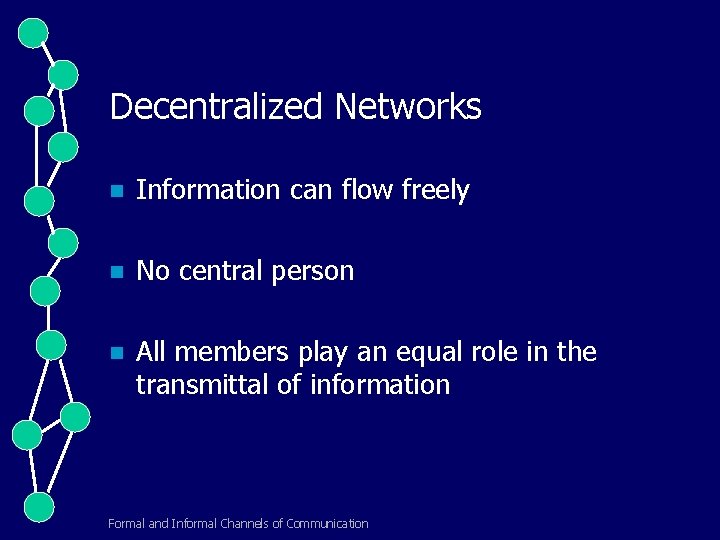
Decentralized Networks n Information can flow freely n No central person n All members play an equal role in the transmittal of information Formal and Informal Channels of Communication
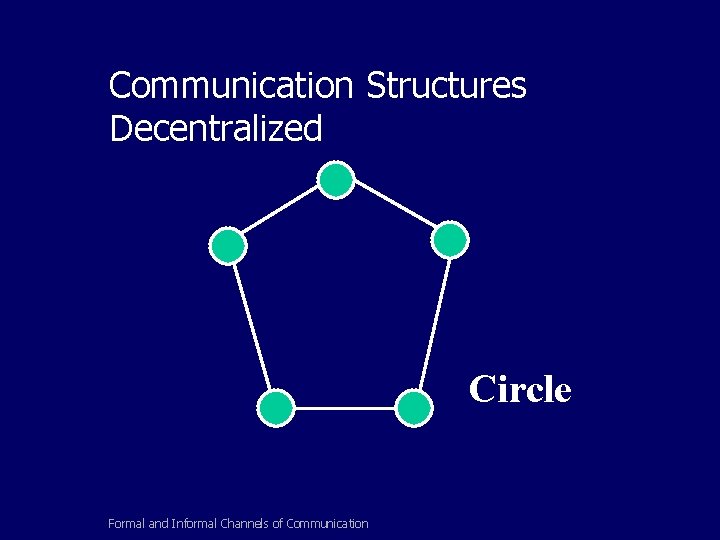
Communication Structures Decentralized Circle Formal and Informal Channels of Communication
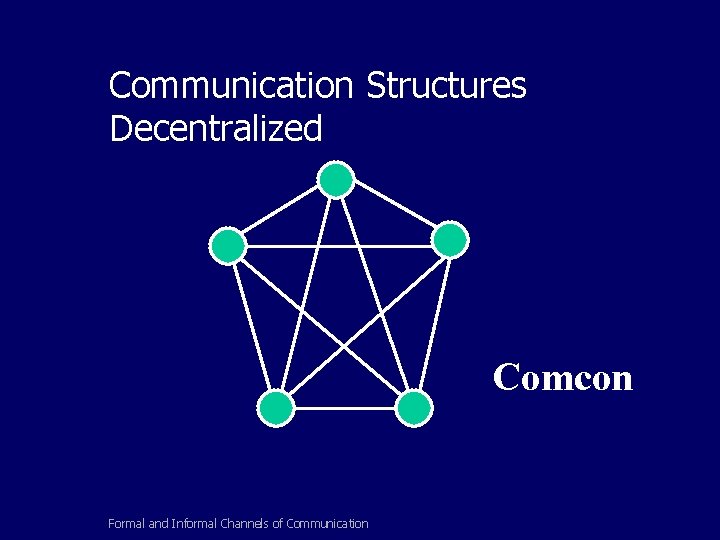
Communication Structures Decentralized Comcon Formal and Informal Channels of Communication

Communication Networks Behavior in Informal Organizations, p. 305 of Communication Formal and Channels
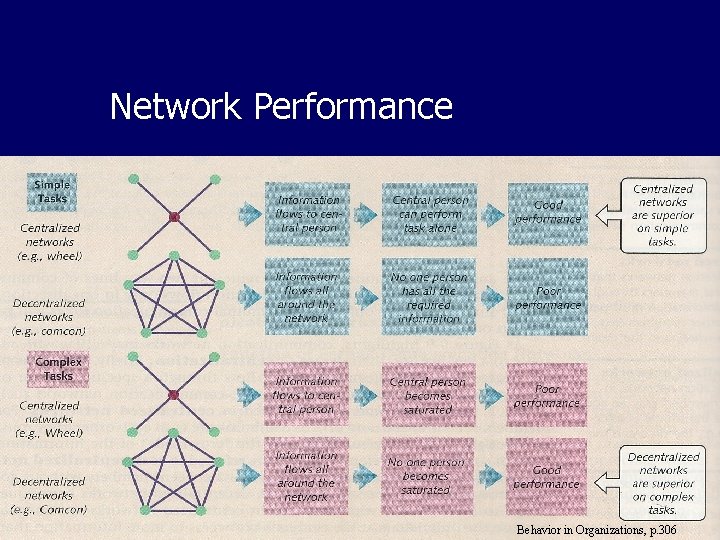
Network Performance Formal and Informal Channels of Communication Behavior in Organizations, p. 306
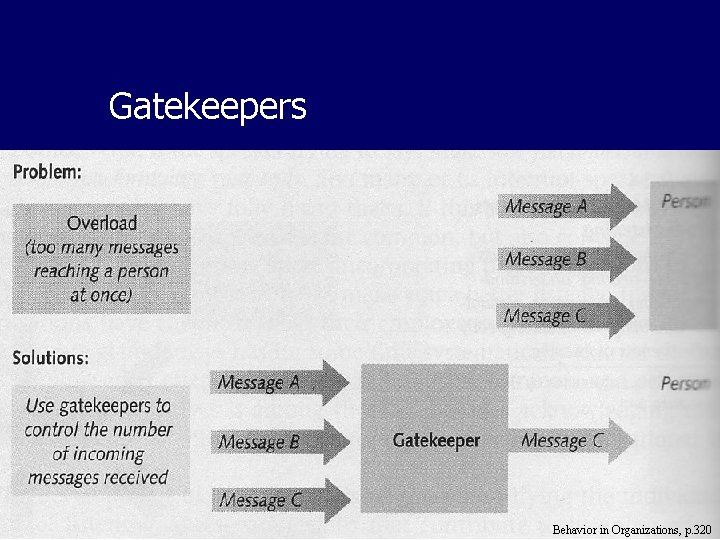
Gatekeepers Formal and Informal Channels of Communication Behavior in Organizations, p. 320
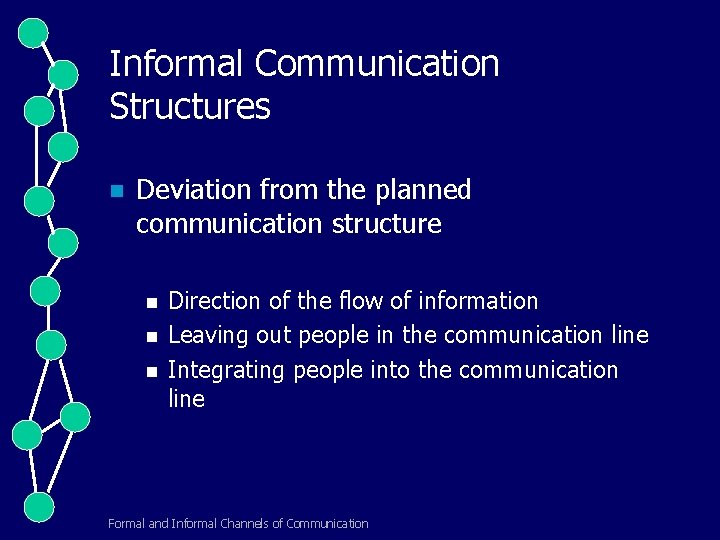
Informal Communication Structures n Deviation from the planned communication structure n n n Direction of the flow of information Leaving out people in the communication line Integrating people into the communication line Formal and Informal Channels of Communication
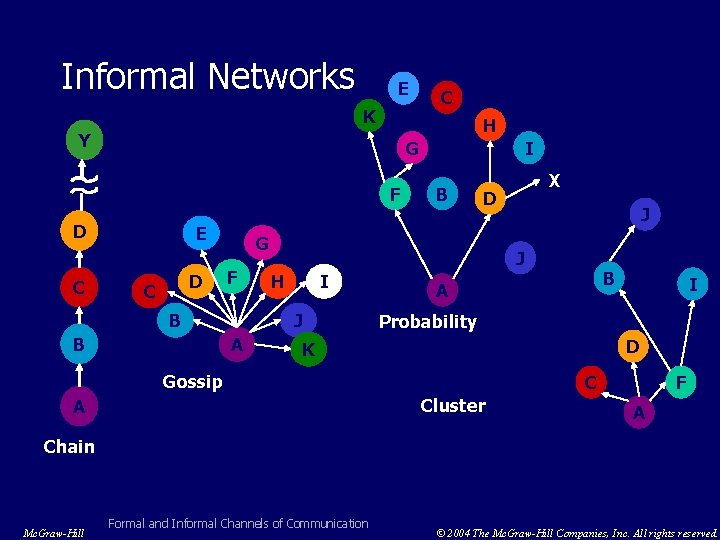
Informal Networks E K H Y G F D C C E D C B F J J H I J A X D G B B I B A Probability D K Gossip C Cluster A I F A Chain Mc. Graw-Hill Formal and Informal Channels of Communication © 2004 The Mc. Graw-Hill Companies, Inc. All rights reserved.
Network Roles n Bridge n Liaison n Isolated Dyad n Cosmopolites Formal and Informal Channels of Communication
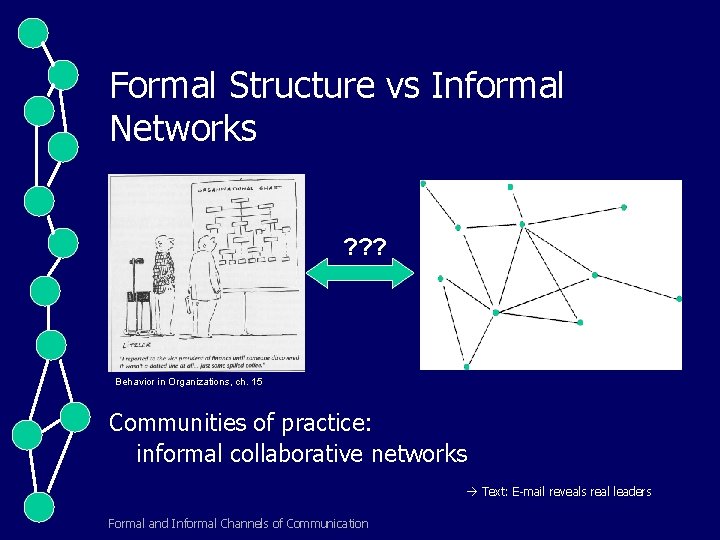
Formal Structure vs Informal Networks ? ? ? Behavior in Organizations, ch. 15 Communities of practice: informal collaborative networks Text: E-mail reveals real leaders Formal and Informal Channels of Communication
![Informal Organization [Buchanan, 2000, p. 463] Formal and Informal Channels of Communication](http://slidetodoc.com/presentation_image_h2/db4a8e0a8a0fe835090c173413aa8057/image-24.jpg "Informal Organization [Buchanan, 2000, p. 463] Formal and Informal Channels of Communication")
Informal Organization [Buchanan, 2000, p. 463] Formal and Informal Channels of Communication
Informal Communication information shared without any formally imposed obligations or restrictions if an organization’s formal communication represents its skeleton, its informal communication constitutes its central nervous system (Behavior in Organizations, p. 307) eng. “grapevine“ n n An organization’s informal channels of communication, based mainly on friendship or acquaintance origin: American Civil War [grapevine telegraphs] Formal and Informal Channels of Communication
“Grapevine“ 1. 2. a secret means of spreading or receiving information the informal transmission of (unofficial) information, gossip or rumor from person-to-person -> "to hear about s. through the grapevine" 3. a rumor: unfounded report; hearsay Formal and Informal Channels of Communication
Grapevine Characteristics n n oral mostly undocumented open to change fast (hours instead of days) crossing organizational boundaries Formal and Informal Channels of Communication
Grapevine Characteristics n inaccuracy: n n levelling deletion of crucial details sharpening exaggeration of the most dramatic details while the grapevine generally carries the truth it seldom carries the whole truth Formal and Informal Channels of Communication
Grapevine Figures n n 70% of all organizational communication occurs at the grapevine level estimated accuracy rates: 75 -90% the incorrect part might change the meaning of the whole message though an estimated 80% of grapevine information is oriented toward the individual while 20% concerns the company Formal and Informal Channels of Communication
Factors Influencing Grapevine Activity I According to Gordon Allport: n importance of the subject for both listener and speaker n ambiguousness of the facts Formula: R=ixa “R“: “i“: intensity of the rumor importance of the rumor to the persons “a“: ambiguity of the facts associated with the rumor Formal and Informal Channels of Communication
Factors influencing Grapevine Activity II Employees rely on the grapevine when: n they feel threatened, n insecure, n under stress n when there is pending change n when communication from management is limited Formal and Informal Channels of Communication
Positive Aspects of the Grapevine n n n n social function reduction of anxiety release mechanism for stress identification of pending problems early warning system for organizational change vehicle for creating a common organizational culture desired information can be circulated quickly to a large group of subordinates (inofficially!) Formal and Informal Channels of Communication
Coping or Managing the Grapevine “the grapevine cannot be abolished, rubbed out, hidden under a basket, chopped down, tied up, or stopped“ (Managing the Grapevine, p. 222) don‘t try to control or restrict it use it to supplement formal channels Formal and Informal Channels of Communication
“Tapping“ the Grapevine n n n identify and make use of key communicators ( bridgers) monitor what is happening in the organization use the grapevine to give new ideas a “trial run“ Formal and Informal Channels of Communication
Preventing Rumors n n provide information through the formal system of communication on the issues important to the employees supply employees with a steady flow of clear, accurate and timely information present full facts keep formal communication lines open and the process as short as possible Formal and Informal Channels of Communication

Formal Media n Company newsletters n Employee handbooks n Company magazines n Formal meetings Formal and Informal Channels of Communication
Formal Media n Letters n Flyers and bulletins n Memos n Faxes n All-employees mailings Formal and Informal Channels of Communication
Informal Media n n n Face-to-face discussions Telephone Voice messaging (voice mail) E-mail Instant messaging (chat) Formal and Informal Channels of Communication
Informal Dialogues Characteristics: n often no formal opening or closing n first utterance often assumes a common reference to a previous interaction or issue n conversations generally last only a few minutes Formal and Informal Channels of Communication
Informal Communication and Physical Proximity physical proximity is crucial for informal communication trends towards telework, mobile work and the globalisation of business are geographically separating workers Can long distance informal communication be supported by technology? Formal and Informal Channels of Communication
The Nature of Informal Communication I n n mostly brief interactions mainly opportunistic ( coordination, initiation) often time-lags between informal interactions ( maintenance and reestablishment of context) occur between frequent interactants who often share large amounts of background knowledge Formal and Informal Channels of Communication
The Nature of Informal Communication II n n n communications in offices more frequent than in public areas majority of “roaming“ interactions self-initiated interruptability (importance of prior activity) interactions are very often terminated by a third party joining an existing conversation role of deixis documents involved in 53% of all Own Office interactions Formal and Informal Channels of Communication

For details and bookings contact: Parveen Kumar Chadha… THINK TANK (Founder and C. E. O of Saxbee Consultants & Other-Mother marketingandcommunicationconsultants. com) Email : -saxbeeconsultants@gmail. com Mobile No. +91 -9818308353 Address: -First Floor G-20(A), Kirti Nagar, New Delhi India Postal Code 110015 Formal and Informal Channels of Communication
- Slides: 43