
Form Content Lost by Carmen Lozar Gestalt Visual

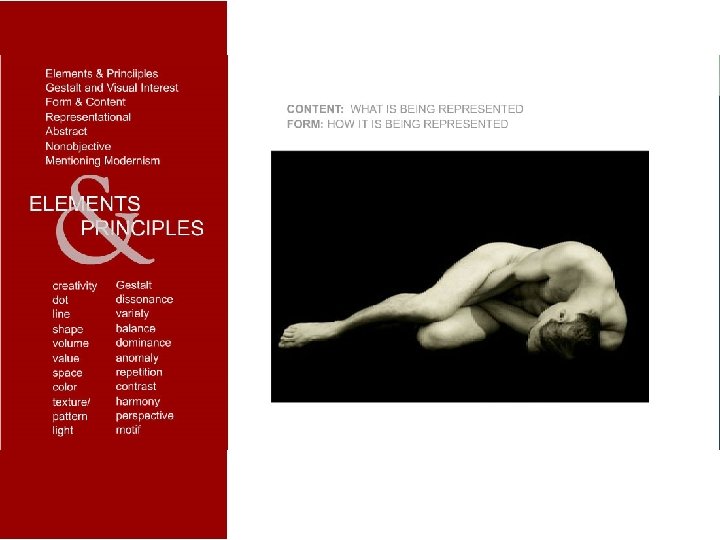
Form & Content
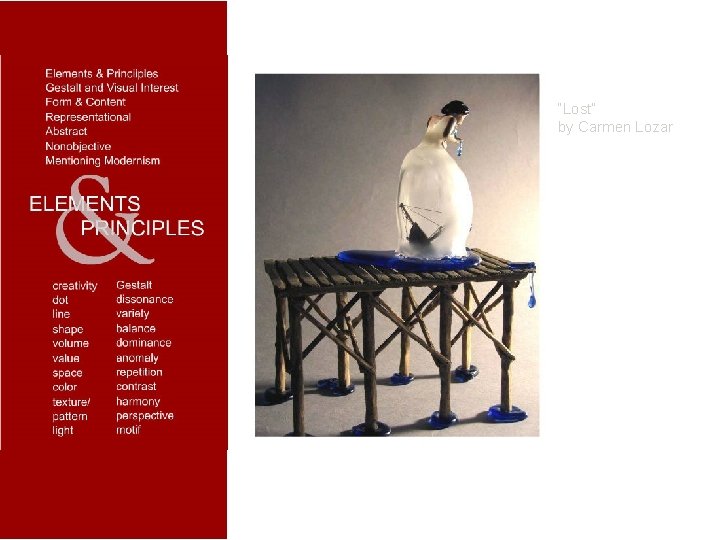
“Lost” by Carmen Lozar
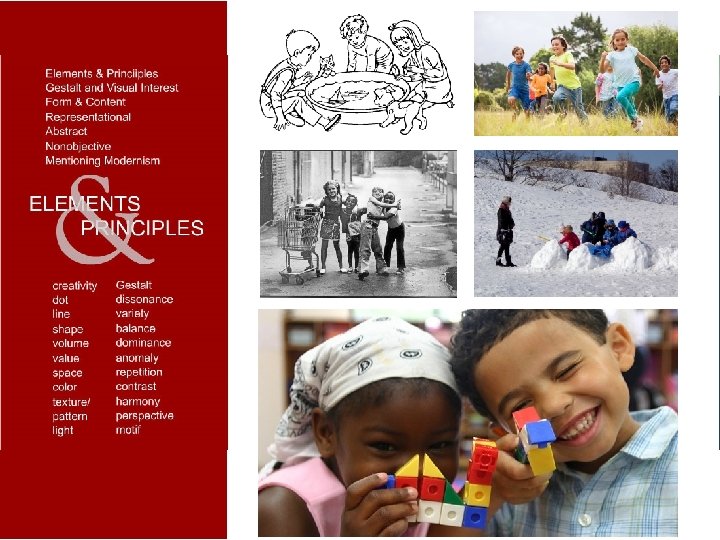

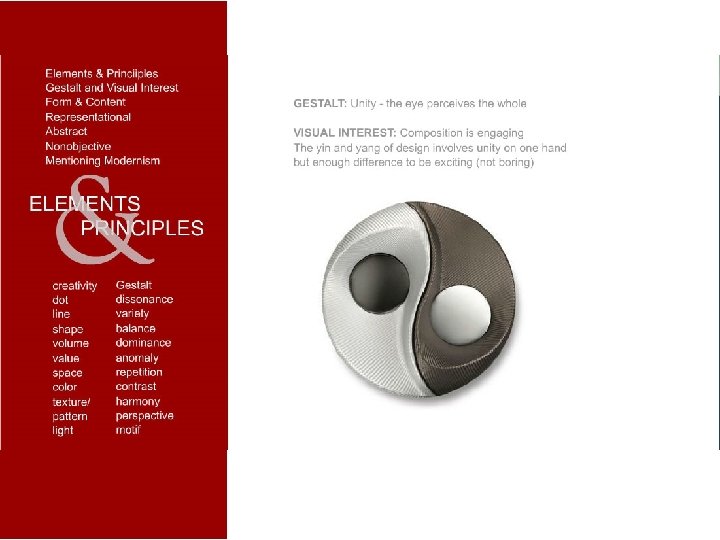
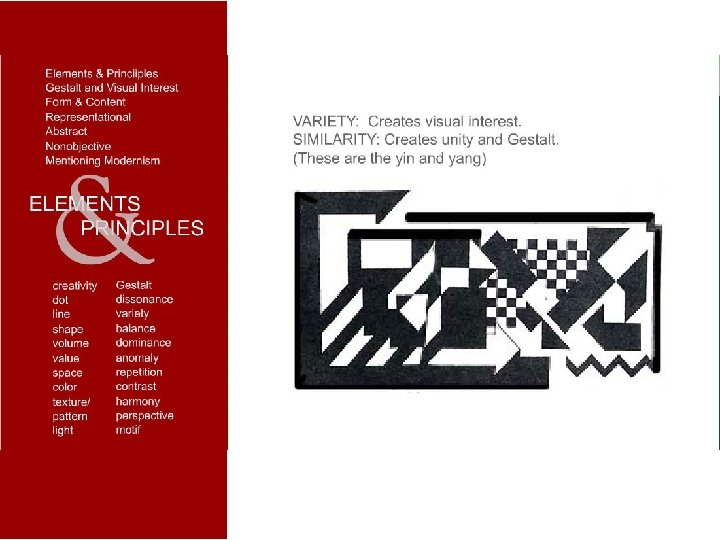
Gestalt & Visual Interest
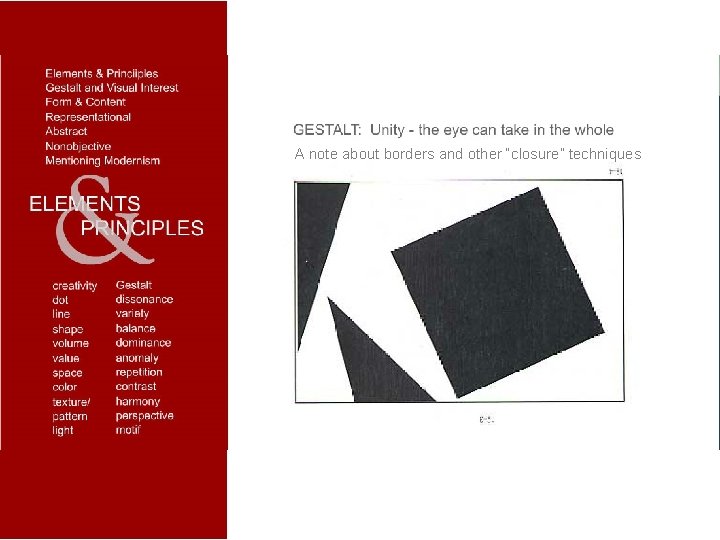
A note about borders and other “closure” techniques
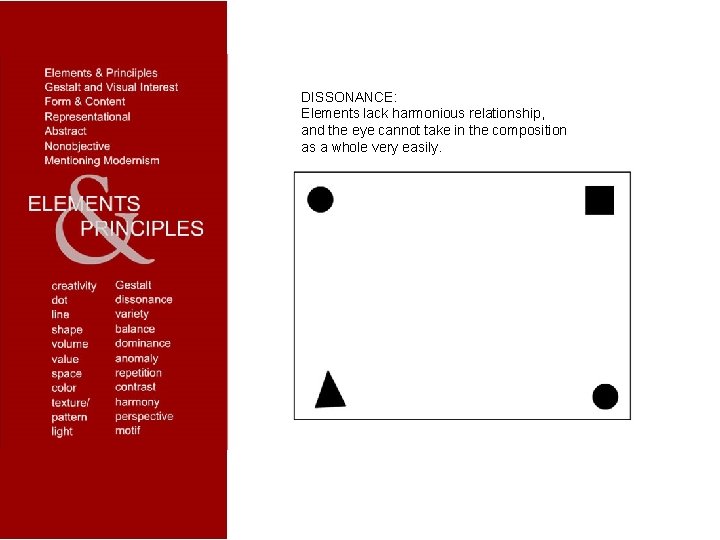
DISSONANCE: Elements lack harmonious relationship, and the eye cannot take in the composition as a whole very easily.

The Valentine’s Day Massacre ; )
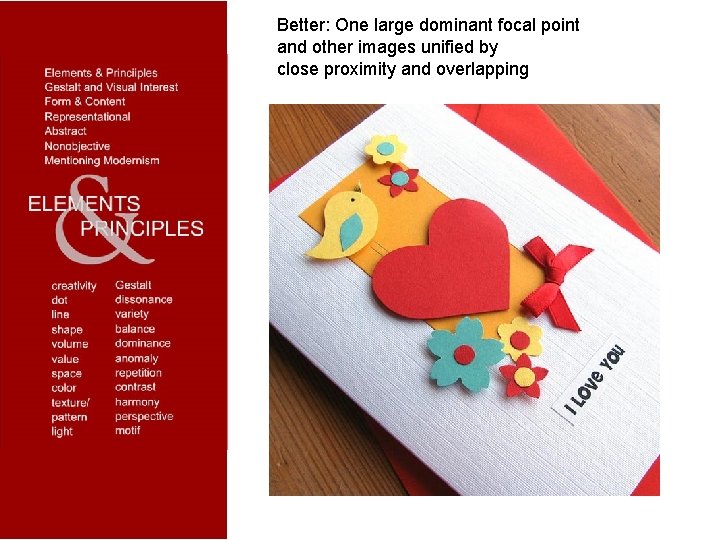
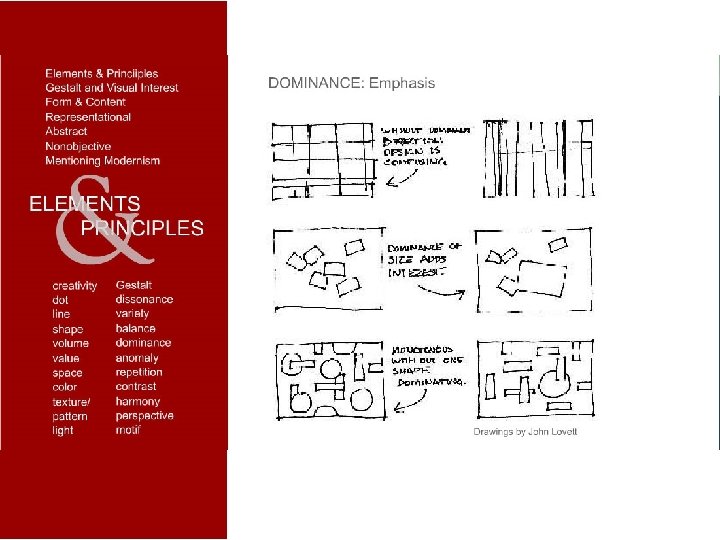
Better: One large dominant focal point and other images unified by close proximity and overlapping
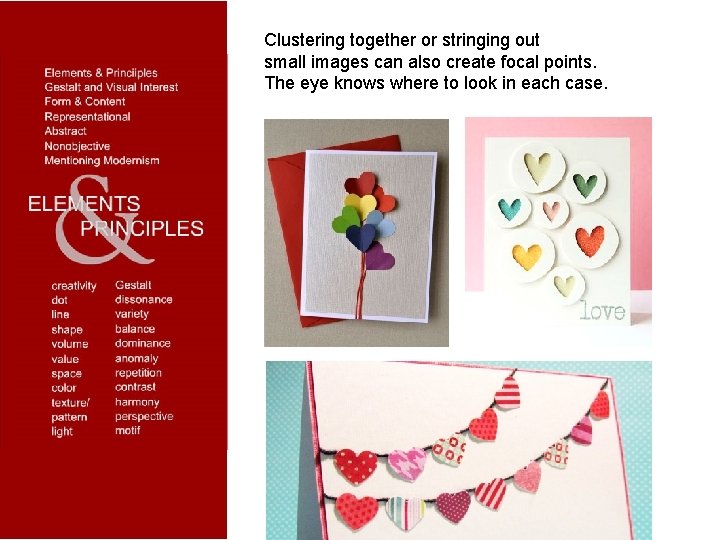
Clustering together or stringing out small images can also create focal points. The eye knows where to look in each case.
3 Types of Images: Representational Abstract Nonobjective
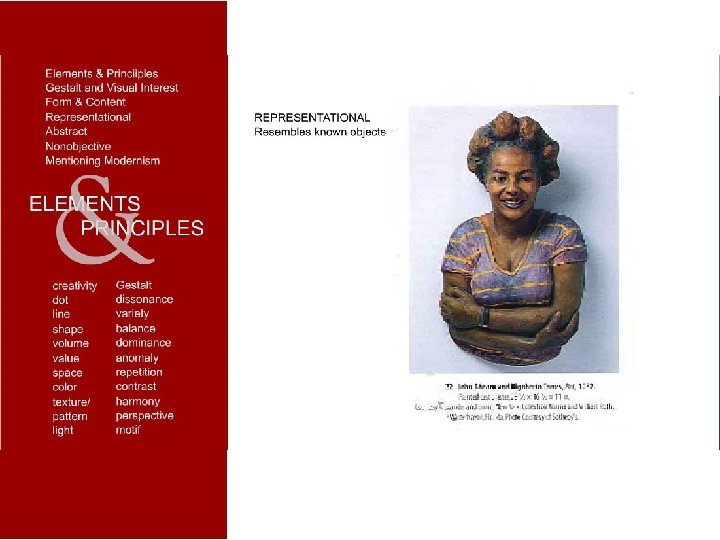
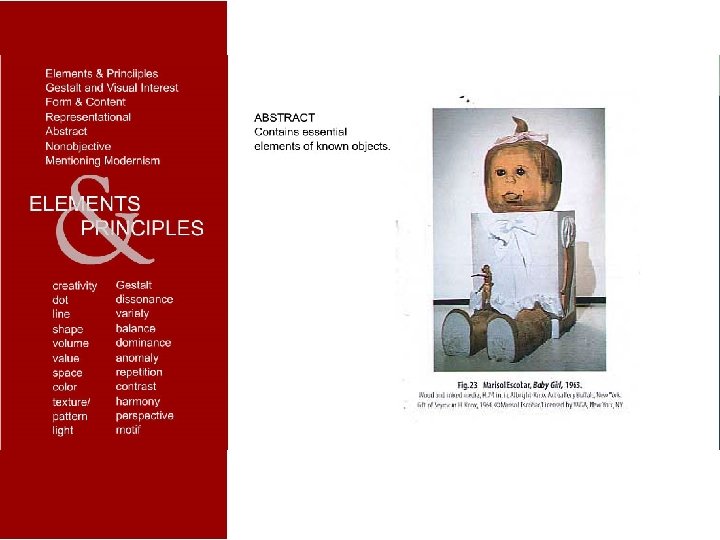
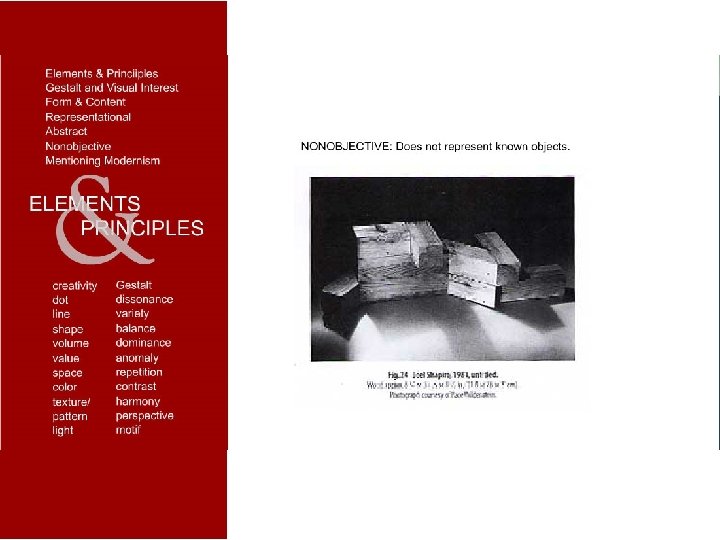
Genre Examples
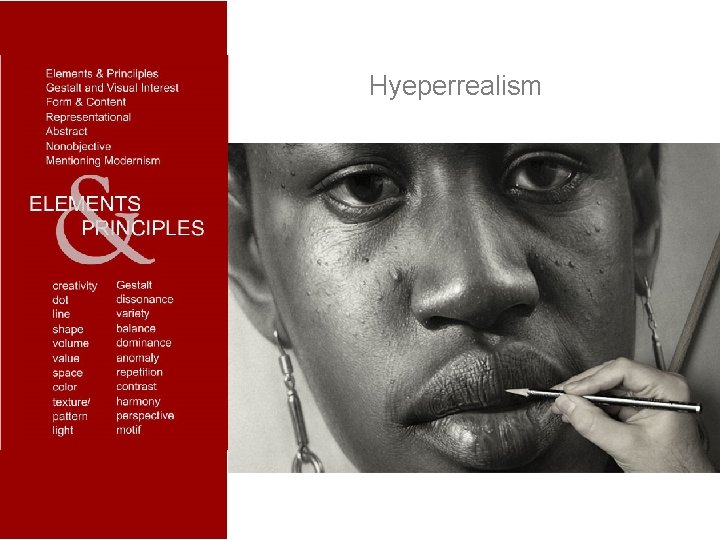
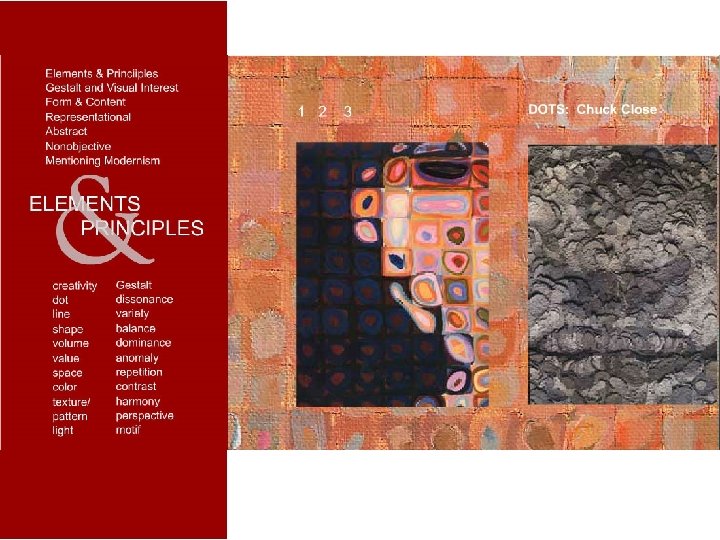
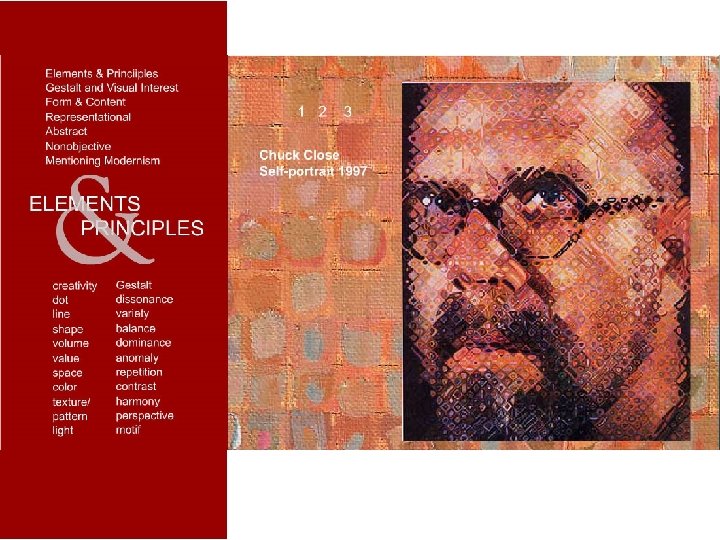
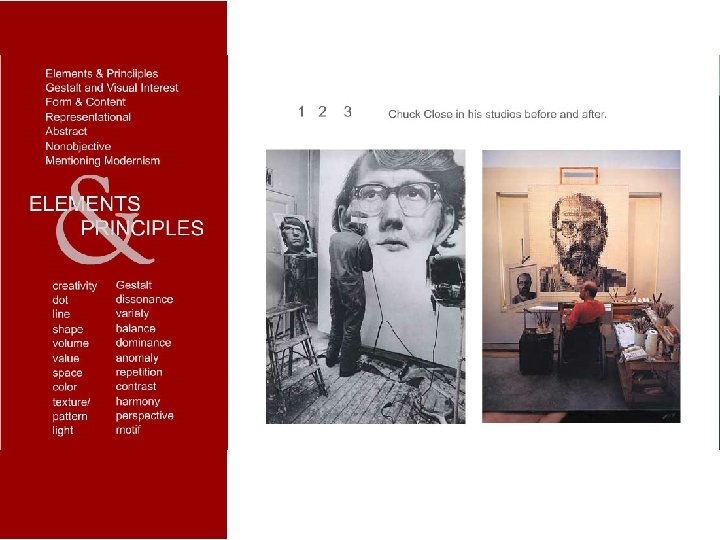
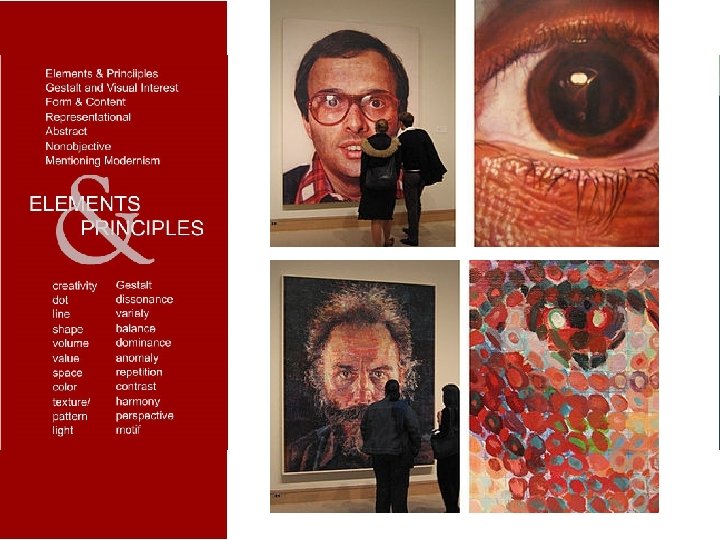
Hyeperrealism
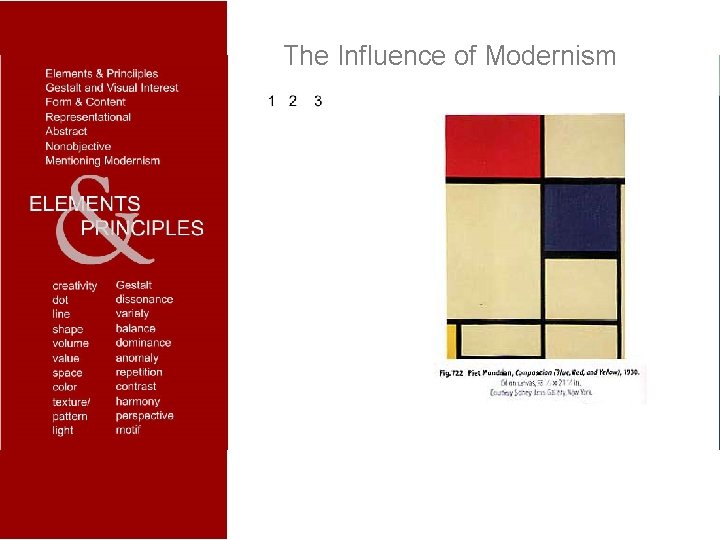
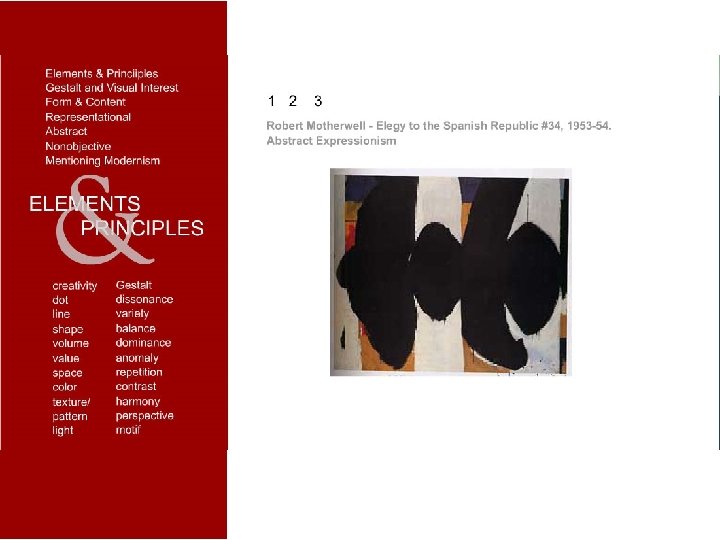
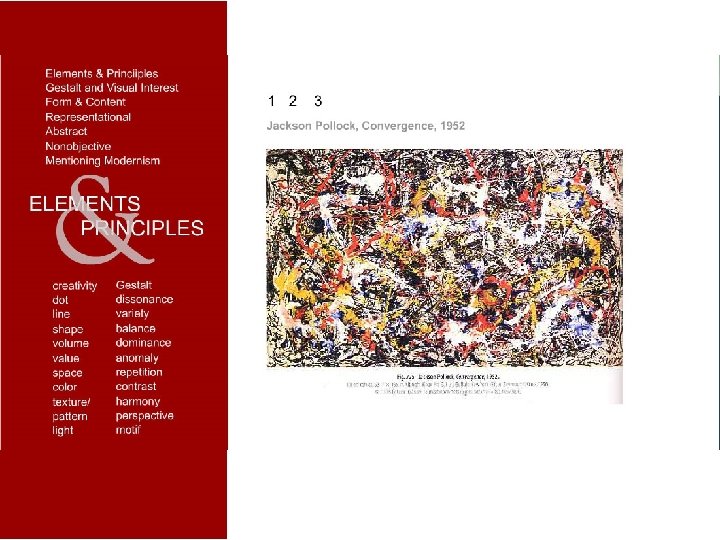
The Influence of Modernism
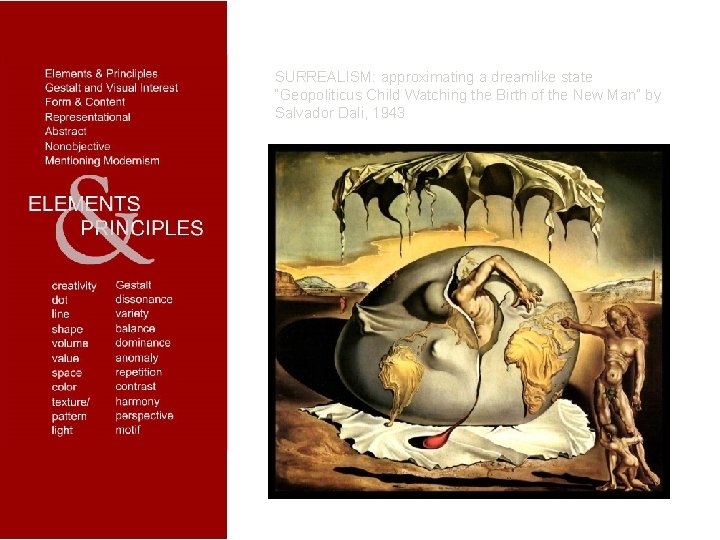
SURREALISM: approximating a dreamlike state “Geopoliticus Child Watching the Birth of the New Man” by Salvador Dali, 1943
The Visual “Elements” (visual building blocks)
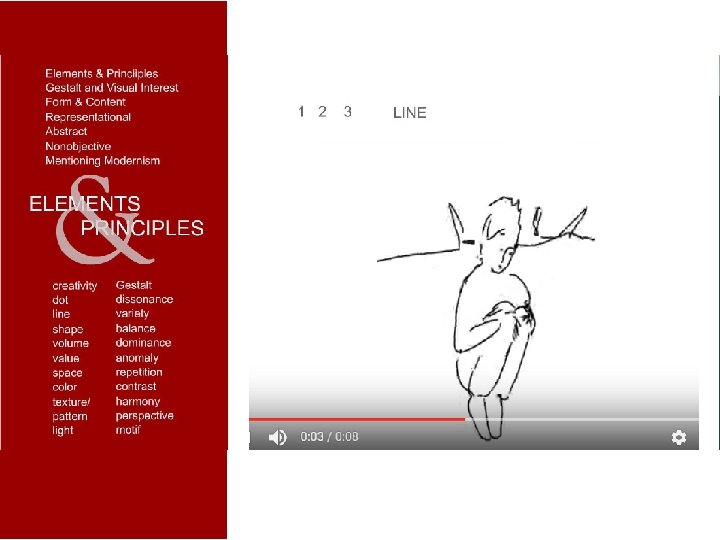
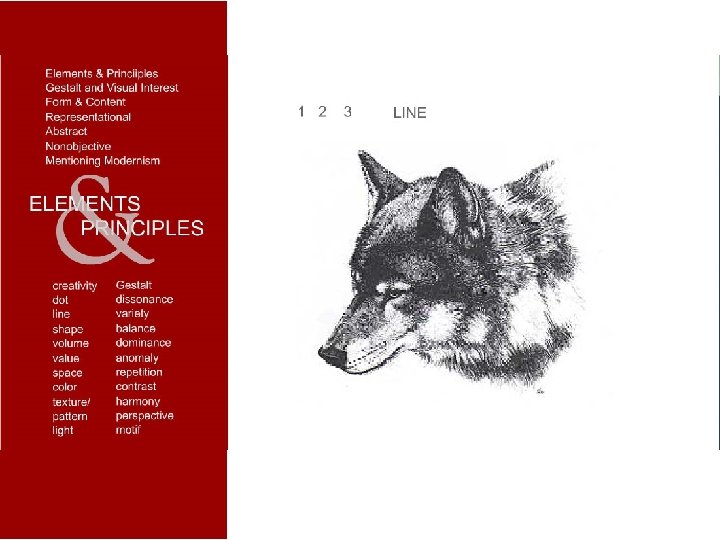
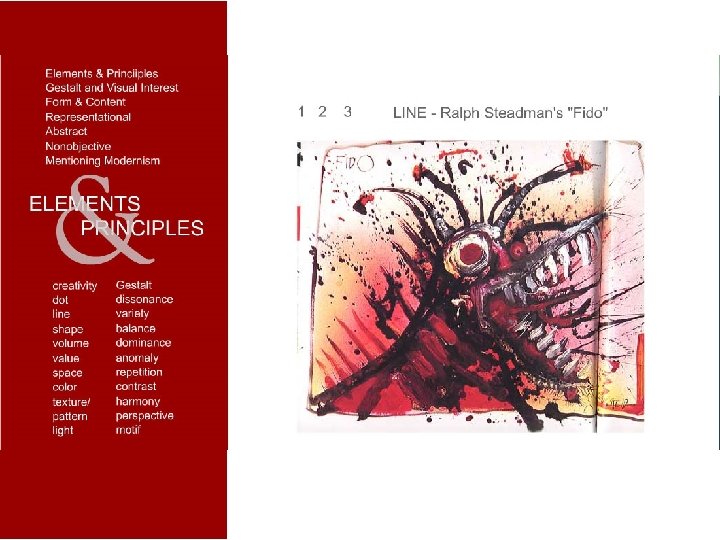
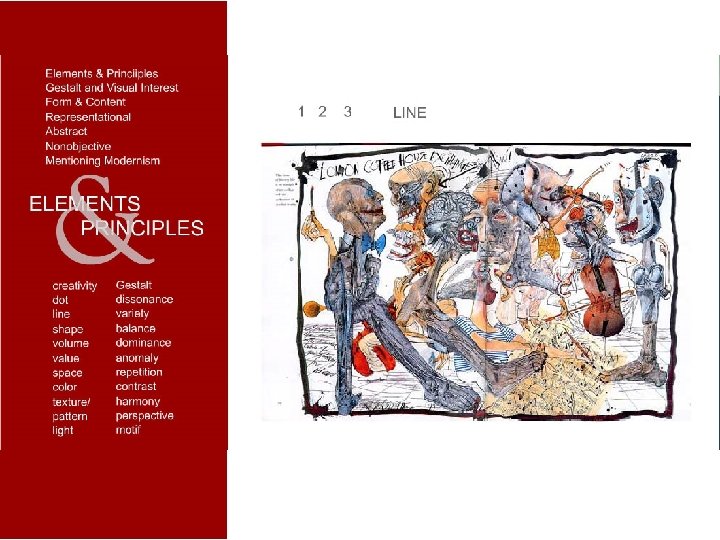
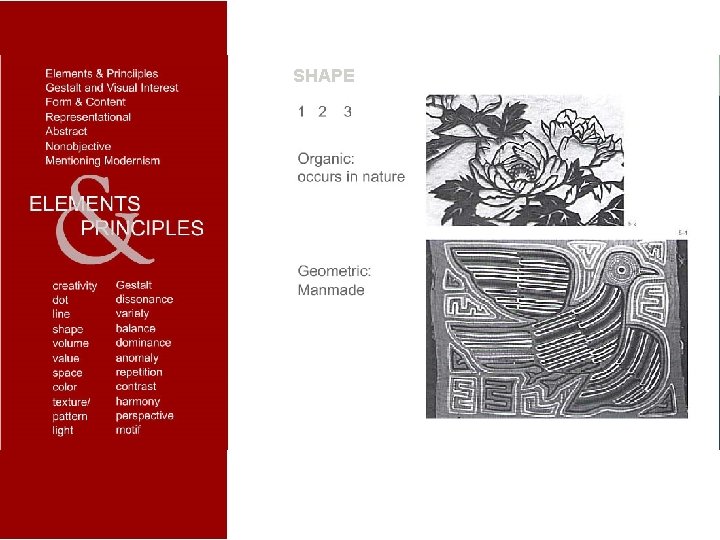
SHAPE
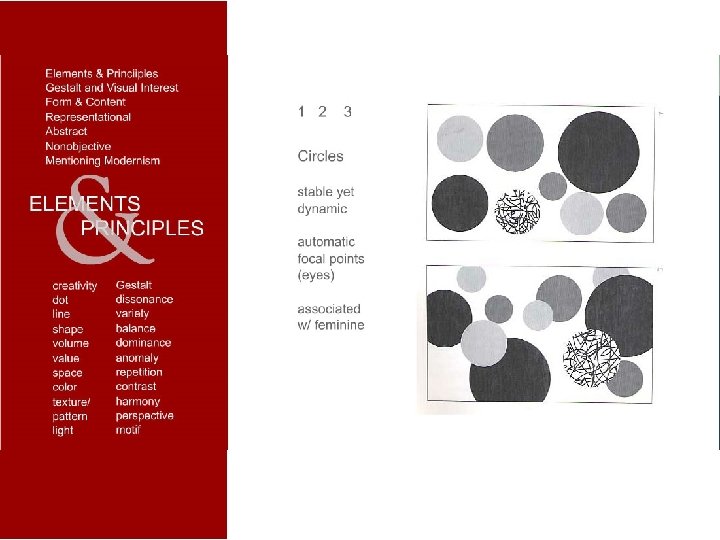
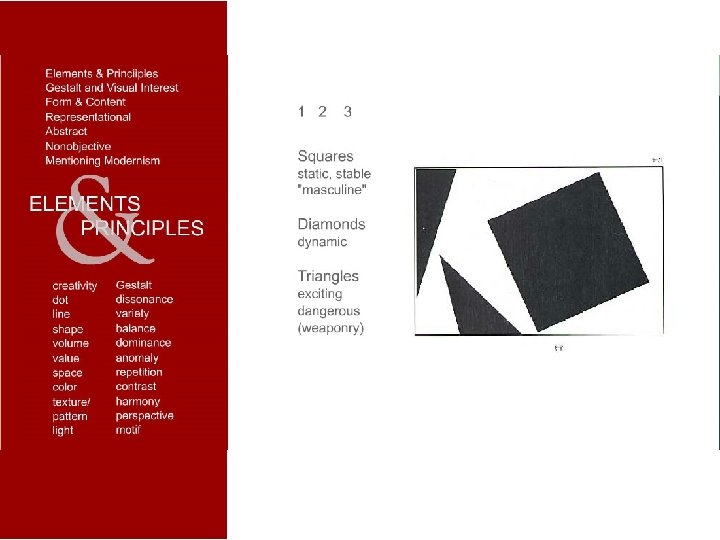
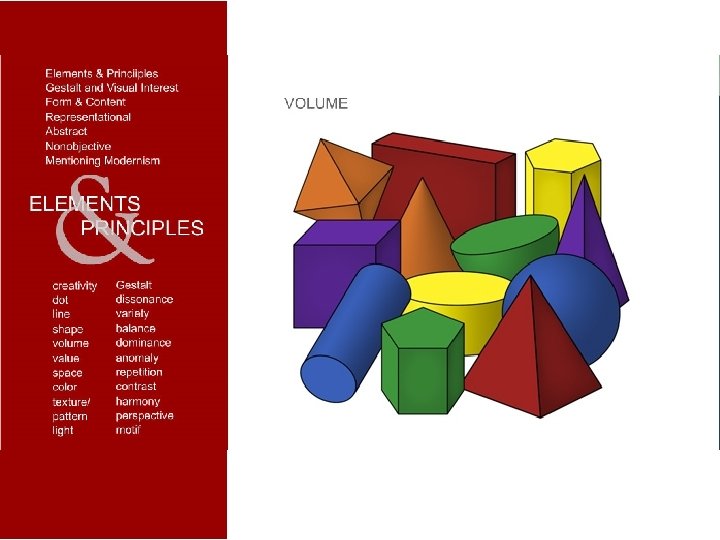
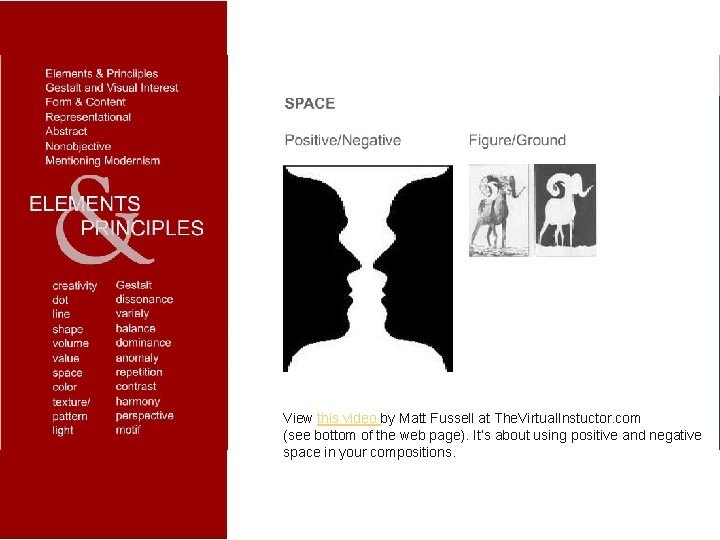
View this video by Matt Fussell at The. Virtual. Instuctor. com (see bottom of the web page). It’s about using positive and negative space in your compositions.
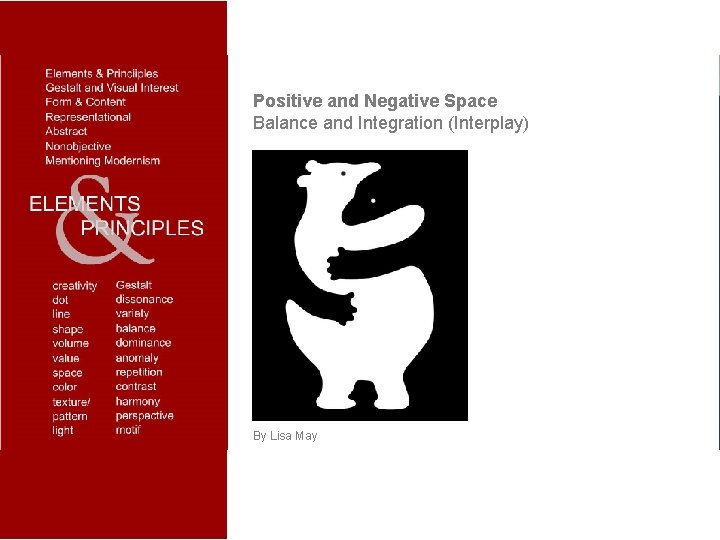
Positive and Negative Space Balance and Integration (Interplay) By Lisa May
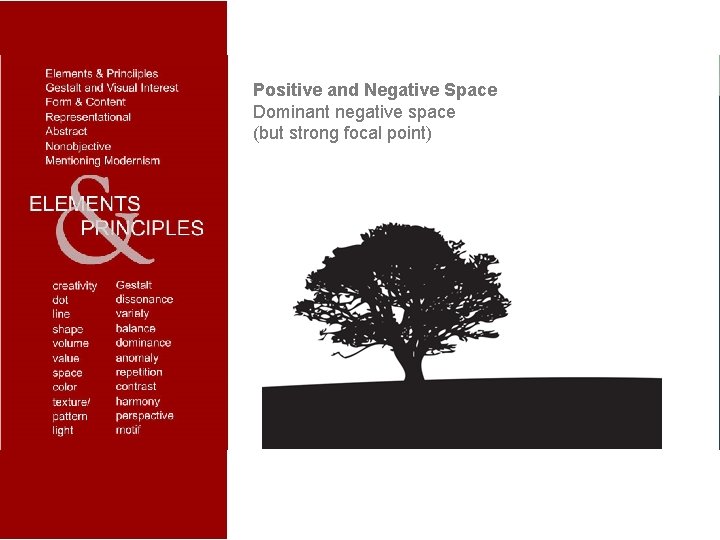
Positive and Negative Space Dominant negative space (but strong focal point)
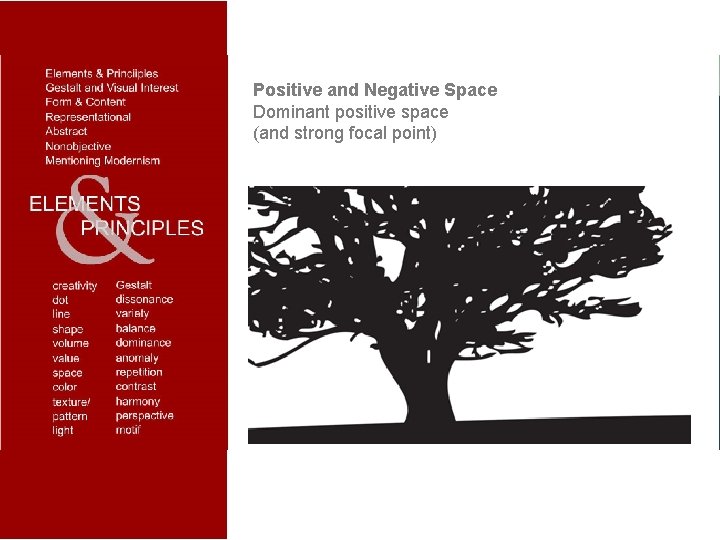
Positive and Negative Space Dominant positive space (and strong focal point)
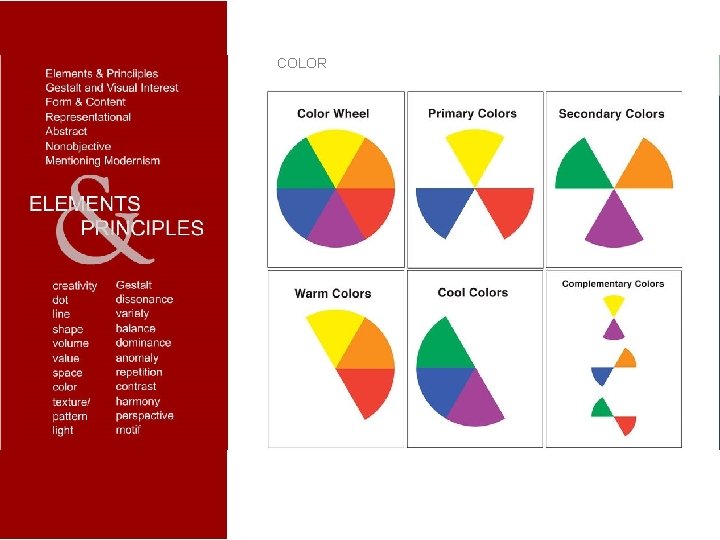
COLOR
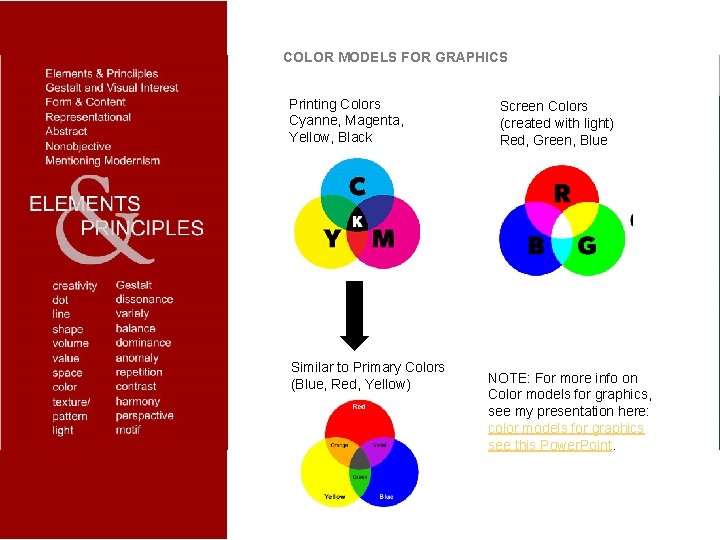
COLOR MODELS FOR GRAPHICS Printing Colors Cyanne, Magenta, Yellow, Black Similar to Primary Colors (Blue, Red, Yellow) Screen Colors (created with light) Red, Green, Blue NOTE: For more info on Color models for graphics, see my presentation here: color models for graphics see this Power. Point.
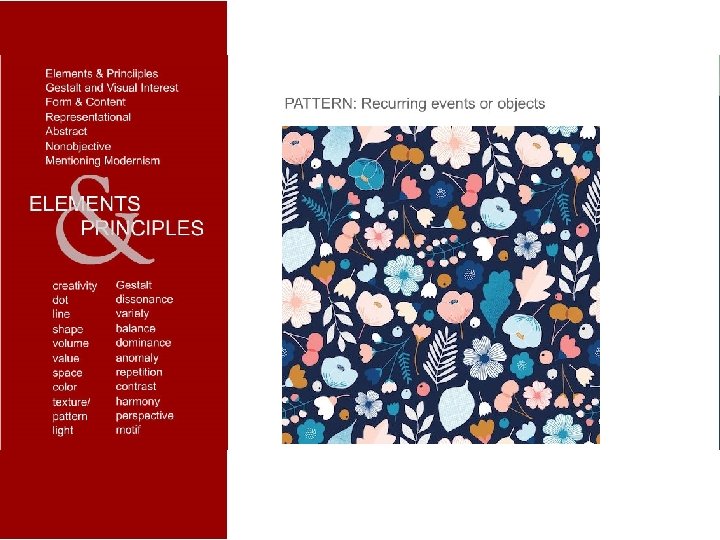
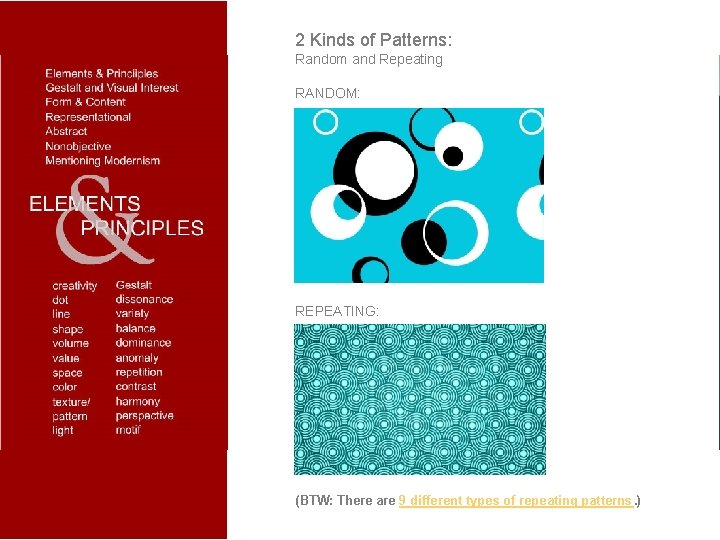
2 Kinds of Patterns: Random and Repeating RANDOM: REPEATING: (BTW: There are 9 different types of repeating patterns. )
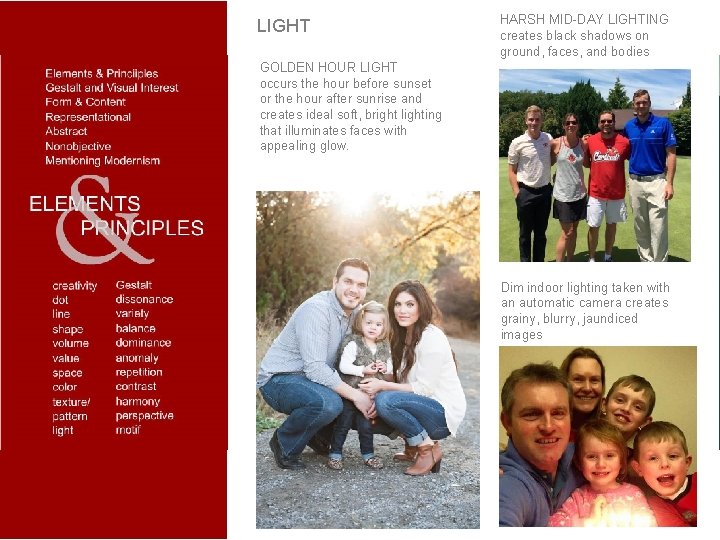
LIGHT HARSH MID-DAY LIGHTING creates black shadows on ground, faces, and bodies GOLDEN HOUR LIGHT occurs the hour before sunset or the hour after sunrise and creates ideal soft, bright lighting that illuminates faces with appealing glow. Dim indoor lighting taken with an automatic camera creates grainy, blurry, jaundiced images
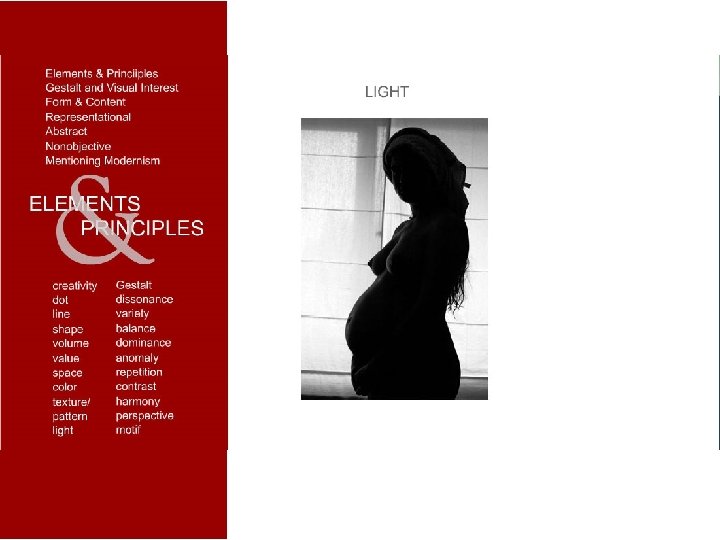
Visual “Principles” (act upon the elements)
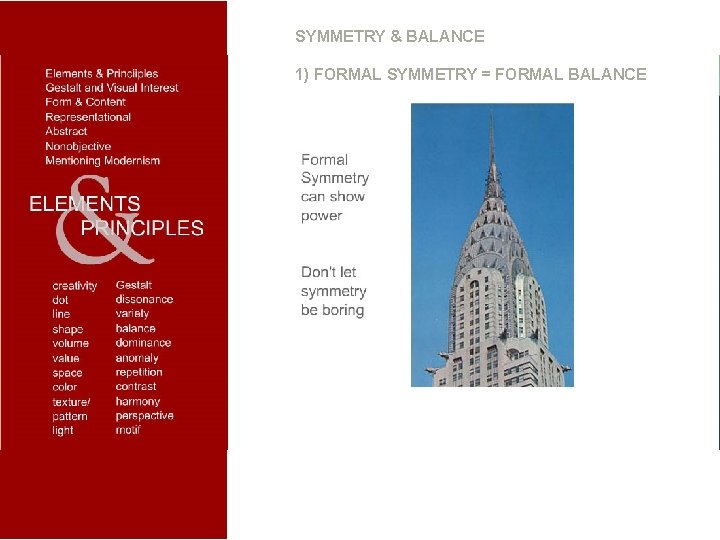
SYMMETRY & BALANCE 1) FORMAL SYMMETRY = FORMAL BALANCE
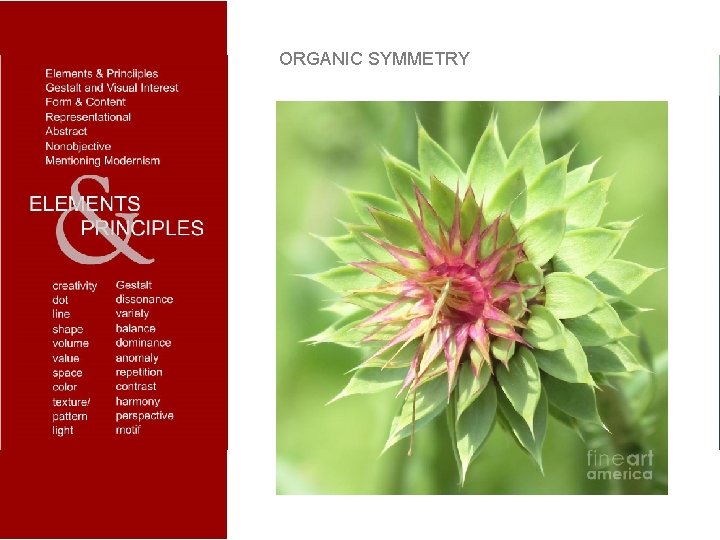
ORGANIC SYMMETRY
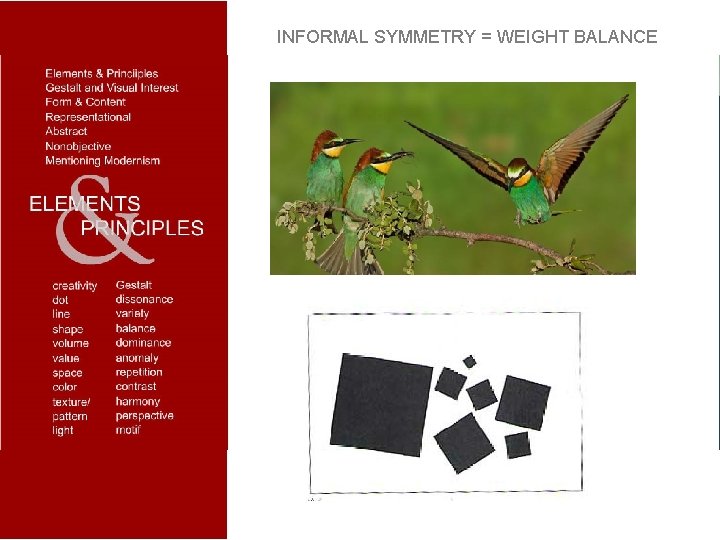
INFORMAL SYMMETRY = WEIGHT BALANCE
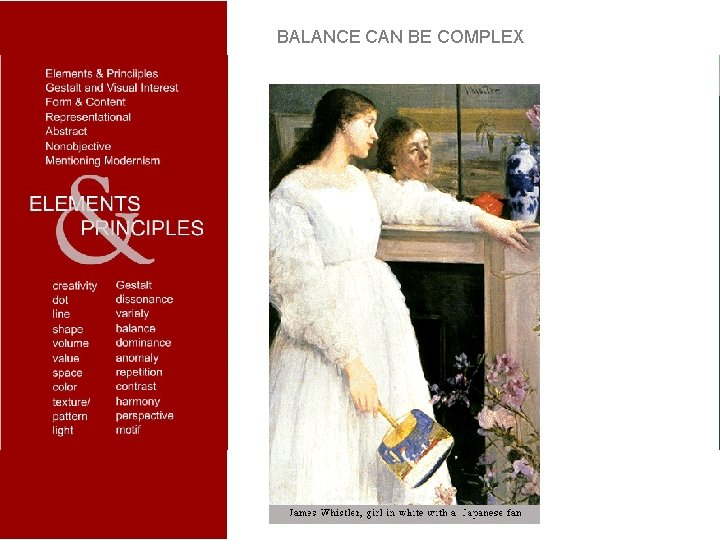
BALANCE CAN BE COMPLEX
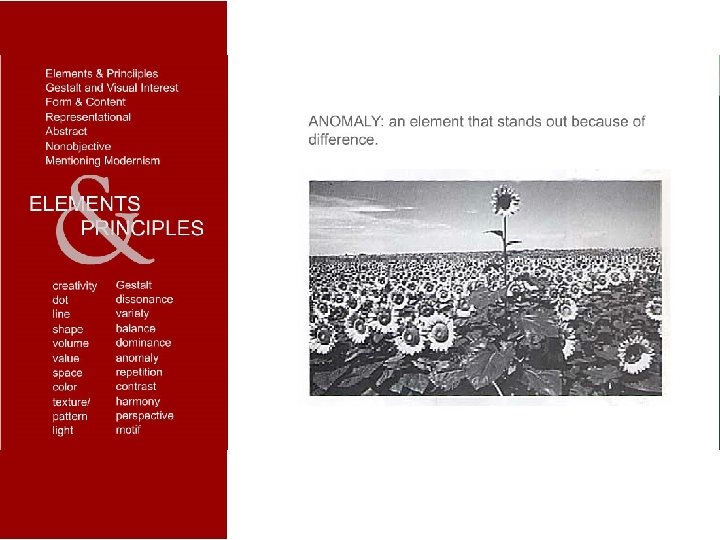
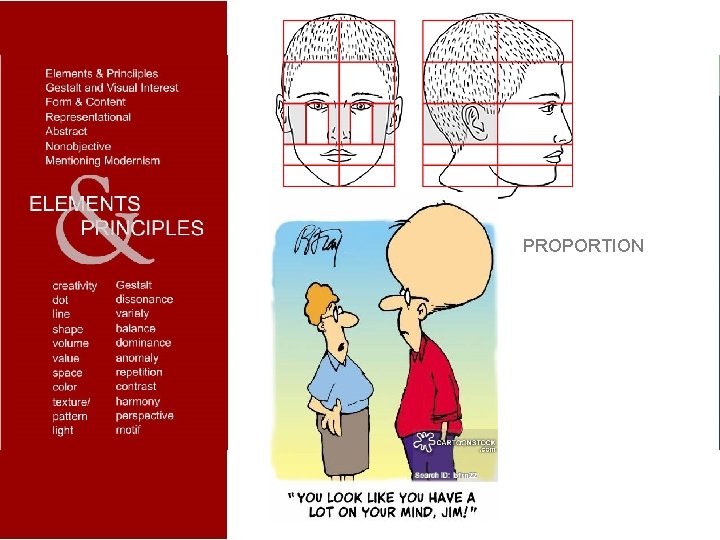
PROPORTION
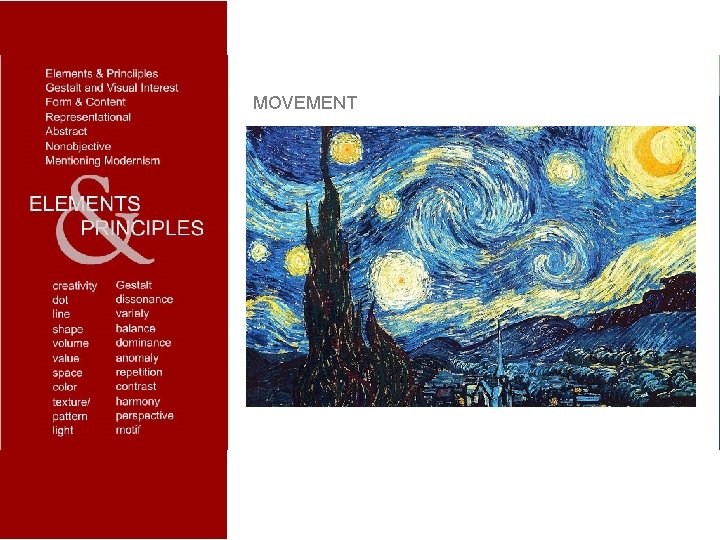
MOVEMENT
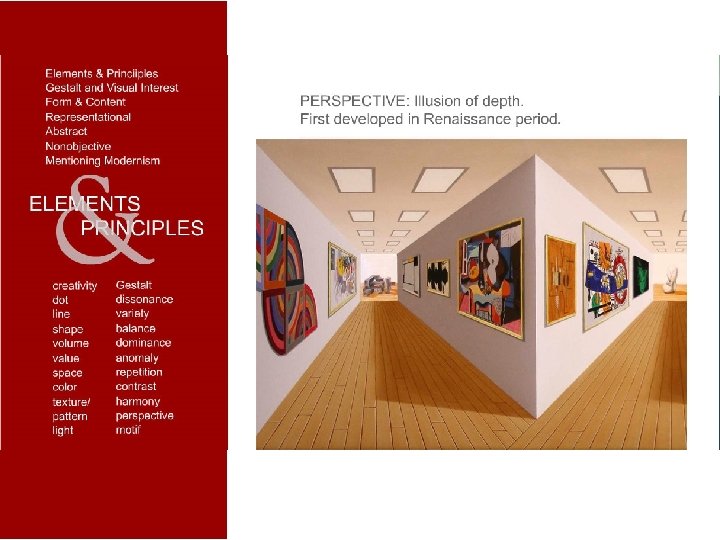
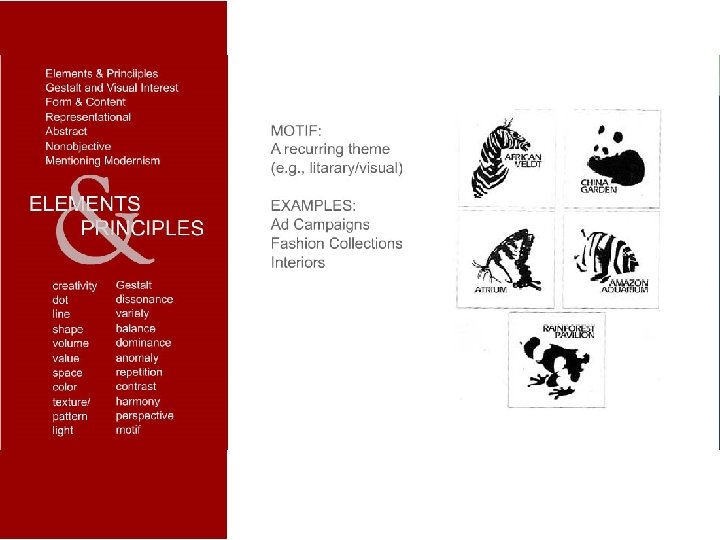
Here’s a helpful Project Checklist for applying knowledge of Elements & Principles to your work.
- Slides: 63