
Form and Function of Vertebrates Section 20 3
Form and Function of Vertebrates Section 20 -3 Rm 111 @ THS
Alveoli
Objectives – Describe a single-loop circulatory system Describe a Double-loop circulatory system – Compare two techniques of body temperature control in vertebrates
Support and Movement • Reptiles: horizontal limbs • Mammals: vertical limbs
Feeding and Digestion – Carnivores: shorter digestive tract – Herbivores: longer digestive tract Why? Plant material takes longer to digest!
Respiration What are some structures used for respiration in vertebrates? – Gills: fish, larval amphibian – Lungs: adult amphibian – Air sacs: birds – Lung: mammals • Bronchi • Alveoli
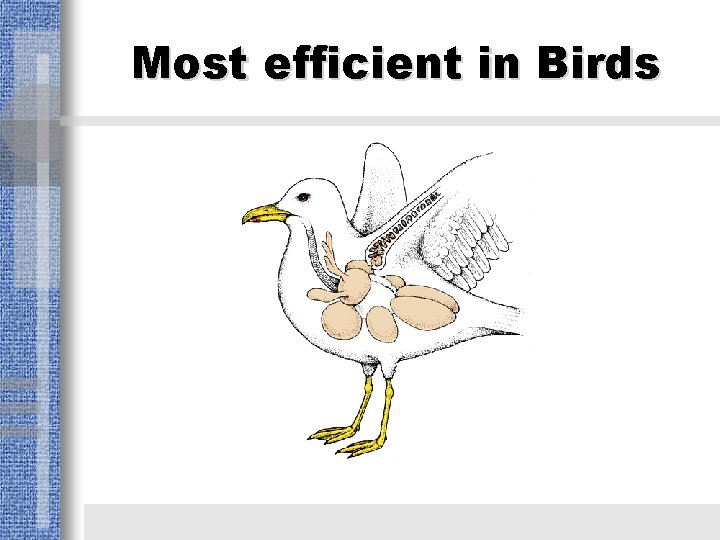
Most efficient in Birds
People at Disneyland
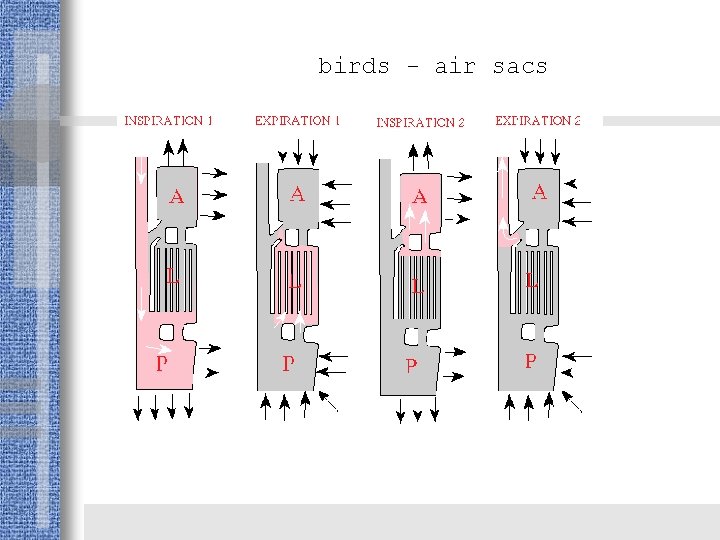
birds - air sacs
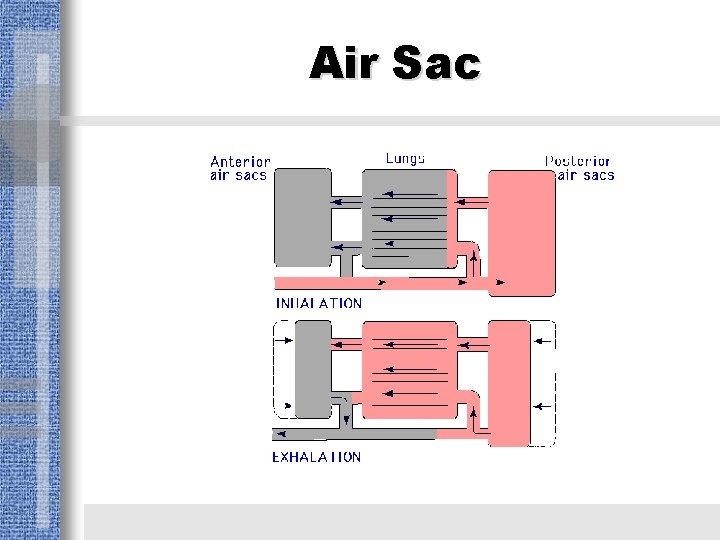
Air Sac
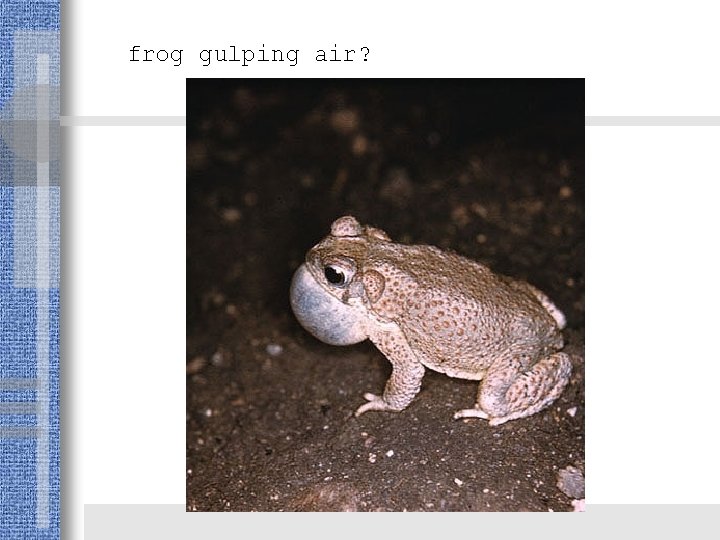
frog gulping air?
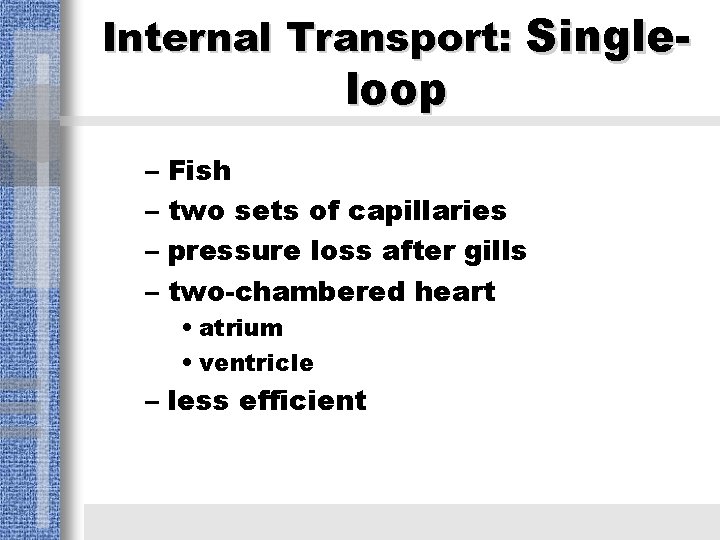
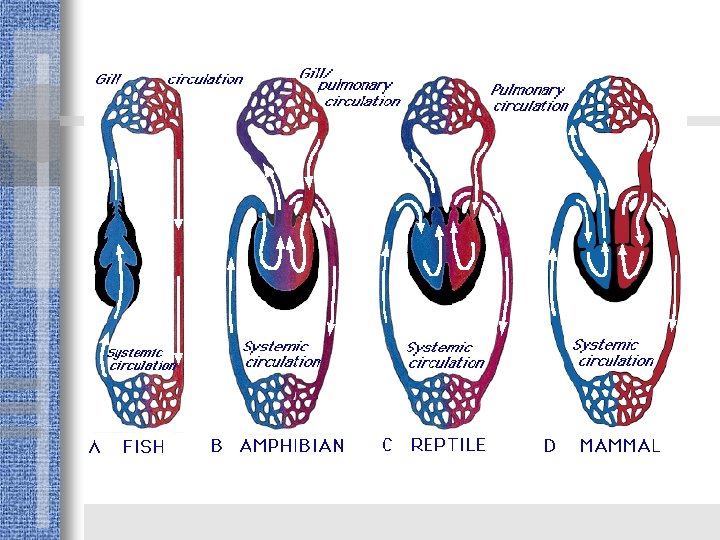
Internal Transport: Single- loop – Fish – two sets of capillaries – pressure loss after gills – two-chambered heart • atrium • ventricle – less efficient
Internal Transport: Double-loop • amphibians: three-chambered heart – mixing of oxygenated and deoxygenated blood • mammals: four-chambered heart – two atria, two ventricles – no mixing • blood to lungs: pulmonary circulation • blood to body: systemic circulation
Temperature Control – Fishes, amphibians, reptiles – Environment used to control temperature – Ectotherms – Water: a constant temperature environment
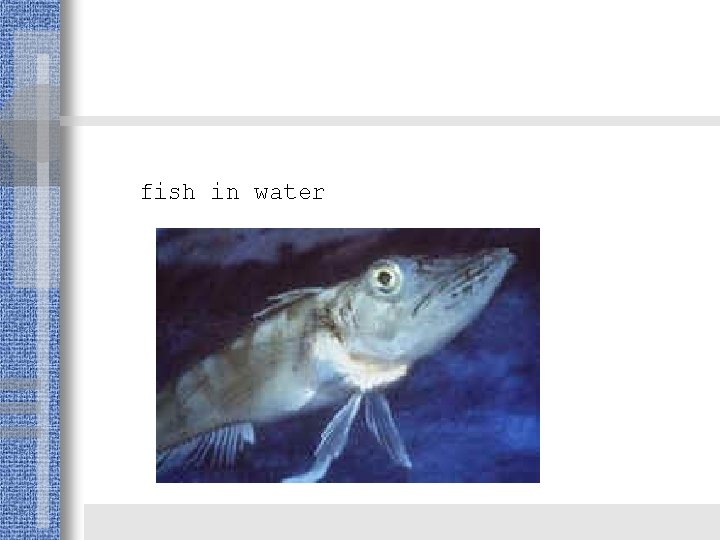
fish in water
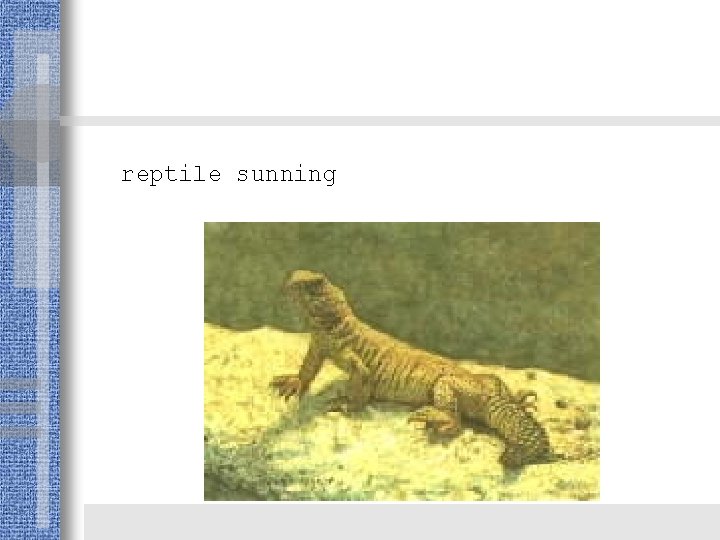
reptile sunning
Temperature Control – Mammals – Generate body heat through chemical reactions in body tissues – Endotherms
Excretion – Diffusion of ammonia • Through gills: fish • Through skin: amphibians – Kidney • Urea: mammals – less toxic • Uric Acid: birds, reptiles – less soluble
Response – Cephalization • Brain • Spinal cord – protected: vertebrae – Cerebrum • an increased size from fish to amphibians to mammals
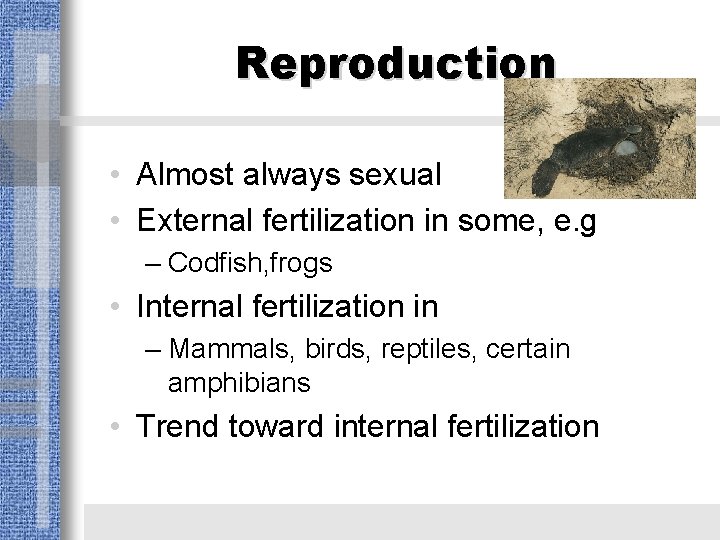
Reproduction • Almost always sexual • External fertilization in some, e. g – Codfish, frogs • Internal fertilization in – Mammals, birds, reptiles, certain amphibians • Trend toward internal fertilization
Reproduction Three Strategies • Oviparous: (Fish) Eggs laid outside and fertilized – lots of eggs/offspring needed • Viviparous: (Mammal) – Few eggs Internal fertilization in • Ovoviviparous: (Shark) Trend toward internal fertilization
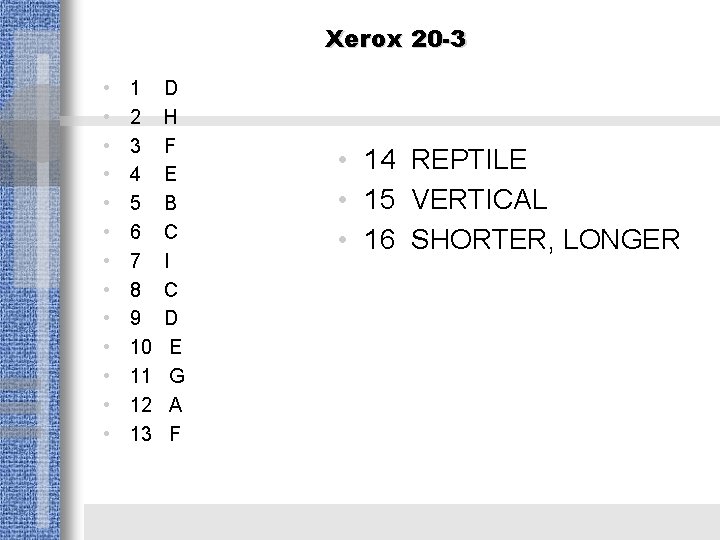
Xerox 20 -3 • • • • 1 2 3 4 5 6 7 8 9 10 11 12 13 D H F E B C I C D E G A F • 14 REPTILE • 15 VERTICAL • 16 SHORTER, LONGER
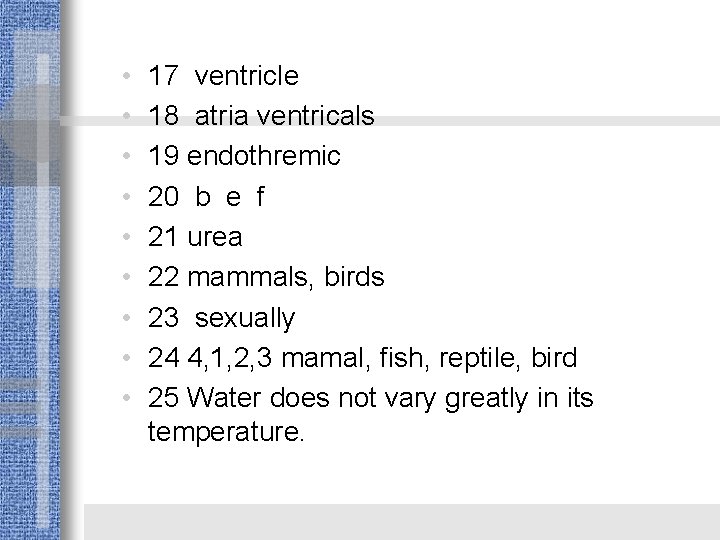
• • • 17 ventricle 18 atria ventricals 19 endothremic 20 b e f 21 urea 22 mammals, birds 23 sexually 24 4, 1, 2, 3 mamal, fish, reptile, bird 25 Water does not vary greatly in its temperature.
waiting. jpg&imgrefurl=http: //students. washington. edu/pphan 001/travel/disney/&h=373&w= 46&prev=/images%3 Fq%3 Ddisney%2 Bland%2 Blines%26 svnum%3 D 10%26 hl%3 Den%26 lr%3 D%26 ie%3 DUTF 8%26 oe%3 DUTF-8 References - Credits Alveoli http: //images. google. com/imgres? imgurl=info. med. yale. edu/intmed/cardio/imaging/anatom /bronchioles/graphics/bronchiole_diagram. gif&imgrefurl=http: //info. med. yale. edu/intme /cardio/imaging/anatomy/bronchioles/&h=400&w=760&prev=/images%3 Fq%3 Dalveoli%26 svnum%3 10%26 hl%3 Den%26 lr%3 D%26 ie%3 DUTF-8%26 oe%3 DUTF-8 reptile sunning http: //images. google. com/imgres? imgurl=www. artofwildlife. com/nilesunsoaker. JPG&imgref rl=http: //www. artofwildlife. com/reptiles. html&h=141&w=200&prev=/images%3 Fq%3 Dreptiles 2 Bin%2 Bthe%2 Bsun%26 svnum%3 D 10%26 hl%3 Den%26 lr%3 D%26 ie%3 DUTF-8%26 oe%3 DUTF-8 io/imaging/anatomy/bronchioles/&h=400&w=760&prev=/images%3 Fq%3 Dalveoli%26 svnum%3 D 10%2 hl%3 Den%26 lr%3 D%26 ie%3 DUTF-8%26 oe%3 DUTF-8 reptile sunning http: //images. google. com/imgres? imgurl=www. artofwildlife. com/nilesunsoaker. JPG&imgref rl=http: //www. artofwildlife. com/reptiles. html&h=141&w=200&prev=/images%3 Fq%3 Dreptiles 2 Bin%2 Bthe%2 Bsun%26 svnum%3 D 10%26 hl%3 Den%26 lr%3 D%26 ie%3 DUTF-8%26 oe%3 DUTF-8 fish in water http: //images. google. com/imgres? imgurl=www. solcomhouse. com/Antarc 8. jpg&imgrefurl=http //www. solcomhouse. com/Antarctica. htm&h=150&w=226&prev=/images%3 Fq%3 Dfish%2 Bin%2 Bice%2 svnum%3 D 10%26 hl%3 Den%26 lr%3 D%26 ie%3 DUTF-8%26 oe%3 DUTF-8
- Slides: 25