
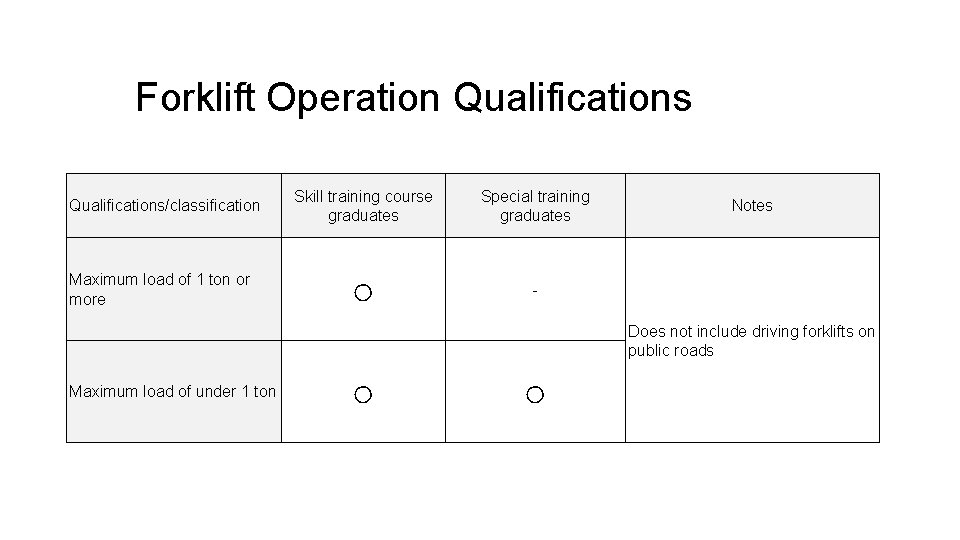
Forklift Operation Qualificationsclassification Maximum load of 1 ton

![Torque Converter Vehicle Acceleration/Deceleration Operations [1 -speed torque converter vehicle] [2 -speed torque converter](https://slidetodoc.com/presentation_image_h/33aadb3996609baf3dff06e277856227/image-13.jpg "Torque Converter Vehicle Acceleration/Deceleration Operations [1 -speed torque converter vehicle] [2 -speed torque converter")
- Slides: 50
Forklift Operation Qualifications/classification Maximum load of 1 ton or more Skill training course graduates Special training graduates ○ - Notes Does not include driving forklifts on public roads Maximum load of under 1 ton ○ ○
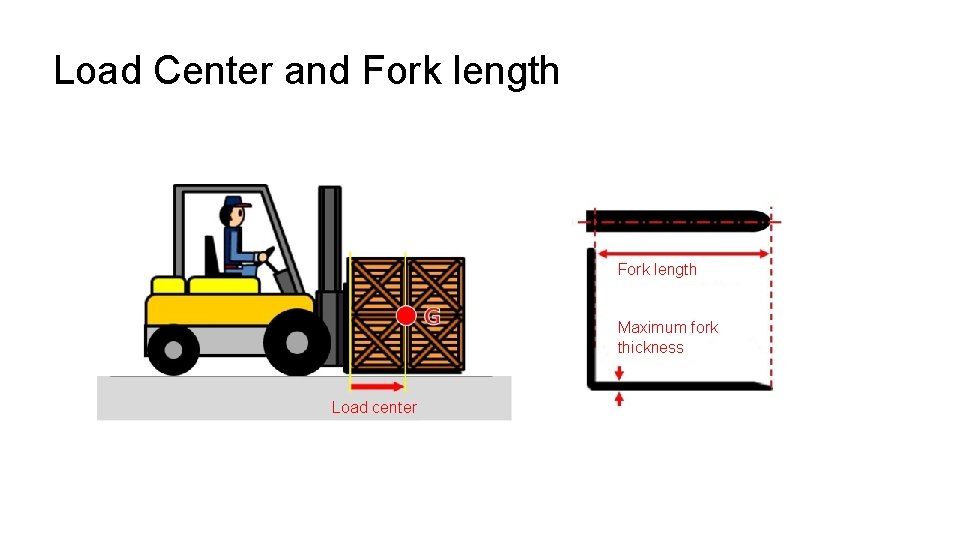
Load Center and Fork length Maximum fork thickness Load center
Standard Load Center Rated load Q a): Includes the distance of 1220 and 1250. Standard load center D
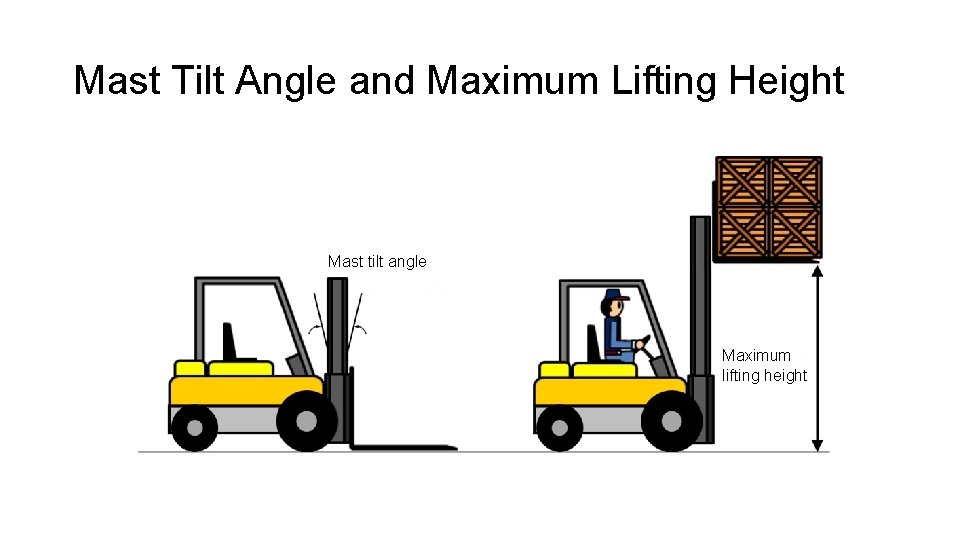
Mast Tilt Angle and Maximum Lifting Height Mast tilt angle Maximum lifting height
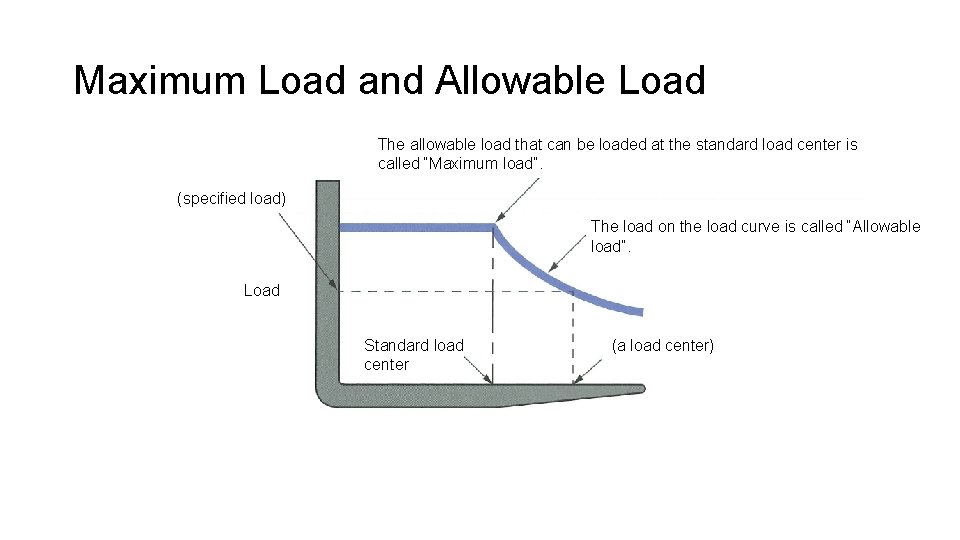
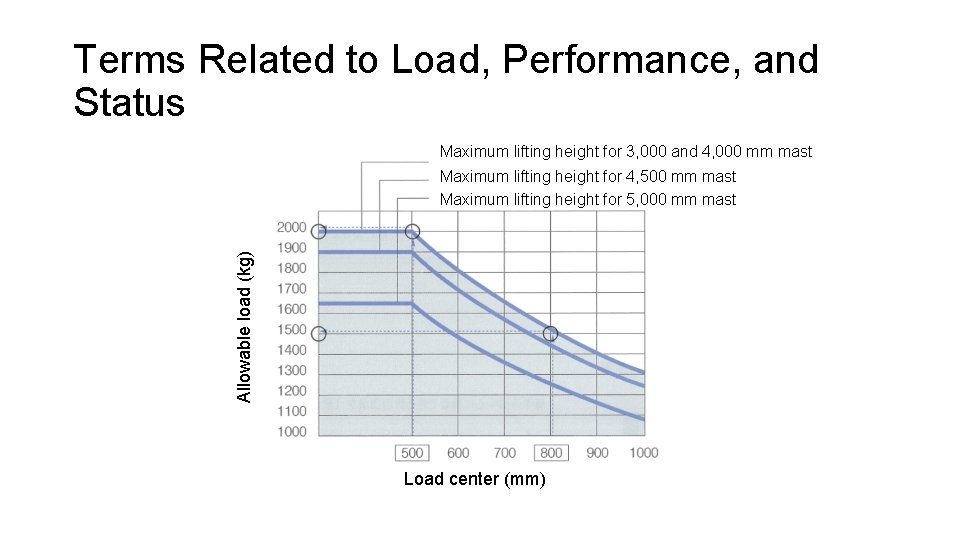
Maximum Load and Allowable Load The allowable load that can be loaded at the standard load center is called “Maximum load”. (specified load) The load on the load curve is called “Allowable load”. Load Standard load center (a load center)
Terms Related to Load, Performance, and Status Maximum lifting height for 3, 000 and 4, 000 mm mast Allowable load (kg) Maximum lifting height for 4, 500 mm mast Maximum lifting height for 5, 000 mm mast Load center (mm)
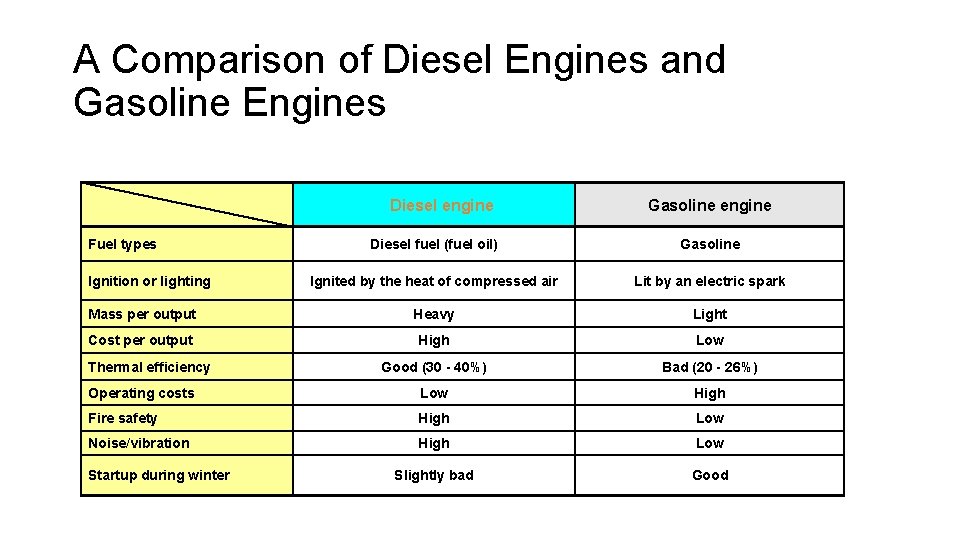
A Comparison of Diesel Engines and Gasoline Engines Diesel engine Gasoline engine Diesel fuel (fuel oil) Gasoline Ignited by the heat of compressed air Lit by an electric spark Mass per output Heavy Light Cost per output High Low Good (30 - 40%) Bad (20 - 26%) Operating costs Low High Fire safety High Low Noise/vibration High Low Slightly bad Good Fuel types Ignition or lighting Thermal efficiency Startup during winter
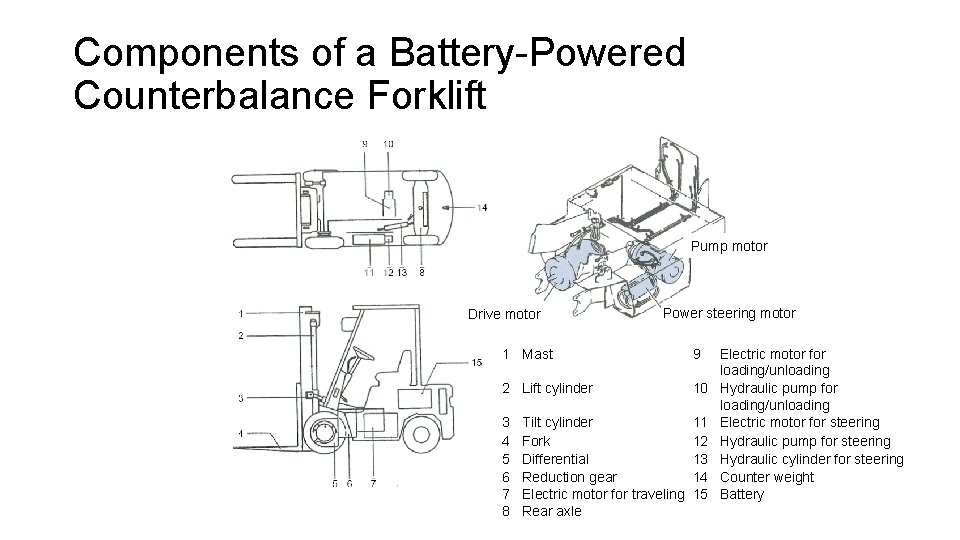
Components of a Battery-Powered Counterbalance Forklift Pump motor Drive motor Power steering motor 1 Mast 9 2 Lift cylinder 10 3 4 5 6 7 8 11 12 13 14 15 Tilt cylinder Fork Differential Reduction gear Electric motor for traveling Rear axle Electric motor for loading/unloading Hydraulic pump for loading/unloading Electric motor for steering Hydraulic pump for steering Hydraulic cylinder for steering Counter weight Battery
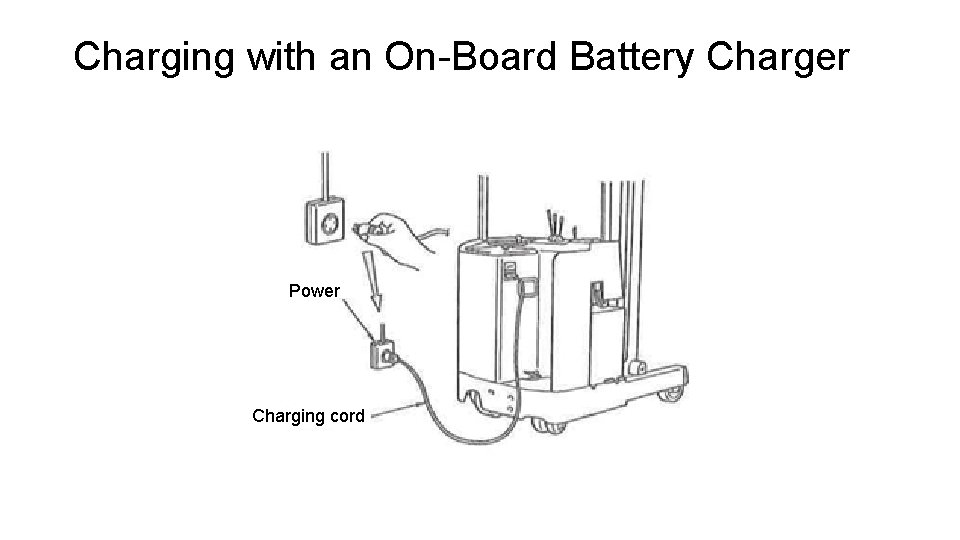
Charging with an On-Board Battery Charger Power Charging cord
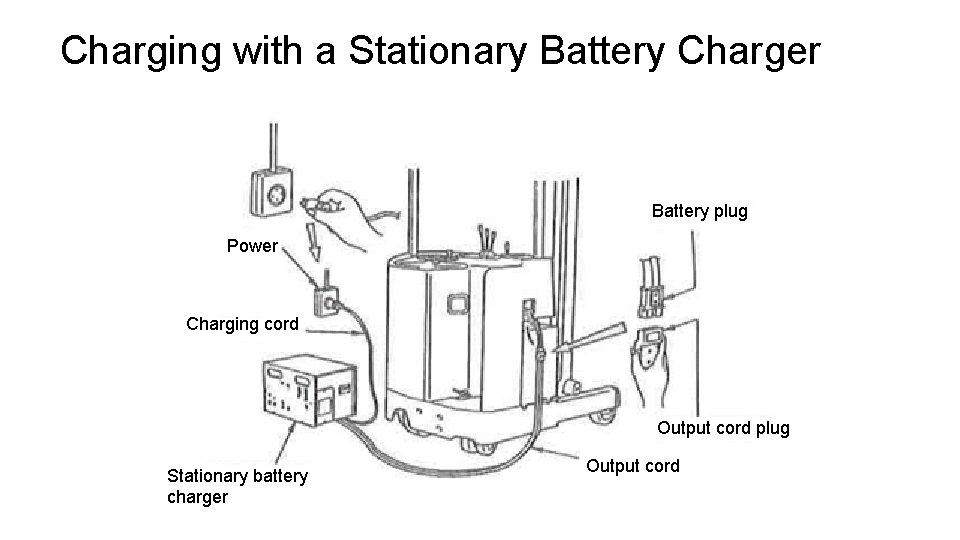
Charging with a Stationary Battery Charger Battery plug Power Charging cord Output cord plug Stationary battery charger Output cord
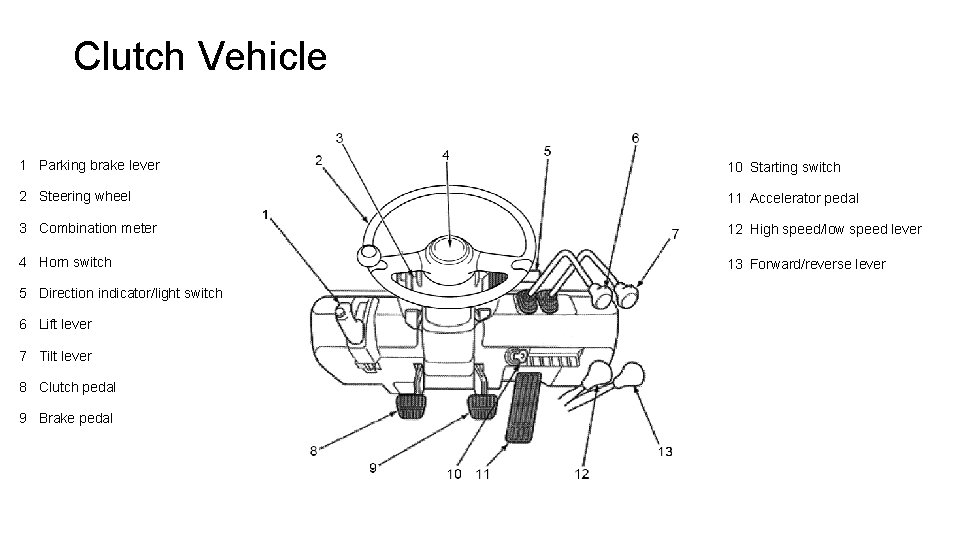
Clutch Vehicle 1 Parking brake lever 10 Starting switch 2 Steering wheel 11 Accelerator pedal 3 Combination meter 12 High speed/low speed lever 4 Horn switch 13 Forward/reverse lever 5 Direction indicator/light switch 6 Lift lever 7 Tilt lever 8 Clutch pedal 9 Brake pedal
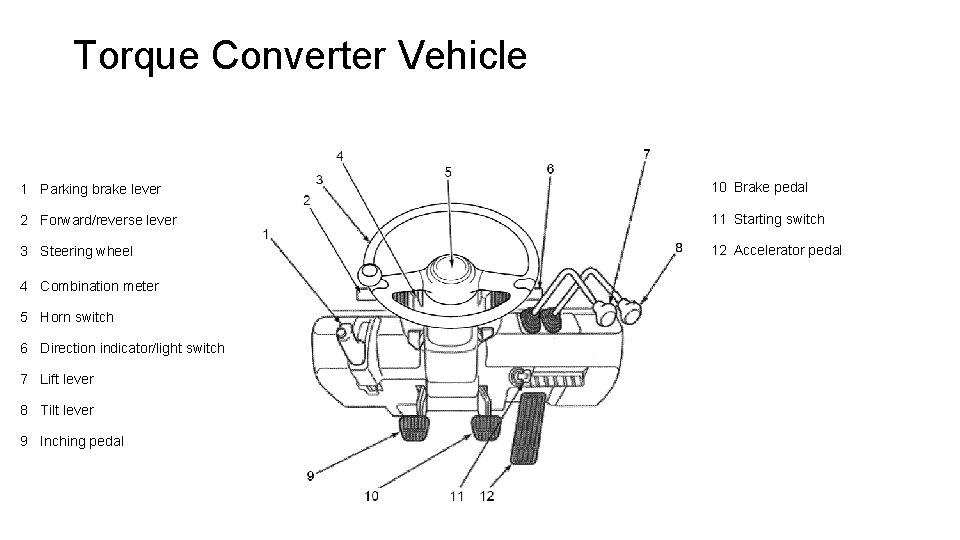
Torque Converter Vehicle 1 Parking brake lever 10 Brake pedal 2 Forward/reverse lever 11 Starting switch 3 Steering wheel 12 Accelerator pedal 4 Combination meter 5 Horn switch 6 Direction indicator/light switch 7 Lift lever 8 Tilt lever 9 Inching pedal
Torque Converter Vehicle Acceleration/Deceleration Operations [1 -speed torque converter vehicle] [2 -speed torque converter vehicle]
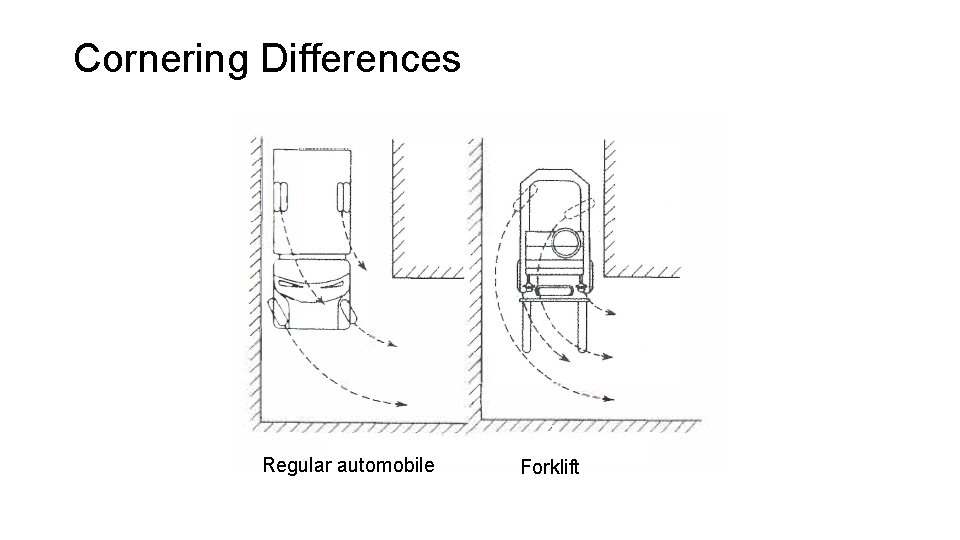
Cornering Differences Regular automobile Forklift
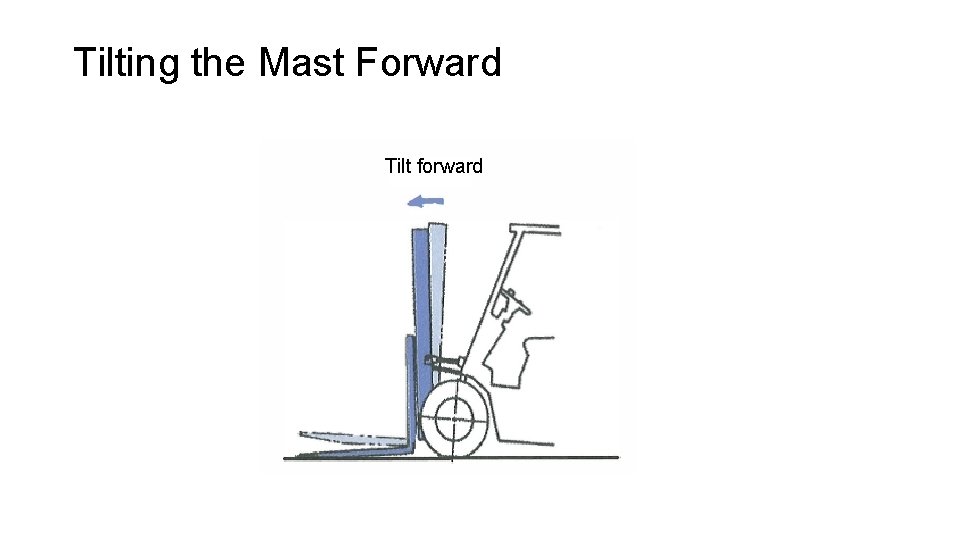
Tilting the Mast Forward Tilt forward
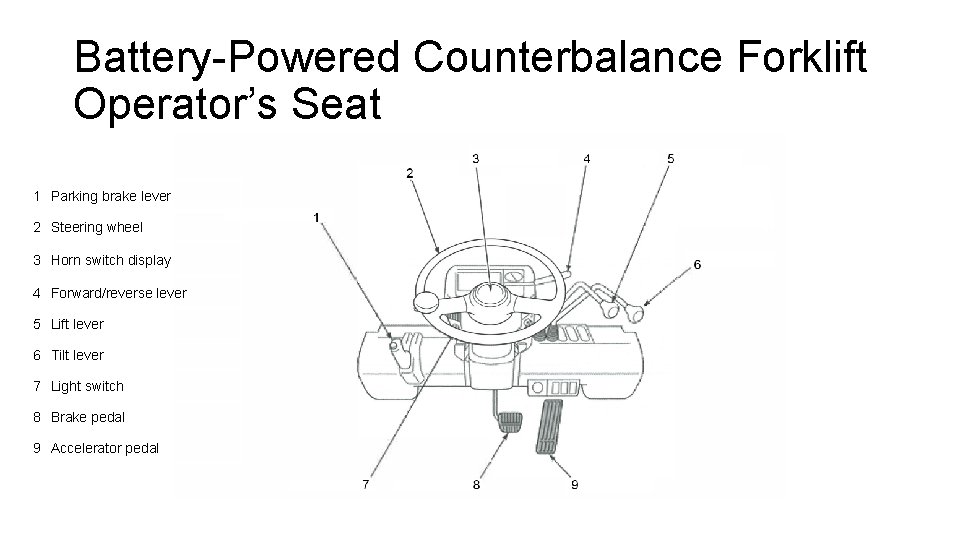
Battery-Powered Counterbalance Forklift Operator’s Seat 1 Parking brake lever 2 Steering wheel 3 Horn switch display 4 Forward/reverse lever 5 Lift lever 6 Tilt lever 7 Light switch 8 Brake pedal 9 Accelerator pedal
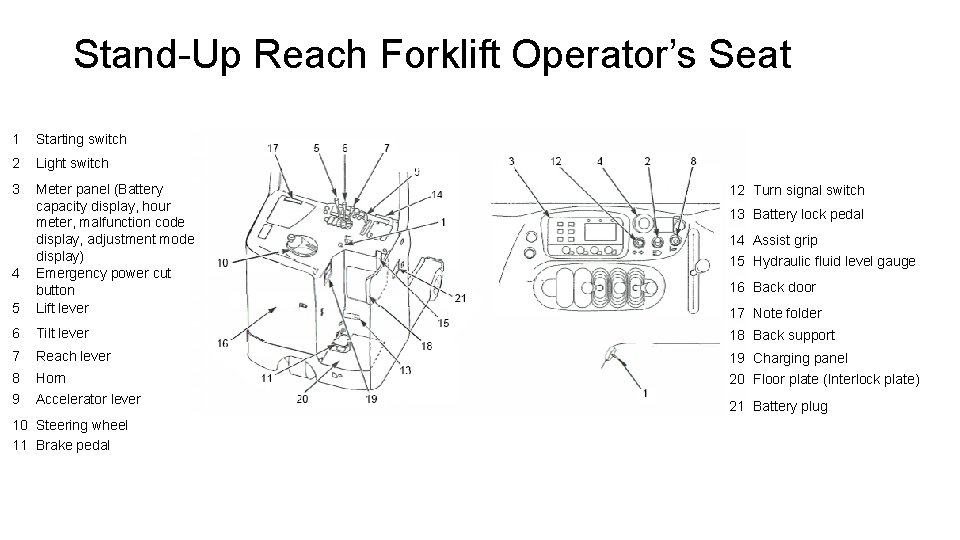
Stand-Up Reach Forklift Operator’s Seat 1 Starting switch 2 Light switch 3 12 Turn signal switch 5 Meter panel (Battery capacity display, hour meter, malfunction code display, adjustment mode display) Emergency power cut button Lift lever 6 Tilt lever 18 Back support 7 Reach lever 8 9 Horn Accelerator lever 19 Charging panel 20 Floor plate (Interlock plate) 4 10 Steering wheel 11 Brake pedal 13 Battery lock pedal 14 Assist grip 15 Hydraulic fluid level gauge 16 Back door 17 Note folder 21 Battery plug
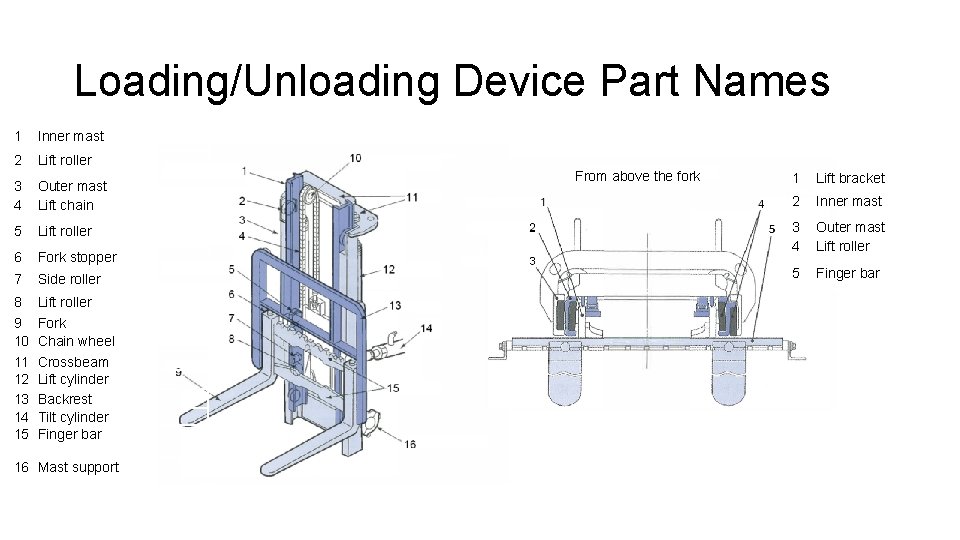
Loading/Unloading Device Part Names 1 Inner mast 2 Lift roller 3 4 Outer mast Lift chain 5 Lift roller 6 Fork stopper 7 Side roller 8 9 10 11 12 13 14 15 Lift roller Fork Chain wheel Crossbeam Lift cylinder Backrest Tilt cylinder Finger bar 16 Mast support From above the fork 1 Lift bracket 2 Inner mast 3 4 Outer mast Lift roller 5 Finger bar
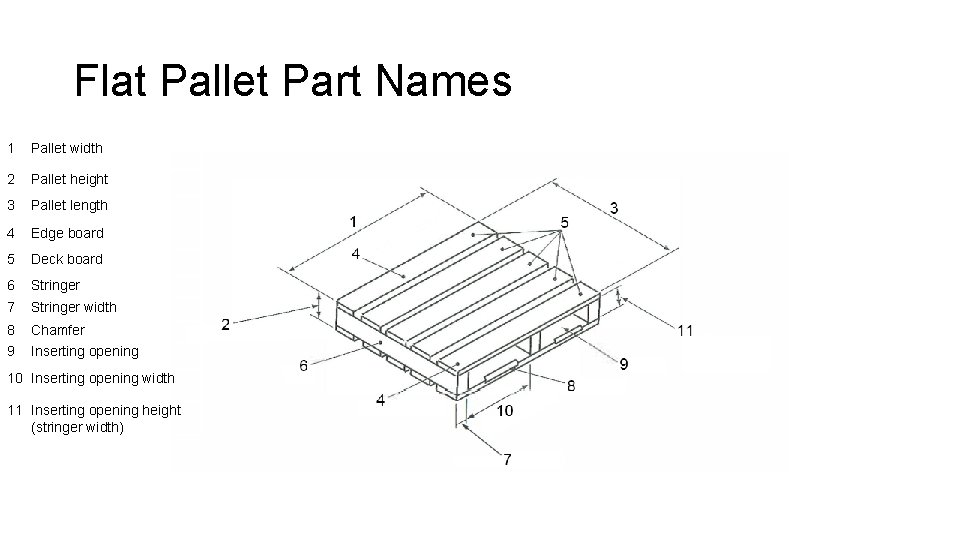
Flat Pallet Part Names 1 Pallet width 2 Pallet height 3 Pallet length 4 Edge board 5 Deck board 6 Stringer 7 Stringer width 8 9 Chamfer Inserting opening 10 Inserting opening width 11 Inserting opening height (stringer width)
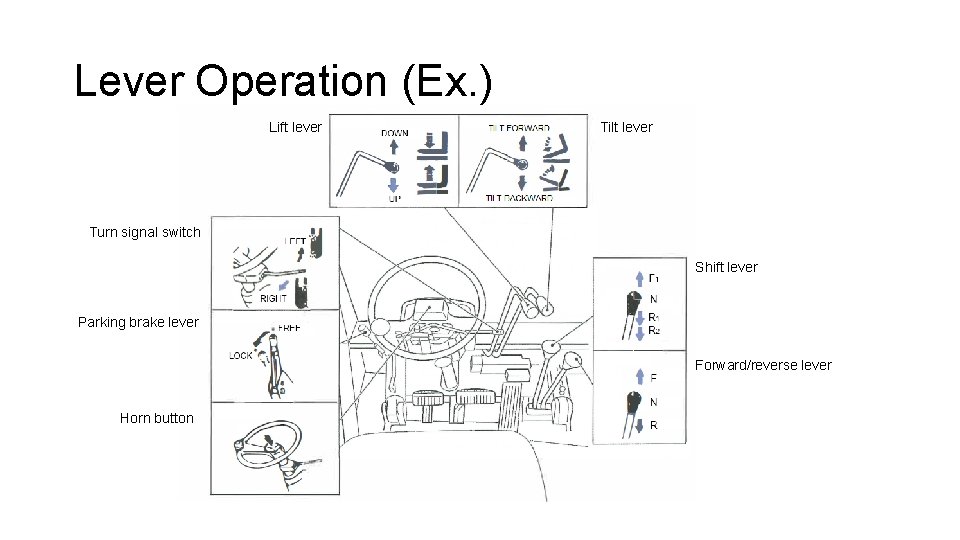
Lever Operation (Ex. ) Lift lever Tilt lever Turn signal switch Shift lever Parking brake lever Forward/reverse lever Horn button
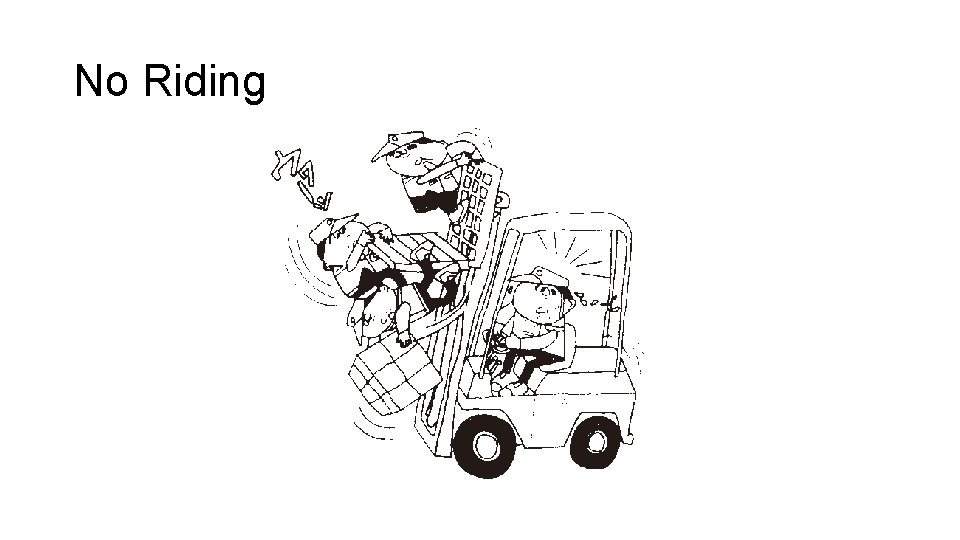
No Riding
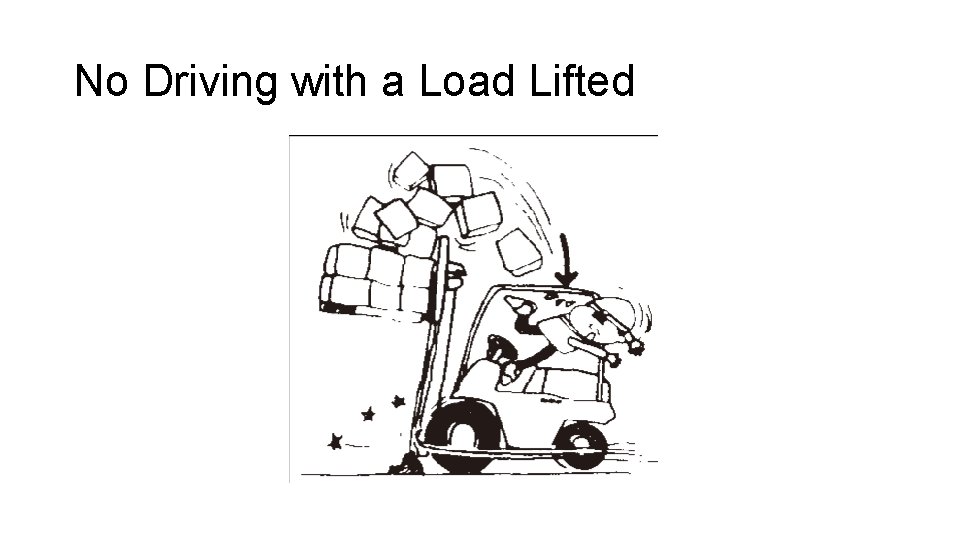
No Driving with a Load Lifted
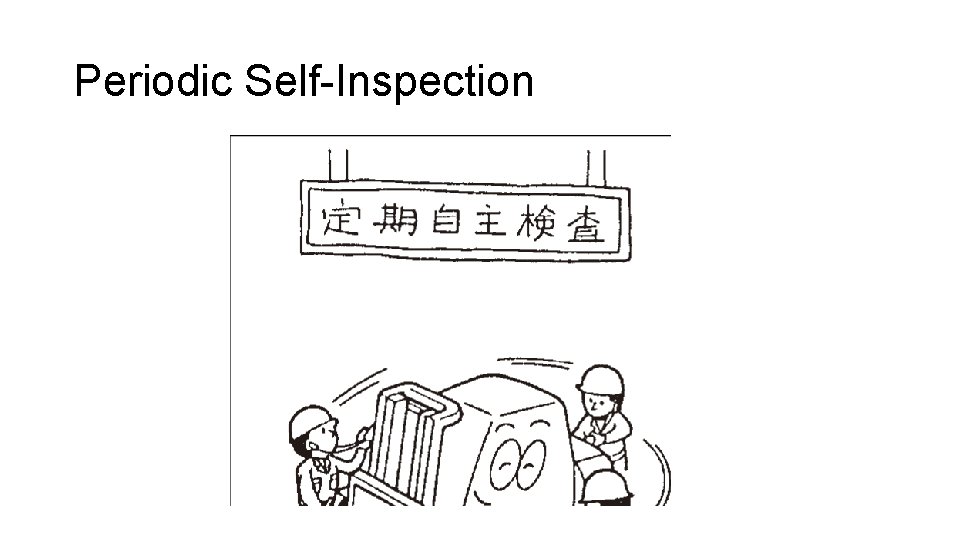
Periodic Self-Inspection
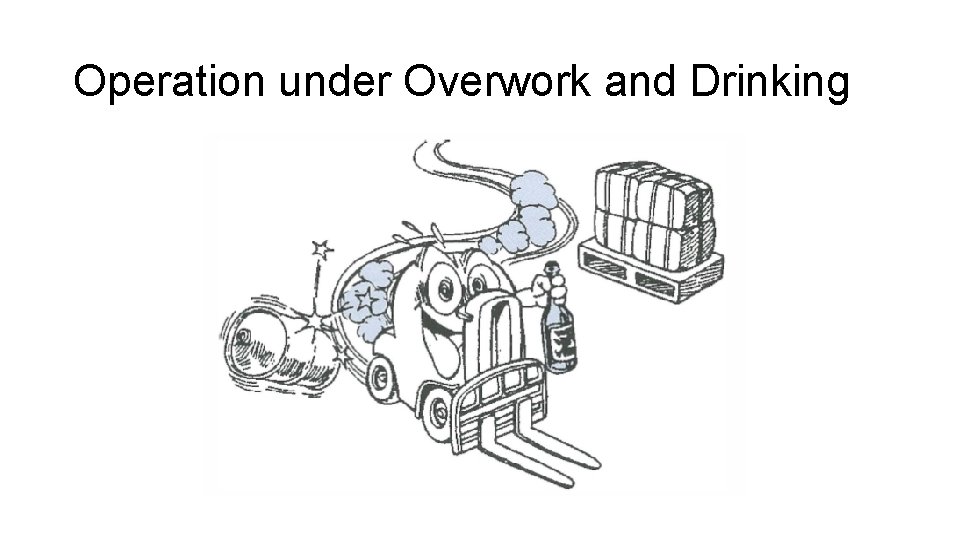
Operation under Overwork and Drinking
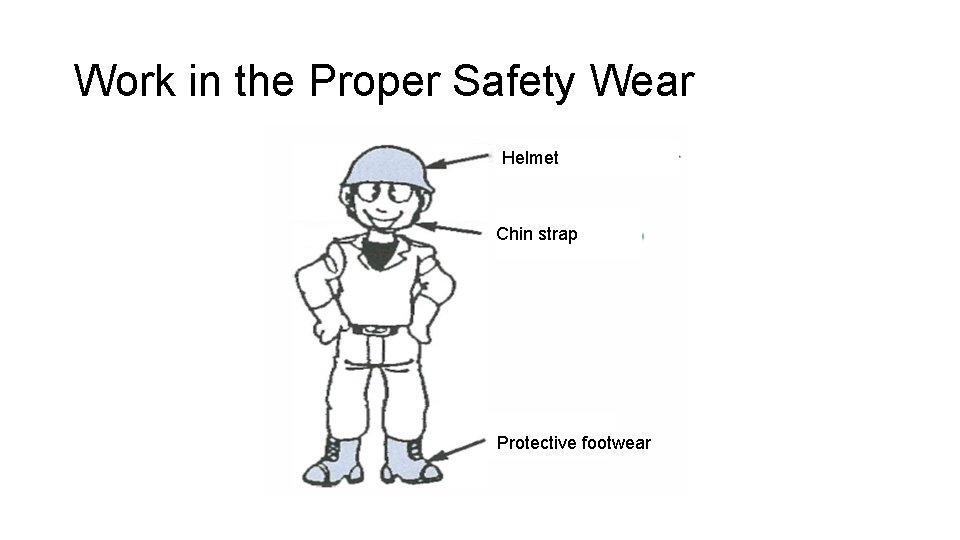
Work in the Proper Safety Wear Helmet Chin strap Protective footwear
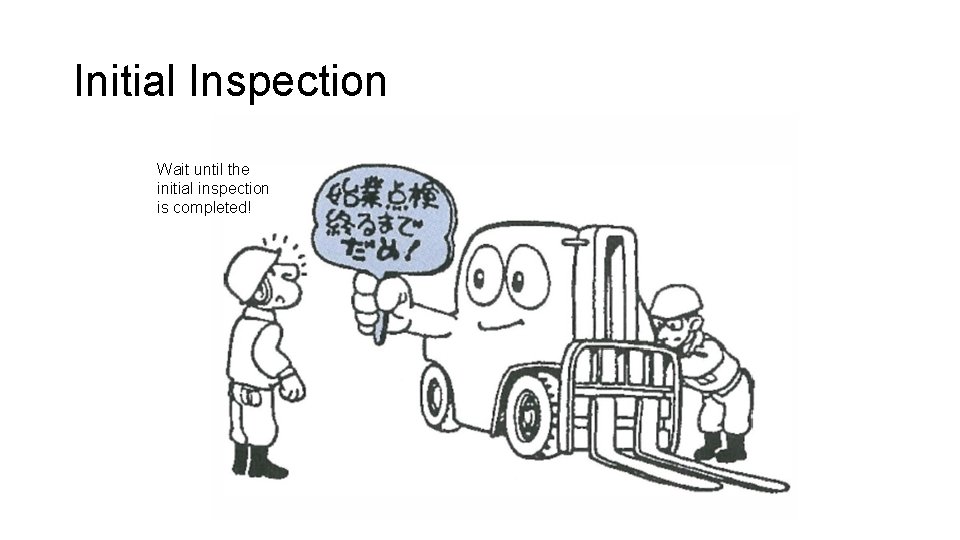
Initial Inspection Wait until the initial inspection is completed!
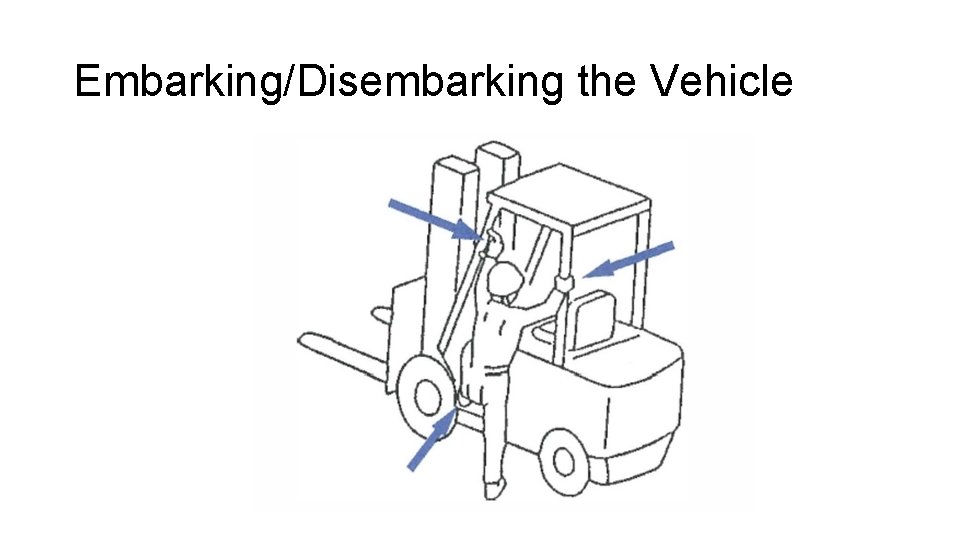
Embarking/Disembarking the Vehicle
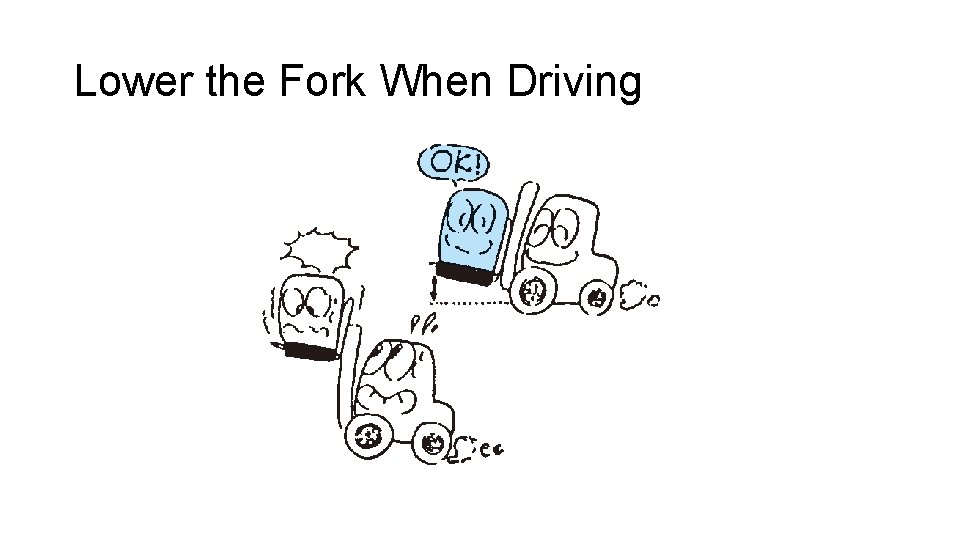
Lower the Fork When Driving
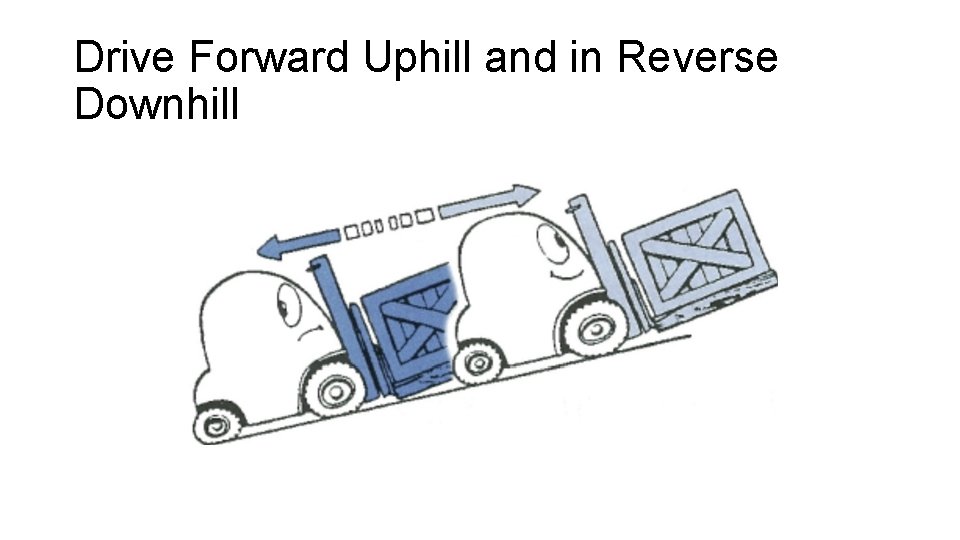
Drive Forward Uphill and in Reverse Downhill
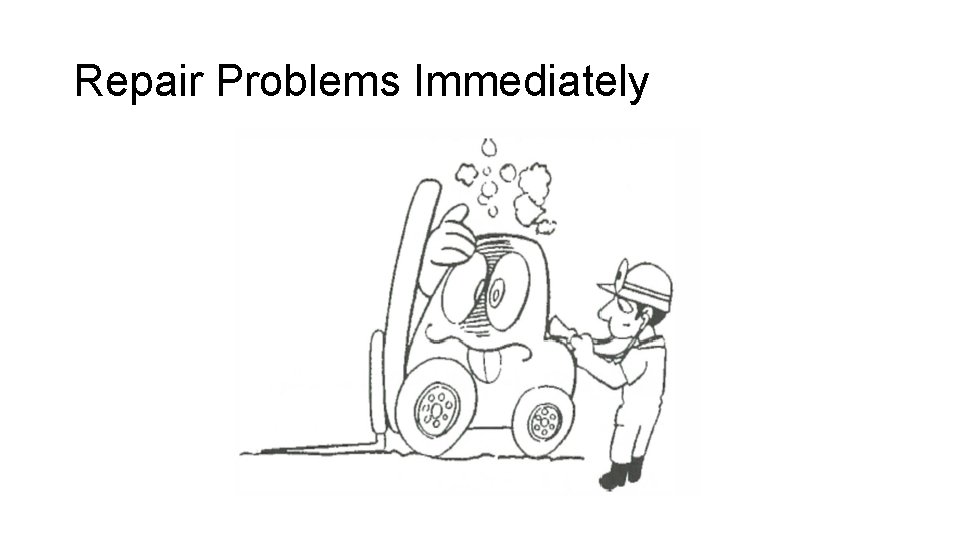
Repair Problems Immediately
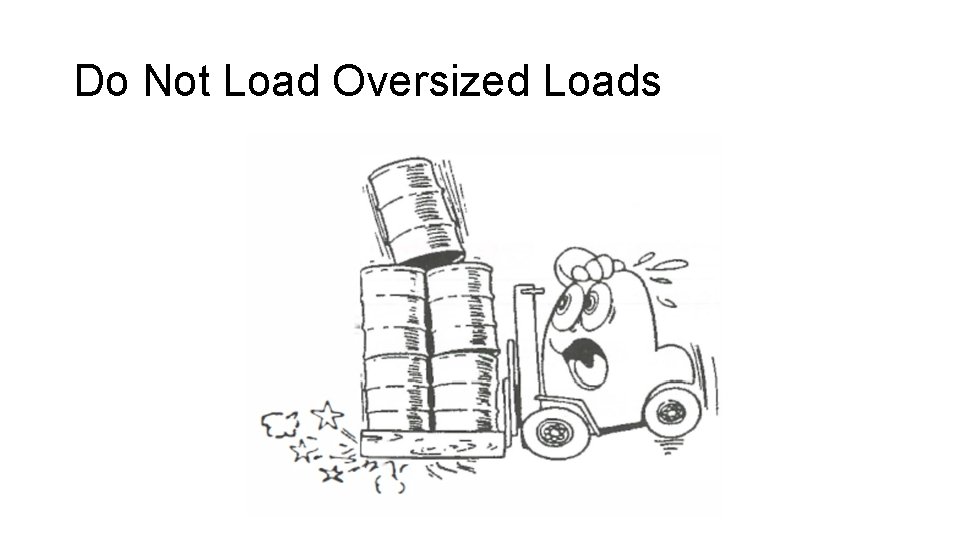
Do Not Load Oversized Loads
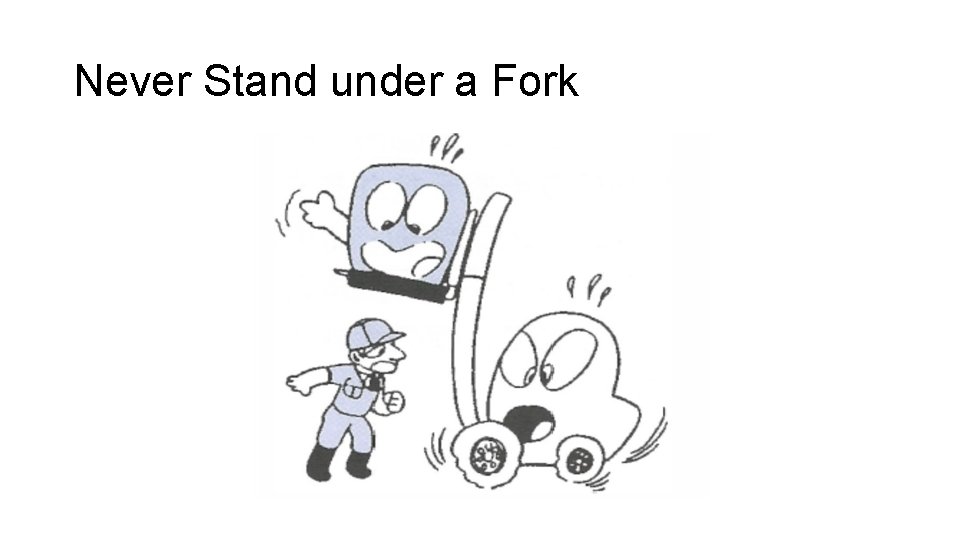
Never Stand under a Fork
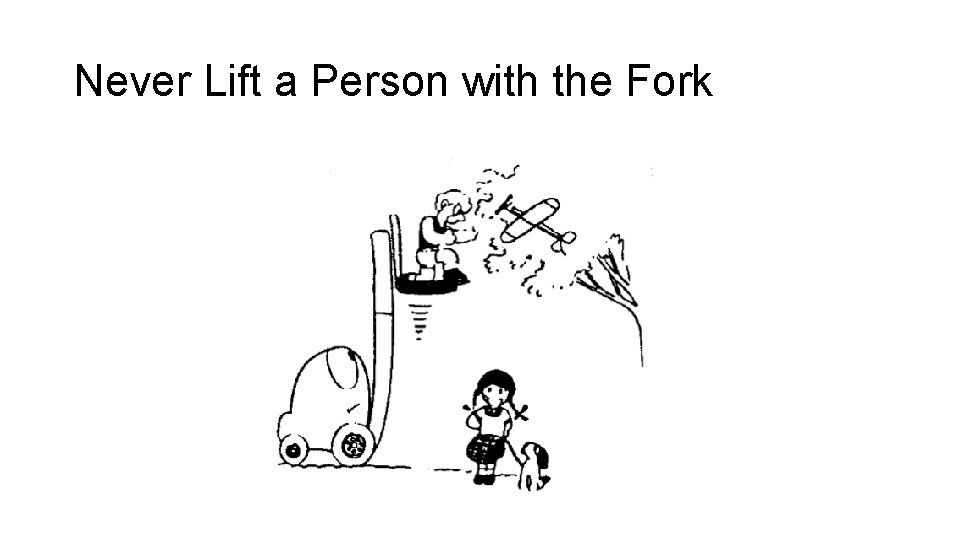
Never Lift a Person with the Fork
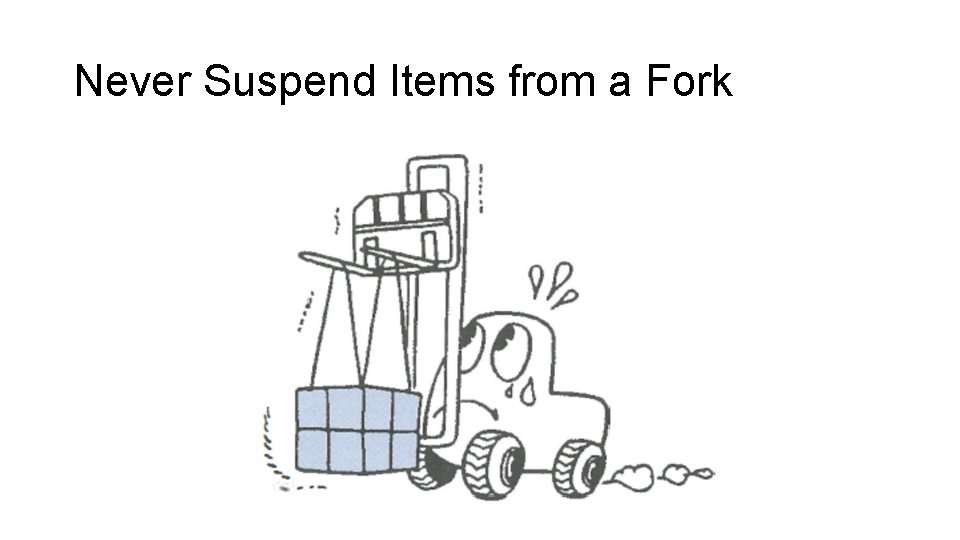
Never Suspend Items from a Fork
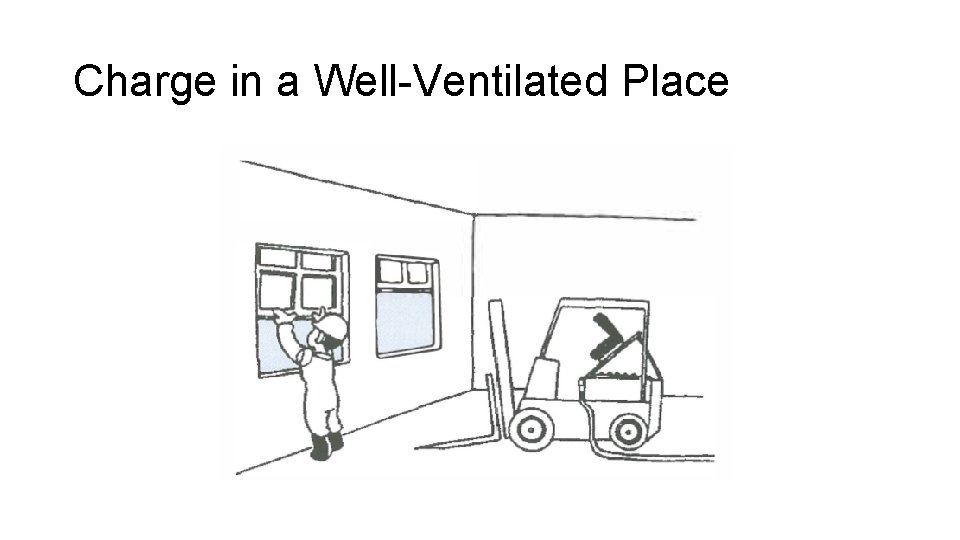
Charge in a Well-Ventilated Place
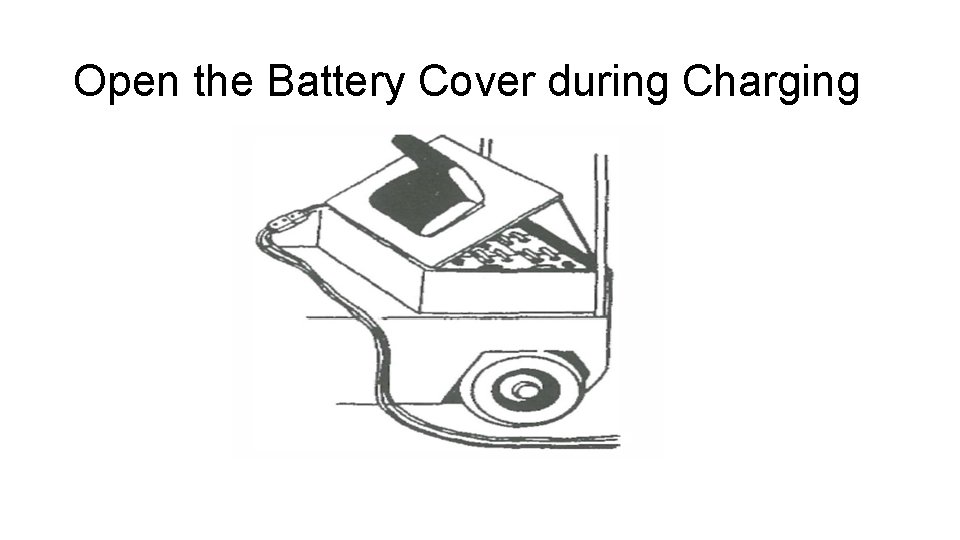
Open the Battery Cover during Charging
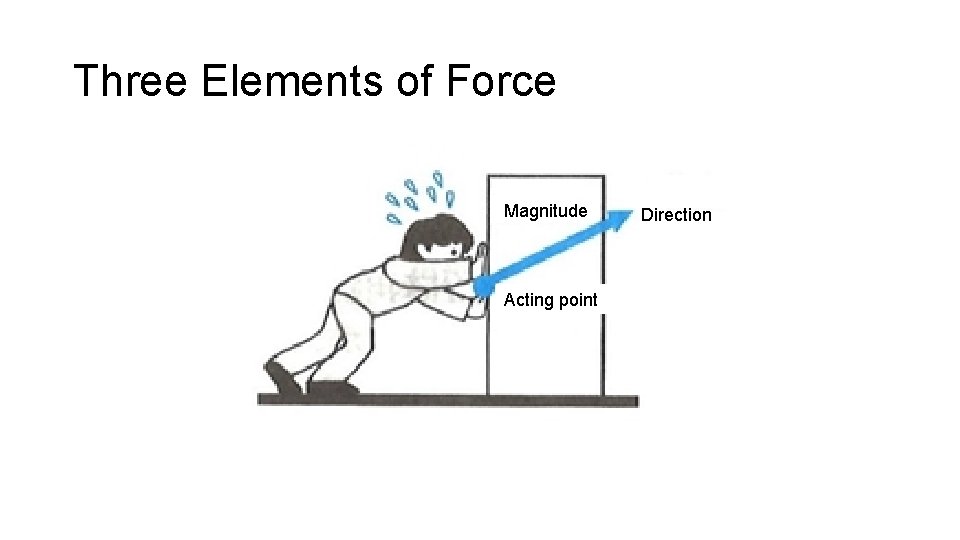
Three Elements of Force Magnitude Acting point Direction
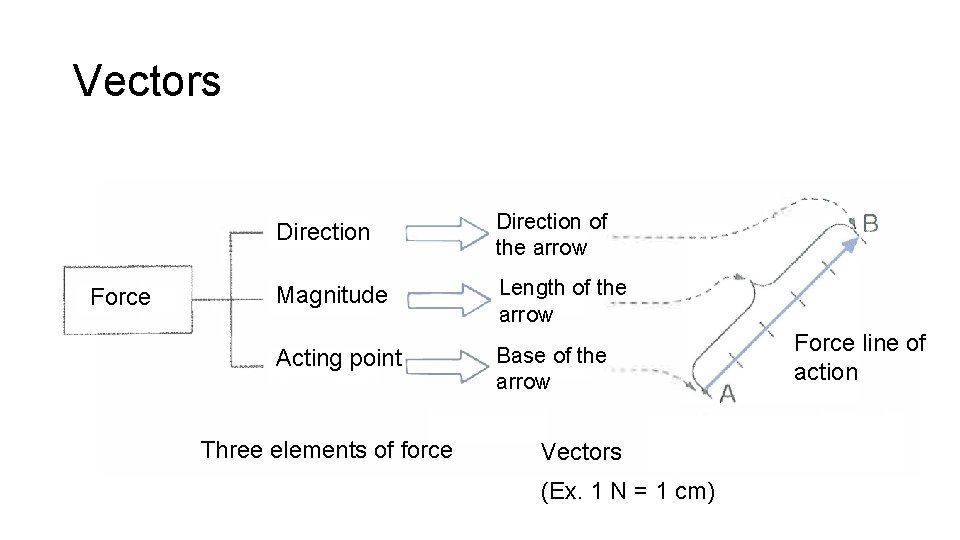
Vectors Force Direction of the arrow Magnitude Length of the arrow Acting point Base of the arrow Three elements of force Vectors (Ex. 1 N = 1 cm) Force line of action
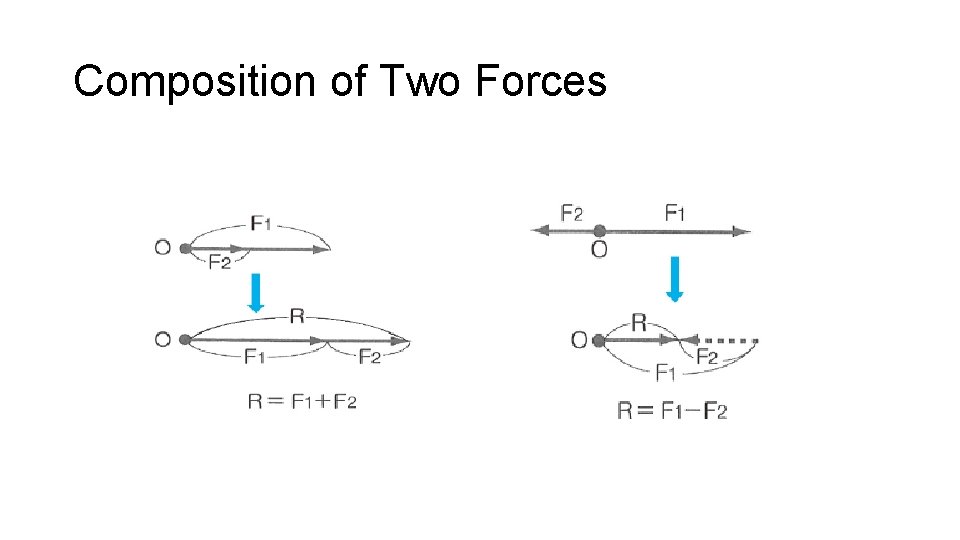
Composition of Two Forces
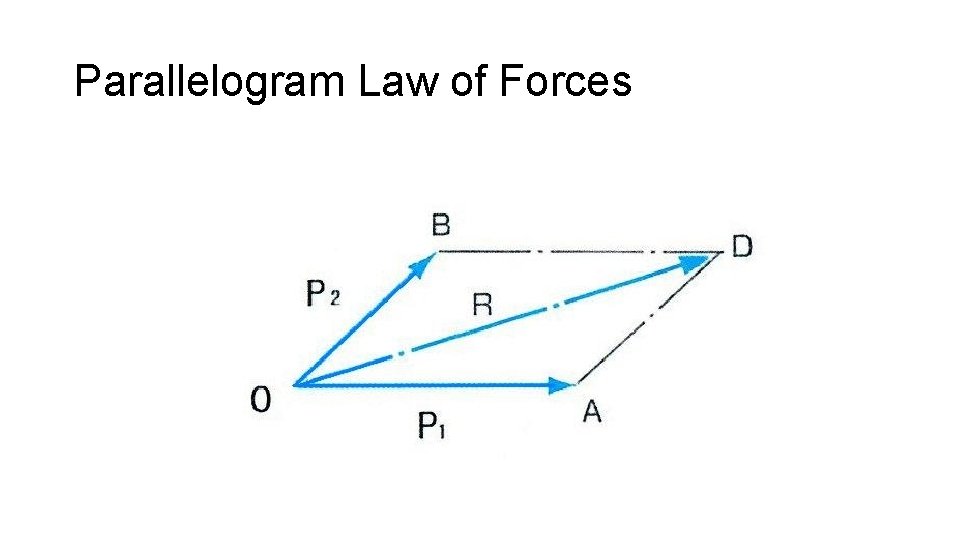
Parallelogram Law of Forces
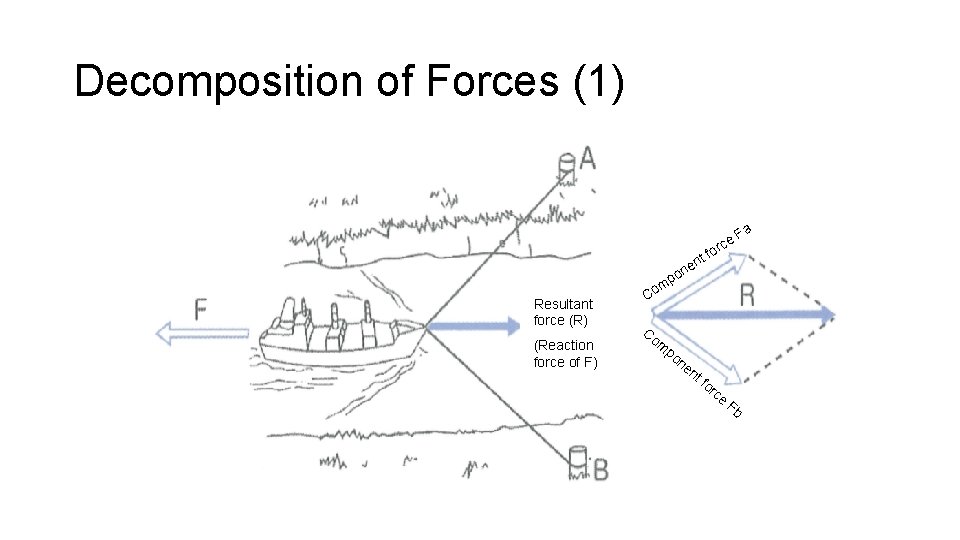
Decomposition of Forces (1) a nt ne Resultant force (R) (Reaction force of F) F e c r fo o mp o C Co m po ne nt fo r ce Fb
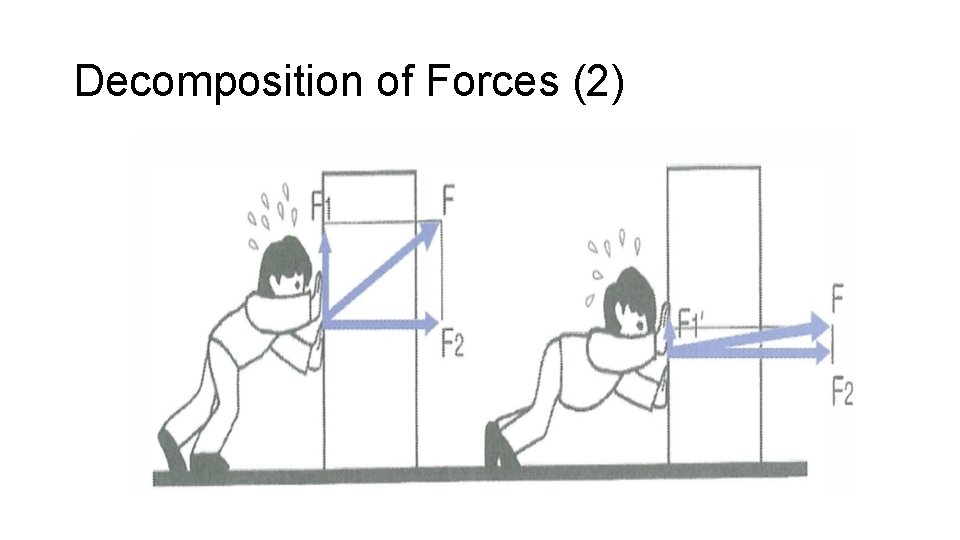
Decomposition of Forces (2)
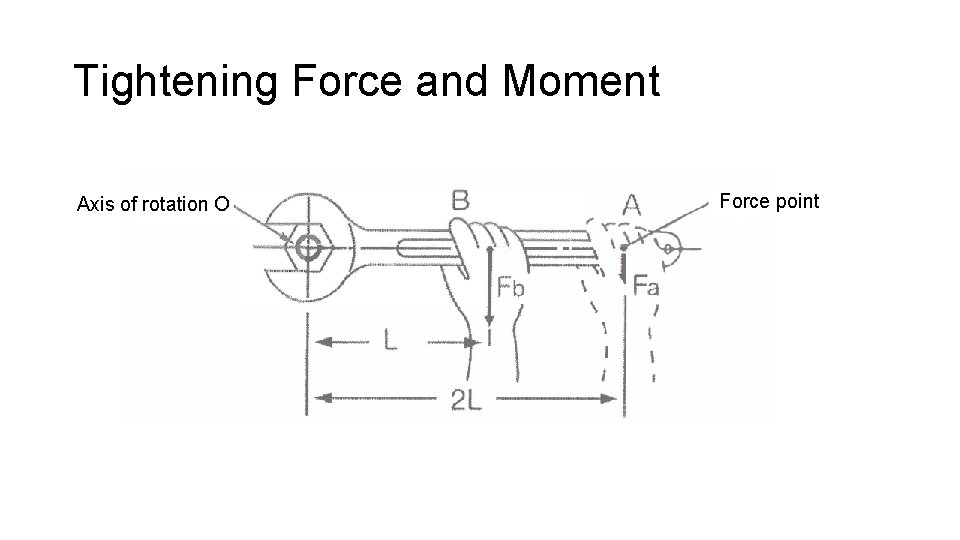
Tightening Force and Moment Axis of rotation O Force point
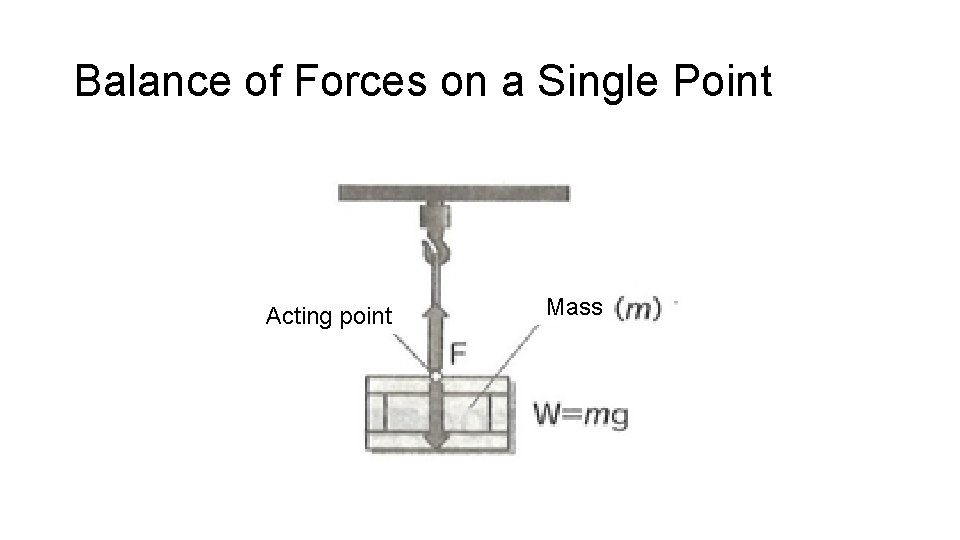
Balance of Forces on a Single Point Acting point Mass
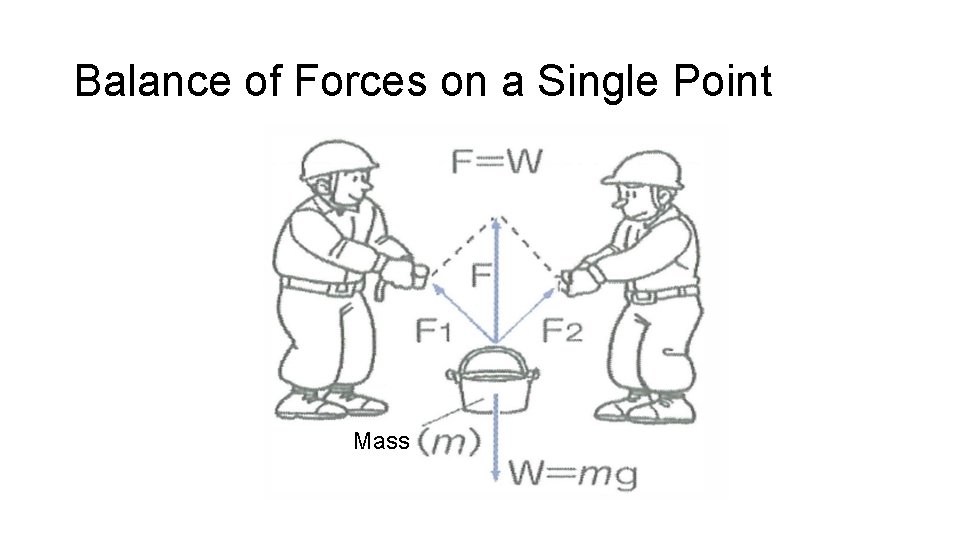
Balance of Forces on a Single Point Mass
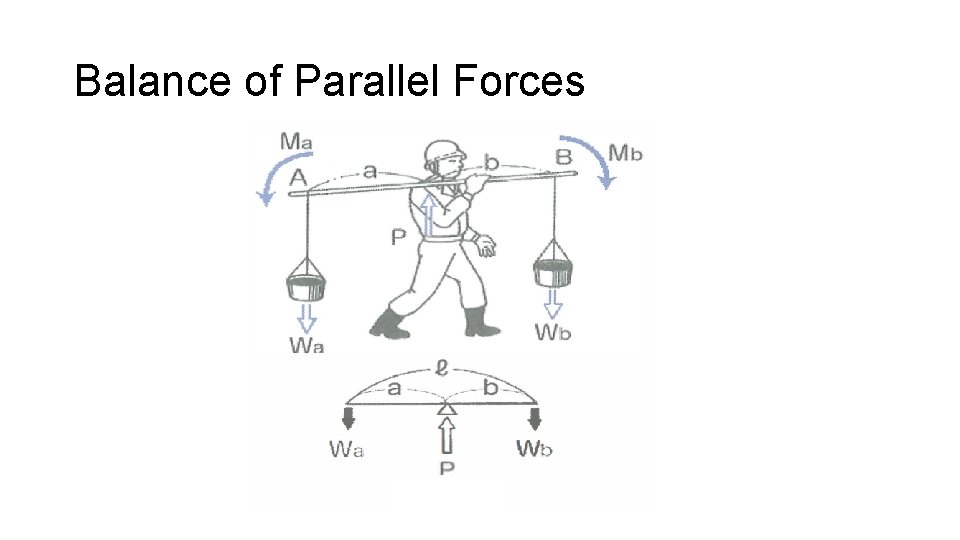
Balance of Parallel Forces
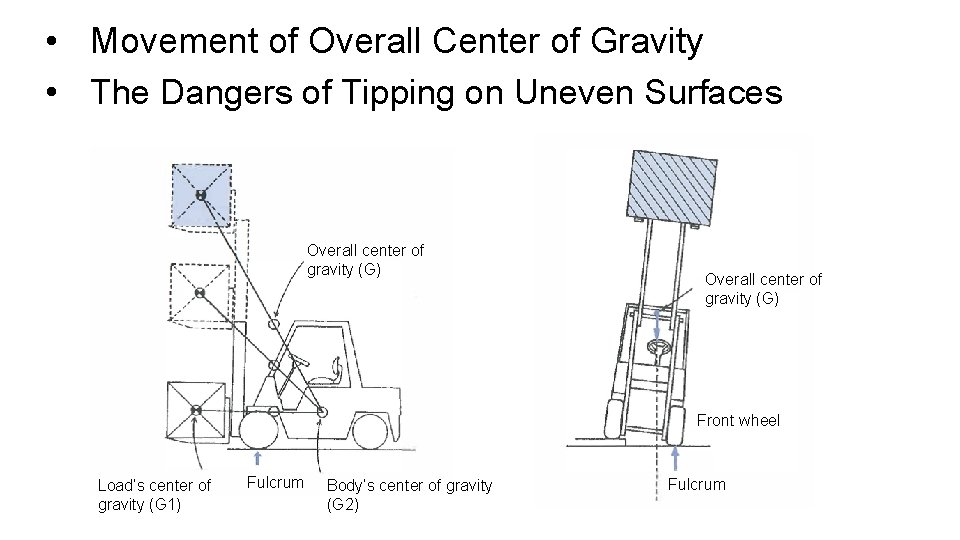
• Movement of Overall Center of Gravity • The Dangers of Tipping on Uneven Surfaces Overall center of gravity (G) Front wheel Load’s center of gravity (G 1) Fulcrum Body’s center of gravity (G 2) Fulcrum
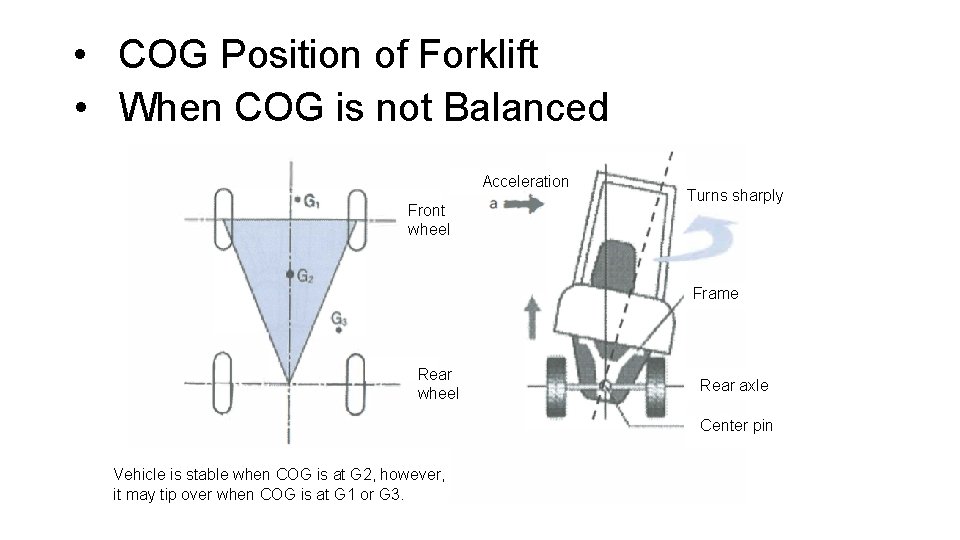
• COG Position of Forklift • When COG is not Balanced Acceleration Front wheel Turns sharply Frame Rear wheel Rear axle Center pin Vehicle is stable when COG is at G 2, however, it may tip over when COG is at G 1 or G 3.
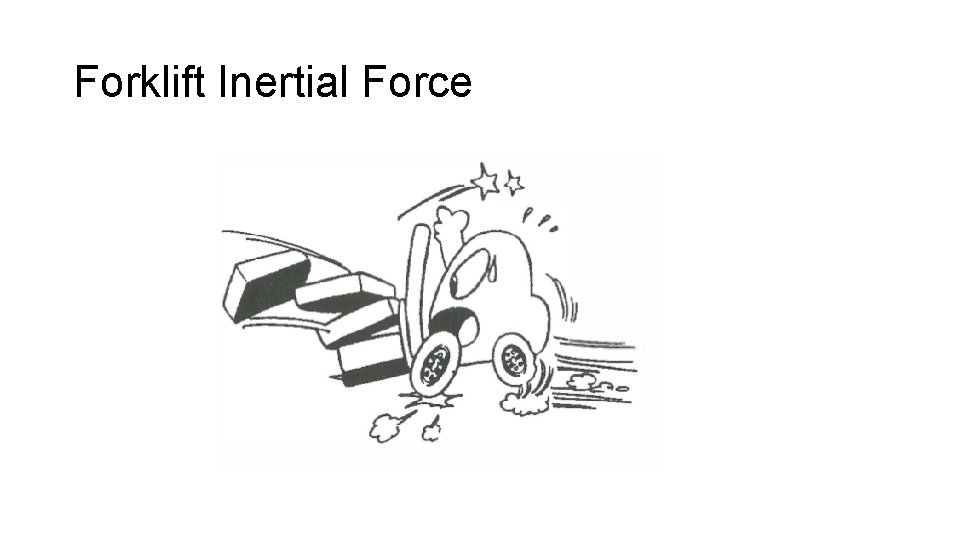
Forklift Inertial Force
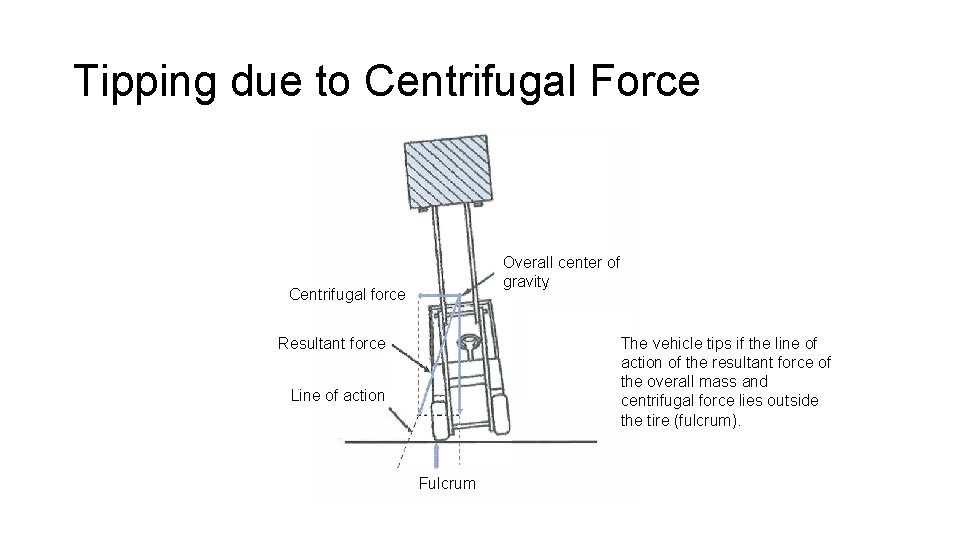
Tipping due to Centrifugal Force Overall center of gravity Centrifugal force Resultant force The vehicle tips if the line of action of the resultant force of the overall mass and centrifugal force lies outside the tire (fulcrum). Line of action Fulcrum