
Forging new generations of engineers Engineering Drawing Types






- Slides: 16
Forging new generations of engineers
Engineering Drawing Types
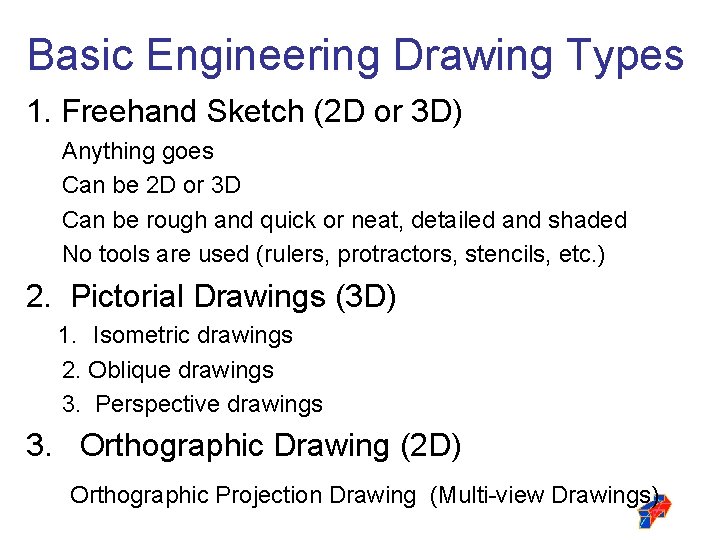
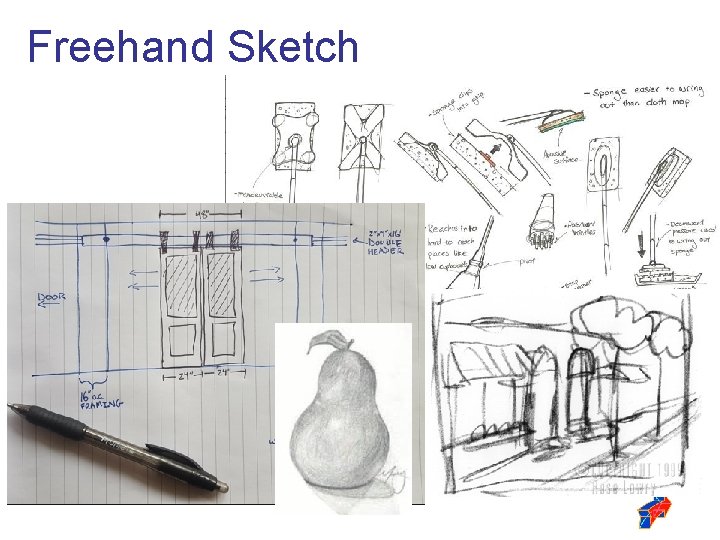
Basic Engineering Drawing Types 1. Freehand Sketch (2 D or 3 D) Anything goes Can be 2 D or 3 D Can be rough and quick or neat, detailed and shaded No tools are used (rulers, protractors, stencils, etc. ) 2. Pictorial Drawings (3 D) 1. Isometric drawings 2. Oblique drawings 3. Perspective drawings 3. Orthographic Drawing (2 D) Orthographic Projection Drawing (Multi-view Drawings)
Freehand Sketch
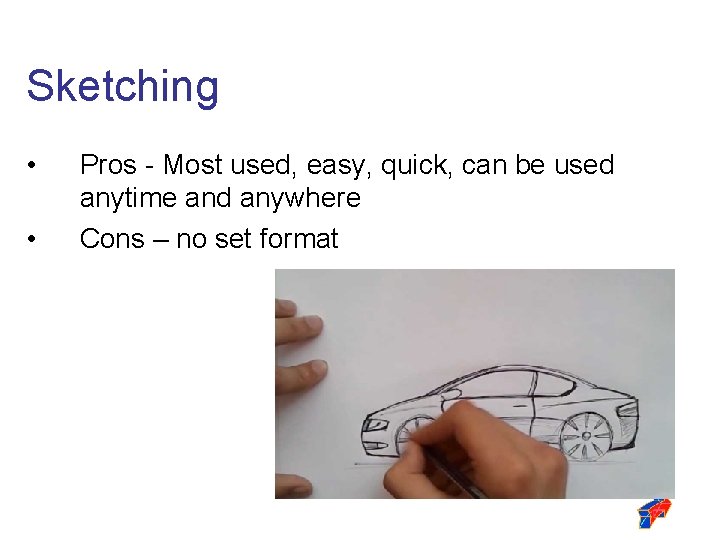
Sketching • • Pros - Most used, easy, quick, can be used anytime and anywhere Cons – no set format
Purpose of Engineering Drawings (instead of sketching) 1. Universally accepted – – – From department to department within a company From one company to the next And even from country to country 2. Efficient – – Drawing gives more information at faster rate then trying to explain it Save time and money 3. Multi-functional – – Can be used simultaneously in all departments Design, drafting, prototyping, production, and advertising
Stop here
Advanced Engineering Drawings Renderings Auxiliary Sections Assembly Exploded Animation
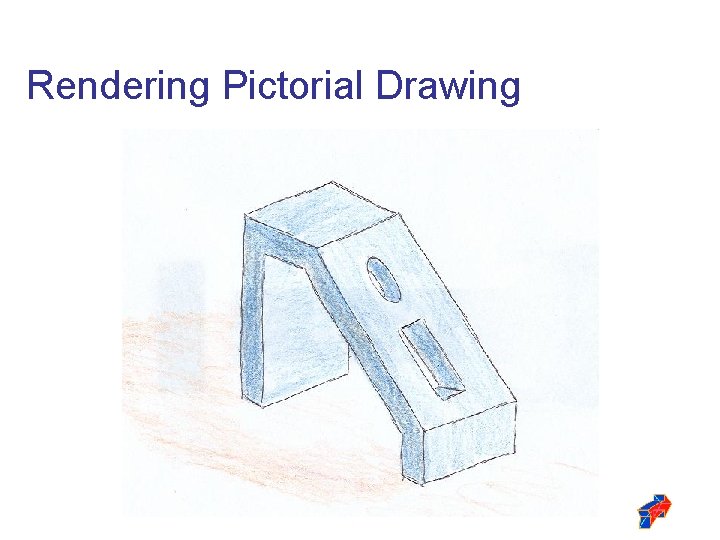
Rendering Pictorial Drawing
Auxiliary Drawing TLs True Lengths 90
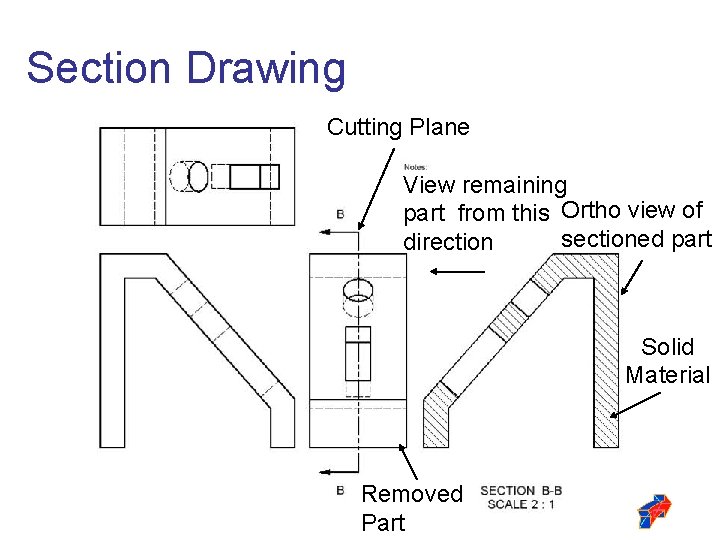
Section Drawing Cutting Plane View remaining part from this Ortho view of sectioned part direction Solid Material Removed Part
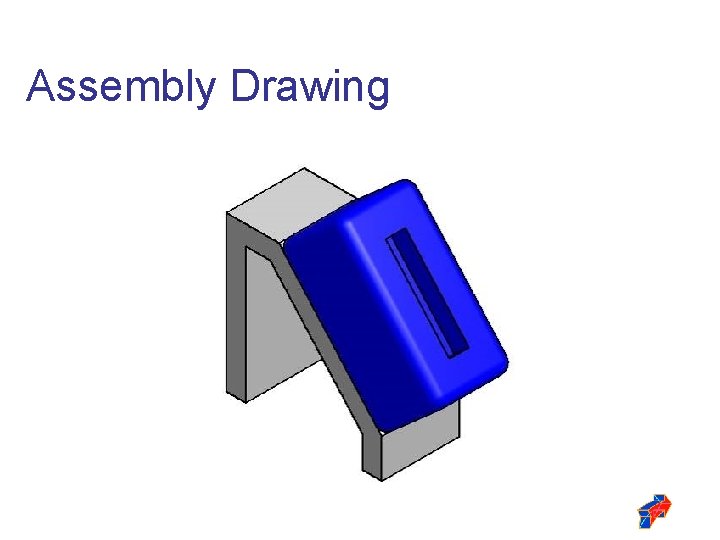
Assembly Drawing
Exploded Drawing Balloons Parts List
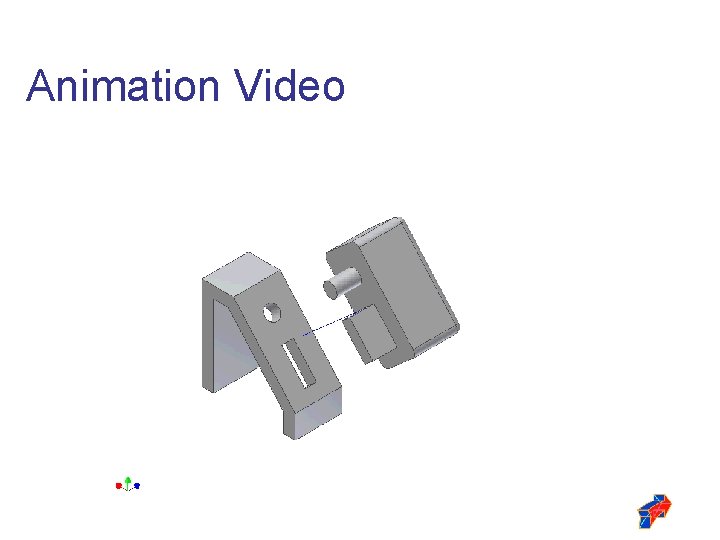
Animation Video
References: Madsen, D. , Folkestad, J. , Schertz, K. , Shumaker, T. , Stark, C. , & Turpin, J. (2004). Engineering Drawing and Design (3 rd ed. ), Albany, NY: Thompson Learning, Inc. / Delmar.
Credits: Writer: Gary Platt Content Editor: Sam Cox & Wes Terrell Production Work: CJ Amarosa