
Forgery and Handwriting Analysis Originally from Mr Syswerda


- Slides: 12
Forgery and Handwriting Analysis Originally from: Mr. Syswerda
Forgery �Forgery is the ACTION of altering or producing an object or information with the INTENT of deception. �Forgery often includes: ◦ Signatures (on a check or other official document. ) ◦ Money (usually called counterfeiting. ) ◦ Artwork ◦ Trademarked items such as clothing or purses.
Forgery and the Law �Simply creating a copy of an object, like a movie prop, does not constitute forgery. �An individual or group must also attempt to deceive and (usually) profit from their forgery. �Counterfeiting carries a fine of up to 15 years in federal prison. �The sentences of other forgery crimes vary by state and the extent of the deception.
Forgery and the Law (cont. ) �Forgery is often part of a larger crime called Fraud. �Fraud is the crime of deceiving an individual or group for the purpose of unlawful gain or profit. �Common crimes of fraud include: ◦ Falsifying documents or figures. ◦ Inappropriate usage of funds. ◦ Lying to an entity to gain something.
Handwriting Analysis �There are typically two types of handwriting analysis. The first is called Graphology. �Graphology is an imprecise science where so-called handwriting “experts” analyze someone’s handwriting and attempt to make generalized statements about the individual. (Such as, “This person is very organized”. )
Handwriting Analysis (cont. ) �Graphology is not very reliable but in a criminal investigation, any details may be valuable. �Withholding a right or a privilege from someone based on graphology is a dangerous legal practice because graphology is NOT always accurate.
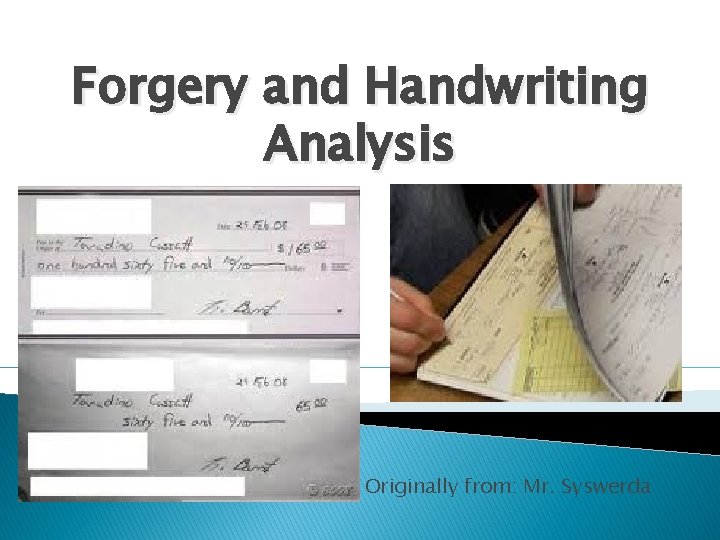
Handwriting Analysis (cont. ) �The second type of handwriting analysis is used to determine if a particular sample is forged. �Usually when individuals attempt to forge a sample, they will often attempt to copy the handwriting style of the person they’re imitating. �They will have the person’s sample placed right next to the document they’re signing.
QD & QDE �QD = ______ �QDE = ______ Examiner
Is a Sample Forged? (cont. ) �This practice tends to lead to several tell-tale signs: ◦ 1. The overall look of the sample is “odd”. ◦ 2. There are ink-blots where the pen was left in one spot. ◦ 3. There are breaks in the sample where the pen was lifted. ◦ 4. The length of the sample is different. ◦ 5. The letters may appear to have a “tremor” to them.
Handwriting Analysis (cont. ) �In addition to the shapes of letters, Questioned Documents Examiners (QDEs) look for: ◦ Spacing between letters, words and lines. ◦ Grammar, punctuation and word choice. ◦ Evidence of unique writing instruments.
Forgery and Technology �Technology has added a new frontier to forgery crimes. �Criminals can “cut and paste” signatures and account numbers digitally. �Sometimes these forgeries are difficult to detect but when attempted they may leave telltale marks like slight color variations around the border of the signature.
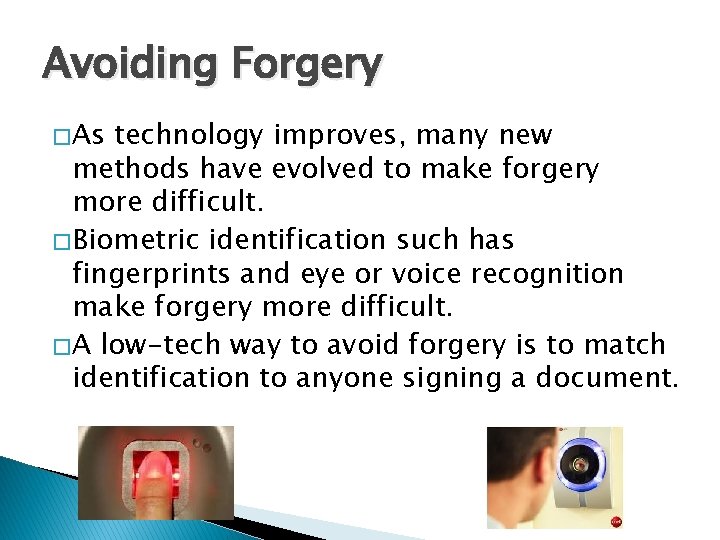
Avoiding Forgery � As technology improves, many new methods have evolved to make forgery more difficult. � Biometric identification such has fingerprints and eye or voice recognition make forgery more difficult. � A low-tech way to avoid forgery is to match identification to anyone signing a document.