
Forest Science Program Research Consultation and Extension Soils

- Slides: 35
Forest Science Program Research, Consultation, and Extension Soils Plant Ecology Hydrology Geomorphology Silvicultural Systems Wildlife Ecology Southern Interior Forest Region
2006 -2007 update Examples of products 170 extension events and products 10 -15 peer-reviewed publications “Guidance” information for MPB retention strategies for wildlife, biodiversity, and, hydrology Wildfire erosion Sarco and Mt. Caribou Soil value and FREP
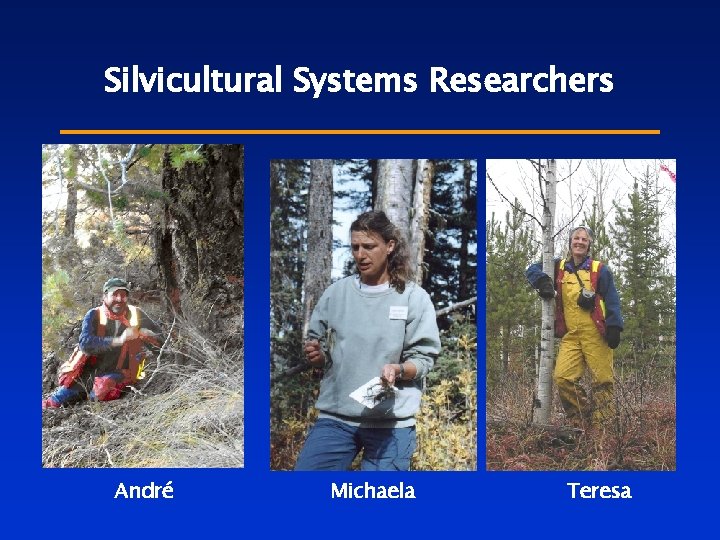
Silvicultural Systems Researchers André Michaela Teresa
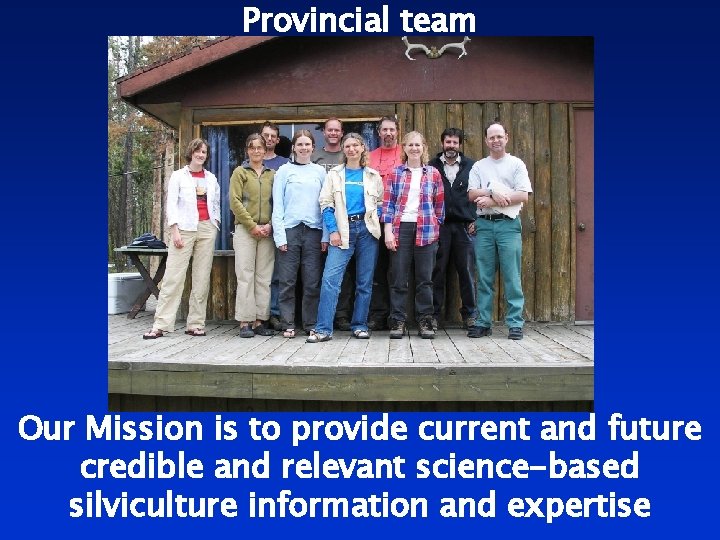
Provincial team Our Mission is to provide current and future credible and relevant science-based silviculture information and expertise
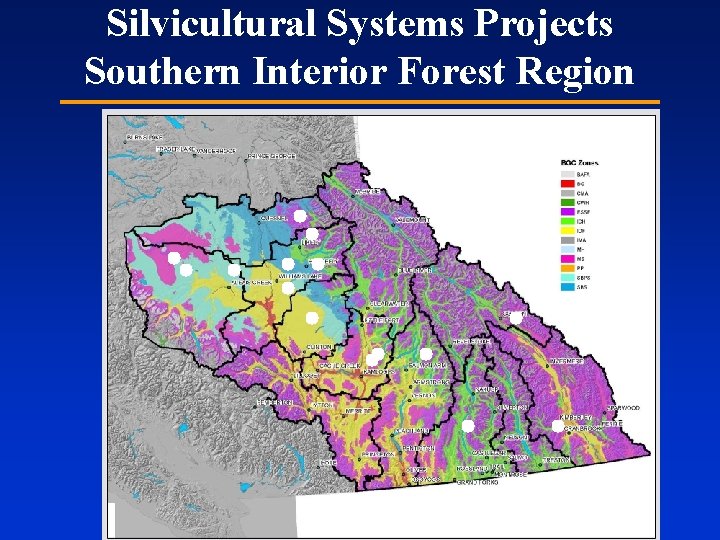
Silvicultural Systems Projects Southern Interior Forest Region
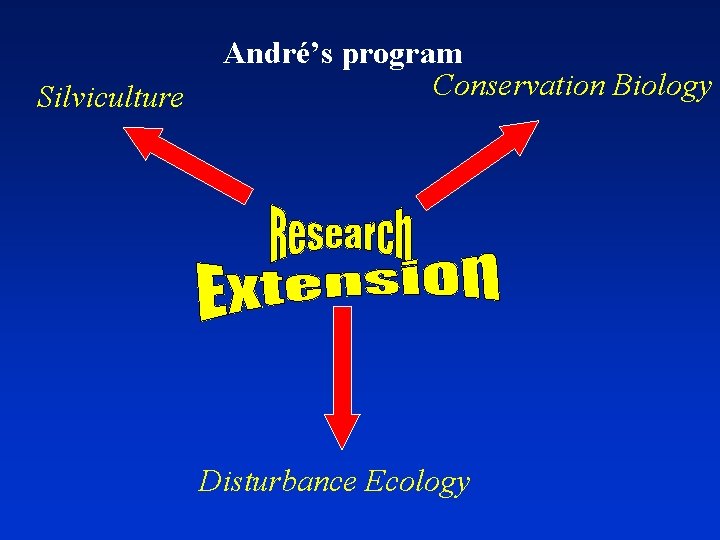
Silviculture André’s program Conservation Biology Disturbance Ecology
Dry-belt forests in the Southern Interior of British Columbia: Perspectives on Historic Disturbances and Implications for Management André Arsenault & Walt Klenner BC Forest Service Southern Interior Forest Region
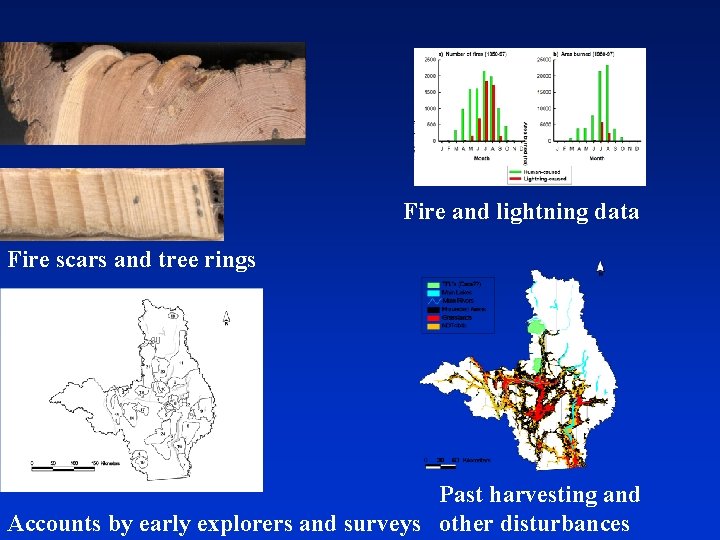
Fire and lightning data Fire scars and tree rings Past harvesting and Accounts by early explorers and surveys other disturbances
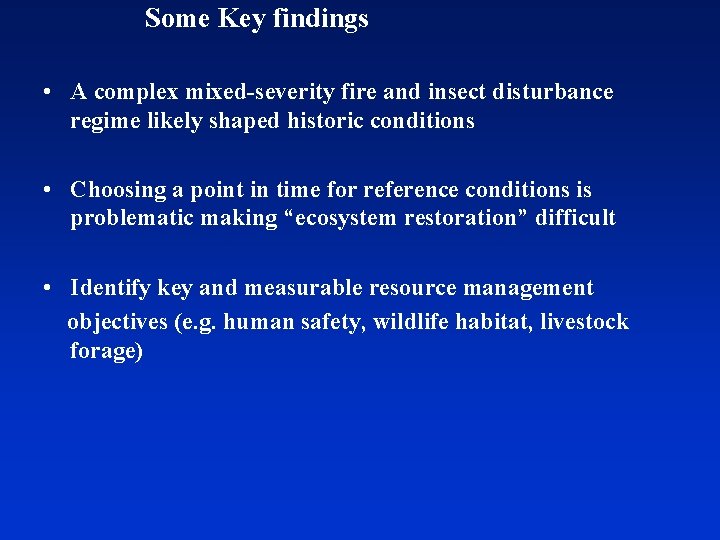
Some Key findings • A complex mixed-severity fire and insect disturbance regime likely shaped historic conditions • Choosing a point in time for reference conditions is problematic making “ecosystem restoration” difficult • Identify key and measurable resource management objectives (e. g. human safety, wildlife habitat, livestock forage)
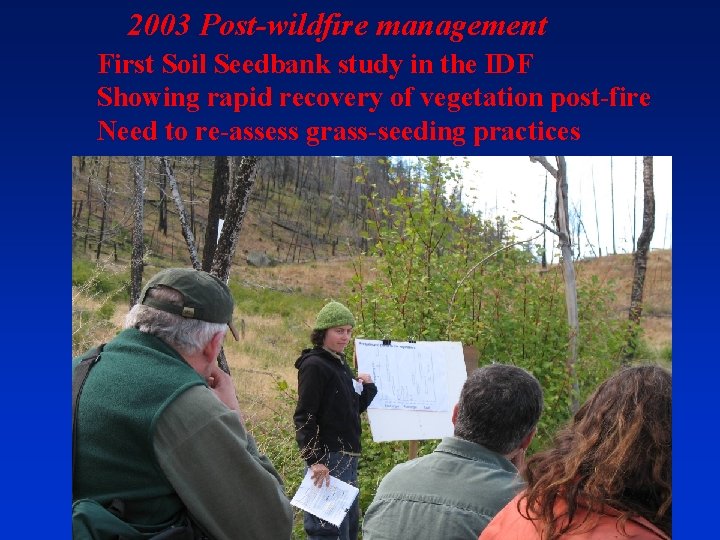
2003 Post-wildfire management First Soil Seedbank study in the IDF Showing rapid recovery of vegetation post-fire Need to re-assess grass-seeding practices
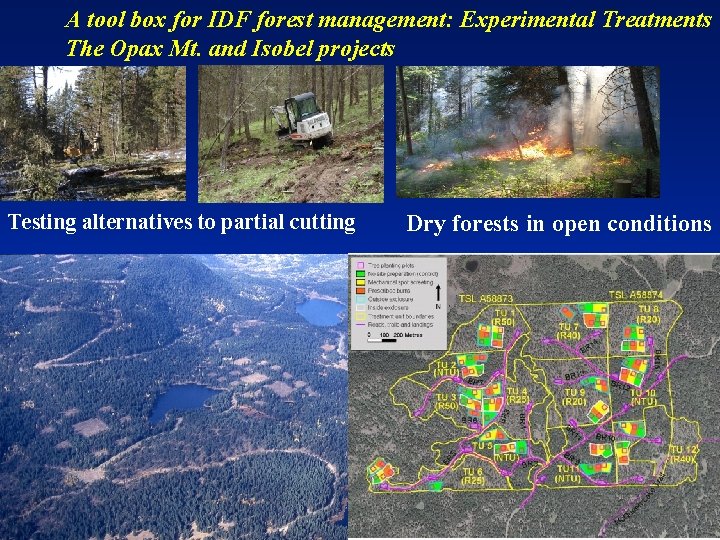
A tool box for IDF forest management: Experimental Treatments The Opax Mt. and Isobel projects Testing alternatives to partial cutting Dry forests in open conditions
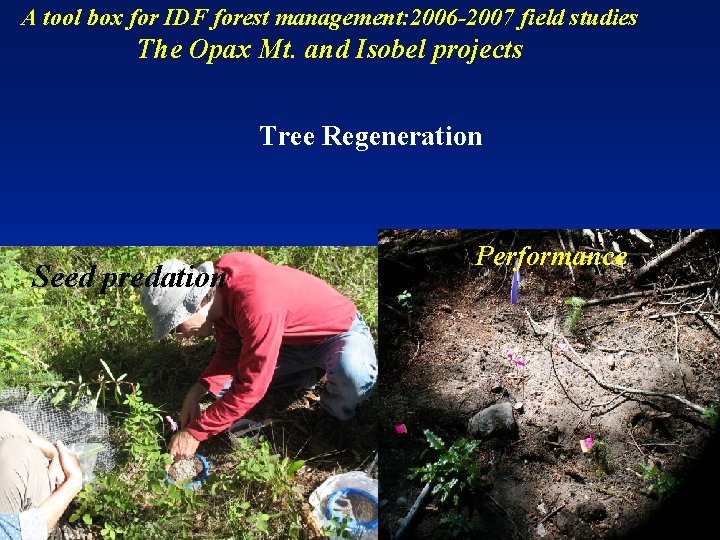
A tool box for IDF forest management: 2006 -2007 field studies The Opax Mt. and Isobel projects Tree Regeneration Seed predation Performance
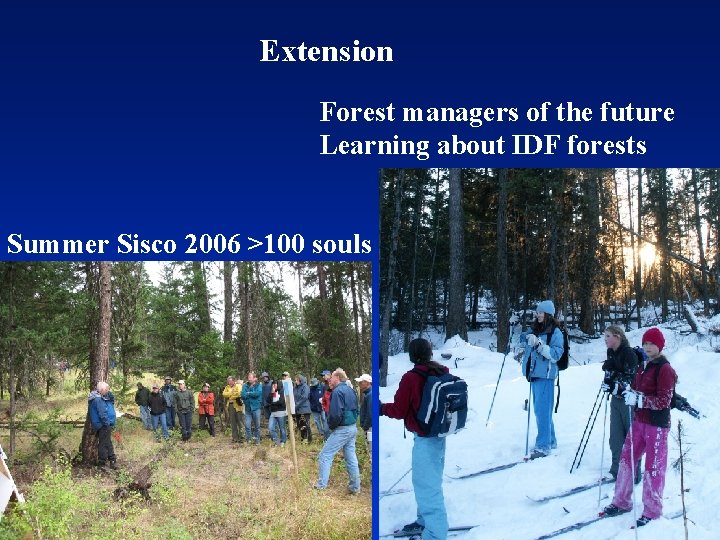
Extension Forest managers of the future Learning about IDF forests Summer Sisco 2006 >100 souls
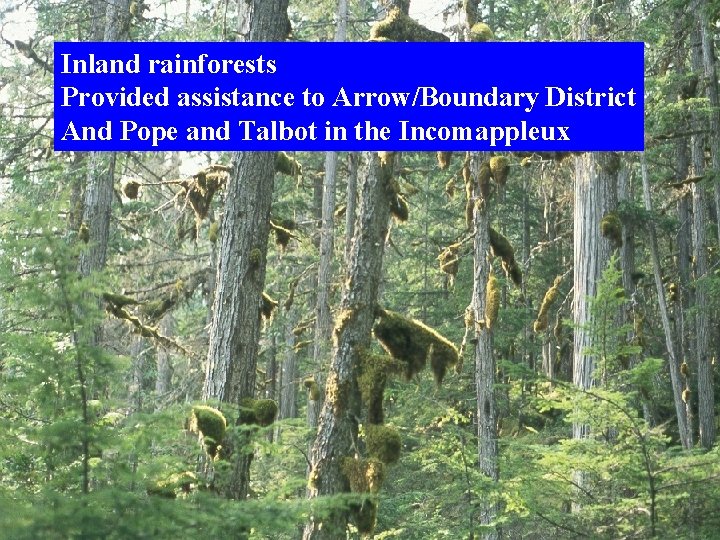
Distribution ecology of lichens in ICH Inland rainforests Provided assistance to Arrow/Boundary District And Pope and Talbot in the Incomappleux Macrolichen Calicioid lichen • Comparison of young and old stands • Habitat requirements for old-growth-associated species • Cyanolichen distribution and tool for predicting diversity hot-spots • Information used during LRMPS • Many papers, presentations, Best paper award, new hypotheses
Management Issue: Can we harvest timber and maintain caribou winter habitat ?
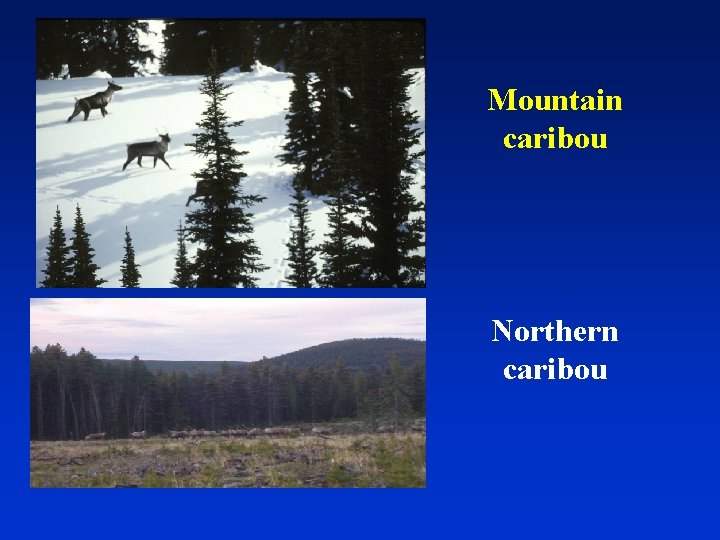
Mountain caribou Northern caribou
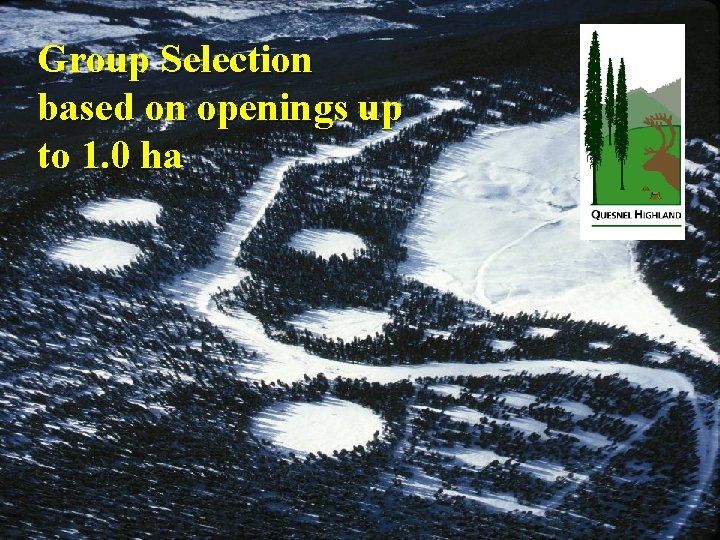
Group Selection based on openings up to 1. 0 ha
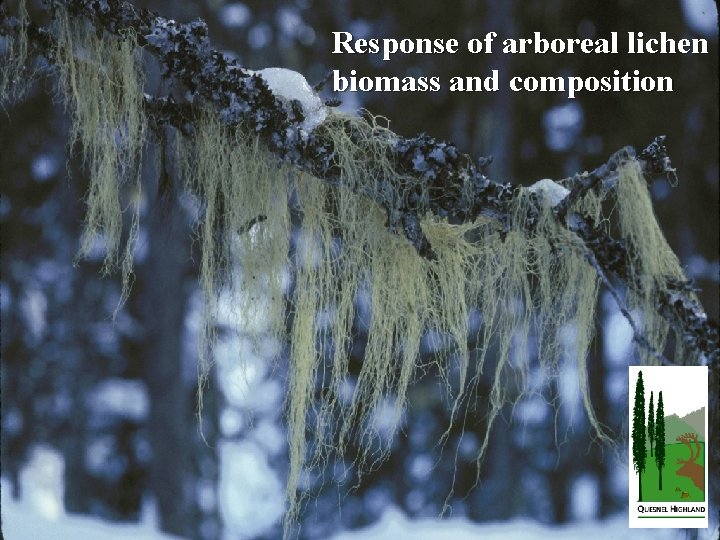
Response of arboreal lichen biomass and composition
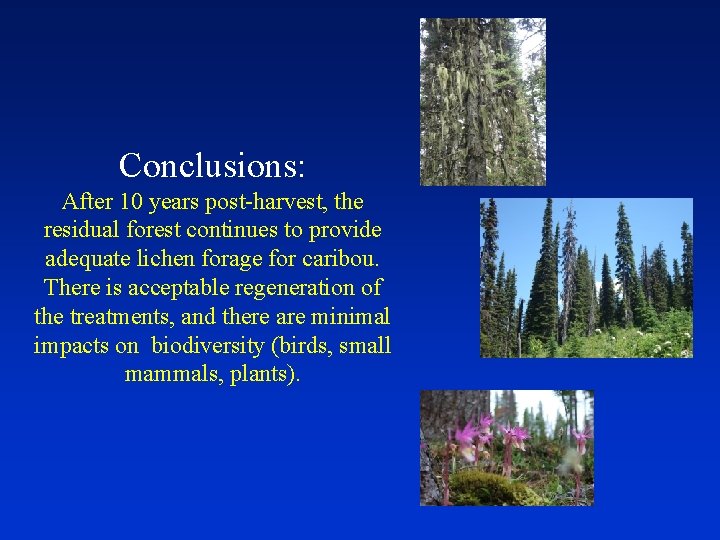
Conclusions: After 10 years post-harvest, the residual forest continues to provide adequate lichen forage for caribou. There is acceptable regeneration of the treatments, and there are minimal impacts on biodiversity (birds, small mammals, plants).
Management Issue: Are there alternatives to clearcutting that managers can use to address issues such as visual quality and species selection?
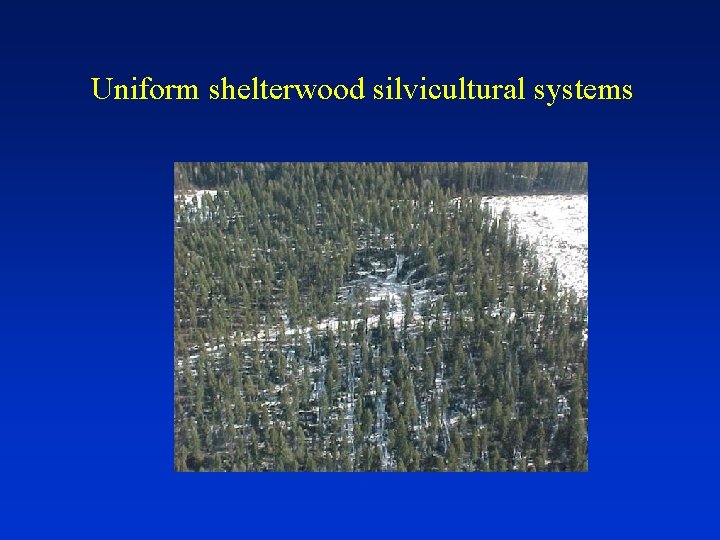
Uniform shelterwood silvicultural systems
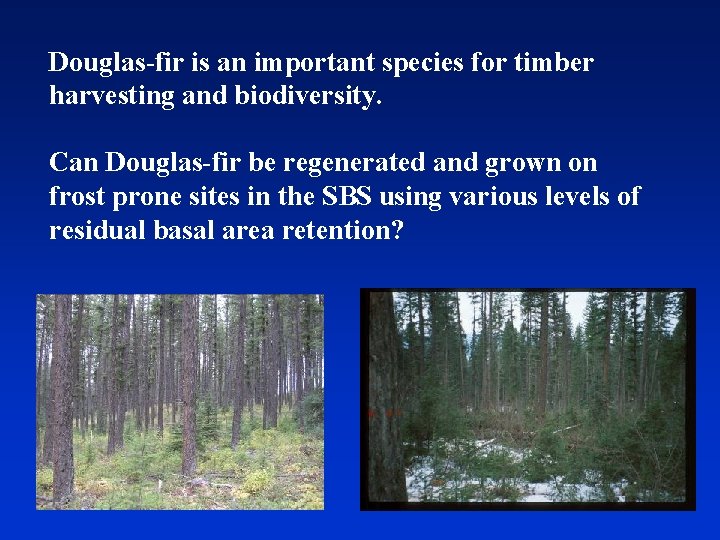
Douglas-fir is an important species for timber harvesting and biodiversity. Can Douglas-fir be regenerated and grown on frost prone sites in the SBS using various levels of residual basal area retention?
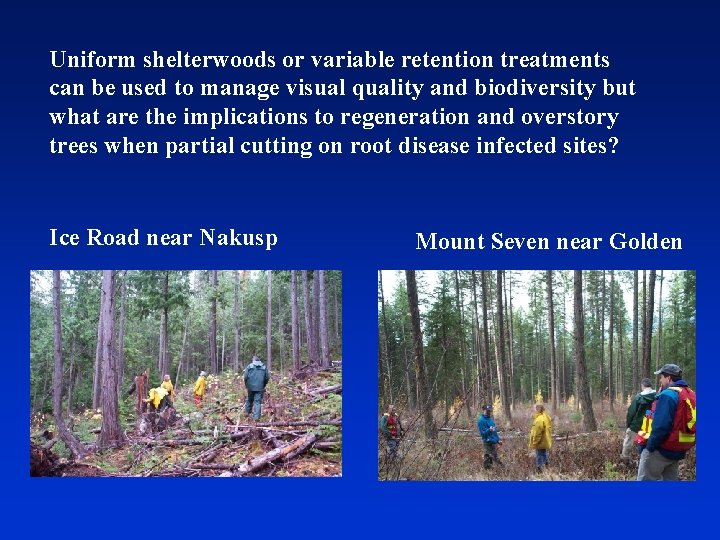
Uniform shelterwoods or variable retention treatments can be used to manage visual quality and biodiversity but what are the implications to regeneration and overstory trees when partial cutting on root disease infected sites? Ice Road near Nakusp Mount Seven near Golden
Conclusions: The SBS shelterwood trial is adequately stocked with Douglas-fir in the seed cut treatments and the final cut is scheduled for 2010. The ICH trials are successfully regenerated with several species but growth is affected by the residual basal area. Survival is just starting to be affected by Armillaria.
Regeneration and Stand Tending • Regeneration in non-conventional silvicultural systems (i. e. small gaps, under shelterwoods) • Brushing (including broadleaf species) • Stand rehabilitation • Growth and yield of mixed species stands • Site preparation / planting treatments • Species Selection • Density management • Fertilization
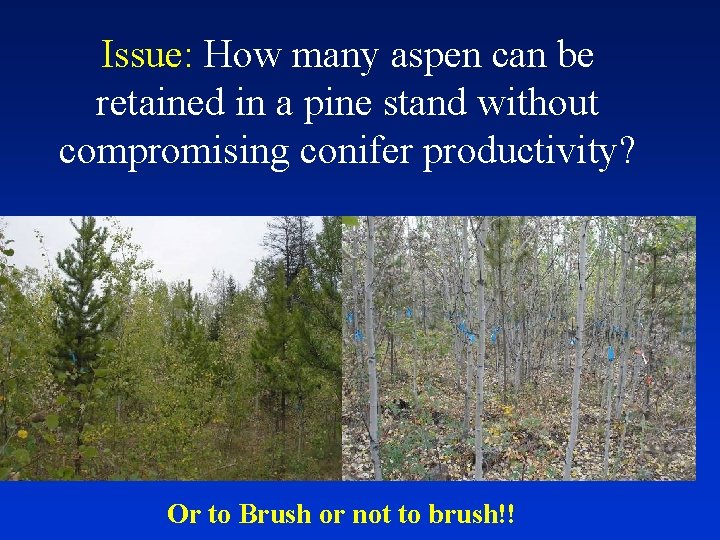
Issue: How many aspen can be retained in a pine stand without compromising conifer productivity? Or to Brush or not to brush!!
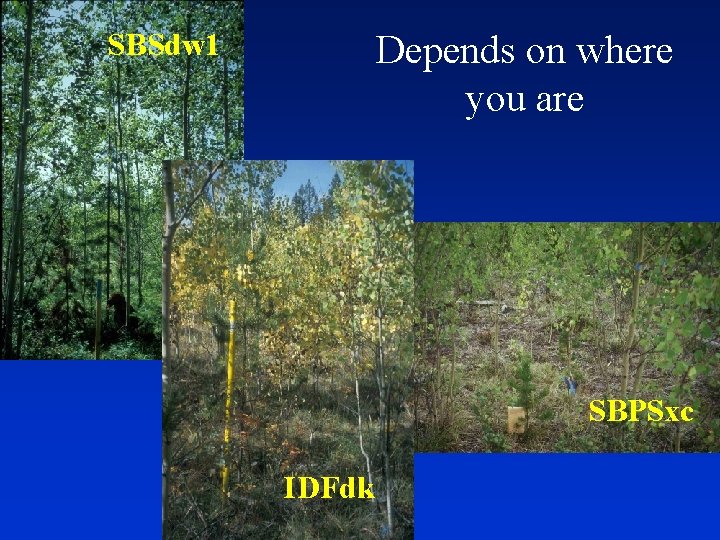
SBSdw 1 Depends on where you are SBPSxc IDFdk
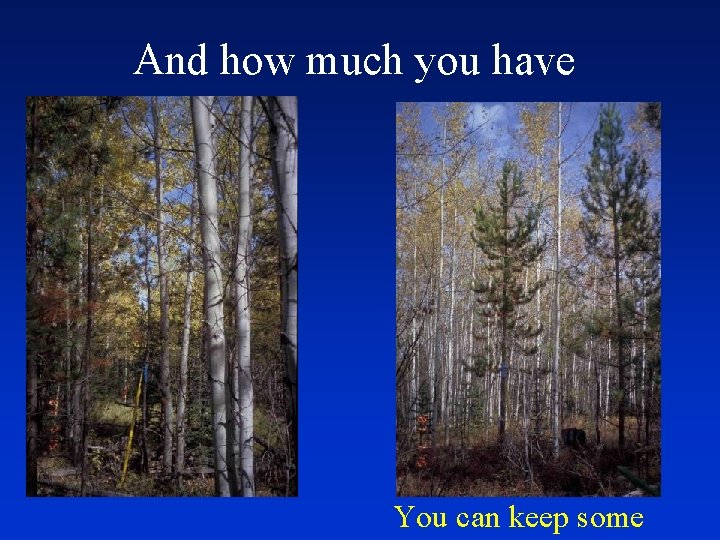
And how much you have You can keep some
Current outcomes • Identified “best” method to predict level of competition in the field • Free growing guidelines have been altered • Able to predict future growth under different competitive environments
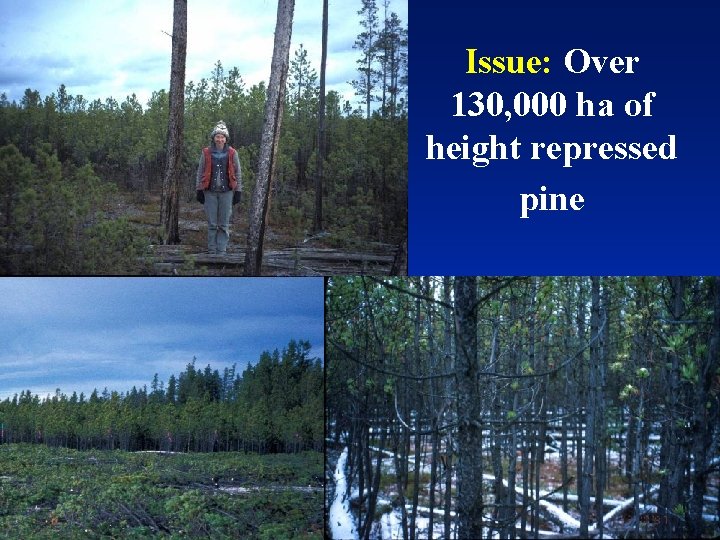
Issue: Over 130, 000 ha of height repressed pine
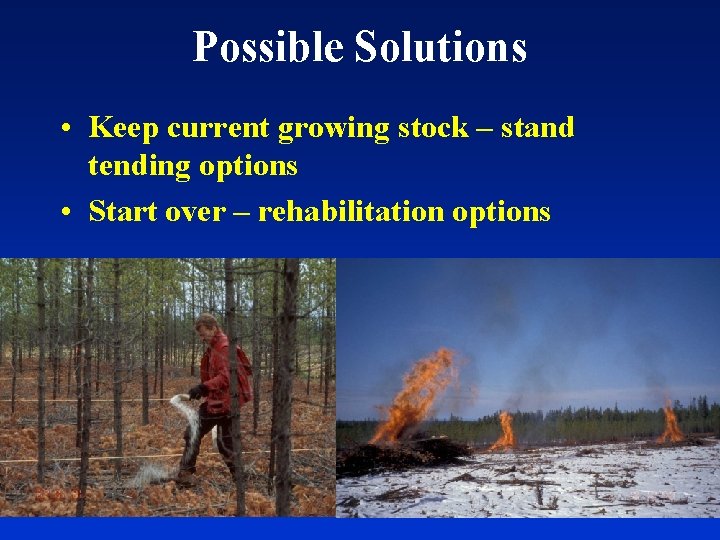
Possible Solutions • Keep current growing stock – stand tending options • Start over – rehabilitation options
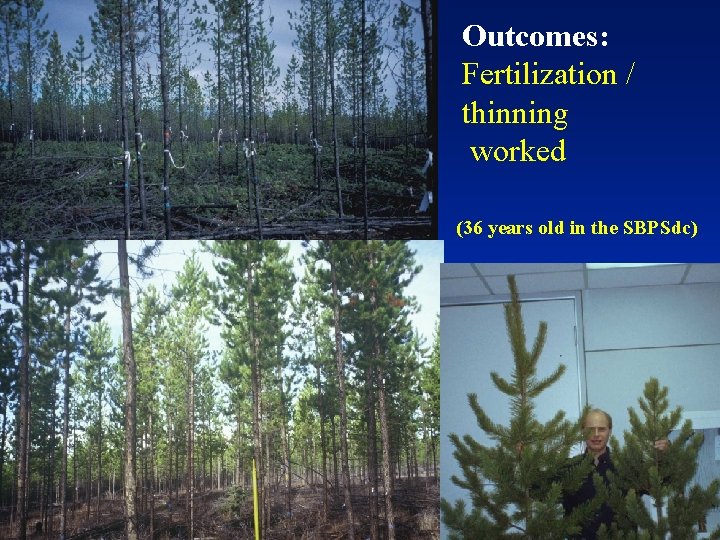
Outcomes: Fertilization / thinning worked (36 years old in the SBPSdc)
Program Challenges • To continue to address high profile issues: provincially and regionally • To promote implementation of research results where applicable and relevant
Program Successes * A network of well designed long-term research installations that are used for continuous learning by a diverse research community even within changing environments * Knowledge transfer to foresters, students, the public and the academic community * Continuous success in securing research funding through competitive process
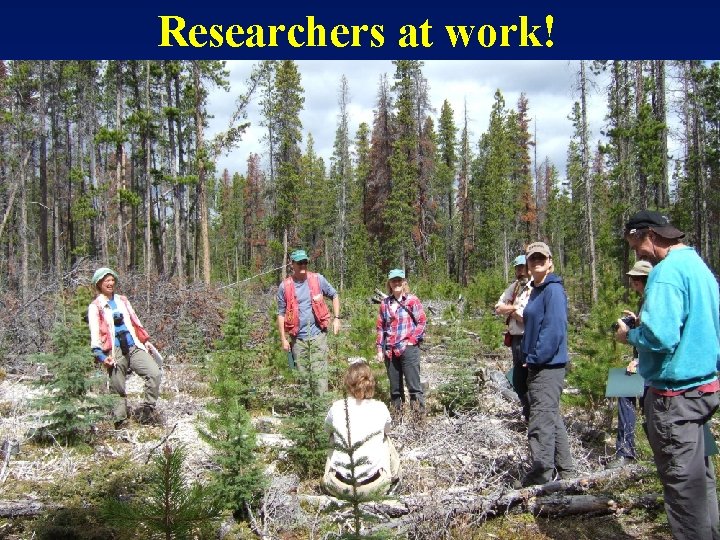
Researchers at work!