
Forest Management in BC Craig Sutherland Assistant Deputy
Forest Management in BC Craig Sutherland, Assistant Deputy Minister April 2017 Ministry of Forests, Lands and Natural Resource Operations
FLNRO Areas of Responsibility Mandate: Economic Prosperity and Environmental Sustainability Ø Front Counter BC Ø Water stewardship and authorizations Ø Crown Lands Ø Major projects Ø Forests stewardship tenures and authorizations Ø Resource roads and infrastructure Ø Aquaculture Ø Biodiversity and Species at Risk Ø Planning and land use issues 2
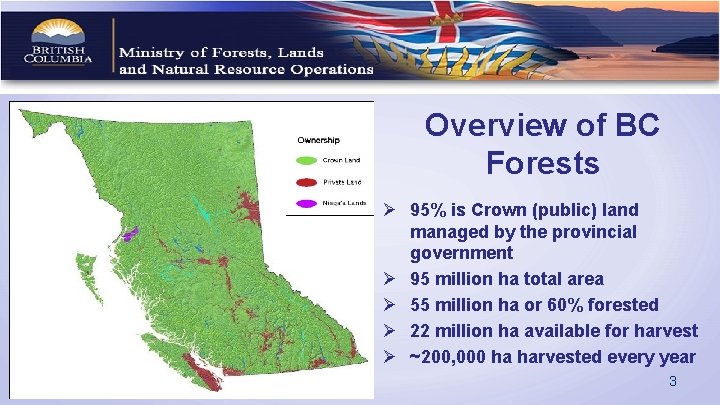
Overview of BC Forests Ø 95% is Crown (public) land managed by the provincial government Ø 95 million ha total area Ø 55 million ha or 60% forested Ø 22 million ha available for harvest Ø ~200, 000 ha harvested every year 3
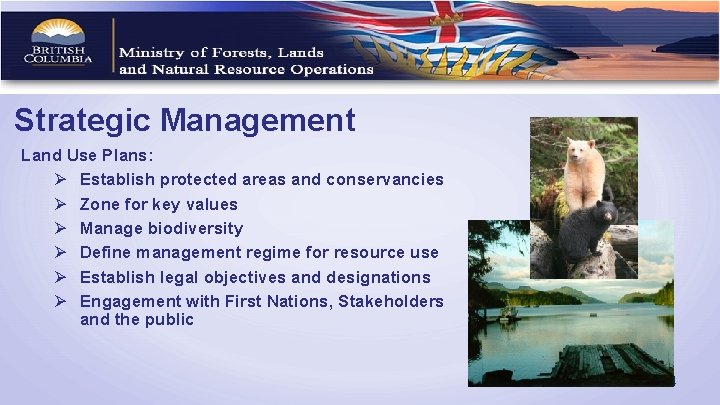
Strategic Management Land Use Plans: Ø Establish protected areas and conservancies Ø Zone for key values Ø Manage biodiversity Ø Define management regime for resource use Ø Establish legal objectives and designations Ø Engagement with First Nations, Stakeholders and the public 4

Vancouver Island Land Use Plan (VILUP) VILUP is a strategic level plan that established broad zonation, protected areas etc. Values at the landscape and operational level are being actively managed through: Ø Old Growth Management area planning Ø Management for species at risk (protecting habitat for MAMU, NOGO) Ø First Nations values (cultural issue – example GAR order Thunder Mt) Ø Wildlife management (elk management plan completed in 2015) Ø Visual management etc. 5

Forest Management in BC Forest and Range Practices Act, a professional reliance framework Ø Government sets objectives, licensees set the path Ø Government has the obligation to consult with First Nations Ø Licensees share information with First Nations and carry out public engagement Ø Government issues licenses and permits to harvest and sets the harvest level 6
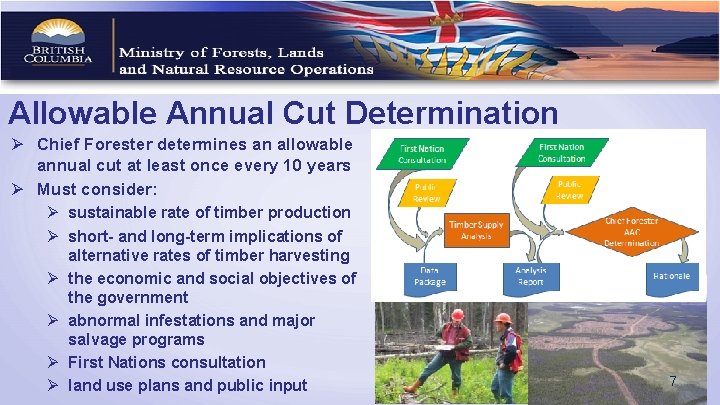
Allowable Annual Cut Determination Ø Chief Forester determines an allowable annual cut at least once every 10 years Ø Must consider: Ø sustainable rate of timber production Ø short- and long-term implications of alternative rates of timber harvesting Ø the economic and social objectives of the government Ø abnormal infestations and major salvage programs Ø First Nations consultation Ø land use plans and public input 7
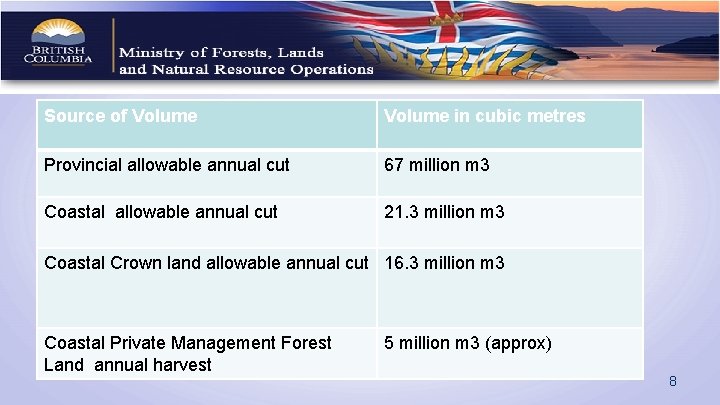
Source of Volume in cubic metres Provincial allowable annual cut 67 million m 3 Coastal allowable annual cut 21. 3 million m 3 Coastal Crown land allowable annual cut 16. 3 million m 3 Coastal Private Management Forest Land annual harvest 5 million m 3 (approx) 8
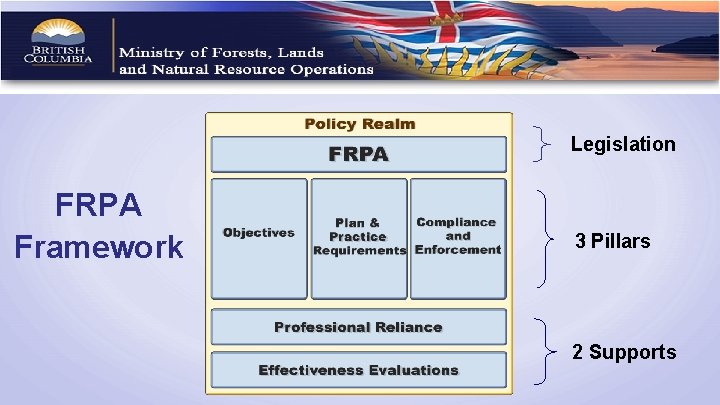
Legislation FRPA Framework 3 Pillars 2 Supports
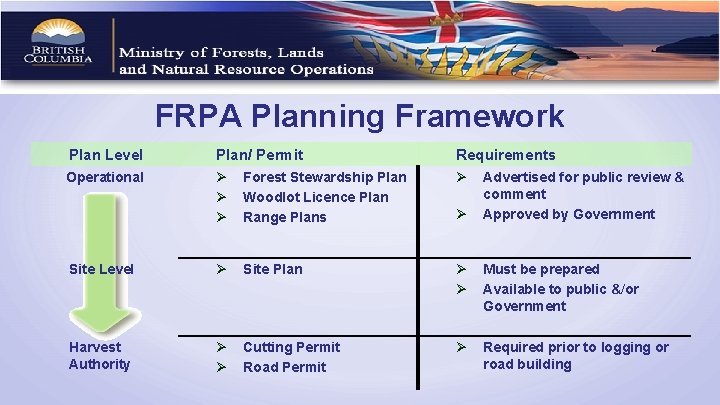
FRPA Planning Framework Plan Level Plan/ Permit Ø Forest Stewardship Plan Ø Woodlot Licence Plan Ø Range Plans Requirements Ø Advertised for public review & Site Level Ø Site Plan Ø Ø Must be prepared Available to public &/or Government Harvest Authority Ø Ø Cutting Permit Road Permit Ø Required prior to logging or road building Operational Ø comment Approved by Government

FRPA Values Includes old growth

Old Growth Management – Coast Area 55% of forest lands in Coast are managed by crown for economic, environmental and social benefits Ø 7. 1 million ha crown managed forest Ø 3. 2 million ha or 45% is old forest (250 years or older) Ø 1. 8 million ha or >55% is protected Old Growth Management Tools: Ø Parks and protected areas Ø Old growth biodiversity targets for landscape units Ø Old Growth Management Areas (OGMAs) Ø Land Use Objectives and Ministerial orders Ø Wildlife habitat, ungulate winter ranges other reserves 12

Old Growth Management – Vancouver Island Ø Vancouver Island is 3. 28 million ha of which 2. 4 million ha is Crown land Ø 860, 000 ha or 46% percent of the forest on Crown land is old growth Ø About 520, 000 ha or 62% is estimated to be protected 13

First Nations Consultation • • Government has a legal duty to consult commensurate with strength of claim (aboriginal rights and title) Decision makers must consider and, where appropriate, accommodate First Nations interests when making decisions on licences, tenures and administrative decisions, First Nations interests include: Ø Wildlife, fish Ø monumental cedar and culturally modified trees Ø medicinal plants Ø sacred sites Ø timber rights and employment Ø access in traditional territory Ø drinking water Ø traditional use (e. g. , trapping) 14
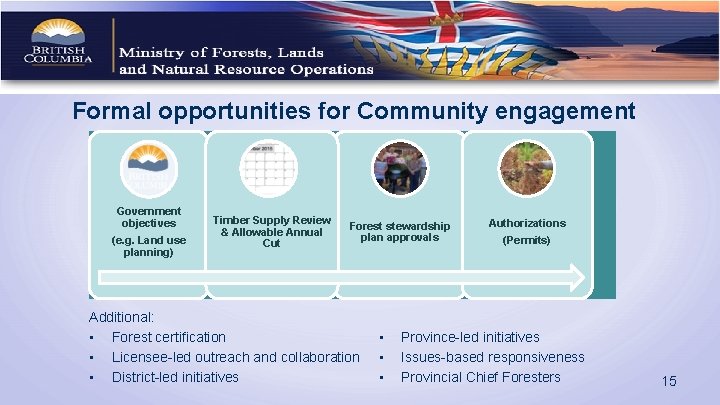
Formal opportunities for Community engagement Government objectives (e. g. Land use planning) Timber Supply Review & Allowable Annual Cut Forest stewardship plan approvals Additional: • Forest certification • Licensee-led outreach and collaboration • District-led initiatives • • • Authorizations (Permits) Province-led initiatives Issues-based responsiveness Provincial Chief Foresters 15
THANK YOU! 16
- Slides: 16