
Forest Health Program Provide forest insect and disease
- Slides: 14
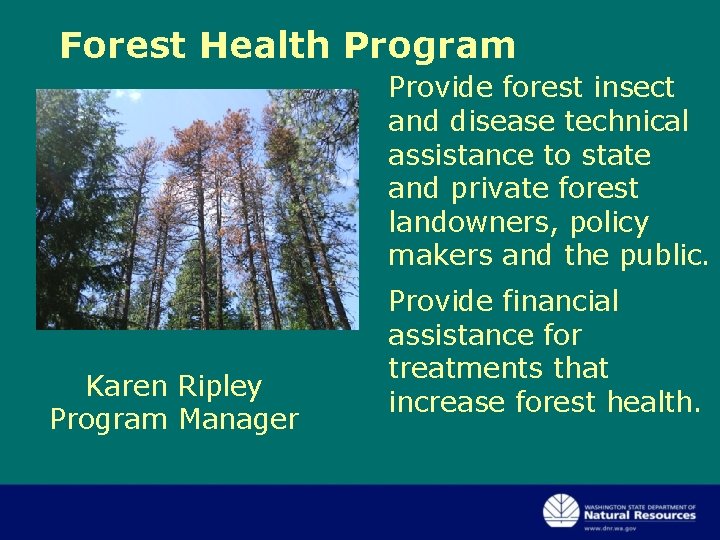
Forest Health Program Provide forest insect and disease technical assistance to state and private forest landowners, policy makers and the public. Karen Ripley Program Manager Provide financial assistance for treatments that increase forest health.
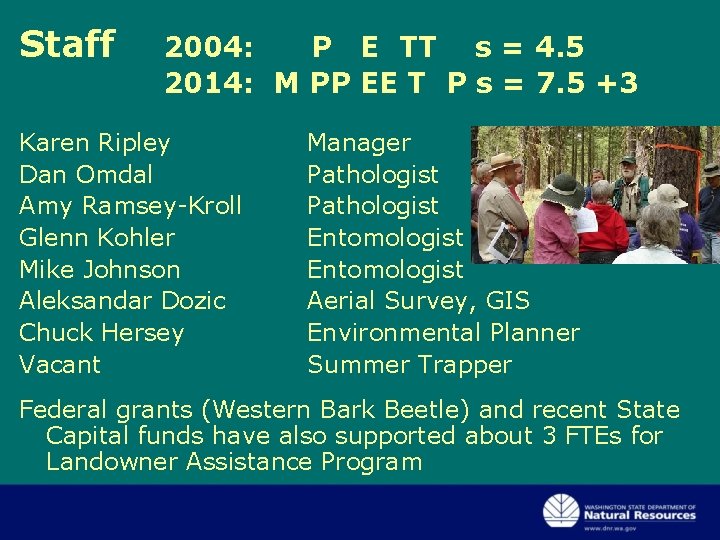
Staff 2004: P E TT s = 4. 5 2014: M PP EE T P s = 7. 5 +3 Karen Ripley Dan Omdal Amy Ramsey-Kroll Glenn Kohler Mike Johnson Aleksandar Dozic Chuck Hersey Vacant Manager Pathologist Entomologist Aerial Survey, GIS Environmental Planner Summer Trapper Federal grants (Western Bark Beetle) and recent State Capital funds have also supported about 3 FTEs for Landowner Assistance Program
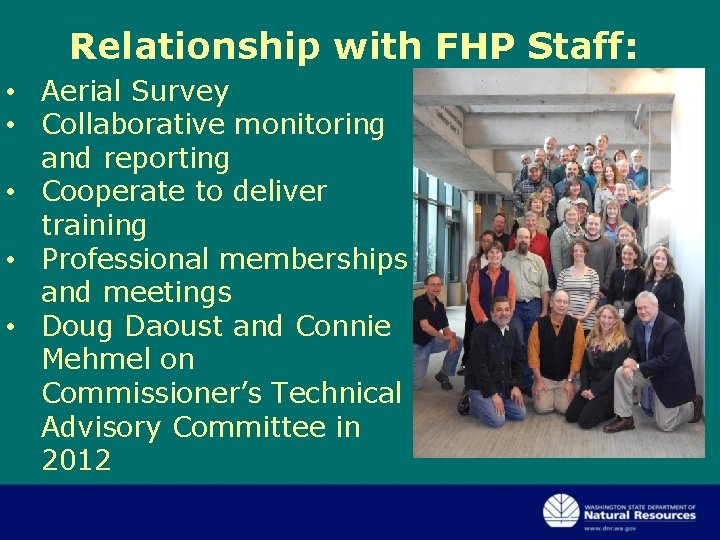
Relationship with FHP Staff: • Aerial Survey • Collaborative monitoring and reporting • Cooperate to deliver training • Professional memberships and meetings • Doug Daoust and Connie Mehmel on Commissioner’s Technical Advisory Committee in 2012
Strategies • Competent, versatile and very productive staff • Close cooperation with Landowner Assistance • Highest priority to land managers or “multipliers” • 2004 Forest Health Strategic Plan • 2006 Wildland Fire Protection Strategic Plan • 2010 Forest Action Plan • RCW 76. 06 Forest Health Hazard Warning
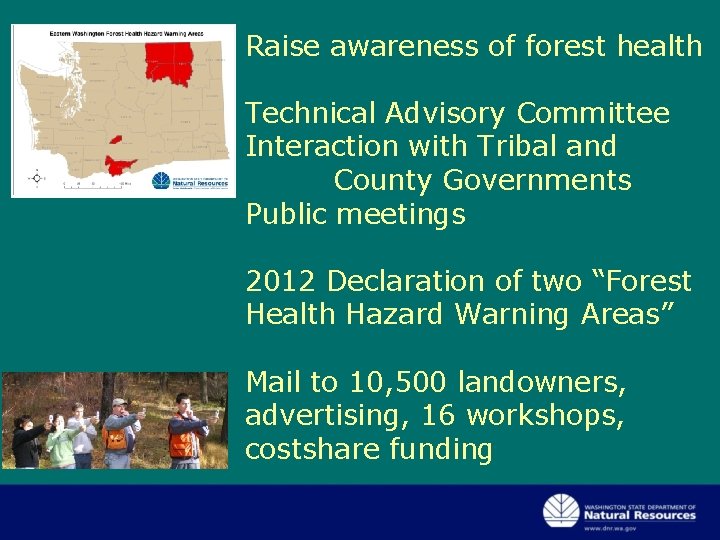
Raise awareness of forest health Technical Advisory Committee Interaction with Tribal and County Governments Public meetings 2012 Declaration of two “Forest Health Hazard Warning Areas” Mail to 10, 500 landowners, advertising, 16 workshops, costshare funding
Interface with Stewardship • Technical assistance delivery • Landowner education event coordination (e. g. Coached Planning Classes, Field Days) • Cost share funding • Mike Johnson co-located in Colville • Articles for the bi-monthly Small Forest Landowner Office Newsletter and the quarterly Forest Stewardship Notes • Tree Improvement: Nursery and Seed Orchard staff and western white pine testing
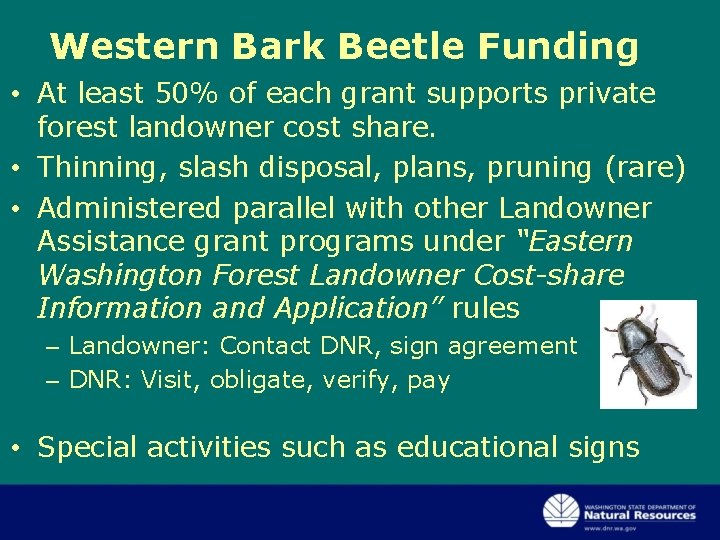
Western Bark Beetle Funding • At least 50% of each grant supports private forest landowner cost share. • Thinning, slash disposal, plans, pruning (rare) • Administered parallel with other Landowner Assistance grant programs under “Eastern Washington Forest Landowner Cost-share Information and Application” rules – Landowner: Contact DNR, sign agreement – DNR: Visit, obligate, verify, pay • Special activities such as educational signs
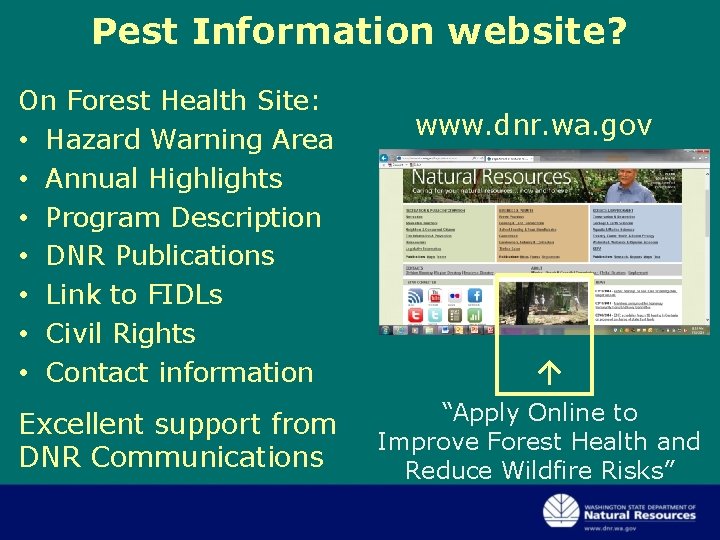
Pest Information website? Excellent support from DNR Communications www. dnr. wa. gov → On Forest Health Site: • Hazard Warning Area • Annual Highlights • Program Description • DNR Publications • Link to FIDLs • Civil Rights • Contact information “Apply Online to Improve Forest Health and Reduce Wildfire Risks”
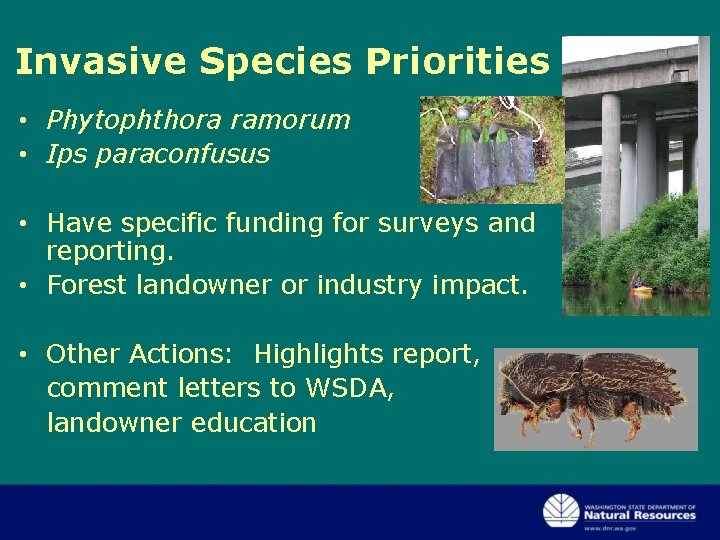
Invasive Species Priorities • Phytophthora ramorum • Ips paraconfusus • Have specific funding for surveys and reporting. • Forest landowner or industry impact. • Other Actions: Highlights report, comment letters to WSDA, landowner education
Complement of Activities • Acres treated with cost share funds (target: 4660/yr) • Landowner contacts (target: 1600/yr) • Monitoring (Aerial surveys, Pheromone trapping, Evaluation Monitoring, Demonstration sites) • San Poil – Kettle Incentive Pilot • Timber sale “qualification” • Data management • North Central Washington Forest Health Collaborative • Environmental Education for Youth or Students
Accomplishment Reporting: • Progress reports with monthly grant invoices • Annual reports for each open grant • Final close out reports specific to each grant • Informal “Program Update” at the annual Region 6 Technical Meeting • Participation in professional meetings
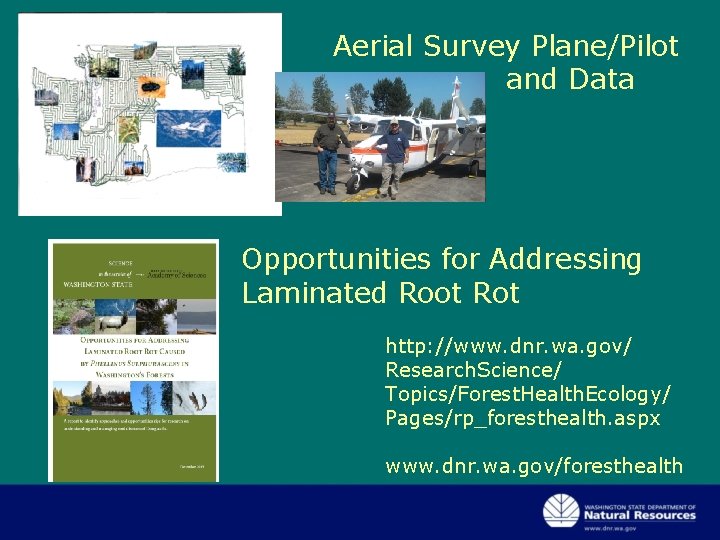
Aerial Survey Plane/Pilot and Data Opportunities for Addressing Laminated Root Rot http: //www. dnr. wa. gov/ Research. Science/ Topics/Forest. Health. Ecology/ Pages/rp_foresthealth. aspx www. dnr. wa. gov/foresthealth