
Forest cutting and reproducing techniques 29 03 Environmental
- Slides: 21
Forest cutting and reproducing techniques 29. 03 Environmental and Natural Resources I
Intermediate Cuttings • Cuttings made between reproduction and harvest in a forest – Thinning – Liberation – Sanitation – Salvage – Removal of undesirable trees – Prescription Burning
Intermediate Cuttings • The different types of cuttings are dependent upon: – Climate – Tree species – Owner and manager objectives
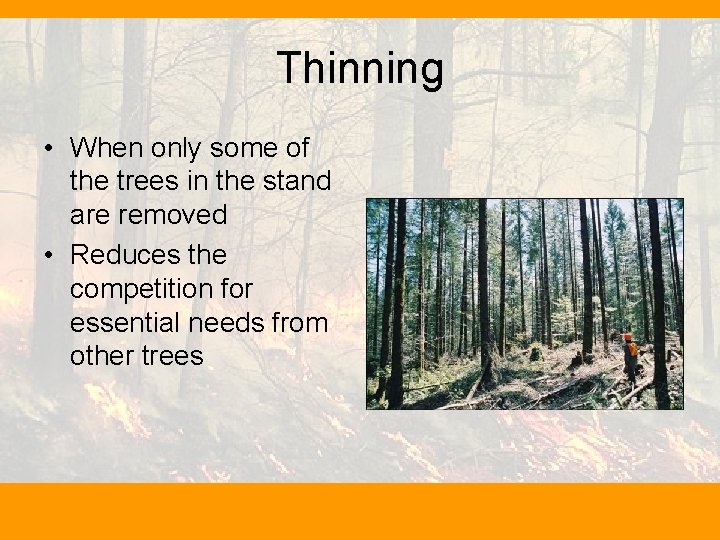
Thinning • When only some of the trees in the stand are removed • Reduces the competition for essential needs from other trees
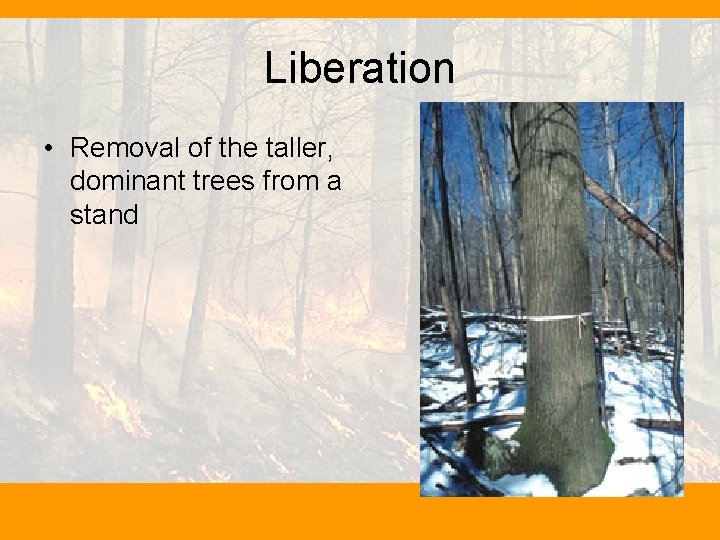
Liberation • Removal of the taller, dominant trees from a stand
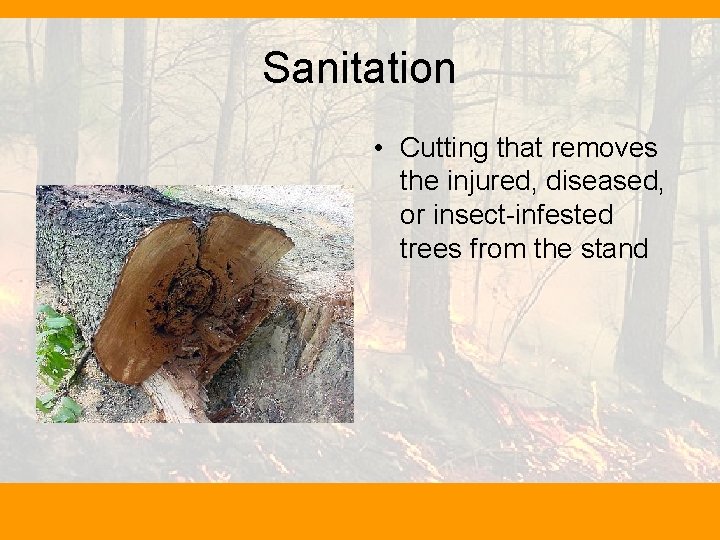
Sanitation • Cutting that removes the injured, diseased, or insect-infested trees from the stand
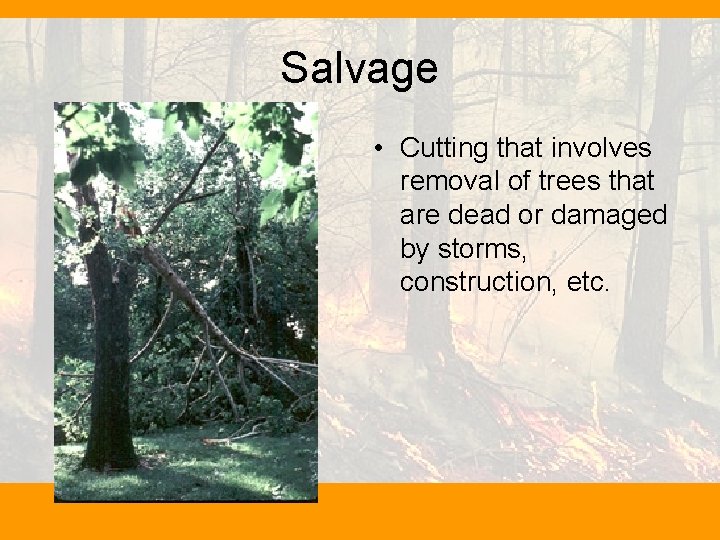
Salvage • Cutting that involves removal of trees that are dead or damaged by storms, construction, etc.
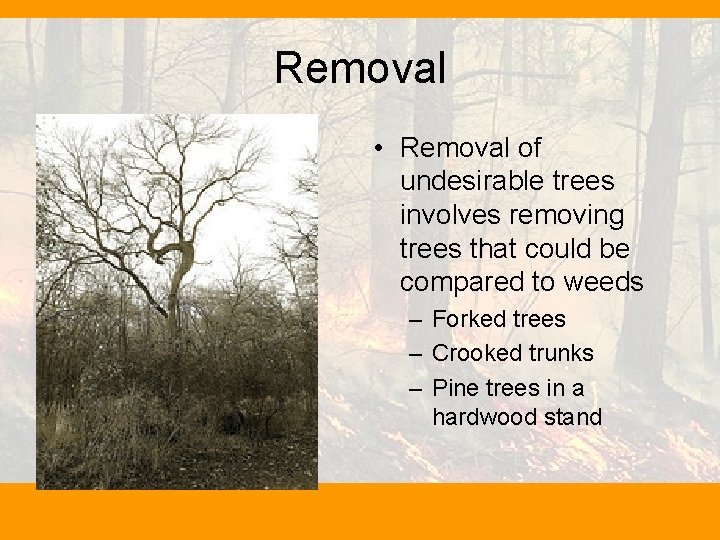
Removal • Removal of undesirable trees involves removing trees that could be compared to weeds – Forked trees – Crooked trunks – Pine trees in a hardwood stand
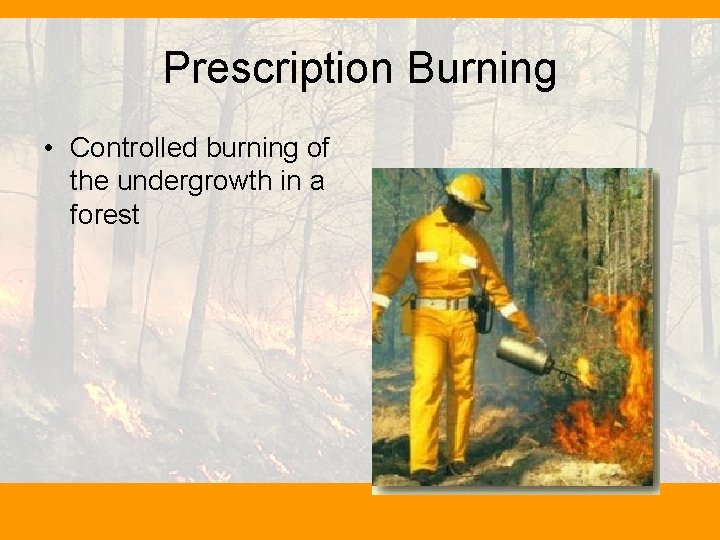
Prescription Burning • Controlled burning of the undergrowth in a forest
Harvest Cuttings • • • Selective Cutting Shelterwood Cutting Seed-tree Cutting Coppice Cutting Clear Cutting
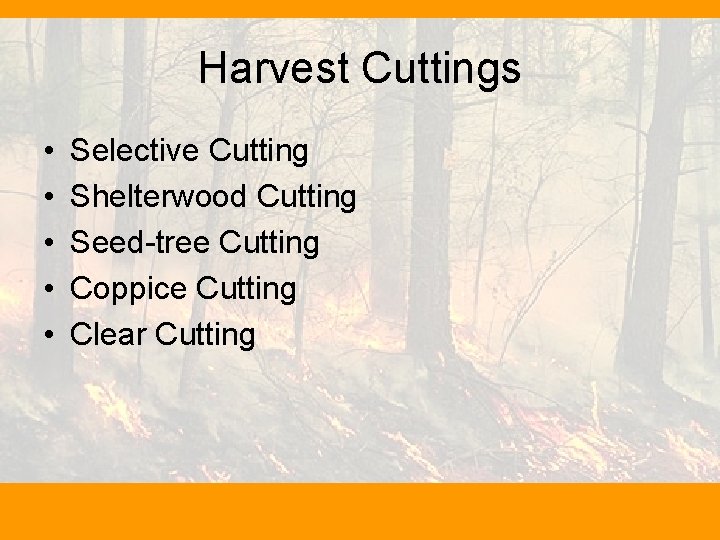
Selective Cutting • Individual trees are selected for harvest based on maturity, size, species, etc. • Goals are to produce an income and a better timber yield
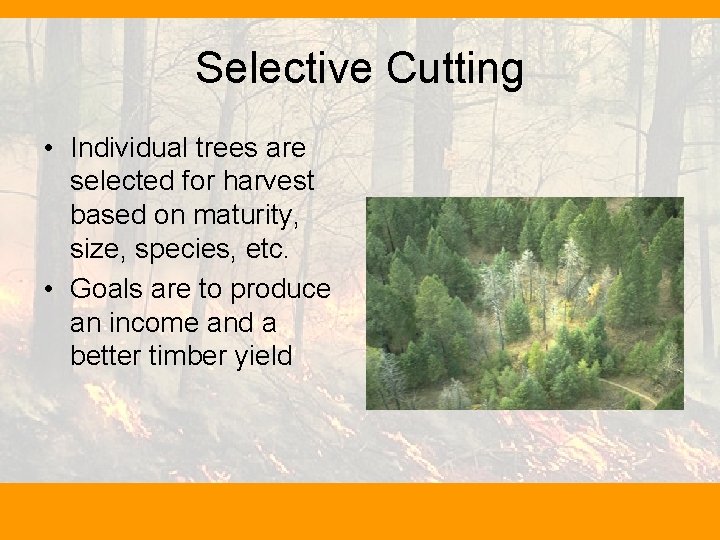
Shelterwood Cutting • Harvesting a mature forest in two or three stages
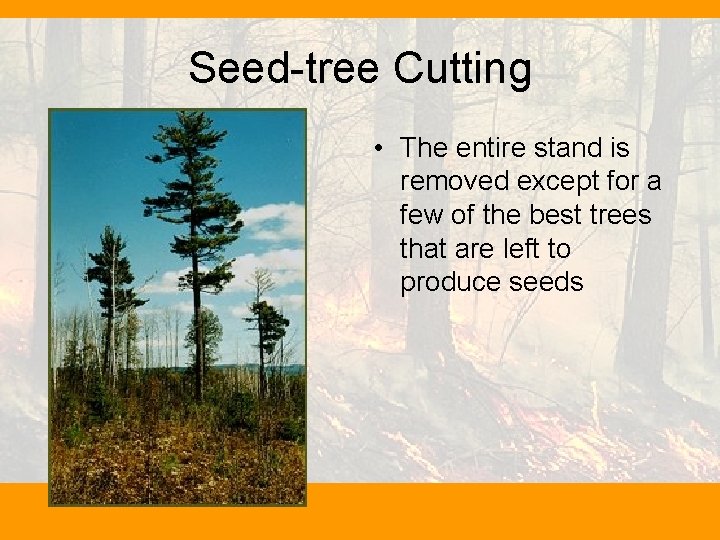
Seed-tree Cutting • The entire stand is removed except for a few of the best trees that are left to produce seeds
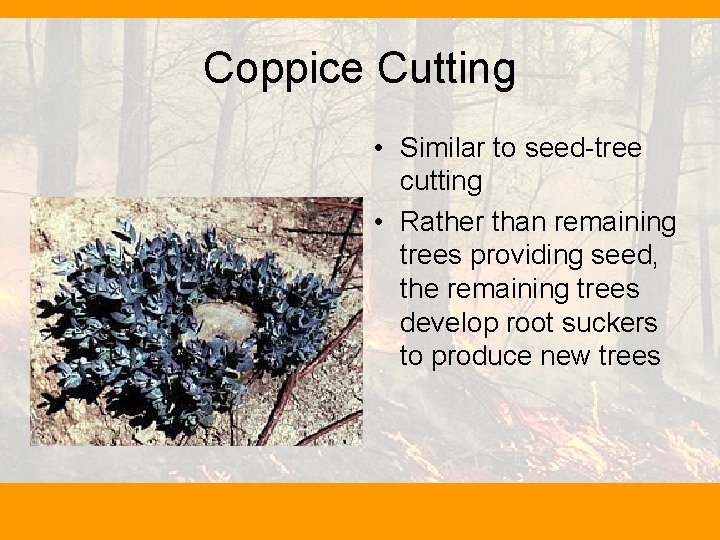
Coppice Cutting • Similar to seed-tree cutting • Rather than remaining trees providing seed, the remaining trees develop root suckers to produce new trees
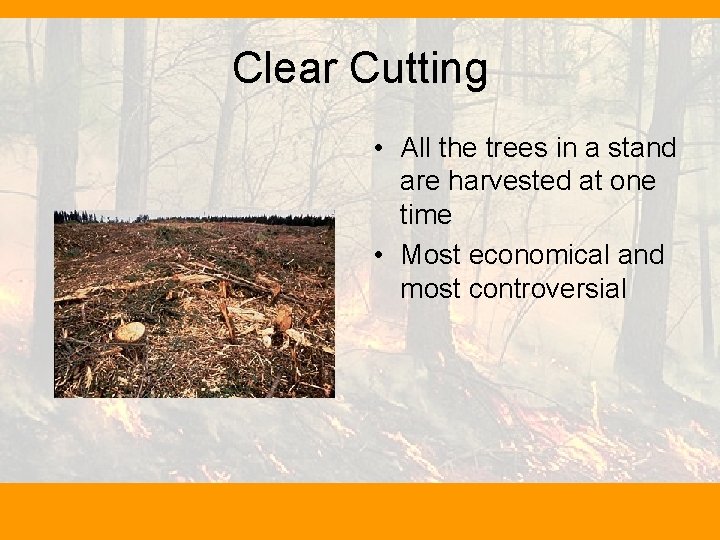
Clear Cutting • All the trees in a stand are harvested at one time • Most economical and most controversial
Reproducing the Forest • • Natural Seeding Direct Seeding Cuttings Plant Seedlings
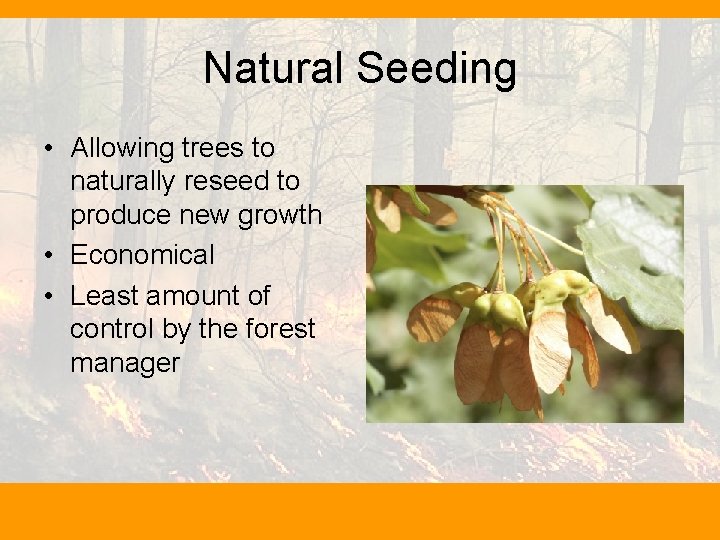
Natural Seeding • Allowing trees to naturally reseed to produce new growth • Economical • Least amount of control by the forest manager
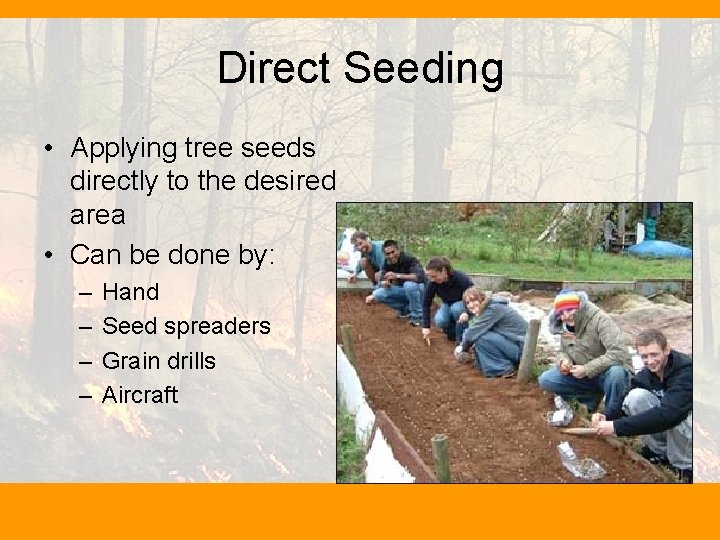
Direct Seeding • Applying tree seeds directly to the desired area • Can be done by: – – Hand Seed spreaders Grain drills Aircraft
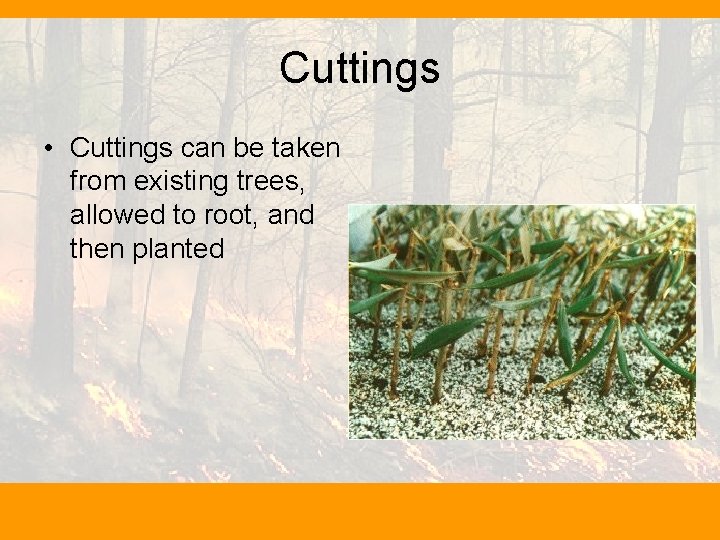
Cuttings • Cuttings can be taken from existing trees, allowed to root, and then planted
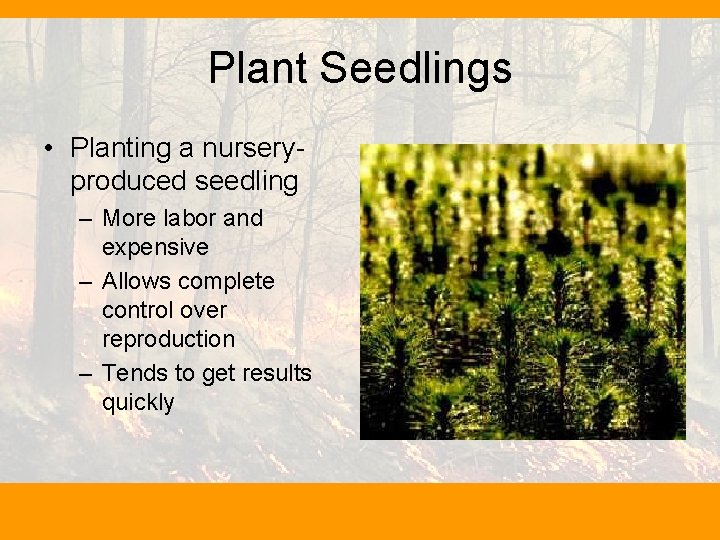
Plant Seedlings • Planting a nurseryproduced seedling – More labor and expensive – Allows complete control over reproduction – Tends to get results quickly
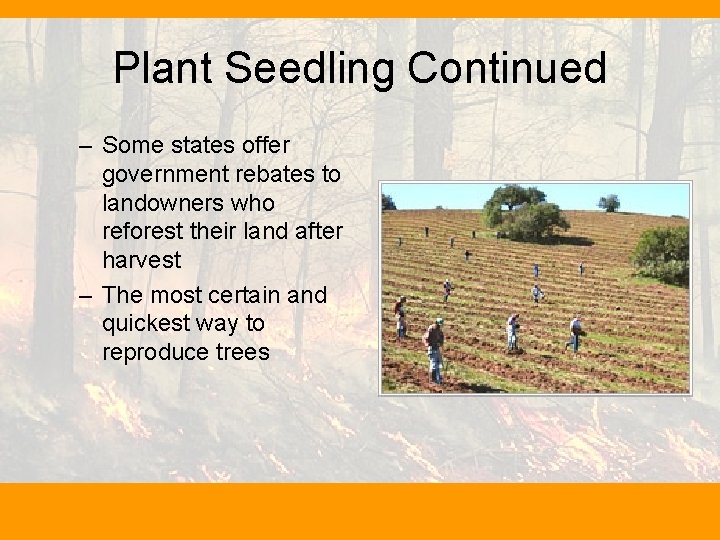
Plant Seedling Continued – Some states offer government rebates to landowners who reforest their land after harvest – The most certain and quickest way to reproduce trees