
Forest Biomes 1 Boreal or Taiga coniferous Forest
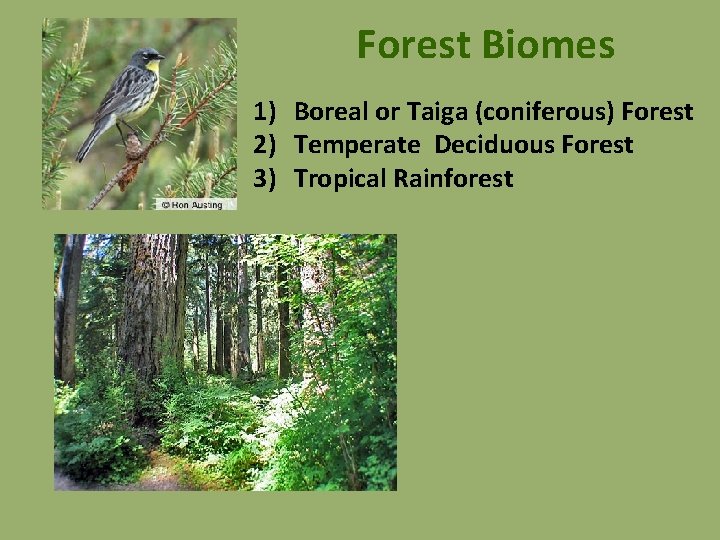
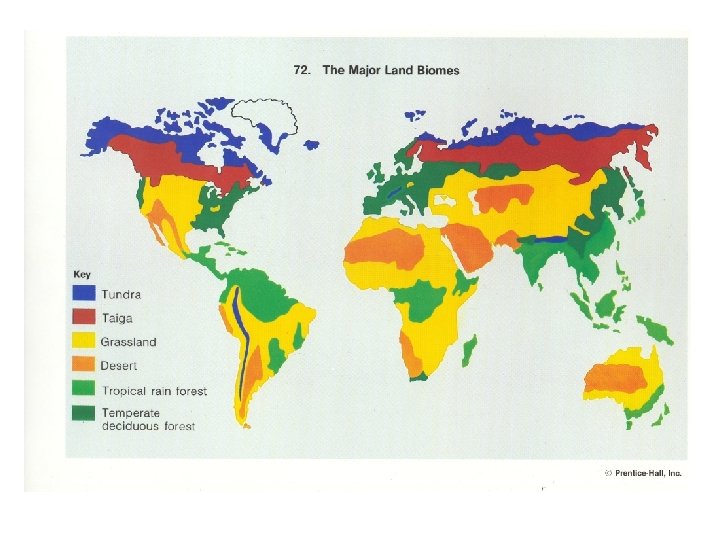
Forest Biomes 1) Boreal or Taiga (coniferous) Forest 2) Temperate Deciduous Forest 3) Tropical Rainforest
Types of Forests 1) • • • Old-Growth (Virgin Forests) uncut undisturbed storehouse of biodiversity Mainly found: Russia, Canada, Brazil, Indonesia, Papua N. Guinea
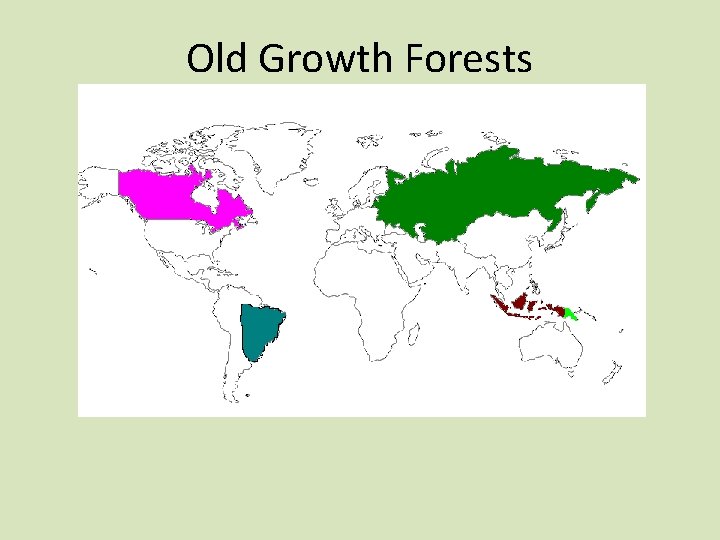
Old Growth Forests
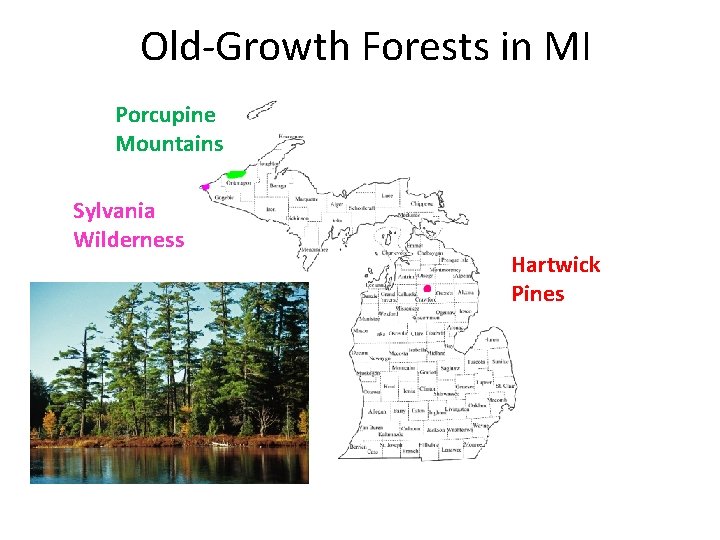
Old-Growth Forests in MI Porcupine Mountains Sylvania Wilderness Hartwick Pines
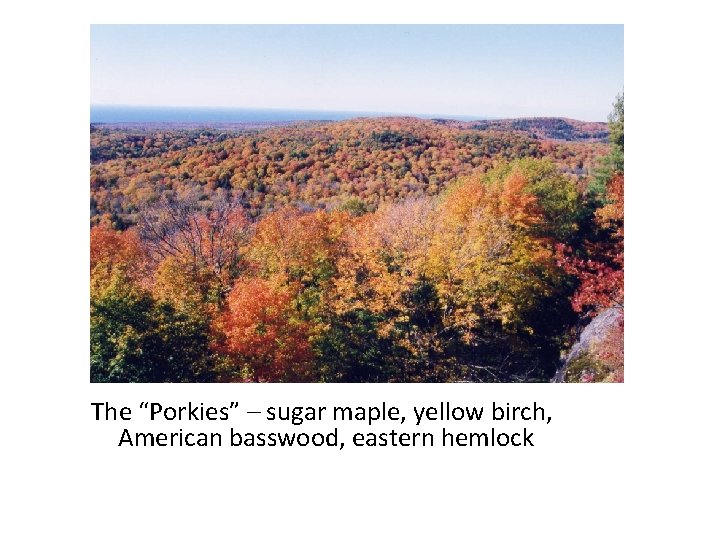
The “Porkies” – sugar maple, yellow birch, American basswood, eastern hemlock
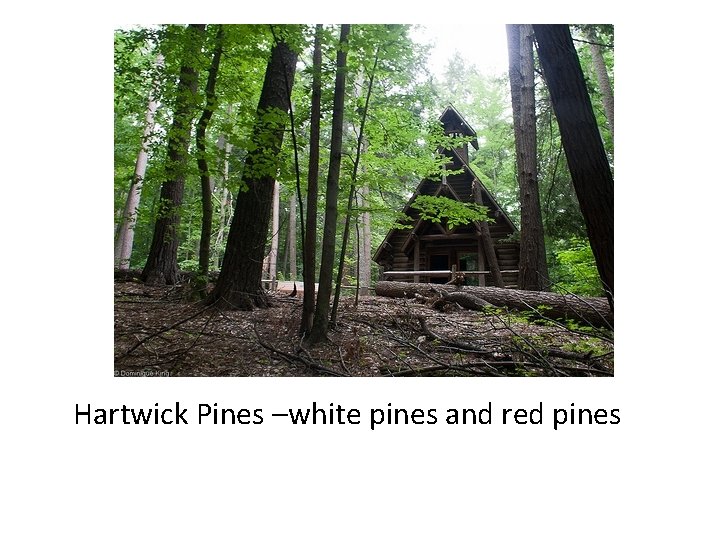
Hartwick Pines –white pines and red pines
Types of Forests 2) Second-Growth - trees resulting from secondary succession, due to … – human activities – clear cutting – natural forces – hurricane, fire, volcanic eruptions, etc. Much of what you see in Michigan is second-growth exceptions: Porcupine Mountains Wilderness State Park, Sylvania Wilderness, Hartwick Pines State Park
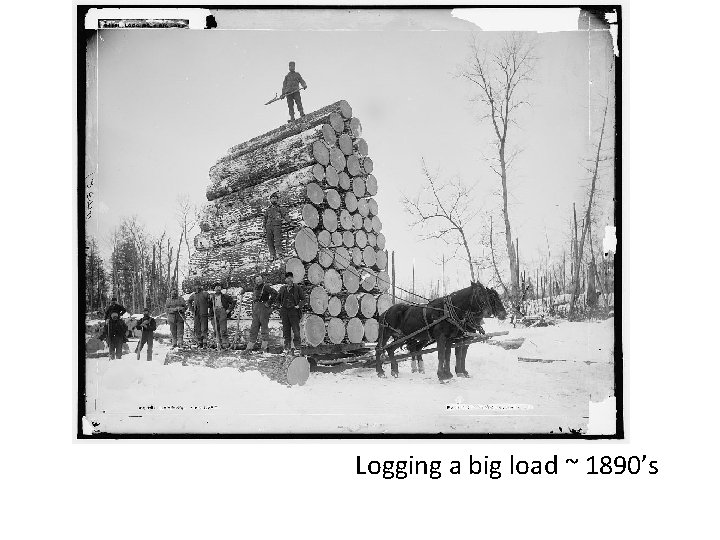
Logging a big load ~ 1890’s
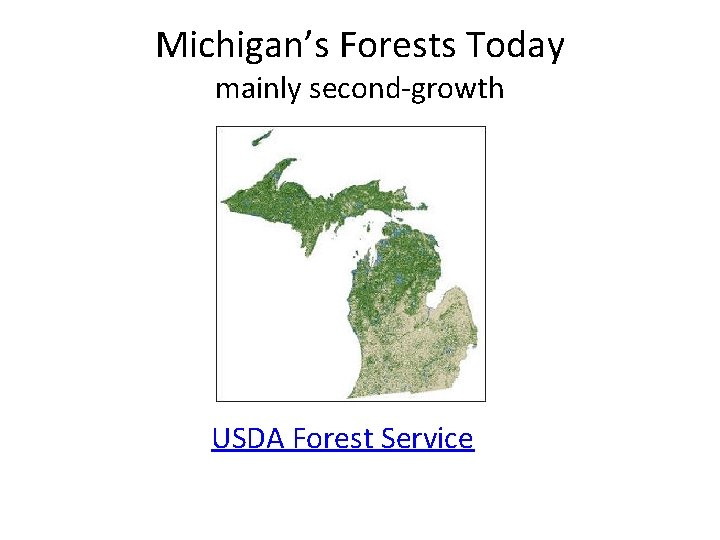
Michigan’s Forests Today mainly second-growth USDA Forest Service
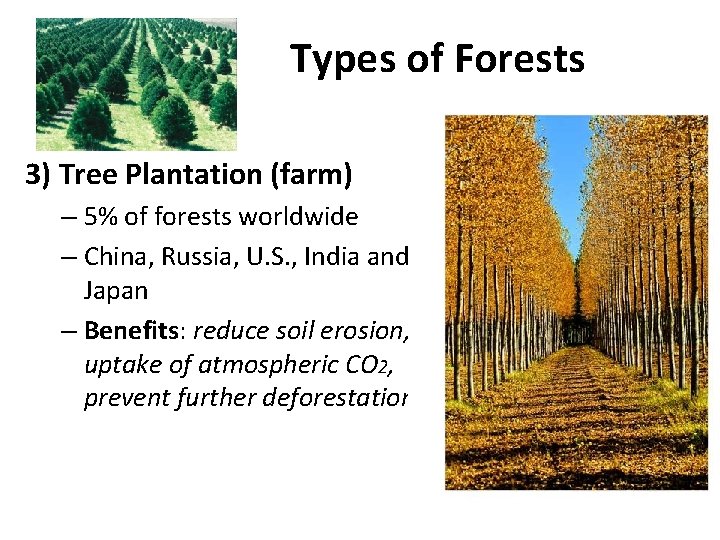
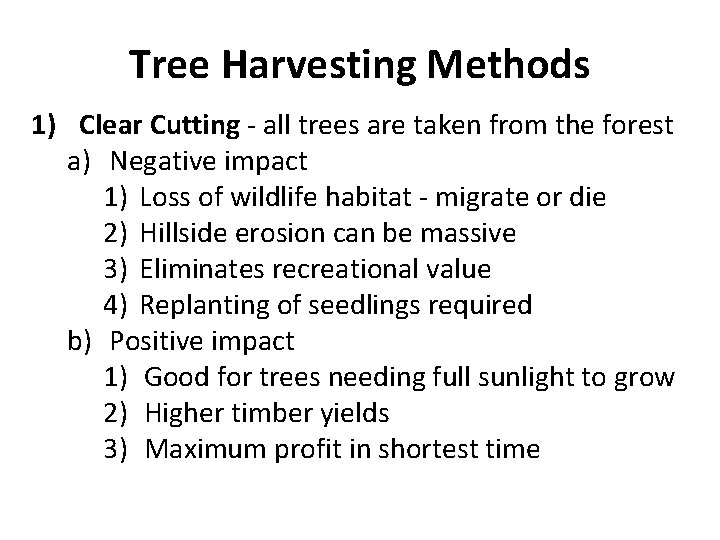
Types of Forests 3) Tree Plantation (farm) – 5% of forests worldwide – China, Russia, U. S. , India and Japan – Benefits: reduce soil erosion, uptake of atmospheric CO 2, prevent further deforestation
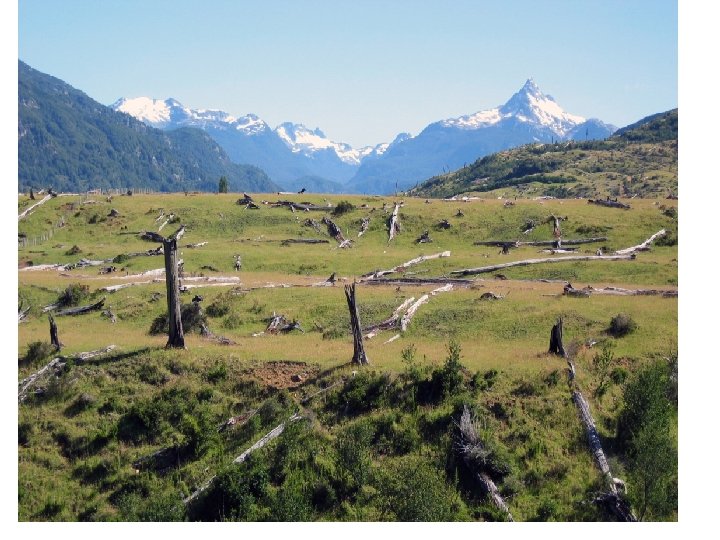
Tree Harvesting Methods 1) Clear Cutting - all trees are taken from the forest a) Negative impact 1) Loss of wildlife habitat - migrate or die 2) Hillside erosion can be massive 3) Eliminates recreational value 4) Replanting of seedlings required b) Positive impact 1) Good for trees needing full sunlight to grow 2) Higher timber yields 3) Maximum profit in shortest time
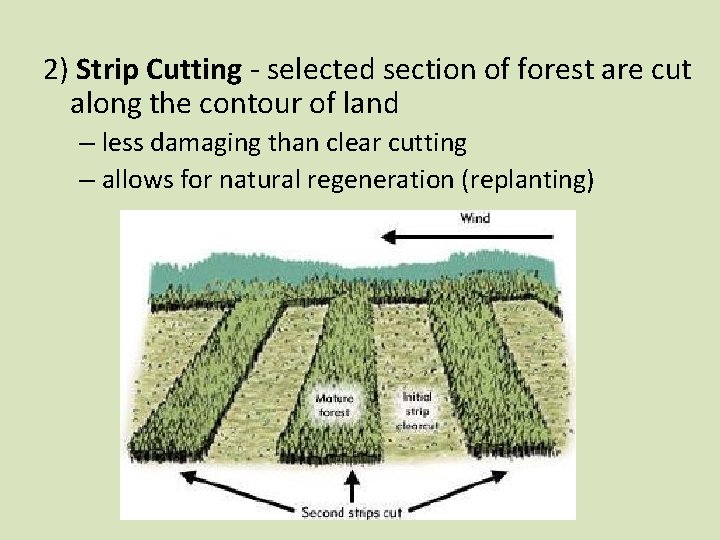
2) Strip Cutting - selected section of forest are cut along the contour of land – less damaging than clear cutting – allows for natural regeneration (replanting)
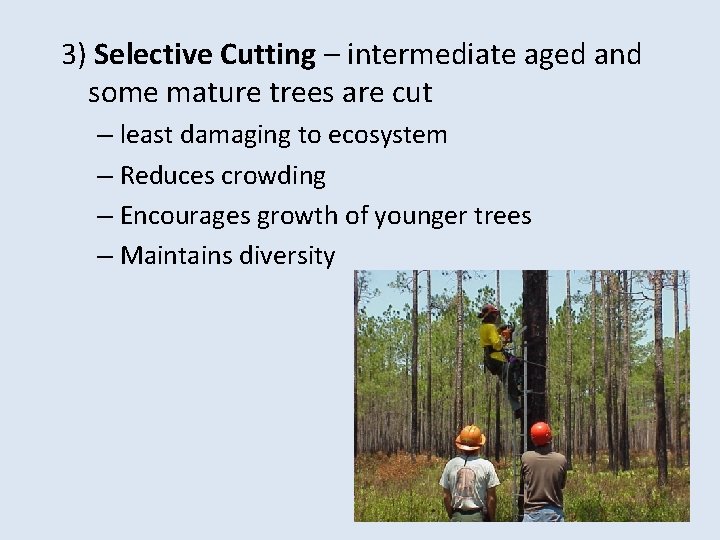
3) Selective Cutting – intermediate aged and some mature trees are cut – least damaging to ecosystem – Reduces crowding – Encourages growth of younger trees – Maintains diversity
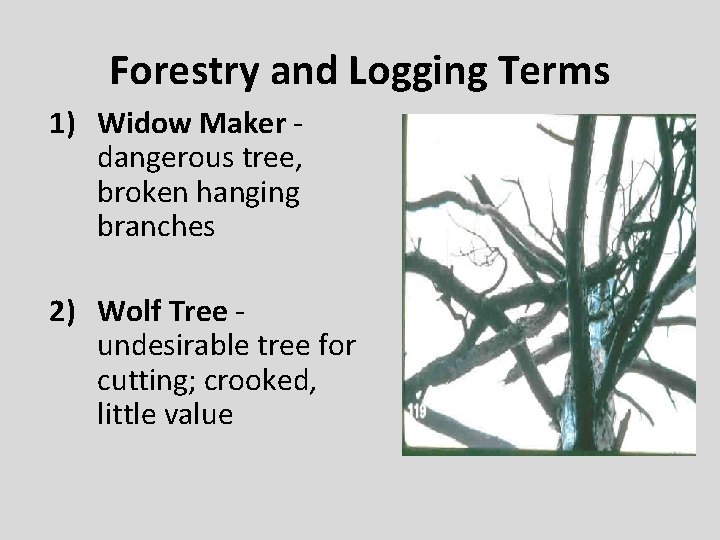
Forestry and Logging Terms 1) Widow Maker dangerous tree, broken hanging branches 2) Wolf Tree undesirable tree for cutting; crooked, little value
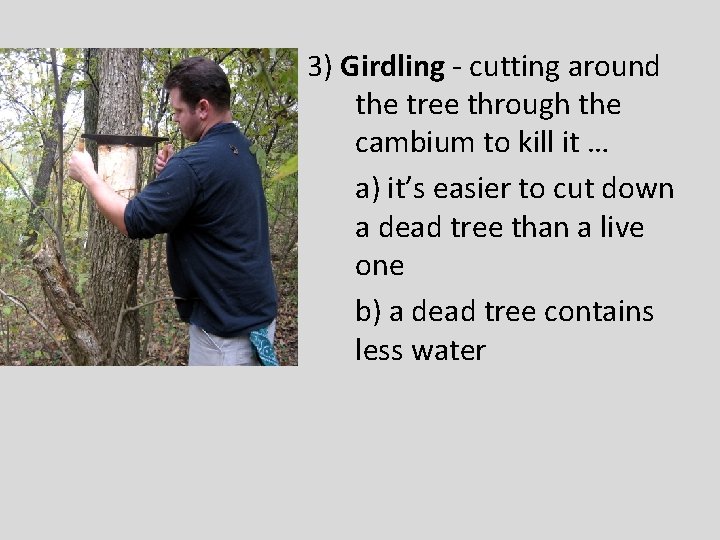
3) Girdling - cutting around the tree through the cambium to kill it … a) it’s easier to cut down a dead tree than a live one b) a dead tree contains less water
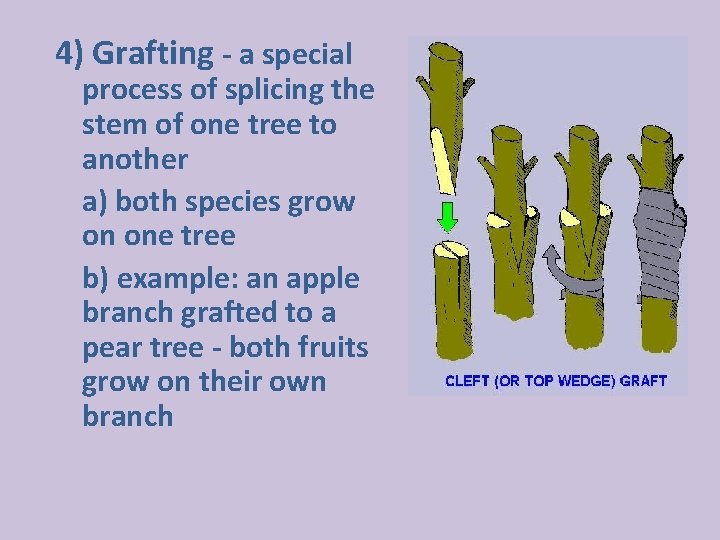
4) Grafting - a special process of splicing the stem of one tree to another a) both species grow on one tree b) example: an apple branch grafted to a pear tree - both fruits grow on their own branch
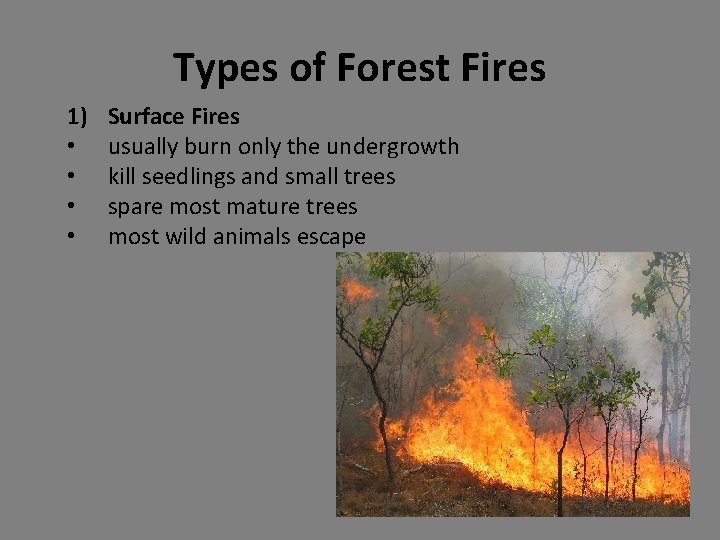
Types of Forest Fires 1) • • Surface Fires usually burn only the undergrowth kill seedlings and small trees spare most mature trees most wild animals escape
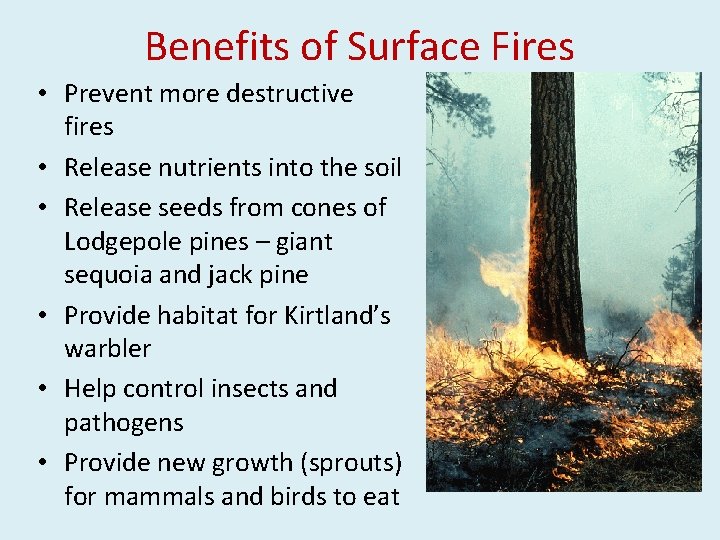
Benefits of Surface Fires • Prevent more destructive fires • Release nutrients into the soil • Release seeds from cones of Lodgepole pines – giant sequoia and jack pine • Provide habitat for Kirtland’s warbler • Help control insects and pathogens • Provide new growth (sprouts) for mammals and birds to eat
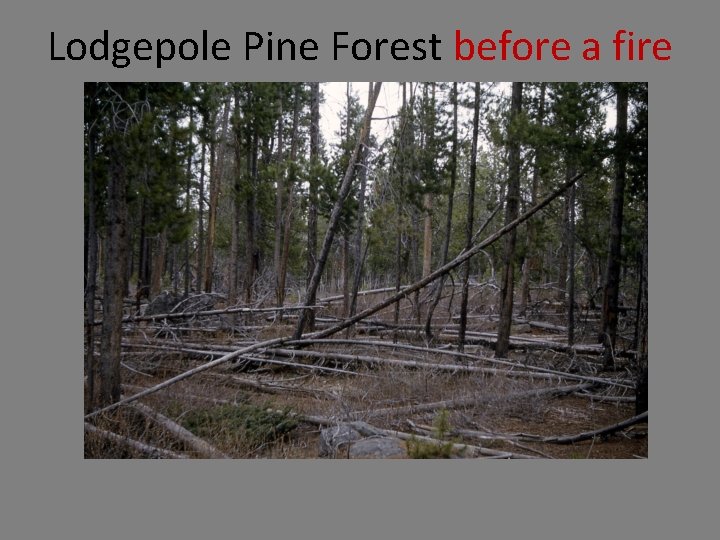
Lodgepole Pine Forest before a fire
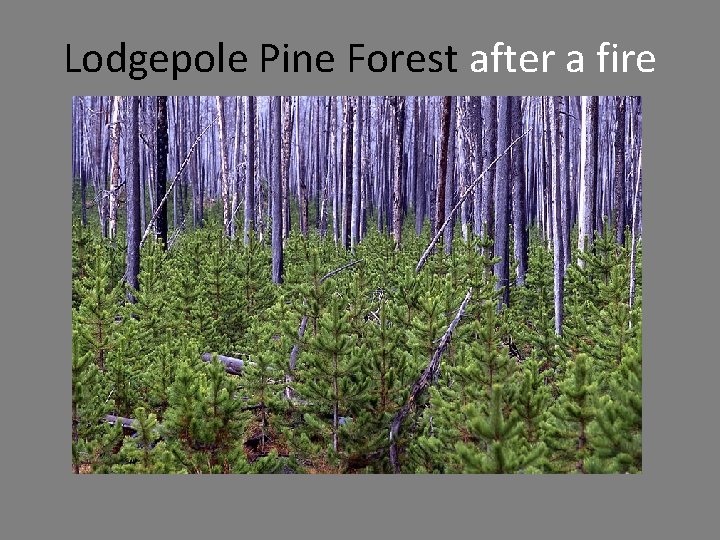
Lodgepole Pine Forest after a fire
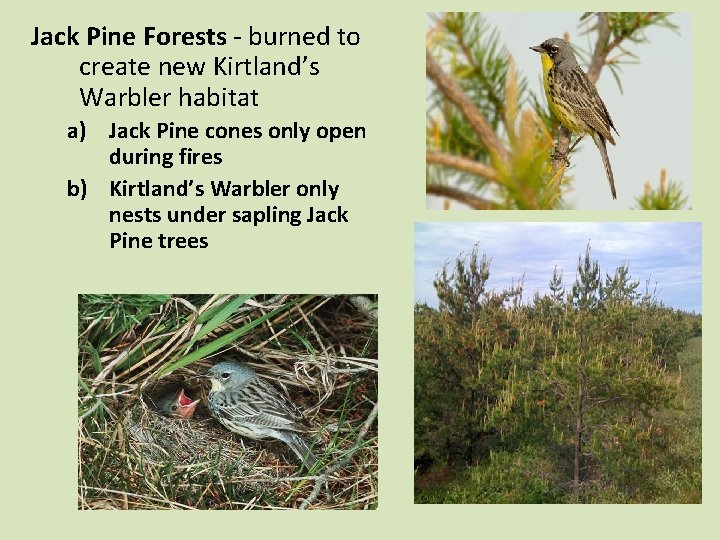
Jack Pine Forests - burned to create new Kirtland’s Warbler habitat a) Jack Pine cones only open during fires b) Kirtland’s Warbler only nests under sapling Jack Pine trees
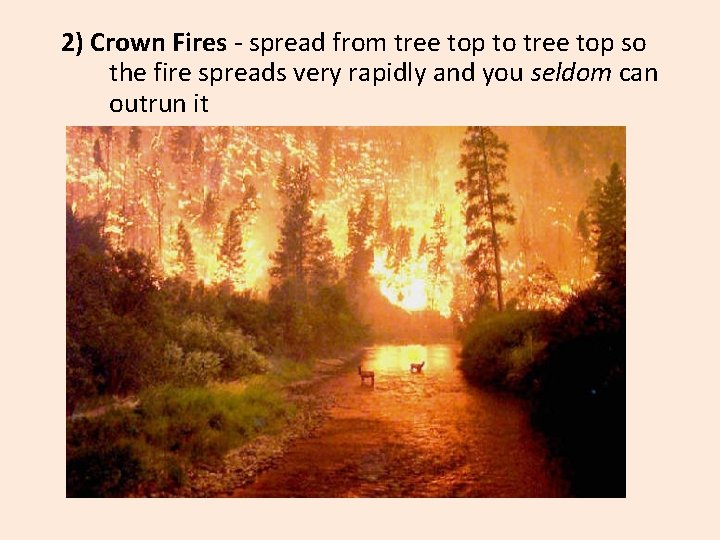
2) Crown Fires - spread from tree top to tree top so the fire spreads very rapidly and you seldom can outrun it
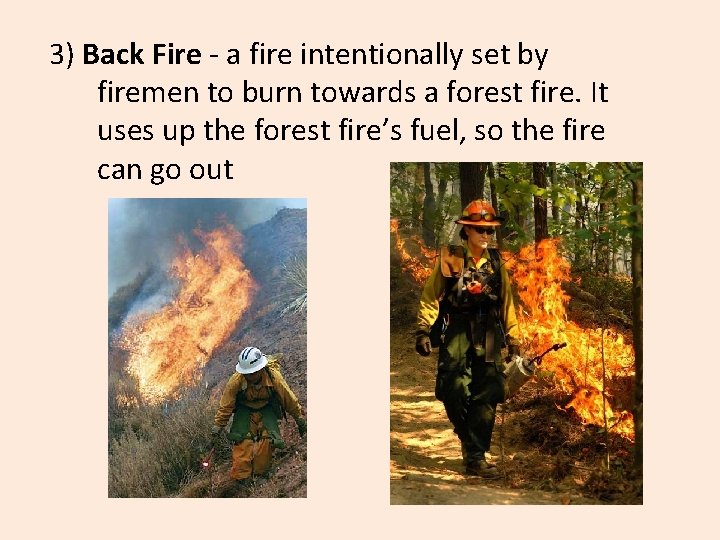
3) Back Fire - a fire intentionally set by firemen to burn towards a forest fire. It uses up the forest fire’s fuel, so the fire can go out
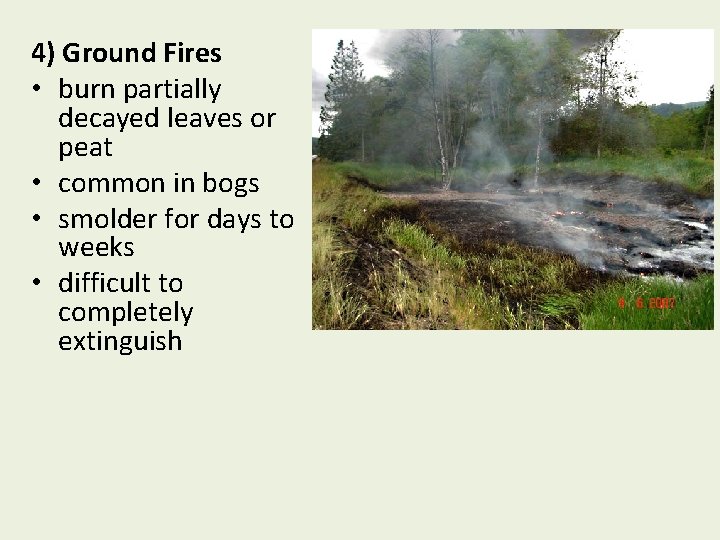
4) Ground Fires • burn partially decayed leaves or peat • common in bogs • smolder for days to weeks • difficult to completely extinguish
- Slides: 28