
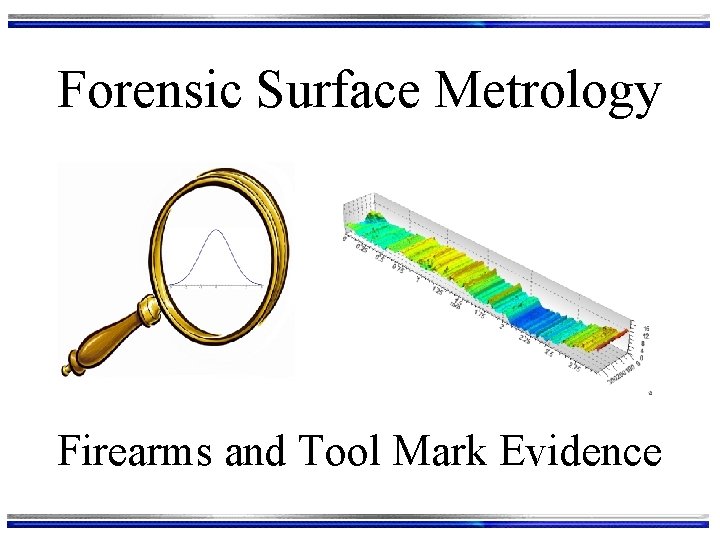
Forensic Surface Metrology Firearms and Tool Mark Evidence
- Slides: 25
Forensic Surface Metrology Firearms and Tool Mark Evidence
Outline • Introduction and the Daubert Standard • Theory of Tool Mark Identification • Details of Our Approach • Preliminary results on 9 mm cartridge cases • Nice images of chisel striation patterns • Future Work • GPU-CUDA • Surface alignments/normalizations • Feature extraction libraries • Rotation-translation invariants
U. S. v. Brown and U. S. v. Glynn • Court ruled that ballistics was not a science • Firearms examiner could not testify to “a reasonable degree of ballistic certainty” • Firearms examiner could not “claim conclusions reached were not to any degree of certainty” • Firearms examiner could only testify that a match was “(at least) more likely than not” • “at least” was ordered dropped in Glynn
Raising Standards with Data and Statistics • DNA profiling the most successful application of statistics in forensic science. • Responsible for current interest in “raising standards” of other branches in forensics. • No protocols for the application of statistics to physical evidence. • Our goal: application of objective, numerical computational pattern comparison to physical evidence
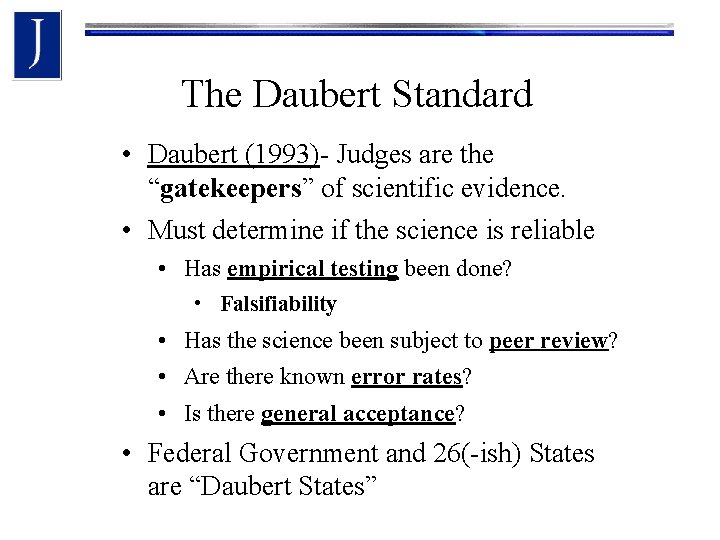
The Daubert Standard • Daubert (1993)- Judges are the “gatekeepers” of scientific evidence. • Must determine if the science is reliable • Has empirical testing been done? • Falsifiability • Has the science been subject to peer review? • Are there known error rates? • Is there general acceptance? • Federal Government and 26(-ish) States are “Daubert States”
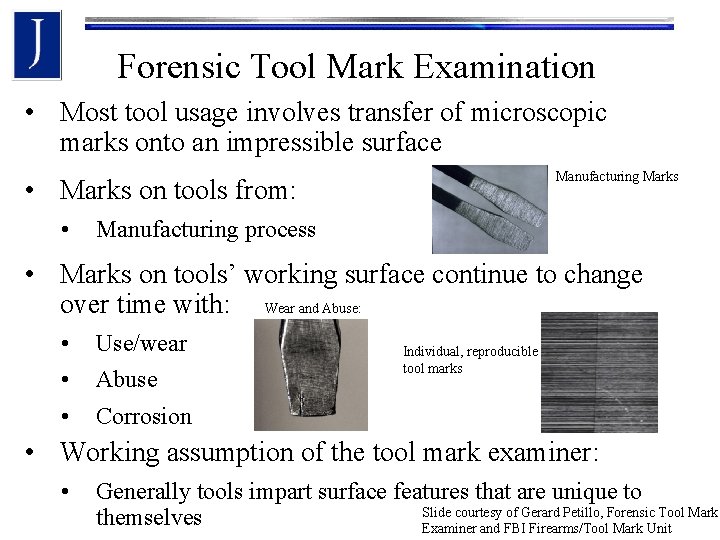
Forensic Tool Mark Examination • Most tool usage involves transfer of microscopic marks onto an impressible surface Manufacturing Marks • Marks on tools from: • Manufacturing process • Marks on tools’ working surface continue to change over time with: Wear and Abuse: • Use/wear • Abuse • Corrosion Individual, reproducible tool marks • Working assumption of the tool mark examiner: • Generally tools impart surface features that are unique to Slide courtesy of Gerard Petillo, Forensic Tool Mark themselves Examiner and FBI Firearms/Tool Mark Unit
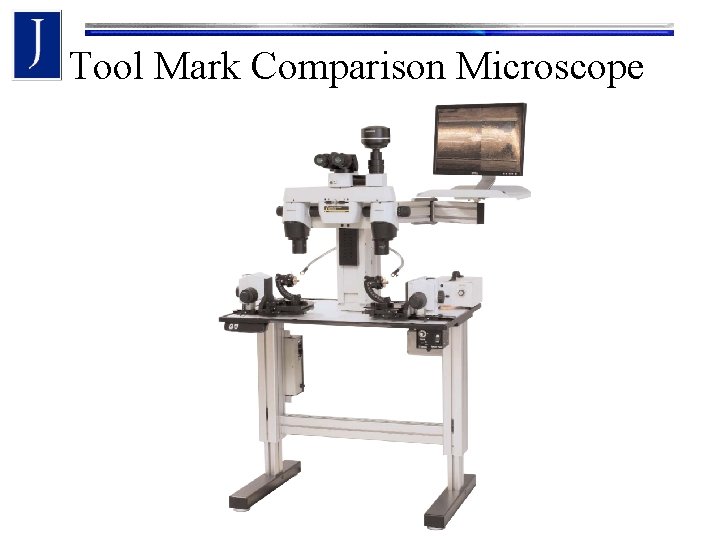
Tool Mark Comparison Microscope
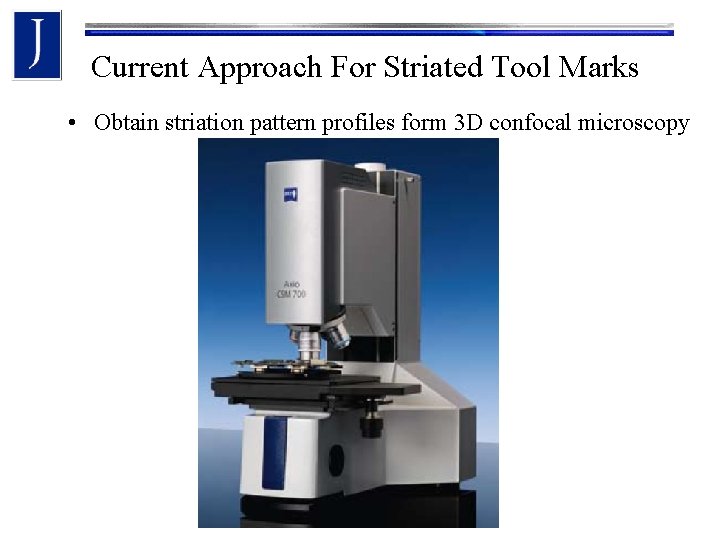
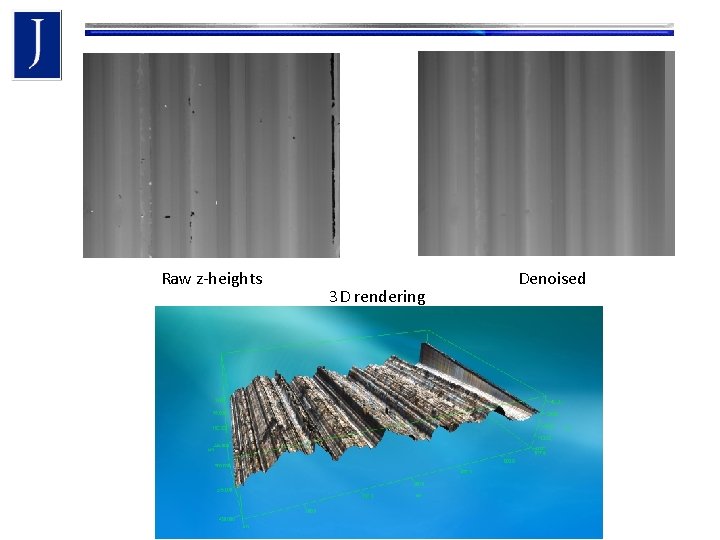
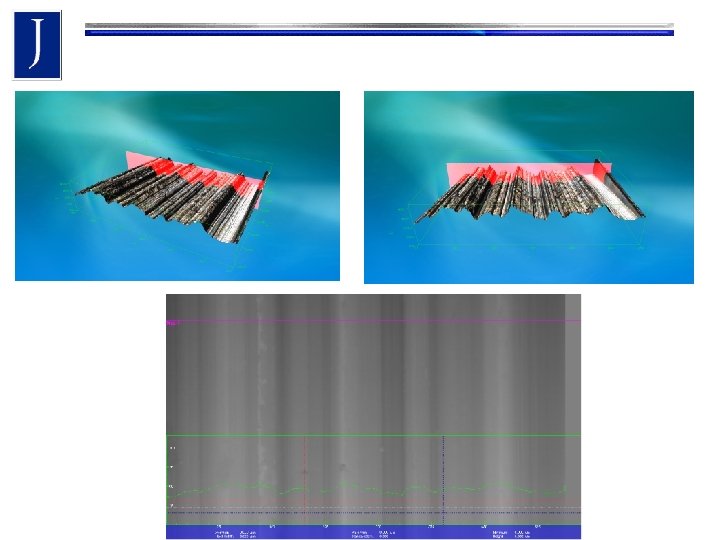
Current Approach For Striated Tool Marks • Obtain striation pattern profiles form 3 D confocal microscopy
Raw z-heights 3 D rendering Denoised
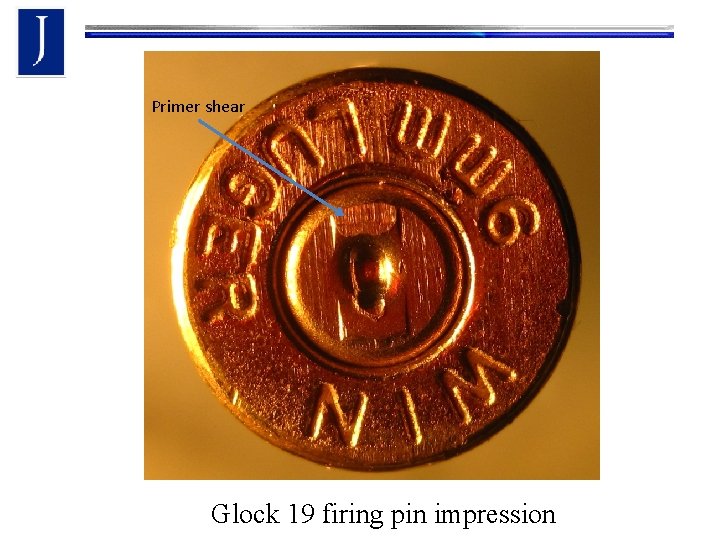
Primer shear Glock 19 firing pin impression
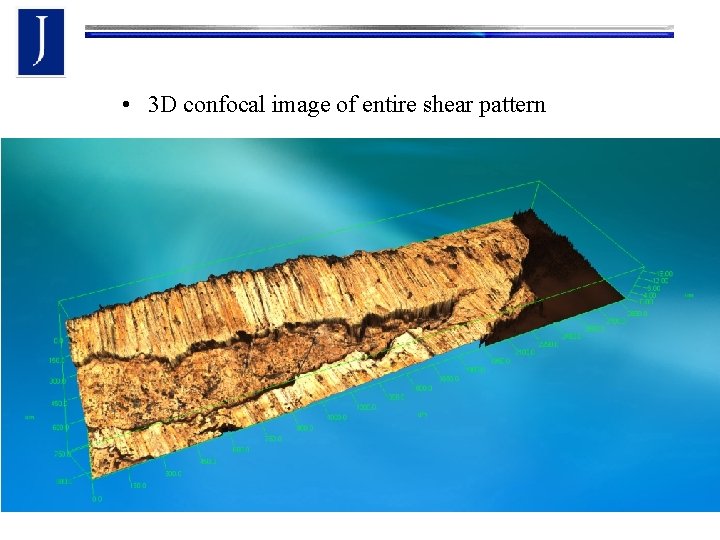
• 3 D confocal image of entire shear pattern
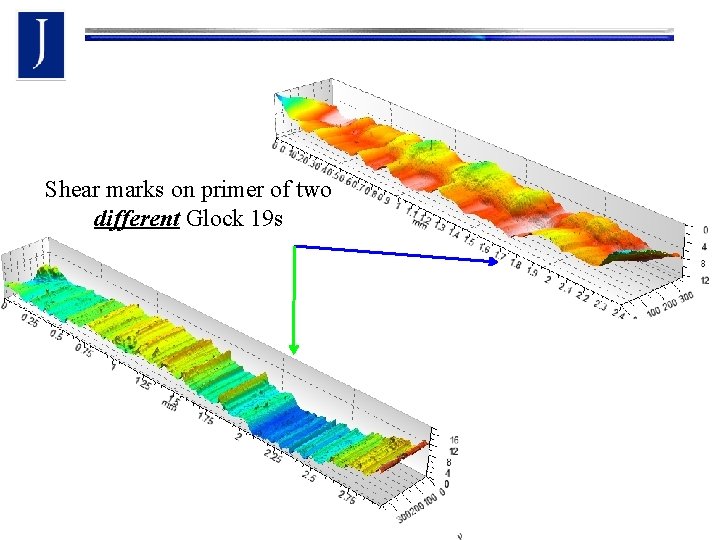
Shear marks on primer of two different Glock 19 s
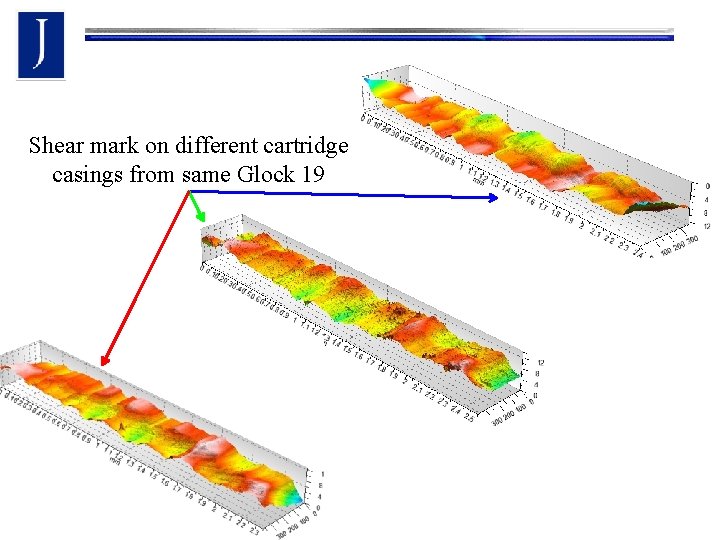
Shear mark on different cartridge casings from same Glock 19
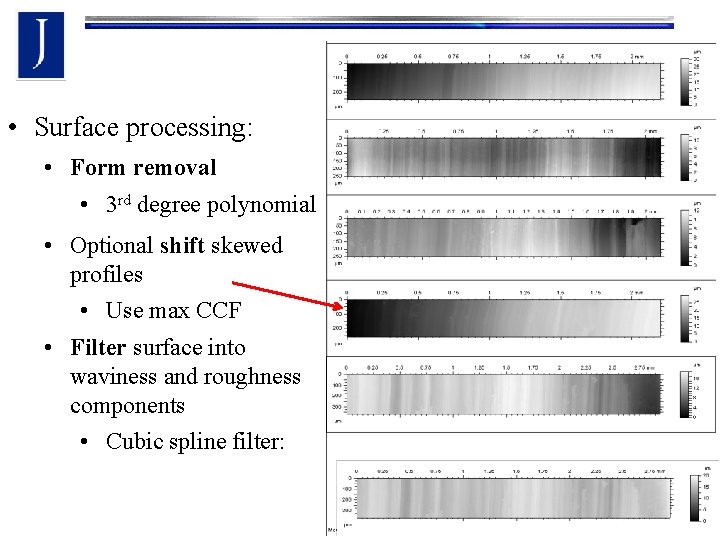
• Surface processing: • Form removal • 3 rd degree polynomial • Optional shift skewed profiles • Use max CCF • Filter surface into waviness and roughness components • Cubic spline filter:
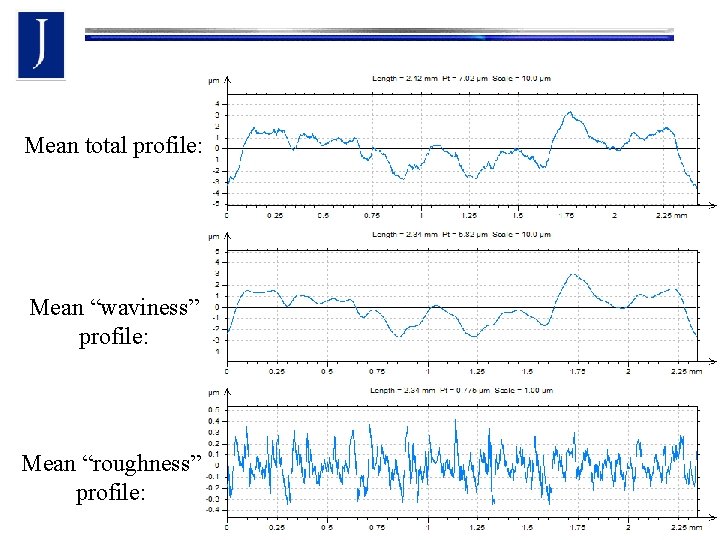
Mean total profile: Mean “waviness” profile: Mean “roughness” profile:
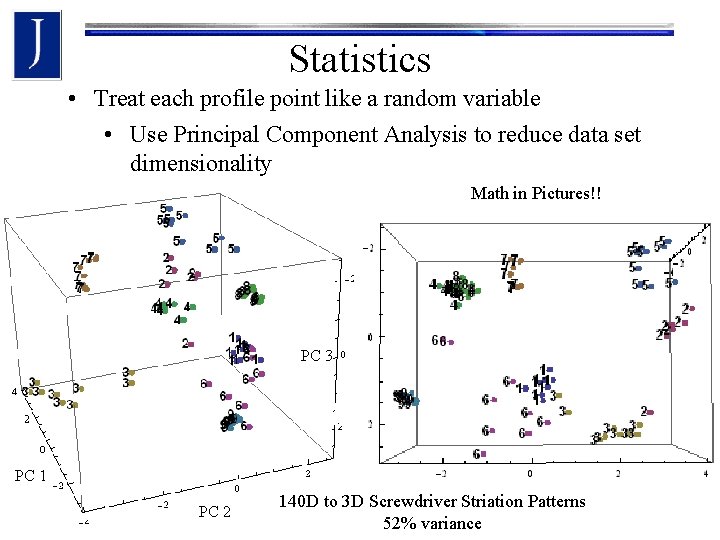
Statistics s 2=4. 24 • Treat each profile point like a random variable • Use Principal Component Analysis to reduce data set dimensionality Math in Pictures!! PC 3 PC 1 PC 2 140 D to 3 D Screwdriver Striation Patterns 52% variance
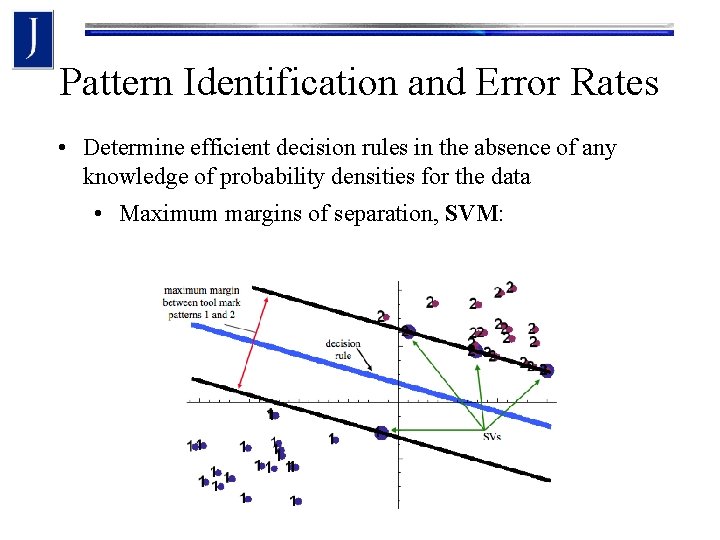
Pattern Identification and Error Rates • Determine efficient decision rules in the absence of any knowledge of probability densities for the data • Maximum margins of separation, SVM:
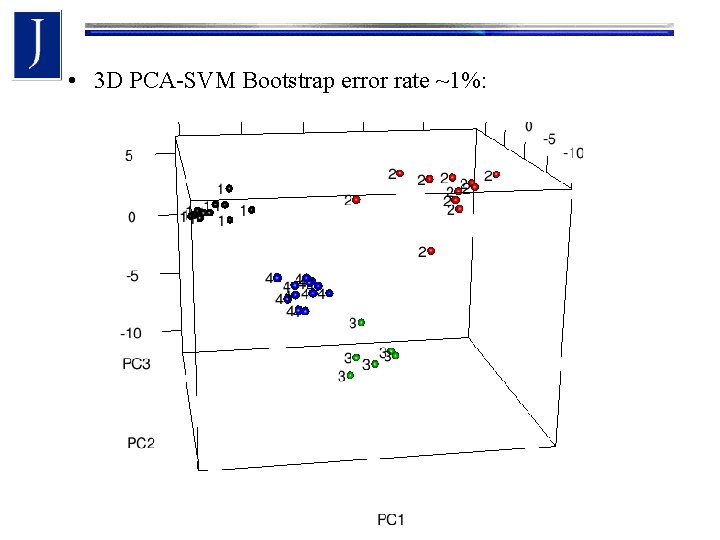
• 3 D PCA-SVM Bootstrap error rate ~1%:
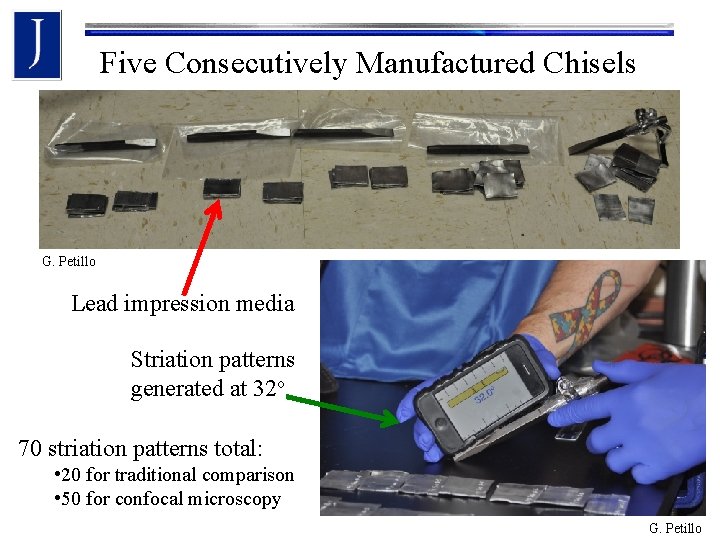
Five Consecutively Manufactured Chisels G. Petillo Lead impression media Striation patterns generated at 32 o 70 striation patterns total: • 20 for traditional comparison • 50 for confocal microscopy G. Petillo
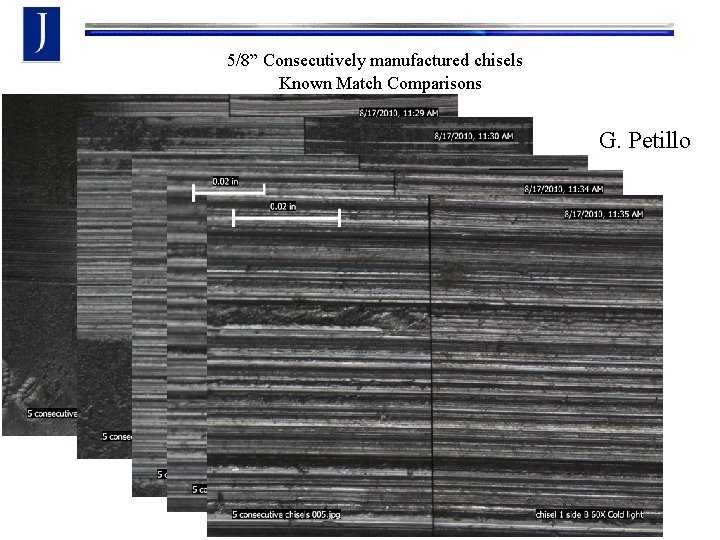
5/8” Consecutively manufactured chisels Known Match Comparisons G. Petillo
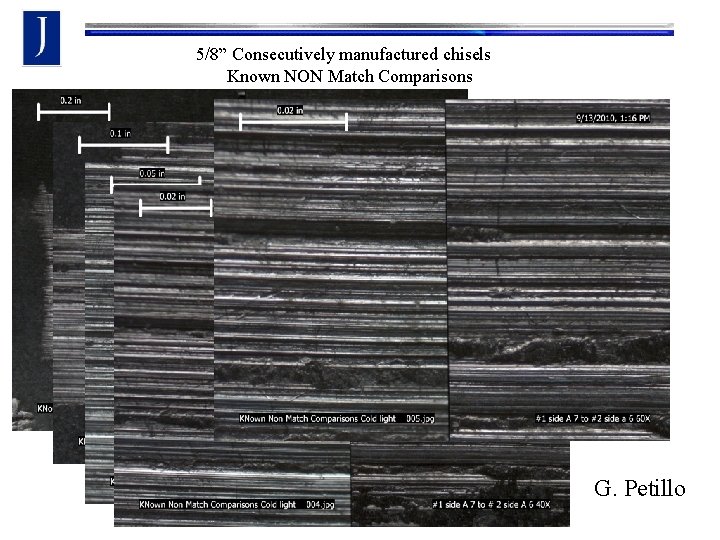
5/8” Consecutively manufactured chisels Known NON Match Comparisons G. Petillo
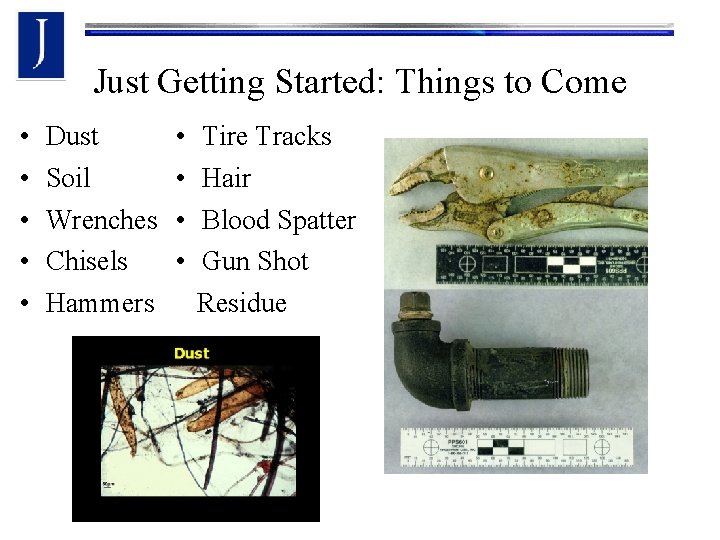
Just Getting Started: Things to Come • • • Dust Soil Wrenches Chisels Hammers • • Tire Tracks Hair Blood Spatter Gun Shot Residue
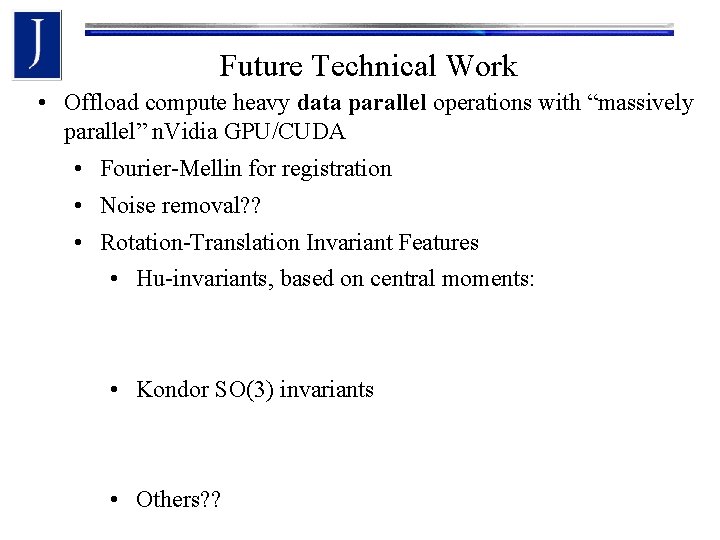
Future Technical Work • Offload compute heavy data parallel operations with “massively parallel” n. Vidia GPU/CUDA • Fourier-Mellin for registration • Noise removal? ? • Rotation-Translation Invariant Features • Hu-invariants, based on central moments: • Kondor SO(3) invariants • Others? ?
Acknowledgements • National Institute of Justice • New York City Police Department Crime Lab • John Jay College of Criminal Justice • Research Team: • Helen Chan • Mr. Peter Diaczuk • Manny Chaparro • Ms. Carol Gambino • Aurora Ghita • Dr. James Hamby • Dr. Thomas Kubic • Eric Gosslin • Off. Patrick Mc. Laughlin • Frani Kammerman • Mr. Jerry Petillo • Brooke Kammrath • Mr. Nicholas Petraco • Loretta Kuo • Dr. Peter A. Pizzola • Dale Purcel • Dr. Graham Rankin • Stephanie Pollut • Dr. Jacqueline Speir • Rebecca Smith • Dr. Peter Shenkin • Elizabeth Willie • Mr. Peter Tytell • Chris Singh • Melodie Yu