
Forensic Science Lab Activity Bloodstains Transfer Passive Projected

Forensic Science Lab Activity
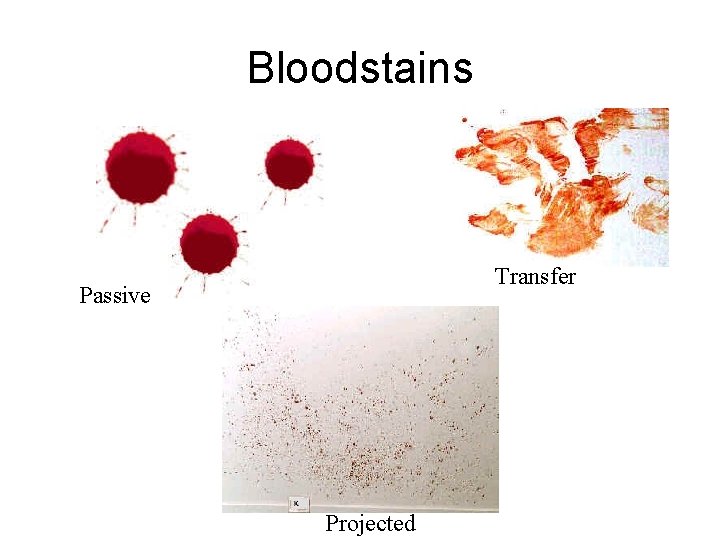
Bloodstains Transfer Passive Projected
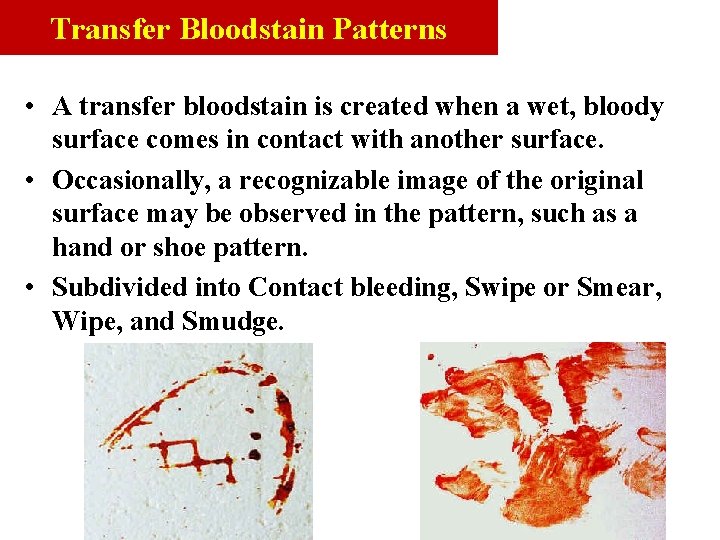
Transfer Bloodstain Patterns • A transfer bloodstain is created when a wet, bloody surface comes in contact with another surface. • Occasionally, a recognizable image of the original surface may be observed in the pattern, such as a hand or shoe pattern. • Subdivided into Contact bleeding, Swipe or Smear, Wipe, and Smudge.
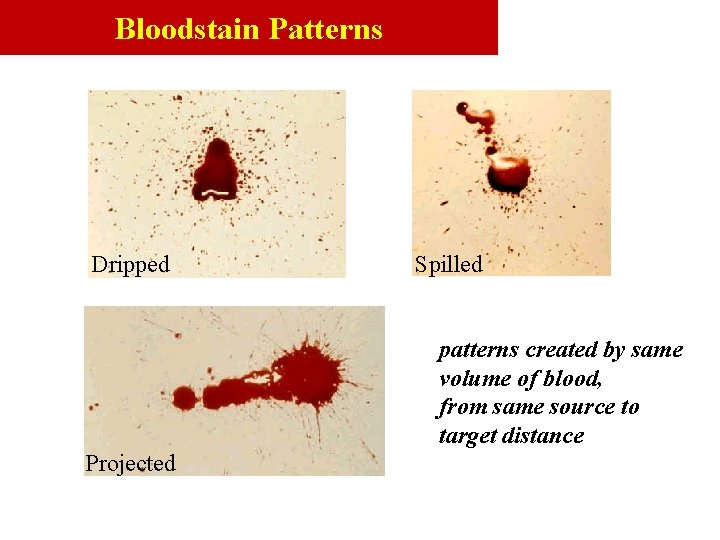
Bloodstain Patterns Dripped Spilled patterns created by same volume of blood, from same source to target distance Projected
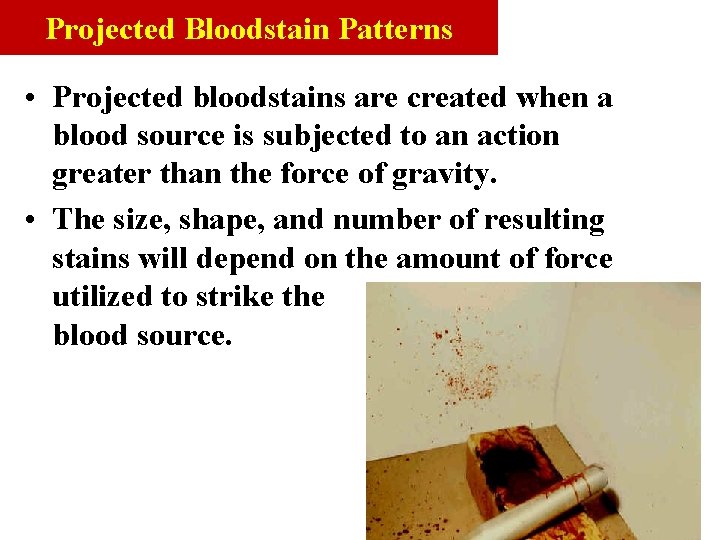
Projected Bloodstain Patterns • Projected bloodstains are created when a blood source is subjected to an action greater than the force of gravity. • The size, shape, and number of resulting stains will depend on the amount of force utilized to strike the blood source.

Projected Bloodstain Patterns • Arterial Spurt / Gush - Bloodstain pattern from blood spurt under pressure from a cut artery. • Cast-off Stains - Blood released or thrown from a bloodsoaked object in motion. • Impact Spatter - Blood stain patterns created when a blood source receives a blow or force resulting in the random dispersion of smaller drops of blood. Arterial Cast-Off
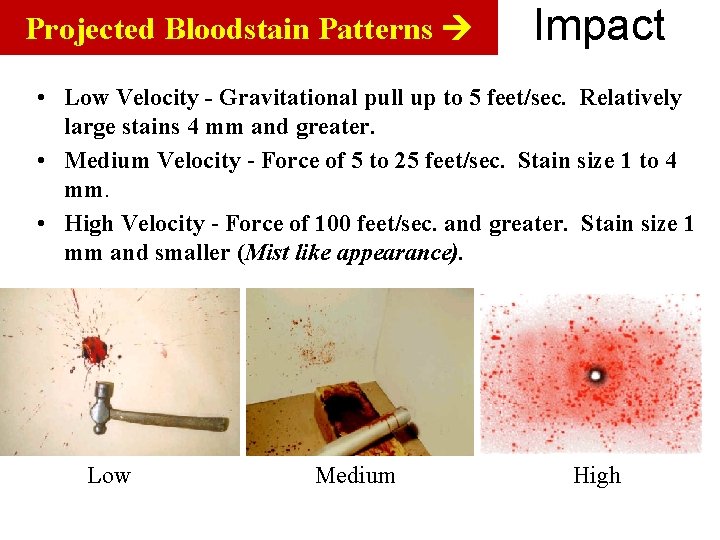
Projected Bloodstain Patterns Impact • Low Velocity - Gravitational pull up to 5 feet/sec. Relatively large stains 4 mm and greater. • Medium Velocity - Force of 5 to 25 feet/sec. Stain size 1 to 4 mm. • High Velocity - Force of 100 feet/sec. and greater. Stain size 1 mm and smaller (Mist like appearance). Low Medium High

Projected Bloodstain Patterns • DIRECTIONALITY OF BLOODSTAINS • When a droplet of blood strikes a surface perpendicular (90 degrees) the resulting bloodstain will be circular. • Blood that strikes a surface at an angle less than 90 degrees will be elongated or have a tear drop shape. • Directionality is usually obvious as the pointed end of the bloodstain ( tail ) will always point in the direction of travel.
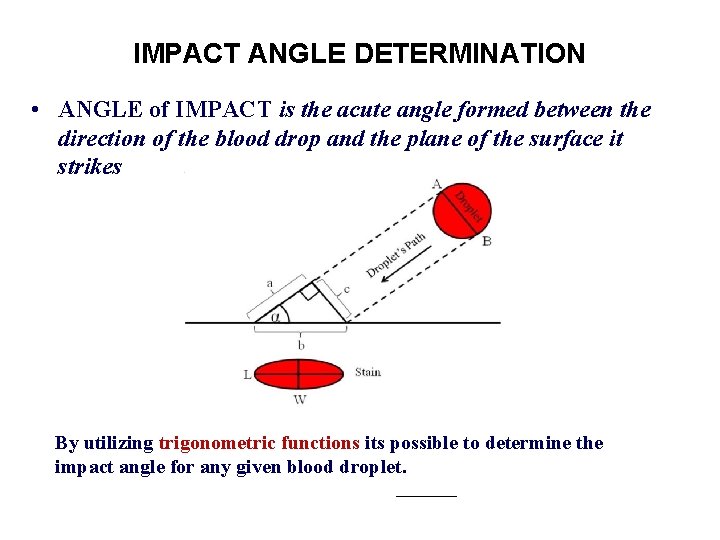
IMPACT ANGLE DETERMINATION • ANGLE of IMPACT is the acute angle formed between the direction of the blood drop and the plane of the surface it strikes By utilizing trigonometric functions its possible to determine the impact angle for any given blood droplet.
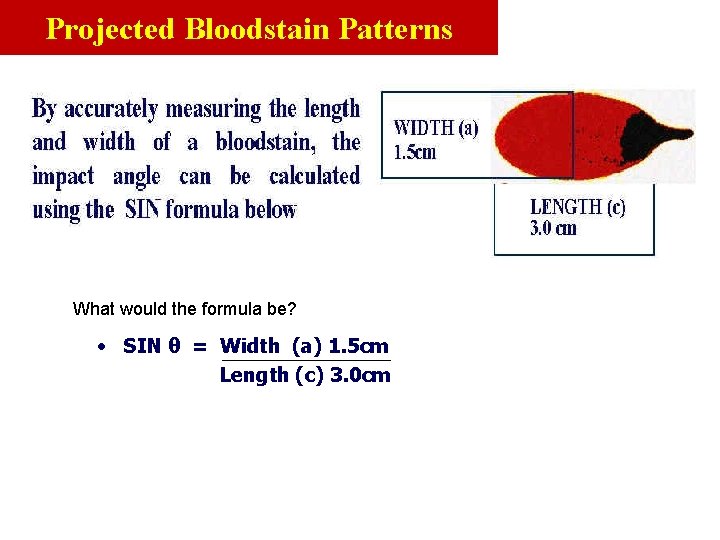
Projected Bloodstain Patterns What would the formula be? • SIN θ = Width (a) 1. 5 cm Length (c) 3. 0 cm
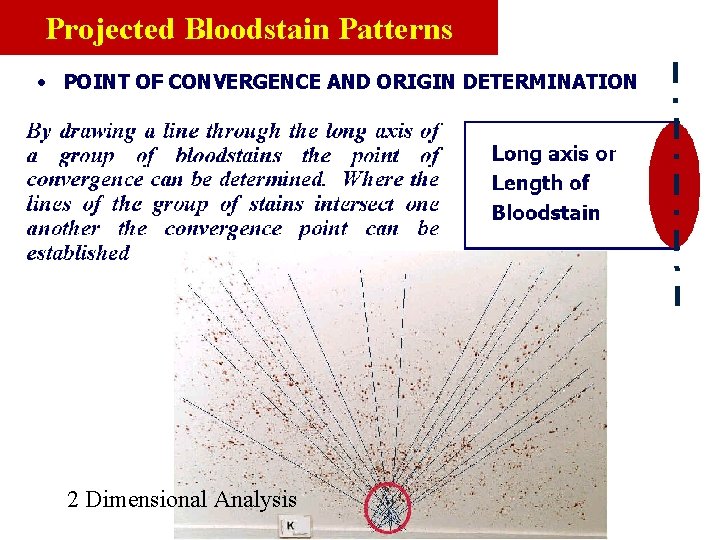
Projected Bloodstain Patterns • POINT OF CONVERGENCE AND ORIGIN DETERMINATION 2 Dimensional Analysis
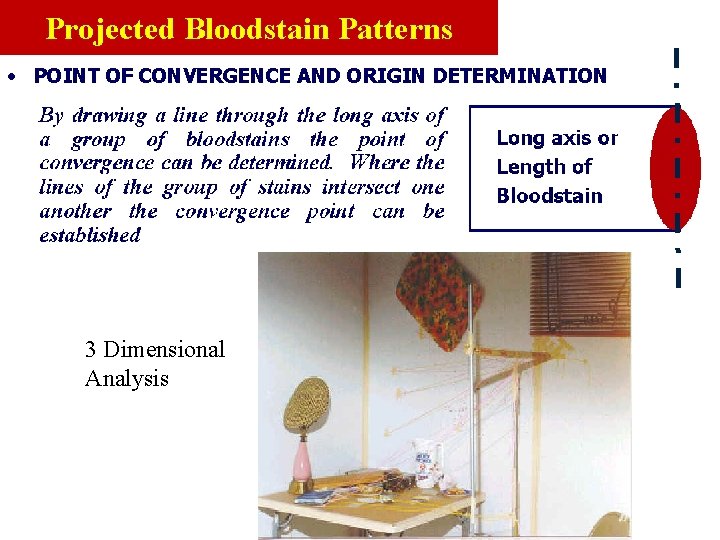
Projected Bloodstain Patterns • POINT OF CONVERGENCE AND ORIGIN DETERMINATION 3 Dimensional Analysis
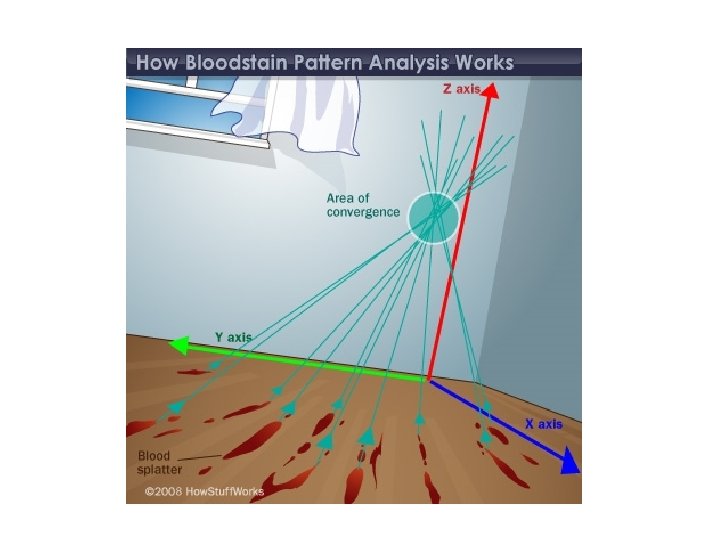
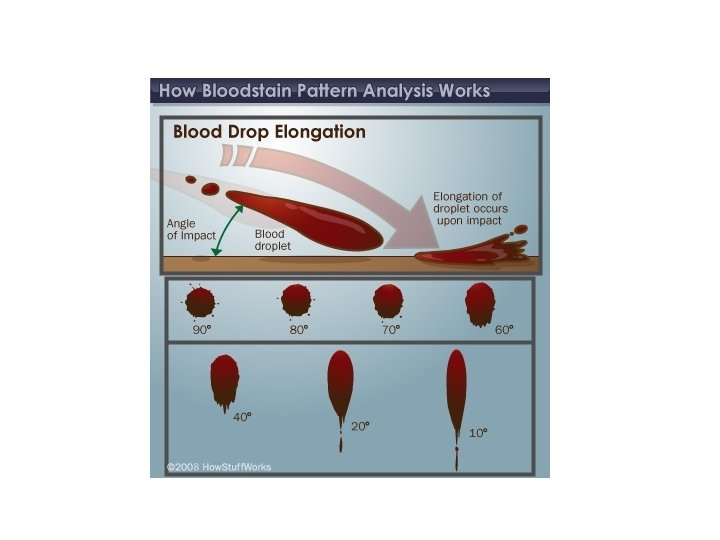
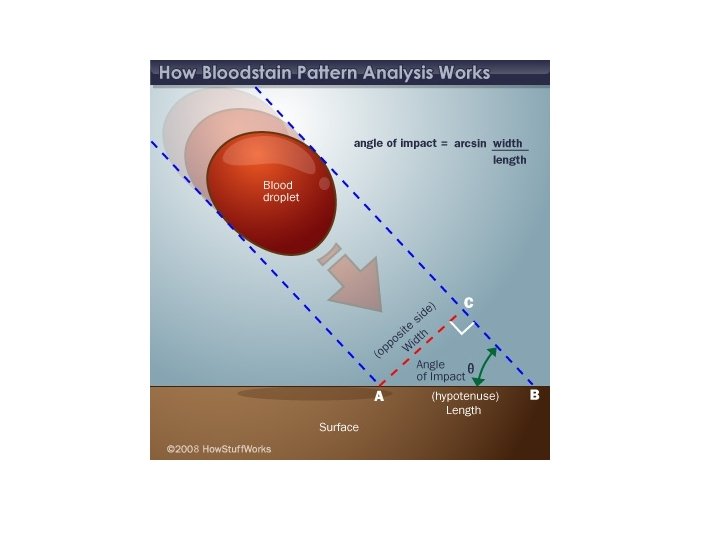
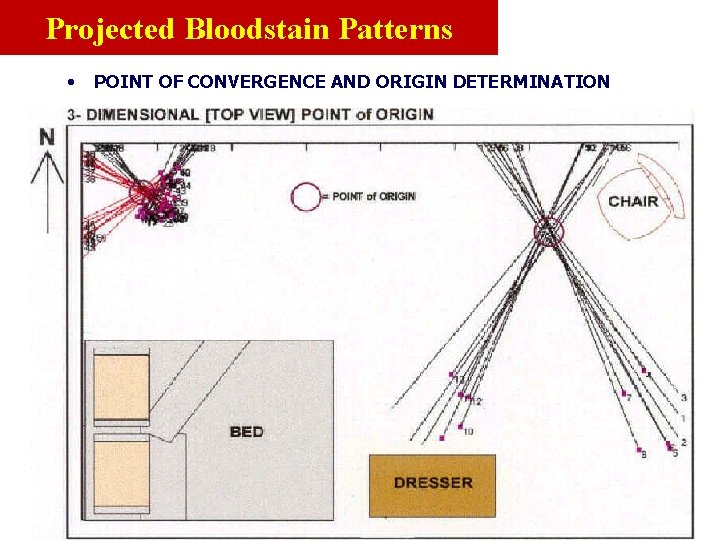
Projected Bloodstain Patterns • POINT OF CONVERGENCE AND ORIGIN DETERMINATION
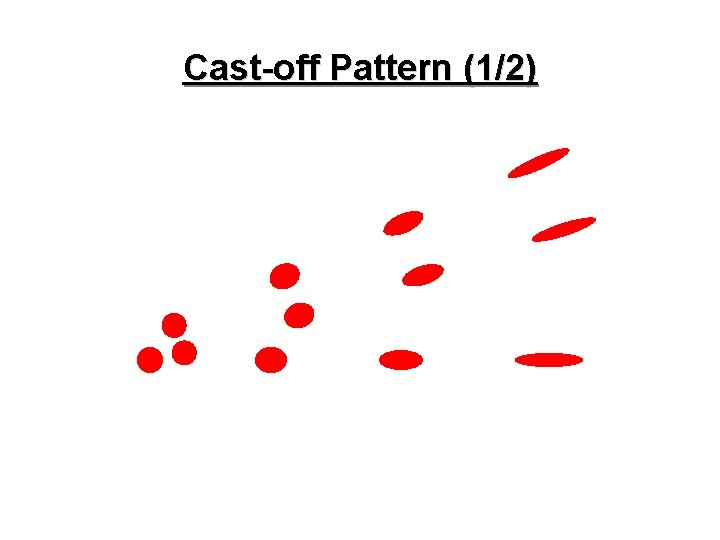
Cast-off Pattern (1/2)
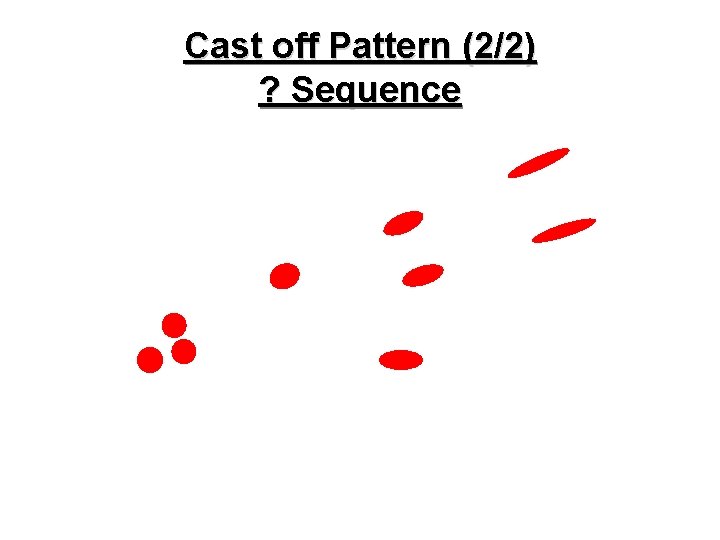
Cast off Pattern (2/2) ? Sequence
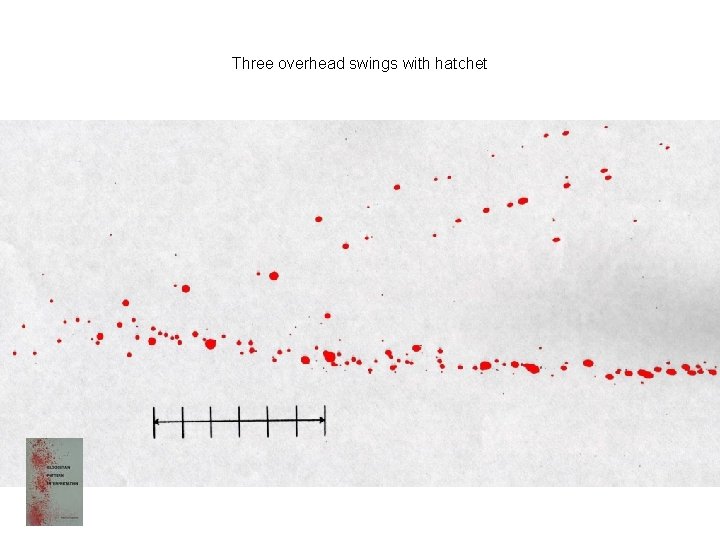
Three overhead swings with hatchet
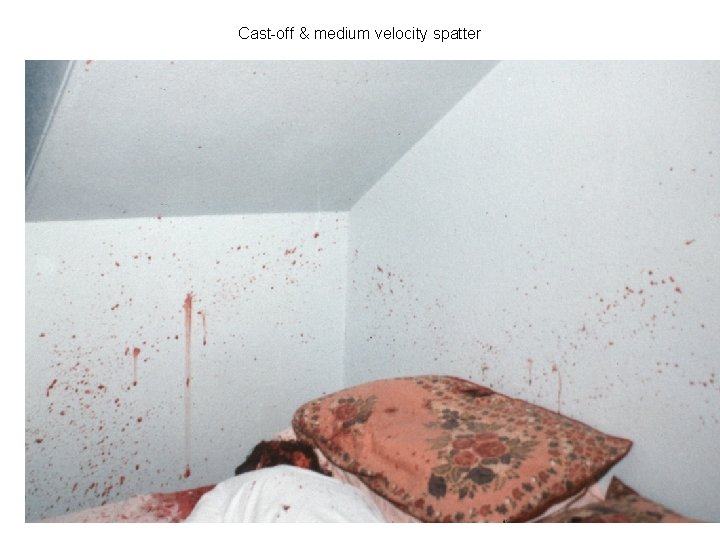
Cast-off & medium velocity spatter
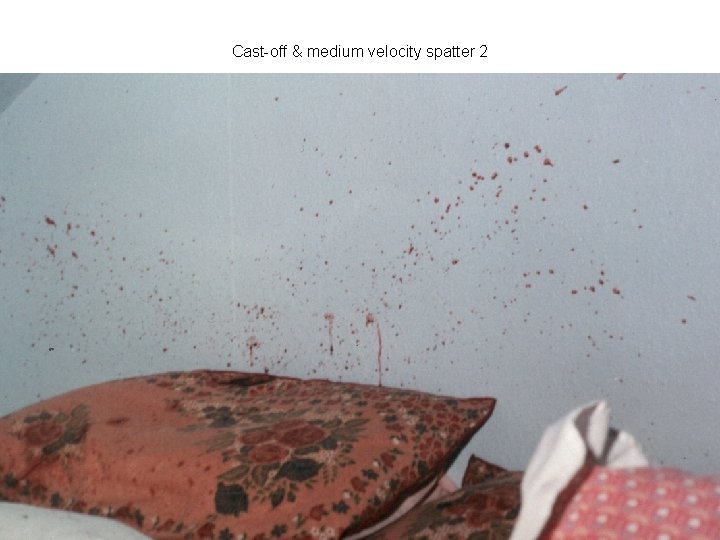
Cast-off & medium velocity spatter 2
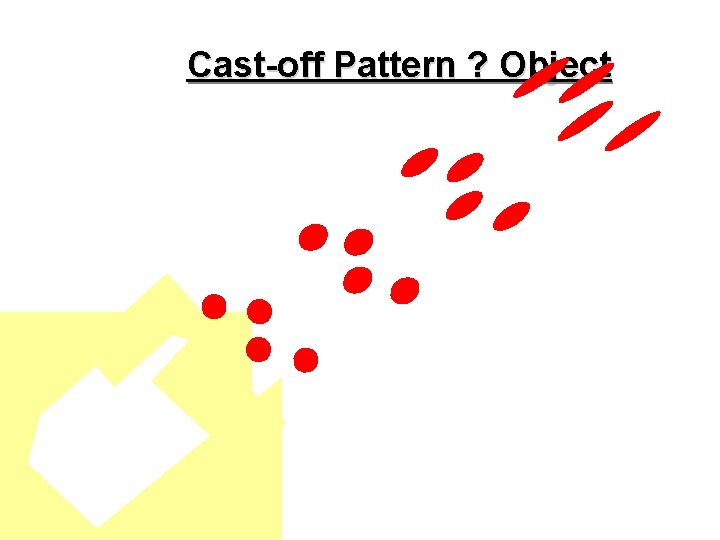
Cast-off Pattern ? Object
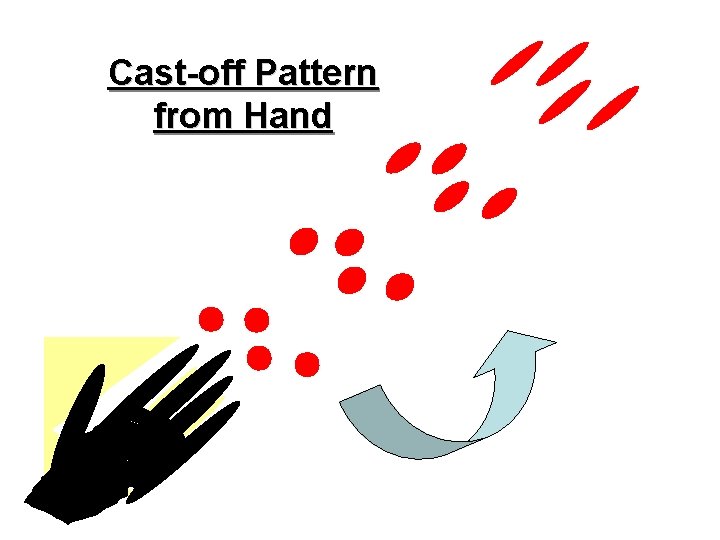
Cast-off Pattern from Hand
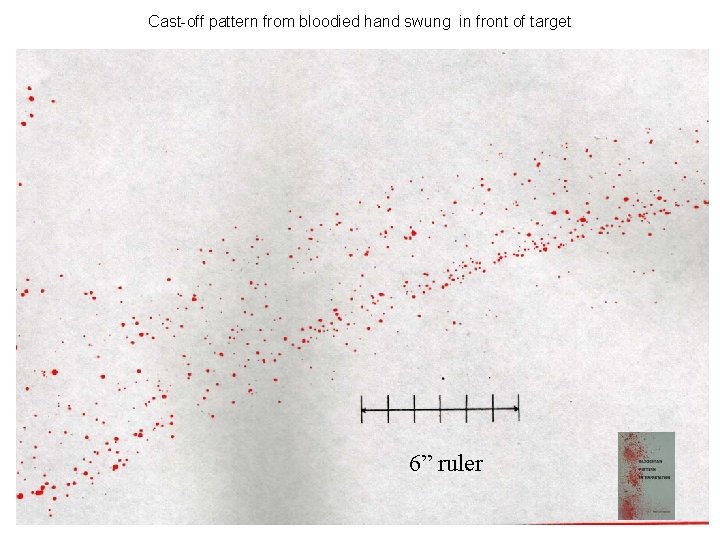
Cast-off pattern from bloodied hand swung in front of target 6” ruler
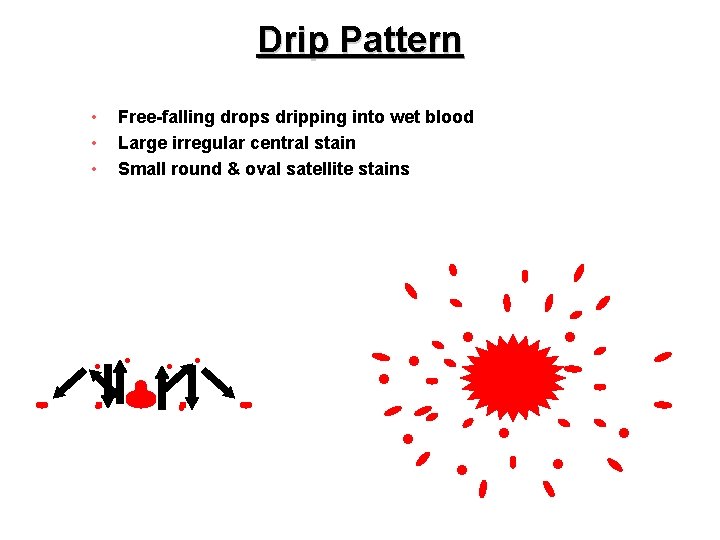
Drip Pattern • • • Free-falling drops dripping into wet blood Large irregular central stain Small round & oval satellite stains . . . .
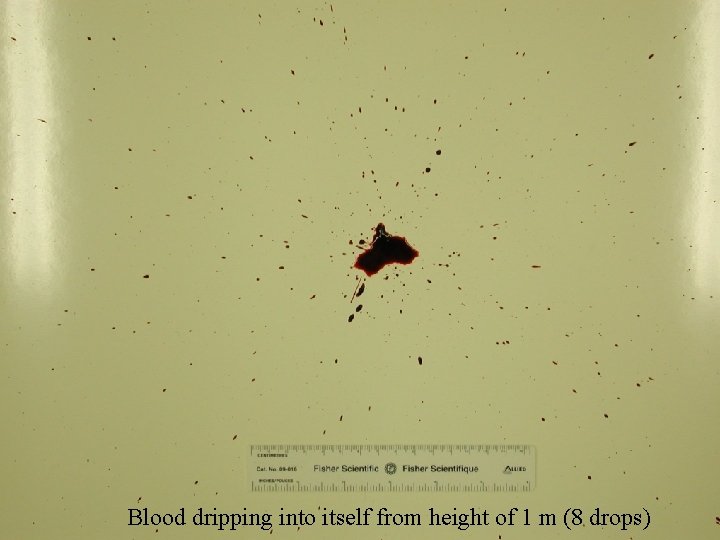
Drip 1: Blood dripping into itself from height of 1 m (8 drops)
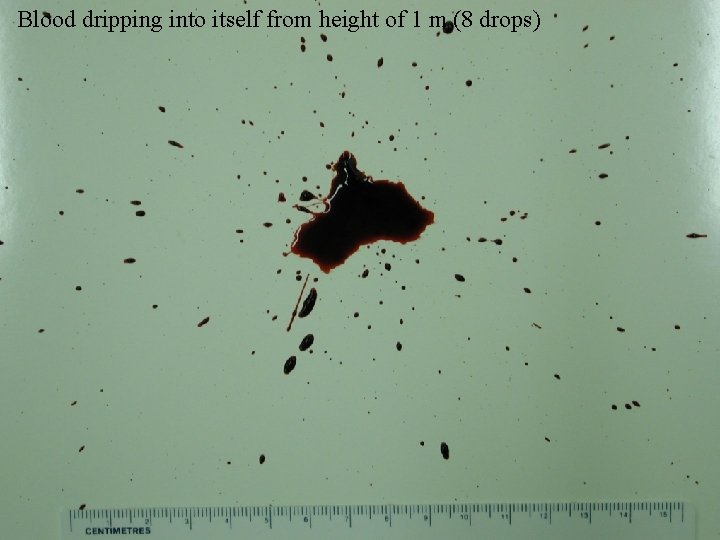
Blood dripping into itself from height of 1 m (8 drops) Drip 2
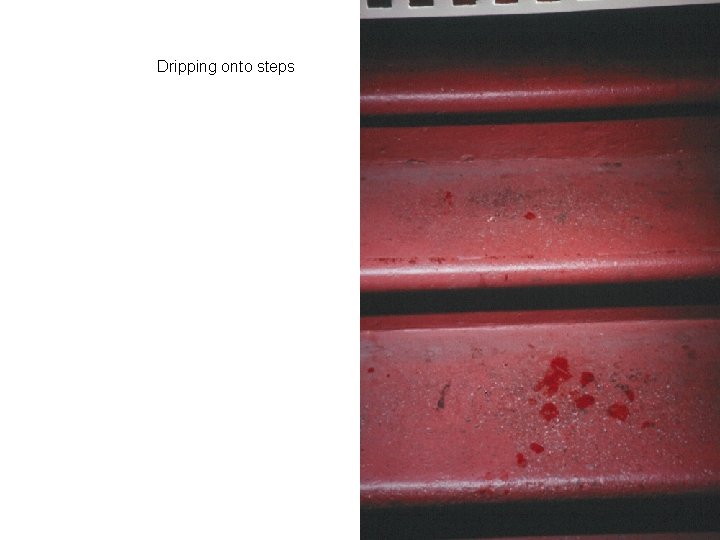
Dripping onto steps
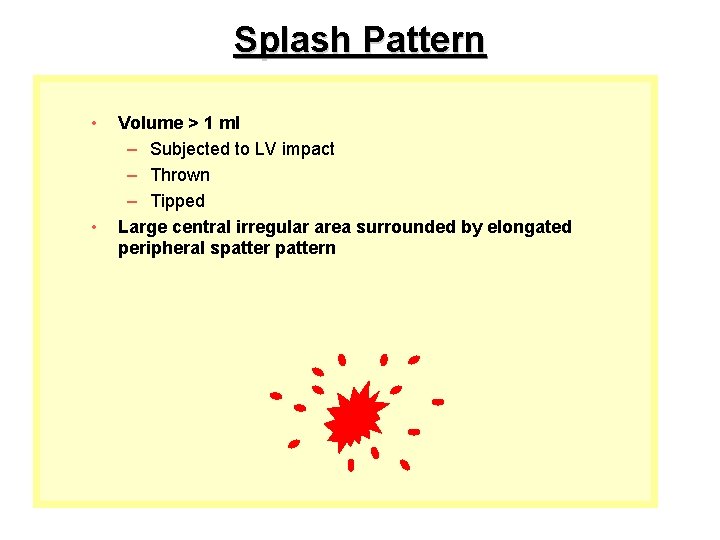
Splash Pattern • • Volume > 1 ml – Subjected to LV impact – Thrown – Tipped Large central irregular area surrounded by elongated peripheral spattern
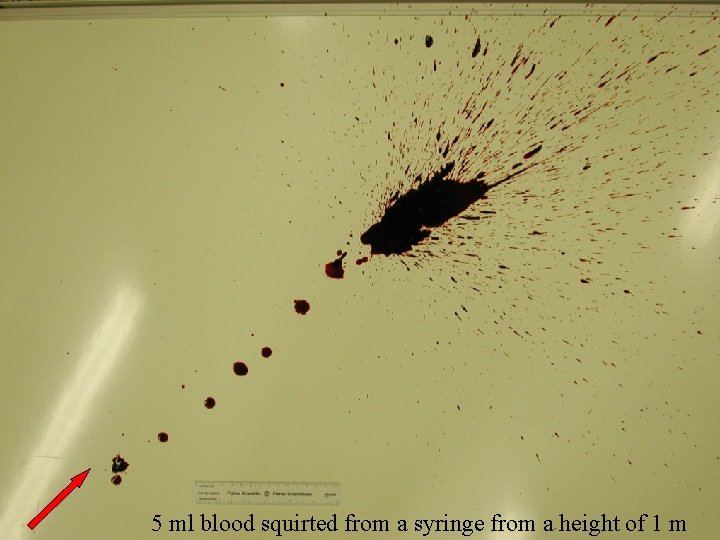
Splash 1 5 ml blood squirted from a syringe from a height of 1 m
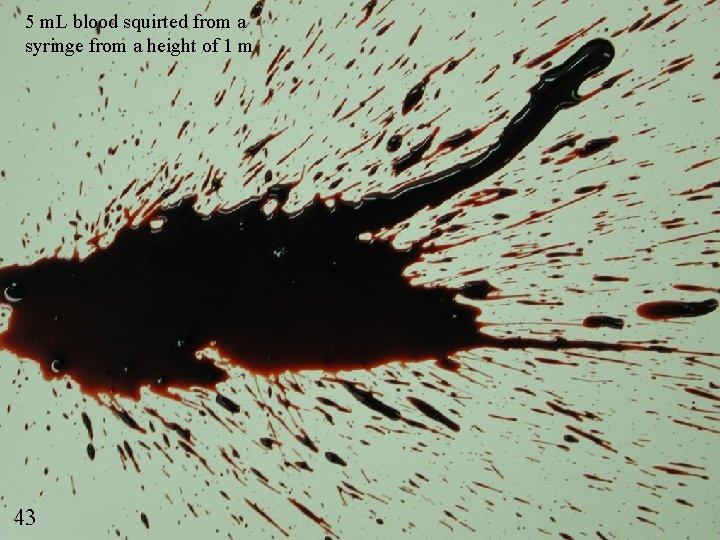
5 m. L blood squirted from a syringe from a height of 1 m Splash 2 43
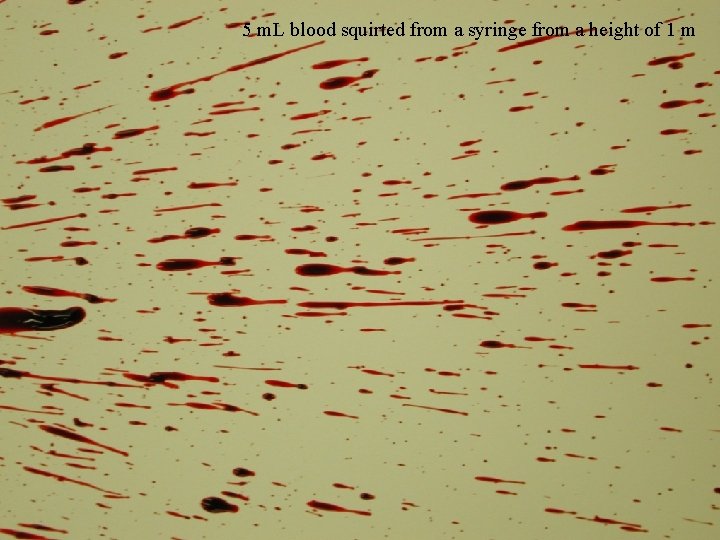
5 m. L blood squirted from a syringe from a height of 1 m Splash 3
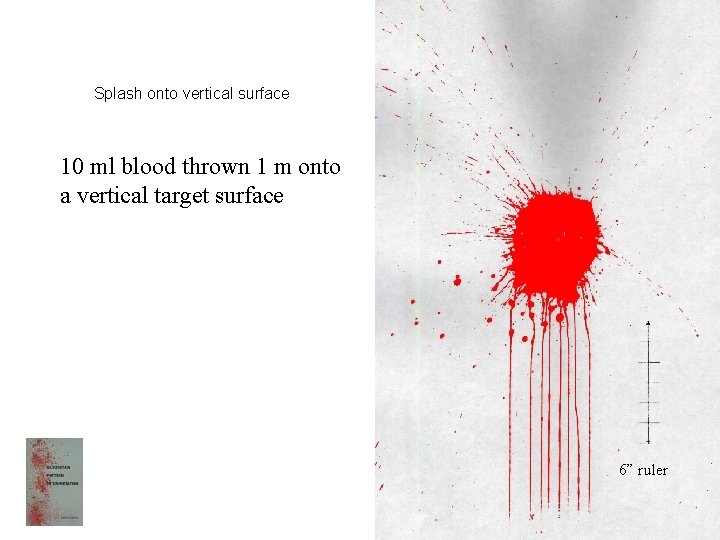
Splash onto vertical surface 10 ml blood thrown 1 m onto a vertical target surface 6” ruler
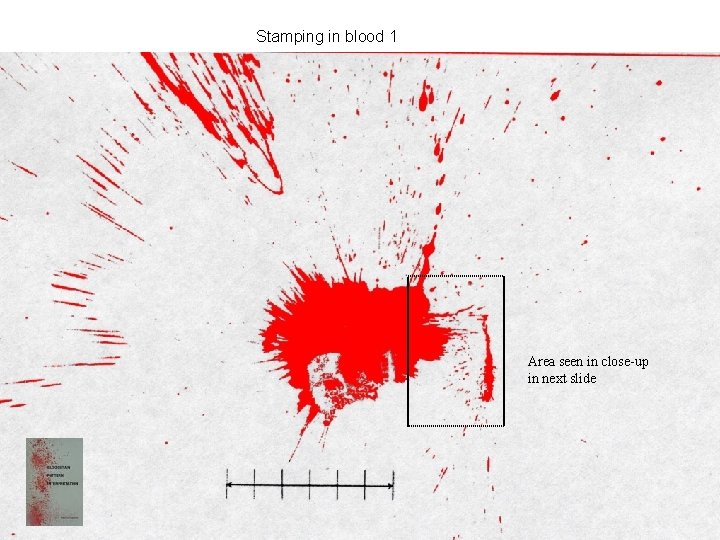
Stamping in blood 1 Area seen in close-up in next slide
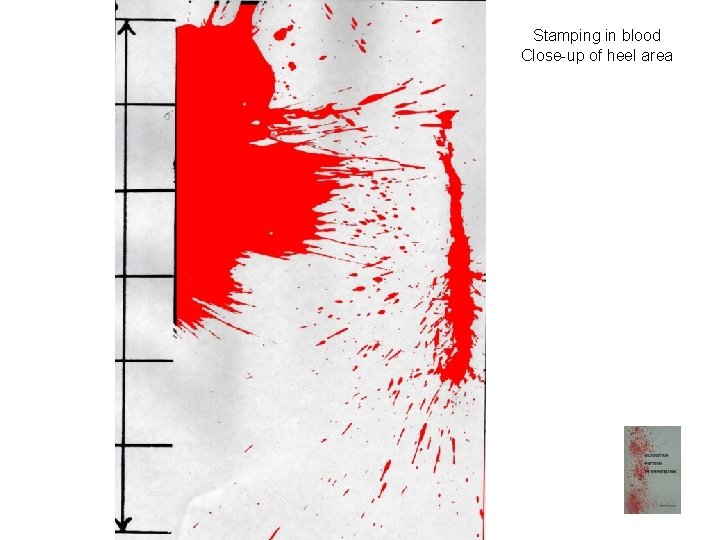
Stamping in blood Close-up of heel area
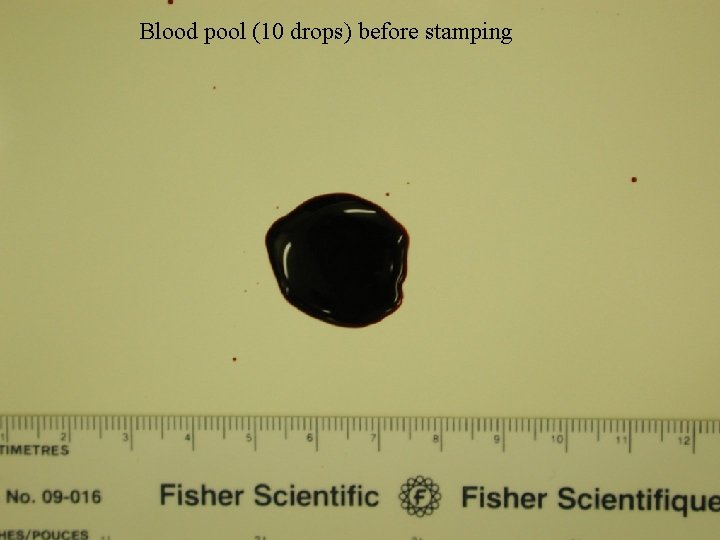
Blood pool (10 drops) before stamping Stamp 1
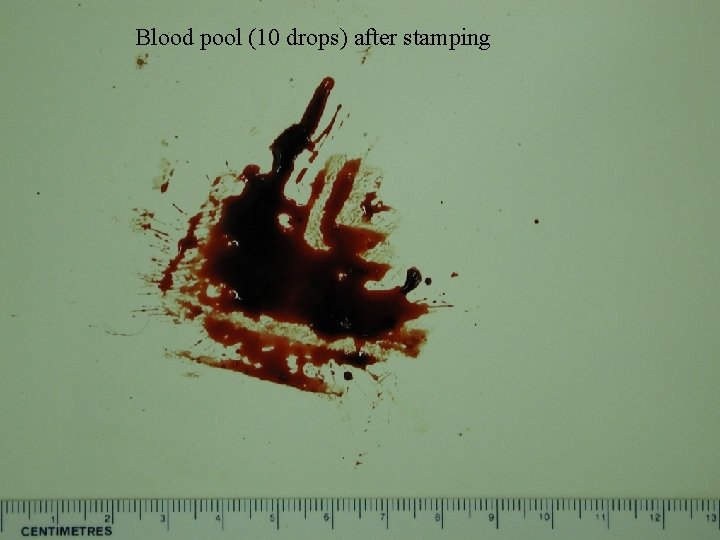
Blood pool (10 drops) after stamping Stamp 2
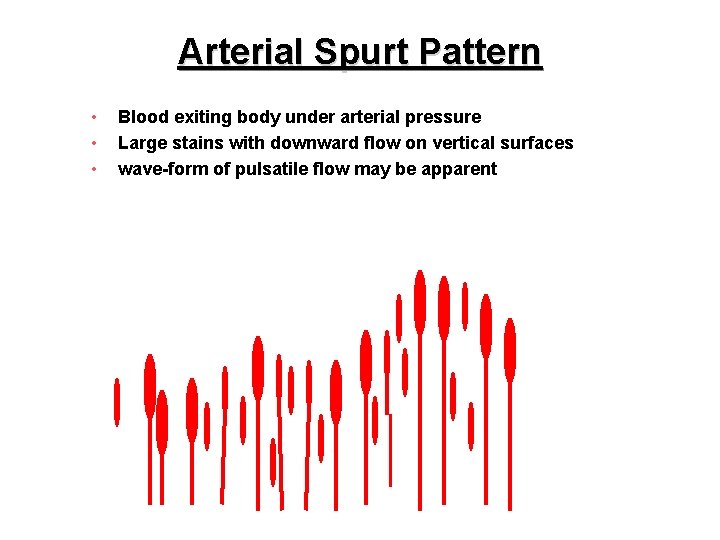
Arterial Spurt Pattern • • • Blood exiting body under arterial pressure Large stains with downward flow on vertical surfaces wave-form of pulsatile flow may be apparent
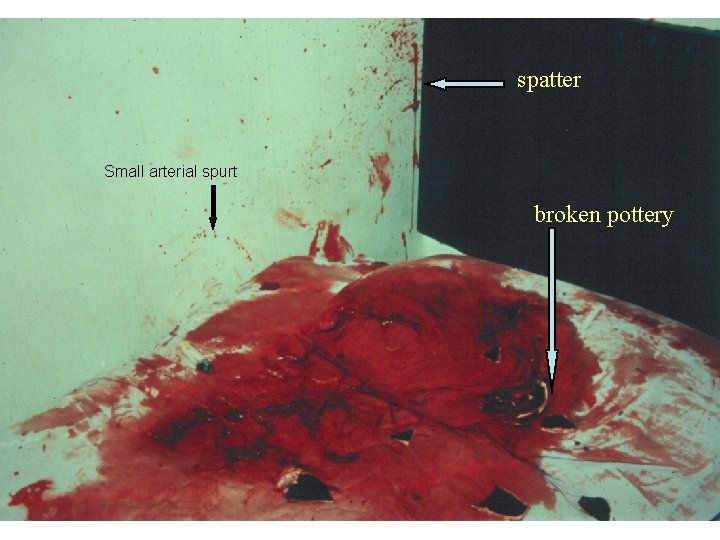
spatter Small arterial spurt broken pottery
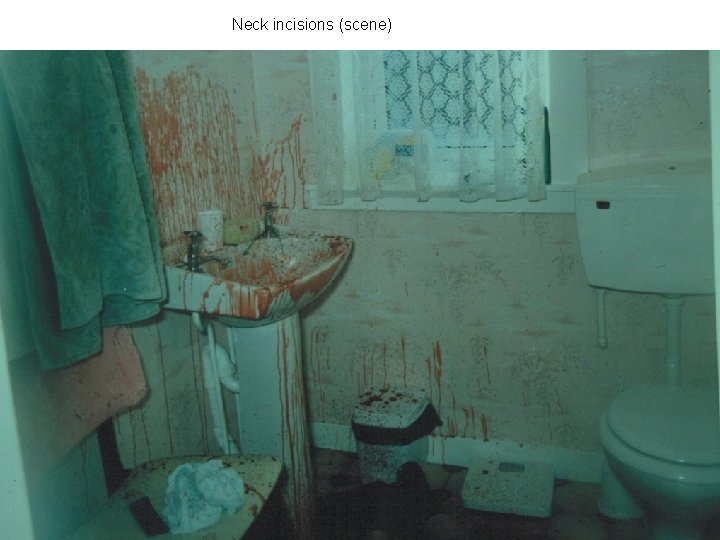
Neck incisions (scene)
Wipe Patterns • Object moves through a wet bloodstain • Feathered edge suggests direction
Transfer Patterns • • Wet, bloodied object contacts a secondary surface Transfer from: – hand, fingers – shoes, weapon – hair Transfer to: – walls, ceilings – clothing, bedding Produces mirror-image of bloodied object
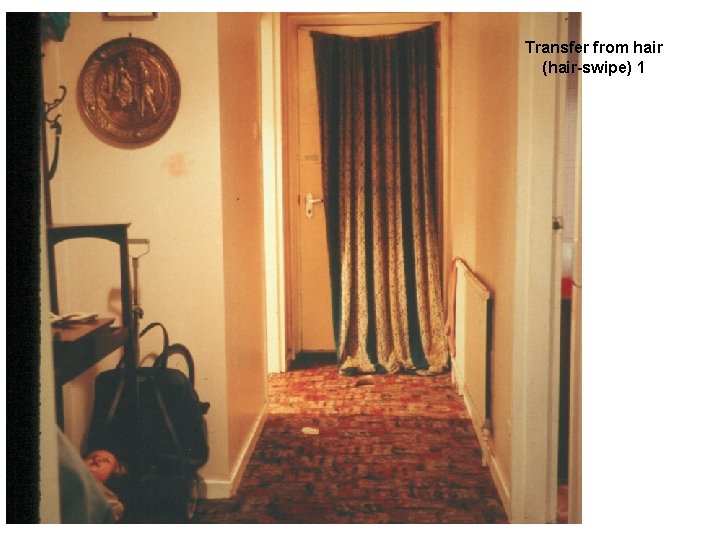
Transfer from hair (hair-swipe) 1
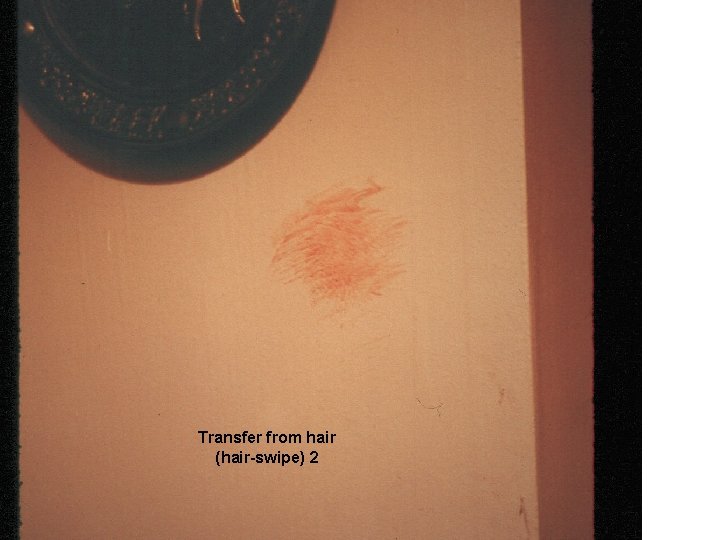
Transfer from hair (hair-swipe) 2
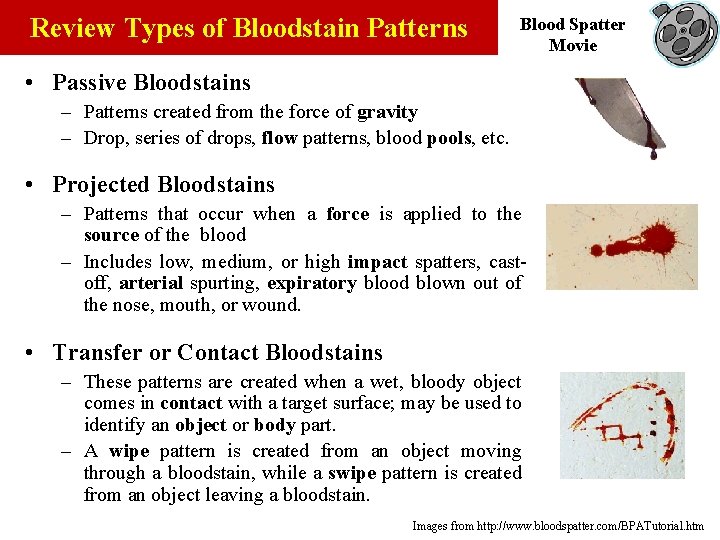
Review Types of Bloodstain Patterns Blood Spatter Movie • Passive Bloodstains – Patterns created from the force of gravity – Drop, series of drops, flow patterns, blood pools, etc. • Projected Bloodstains – Patterns that occur when a force is applied to the source of the blood – Includes low, medium, or high impact spatters, castoff, arterial spurting, expiratory blood blown out of the nose, mouth, or wound. • Transfer or Contact Bloodstains – These patterns are created when a wet, bloody object comes in contact with a target surface; may be used to identify an object or body part. – A wipe pattern is created from an object moving through a bloodstain, while a swipe pattern is created from an object leaving a bloodstain. Images from http: //www. bloodspatter. com/BPATutorial. htm
- Slides: 45