
Forensic Psychiatry 2 The link between crime and
Forensic Psychiatry 2 The link between crime and mental disorder
The link between crime and mental disorder Aims and Objectives (from handbook) • To develop an understanding of – The types of offences committed by mentally-disordered offenders – The aetiology of certain crimes including violent offences, sex offences, criminal damage and fire-setting – The ranges of offences committed by offenders with schizophrenia, affective disorder and personality disorder – Genetic and gender-specific factors in offending
The link between crime and mental disorder To achieve this • • • Case Presentation Journal Club 555 Presentation Expert-Led Session MCQs • Please sign the register and complete the feedback
The link between crime and mental disorder Expert Led Session The link between crime and mental disorder Author: Dr Victoria Sullivan
SEX OFFENDING
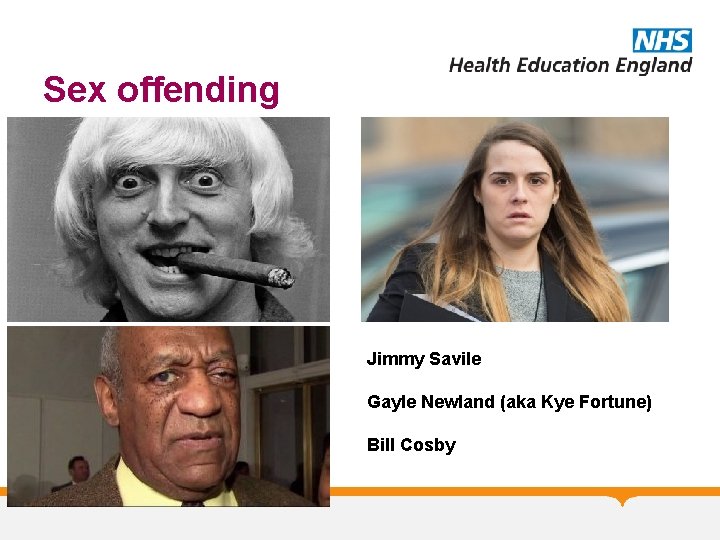
Sex offending Jimmy Savile Gayle Newland (aka Kye Fortune) Bill Cosby
Sexual Offence “A criminal offence involving sexual behaviour occurs when one party does not give, or is incapable of giving fully informed consent or where the difference in power between two parties is such that one is not in a position to make a truly free choice. ” O’Connell 1990
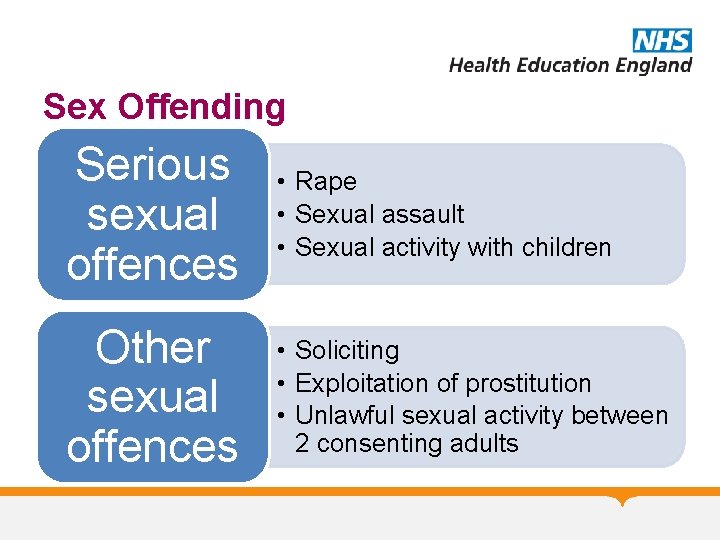
Sex Offending Serious sexual offences • Rape • Sexual assault • Sexual activity with children Other sexual offences • Soliciting • Exploitation of prostitution • Unlawful sexual activity between 2 consenting adults
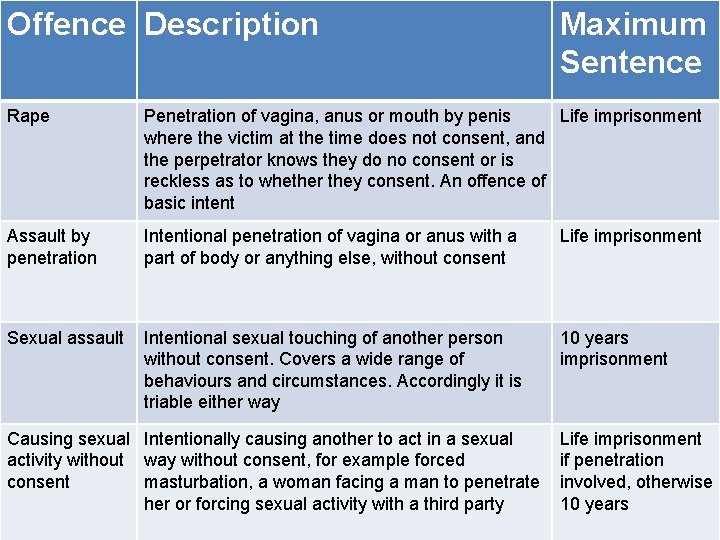
Offence Description Maximum Sentence Rape Penetration of vagina, anus or mouth by penis Life imprisonment where the victim at the time does not consent, and the perpetrator knows they do no consent or is reckless as to whether they consent. An offence of basic intent Assault by penetration Intentional penetration of vagina or anus with a part of body or anything else, without consent Life imprisonment Sexual assault Intentional sexual touching of another person without consent. Covers a wide range of behaviours and circumstances. Accordingly it is triable either way 10 years imprisonment Causing sexual Intentionally causing another to act in a sexual activity without way without consent, for example forced consent masturbation, a woman facing a man to penetrate her or forcing sexual activity with a third party Life imprisonment if penetration involved, otherwise 10 years
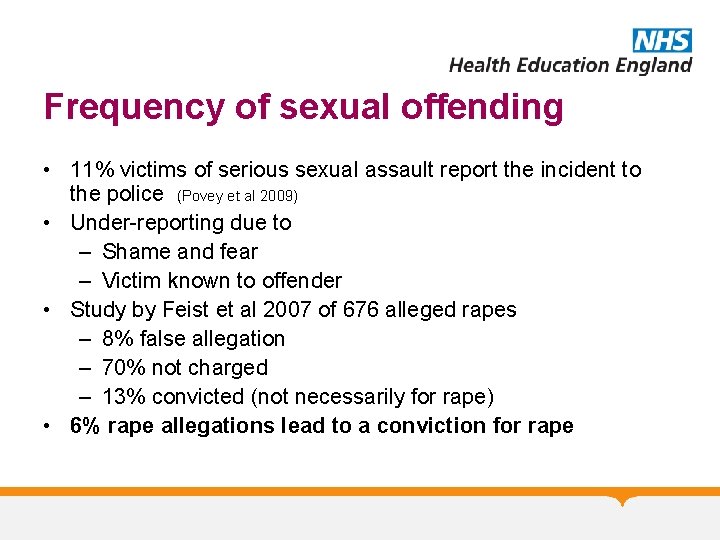
Frequency of sexual offending • 11% victims of serious sexual assault report the incident to the police (Povey et al 2009) • Under-reporting due to – Shame and fear – Victim known to offender • Study by Feist et al 2007 of 676 alleged rapes – 8% false allegation – 70% not charged – 13% convicted (not necessarily for rape) • 6% rape allegations lead to a conviction for rape
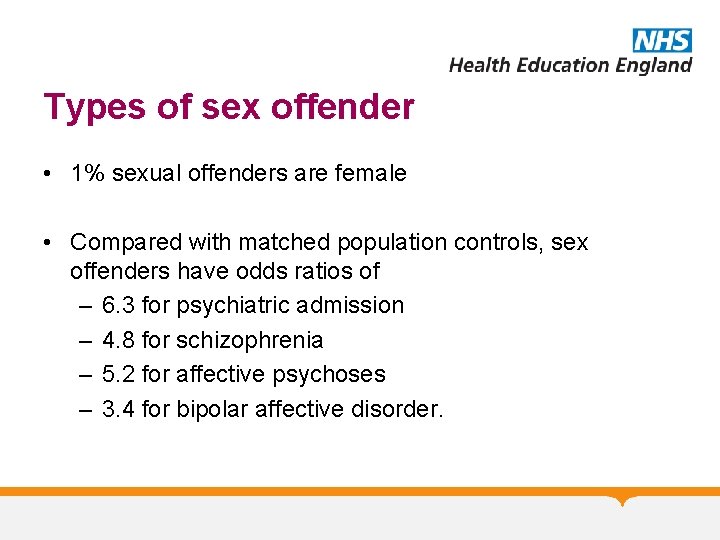
Types of sex offender • 1% sexual offenders are female • Compared with matched population controls, sex offenders have odds ratios of – 6. 3 for psychiatric admission – 4. 8 for schizophrenia – 5. 2 for affective psychoses – 3. 4 for bipolar affective disorder.
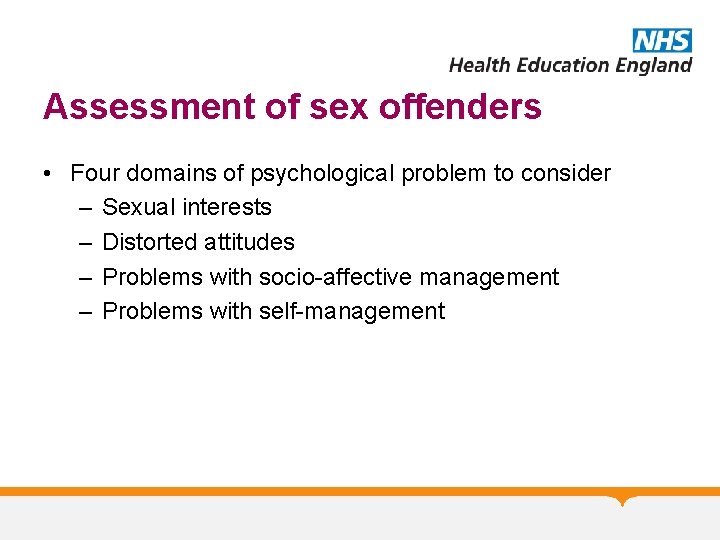
Assessment of sex offenders • Four domains of psychological problem to consider – Sexual interests – Distorted attitudes – Problems with socio-affective management – Problems with self-management
Risk assessment tools • Static-2002 • Risk Matrix 2000 • Sex Offender Risk Appraisal Guide (SORAG) • Rapid Risk Assessment for Sex Offender Recidivism (RRASOR) • Risk of Sexual Violence Protocol (RSVP)
Psychological treatment • Aim to reduce risk by identifying and modifying dynamic risk factors • Sex Offender Treatment Programme (SOTP) – Standardised – Usually group – Adapted programme for low IQ – Efficacy – evidence conflicting
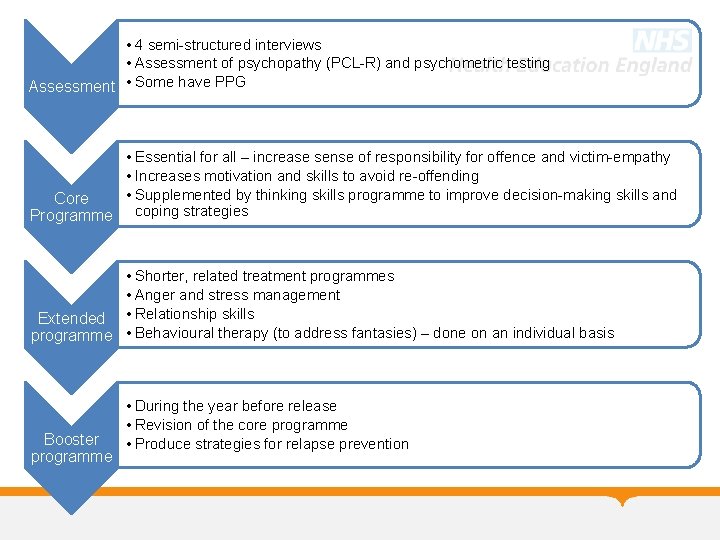
• 4 semi-structured interviews • Assessment of psychopathy (PCL-R) and psychometric testing Assessment • Some have PPG • Essential for all – increase sense of responsibility for offence and victim-empathy • Increases motivation and skills to avoid re-offending • Supplemented by thinking skills programme to improve decision-making skills and Core Programme coping strategies • Shorter, related treatment programmes • Anger and stress management Extended • Relationship skills programme • Behavioural therapy (to address fantasies) – done on an individual basis Booster programme • During the year before release • Revision of the core programme • Produce strategies for relapse prevention

Pharmacological Treatment • As part of a comprehensive treatment package • 3 classes – SSRIs – Antiandrogens – Luteinizing hormone-releasing hormone agonists
Reconviction rates • Hood et al (2002) followed up 192 sex offenders for 4 – 6 years following release from prison – 8. 5% convicted for sexual offence – 18. 1% imprisoned for any offence – Reconviction rates lower • Those who had offended against a child in own family • Those who had offended against adults
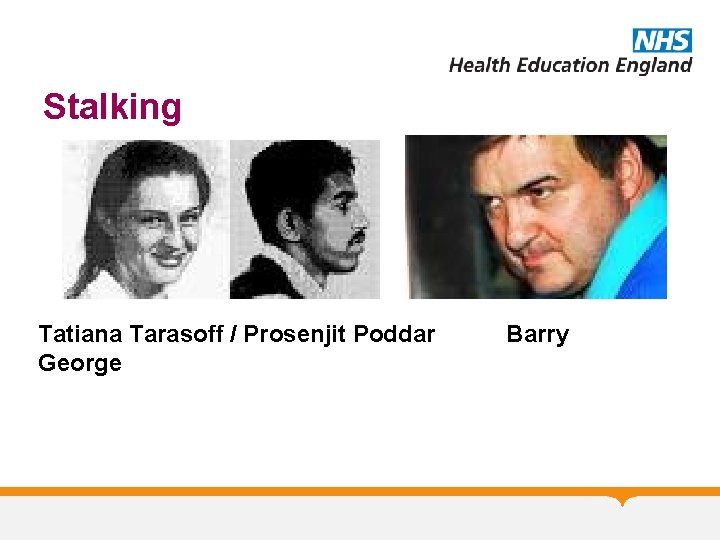
Stalking Tatiana Tarasoff / Prosenjit Poddar George Barry
Stalking • Repeated intrusions involving unwanted contacts and / or communication • 15% women lifetime prevalence • Individual formulation required • Mullen et al (2006) devised a typology of stalkers
Rejected Angry, dependent man pursuing an ex-partner. Unable to accept rejection. Stalking maintains a semblance of a relationship Intimacy seekers Socially incompetent fantasist seeking a relationship with someone with whom they are in love, or they believed to be in love with them. Includes delusional erotomania. Incompete nt suitor Pursue intimate relationships inappropriately due to poor social skills and/or a sense of entitlement. May occur in LD or ASD. May be easy to persuade them to stop stalking one victim, but the behaviour may recur with someone else. Resentful Motivated by revenge for some slight / insult, so well aware of distress or fear of victim. Likely to threaten, but less likely to carry out violence. Paranoid PD common. Predatory Stalking is preparatory to a sexual assault

FIRE-SETTING
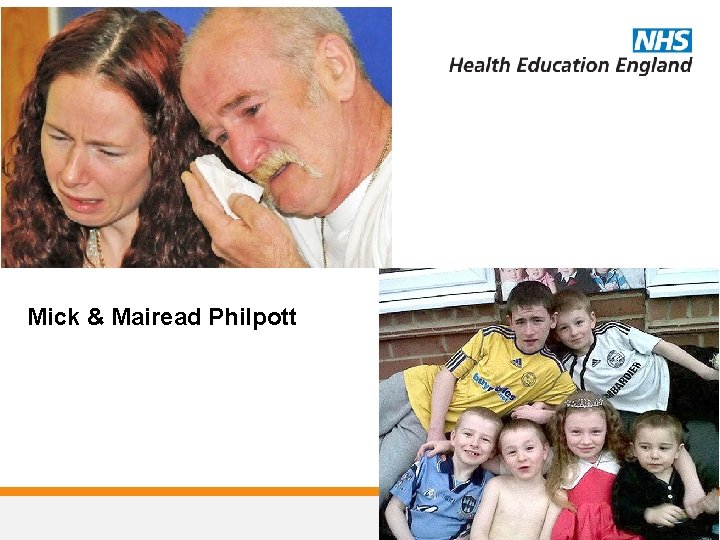
Mick & Mairead Philpott
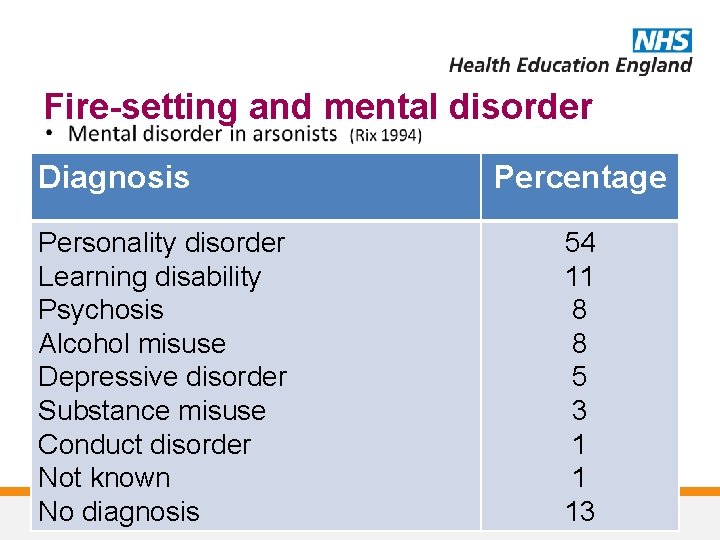
Fire-setting and mental disorder Diagnosis Personality disorder Learning disability Psychosis Alcohol misuse Depressive disorder Substance misuse Conduct disorder Not known No diagnosis Percentage 54 11 8 8 5 3 1 1 13
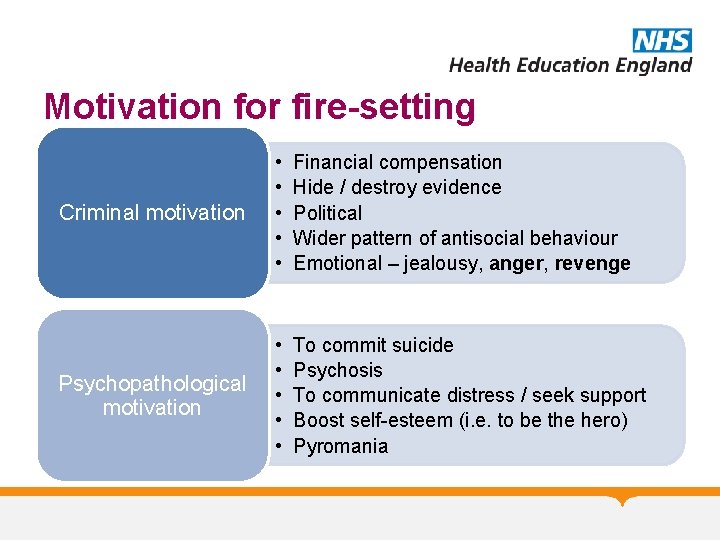
Motivation for fire-setting Criminal motivation • • • Financial compensation Hide / destroy evidence Political Wider pattern of antisocial behaviour Emotional – jealousy, anger, revenge Psychopathological motivation • • • To commit suicide Psychosis To communicate distress / seek support Boost self-esteem (i. e. to be the hero) Pyromania
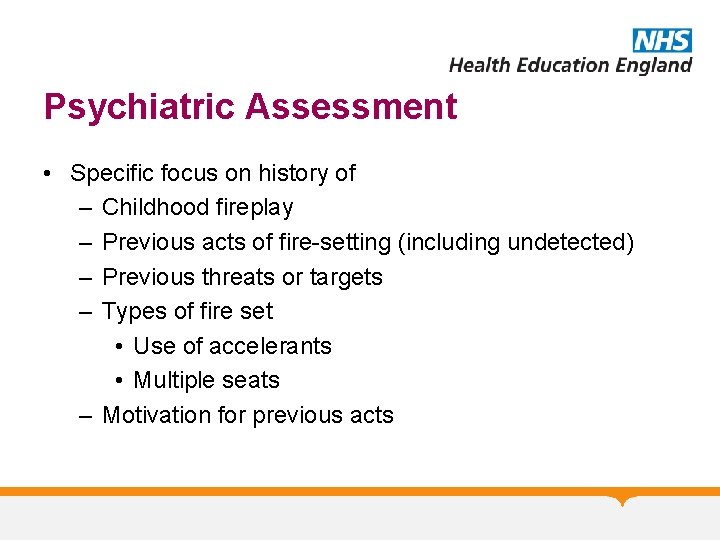
Psychiatric Assessment • Specific focus on history of – Childhood fireplay – Previous acts of fire-setting (including undetected) – Previous threats or targets – Types of fire set • Use of accelerants • Multiple seats – Motivation for previous acts
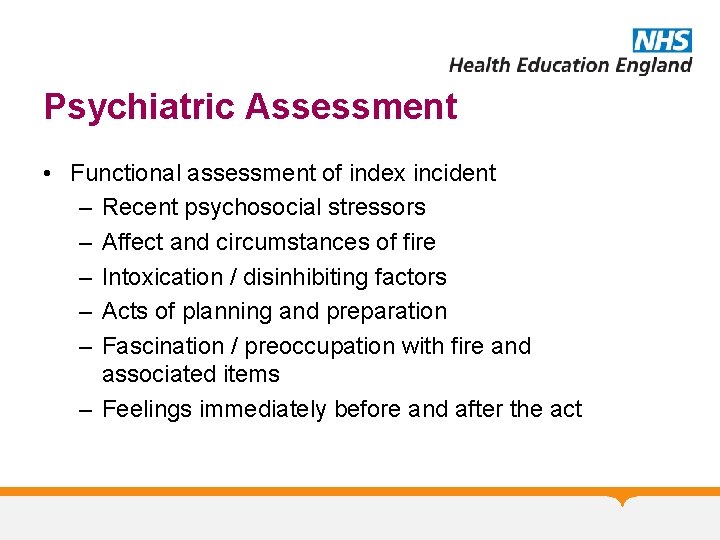
Psychiatric Assessment • Functional assessment of index incident – Recent psychosocial stressors – Affect and circumstances of fire – Intoxication / disinhibiting factors – Acts of planning and preparation – Fascination / preoccupation with fire and associated items – Feelings immediately before and after the act
Pathological fire-setting • ‘Habit and impulse disorder’ (ICD-10) • Interest in fire and associated things – Likely to watch fire, call fire brigade and watch intervention • Compulsive nature – anticipatory subjective tension followed by excitement • More common in – Males – LD – Inadequate personality
Treatment Very few modifiable risk factors to address Educational vs psychological approach Educational Psychological • Typically with children • Information on fire safety skills • Information on risks and consequences • CBT-based group interventions in hospital settings • (little available in prison or probation settings)
Reoffending • Rates vary from 4 – 60% • Risk factors for recidivism – Young age – Single – Developmental history of family violence or substance misuse – Early onset of criminal convictions – Lengthier prison stays – Relationship problems – More previous convictions for property offences Dickens et al (2007)
VIOLENCE, HOMICIDE & INFANTICIDE

Christopher Clunis
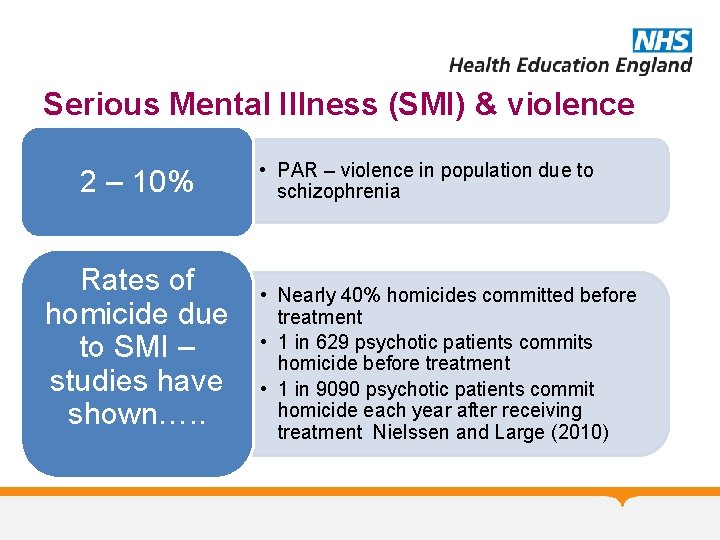
Serious Mental Illness (SMI) & violence / homicide • PAR – violence in population due to 2 – 10% schizophrenia Rates of homicide due to SMI – studies have shown…. . • Nearly 40% homicides committed before treatment • 1 in 629 psychotic patients commits homicide before treatment • 1 in 9090 psychotic patients commit homicide each year after receiving treatment Nielssen and Large (2010)
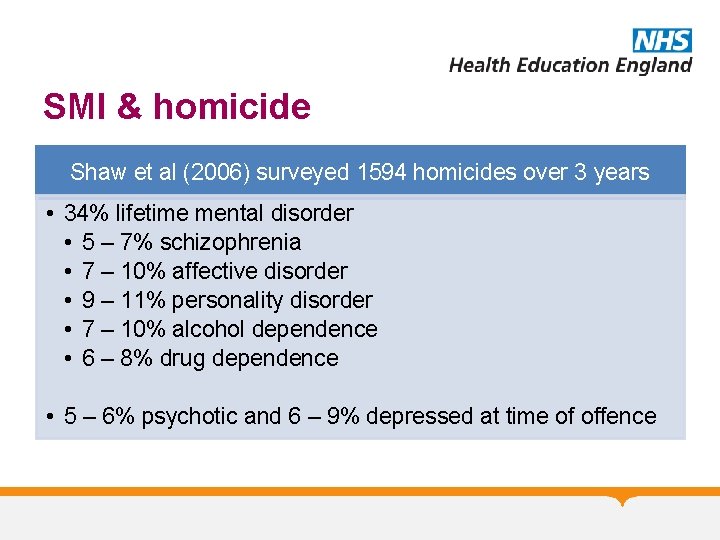
SMI & homicide Shaw et al (2006) surveyed 1594 homicides over 3 years • 34% lifetime mental disorder • 5 – 7% schizophrenia • 7 – 10% affective disorder • 9 – 11% personality disorder • 7 – 10% alcohol dependence • 6 – 8% drug dependence • 5 – 6% psychotic and 6 – 9% depressed at time of offence
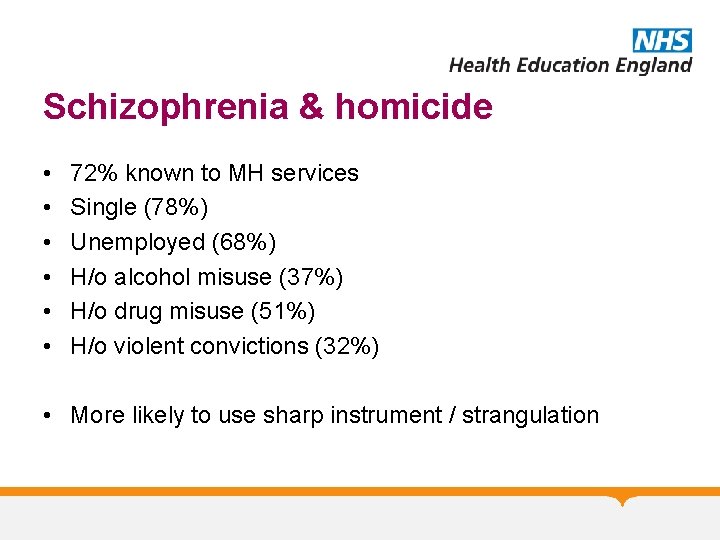
Schizophrenia & homicide • • • 72% known to MH services Single (78%) Unemployed (68%) H/o alcohol misuse (37%) H/o drug misuse (51%) H/o violent convictions (32%) • More likely to use sharp instrument / strangulation
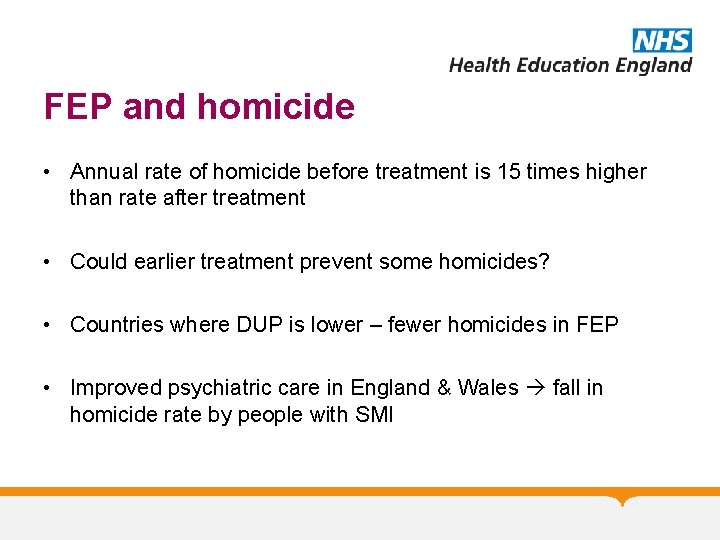
FEP and homicide • Annual rate of homicide before treatment is 15 times higher than rate after treatment • Could earlier treatment prevent some homicides? • Countries where DUP is lower – fewer homicides in FEP • Improved psychiatric care in England & Wales fall in homicide rate by people with SMI
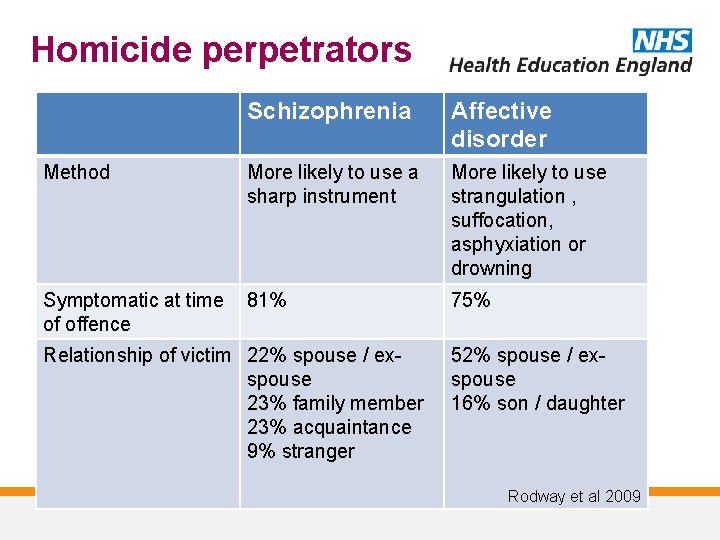
Homicide perpetrators Method Schizophrenia Affective disorder More likely to use a sharp instrument More likely to use strangulation , suffocation, asphyxiation or drowning Symptomatic at time 81% of offence 75% Relationship of victim 22% spouse / exspouse 23% family member 23% acquaintance 9% stranger 52% spouse / exspouse 16% son / daughter Rodway et al 2009
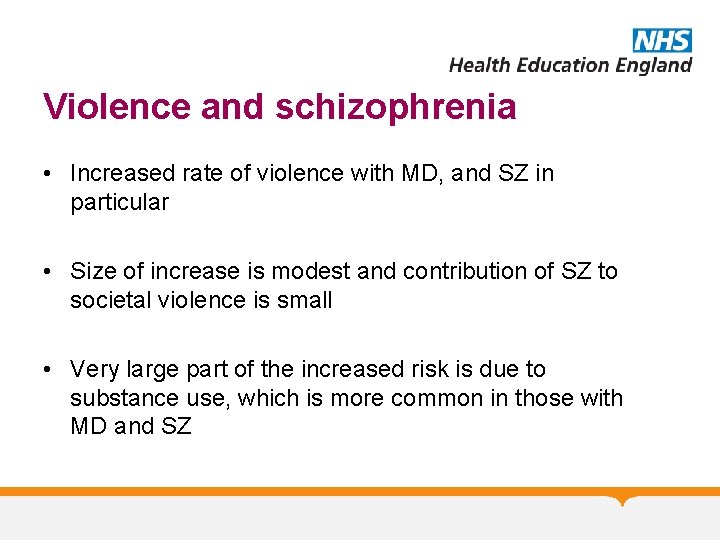
Violence and schizophrenia • Increased rate of violence with MD, and SZ in particular • Size of increase is modest and contribution of SZ to societal violence is small • Very large part of the increased risk is due to substance use, which is more common in those with MD and SZ
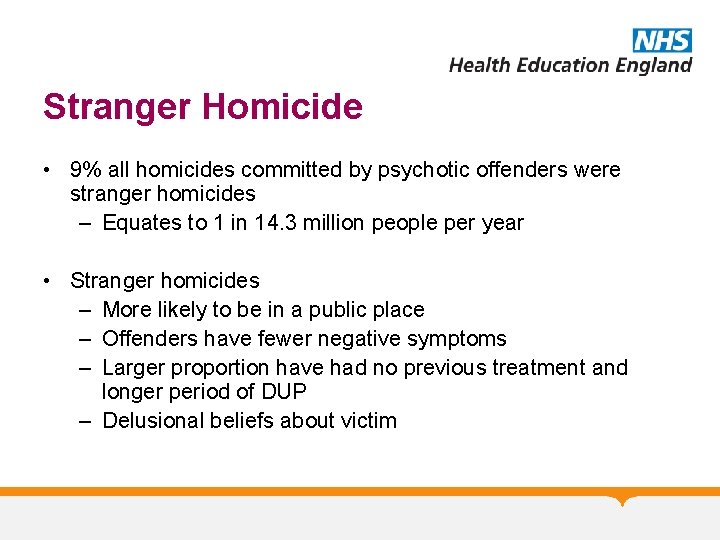
Stranger Homicide • 9% all homicides committed by psychotic offenders were stranger homicides – Equates to 1 in 14. 3 million people per year • Stranger homicides – More likely to be in a public place – Offenders have fewer negative symptoms – Larger proportion have had no previous treatment and longer period of DUP – Delusional beliefs about victim

Dominique Cottrez
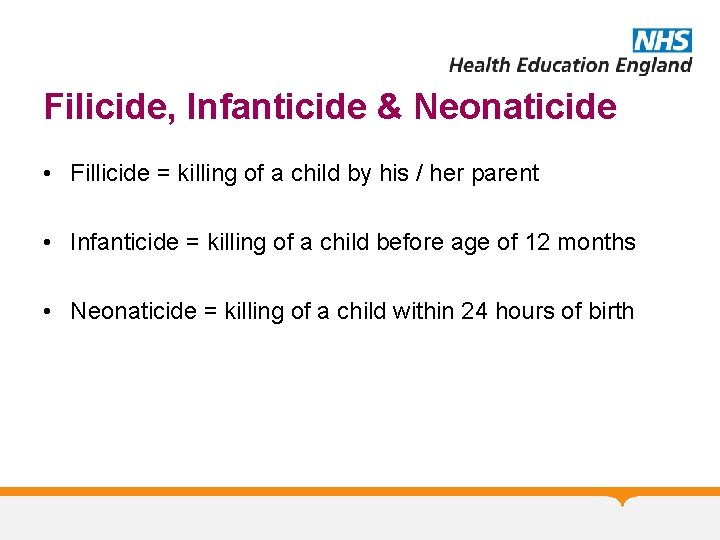
Filicide, Infanticide & Neonaticide • Fillicide = killing of a child by his / her parent • Infanticide = killing of a child before age of 12 months • Neonaticide = killing of a child within 24 hours of birth
Incidence of filicide • Associated with suicide – 16 – 29% maternal filicides – 40 – 60 % paternal filicides • 38% affective disorder • 16% personality disorder • 13% schizophrenia • Average 32 cases filicide per year – 50% all child homicides • Children under 1 greatest risk (55%) • Male (67%) vs Female (33%) perpetrator
Maternal Filicides • Women who kill their children…. – 20 – 40 years – No association with marital status • Neonaticide more likely single – Poverty – 20% minority ethnic group – Depression
Motivation for filicide • Altruistic / mercy killing • Unwanted children • Accidental • Retaliation or spousal revenge • Mental illness

MCQS
The link between crime and mental disorder MCQs 1. Which is the most prevalent personality disorder in prisoners? A. Borderline B. Anankastic C. Narcissistic D. Paranoid E. Antisocial
The link between crime and mental disorder MCQs 1. Which is the most prevalent personality disorder in prisoners? A. Borderline B. Anankastic C. Narcissistic D. Paranoid E. Antisocial
The link between crime and mental disorder MCQs 2. Which of the following is true for female offenders? A. Less likely to have a psychiatric disposal B. Higher rate of reoffending than men C. Less likely to self-harm than men D. Violent offences are more common than crimes of passion E. More likely to offend against family
The link between crime and mental disorder MCQs 2. Which of the following is true for female offenders? A. Less likely to have a psychiatric disposal B. Higher rate of reoffending than men C. Less likely to self-harm than men D. Violent offences are more common than crimes of passion E. More likely to offend against family
The link between crime and mental disorder MCQs 3. Which is the most common mental disorder found in arsonists? A. Learning disability B. Personality disorder C. Psychosis D. Alcohol misuse E. Depressive disorder
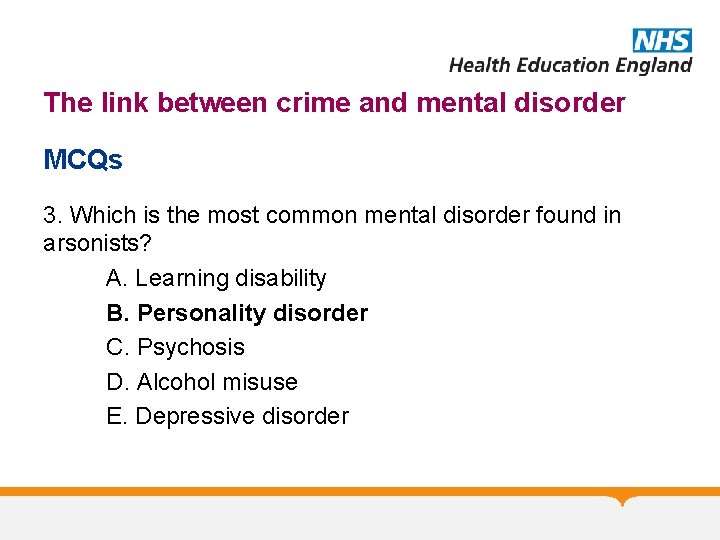
The link between crime and mental disorder MCQs 3. Which is the most common mental disorder found in arsonists? A. Learning disability B. Personality disorder C. Psychosis D. Alcohol misuse E. Depressive disorder
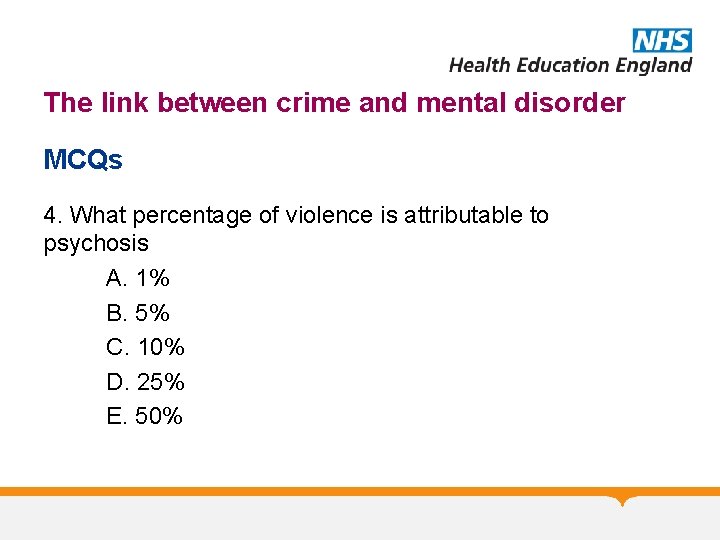
The link between crime and mental disorder MCQs 4. What percentage of violence is attributable to psychosis A. 1% B. 5% C. 10% D. 25% E. 50%
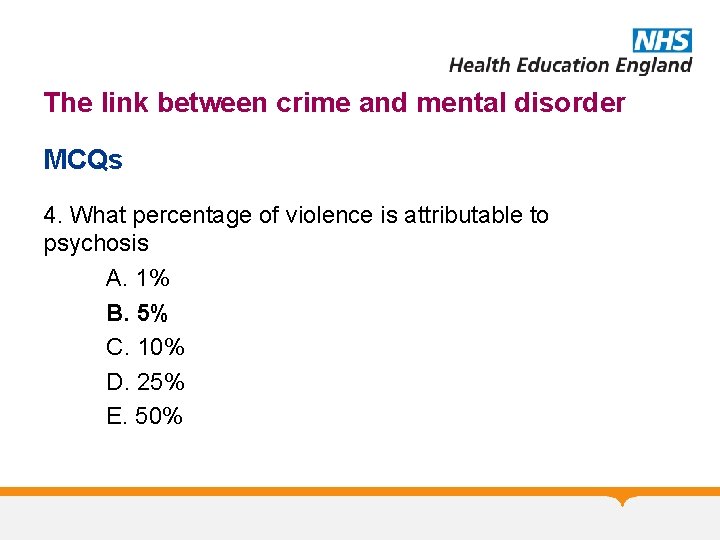
The link between crime and mental disorder MCQs 4. What percentage of violence is attributable to psychosis A. 1% B. 5% C. 10% D. 25% E. 50%
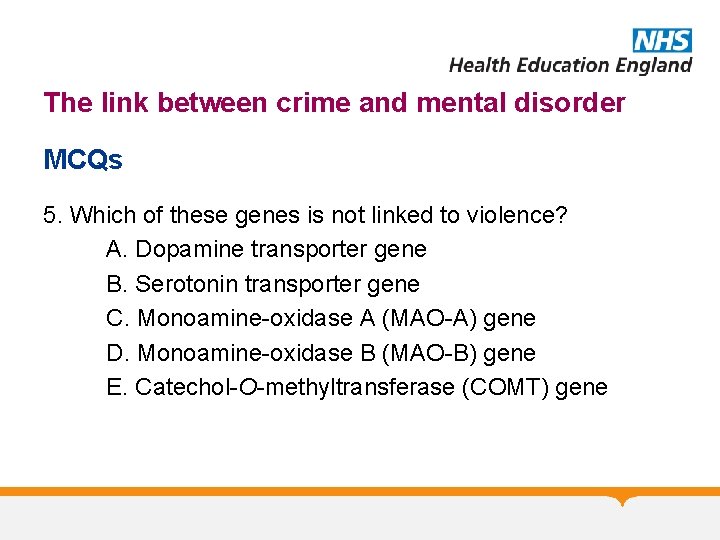
The link between crime and mental disorder MCQs 5. Which of these genes is not linked to violence? A. Dopamine transporter gene B. Serotonin transporter gene C. Monoamine-oxidase A (MAO-A) gene D. Monoamine-oxidase B (MAO-B) gene E. Catechol-O-methyltransferase (COMT) gene
The link between crime and mental disorder MCQs 5. Which of these genes is not linked to violence? A. Dopamine transporter gene B. Serotonin transporter gene C. Monoamine-oxidase A (MAO-A) gene D. Monoamine-oxidase B (MAO-B) gene E. Catechol-O-methyltransferase (COMT) gene
The link between crime and mental disorder Any Questions? Thank you.
- Slides: 55