
Forensic Odontology History of Forensic Dentistry Roman Emperor

- Slides: 14
Forensic Odontology
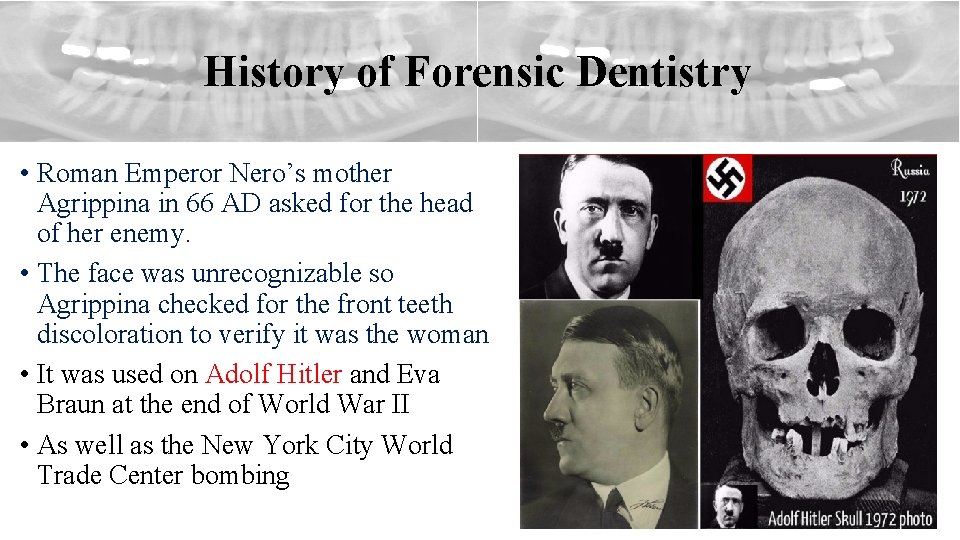
History of Forensic Dentistry • Roman Emperor Nero’s mother Agrippina in 66 AD asked for the head of her enemy. • The face was unrecognizable so Agrippina checked for the front teeth discoloration to verify it was the woman • It was used on Adolf Hitler and Eva Braun at the end of World War II • As well as the New York City World Trade Center bombing
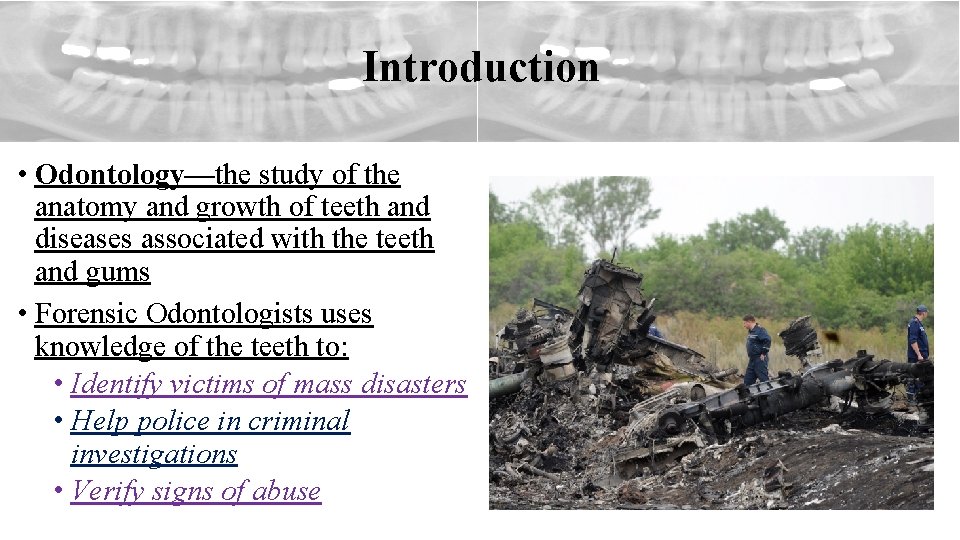
Introduction • Odontology—the study of the anatomy and growth of teeth and diseases associated with the teeth and gums • Forensic Odontologists uses knowledge of the teeth to: • Identify victims of mass disasters • Help police in criminal investigations • Verify signs of abuse
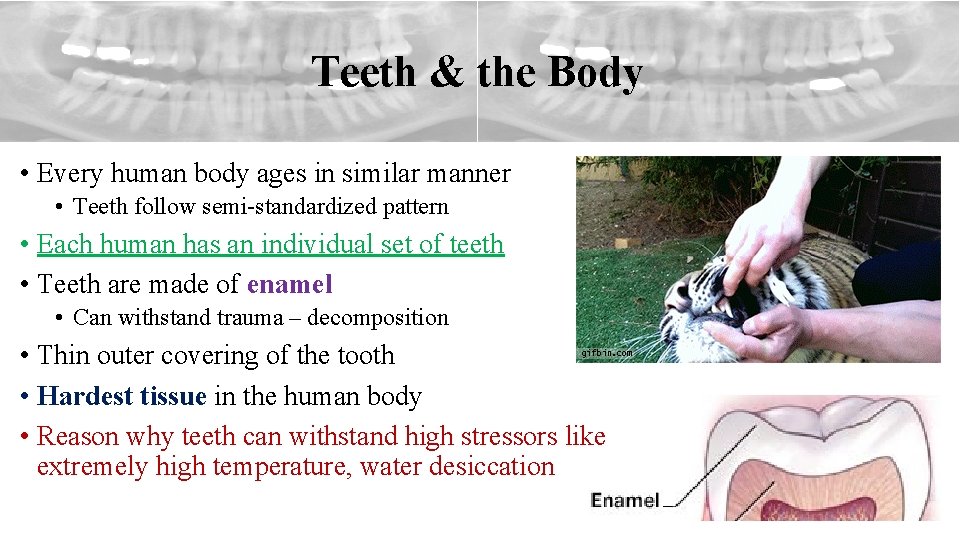
Teeth & the Body • Every human body ages in similar manner • Teeth follow semi-standardized pattern • Each human has an individual set of teeth • Teeth are made of enamel • Can withstand trauma – decomposition • Thin outer covering of the tooth • Hardest tissue in the human body • Reason why teeth can withstand high stressors like extremely high temperature, water desiccation
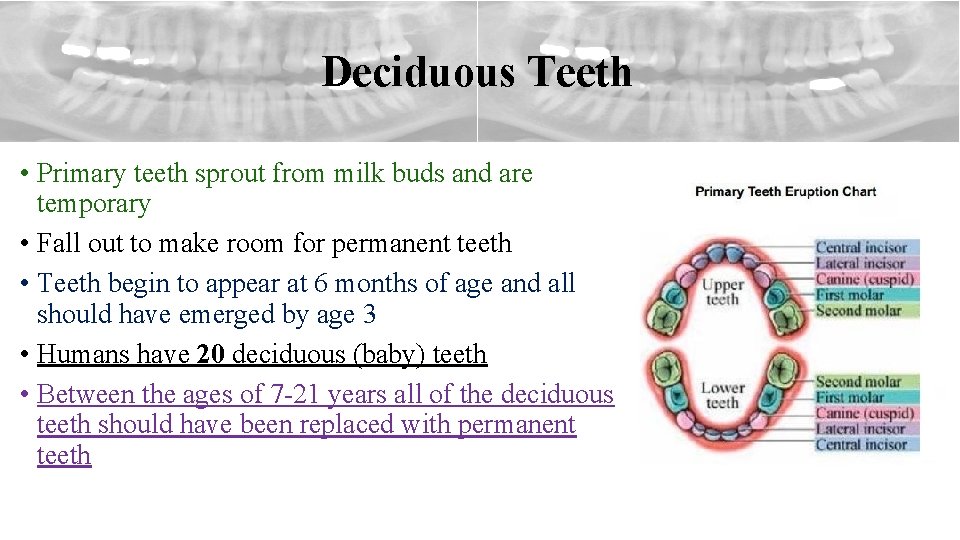
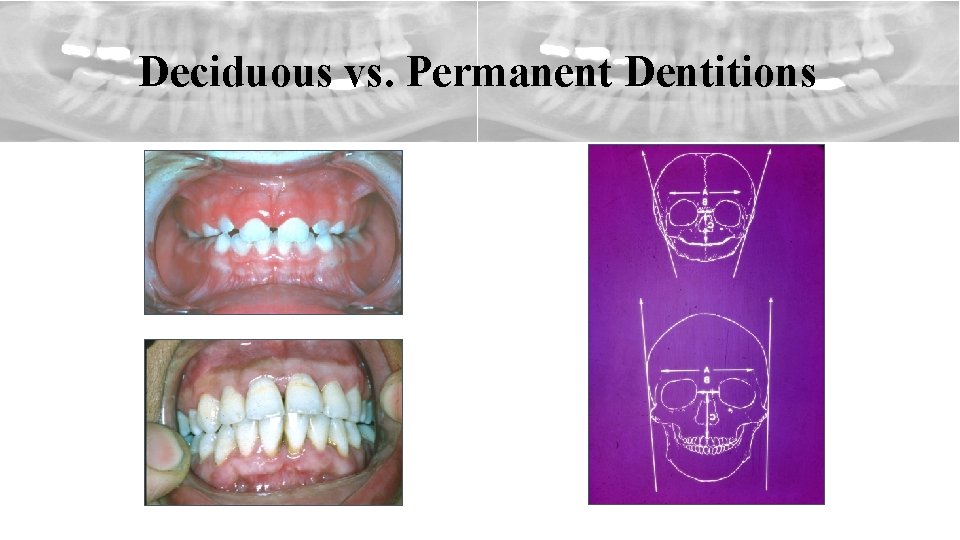
Deciduous Teeth • Primary teeth sprout from milk buds and are temporary • Fall out to make room for permanent teeth • Teeth begin to appear at 6 months of age and all should have emerged by age 3 • Humans have 20 deciduous (baby) teeth • Between the ages of 7 -21 years all of the deciduous teeth should have been replaced with permanent teeth
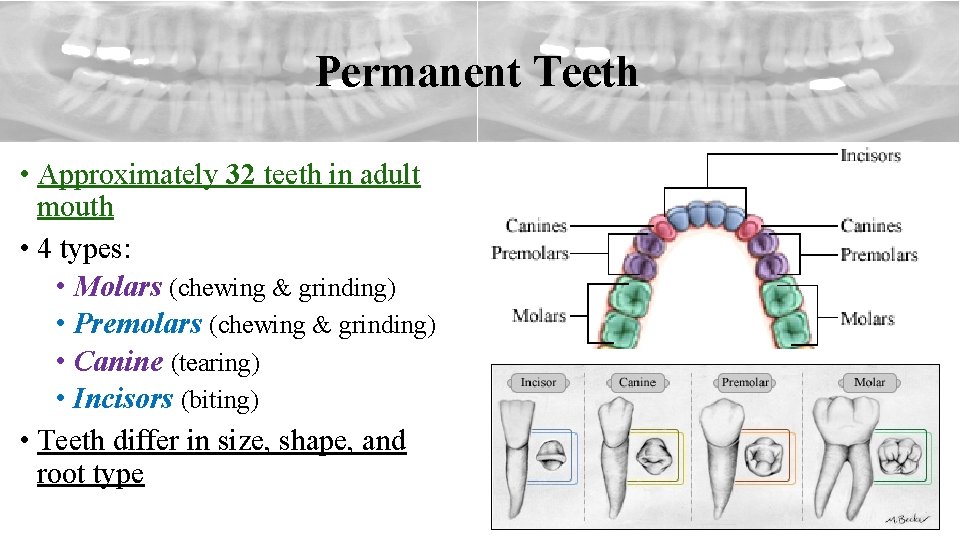
Permanent Teeth • Approximately 32 teeth in adult mouth • 4 types: • Molars (chewing & grinding) • Premolars (chewing & grinding) • Canine (tearing) • Incisors (biting) • Teeth differ in size, shape, and root type
Deciduous vs. Permanent Dentitions
Estimating Characteristics • Examining physical characteristics CANNOT absolutely determine an unidentified person’s ancestry • Gender is difficult to determine with teeth • Male teeth—generally larger • Female teeth—canines tend to be more pointed • Age is most accurate as teeth are shed in patterns from childhood until adulthood
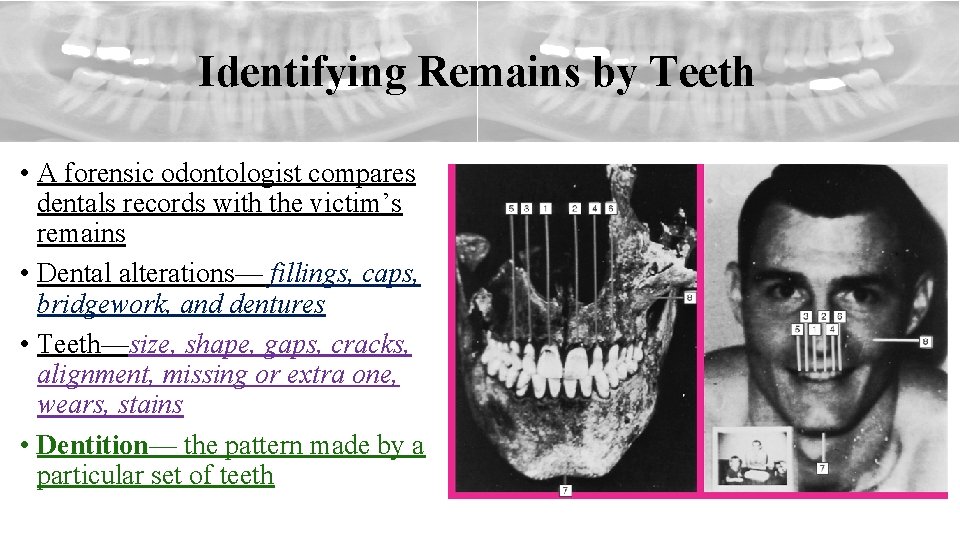
Identifying Remains by Teeth • A forensic odontologist compares dentals records with the victim’s remains • Dental alterations— fillings, caps, bridgework, and dentures • Teeth—size, shape, gaps, cracks, alignment, missing or extra one, wears, stains • Dentition— the pattern made by a particular set of teeth
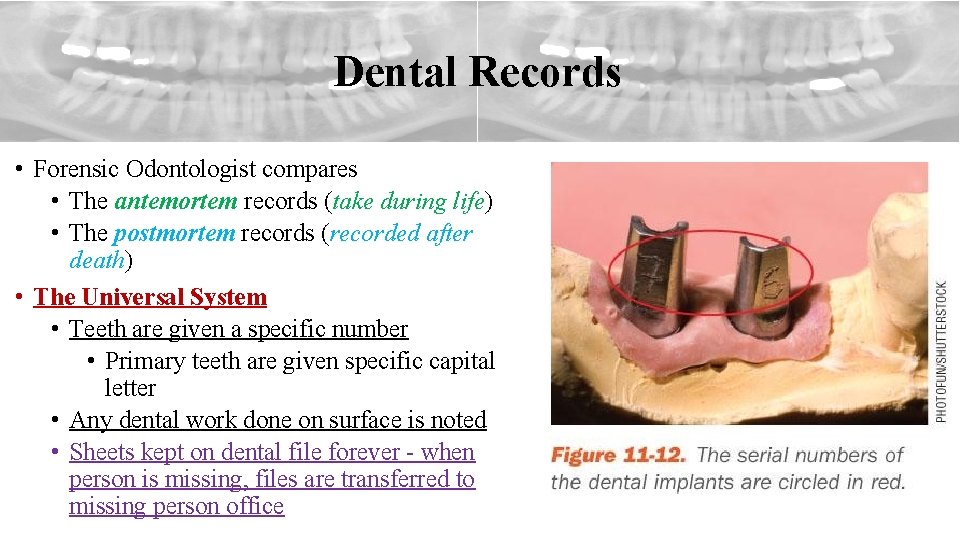
Dental Records • Forensic Odontologist compares • The antemortem records (take during life) • The postmortem records (recorded after death) • The Universal System • Teeth are given a specific number • Primary teeth are given specific capital letter • Any dental work done on surface is noted • Sheets kept on dental file forever - when person is missing, files are transferred to missing person office
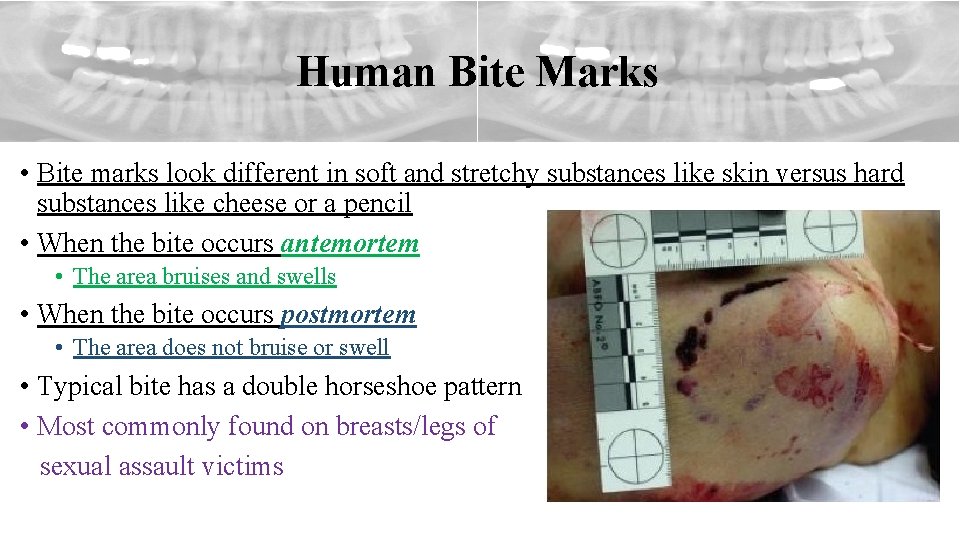
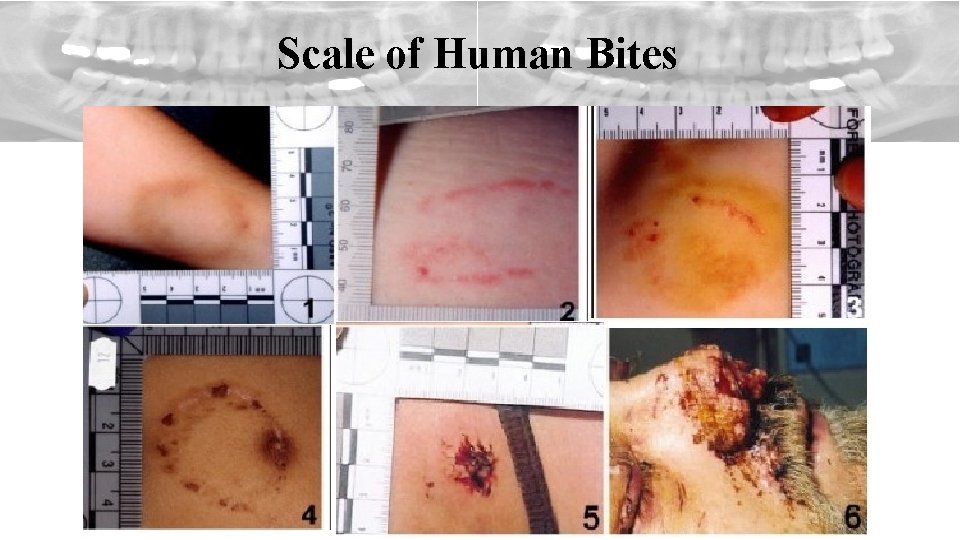
Human Bite Marks • Bite marks look different in soft and stretchy substances like skin versus hard substances like cheese or a pencil • When the bite occurs antemortem • The area bruises and swells • When the bite occurs postmortem • The area does not bruise or swell • Typical bite has a double horseshoe pattern • Most commonly found on breasts/legs of sexual assault victims
Scale of Human Bites
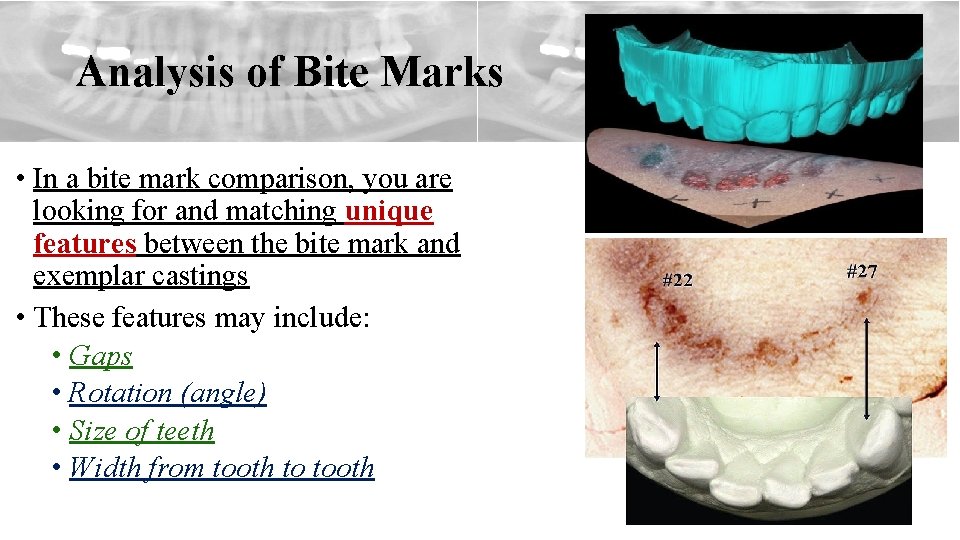
Analysis of Bite Marks • In a bite mark comparison, you are looking for and matching unique features between the bite mark and exemplar castings • These features may include: • Gaps • Rotation (angle) • Size of teeth • Width from tooth to tooth
How reliable is Forensic Odontologist? • Not very accurate • Why? Soft tissue will swell or distort and two people can have similar teeth construction • However, bite marks can exclude suspects