
FORENSIC LINGUISTICS Elena Orenes Guillamm Alejandra Menchn Barreras
FORENSIC LINGUISTICS Elena Orenes Guillamóm Alejandra Menchón Barreras Marina Mateo Fernández Veronica Omar Débora Molina Verdejo

1. INTRODUCTION WHAT IS FORENSIC LINGUISTICS? MAIN BRANCHES OF FORENSIC LINGUISTICS › Legal language. › Legal processes. › Linguistic evidence. › Author identification. › Forensic stylistics. › Discourse analysis, Linguistic dialectology &Forensic phonetics.
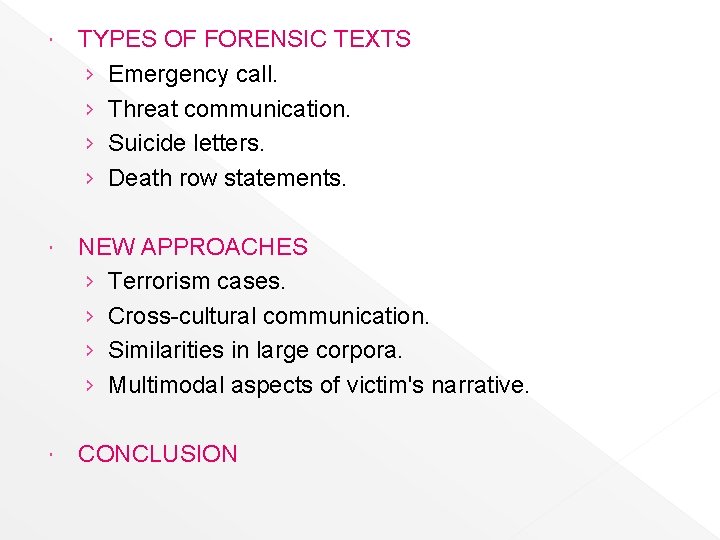
TYPES OF FORENSIC TEXTS › Emergency call. › Threat communication. › Suicide letters. › Death row statements. NEW APPROACHES › Terrorism cases. › Cross-cultural communication. › Similarities in large corpora. › Multimodal aspects of victim's narrative. CONCLUSION
WHAT IS FORENSIC LINGUISTICS?
2. What is forensic linguistics? It is a branch of applied linguistics. Forensic linguistics is the application of the linguistics to legal matters. Forensic linguistics is based on the study, understanding and use of the LANGUAGE forensic purposes.
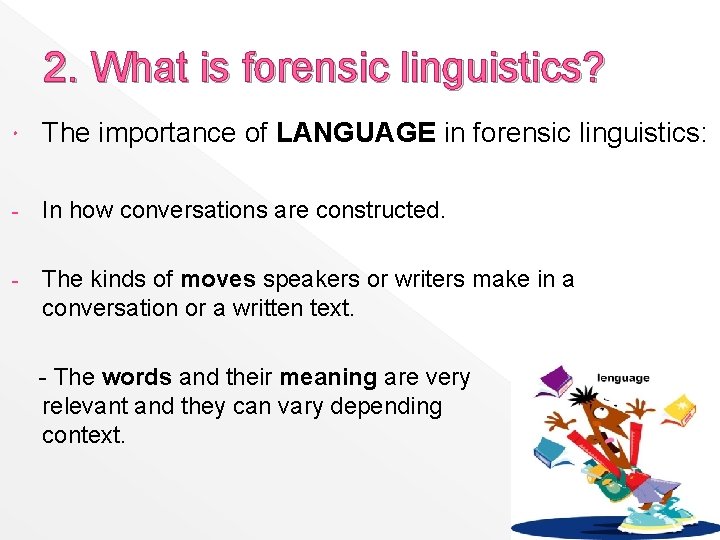
2. What is forensic linguistics? The importance of LANGUAGE in forensic linguistics: - In how conversations are constructed. - The kinds of moves speakers or writers make in a conversation or a written text. - The words and their meaning are very relevant and they can vary depending on the context.
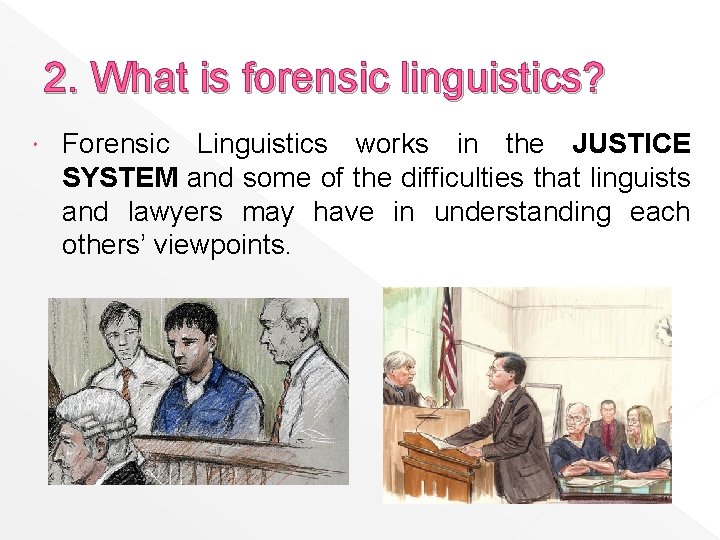
2. What is forensic linguistics? Forensic Linguistics works in the JUSTICE SYSTEM and some of the difficulties that linguists and lawyers may have in understanding each others’ viewpoints.
2. What is forensic linguistics? Law INSEPARABLE TO Language Lawyers CONFLICT WITH Linguists Lawyers and linguists DIFFERENT AIMS. Lawyers: to persuade the jury. Linguists: to present an opinion and explain that opinion.
2. What is forensic linguistics? One judge remarked to a phonetician: “A linguist…is someone who speaks a lot of languages, so what exactly are you doing here? ” (Storey White 1997: 281). In another case a linguist was told by the judge that ‘Surely there are only two kinds of English — correct English and incorrect English? ’
2. What is forensic linguistics? Forensic linguistics is applied in these different areas: Law language Judicial procedure language Linguistic evidence in judicial procedure:
Main Branches of Forensic Linguistics Legal Processes Legal Language - Linguistic Evidence -
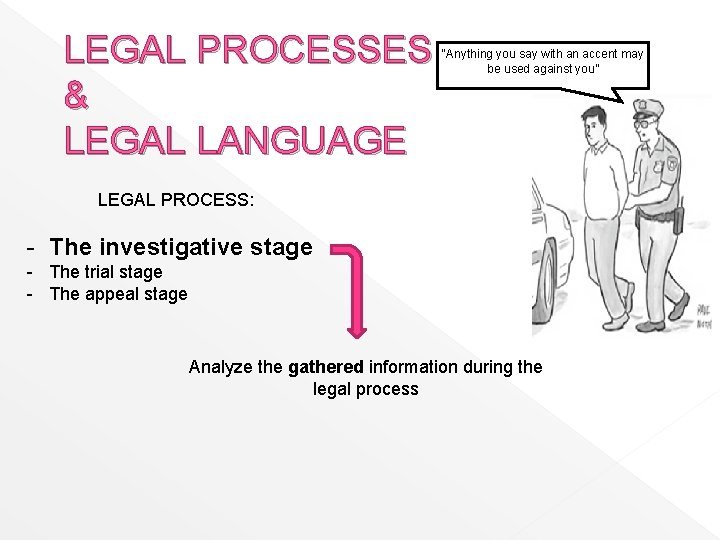
LEGAL PROCESSES & LEGAL LANGUAGE “Anything you say with an accent may be used against you” LEGAL PROCESS: - The investigative stage - The trial stage - The appeal stage Analyze the gathered information during the legal process
During legal process… Laguage is used as an instrument Laguage Were you provoked? What was in your mind then?
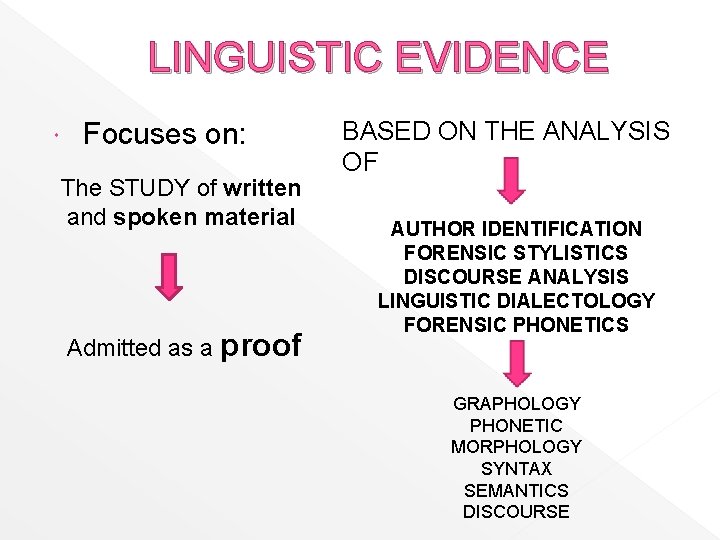
LINGUISTIC EVIDENCE Focuses on: The STUDY of written and spoken material Admitted as a proof BASED ON THE ANALYSIS OF AUTHOR IDENTIFICATION FORENSIC STYLISTICS DISCOURSE ANALYSIS LINGUISTIC DIALECTOLOGY FORENSIC PHONETICS GRAPHOLOGY PHONETIC MORPHOLOGY SYNTAX SEMANTICS DISCOURSE
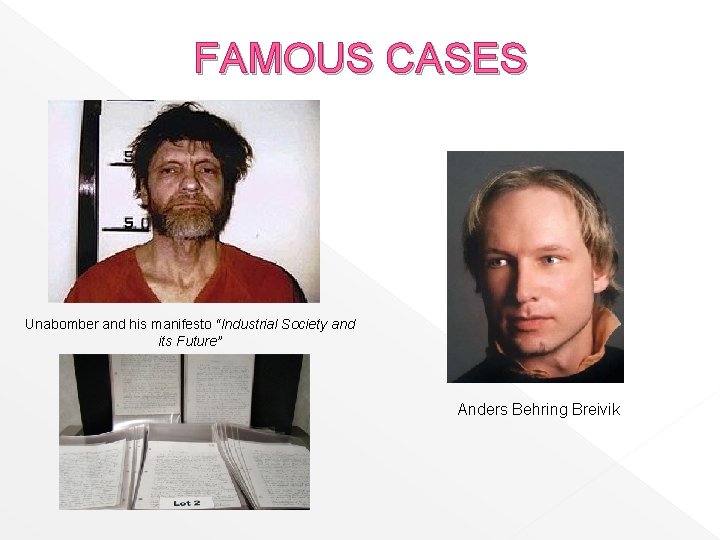
FAMOUS CASES Unabomber and his manifesto “Industrial Society and its Future” Anders Behring Breivik
FORENSIC TEXT TYPES
FORENSIC TEXT TYPES Emergency calls Ransom demands and other threat texts Suicide letters Final death row statements Confessions and denials by public persons
Emergency calls › Operators’ skills Intonation Voice. Speech Timely responses Cooperation › How to discover a hoax call Hesitation Incomplete or short answers Avoid giving information
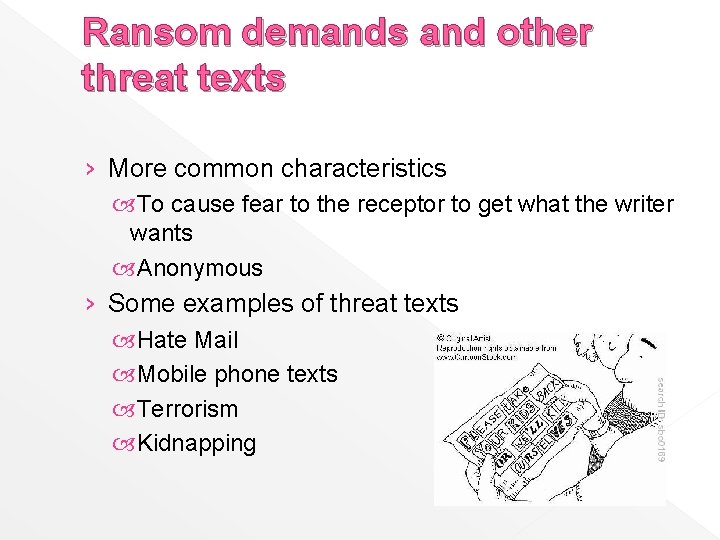
Ransom demands and other threat texts › More common characteristics To cause fear to the receptor to get what the writer wants Anonymous › Some examples of threat texts Hate Mail Mobile phone texts Terrorism Kidnapping
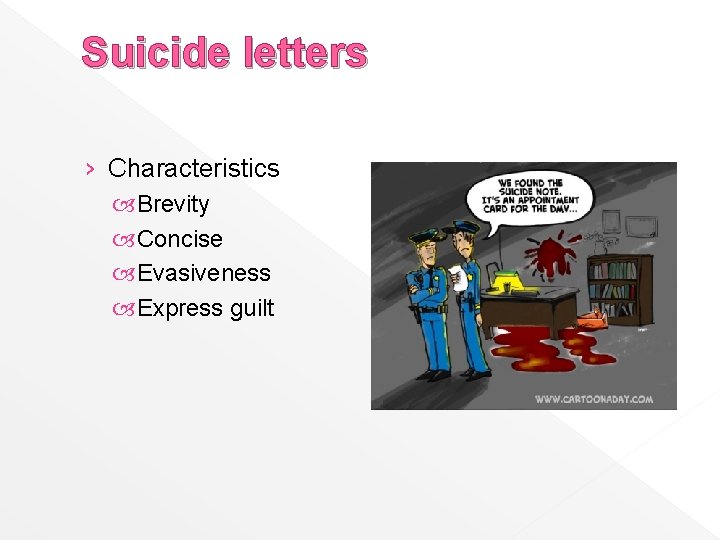
Suicide letters › Characteristics Brevity Concise Evasiveness Express guilt
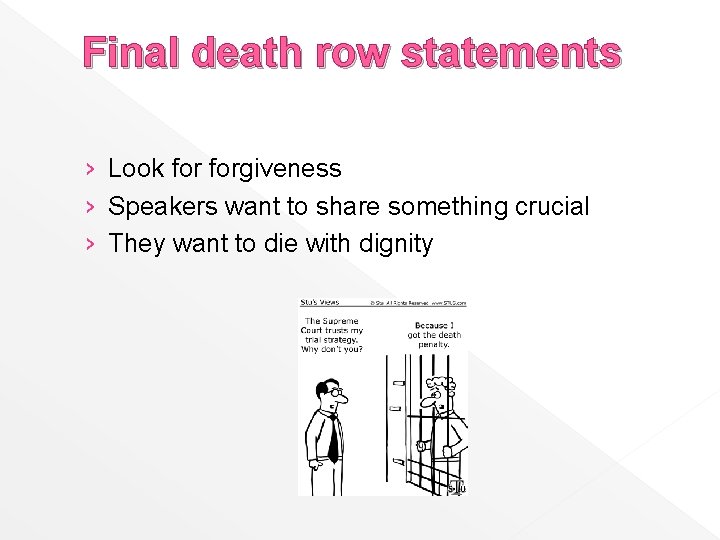
Final death row statements › Look forgiveness › Speakers want to share something crucial › They want to die with dignity
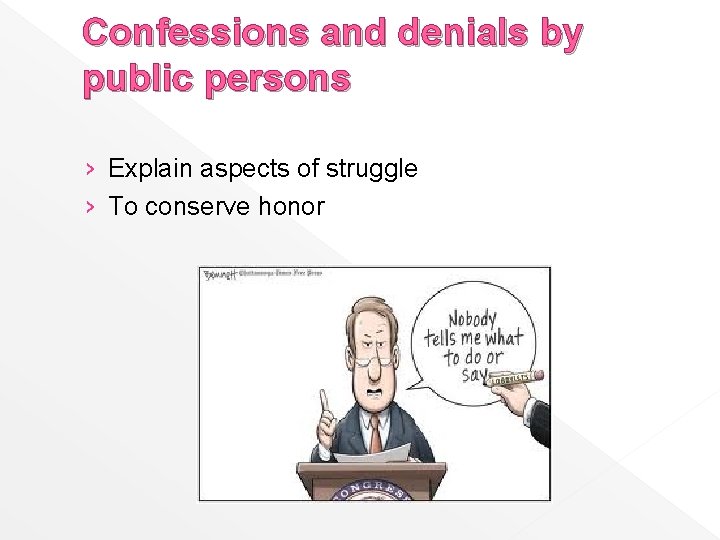
Confessions and denials by public persons › Explain aspects of struggle › To conserve honor

NEW APPROACHES
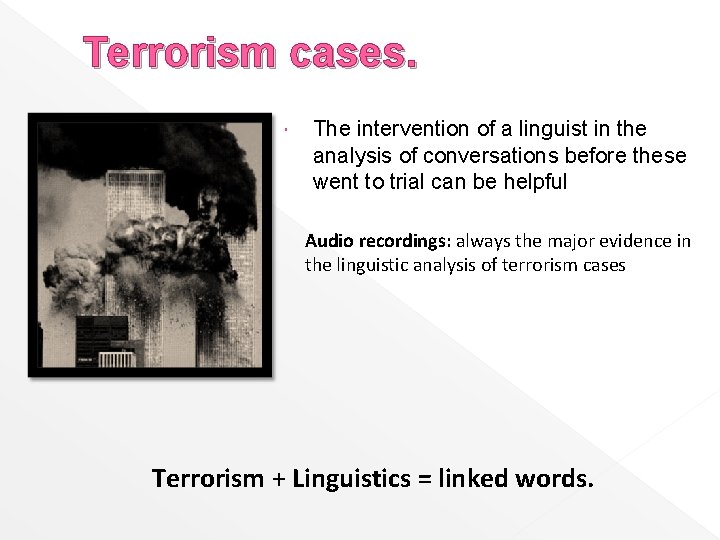
Terrorism cases. The intervention of a linguist in the analysis of conversations before these went to trial can be helpful Audio recordings: always the major evidence in the linguistic analysis of terrorism cases Terrorism + Linguistics = linked words.
Problems derived from using language as evidence: • Finding the right suspect. • Determining who created the alleged crime. • Accurately determining the agendas of the target. • Lacks of careful intelligence analysis before suspects are indicted. To avoid all these problems linguists should use discourse, phonetics, morphological, syntax and pragmatic analysis to provide accurate records of “what was said by whom”
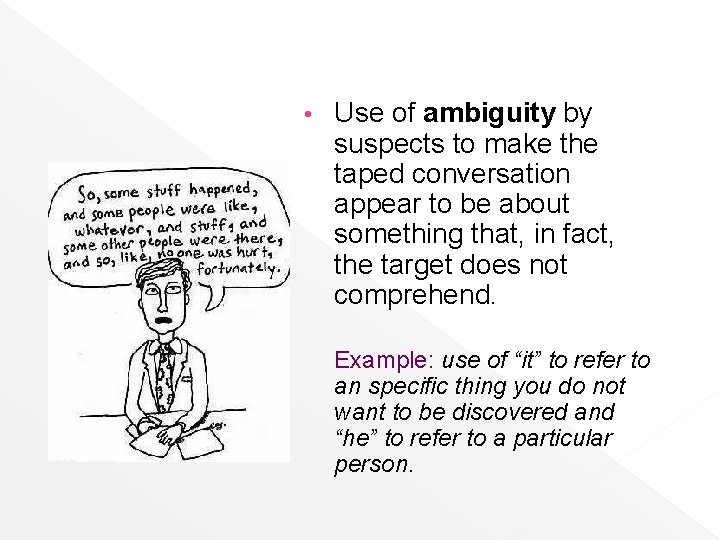
• Use of ambiguity by suspects to make the taped conversation appear to be about something that, in fact, the target does not comprehend. Example: use of “it” to refer to an specific thing you do not want to be discovered and “he” to refer to a particular person.
Similarities in large corpora. Identification of two large documents so that you can solve problems regarding to authenticity. Length of the corpora = key This kind of process is nowadays more and more developed by computers. It is not enough to discover if the texts are similar or different, we have to know in which aspects they have significant similarities.
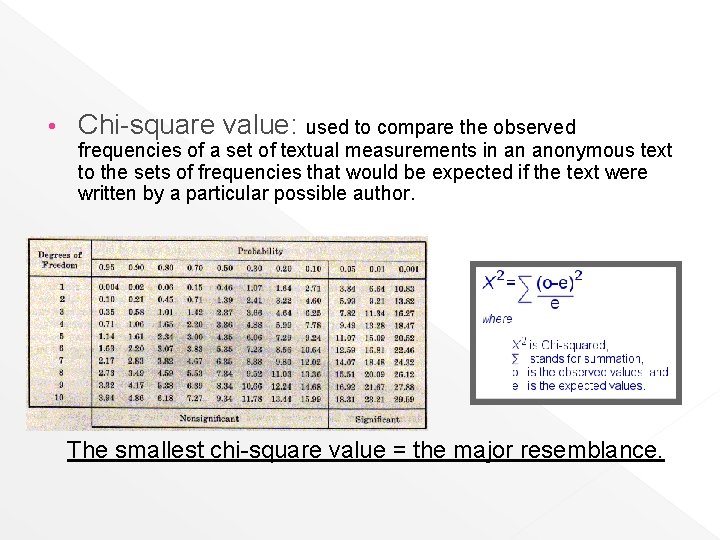
• Chi-square value: used to compare the observed frequencies of a set of textual measurements in an anonymous text to the sets of frequencies that would be expected if the text were written by a particular possible author. The smallest chi-square value = the major resemblance.
CROSS-CULTURAL COMUNICATION Problem! Lack of communication between those engaged in the practice of the law and those in the field of forensic linguistics. If the work of forensic linguists were to be heeded by lawyers to a greater extent than it has been legal system would be improved! By removing at least some of the process from the responsibility of the lawyers, and transferring it to the responsibility of the experts, the giving of expert evidence will be facilitated.
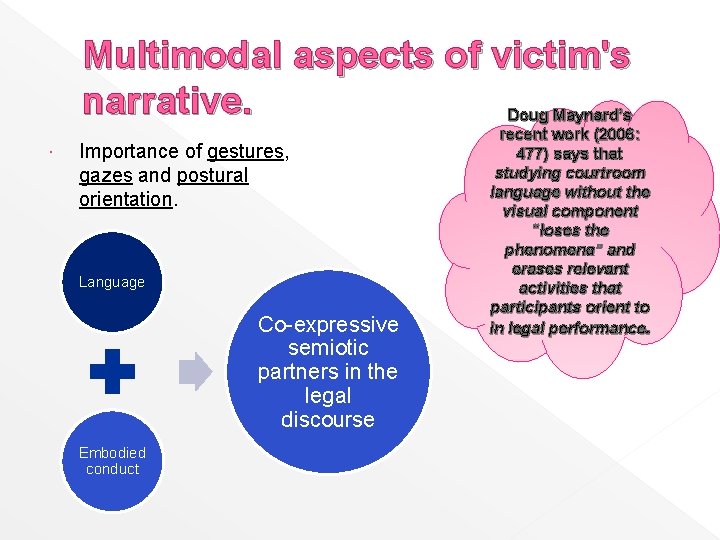
Multimodal aspects of victim's narrative. Doug Maynard’s Importance of gestures, gazes and postural orientation. Language Co-expressive semiotic partners in the legal discourse Embodied conduct recent work (2006: 477) says that studying courtroom language without the visual component “loses the phenomena” and erases relevant activities that participants orient to in legal performance.
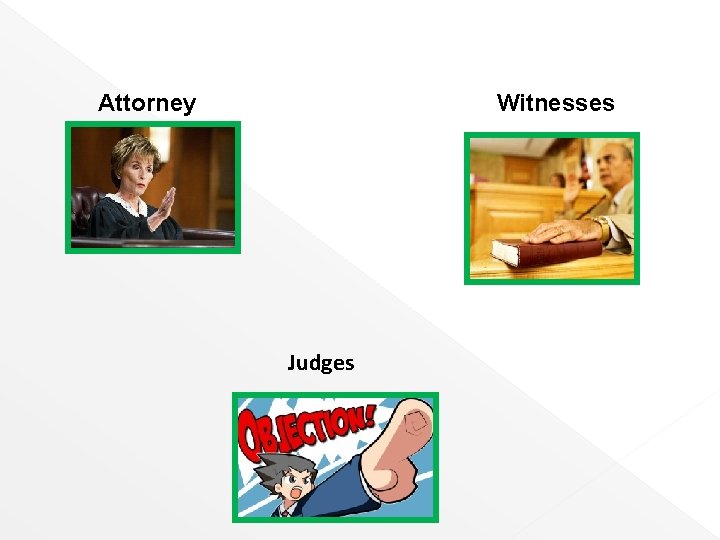
Witnesses Attorney Judges
These kinds of actions co-occur with speech instead of being isolated. Multimodal discourse: Speech and gesture function as equal partners in the embodied materialization of meaning.
CONCLUSION Forensic linguistics: is a branch of applied linguistics which is based on the study, understanding and use of the language forensic purposes. › Law, language, crime investigation, judicial procedure. - Main branches: Legal Language Legal Processes Linguistic evidence
CONCLUSION Forensic text types: › Emergency call Operators’ skills A hoax call › Threat communication Characteristics › Suicide letters Characteristics › Death row statements New approaches: › Terrorism cases. Problems Use of ambiguity › Similarities in large corpora Chi-square value › Cross-cultural communication Problem! › Multimodal aspects of victim's narrative Gestures, gazes and postural orientation Co-expressive semiotic partners in the legal discourse
REFERENCES http: //www. theatlantic. com/national/archive/2011/03/the-corpus-inthe-court-like-lexis-on-steroids/72054/ Pascual Perez-Paredes, TEMA 5: A Review of text-oriented tools and data mining essentials from Recursos, Herramientas y Nuevas tecnologias para los Estudios Ingleses. Gibbons, J. (ed. ). (1994). Language and the Law. Londres y Nueva York: Longman. Olsson John 2004. Forensic Linguistics: An introduction to Language, Crime and the Law. London, Continuum. What is forencis linguistics? John Olsson Adjunct Professor, Nebraska Wesleyan University, Lincoln, Nebraska. An introduction to forensic linguistics: Language in evidence written by Malcolm Coulthard, and Alison Johnson.
- Slides: 35