
Forensic Entomology Insects of Death Stage of insects
- Slides: 12
Forensic Entomology
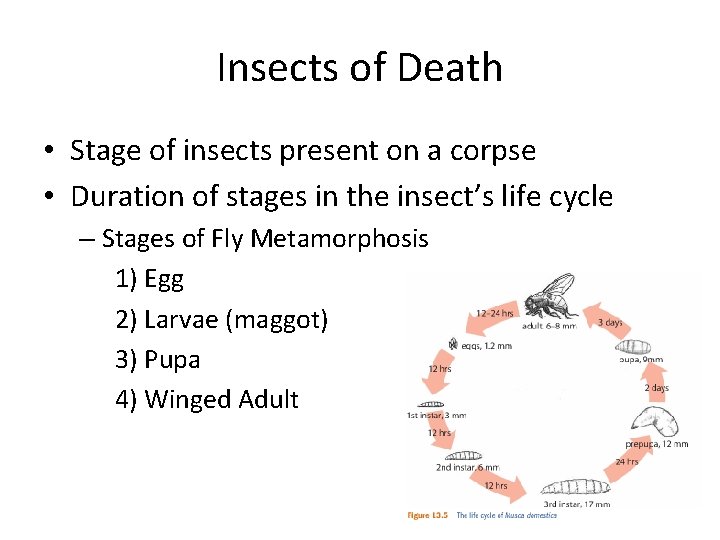
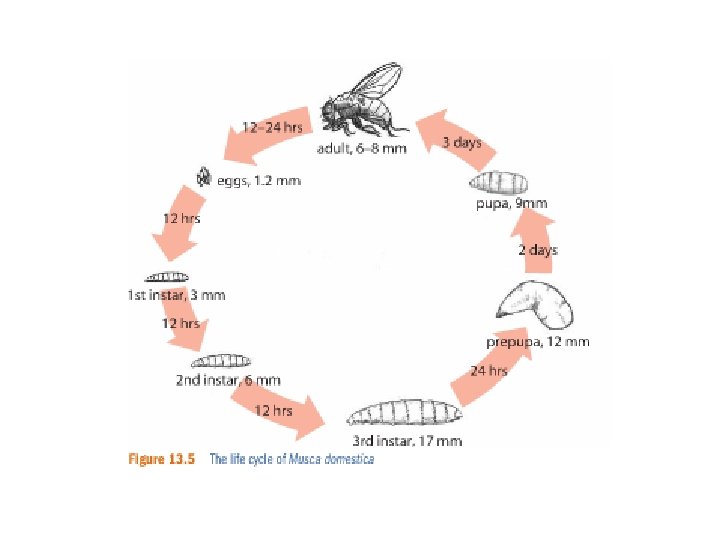
Insects of Death • Stage of insects present on a corpse • Duration of stages in the insect’s life cycle – Stages of Fly Metamorphosis 1) Egg 2) Larvae (maggot) 3) Pupa 4) Winged Adult
Musca Domestica (Housefly) • Female deposits 100 – 150 eggs – Oviposition • 1 st Instar (larvae) – Eat and grow a lot – Rigid exoskeleton (must molt to go into the 2 nd) • 2 nd Instar • 3 rd Instar – Longest – No longer eats and moves away from food • Prepupa – Darkens and hardens to form a brittle casing (pupa)
Use in Forensics • Corpse is found with empty housefly pupae – Time since colonization is more than 7 days • As a body undergoes successive stages of decomposition, it will attract different insects – Feed on products of decomposition – Feed on the feeders (insect predators)
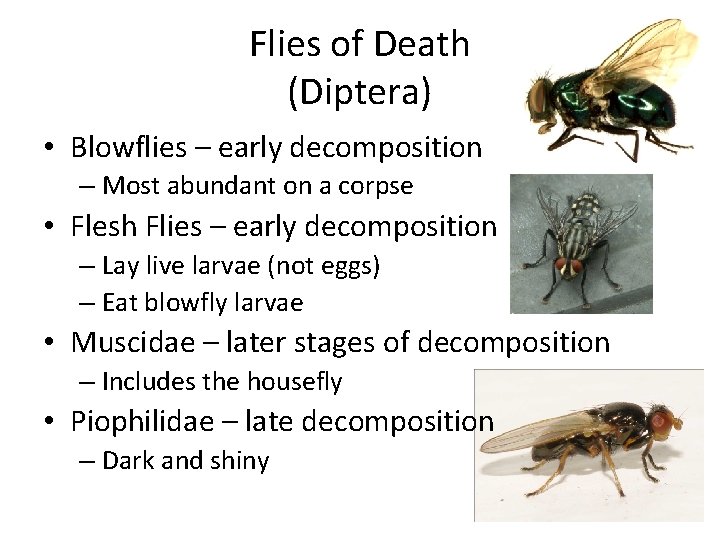
Flies of Death (Diptera) • Blowflies – early decomposition – Most abundant on a corpse • Flesh Flies – early decomposition – Lay live larvae (not eggs) – Eat blowfly larvae • Muscidae – later stages of decomposition – Includes the housefly • Piophilidae – late decomposition – Dark and shiny
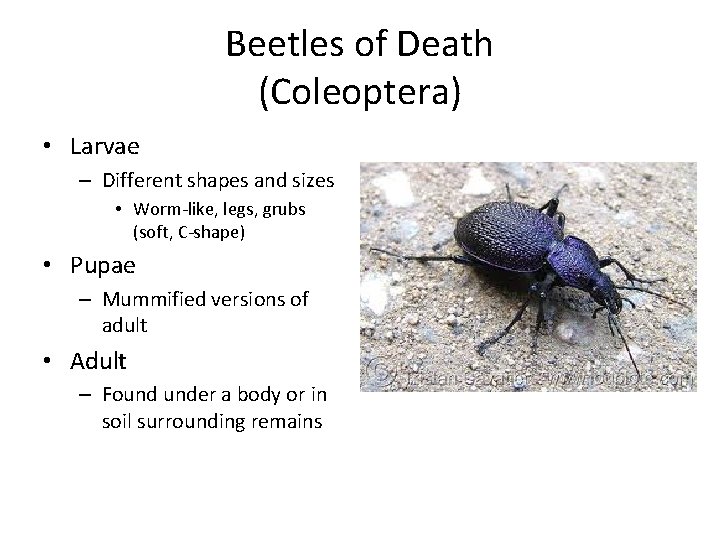
Beetles of Death (Coleoptera) • Larvae – Different shapes and sizes • Worm-like, legs, grubs (soft, C-shape) • Pupae – Mummified versions of adult • Adult – Found under a body or in soil surrounding remains
Detailed Succession • First fly families prefer the semi-fluid environment, so the Piophilidae family takes over as the corpse dries out – Female oviposits within body openings and wounds – Eggs hatch as maggots • Feed on soft body parts • Raise the temperature above ambient • Account for the loss of most of the body’s mass • Checkered beetle arrives – Feed on flies and other beetles • Body is now 20% of its original weight (skin and bones remaining) • Flies and maggots gone and rove and hide beetles take over
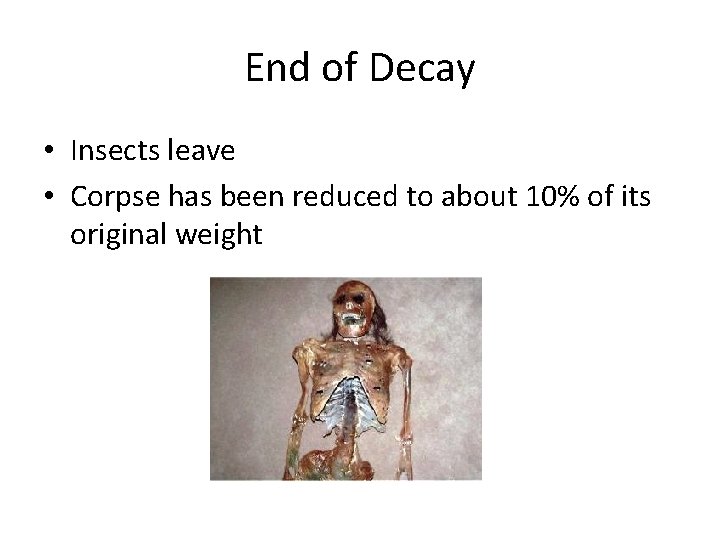
End of Decay • Insects leave • Corpse has been reduced to about 10% of its original weight
Temperature Dependence • Insect development is dependent on temperature – Higher the temperature the faster the growth – Will not develop below or above a certain threshold • Growth rate (temperature-time) – Accumulated units represent the energy needed to effect a change in insect stage (i. e. ; Egg to 3 rd instar) – Examples: Degree-day, Degree-hour
Calculating Temperature-Time • In the Lab – Published Life Cycle x Constant Temperature – Hours x Temperature = ADH (Accumulated Degree Hours) • Help determine the time of death when average temperature is known
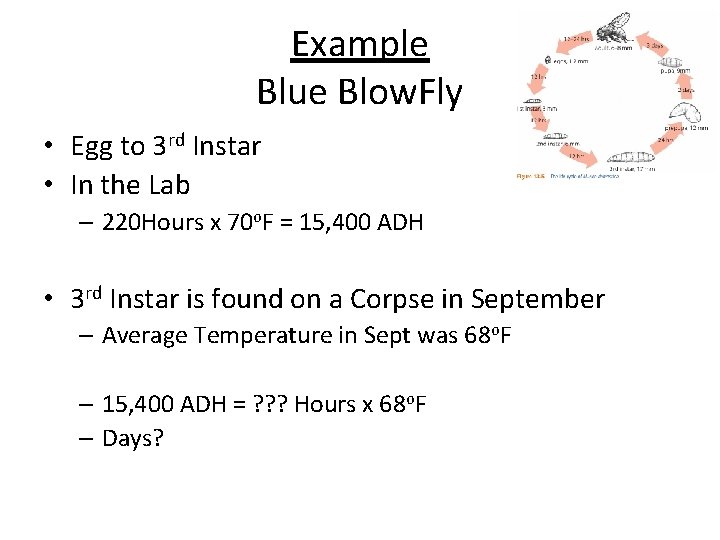
Example Blue Blow. Fly • Egg to 3 rd Instar • In the Lab – 220 Hours x 70 o. F = 15, 400 ADH • 3 rd Instar is found on a Corpse in September – Average Temperature in Sept was 68 o. F – 15, 400 ADH = ? ? ? Hours x 68 o. F – Days?