
Forensic Drug Analysis 60 of Forensics Lab work
Forensic Drug Analysis 60 % of Forensics Lab work is drugs 85 -90% of all Criminal Cases involve drugs
Addiction Physical vs. Psychological addiction Physical – causes withdrawl symptoms – Ex: Alcohol, Narcotics, Depressants Psychological addiction – Dopamine release; satisfies an emotional need – Ex: Cocaine, PCP
Classification of Drugs Opiates/Narcotics – Reduce sensation – sleep like state – morphine, heroin, codeine, fentanyl – Both physically and psychologically addictive Stimulants – Stimulates, speeds up, the central nervous system (CNS) – high energy, euphoria – amphetamines, cocaine, nicotine – Psychologically addictive
Classification of Drugs Hallucinogens – Alters perceptions, “gen”erates illusions – LSD (acid), PCP(angel dust), MDMA (Ecstasy), Mescaline (peyote cactus), Marijuana (THC), hallucinogenic mushrooms (psilocybin) – Most neither physical nor psychological dependence
Depressants –Depress CNS, drowsiness, slowed response –Barbiturates(Phenobarbital), Ethanol –Valium (diazepam), Xanax (alprazolam) –Physically and psychologically addictive
Drug Classification Drugs-_____ substances (manufacture/limited) Complication for Law Enforcement Quantity (backlog) New Design-more time, new technique Similar in appearance and properties Schedules- ___ – _______ use – _______ – Dependence
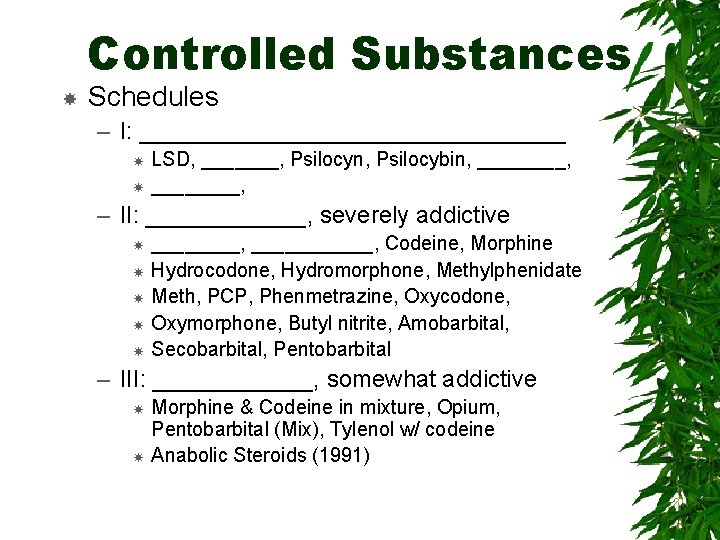
Controlled Substances Schedules – I: ________________ LSD, _______, Psilocyn, Psilocybin, ________, – II: ______, severely addictive ____, ______, Codeine, Morphine Hydrocodone, Hydromorphone, Methylphenidate Meth, PCP, Phenmetrazine, Oxycodone, Oxymorphone, Butyl nitrite, Amobarbital, Secobarbital, Pentobarbital – III: ______, somewhat addictive Morphine & Codeine in mixture, Opium, Pentobarbital (Mix), Tylenol w/ codeine Anabolic Steroids (1991)
Controlled Substances – IV: Medical use, _________ & ____ Ephedrine Codeine cough syrup Phenobarbital – V: Drugs with lower potential for abuse than Schedule IV and consist of preparations containing limited quantities of certain narcotics – Mixtures of analgesics and opiates Antitussive Antidiarrheal Robitussin Propylhexedrine (decongestant)
Drug Identification The challenge comes in selecting analytical procedures that will specifically identify a drug. Toxicology Test-Orfila – Decomposition of bodies – Poisons This plan is divided into two phases. – _____ test (presumptive) – _____ test
Analysis Sequence ® Observations - Rock like, powdered, wet ® Screening Test - A presumptive test used to reduce the number of possible identities of an unknown substance
Confirmation Tests ______ and mass spectrometry are commonly used by forensic scientists. _______- separating and identifying the components of a mixture.

Confirmation Tests Mass spectrometry identifies a specific drug according to the mass of its components.
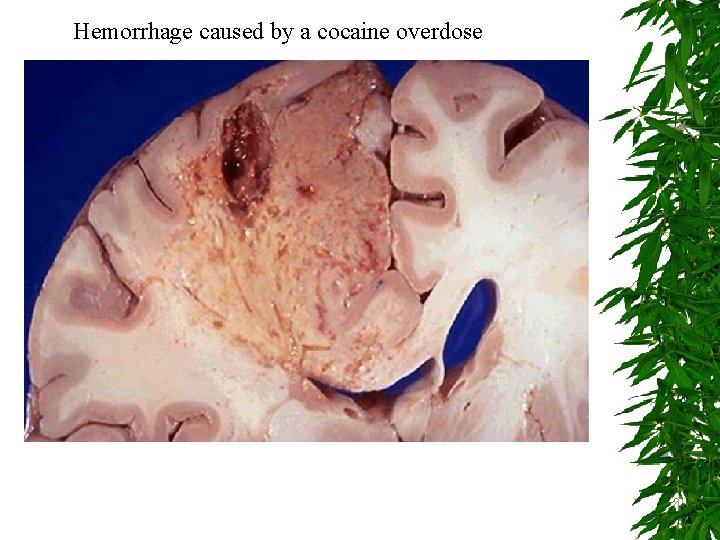
Hemorrhage caused by a cocaine overdose
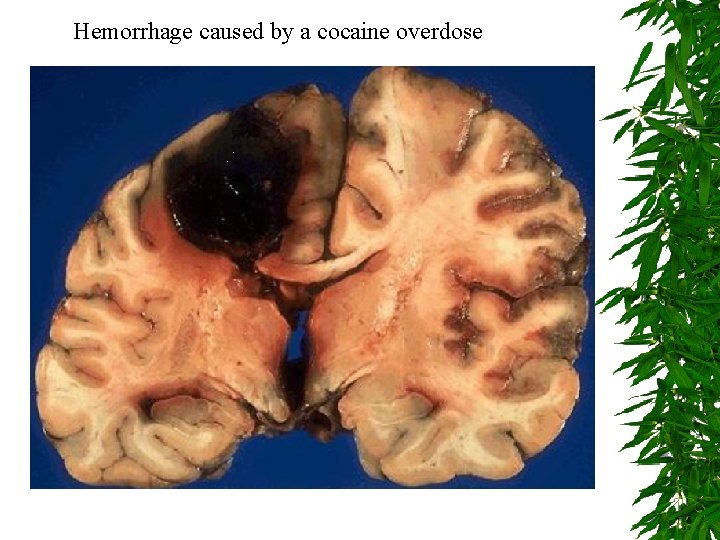
Hemorrhage caused by a cocaine overdose
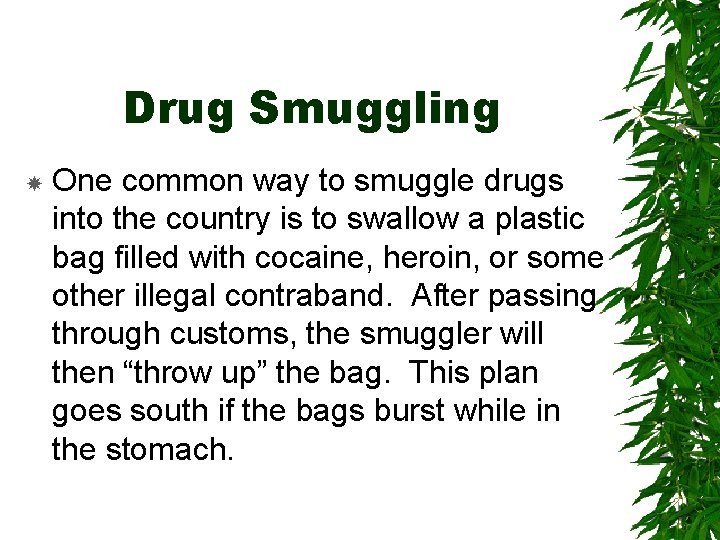
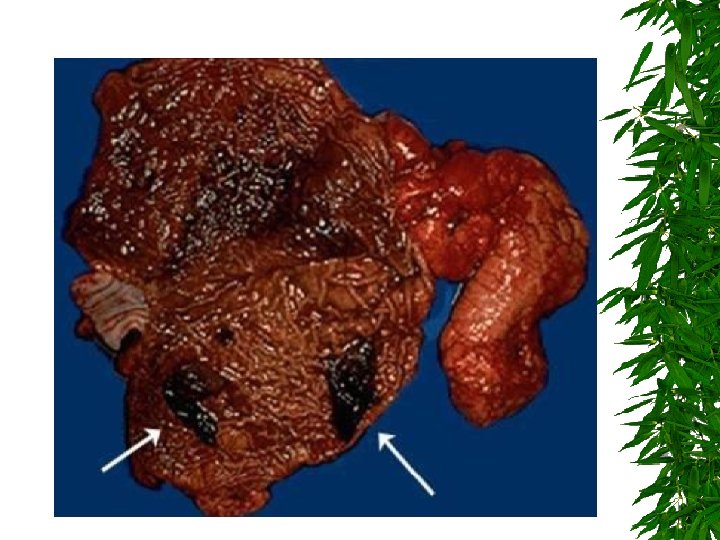
Drug Smuggling One common way to smuggle drugs into the country is to swallow a plastic bag filled with cocaine, heroin, or some other illegal contraband. After passing through customs, the smuggler will then “throw up” the bag. This plan goes south if the bags burst while in the stomach.
Color Screening Tests for other drugs Marquis Test – ex: Nark II Formaldehyde and concentrated sulfuric acid Primary presumptive test used for ecstasy testing. Also used to test for cocaine, opiates (e. g. methadone, heroin), and methamphetamine. – – Purple Orange to brown Blue Red Opiates Amphetamine & Meth Ecstasy Aspirin
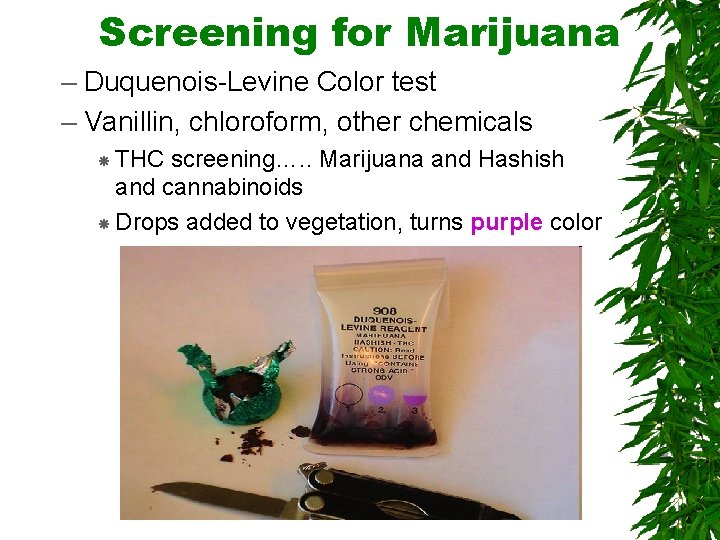
Screening for Marijuana – Duquenois-Levine Color test – Vanillin, chloroform, other chemicals THC screening…. . Marijuana and Hashish and cannabinoids Drops added to vegetation, turns purple color
Cobalt Thiocyanate Distilled water, glycerin, hydrochloric acid, chloroform Cocaine will turn the liquid blue.
Color Screening: Dillie-Koppanyi Cobalt acetate and isopropylamine Barbiturates will turn the solution violet -blue.
Van Urk LSD will turn the solution blue-purple.
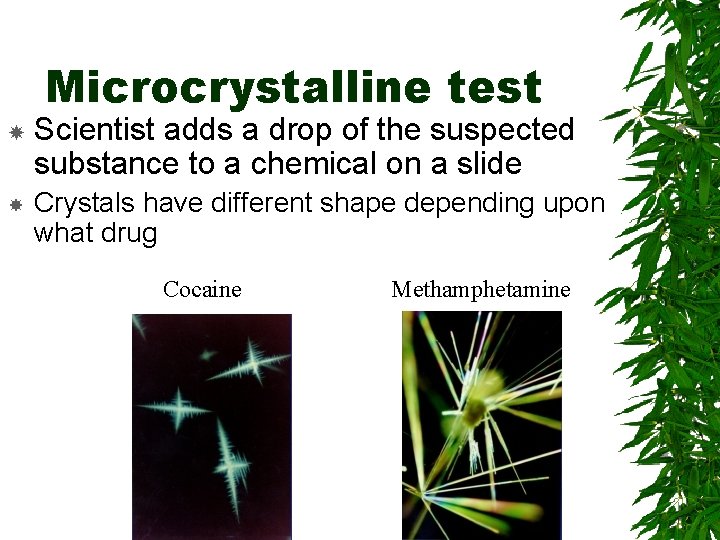
Microcrystalline test Scientist adds a drop of the suspected substance to a chemical on a slide Crystals have different shape depending upon what drug Cocaine Methamphetamine
Detection Time Frame How long do drugs stay in your system? https: //www. ohsinc. com/info/detectiontime-frame/
Drug Toxicity- how poisonous or harmful a substance can be Drug toxicity- too much, adverse effects Acute/Chronic(one-time/vv) Lithium Detox/ filtration organs fail & accumulate in the body Exceeded dose, intentionally/ unintentionally
Drug Overdose Stomach pumping Activated Charcoal
Suicide? Drug overdose? Poison?

A woman has been sentenced to death for killing her lover with a kiss, having used it to drop a poisoned pellet into his mouth. Xinfeng and her childhood sweetheart, Mao Ansheng, swore an oath that if either was unfaithful, they would have to die. Xin took action after she saw her man talking to a woman in a way that made her suspicious, a court in Henan province, central China, was told. They had arranged to meet the next day at a public bathhouse. She filled a plastic pellet with rat poison, hid it under her tongue, and while they were kissing, nudged it into his mouth. Mao failed to notice it, swallowed it and died shortly afterwards.
Drug Testing in the Body ______ ______
False Positives In some cases, a drug test may report the presence of illicit drugs, although none were taken. While this is not common, no test is 100% accurate. Lab errors account for some of the mistakes, but most false-positives may be attributed to over-the-counter drugs and foods that can affect the test.
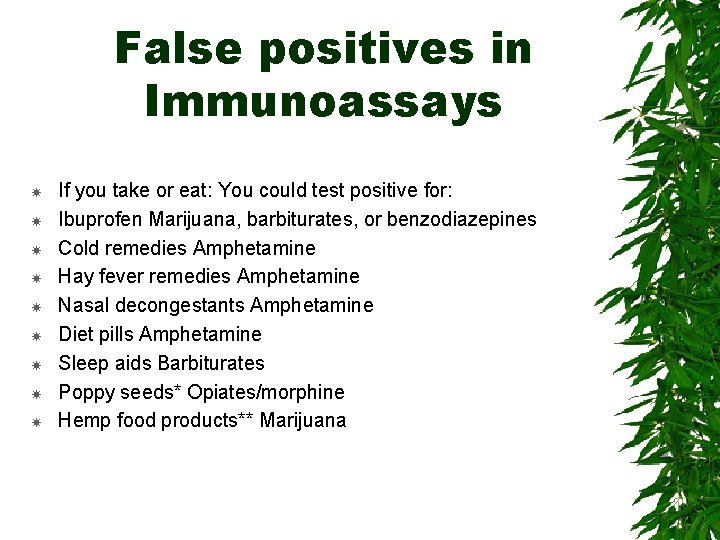
False positives in Immunoassays If you take or eat: You could test positive for: Ibuprofen Marijuana, barbiturates, or benzodiazepines Cold remedies Amphetamine Hay fever remedies Amphetamine Nasal decongestants Amphetamine Diet pills Amphetamine Sleep aids Barbiturates Poppy seeds* Opiates/morphine Hemp food products** Marijuana
Watch the video and then answer the questions. Video Link: http: //www. aetv. com/crime 360/video/index. jsp? bcpid=1459183602&bclid=1459293923&bctid=1620577030 1. What kit do investigators use to identify a type of drug? A. Mark II B. Nark II C. Dark II 2. True or False? Investigators taste a drug sample to identify what it is. 3. What color would morphine or heroin turn after the reaction? A. Black B. Brown C. Purple 4. How long did the investigator have to agitate the sample? A. 12 seconds B. 20 seconds C. 60 seconds 5. What type of drug was the test sample? A. Morphine or Heroin B. Ecstasy C. Amphetamine or Meth
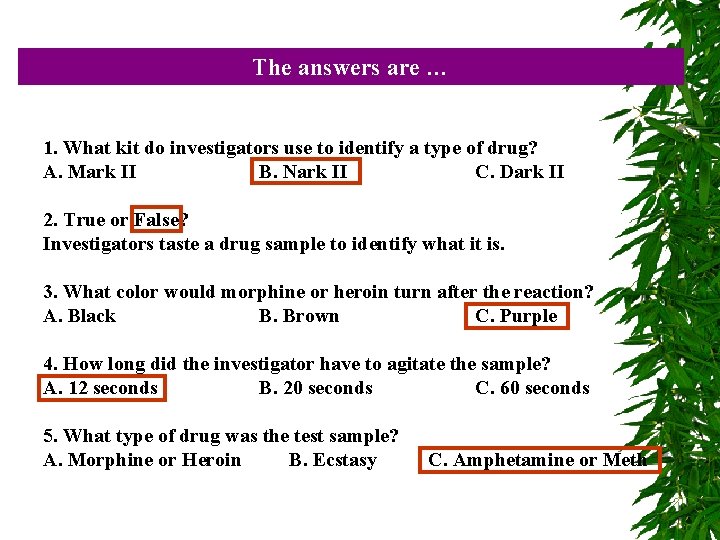
The answers are … 1. What kit do investigators use to identify a type of drug? A. Mark II B. Nark II C. Dark II 2. True or False? Investigators taste a drug sample to identify what it is. 3. What color would morphine or heroin turn after the reaction? A. Black B. Brown C. Purple 4. How long did the investigator have to agitate the sample? A. 12 seconds B. 20 seconds C. 60 seconds 5. What type of drug was the test sample? A. Morphine or Heroin B. Ecstasy C. Amphetamine or Meth
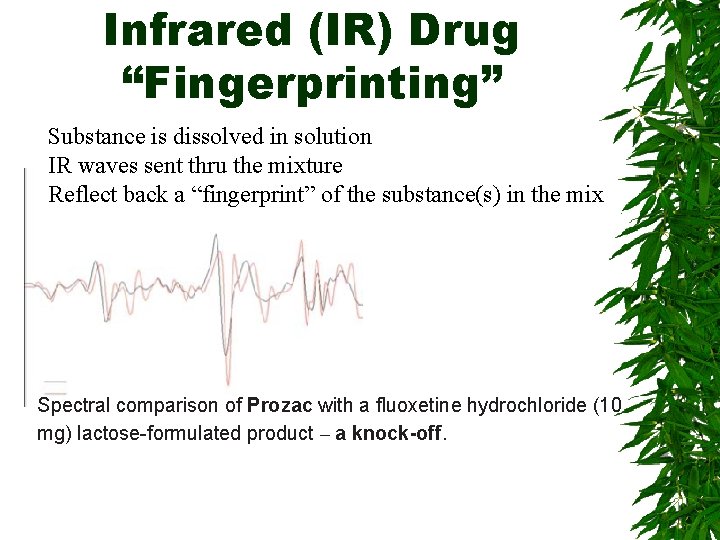
Infrared (IR) Drug “Fingerprinting” Substance is dissolved in solution IR waves sent thru the mixture Reflect back a “fingerprint” of the substance(s) in the mix Spectral comparison of Prozac with a fluoxetine hydrochloride (10 mg) lactose-formulated product – a knock-off.
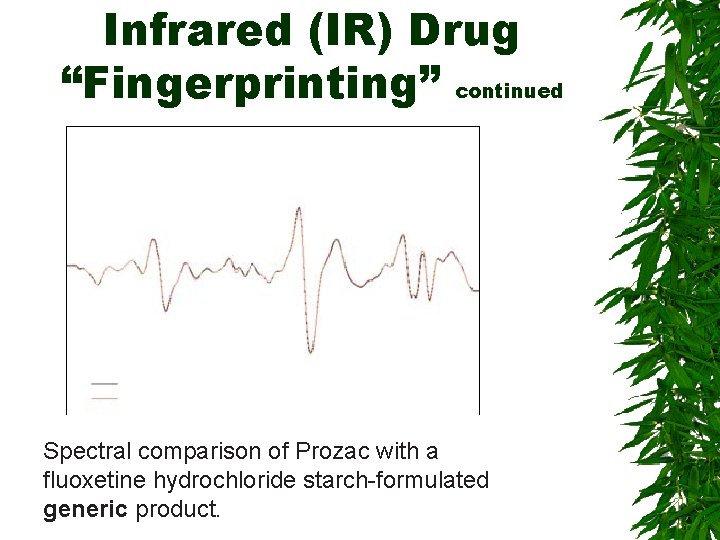
Infrared (IR) Drug “Fingerprinting” continued Spectral comparison of Prozac with a fluoxetine hydrochloride starch-formulated generic product.
Drug Testing in the Body Urine is most common Immunoassay – Based on antigen-antibody binding specificity – Antibody produced by injecting antigen (drug) into rabbit – Antibodies will bind to drug in urine Confirmation done w/TLC
False positives in Immunoassays Poppy seeds and Vicks 44 for opiates Decongestants for amphetamines Benadryl and numerous cough syrups for PCP
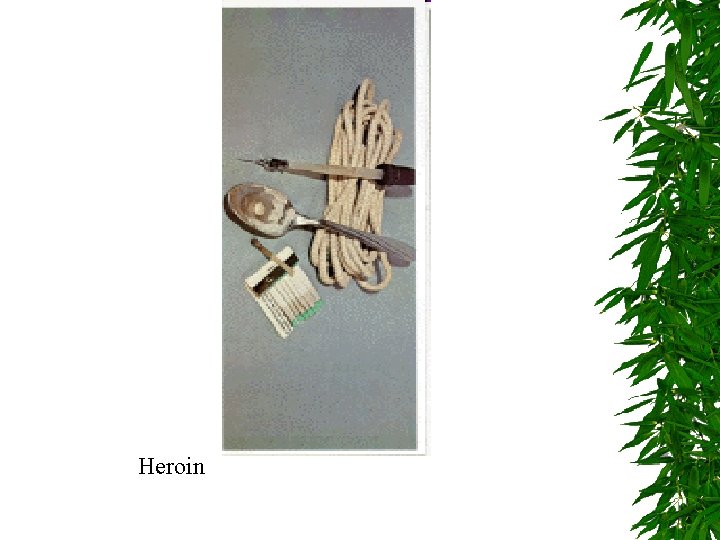
Heroin
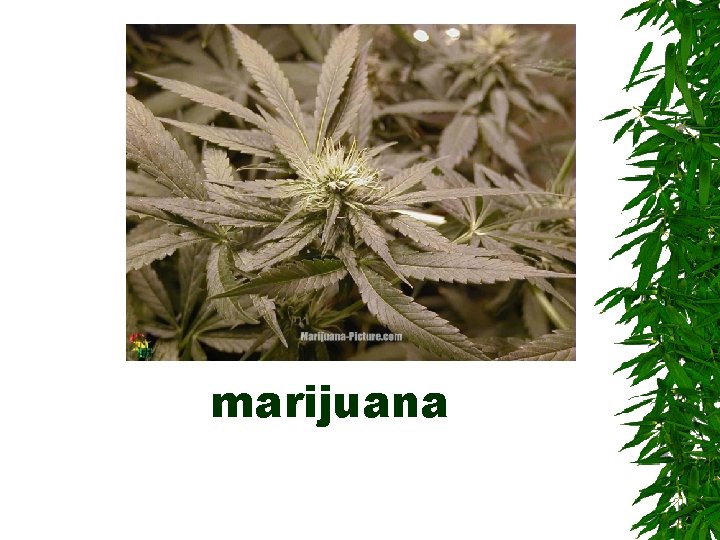
marijuana
- Slides: 38