
Forensic Applications of Raman Micro Spectroscopy with an



- Slides: 39
Forensic Applications of Raman Micro -Spectroscopy with an Emphasis on In Situ Pigment Identification Brendan Nytes, Chris Palenik, Skip Palenik, and Bryn Wilke Microtrace LLC
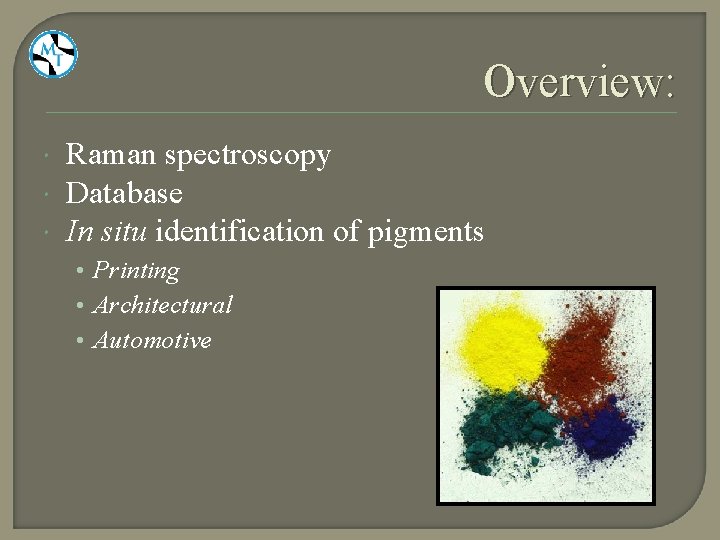
Overview: Raman spectroscopy Database In situ identification of pigments • Printing • Architectural • Automotive
Raman Spectroscopy: Advantages: • Small analysis volume (confocal) • Mapping • Depth profiling • In situ analysis • Phase identification Disadvantages • Fluorescence • Strong scatterers can dominate the spectrum
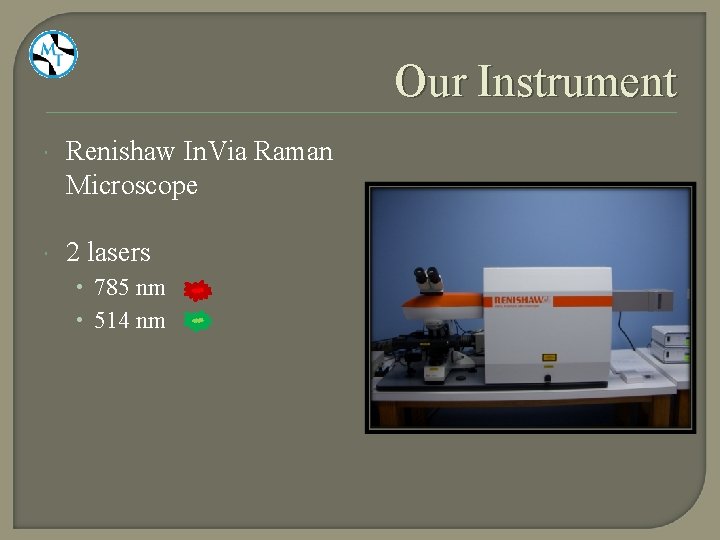
Our Instrument Renishaw In. Via Raman Microscope 2 lasers • 785 nm • 514 nm
Raman Library: IR databases are more prevalent that Raman Database: • Pigments • Dyes • Minerals • Chemical compounds Includes over 200 pigments • Of ~500 pigments and 2000+ dyes in our physical reference collection Can be searched • Background/baseline corrections can interfere with search
Pigmented Printing Inks: Starting point 4 -color process printing • • Packaging Letterheads Laser printers Commercial printing Samples are readily available Can study both individual pigments and mixtures produced in the printing process
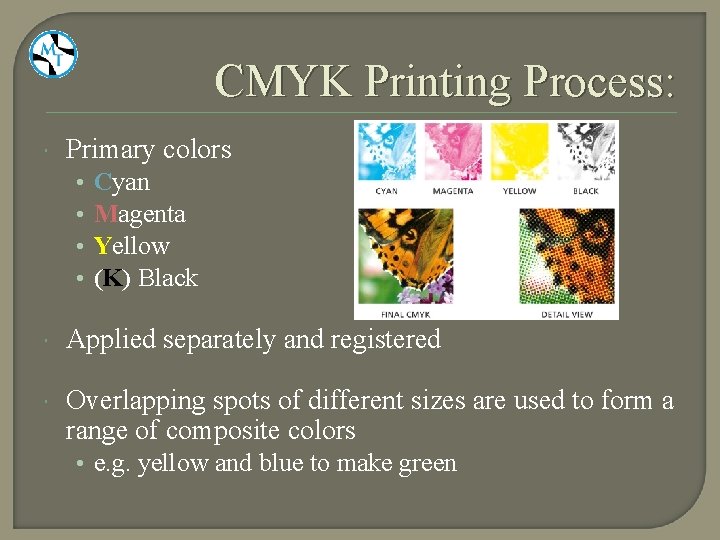
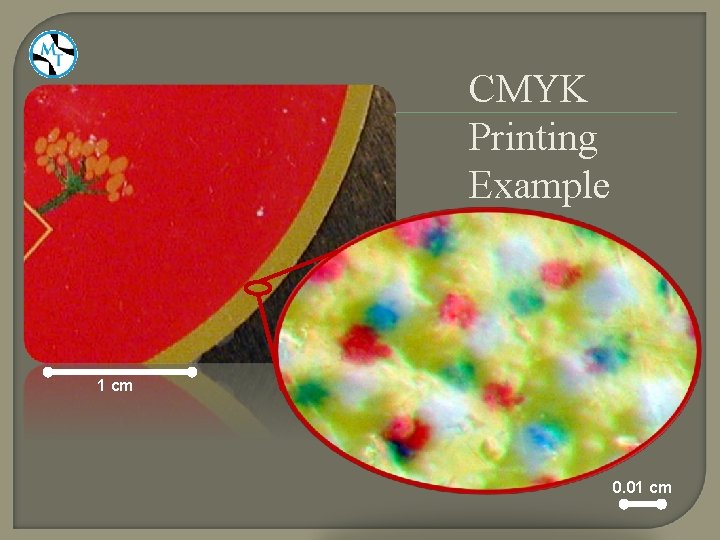
CMYK Printing Process: Primary colors • • Cyan Magenta Yellow (K) Black Applied separately and registered Overlapping spots of different sizes are used to form a range of composite colors • e. g. yellow and blue to make green
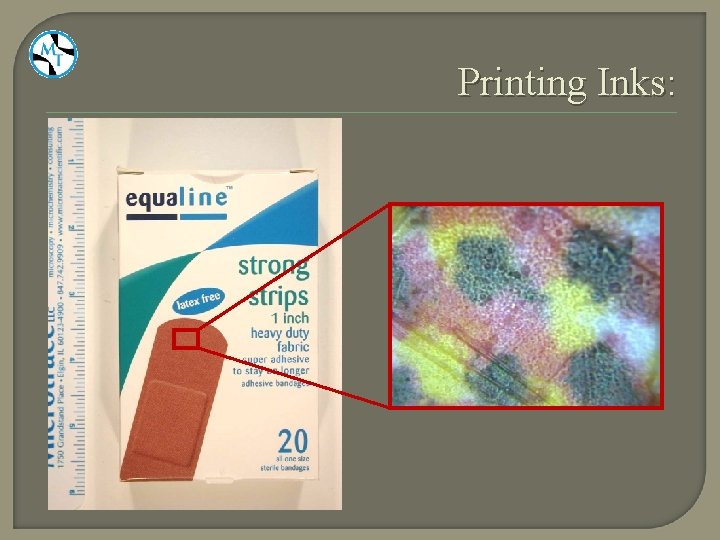
Printing Inks: Bandaid
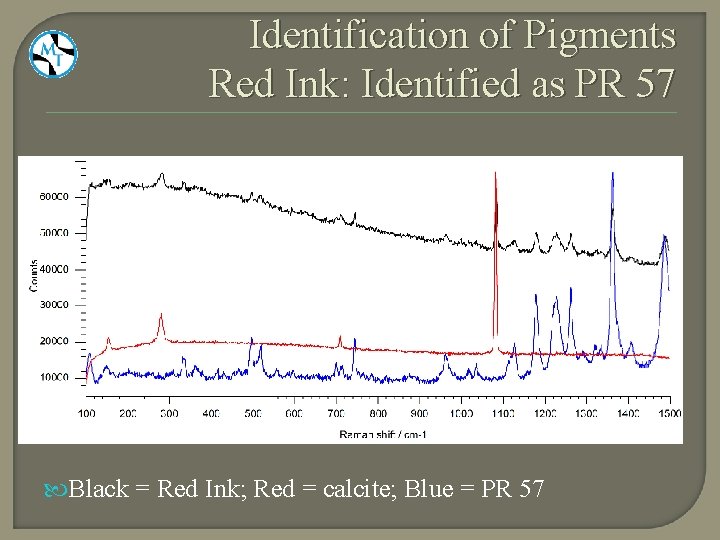
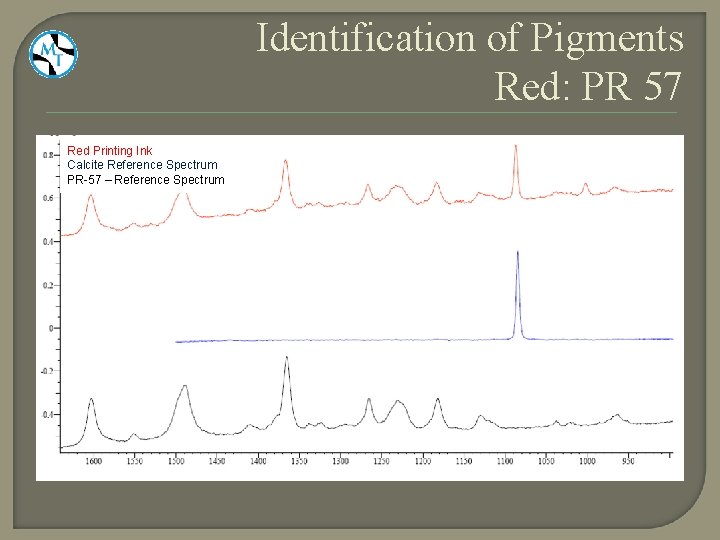
Identification of Pigments Red Ink: Identified as PR 57 Black = Red Ink; Red = calcite; Blue = PR 57
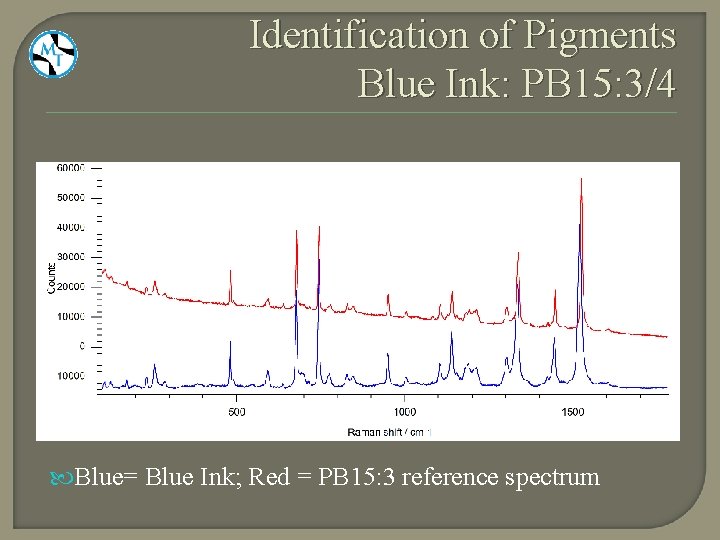
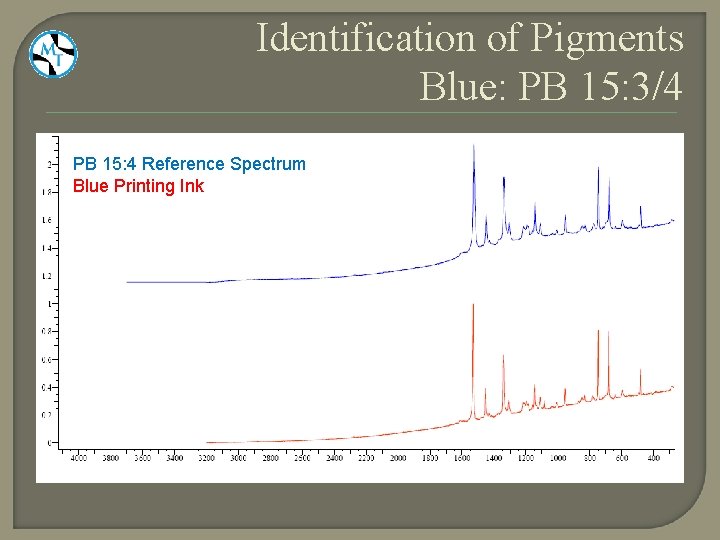
Identification of Pigments Blue Ink: PB 15: 3/4 Blue= Blue Ink; Red = PB 15: 3 reference spectrum
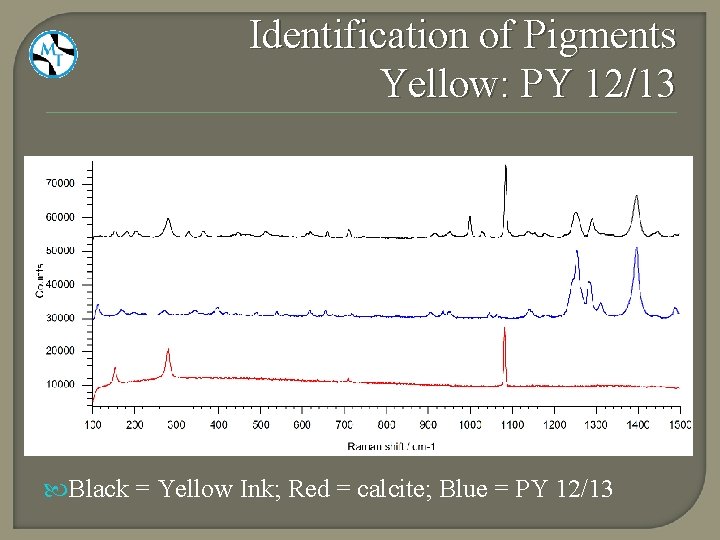
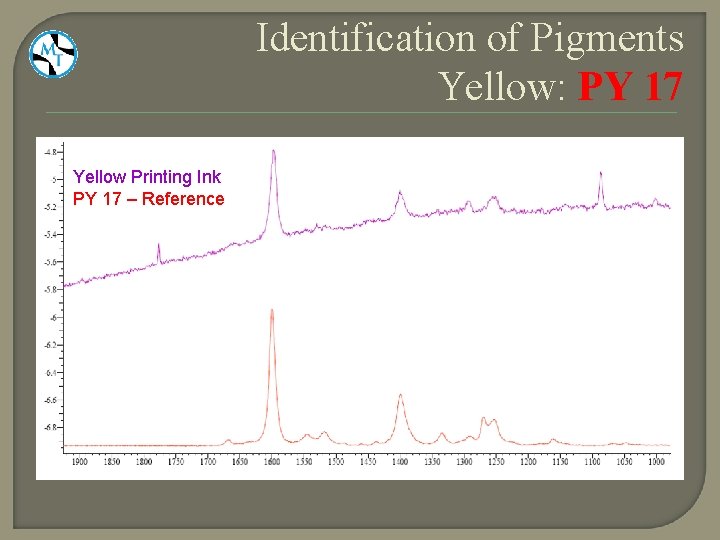
Identification of Pigments Yellow: PY 12/13 Black = Yellow Ink; Red = calcite; Blue = PY 12/13
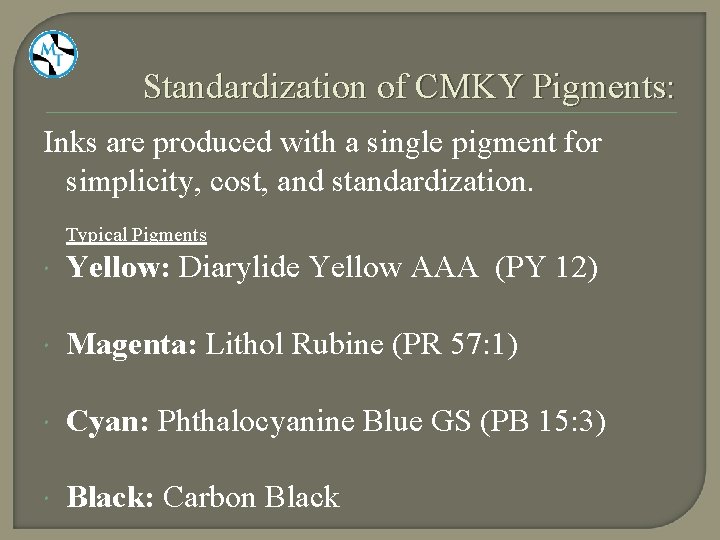
Standardization of CMKY Pigments: Inks are produced with a single pigment for simplicity, cost, and standardization. Typical Pigments Yellow: Diarylide Yellow AAA (PY 12) Magenta: Lithol Rubine (PR 57: 1) Cyan: Phthalocyanine Blue GS (PB 15: 3) Black: Carbon Black
CMYK Printing Example 1 cm 0. 01 cm
Identification of Pigments Blue: PB 15: 3/4 PB 15: 4 Reference Spectrum Blue Printing Ink
Identification of Pigments Red: PR 57 Red Printing Ink Calcite Reference Spectrum PR-57 – Reference Spectrum
Identification of Pigments Yellow: PY 17 Yellow Printing Ink PY 17 – Reference
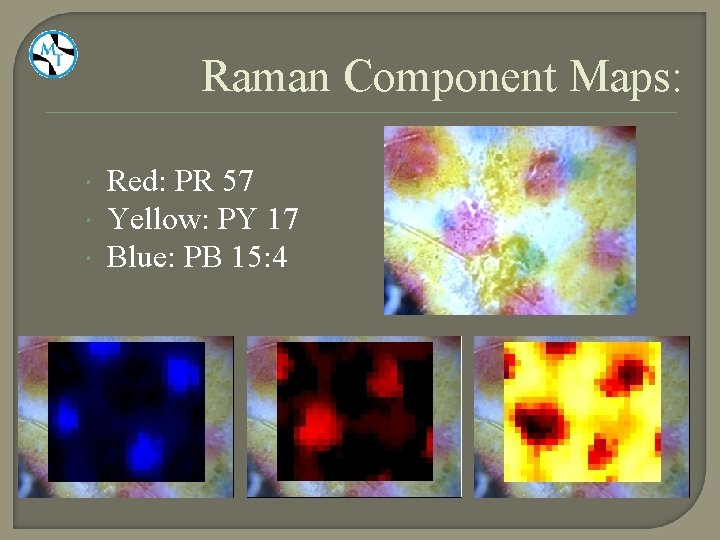
Raman Component Maps: Red: PR 57 Yellow: PY 17 Blue: PB 15: 4
Printing Pigment Wrap-up: Multiple pigments were identified Pigments were indentified in situ • No sample preparation
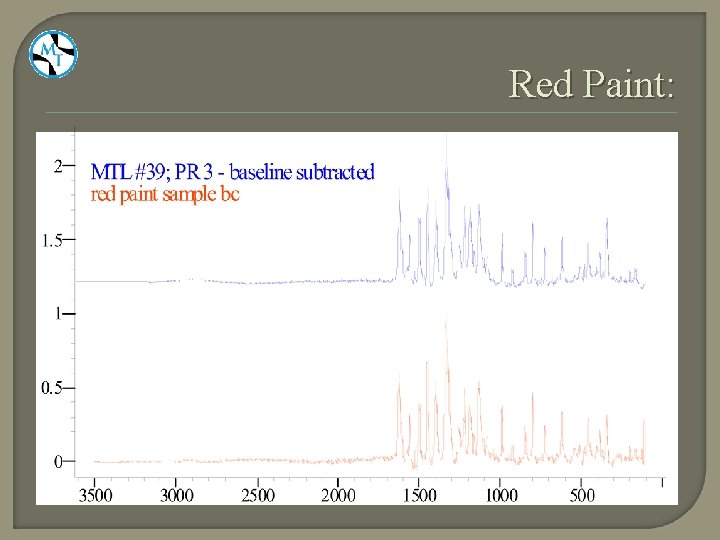
Architectural Paints: Encountered in casework Limited number of pigments used Readily available samples Some pigments are listed on the containers Seven paint samples
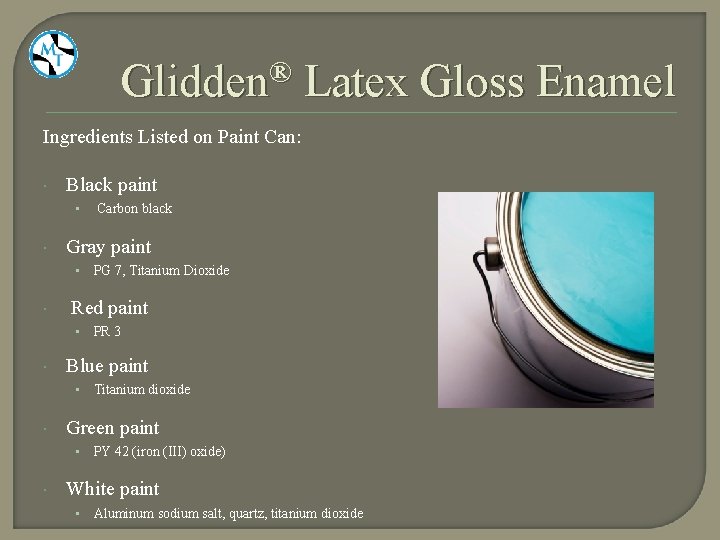
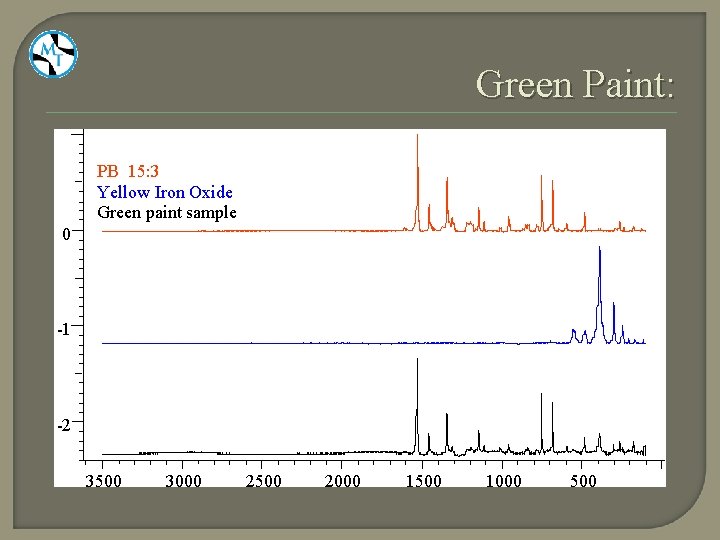
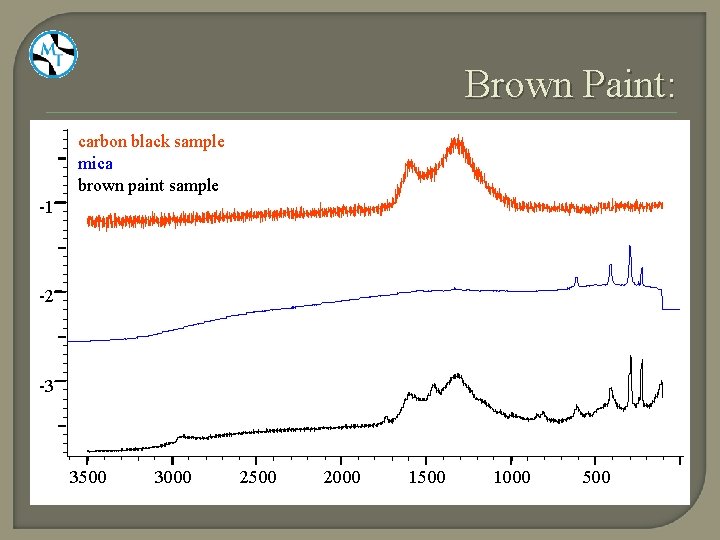
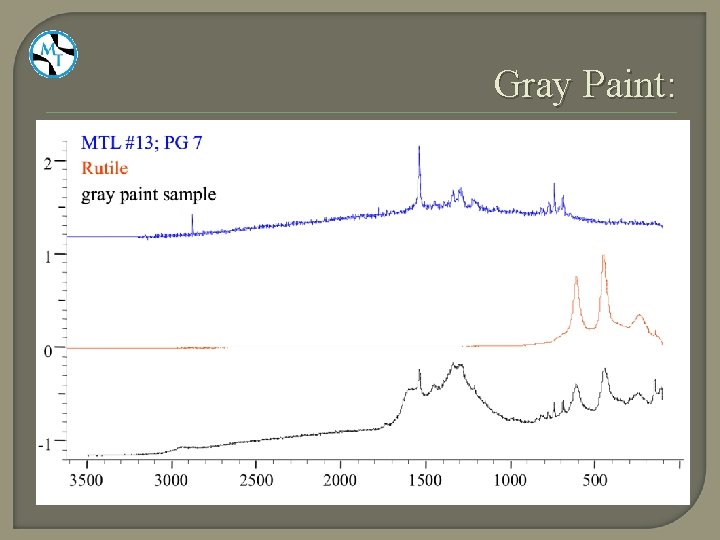
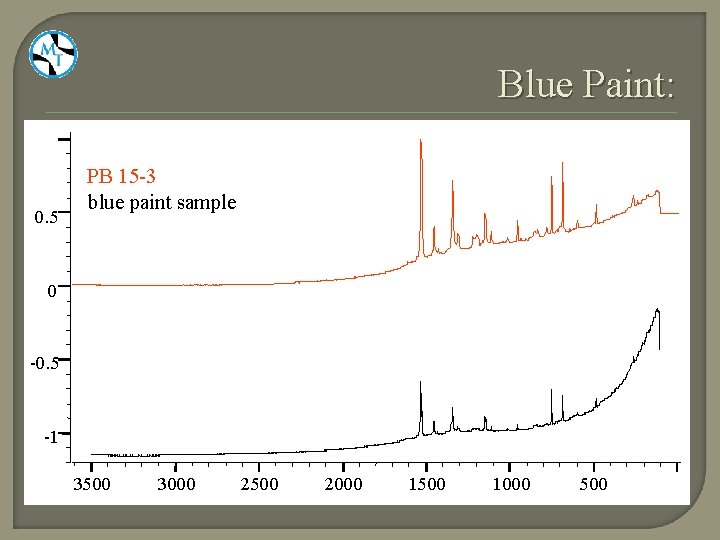
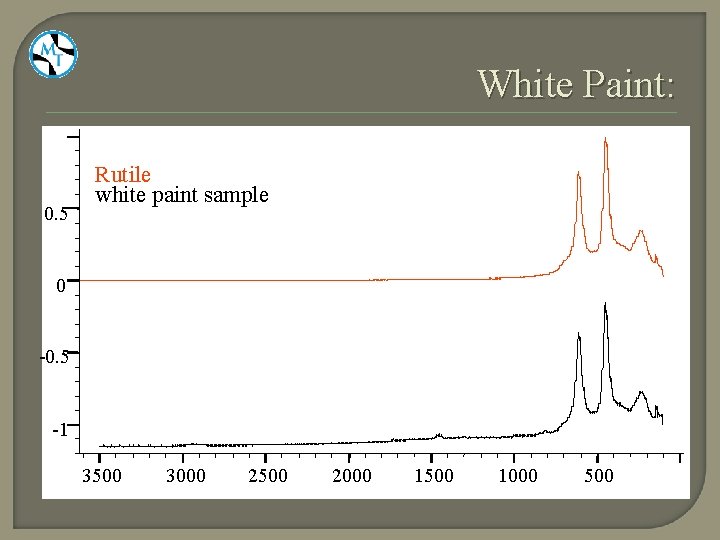
Glidden® Latex Gloss Enamel Ingredients Listed on Paint Can: Black paint • Gray paint • Titanium dioxide Green paint • PR 3 Blue paint • PG 7, Titanium Dioxide Red paint • Carbon black PY 42 (iron (III) oxide) White paint • Aluminum sodium salt, quartz, titanium dioxide
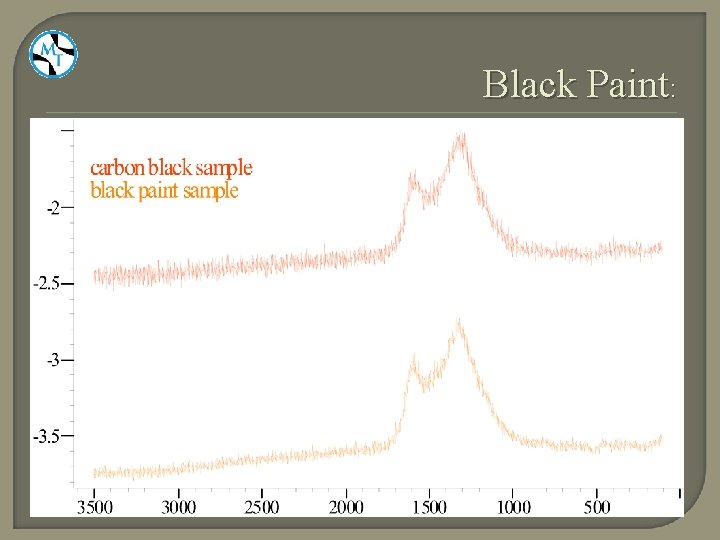
Black Paint:
Green Paint: PB 15: 3 Yellow Iron Oxide Green paint sample 0 -1 -2 3500 3000 2500 2000 1500 1000 500
Brown Paint: carbon black sample mica brown paint sample -1 -2 -3 3500 3000 2500 2000 1500 1000 500
Gray Paint:
Blue Paint: 0. 5 PB 15 -3 blue paint sample 0 -0. 5 -1 3500 3000 2500 2000 1500 1000 500
Red Paint:
White Paint: 0. 5 Rutile white paint sample 0 -0. 5 -1 3500 3000 2500 2000 1500 1000 500
Architectural Wrap –up: Seven paint samples studied Major pigments in all paints were identified Some fillers were identified Pigments not listed were identified In some cases, multiple pigments were identified Successful in situ identification
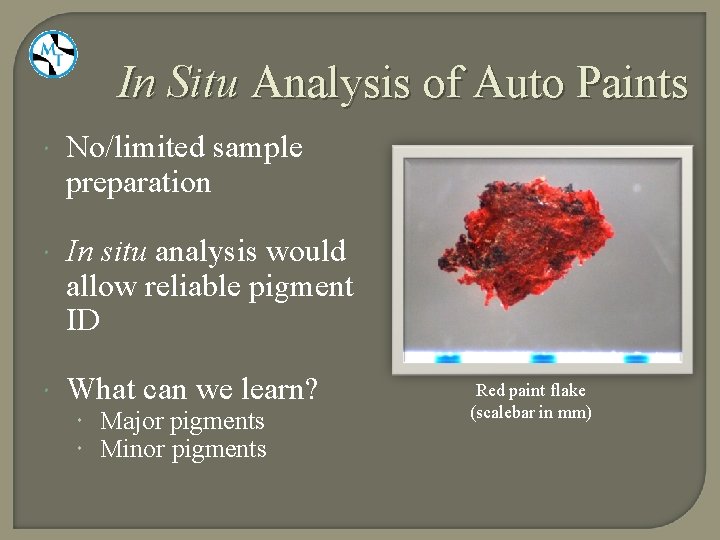
In Situ Analysis of Auto Paints No/limited sample preparation In situ analysis would allow reliable pigment ID What can we learn? Major pigments Minor pigments Red paint flake (scalebar in mm)
In Situ Analysis of Auto Paints 27 CTS Paint Samples Provided by Scott Ryland Emphasis on Browns and Reds (harder to examine) Some pigment names were supplied (from CTS) Analyzed and compared to our Raman Database
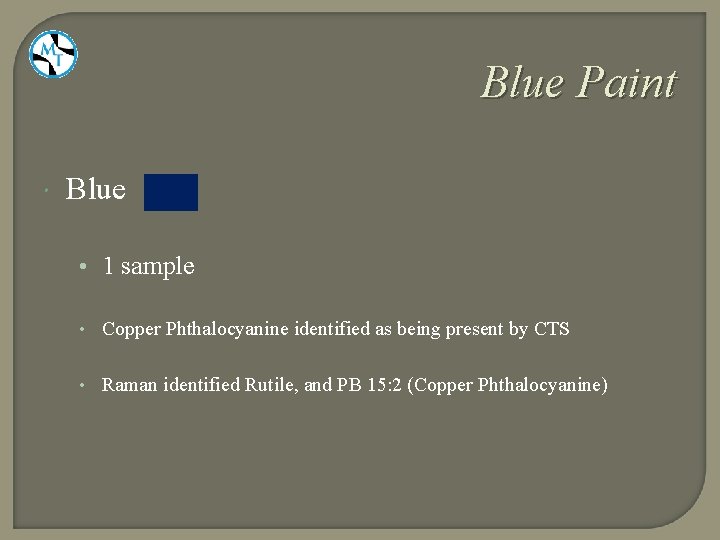
Blue Paint Blue • 1 sample • Copper Phthalocyanine identified as being present by CTS • Raman identified Rutile, and PB 15: 2 (Copper Phthalocyanine)
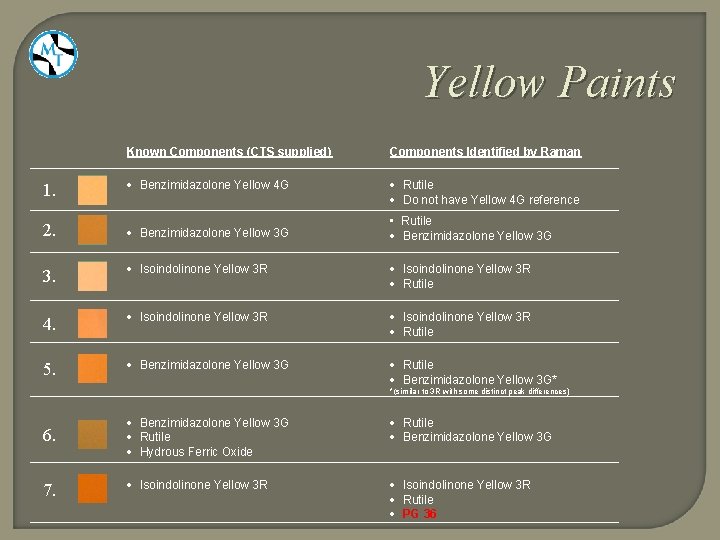
Yellow Paints Known Components (CTS supplied) Components Identified by Raman 1. Benzimidazolone Yellow 4 G Rutile Do not have Yellow 4 G reference 2. Benzimidazolone Yellow 3 G 3. Isoindolinone Yellow 3 R Rutile 4. Isoindolinone Yellow 3 R Rutile 5. Benzimidazolone Yellow 3 G Rutile Benzimidazolone Yellow 3 G* • Rutile Benzimidazolone Yellow 3 G *(similar to 3 R with some distinct peak differences) 6. Benzimidazolone Yellow 3 G Rutile Hydrous Ferric Oxide Rutile Benzimidazolone Yellow 3 G 7. Isoindolinone Yellow 3 R Rutile PG 36
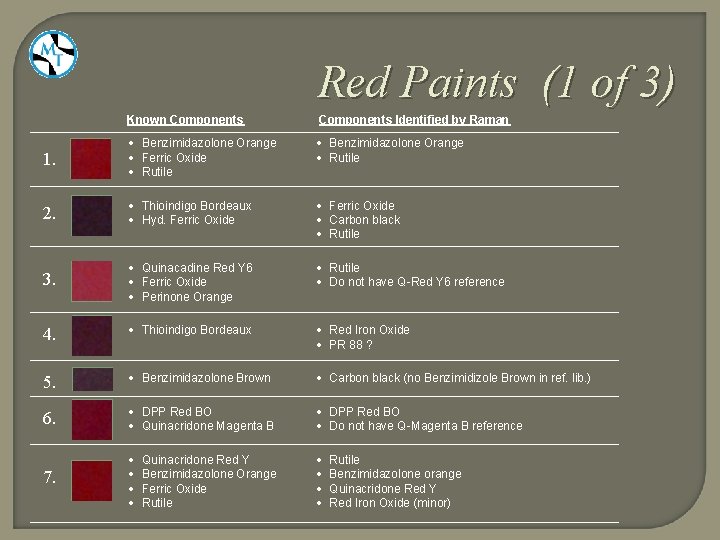
Red Paints (1 of 3) Known Components Identified by Raman 1. Benzimidazolone Orange Ferric Oxide Rutile Benzimidazolone Orange Rutile 2. Thioindigo Bordeaux Hyd. Ferric Oxide Carbon black Rutile 3. Quinacadine Red Y 6 Ferric Oxide Perinone Orange Rutile Do not have Q-Red Y 6 reference 4. Thioindigo Bordeaux Red Iron Oxide PR 88 ? 5. Benzimidazolone Brown Carbon black (no Benzimidizole Brown in ref. lib. ) 6. DPP Red BO Quinacridone Magenta B DPP Red BO Do not have Q-Magenta B reference 7. Quinacridone Red Y Benzimidazolone Orange Ferric Oxide Rutile Benzimidazolone orange Quinacridone Red Y Red Iron Oxide (minor)
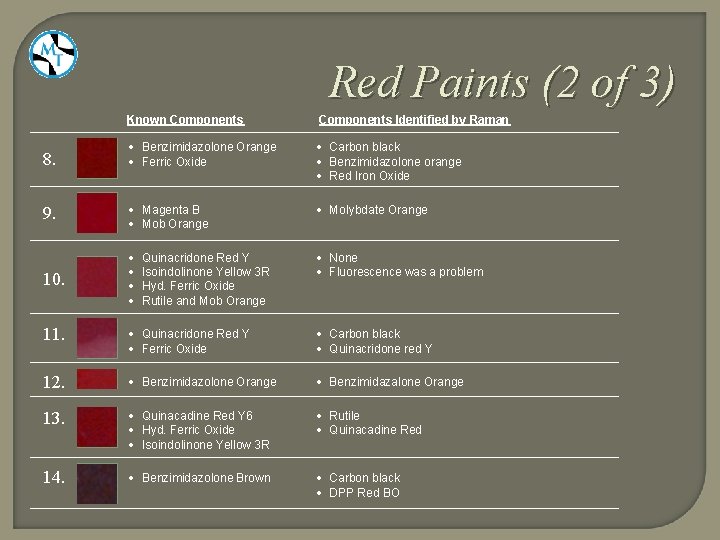
Red Paints (2 of 3) Known Components Identified by Raman 8. Benzimidazolone Orange Ferric Oxide Carbon black Benzimidazolone orange Red Iron Oxide 9. Magenta B Mob Orange Molybdate Orange 10. None Fluorescence was a problem Quinacridone Red Y Isoindolinone Yellow 3 R Hyd. Ferric Oxide Rutile and Mob Orange 11. Quinacridone Red Y Ferric Oxide Carbon black Quinacridone red Y 12. Benzimidazolone Orange Benzimidazalone Orange 13. Quinacadine Red Y 6 Hyd. Ferric Oxide Isoindolinone Yellow 3 R Rutile Quinacadine Red 14. Benzimidazolone Brown Carbon black DPP Red BO
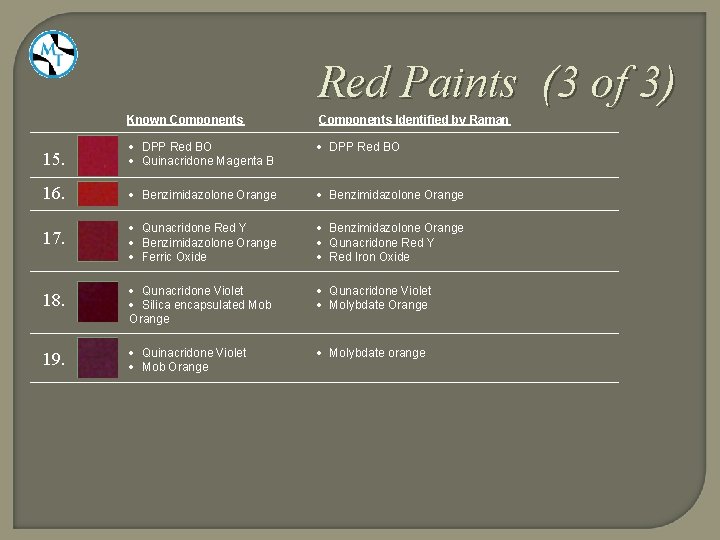
Red Paints (3 of 3) Known Components Identified by Raman 15. DPP Red BO Quinacridone Magenta B DPP Red BO 16. Benzimidazolone Orange 17. Qunacridone Red Y Benzimidazolone Orange Ferric Oxide Benzimidazolone Orange Qunacridone Red Y Red Iron Oxide 18. Qunacridone Violet Silica encapsulated Mob Orange Qunacridone Violet Molybdate Orange 19. Quinacridone Violet Mob Orange Molybdate orange
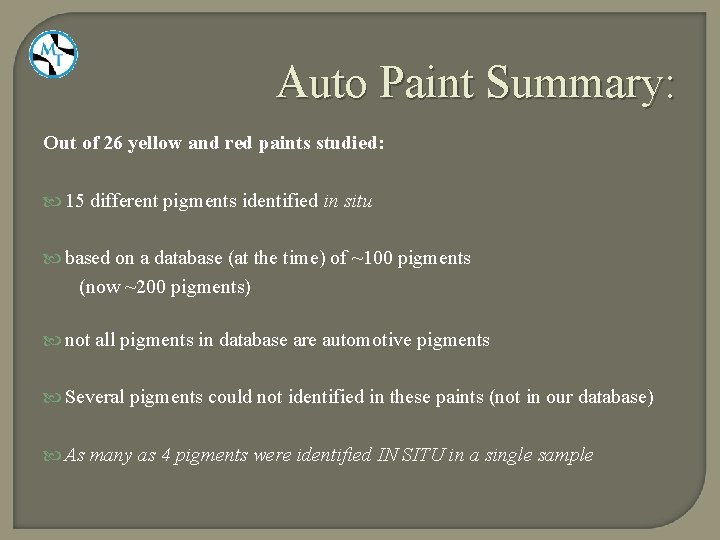
Auto Paint Summary: Out of 26 yellow and red paints studied: 15 different pigments identified in situ based on a database (at the time) of ~100 pigments (now ~200 pigments) not all pigments in database are automotive pigments Several pigments could not identified in these paints (not in our database) As many as 4 pigments were identified IN SITU in a single sample
Summary: Raman has the potential to be extremely valuable for identifying pigments in situ. Valuable for many other types of materials Since, we’ve expanded our database to >200 pigments Currently working on a general classification scheme Focus now on minor pigments
Thank You • Microtrace Staff • Heidi Bonta • Scott Ryland
Questions? ? ?