
FORENSIC ANTHROPOLOGY The application of the science of

- Slides: 19
FORENSIC ANTHROPOLOGY
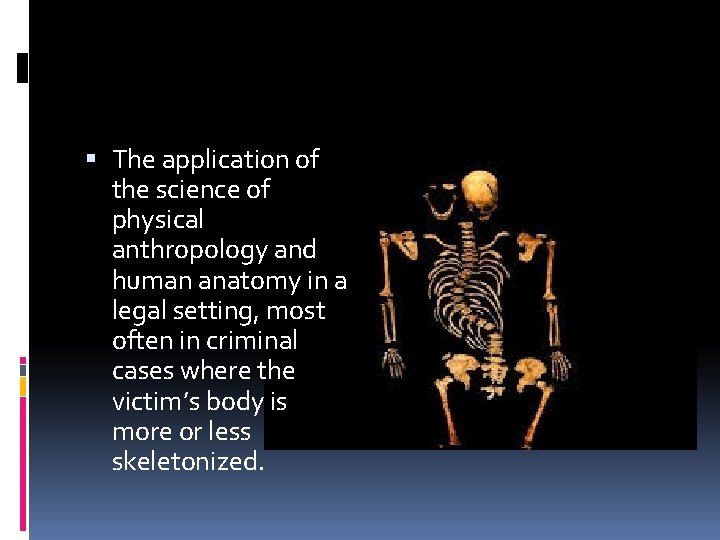
The application of the science of physical anthropology and human anatomy in a legal setting, most often in criminal cases where the victim’s body is more or less skeletonized.
A forensic anthropologist can also assist in the identification of deceased individuals whose remains are decomposed, burned, mutilated, or otherwise damaged.
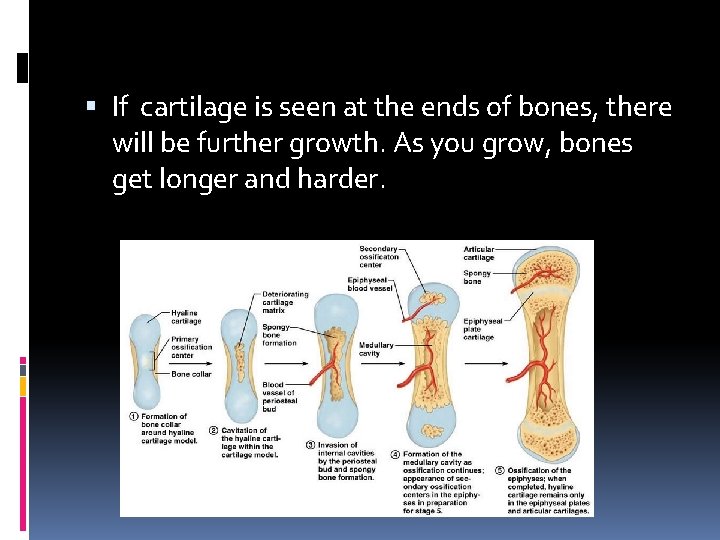
Cartilage Before Bones Most bones in humans develop from masses of cartilage. Cartilage is gradually replaced with true bone. As long as cartilage is present in the bone, the bone can continue to grow.
If cartilage is seen at the ends of bones, there will be further growth. As you grow, bones get longer and harder.
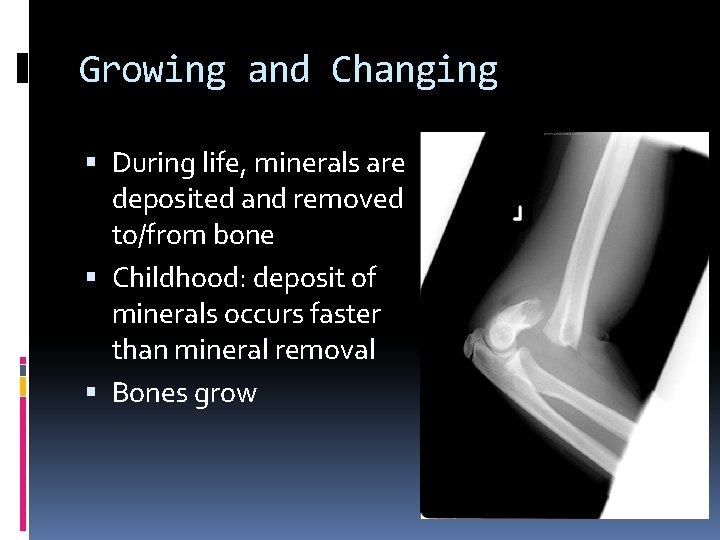
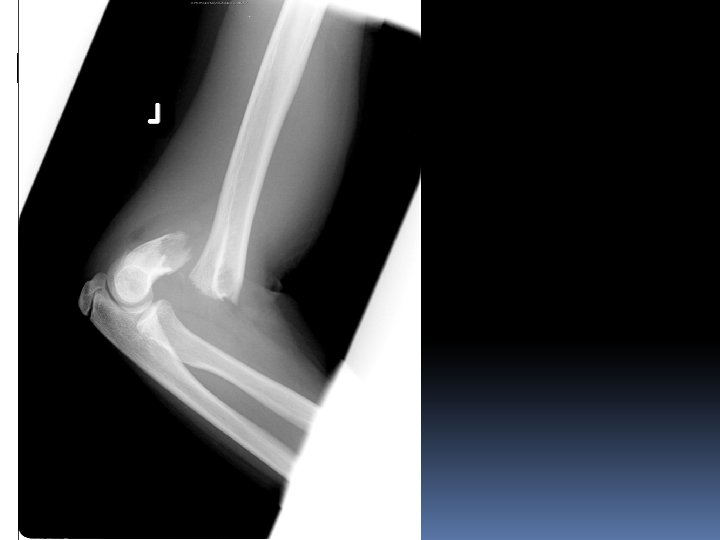
Growing and Changing During life, minerals are deposited and removed to/from bone Childhood: deposit of minerals occurs faster than mineral removal Bones grow
Females grow until 18 years of age Males grow until 2122 years of age
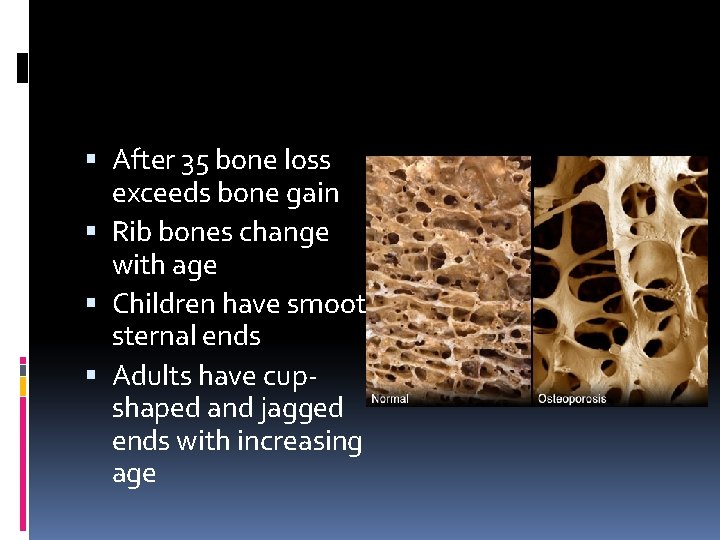
After 35 bone loss exceeds bone gain Rib bones change with age Children have smooth sternal ends Adults have cupshaped and jagged ends with increasing age
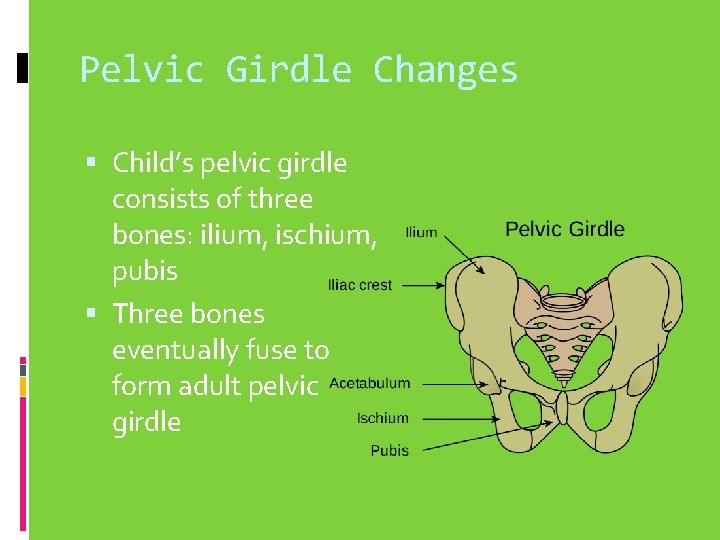
Pelvic Girdle Changes Child’s pelvic girdle consists of three bones: ilium, ischium, pubis Three bones eventually fuse to form adult pelvic girdle
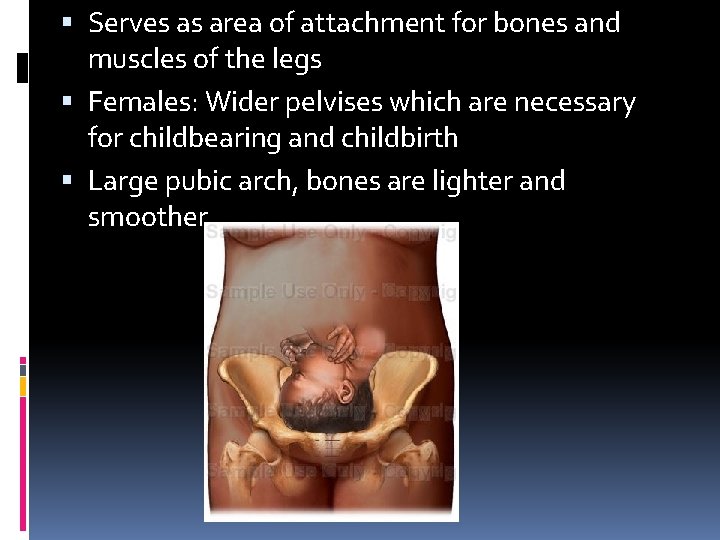
Serves as area of attachment for bones and muscles of the legs Females: Wider pelvises which are necessary for childbearing and childbirth Large pubic arch, bones are lighter and smoother
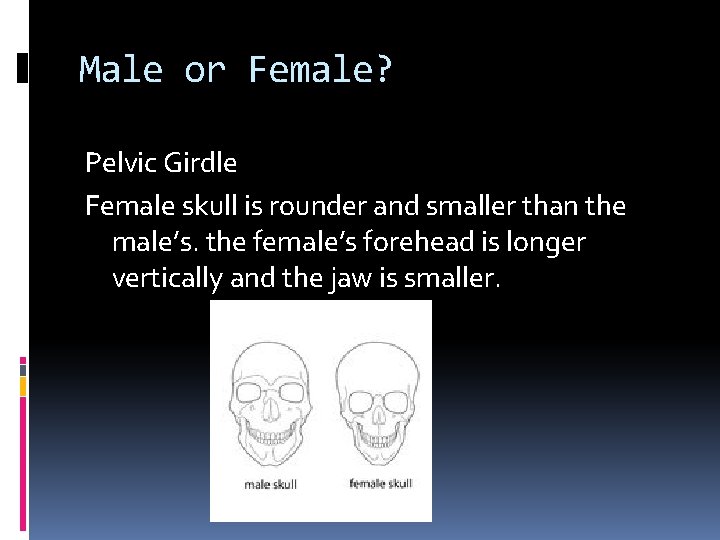
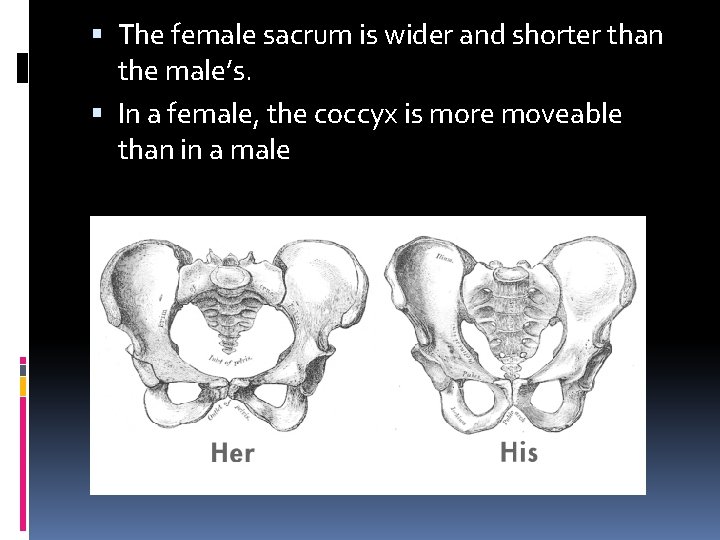
Male or Female? Pelvic Girdle Female skull is rounder and smaller than the male’s. the female’s forehead is longer vertically and the jaw is smaller.
The female sacrum is wider and shorter than the male’s. In a female, the coccyx is more moveable than in a male
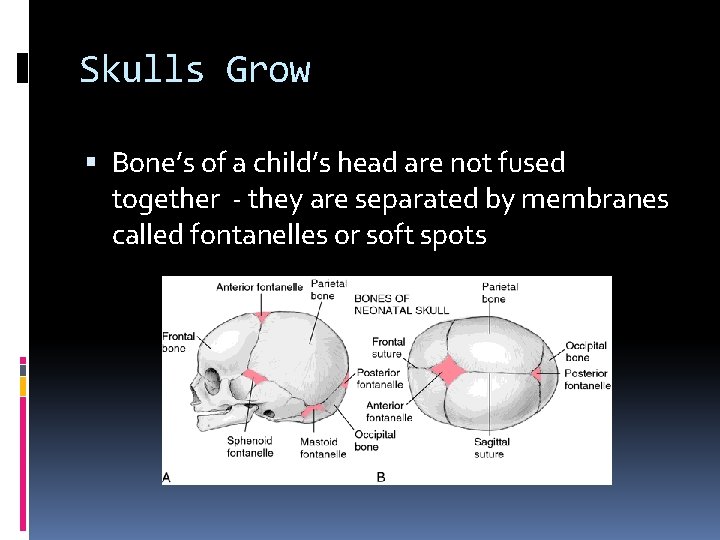
Skulls Grow Bone’s of a child’s head are not fused together - they are separated by membranes called fontanelles or soft spots
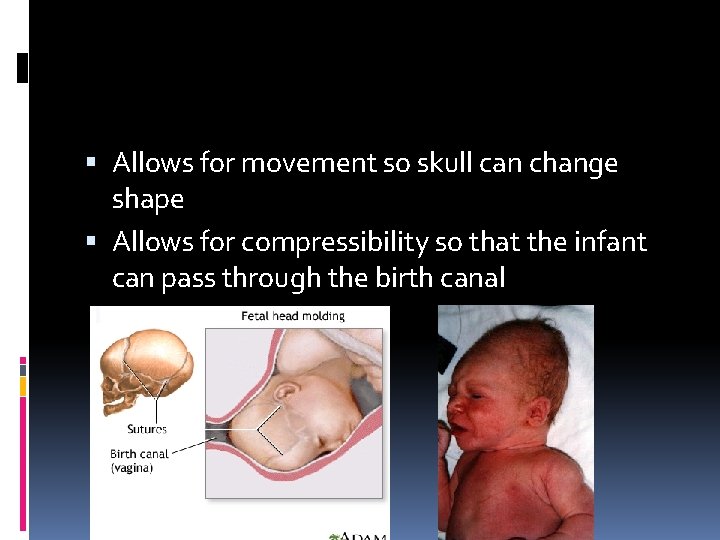
Allows for movement so skull can change shape Allows for compressibility so that the infant can pass through the birth canal
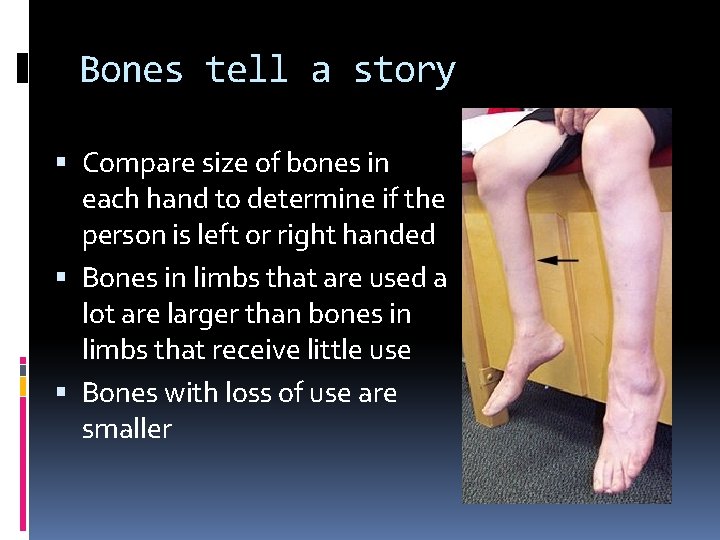
Bones tell a story Compare size of bones in each hand to determine if the person is left or right handed Bones in limbs that are used a lot are larger than bones in limbs that receive little use Bones with loss of use are smaller
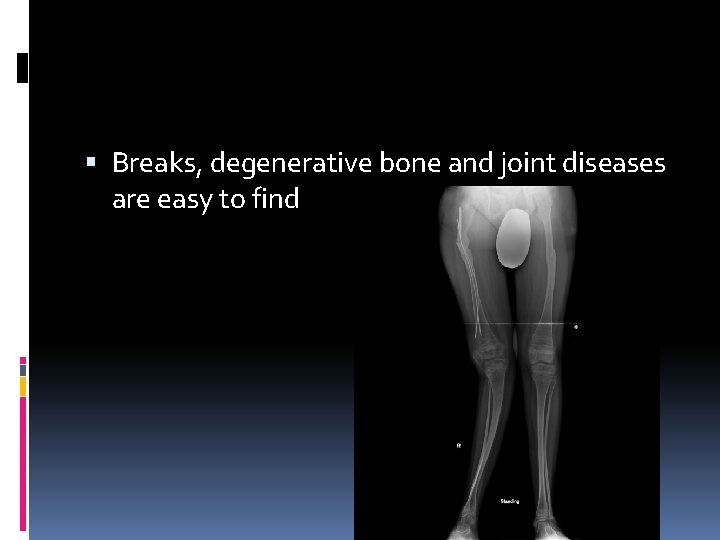
Breaks, degenerative bone and joint diseases are easy to find
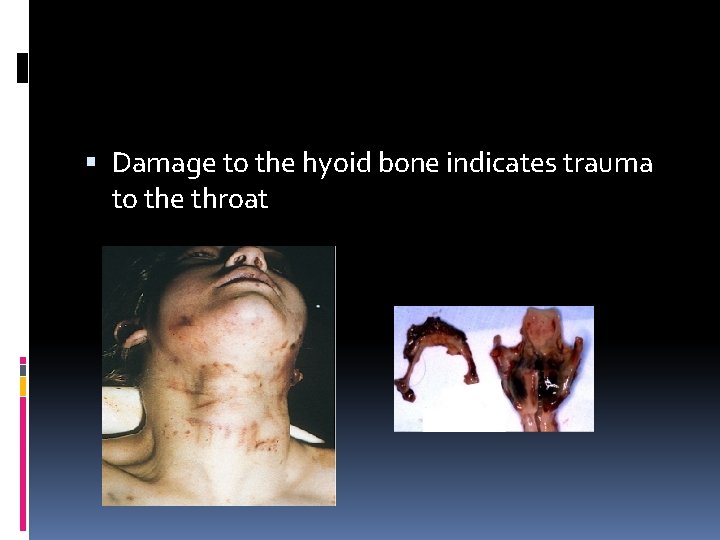
Damage to the hyoid bone indicates trauma to the throat