
Foreign Policy Polarity Unipolar Bipolar Multipolar Supportership Schools
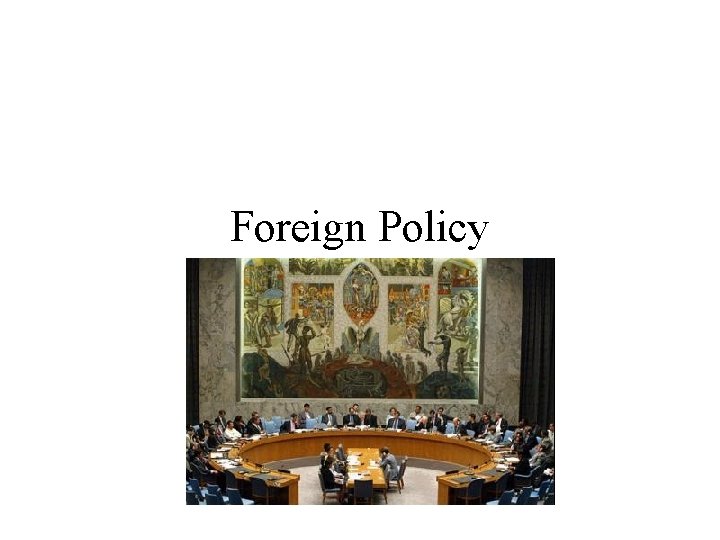
Foreign Policy

Polarity • Unipolar • Bipolar • Multipolar • Supportership
Schools of IR • • Liberal Idealism (Classical) Realism Neo-Liberal Institutionalism Neo-Realism
Levels of analysis • I. Individual • II. Domestic • III. Systemic
Diplomacy • Archie Bunker: “Getting someone to do something they don't wanna by promising to do something you ain't got no intention of doing” • A more formal definition: The total process by which states carry on political relations with each other; settling conflicts among nations by peaceful means
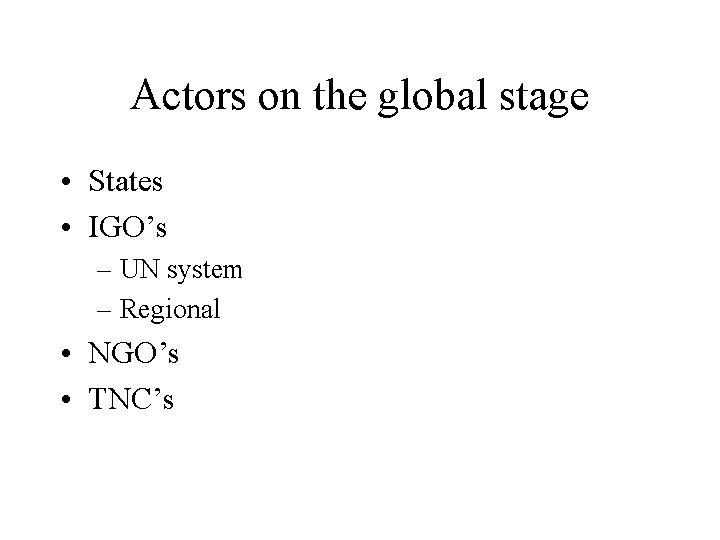
Actors on the global stage • States • IGO’s – UN system – Regional • NGO’s • TNC’s
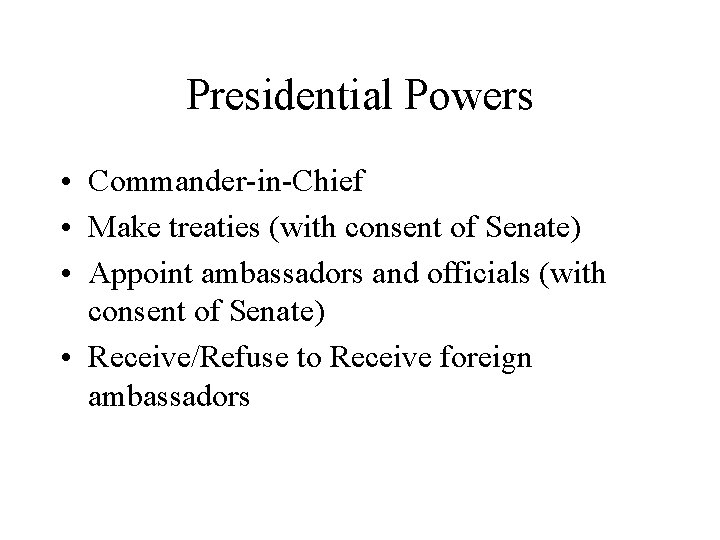
Presidential Powers • Commander-in-Chief • Make treaties (with consent of Senate) • Appoint ambassadors and officials (with consent of Senate) • Receive/Refuse to Receive foreign ambassadors
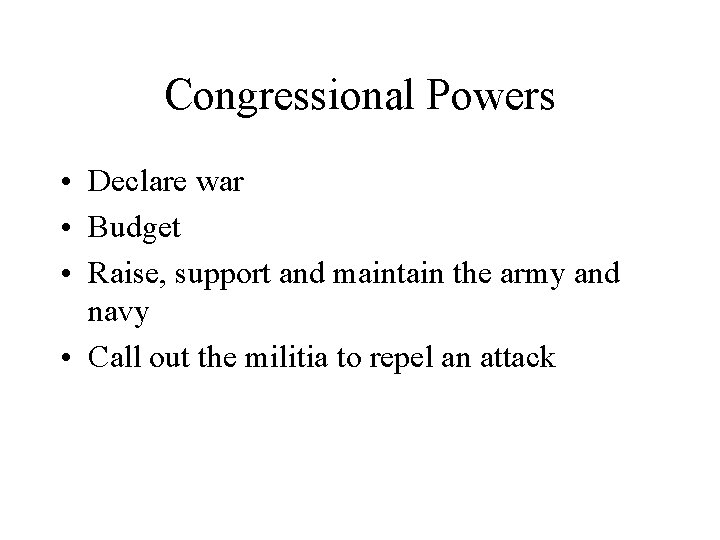
Congressional Powers • Declare war • Budget • Raise, support and maintain the army and navy • Call out the militia to repel an attack
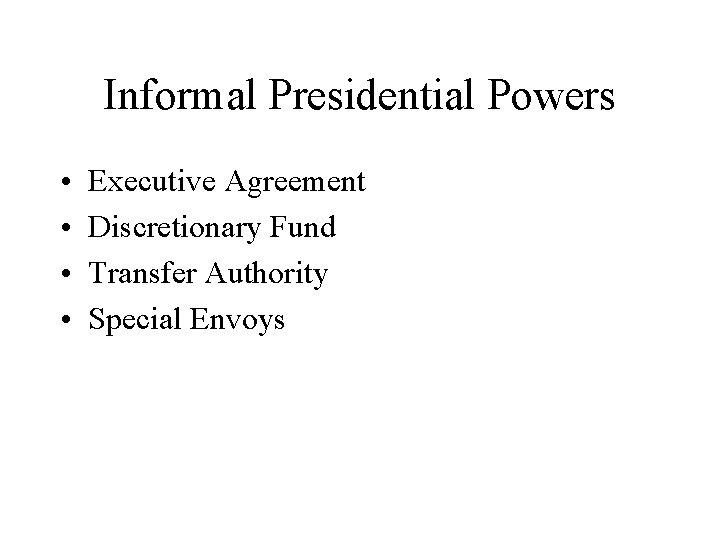
Informal Presidential Powers • • Executive Agreement Discretionary Fund Transfer Authority Special Envoys
War Powers Resolution • Notify Congress within 48 hours of committing troops to a foreign intervention • Once deployed troops may not remain for more than 60 days without affirmative Congressional approval (30 more days are allowed for “safe” removal) • Congress must be consulted at “every possible instance” • Passed in 1973 over Nixon’s veto
Foreign Policy Bureaucracy • Dept. State – US AID • Dept. Defense • NSC • Intelligence Community
American Foreign Policy • • • Washington’s Admonishment Monroe Doctrine Isolationism Globalism Cold War: – – Roll back Containment Deterrence Détente • Afghan and Iraq Wars
- Slides: 12