
Foreign Policy Facing the World Foreign and Defense
- Slides: 32
Foreign Policy
Facing the World: Foreign and Defense Policy • Foreign policy includes the techniques and strategies used to achieve external goals, as well as the goals themselves. • Diplomacy • Economic Aid • Technical Assistance Copyright © 2011 Cengage Learning 2
Do we lead by the example of our power or by the power of our example? Former President Bill Clinton Copyright © 2011 Cengage Learning 3
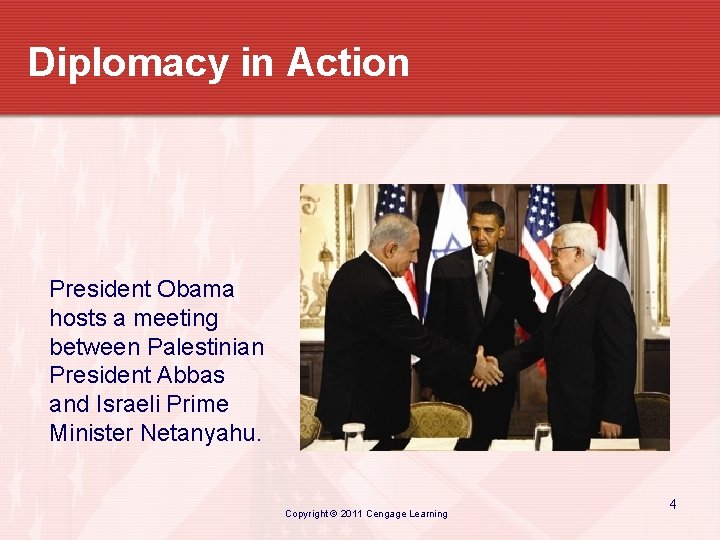
Diplomacy in Action President Obama hosts a meeting between Palestinian President Abbas and Israeli Prime Minister Netanyahu. Copyright © 2011 Cengage Learning 4
National Security and Diplomacy • National security deals with the protection of the independence, as well as the political and economic integrity, of the United States. • Defense Policy: directing the intent, size and scale of U. S. armed forces • Diplomacy: external relationships and settling of disputes between nations Copyright © 2011 Cengage Learning 5
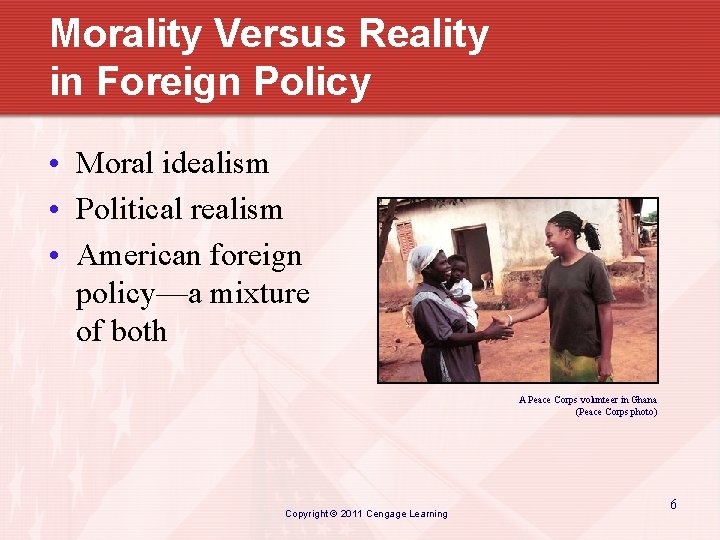
Morality Versus Reality in Foreign Policy • Moral idealism • Political realism • American foreign policy—a mixture of both A Peace Corps volunteer in Ghana (Peace Corps photo) Copyright © 2011 Cengage Learning 6
Major Foreign Policy Themes • Colonial Era • Little international power • Focus on avoiding entanglements • Era of Isolationism (1800 s) • Monroe Doctrine • Isolationism Ends • Spanish American War, WWI • Brief period of “return to normalcy” in 1920 s Copyright © 2011 Cengage Learning 7
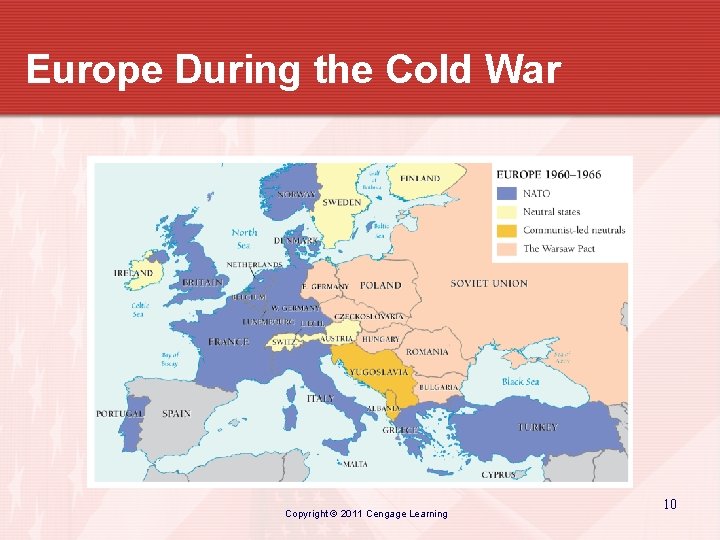
Major Foreign Policy Themes (cont) • Era of Internationalism • Pearl Harbor attack forces U. S. into WWII • Marshall Plan • U. S. emerges as superpower • Cold War • NATO • Containment • Vietnam Copyright © 2011 Cengage Learning 8
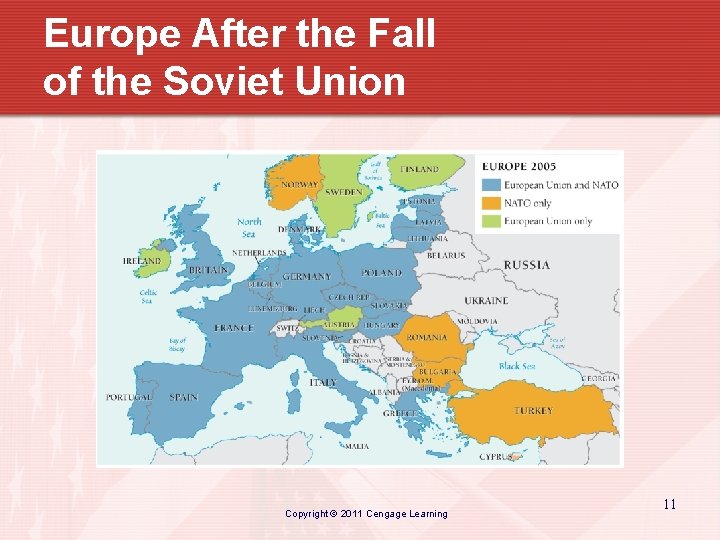
Major Foreign Policy Themes (cont) • Period of Détente (late 1960 s) • Tensions relax • Diplomatic relations expand • Sole superpower (1990 s) • Soviet Union dissolves • Nuclear containment • New World Order • What is the role of the United States? Copyright © 2011 Cengage Learning 9
Europe During the Cold War Copyright © 2011 Cengage Learning 10
Europe After the Fall of the Soviet Union Copyright © 2011 Cengage Learning 11
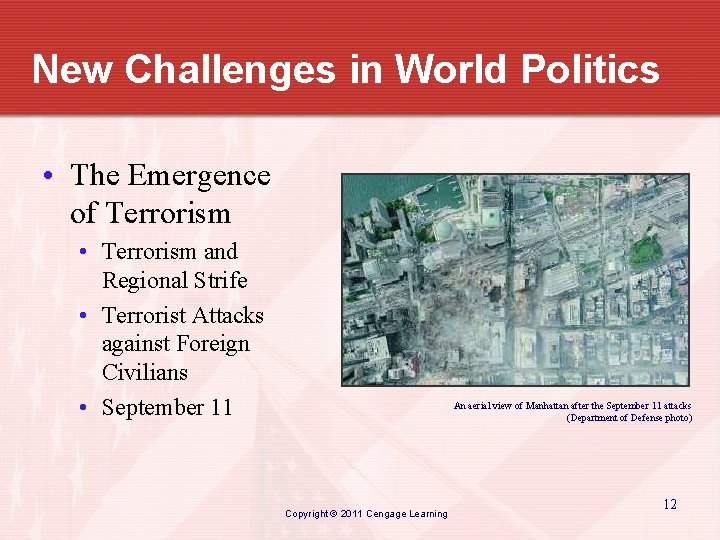
New Challenges in World Politics • The Emergence of Terrorism • Terrorism and Regional Strife • Terrorist Attacks against Foreign Civilians • September 11 An aerial view of Manhattan after the September 11 attacks (Department of Defense photo) Copyright © 2011 Cengage Learning 12
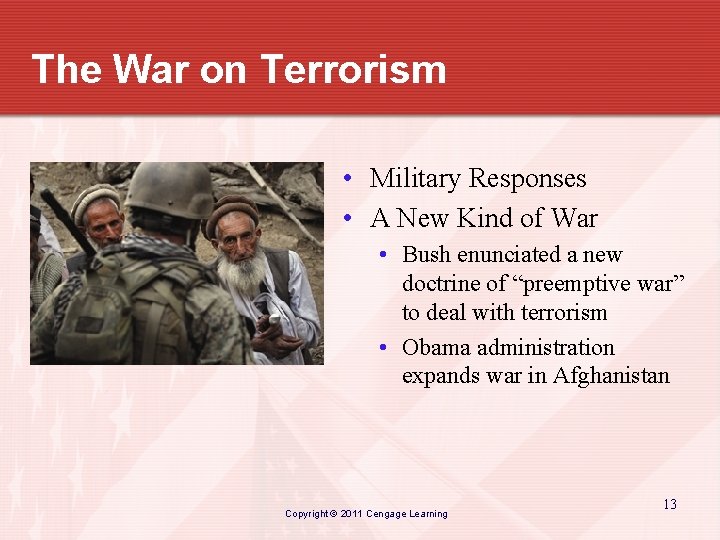
The War on Terrorism • Military Responses • A New Kind of War • Bush enunciated a new doctrine of “preemptive war” to deal with terrorism • Obama administration expands war in Afghanistan Copyright © 2011 Cengage Learning 13
Foreign Policy and Conflict in Iraq • For the past two decades, U. S. foreign policy has focused on the Middle East • • Saddam Hussein’s annexation of Kuwait in 1990 The Persian Gulf—The First Gulf War The Persian Gulf—The Second Gulf War Occupied Iraq Uprisings: Spring 2004 Continuing insurgency, civil war Operation New Dawn Copyright © 2011 Cengage Learning 14
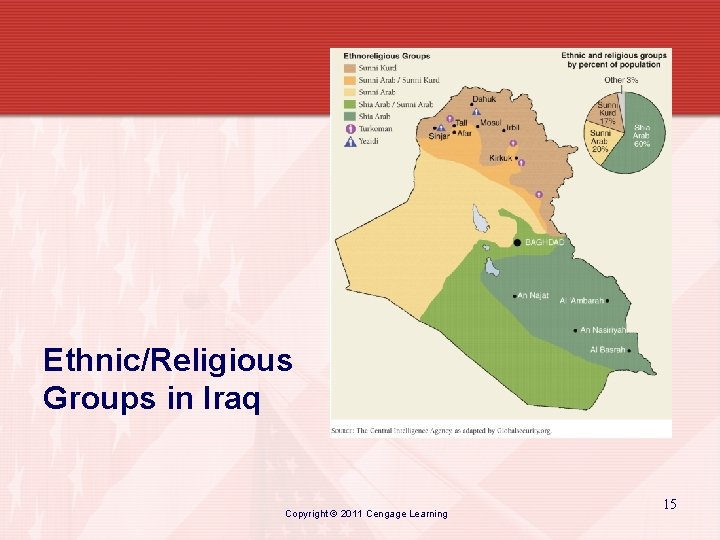
Ethnic/Religious Groups in Iraq Copyright © 2011 Cengage Learning 15
Other Foreign Policy Concerns • • Ongoing tensions with Cuba Israel and the Palestinians World ecology AIDS (particularly in Southern Africa) African Civil Wars China as emerging superpower Removing trade barriers/increasing exports Protecting access to oil Copyright © 2011 Cengage Learning 16
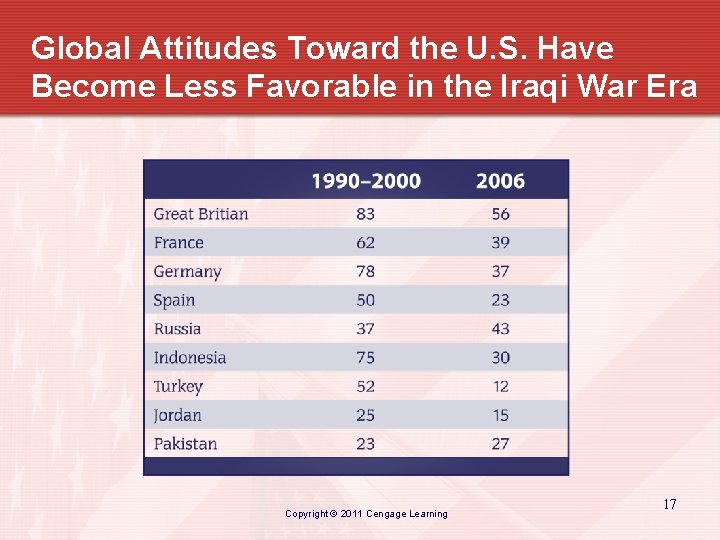
Global Attitudes Toward the U. S. Have Become Less Favorable in the Iraqi War Era Copyright © 2011 Cengage Learning 17
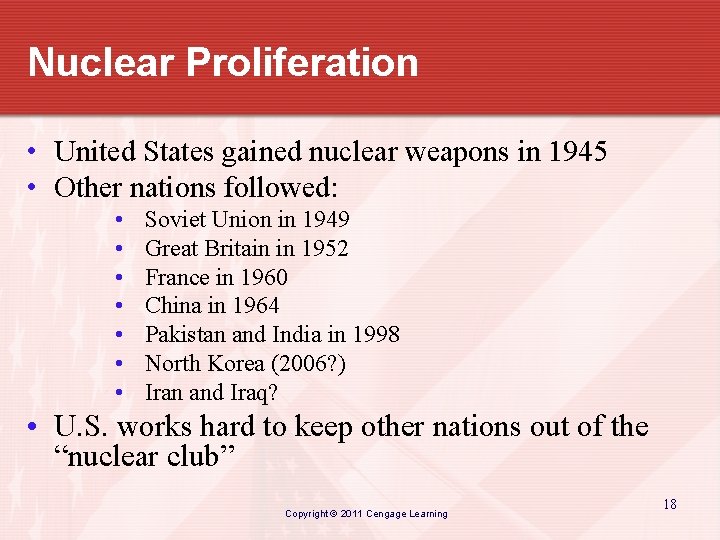
Nuclear Proliferation • United States gained nuclear weapons in 1945 • Other nations followed: • • Soviet Union in 1949 Great Britain in 1952 France in 1960 China in 1964 Pakistan and India in 1998 North Korea (2006? ) Iran and Iraq? • U. S. works hard to keep other nations out of the “nuclear club” Copyright © 2011 Cengage Learning 18
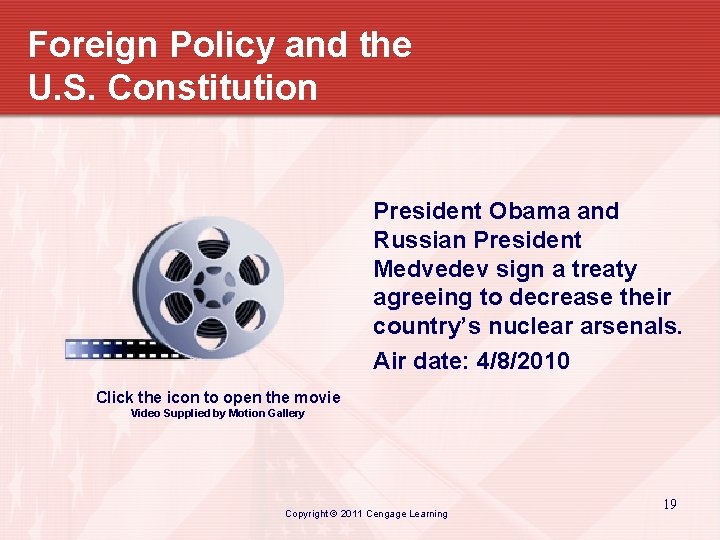
Foreign Policy and the U. S. Constitution President Obama and Russian President Medvedev sign a treaty agreeing to decrease their country’s nuclear arsenals. Air date: 4/8/2010 Click the icon to open the movie Video Supplied by Motion Gallery Copyright © 2011 Cengage Learning 19
Video Questions 1. Why is this a historic step in arms reduction? 2. What message does this treaty send to other nations? 3. Does the U. S. consider Russia an ally or an enemy? 4. What nation presents the greatest security threat to the United States? Copyright © 2011 Cengage Learning 20
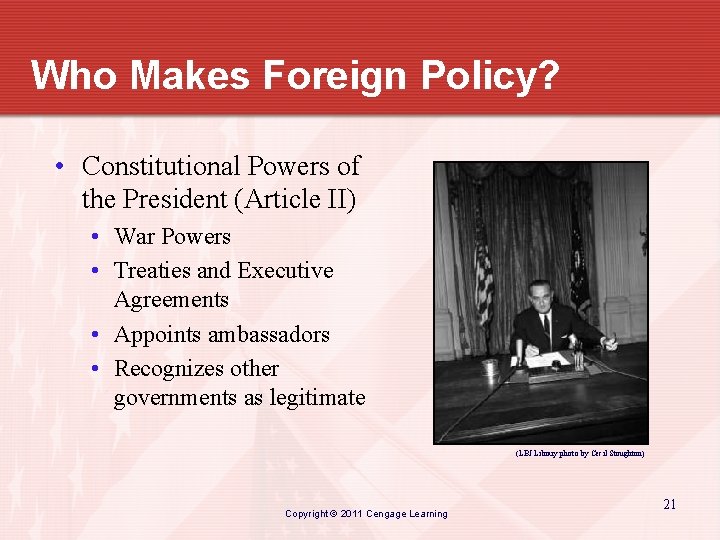
Who Makes Foreign Policy? • Constitutional Powers of the President (Article II) • War Powers • Treaties and Executive Agreements • Appoints ambassadors • Recognizes other governments as legitimate (LBJ Library photo by Cecil Stoughton) Copyright © 2011 Cengage Learning 21
Informal Techniques of Presidential Leadership • Accessing information from within the executive branch • Influencing the budget in all areas of appropriations • Building public support for programs • Committing the nation to courses of action from which it would be very difficult to back down even if Congress wished to Copyright © 2011 Cengage Learning 22
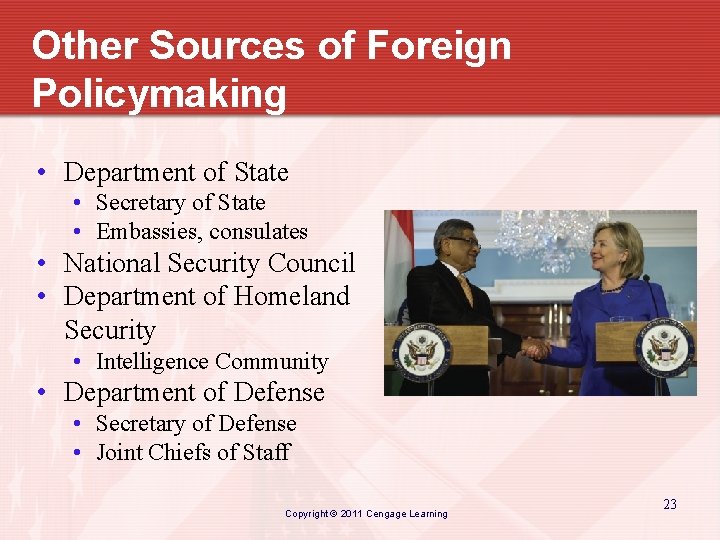
Other Sources of Foreign Policymaking • Department of State • Secretary of State • Embassies, consulates • National Security Council • Department of Homeland Security • Intelligence Community • Department of Defense • Secretary of Defense • Joint Chiefs of Staff Copyright © 2011 Cengage Learning 23
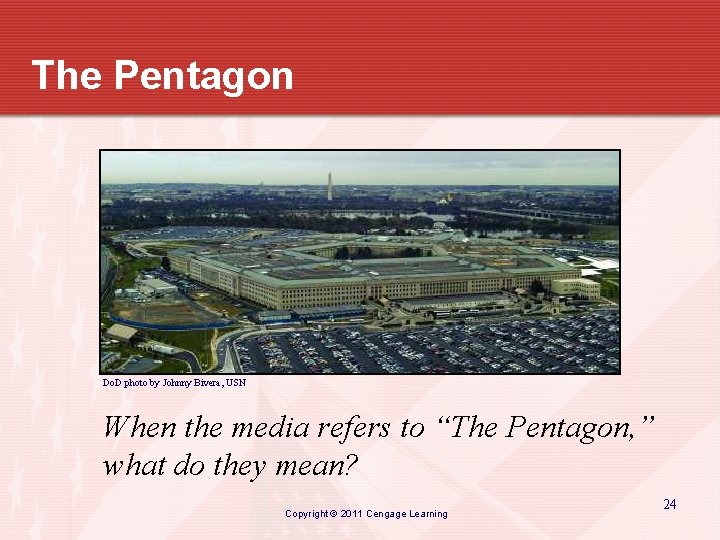
The Pentagon Do. D photo by Johnny Bivera, USN When the media refers to “The Pentagon, ” what do they mean? Copyright © 2011 Cengage Learning 24
Congress Balances the President • Constitutional powers (Article I) • Declare war and raise armies • Regulate foreign commerce • War Powers Resolution (1973) • Presidents since, however, have often not consulted Congress before committing troops, and that can create a situation in which Congress does not dare recall them. • Congress can sometimes take the lead • Example: voting sanctions on South Africa to oppose that nation’s former policy of racial discrimination known as apartheid. Copyright © 2011 Cengage Learning 25
Domestic Sources of Foreign Policymaking • Elite and Mass Opinion • Both presidents and elites try to influence that subset of the public that has a strong interest in foreign policy, the attentive public • The Military-Industrial Complex Copyright © 2011 Cengage Learning 26
Who’s in Charge? • Two Presidencies Theory: more powerful presidency in foreign affairs sphere; limited presidency in domestic affairs • Congress keeps trying to reassert authority • War Powers Resolution largely ignored by presidents • 20 th and 21 st centuries brought increased importance to role of president in foreign affairs Copyright © 2011 Cengage Learning 27
Emergence of Global Policy • Global policy replacing foreign policy • • Embraces broader world view Encompasses social and environmental concerns Less emphasis on disputes and security More emphasis on cumulative world events and international alliances Copyright © 2011 Cengage Learning 28
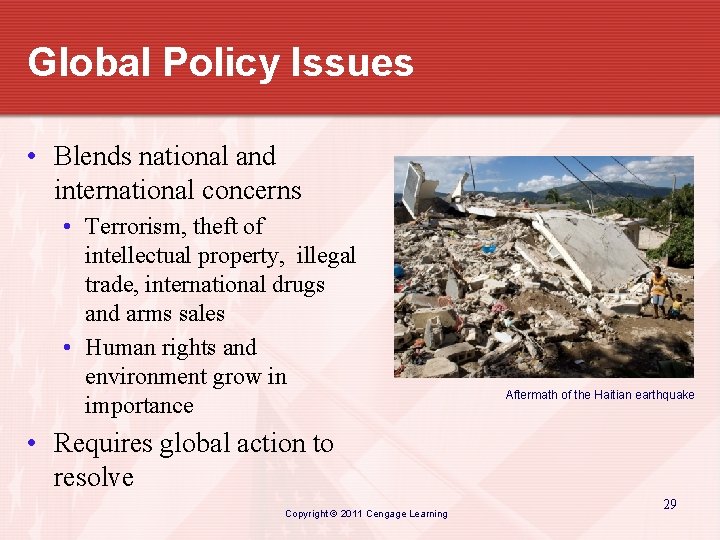
Global Policy Issues • Blends national and international concerns • Terrorism, theft of intellectual property, illegal trade, international drugs and arms sales • Human rights and environment grow in importance Aftermath of the Haitian earthquake • Requires global action to resolve Copyright © 2011 Cengage Learning 29
Questions for Critical Thinking 1. How strong militarily was the United Sates in the 1790 s? Could the U. S. have been very active in world affairs? What was the major goal of U. S. policy then? 2. What foreign policy issue will dominate Obama’s administration? 3. Why will relations with China prove important in the years to come? Copyright © 2011 Cengage Learning 30
Questions for Critical Thinking 4. What other players on the world stage will grow in importance to the U. S. ? What nations may decrease in importance? 5. Should Congress play an increased role in determining foreign policy? Why or why not? 6. Consider the goals and acts of eco-terrorism. Are they justified? What about other forms of terrorism? Copyright © 2011 Cengage Learning 31
Web Links • USINFO—The United States Department of State • The Economist • Portals to the World From the Library of Congress Copyright © 2011 Cengage Learning 32