
Foreign Objects Poisoning Bites and Stings 1 1
Foreign Objects, Poisoning, Bites and Stings (1) 1
Objects that find their way into the body are known as “foreign bodies. ” These range from grit in the eye to small objects that young children may push into their noses and ears. These can be distressing but do not usually cause serious problems for the casualty. Poisoning may result from exposure to or ingestion of toxic substances, chemicals, and contaminated food. The effects of poisons vary but medical advice will be needed in most cases. Insect stings and marine stings can often be treated with first aid. However, multiple stings can produce a reaction that requires urgent medical help. Animal and human bites always require medical attention due to the risk of infection. 2
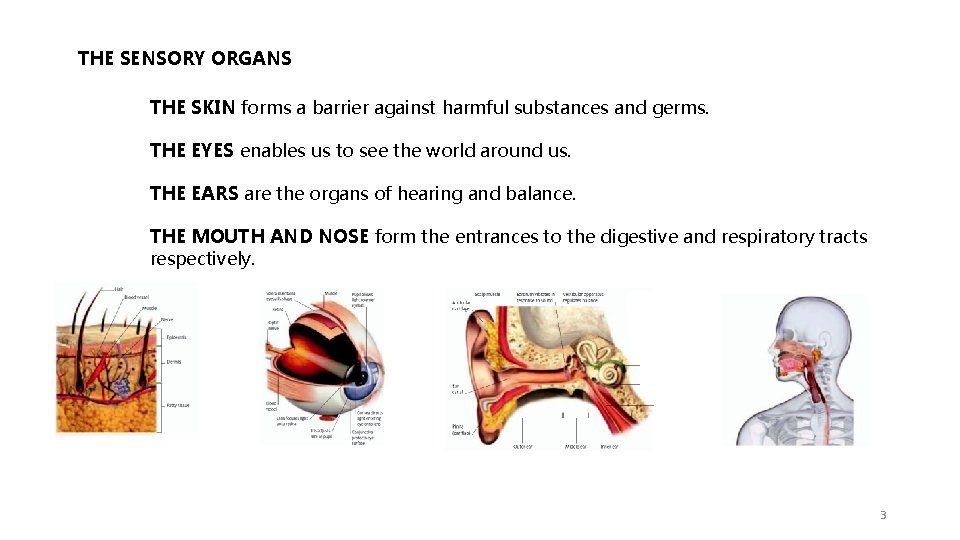
THE SENSORY ORGANS THE SKIN forms a barrier against harmful substances and germs. THE EYES enables us to see the world around us. THE EARS are the organs of hearing and balance. THE MOUTH AND NOSE form the entrances to the digestive and respiratory tracts respectively. 3
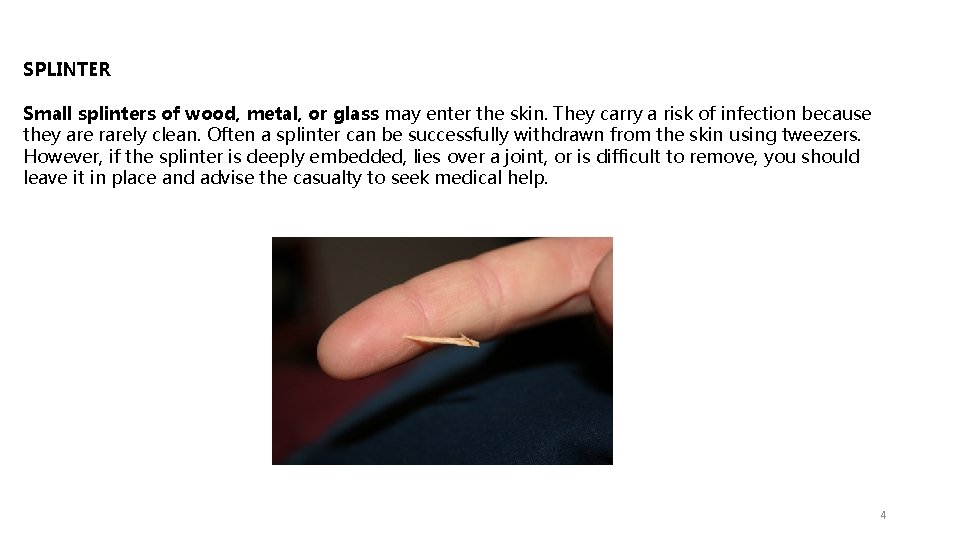
SPLINTER Small splinters of wood, metal, or glass may enter the skin. They carry a risk of infection because they are rarely clean. Often a splinter can be successfully withdrawn from the skin using tweezers. However, if the splinter is deeply embedded, lies over a joint, or is difficult to remove, you should leave it in place and advise the casualty to seek medical help. 4
YOUR AIMS Ø To remove the splinter Ø To minimize the risk of infection IF the splinter is embedded, Do not probe the area with a sharp object, such as a needle, you may introduce infection. Pad around the splinter and bandage over it without pressing on it and seek medical help. 5
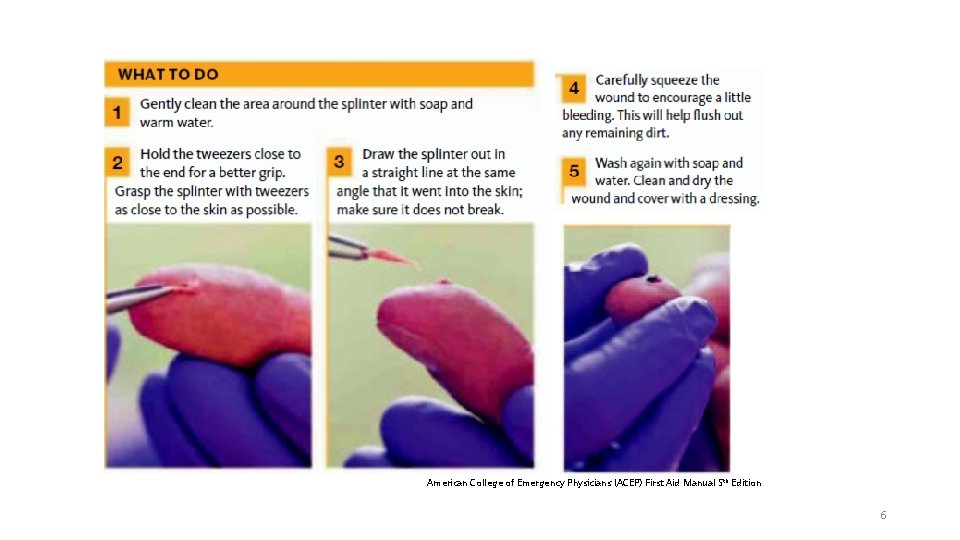
American College of Emergency Physicians (ACEP) First Aid Manual 5 th Edition 6
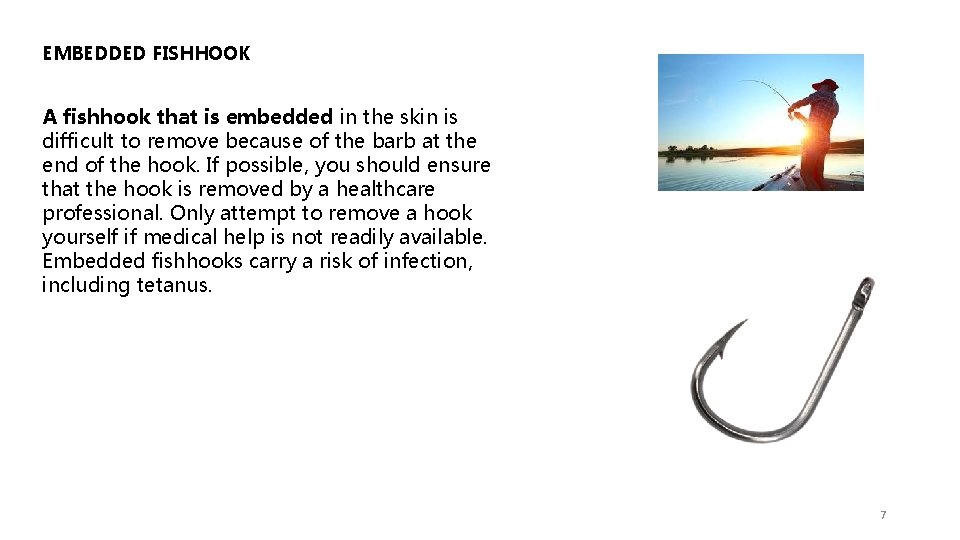
EMBEDDED FISHHOOK A fishhook that is embedded in the skin is difficult to remove because of the barb at the end of the hook. If possible, you should ensure that the hook is removed by a healthcare professional. Only attempt to remove a hook yourself if medical help is not readily available. Embedded fishhooks carry a risk of infection, including tetanus. 7
YOUR AIMS Ø To obtain medical help Ø To minimize the risk of infection Ø If help is delayed, to remove the fishhook without causing any further injury and pain medical advice. IF the casualty is not sure if he is up to date on his tetanus immunization, seek 8
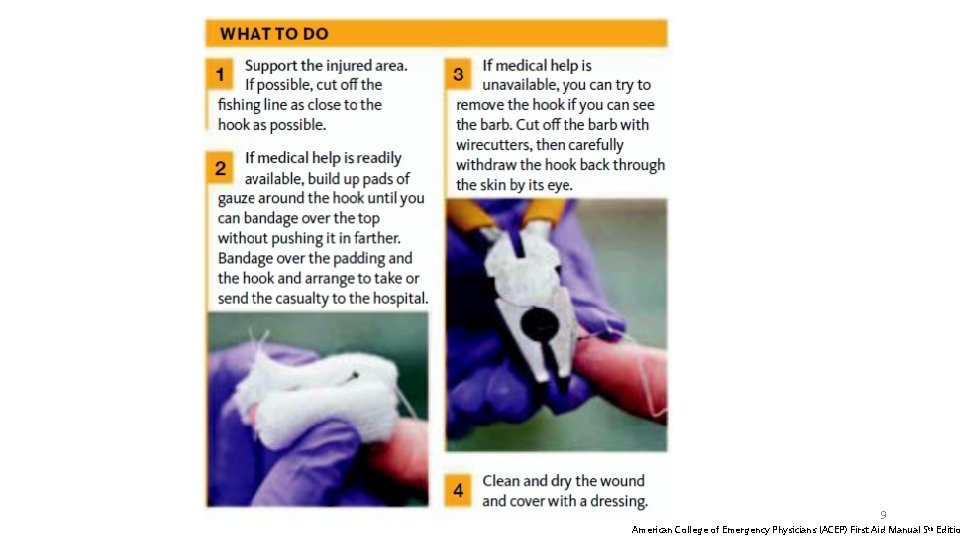
9 American College of Emergency Physicians (ACEP) First Aid Manual 5 th Editio
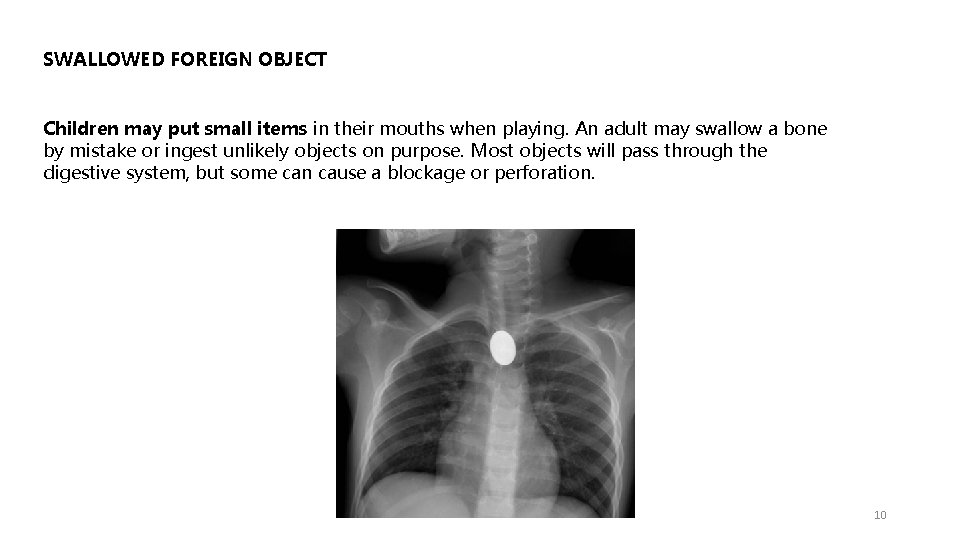
SWALLOWED FOREIGN OBJECT Children may put small items in their mouths when playing. An adult may swallow a bone by mistake or ingest unlikely objects on purpose. Most objects will pass through the digestive system, but some can cause a blockage or perforation. 10
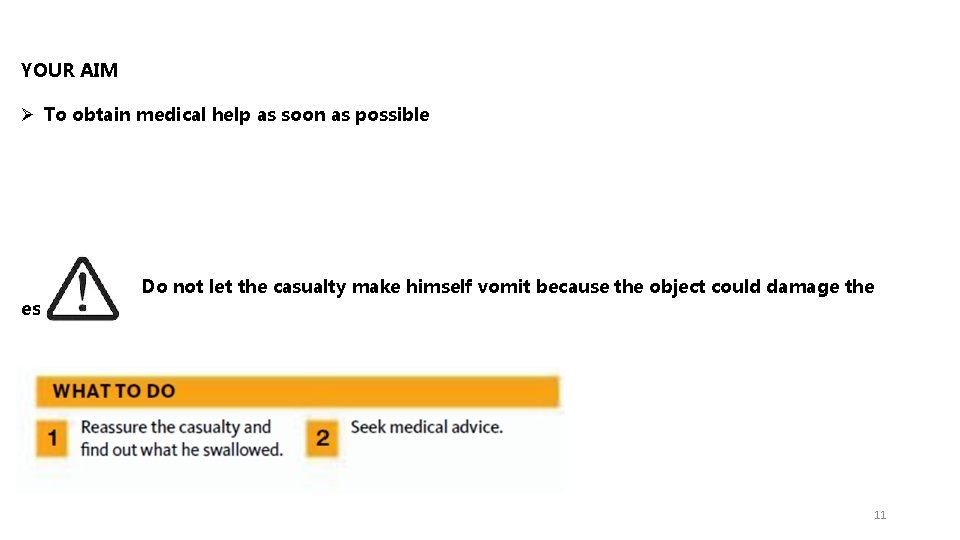
YOUR AIM Ø To obtain medical help as soon as possible esophagus. Do not let the casualty make himself vomit because the object could damage the 11
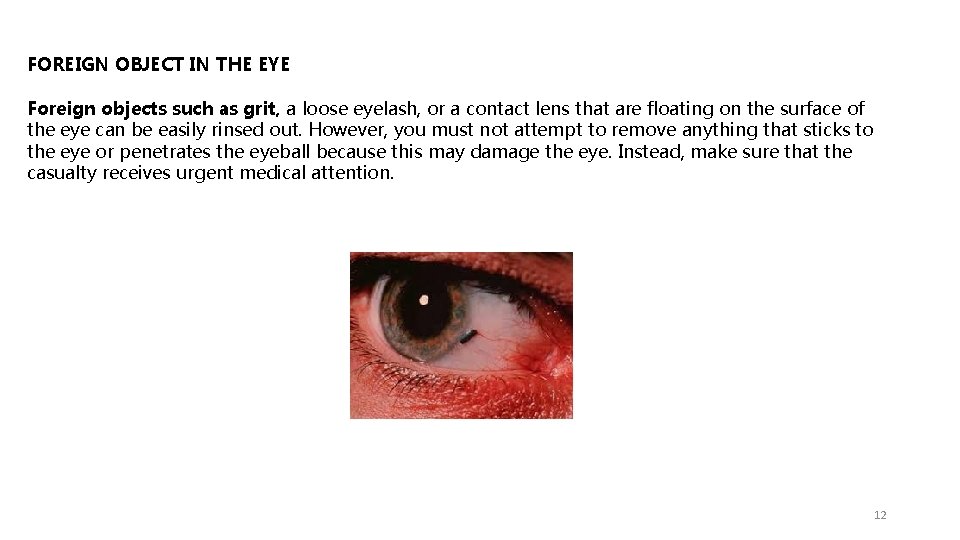
FOREIGN OBJECT IN THE EYE Foreign objects such as grit, a loose eyelash, or a contact lens that are floating on the surface of the eye can be easily rinsed out. However, you must not attempt to remove anything that sticks to the eye or penetrates the eyeball because this may damage the eye. Instead, make sure that the casualty receives urgent medical attention. 12
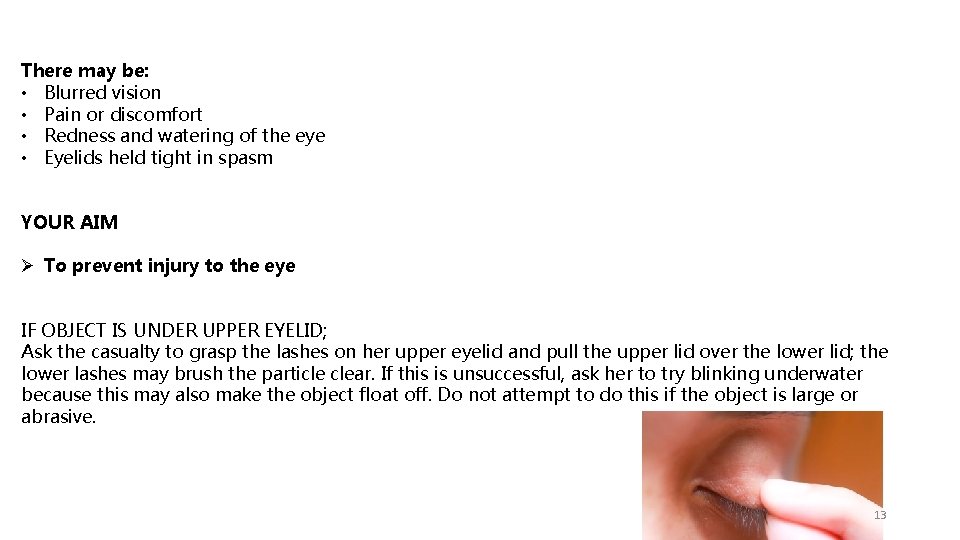
There may be: • Blurred vision • Pain or discomfort • Redness and watering of the eye • Eyelids held tight in spasm YOUR AIM Ø To prevent injury to the eye IF OBJECT IS UNDER UPPER EYELID; Ask the casualty to grasp the lashes on her upper eyelid and pull the upper lid over the lower lid; the lower lashes may brush the particle clear. If this is unsuccessful, ask her to try blinking underwater because this may also make the object float off. Do not attempt to do this if the object is large or abrasive. 13
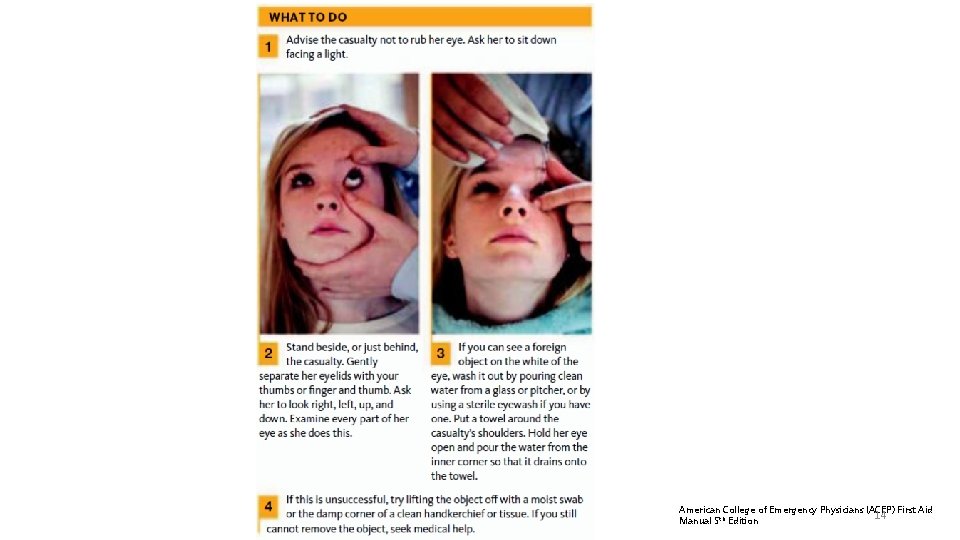
American College of Emergency Physicians (ACEP) First Aid 14 Manual 5 th Edition
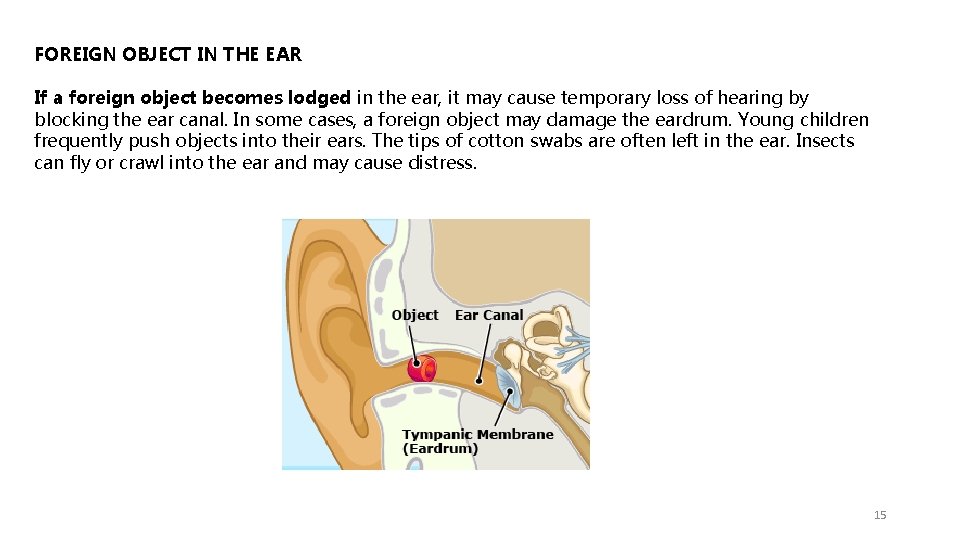
FOREIGN OBJECT IN THE EAR If a foreign object becomes lodged in the ear, it may cause temporary loss of hearing by blocking the ear canal. In some cases, a foreign object may damage the eardrum. Young children frequently push objects into their ears. The tips of cotton swabs are often left in the ear. Insects can fly or crawl into the ear and may cause distress. 15
YOUR AIM Ø To prevent injury to the ear Ø To remove a trapped insect Ø To arrange transportation to the hospital if a foreign object is lodged in the ear Do not attempt to remove any object that is lodged in the ear. You may cause serious injury and push the foreign object in farther. 16
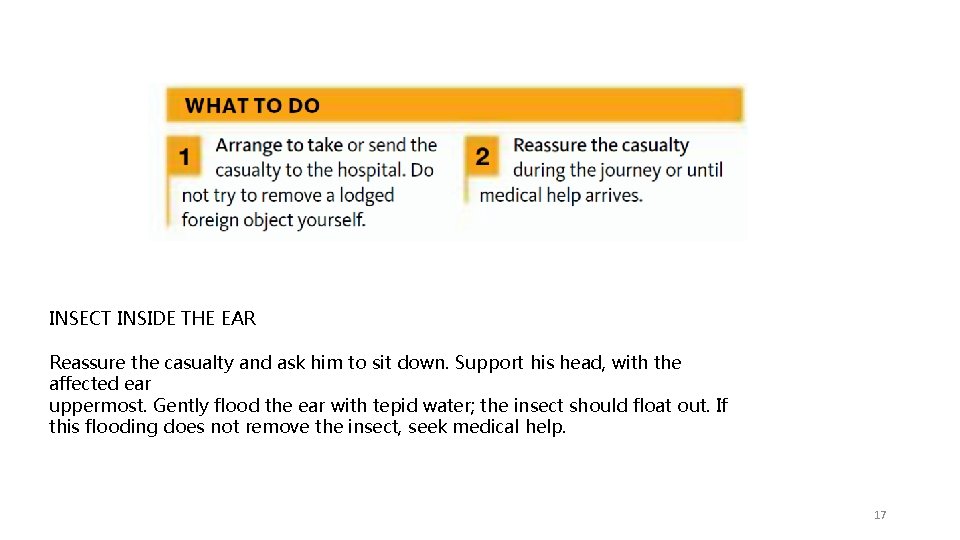
INSECT INSIDE THE EAR Reassure the casualty and ask him to sit down. Support his head, with the affected ear uppermost. Gently flood the ear with tepid water; the insect should float out. If this flooding does not remove the insect, seek medical help. 17
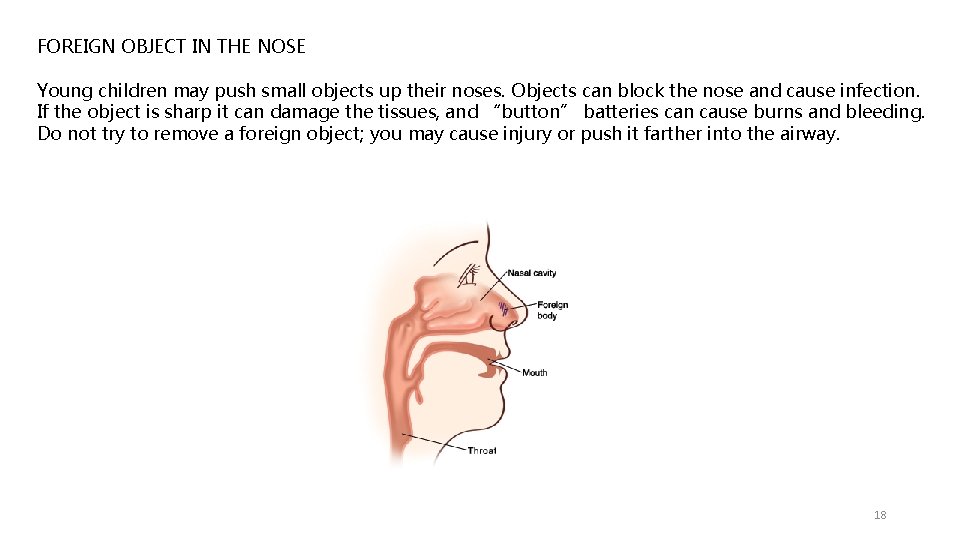
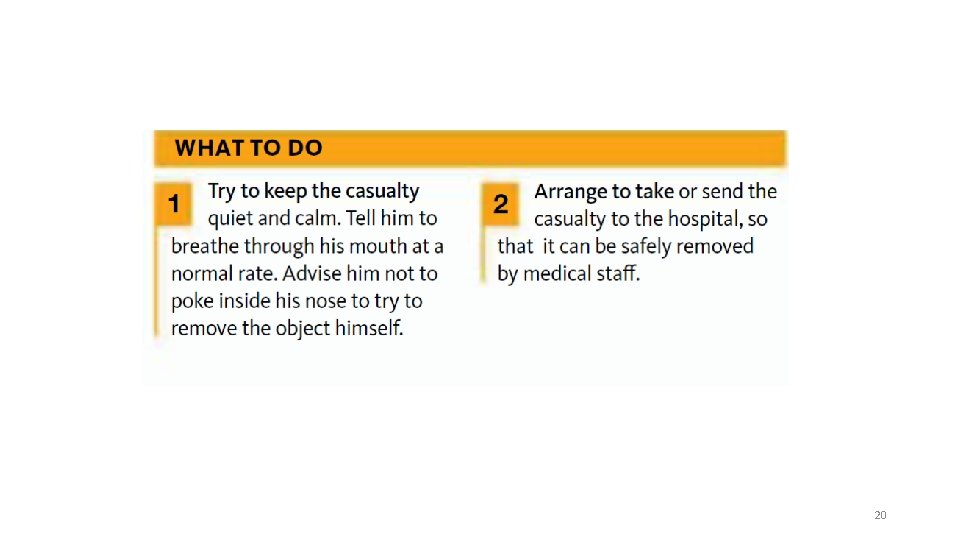
FOREIGN OBJECT IN THE NOSE Young children may push small objects up their noses. Objects can block the nose and cause infection. If the object is sharp it can damage the tissues, and “button” batteries can cause burns and bleeding. Do not try to remove a foreign object; you may cause injury or push it farther into the airway. 18
There may be: • Difficult or noisy breathing through the nose • Swelling of the nose • Smelly or blood-stained discharge, indicating that an object may have been lodged for some time YOUR AIM Ø To arrange transportation to the hospital Do not attempt to remove the foreign object, even if you can see it. 19
20
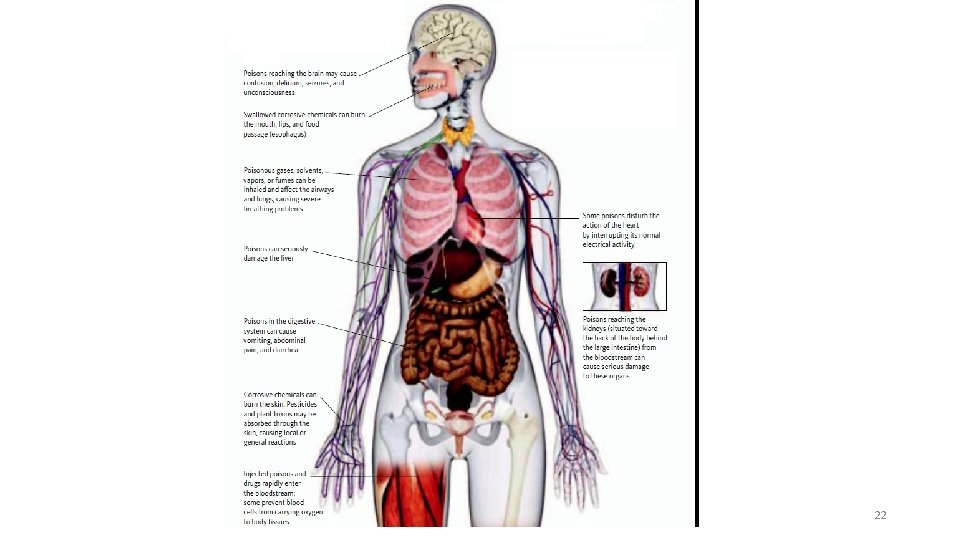
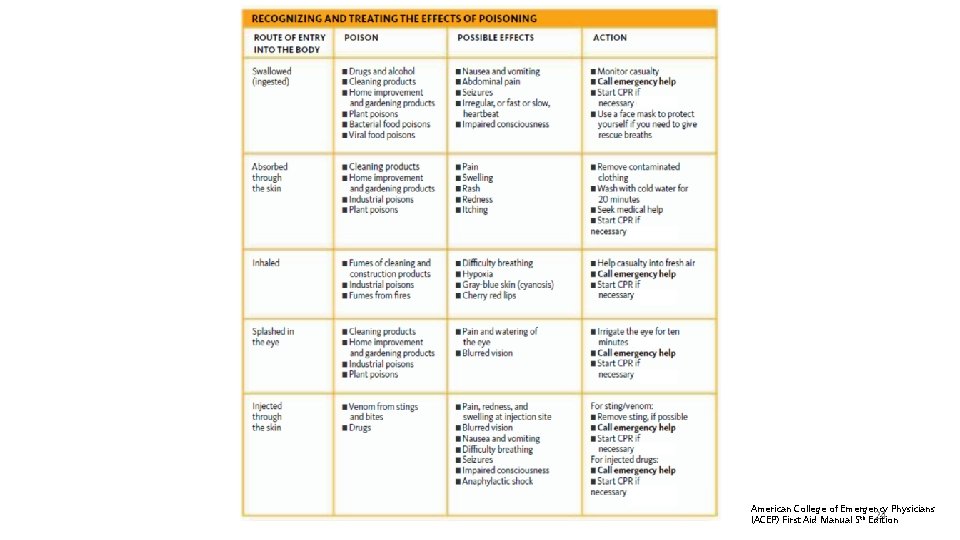
HOW POISONS AFFECT THE BODY A poison (toxin) is a substance that, if taken into or absorbed into the body in sufficient quantity, can cause either temporary or permanent damage. Poisons can be swallowed, absorbed through the skin, inhaled, splashed into the eyes, or injected. Once in the body, they may enter the bloodstream and be carried swiftly to all organs and tissues. Signs and symptoms of poisoning vary with the poison. They may develop quickly or over a number of days. Vomiting is common, especially when the poison has been ingested. Inhaled poisons often cause breathing difficulties. Effects of poisons on the body Poisons can enter the body through the skin, digestive system, lungs, or bloodstream. Once there, they can be carried to all parts of the body and cause multiple side effects. 21
22
TYPES OF POISONS Some poisons are man-made—for example, chemicals and drugs—and these are found in the home as well as in industry. Almost every household contains substances that are potentially poisonous, such as bleach and paint stripper, as well as prescribed or overthe counter medicines, which may be dangerous if taken in excessive amounts. Other poisons occur in nature: for example, plants produce poisons that may irritate the skin or cause more serious symptoms if ingested, and various insects and creatures produce venom in their bites and stings. Contamination of food by bacteria may result in food poisoning—one of the most common forms of poisoning. 23
American College of Emergency Physicians 24 (ACEP) First Aid Manual 5 th Edition
25
SWALLOWED POISONS Chemicals that are swallowed may harm the digestive tract, or cause more widespread damage if they enter the bloodstream and are transported to other parts of the body. Hazardous chemicals include household substances such as bleach and paint stripper, which are poisonous or corrosive if swallowed. Drugs, both prescribed or those bought over the counter, can also be harmful if an overdose is taken. Some plants and their berries can also be poisonous. 26
• History of ingestion/exposure There may be: • Vomiting, sometimes bloodstained, later diarrhea • Cramping abdominal pains • Pain or a burning sensation • Empty containers in the vicinity • Impaired consciousness • Seizures YOUR AIM Ø Ø To manitain an open airway, breathing, and circulation To remove any contaminated clothing To identify the person To arrange urgent removal to the hospital 27
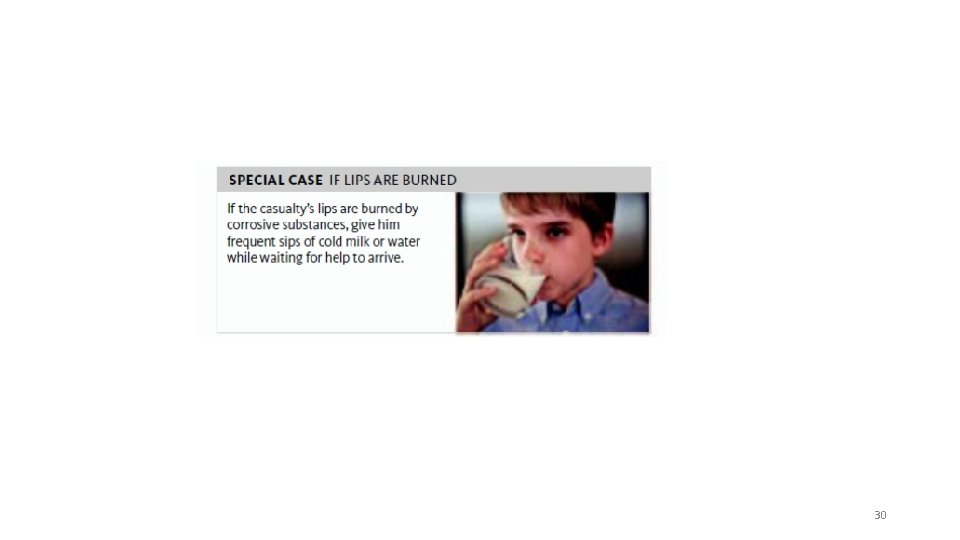
■ Never attempt to induce vomiting. ■ If a casualty is contaminated with chemicals, wear protective gloves, and goggles or a mask. ■ If the casualty is unconscious and is not breathing (or just gasping), begin CPR with chest compressions. ■ If there any chemicals on the casualty’s mouth, use a face shield or pocket mask rescue breaths. 28
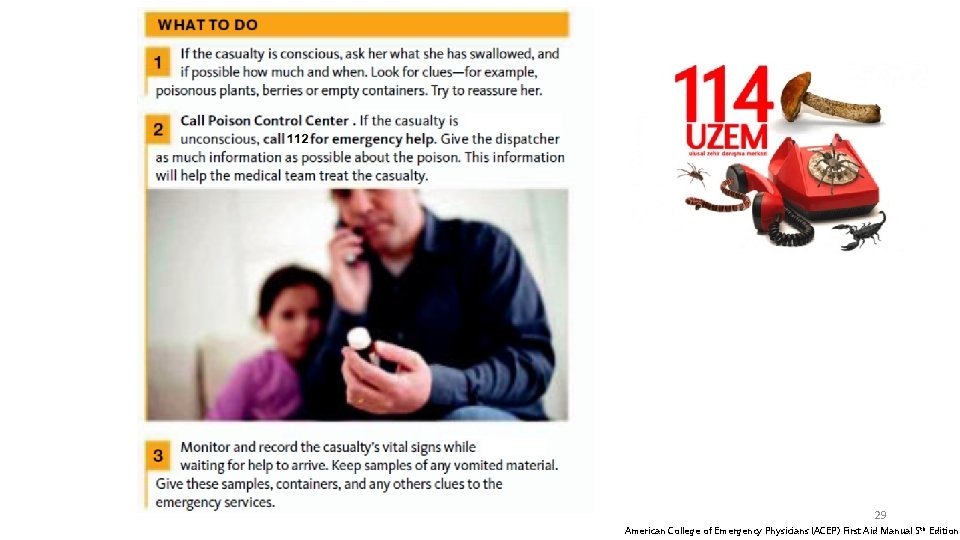
29 American College of Emergency Physicians (ACEP) First Aid Manual 5 th Edition
30
- Slides: 30