
FOREIGN LANGUAGE COURSE ISIZULU Hello Welcome to Isi





- Slides: 20
FOREIGN LANGUAGE COURSE ISIZULU
Hello! Welcome to Isi. Zulu 101 with Bongeka Gumede Carlos Ncube 2
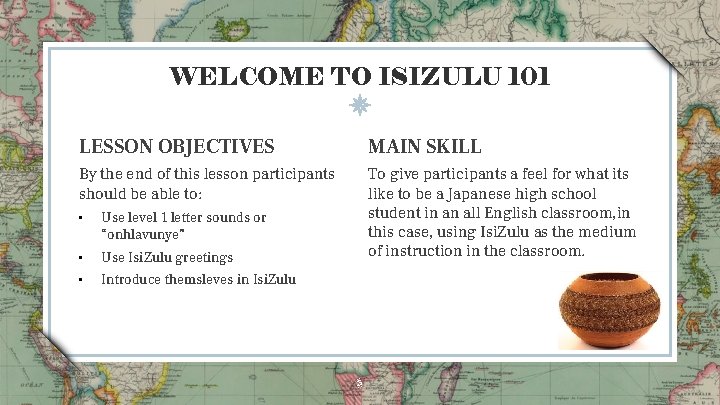
WELCOME TO ISIZULU 101 LESSON OBJECTIVES MAIN SKILL By the end of this lesson participants should be able to: To give participants a feel for what its like to be a Japanese high school student in an all English classroom, in this case, using Isi. Zulu as the medium of instruction in the classroom. • Use level 1 letter sounds or “onhlavunye” • Use Isi. Zulu greetings • Introduce themsleves in Isi. Zulu 3
VOWEL SOUNDS ISIFUNDO 1: ONKAMISA KANYE NONHLAMVUNYE
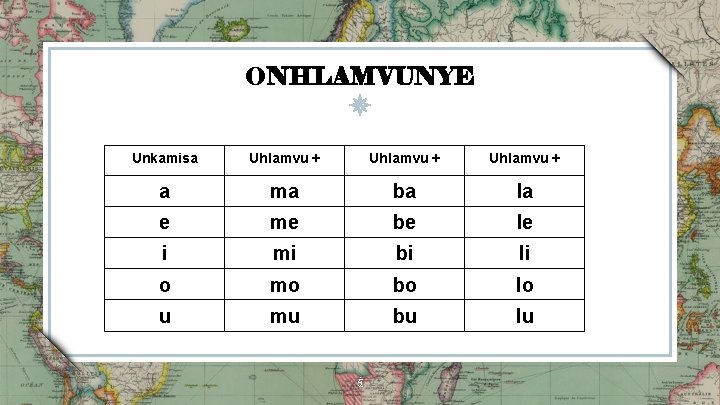
ONHLAMVUNYE Unkamisa Uhlamvu + a ma ba la e me be le i mi bi li o mo bo lo u mu bu lu 5
SELF INTRODUCTION ISIFUNDO 2: UKUZETHULA
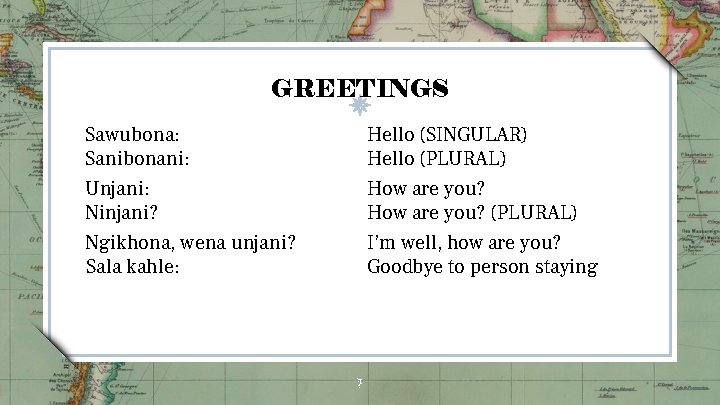
GREETINGS Sawubona: Sanibonani: Hello (SINGULAR) Hello (PLURAL) Unjani: Ninjani? Ngikhona, wena unjani? Sala kahle: How are you? (PLURAL) I’m well, how are you? Goodbye to person staying 7
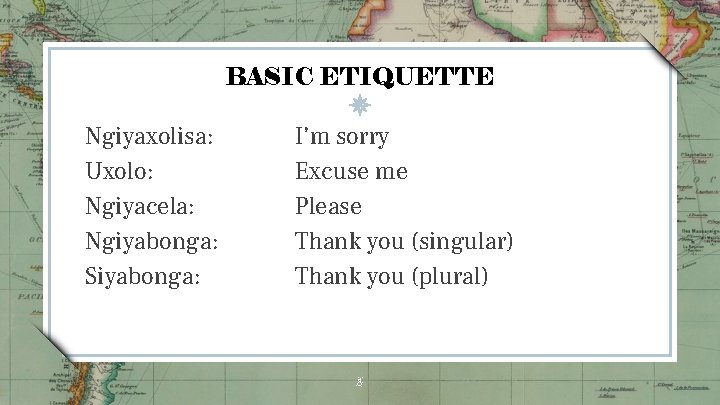
BASIC ETIQUETTE Ngiyaxolisa: Uxolo: Ngiyacela: Ngiyabonga: Siyabonga: I’m sorry Excuse me Please Thank you (singular) Thank you (plural) 8
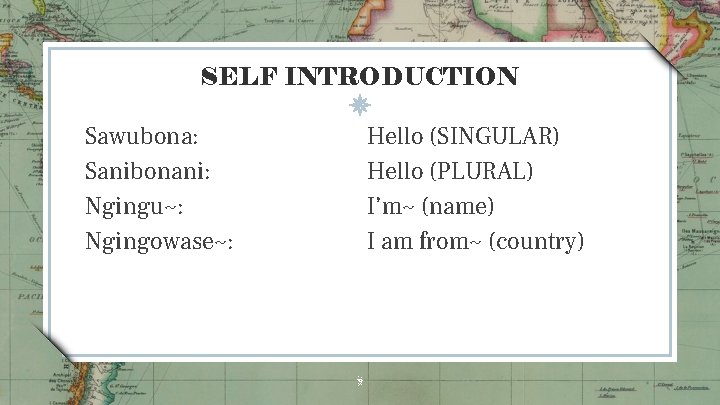
SELF INTRODUCTION Sawubona: Sanibonani: Ngingu~: Ngingowase~: Hello (SINGULAR) Hello (PLURAL) I’m~ (name) I am from~ (country) 9
FUN ACTIVITY ISIFUNDO 3: UKUDLALISA ULIMI 10
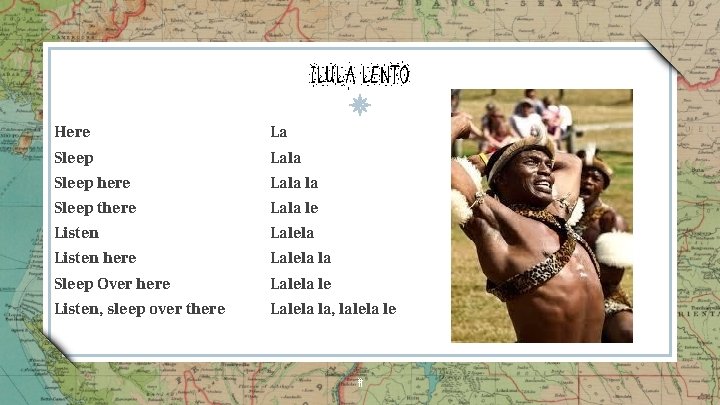
ILULA LENTO Here La . Sleep Lala Sleep here Lala la Sleep there Lala le Listen Lalela Listen here Lalela la Sleep Over here Lalela le Listen, sleep over there Lalela la, lalela le 11
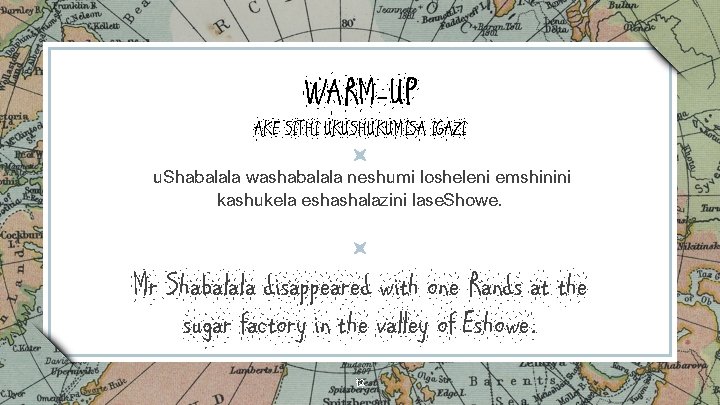
WARM-UP AKE SITHI UKUSHUKUMISA IGAZI u. Shabalala washabalala neshumi losheleni emshinini kashukela eshashalazini lase. Showe. Mr Shabalala disappeared with one Rands at the sugar factory in the valley of Eshowe. 12
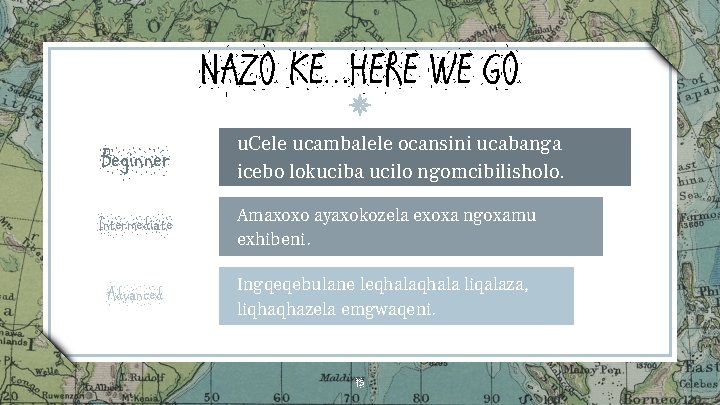
NAZO KE…HERE WE GO Beginner u. Cele ucambalele ocansini ucabanga icebo lokuciba ucilo ngomcibilisholo. Intermediate Amaxoxo ayaxokozela exoxa ngoxamu exhibeni. Advanced Ingqeqebulane leqhala liqalaza, liqhaqhazela emgwaqeni. 13
Quiz 14
REFLECTION FACTORS THAT INFLUENCE LANGUAGE LEARNING Motivation Does the language apply to daily life? Can students see the importance? Do students feel forced to learn the language? 15
SUPPORT Is the language spoken at home? Where else can students hear the language? What is the level of exposure? 16
TEACHING STRATEGIES AND COMPREHENSIBLE INPUT Are different learning styles considered? Different levels of comprehension? Does the student understand? Does the curriculum reach the student at their level with activities just a level beyond? 17
AGE Pronunciation and intonation can be acquired with ease during childhood up to the age of 12. By the onset of puberty language acquisition is said to have solidified and it becomes increasingly difficult to learn a new language. 18
19
Siyayiyamukela imibuzo! Any questions? THANKS! 20