
Foreground questions Treatment n In children with lower
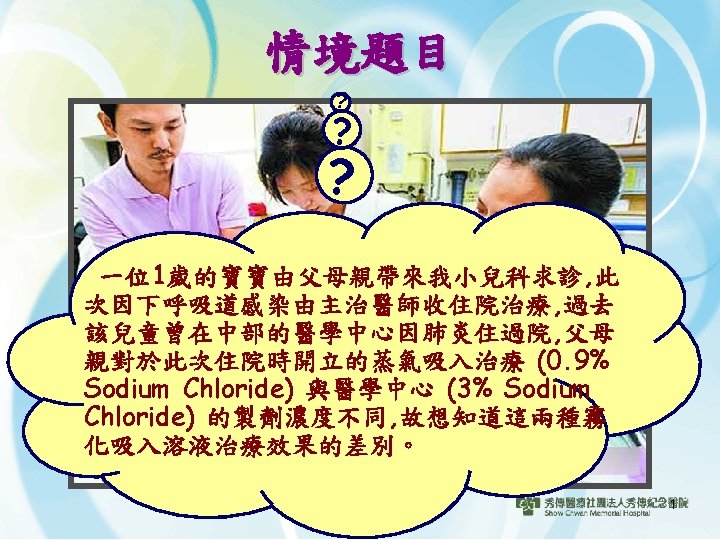

- Slides: 35
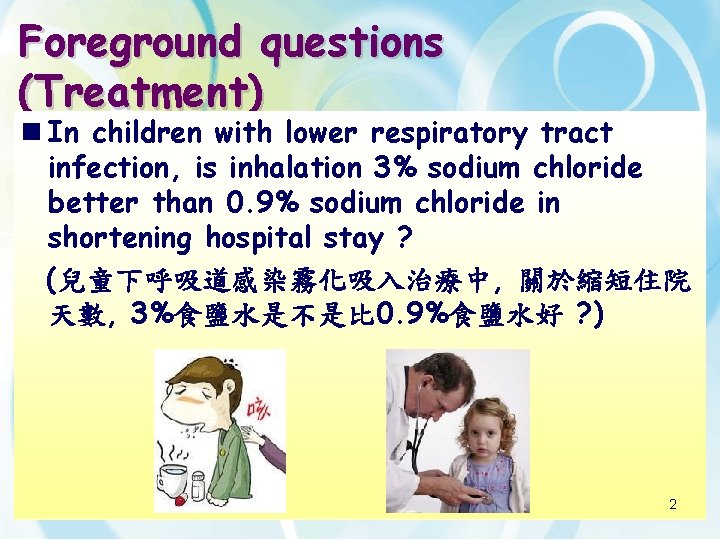
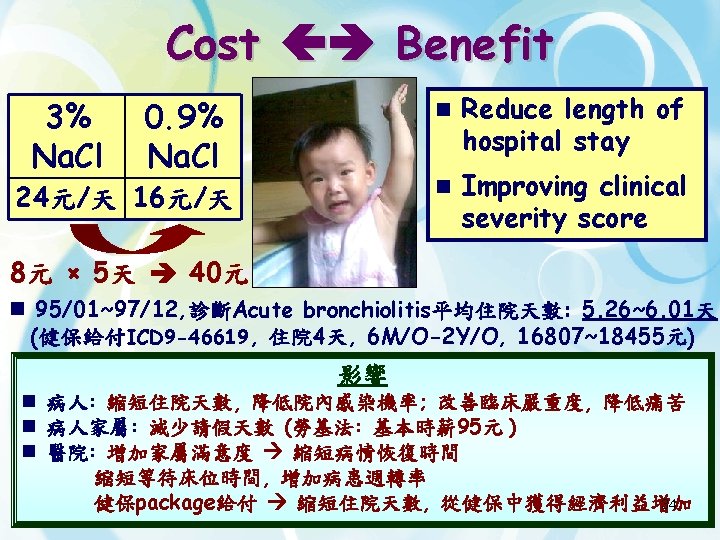
Foreground questions (Treatment) n In children with lower respiratory tract infection, is inhalation 3% sodium chloride better than 0. 9% sodium chloride in shortening hospital stay ? (兒童下呼吸道感染霧化吸入治療中, 關於縮短住院 天數, 3%食鹽水是不是比 0. 9%食鹽水好 ? ) 2
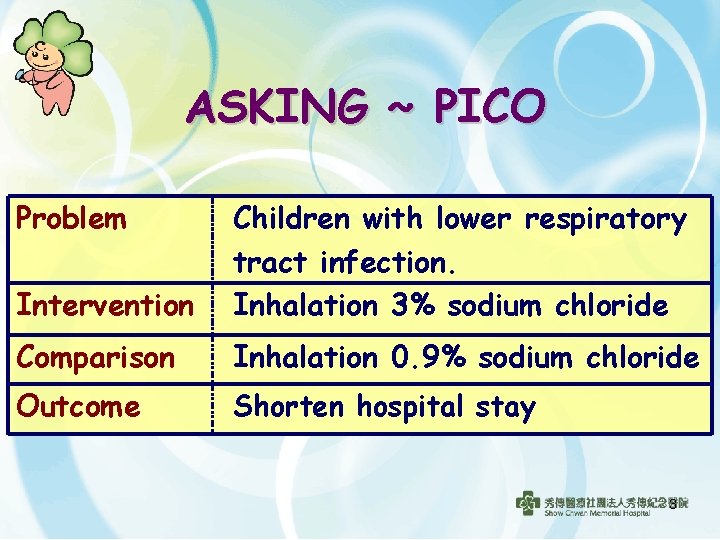
ASKING ~ PICO Problem Intervention Children with lower respiratory tract infection. Inhalation 3% sodium chloride Comparison Inhalation 0. 9% sodium chloride Outcome Shorten hospital stay 3
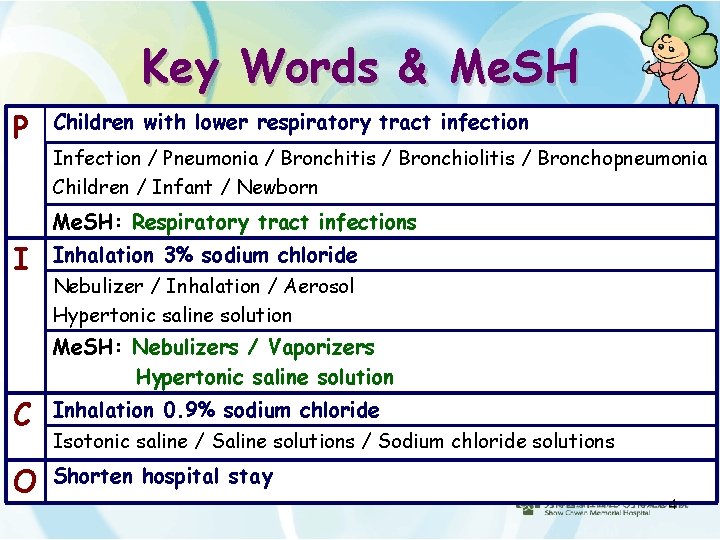
Key Words & Me. SH P Children with lower respiratory tract infection Infection / Pneumonia / Bronchitis / Bronchiolitis / Bronchopneumonia Children / Infant / Newborn Me. SH: Respiratory tract infections I Inhalation 3% sodium chloride Nebulizer / Inhalation / Aerosol Hypertonic saline solution Me. SH: Nebulizers / Vaporizers Hypertonic saline solution C Inhalation 0. 9% sodium chloride Isotonic saline / Saline solutions / Sodium chloride solutions O Shorten hospital stay 4
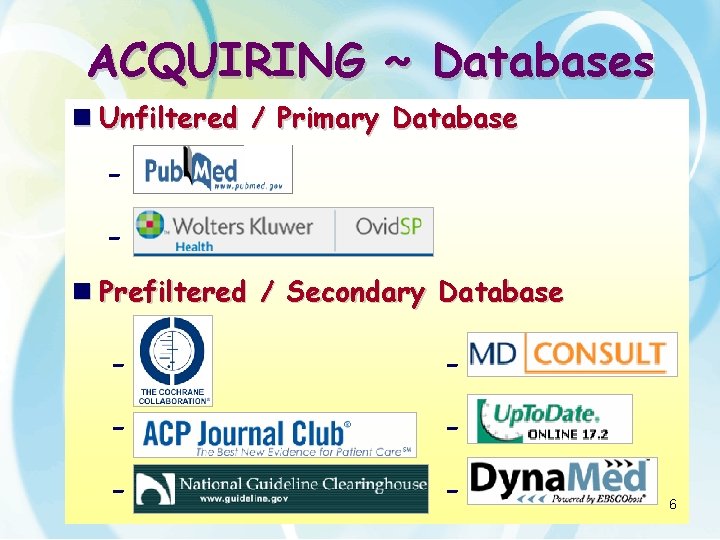
ACQUIRING ~ Databases n Unfiltered / Primary Database n Prefiltered / Secondary Database - - - 6
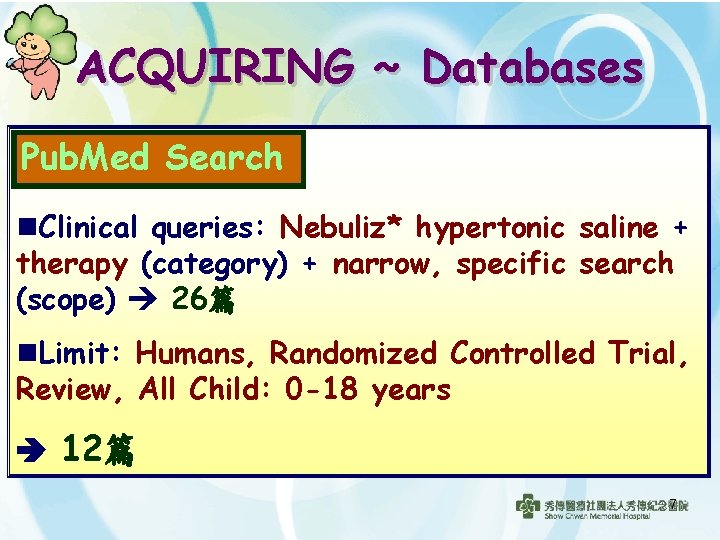
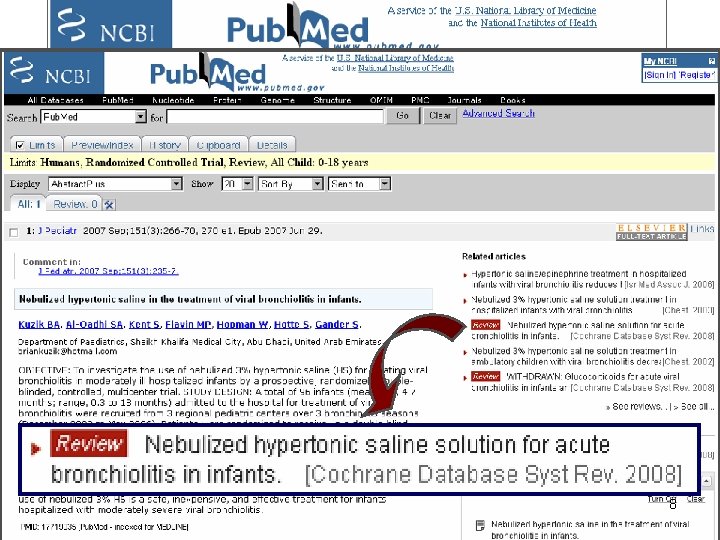
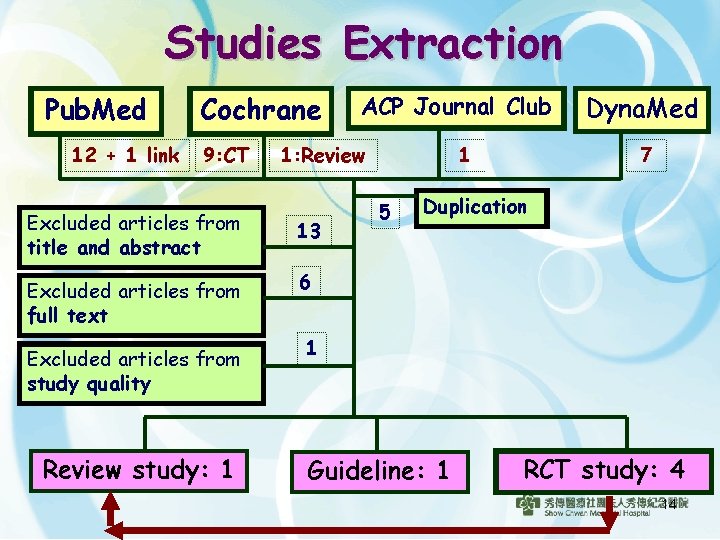
ACQUIRING ~ Databases Pub. Med Search n. Clinical queries: Nebuliz* hypertonic saline + therapy (category) + narrow, specific search (scope) 26篇 n. Limit: Humans, Randomized Controlled Trial, Review, All Child: 0 -18 years 12篇 7
8
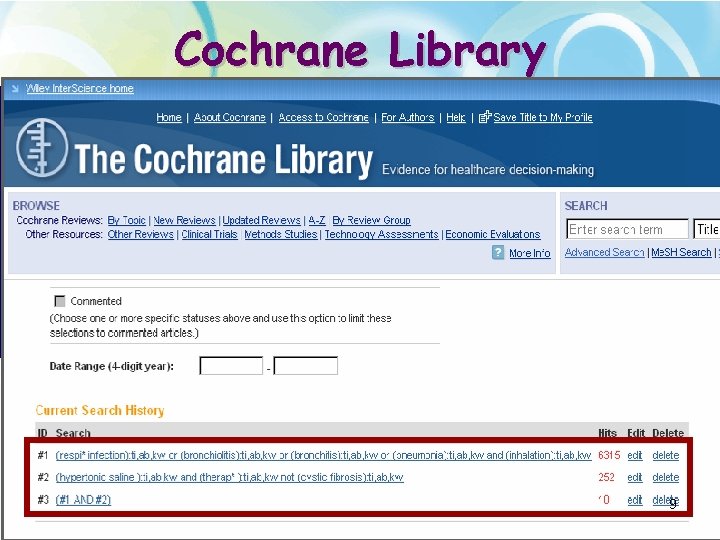
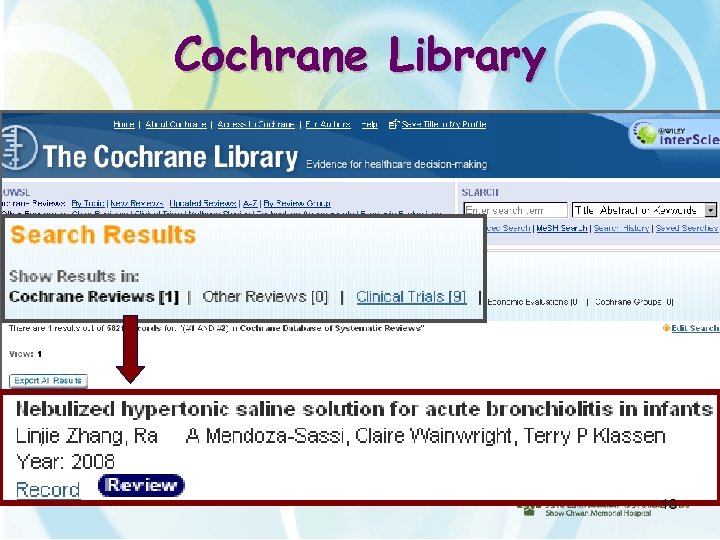
Cochrane Library 搜尋策略 : Advance search # 1 (respi* infection OR bronchiolitis OR bronchitis OR pneumonia AND inhalation) in Title, Abstract or Keywords 6315 篇 # 2 (hypertonic saline AND therap* NOT cystic fibrosis) in Title, Abstract or Keywords 252篇 #1 and #2 9
Cochrane Library 10
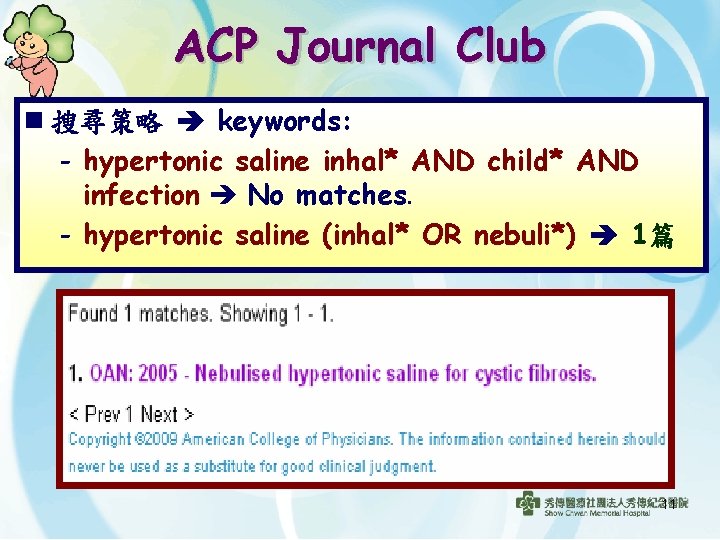
ACP Journal Club n 搜尋策略 keywords: - hypertonic saline inhal* AND child* AND infection No matches. - hypertonic saline (inhal* OR nebuli*) 1篇 11
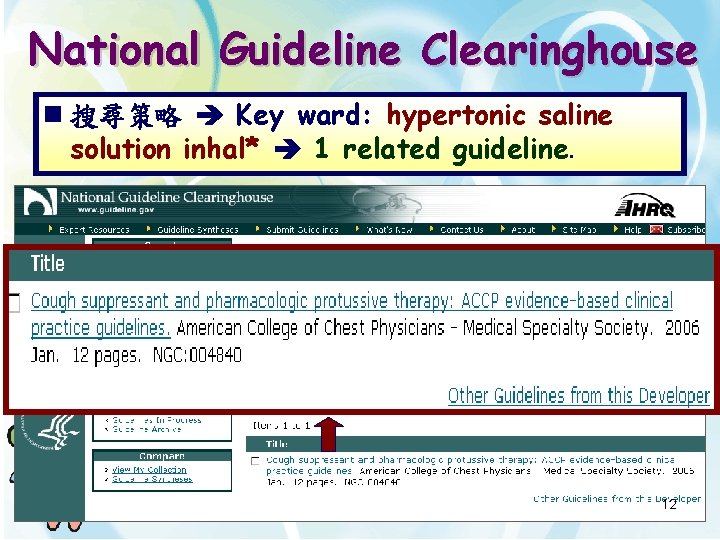
National Guideline Clearinghouse n 搜尋策略 Key ward: hypertonic saline solution inhal* 1 related guideline. 12
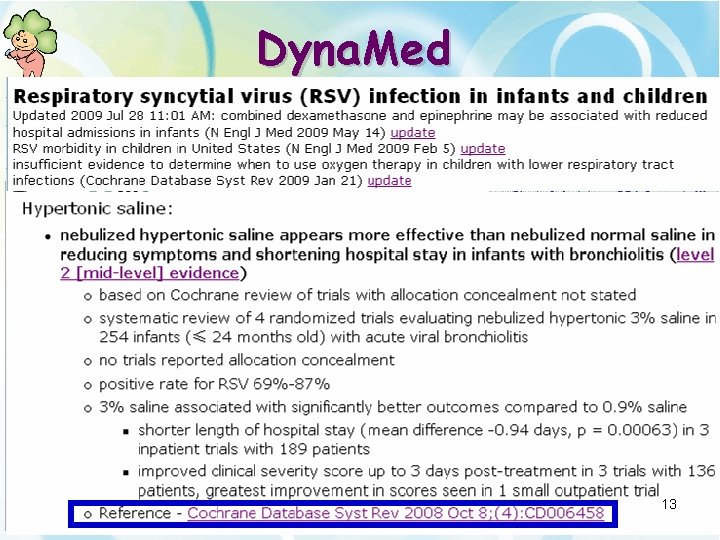
Dyna. Med n 搜尋策略 Key ward: hypertonic saline solution inhal* AND child* AND infection 7 Documents 13
Studies Extraction Pub. Med 12 + 1 link Cochrane 9: CT 13 Excluded articles from full text 6 Review study: 1 1 1: Review Excluded articles from title and abstract Excluded articles from study quality ACP Journal Club 5 Dyna. Med 7 Duplication 1 Guideline: 1 RCT study: 4 14
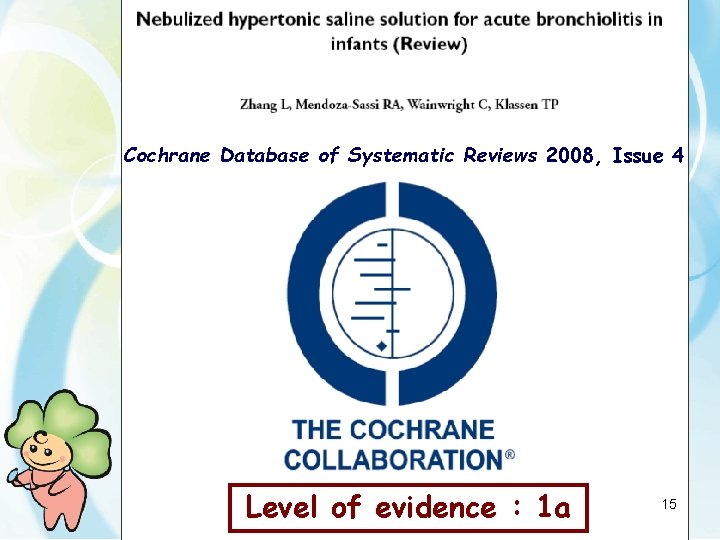
Cochrane Database of Systematic Reviews 2008, Issue 4 Level of evidence : 1 a 15
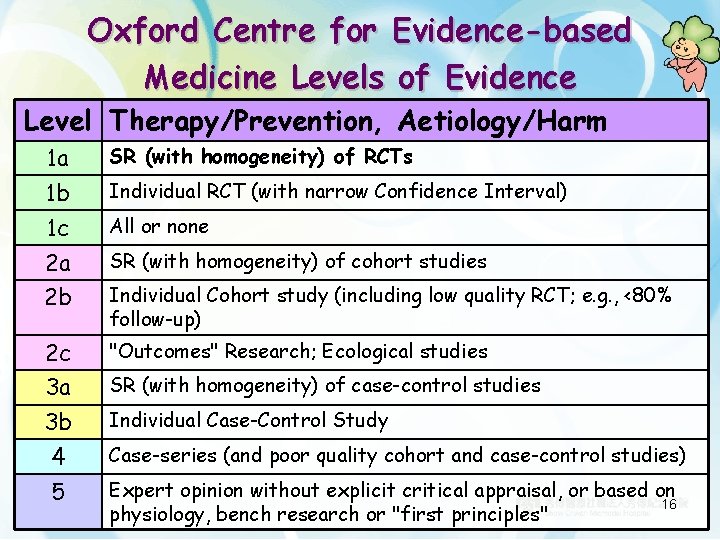
Oxford Centre for Evidence-based Medicine Levels of Evidence Level Therapy/Prevention, Aetiology/Harm 1 a SR (with homogeneity) of RCTs 1 b Individual RCT (with narrow Confidence Interval) 1 c All or none 2 a SR (with homogeneity) of cohort studies 2 b Individual Cohort study (including low quality RCT; e. g. , <80% follow-up) 2 c "Outcomes" Research; Ecological studies 3 a SR (with homogeneity) of case-control studies 3 b Individual Case-Control Study 4 Case-series (and poor quality cohort and case-control studies) 5 Expert opinion without explicit critical appraisal, or based on 16 physiology, bench research or "first principles"
17
文獻評讀 Critical appraisal topic 18
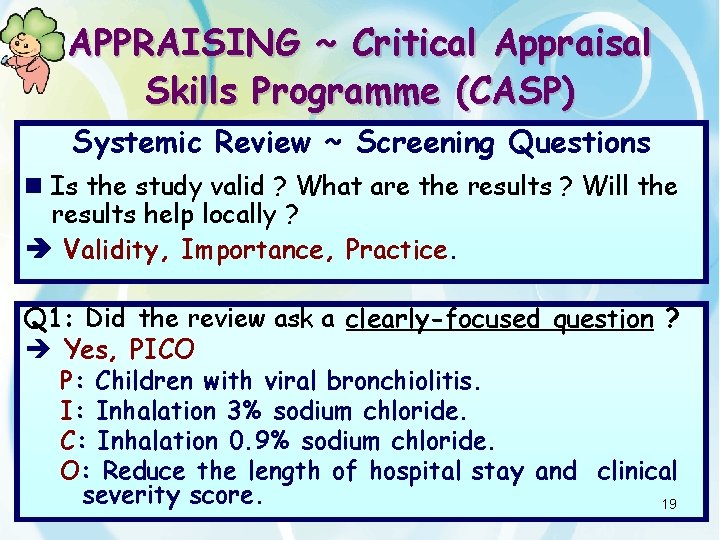
APPRAISING ~ Critical Appraisal Skills Programme (CASP) Systemic Review ~ Screening Questions n Is the study valid ? What are the results ? Will the results help locally ? Validity, Importance, Practice. Q 1: Did the review ask a clearly-focused question ? Yes, PICO P: Children with viral bronchiolitis. I: Inhalation 3% sodium chloride. C: Inhalation 0. 9% sodium chloride. O: Reduce the length of hospital stay and clinical severity score. 19
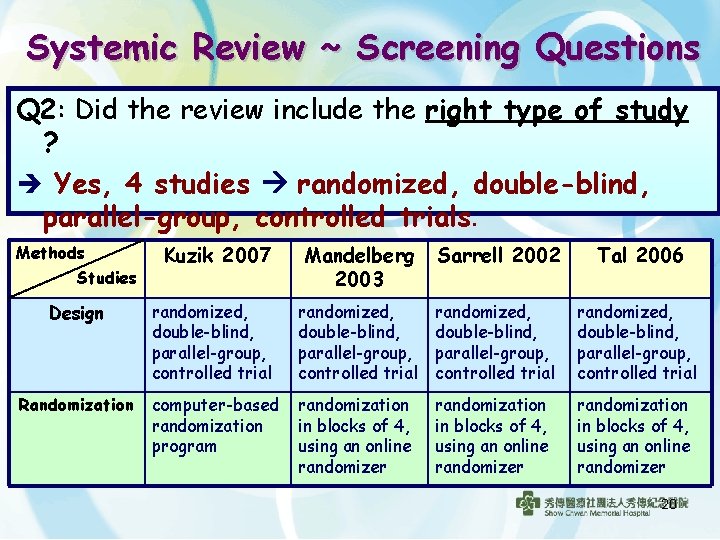
Systemic Review ~ Screening Questions Q 2: Did the review include the right type of study ? Yes, 4 studies randomized, double-blind, parallel-group, controlled trials. Kuzik 2007 Mandelberg 2003 Sarrell 2002 Tal 2006 Design randomized, double-blind, parallel-group, controlled trial Randomization computer-based randomization program randomization in blocks of 4, using an online randomizer Methods Studies 20
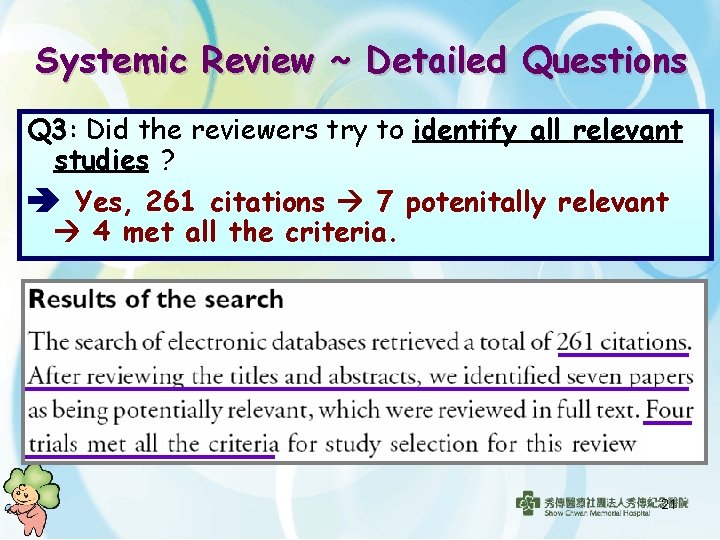
Systemic Review ~ Detailed Questions Q 3: Did the reviewers try to identify all relevant studies ? Yes, 261 citations 7 potenitally relevant 4 met all the criteria. 21
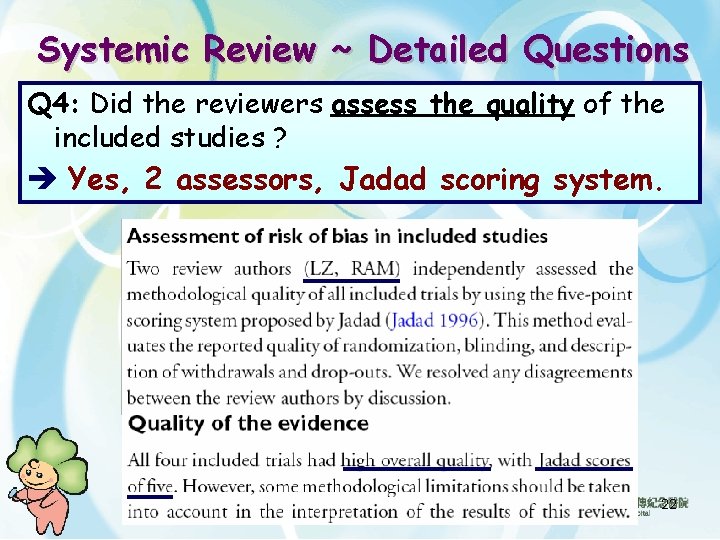
Systemic Review ~ Detailed Questions Q 4: Did the reviewers assess the quality of the included studies ? Yes, 2 assessors, Jadad scoring system. 22
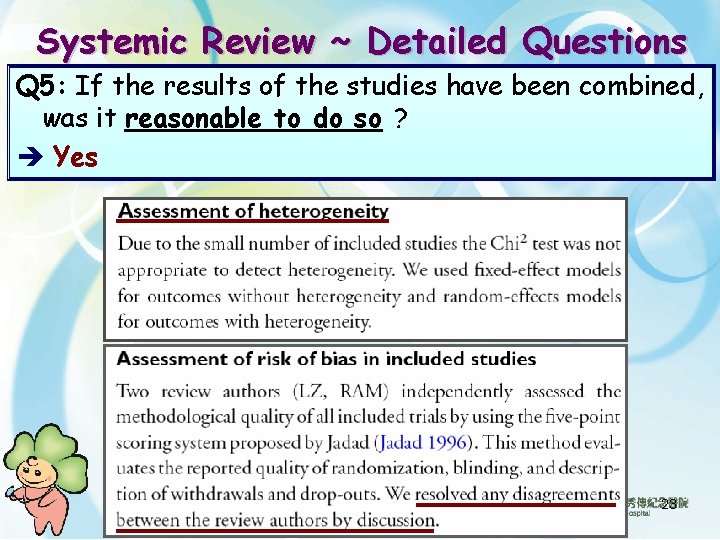
Systemic Review ~ Detailed Questions Q 5: If the results of the studies have been combined, was it reasonable to do so ? Yes 23
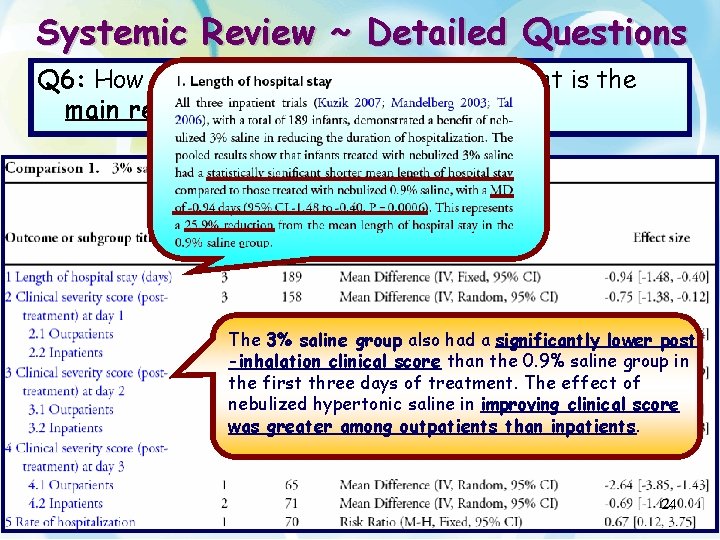
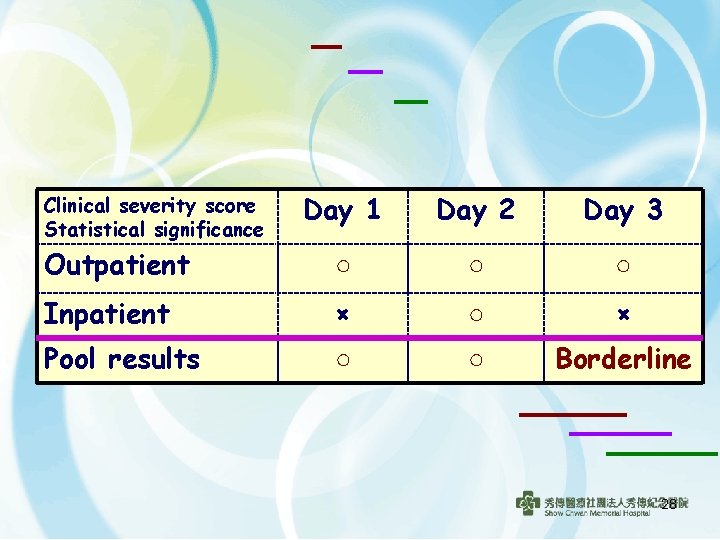
Systemic Review ~ Detailed Questions Q 6: How are the results presented and what is the main result ? The 3% saline group also had a significantly lower post -inhalation clinical score than the 0. 9% saline group in the first three days of treatment. The effect of nebulized hypertonic saline in improving clinical score was greater among outpatients than inpatients. 24
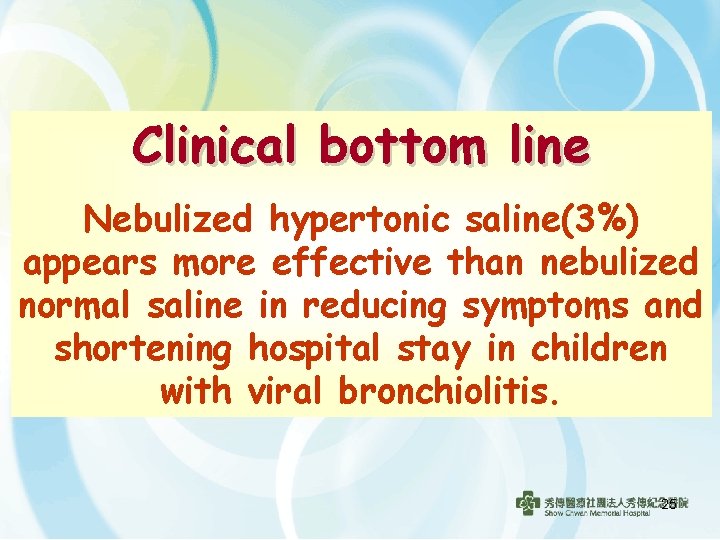
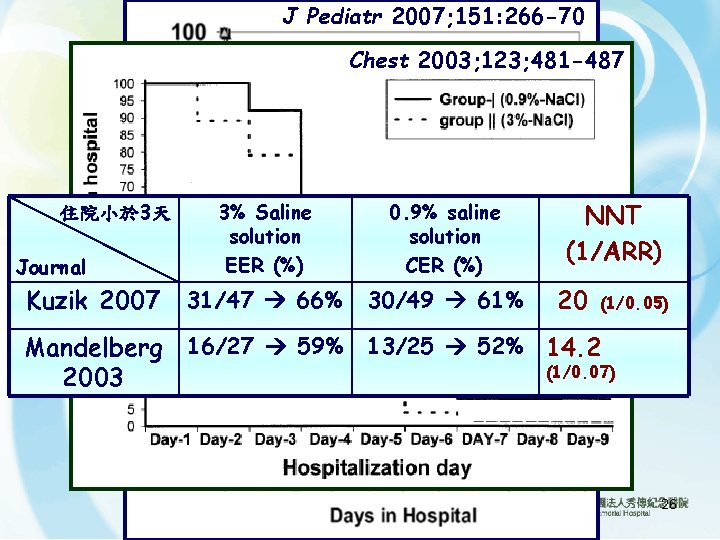
Clinical bottom line Nebulized hypertonic saline(3%) appears more effective than nebulized normal saline in reducing symptoms and shortening hospital stay in children with viral bronchiolitis. 25
J Pediatr 2007; 151: 266 -70 Chest 2003; 123; 481 -487 住院小於 3天 Journal Kuzik 2007 3% Saline solution EER (%) 0. 9% saline solution CER (%) 31/47 66% 30/49 61% NNT (1/ARR) 20 (1/0. 05) Mandelberg 16/27 59% 13/25 52% 14. 2 (1/0. 07) 2003 26
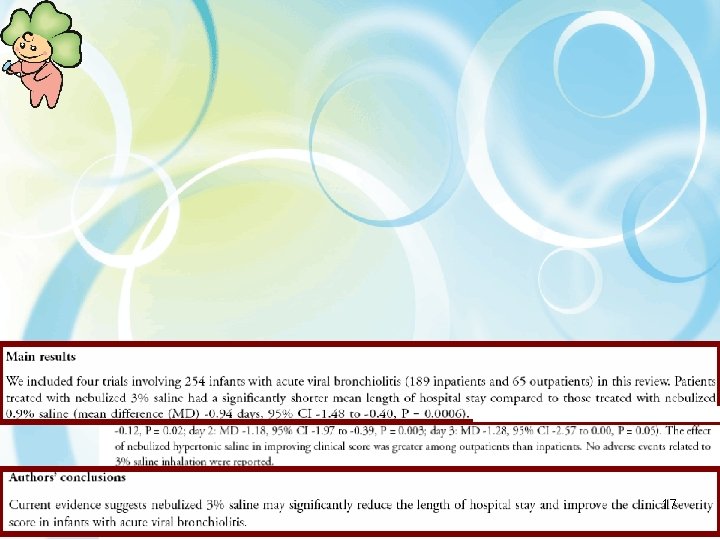
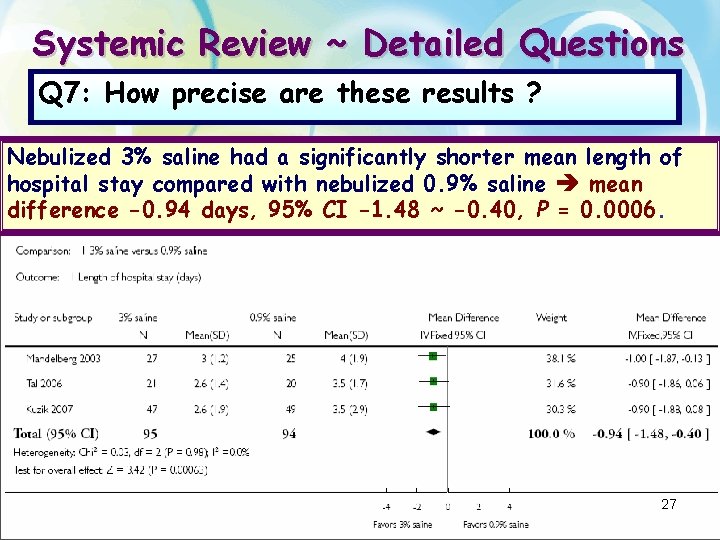
Systemic Review ~ Detailed Questions Q 7: How precise are these results ? Nebulized 3% saline had a significantly shorter mean length of hospital stay compared with nebulized 0. 9% saline mean difference -0. 94 days, 95% CI -1. 48 ~ -0. 40, P = 0. 0006. 27
Day 1 Day 2 Day 3 Outpatient ○ ○ ○ Inpatient × ○ × Pool results ○ ○ Borderline Clinical severity score Statistical significance 28
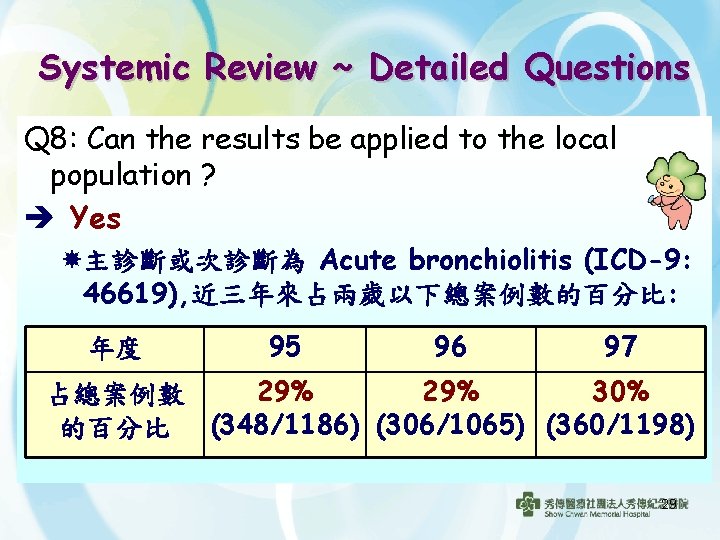
Systemic Review ~ Detailed Questions Q 8: Can the results be applied to the local population ? Yes 主診斷或次診斷為 Acute bronchiolitis (ICD-9: 46619), 近三年來占兩歲以下總案例數的百分比: 年度 95 96 97 29% 30% 占總案例數 的百分比 (348/1186) (306/1065) (360/1198) 29
Systemic Review ~ Detailed Questions Q 9: Were all important outcomes considered ? Yes Length of hospital stay Clinical severity score 30
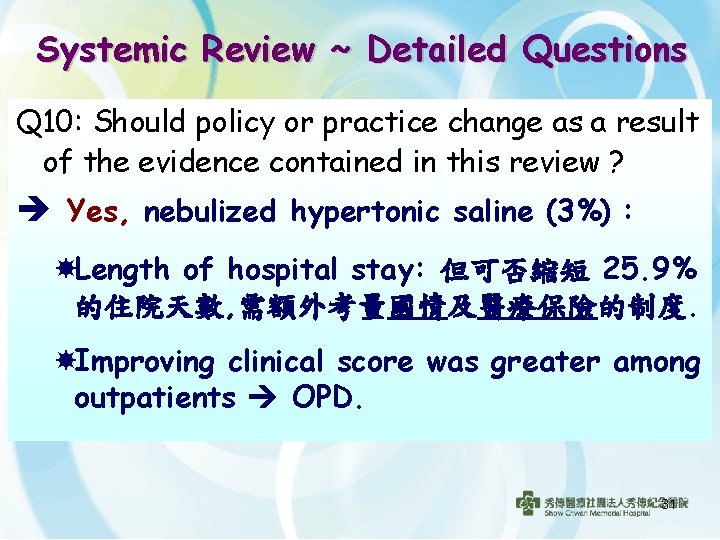
Systemic Review ~ Detailed Questions Q 10: Should policy or practice change as a result of the evidence contained in this review ? Yes, nebulized hypertonic saline (3%) : Length of hospital stay: 但可否縮短 25. 9% 的住院天數, 需額外考量國情及醫療保險的制度. Improving clinical score was greater among outpatients OPD. 31
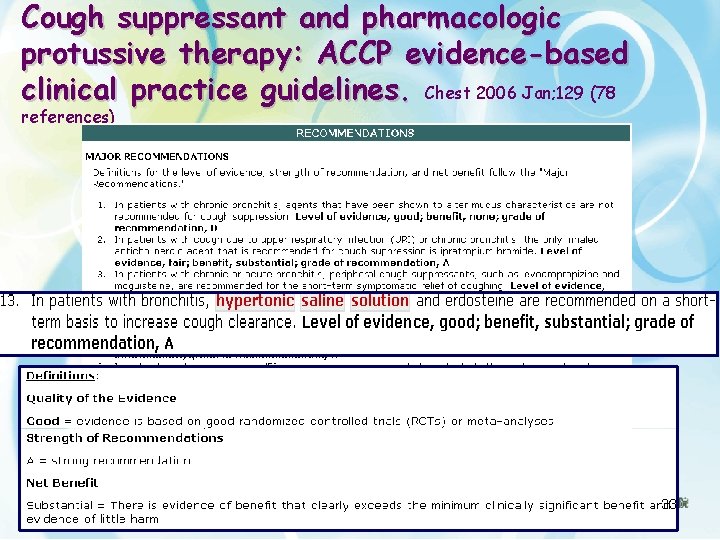
Cough suppressant and pharmacologic protussive therapy: ACCP evidence-based clinical practice guidelines. Chest 2006 Jan; 129 (78 references) 33