
Forearm shaft fractures Volker Braunstein Learning outcomes At
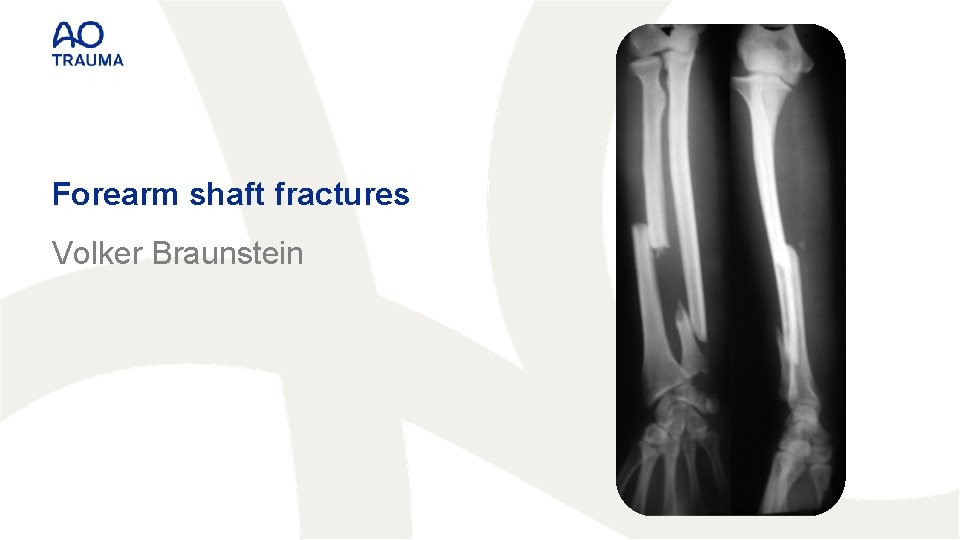
Forearm shaft fractures Volker Braunstein
Learning outcomes At the end of this lecture you will be able to: • Outline the anatomy and physiology of the forearm • Outline indications for nonoperative and operative treatment • Discuss principles of surgical treatment
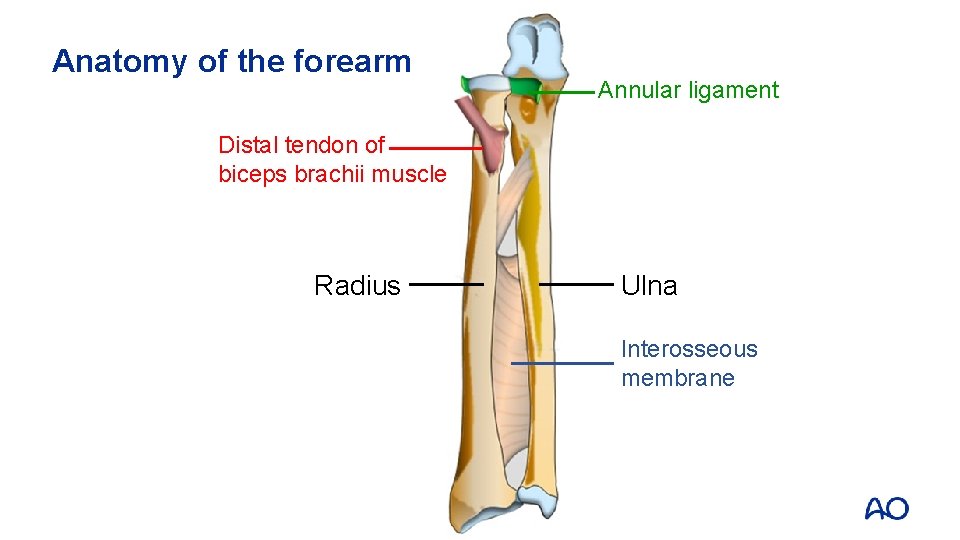
Anatomy of the forearm Annular ligament Distal tendon of biceps brachii muscle Radius Ulna Interosseous membrane

Anatomy of the forearm Radiocapitellar joint Humeroulnar joint Proximal radioulnar joint (PRUJ) . . . plus interosseous membrane Distalradioulnar joint (DRUJ) Radiocarpal joint

Anatomy—supination and pronation Supination Pronation

Anatomy—supination and pronation Supination Pronation

Anatomy—supination and pronation • The forearm bones and their rotational articulations function as a single joint • For this reason, the objectives of treatment of all joint fractures apply: • • • Anatomical reduction Stable fixation Early functional aftercare
Epidemiology • 10– 14% of all fractures occur in the forearm • Incidence of forearm shaft fractures does not increase with age

Fracture mechanism • High-energy trauma, resulting in: • • Axial compression Bending Rotation Direct trauma
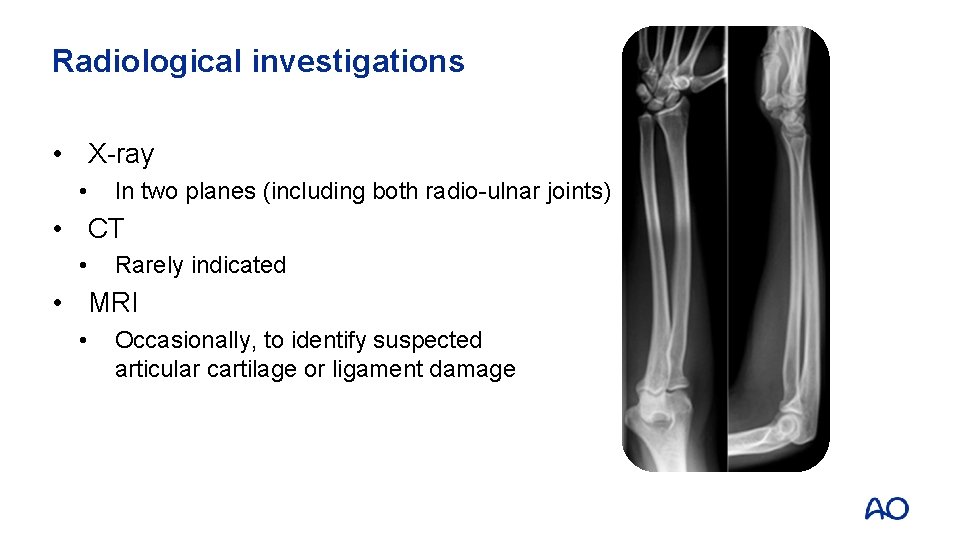
Radiological investigations • X-ray • In two planes (including both radio-ulnar joints) • CT • Rarely indicated • MRI • Occasionally, to identify suspected articular cartilage or ligament damage

AO/OTA Fracture Classification Bone code: 2 2 2
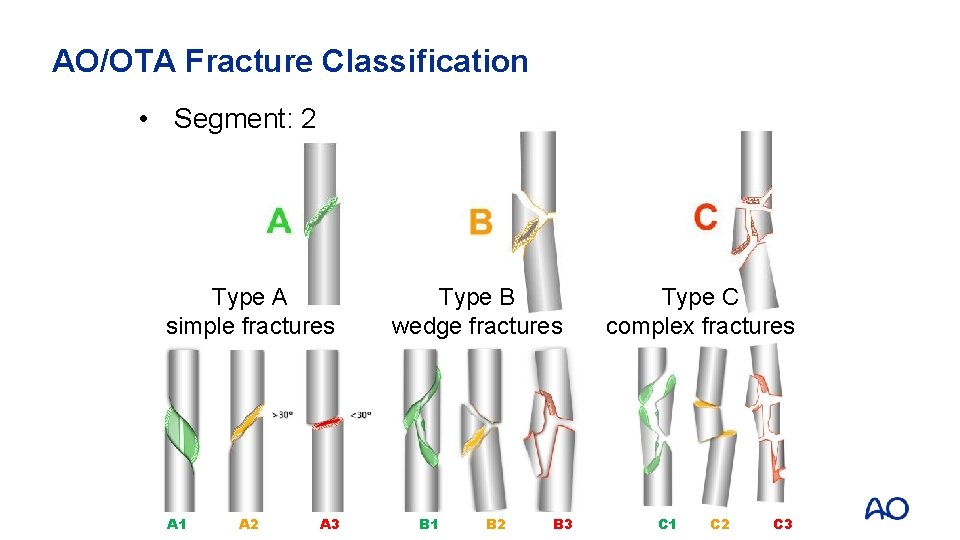
AO/OTA Fracture Classification • Segment: 2 Type A simple fractures A 1 A 2 A 3 Type B wedge fractures B 1 B 2 B 3 Type C complex fractures C 1 C 2 C 3
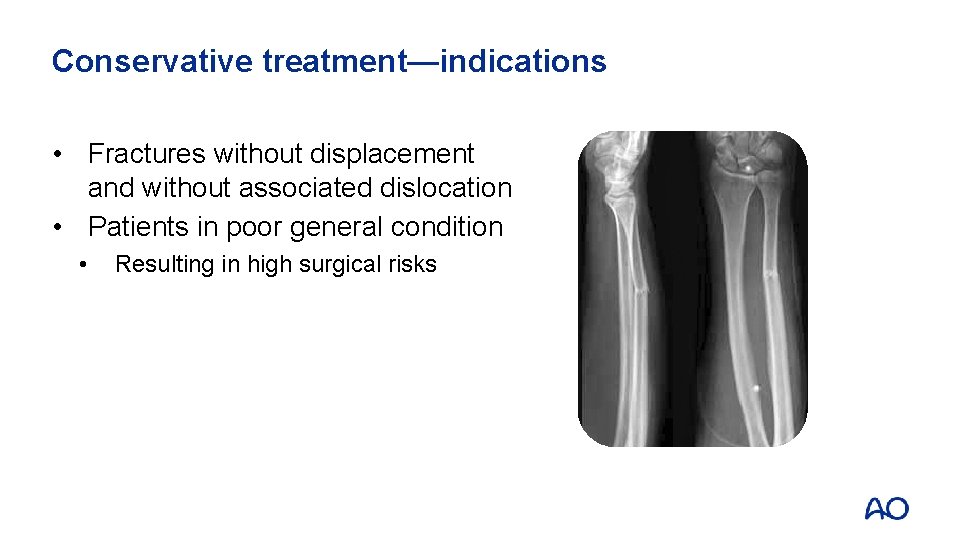
Conservative treatment—indications • Fractures without displacement and without associated dislocation • Patients in poor general condition • Resulting in high surgical risks
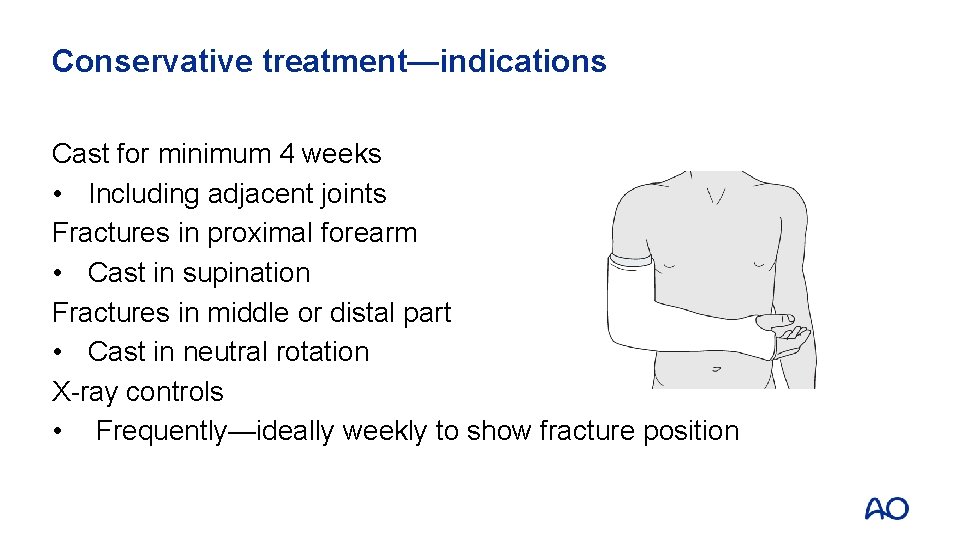
Conservative treatment—indications Cast for minimum 4 weeks • Including adjacent joints Fractures in proximal forearm • Cast in supination Fractures in middle or distal part • Cast in neutral rotation X-ray controls • Frequently—ideally weekly to show fracture position
Conservative treatment—risks Delayed union—nonunion • Up to 30 % Limited range of motion (ROM) after immobilization • Pronation, supination • Contracture of interosseous membrane
Operative treatment—indications • Displaced fractures of both radius and ulna • Displaced, isolated fracture of either bone • Rotated or angulated > 10° • Fractures combined with radioulnar dislocations • • Monteggia injury (ulnar fracture and dislocation of radiocapitellar joint) Galeazzi injury (distal radius and dislocation of distal radioulnar joint) • Open fractures
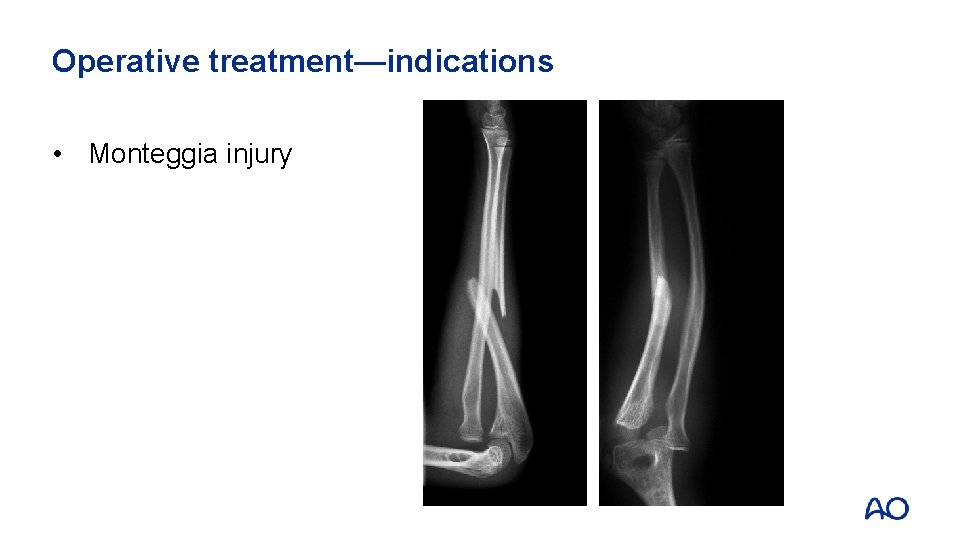
Operative treatment—indications • Monteggia injury
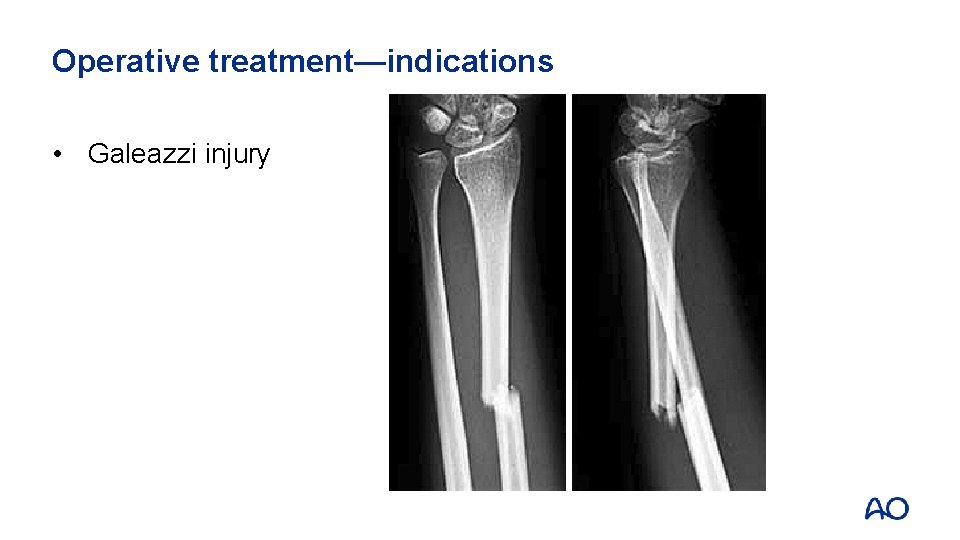
Operative treatment—indications • Galeazzi injury
Goals of treatment • • • Anatomical reduction Restoration of length (ulna and radius) Restoration of axial and rotational alignment Restoration and stabilization of joints Repair of soft-tissue injuries Ø Stable fixation allows immediate postoperative movement
Preoperative planning • Technique • Absolute or relative stability • Implant • Plates, external fixator, or nail • Strategy and approach • Which bone should be fixed first
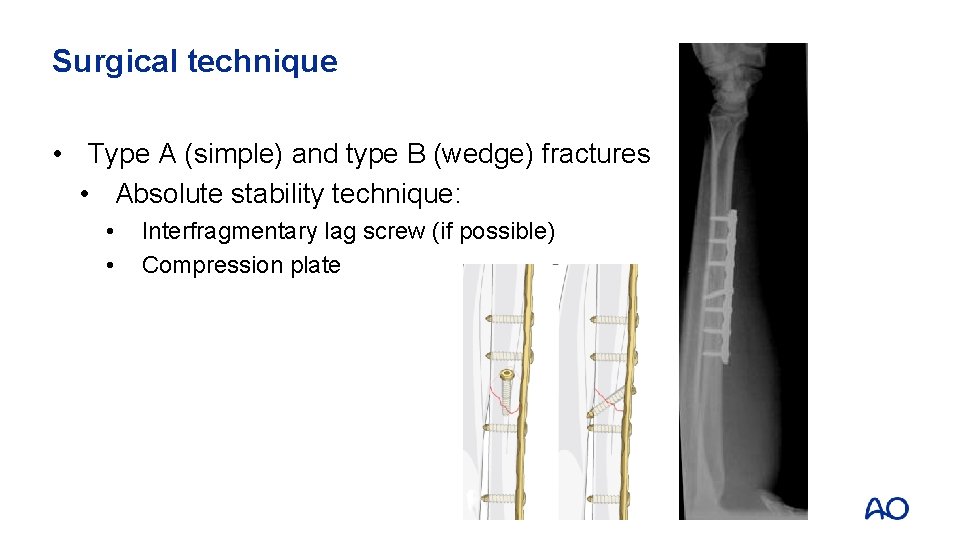
Surgical technique • Type A (simple) and type B (wedge) fractures • Absolute stability technique: • • Interfragmentary lag screw (if possible) Compression plate
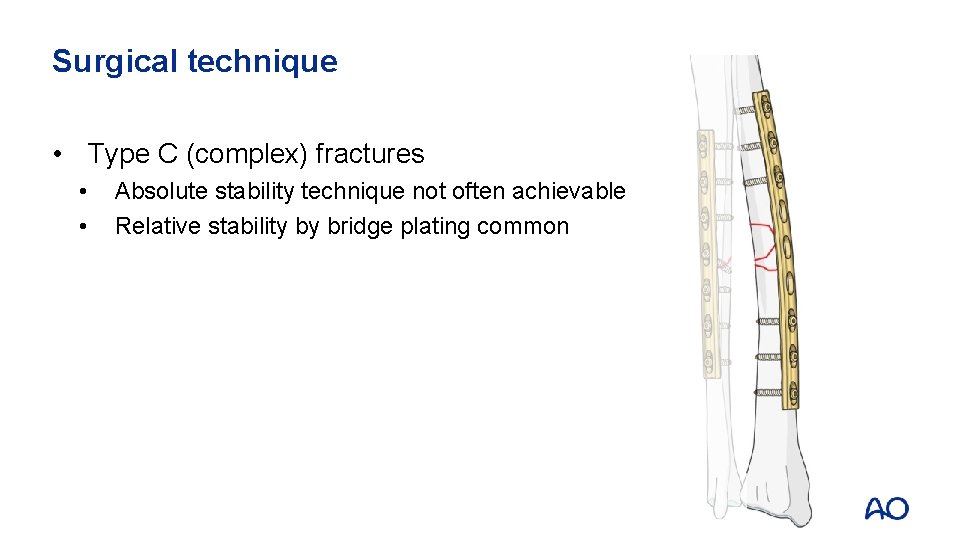
Surgical technique • Type C (complex) fractures • • Absolute stability technique not often achievable Relative stability by bridge plating common
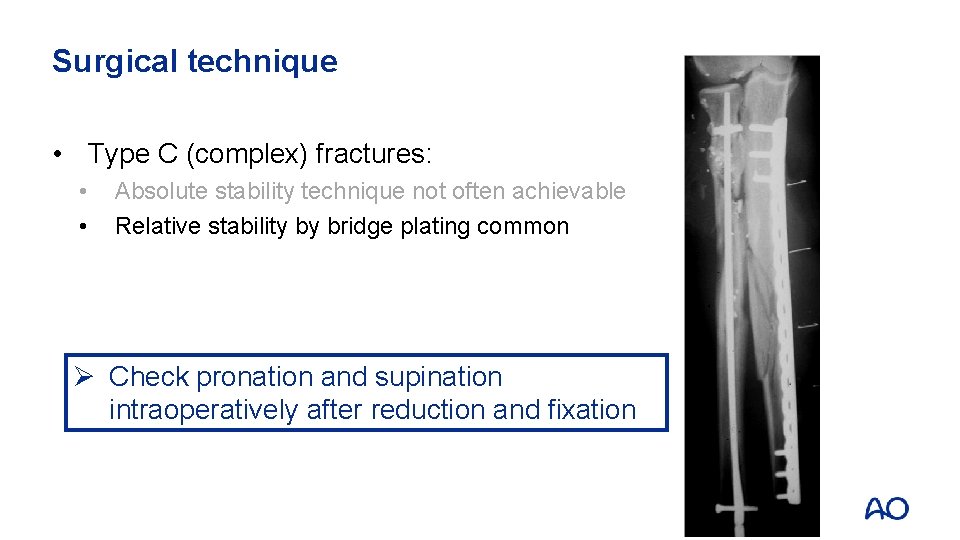
Surgical technique • Type C (complex) fractures: • • Absolute stability technique not often achievable Relative stability by bridge plating common Ø Check pronation and supination intraoperatively after reduction and fixation
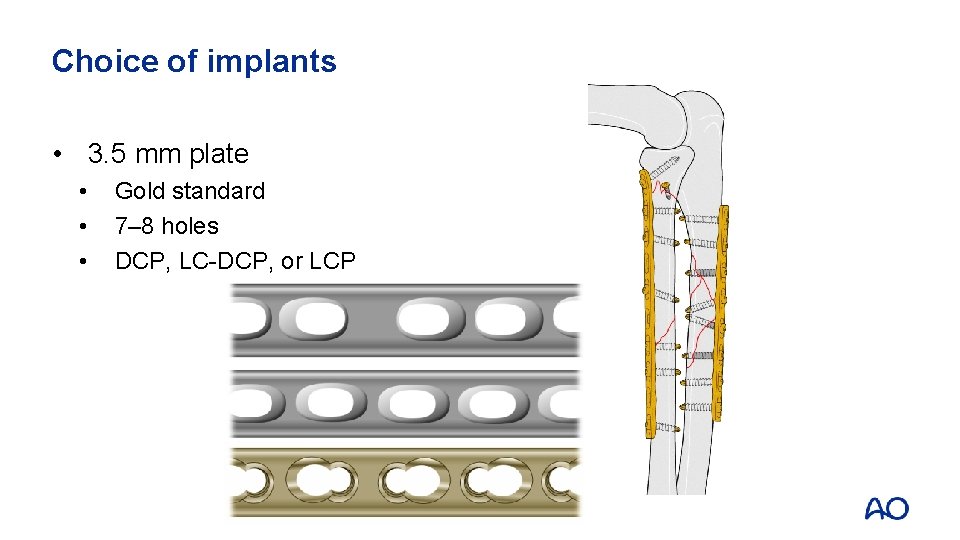
Choice of implants • 3. 5 mm plate • • • Gold standard 7– 8 holes DCP, LC-DCP, or LCP

Choice of implants • Elastic stable intramedullary nails (ESIN) • • Controversial in adults Excellent results in pediatric forearm fractures
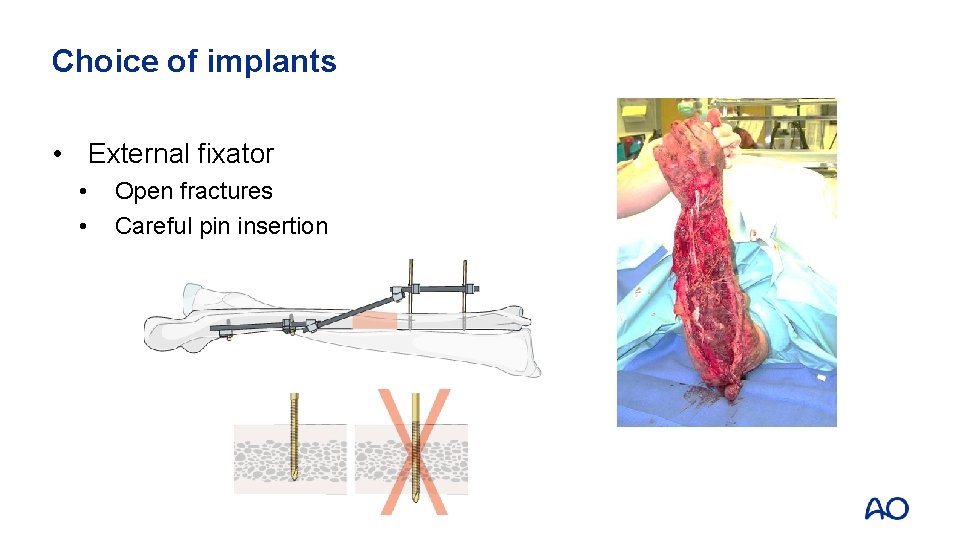
Choice of implants • External fixator • • Open fractures Careful pin insertion
Choice of implants • External fixation • Fracture consolidation • • Cannot be achieved by external fixation alone Rates of nonunion and malrotation are considerable Ø Change as soon as plate fixation is safe
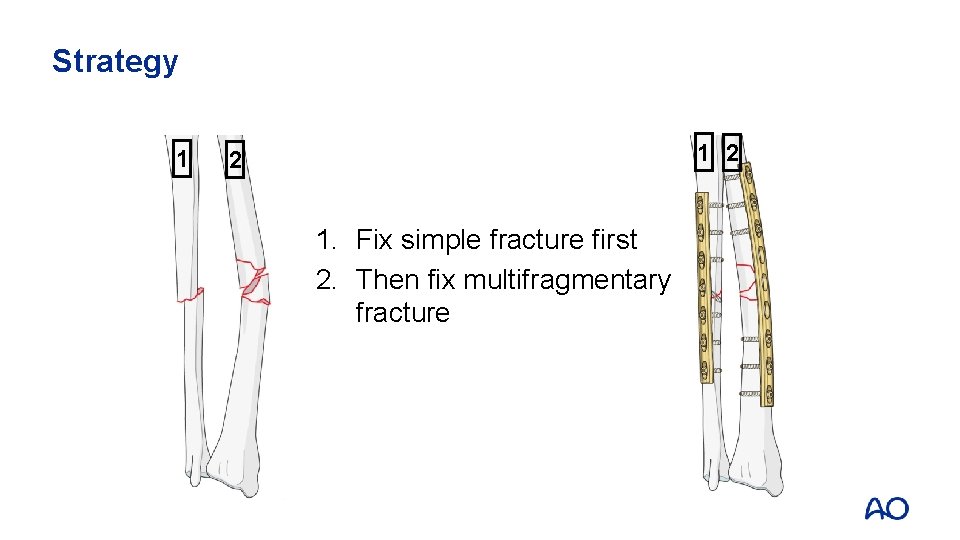
Strategy 1 1 2 2 1. Fix simple fracture first 2. Then fix multifragmentary fracture

Strategy: approach—ulna • Positioning of arm • In pronation Dorsal cutaneous branch of ulnar nerve Olecranon Styloid process of ulna

Strategy: approach—radius • Positioning of arm in supination • • Anterior (Henry) Entire shaft can be accessed Brachioradialis muscle Styloid process of radius Insertion biceps brachii tendon
Postoperative treatment Temporary splintage 10– 14 days • Longer for unreliable patients • Start functional treatment as soon as possible • Weight bearing, 6– 8 weeks postoperatively • High risk of stiffness if delayed X-ray control • 1, 6, and 12 weeks postoperatively Removal of implants is rarely indicated • High risk of neurovascular injury and refracture
Results and complications • Excellent to satisfactory • Synostosis • Posttraumatic radioulnar cross union • Nonunion • 3. 7% to 10. 3% Anatomical reduction and absolute stability crucial • Refracture after implant removal up to • 80% to 92% 2. 6% to 6. 6% Implant removal is not generally recommended 25%

Questions
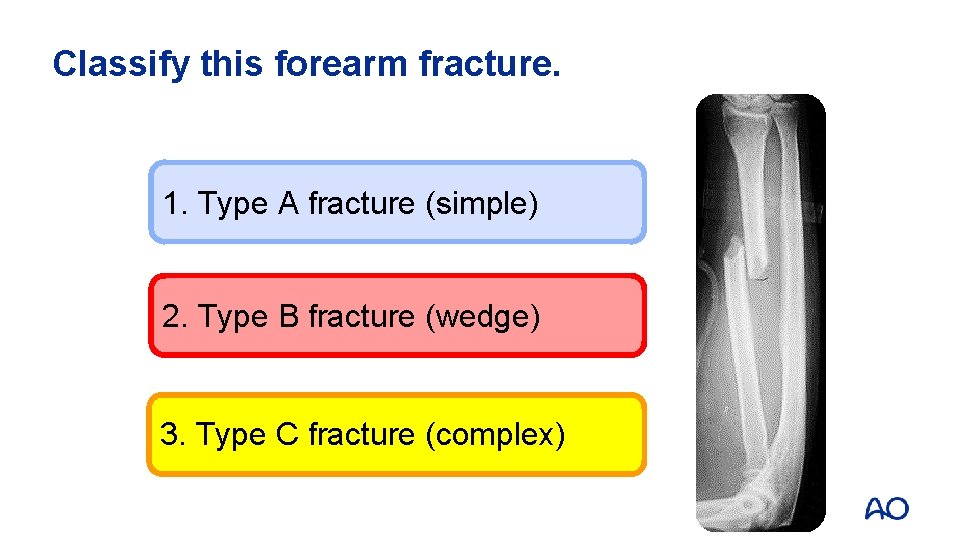
Classify this forearm fracture. 1. Type A fracture (simple) 2. Type B fracture (wedge) 3. Type C fracture (complex)
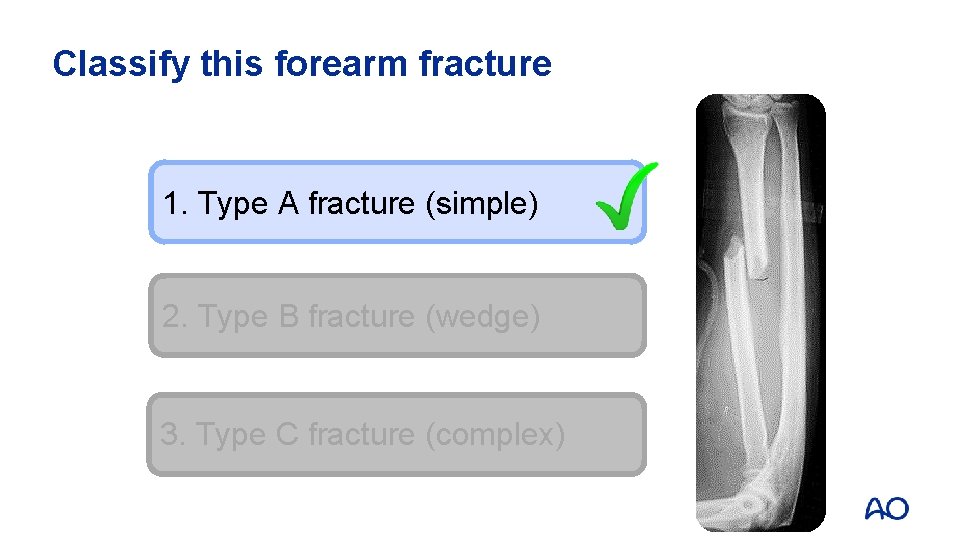
Classify this forearm fracture 1. Type A fracture (simple) 2. Type B fracture (wedge) 3. Type C fracture (complex)
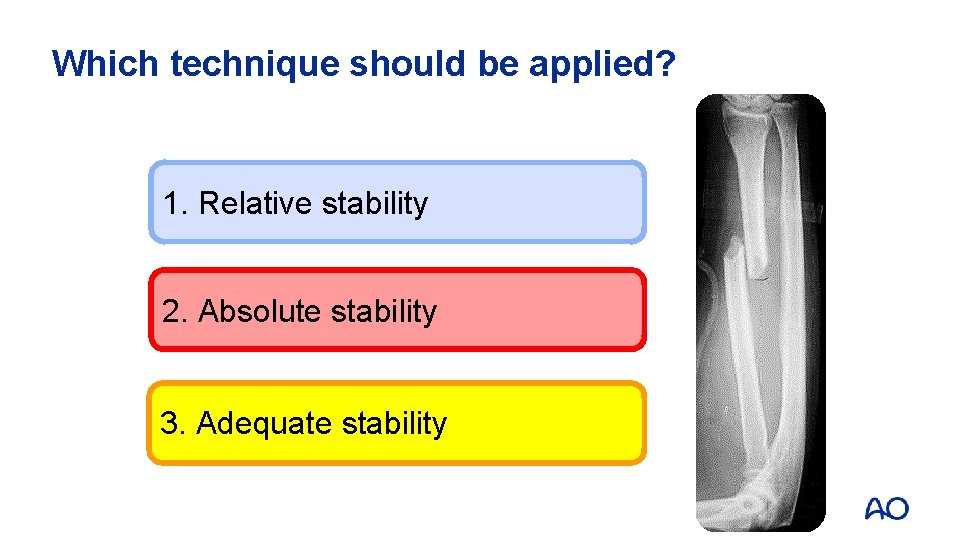
Which technique should be applied? 1. Relative stability 2. Absolute stability 3. Adequate stability
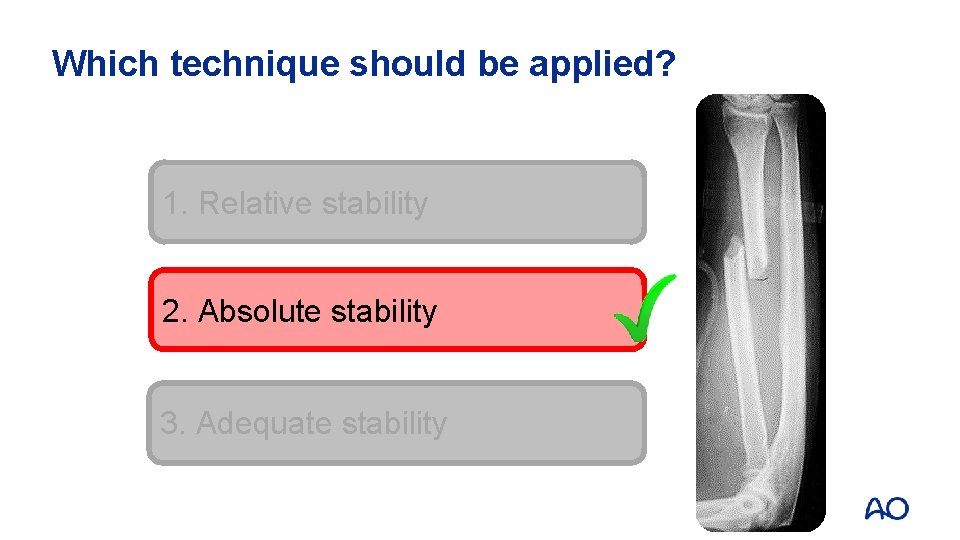
Which technique should be applied? 1. Relative stability 2. Absolute stability 3. Adequate stability

What is the choice of implant? 1. ESIN (Elastic intramedullary nail) 2. Two lag screws 3. Lag screw and protection plate
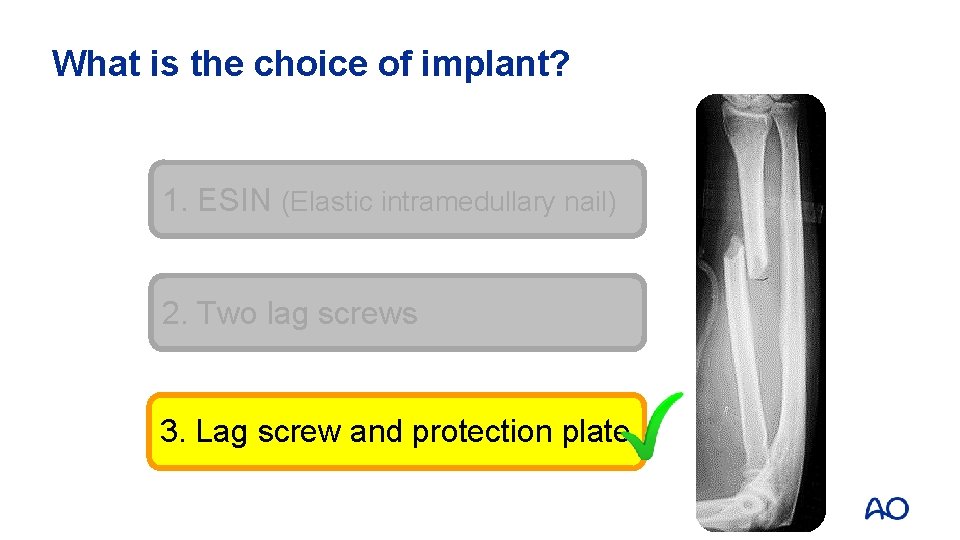
What is the choice of implant? 1. ESIN (Elastic intramedullary nail) 2. Two lag screws 3. Lag screw and protection plate
Conclusion You should now be able to: • Outline the anatomy and physiology of the forearm • Outline indications for nonoperative and operative treatment • Discuss principles of surgical treatment
- Slides: 40