
Forearm Bones of the Forearm Ulna Medial Extension
Forearm
Bones of the Forearm • Ulna – Medial – Extension of the humerus • Radius – Lateral – Extension of the hand
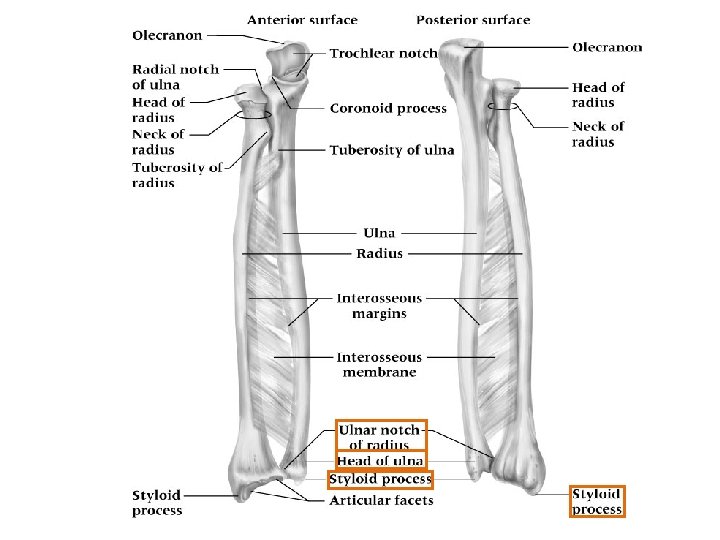
3 Joints of the Forearm • Proximal Radioulnar – Pivot joint: radial head held in place by annular ligament • Distal Radioulnar – Pivot joint – Head of ulna and ulnar notch on radius

• Carpal Bones – 8 cube shaped bones – Proximal row of 4 bones & distal row of 4 bones • Metacarpals – 5 bones – 1 st metacarpal – thumb side – 5 th metacarpal – little finger side • Phalanges – 14 bones – Proximal, middle, distal – 1 st – thumb side; 5 th little finger side
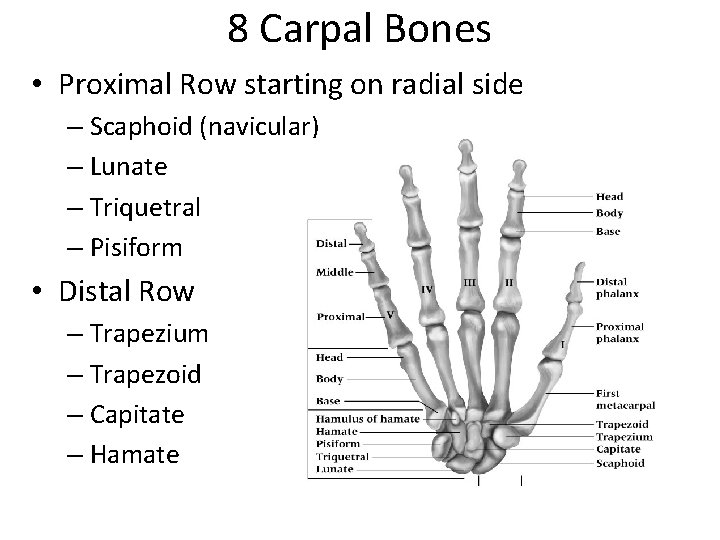
8 Carpal Bones • Proximal Row starting on radial side – Scaphoid (navicular) – Lunate – Triquetral – Pisiform • Distal Row – Trapezium – Trapezoid – Capitate – Hamate
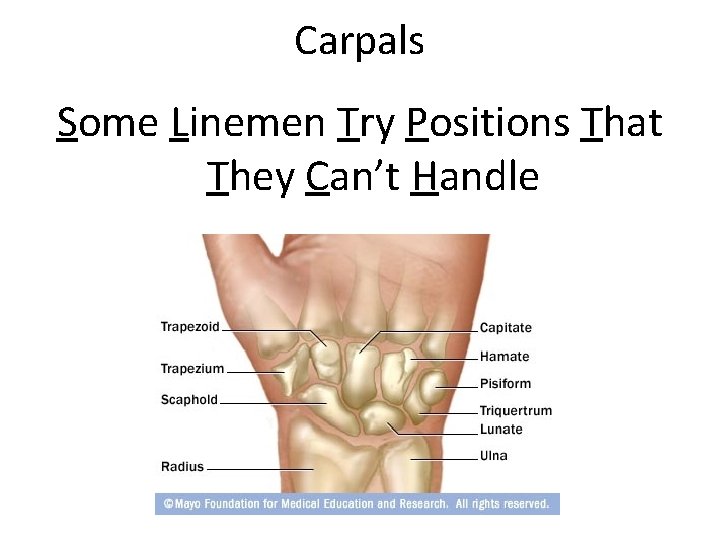
Carpals Some Linemen Try Positions That They Can’t Handle
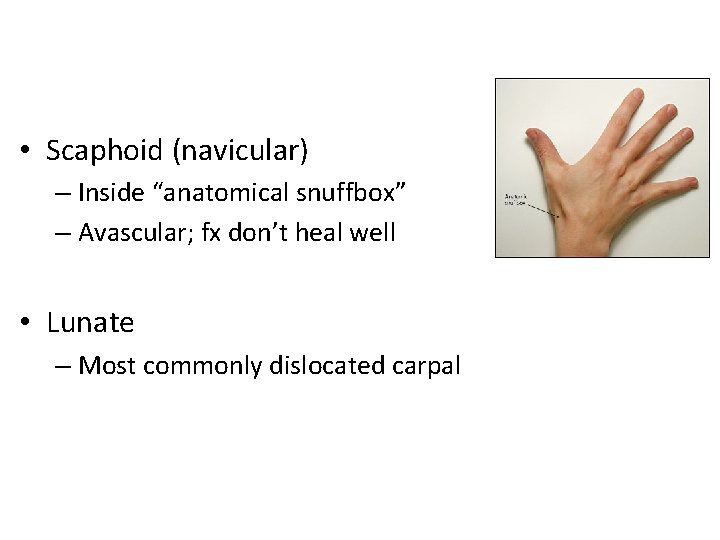
• Scaphoid (navicular) – Inside “anatomical snuffbox” – Avascular; fx don’t heal well • Lunate – Most commonly dislocated carpal
Trianglular Fibrocartilage Complex (TFCC) • Triangular shaped disc that is between the ulna and the triquetrum and pisiform • Main stabilizer and shock absorber • Like the meniscus of the knee
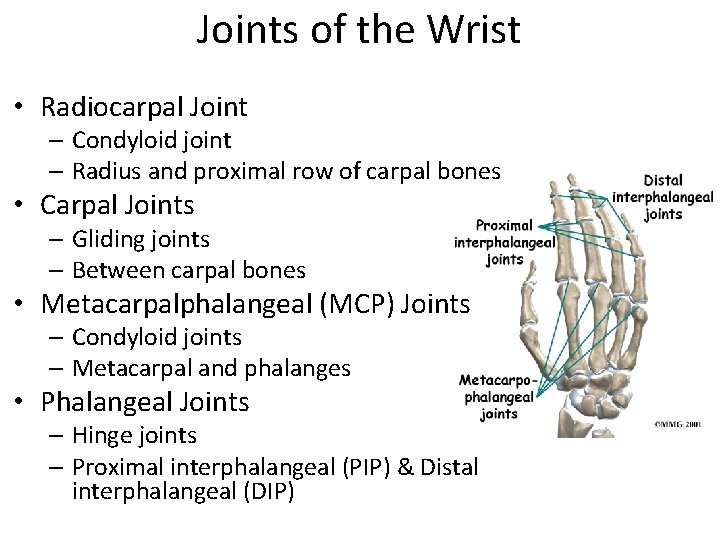
Joints of the Wrist • Radiocarpal Joint – Condyloid joint – Radius and proximal row of carpal bones • Carpal Joints – Gliding joints – Between carpal bones • Metacarpalphalangeal (MCP) Joints – Condyloid joints – Metacarpal and phalanges • Phalangeal Joints – Hinge joints – Proximal interphalangeal (PIP) & Distal interphalangeal (DIP)

Bony Anatomy
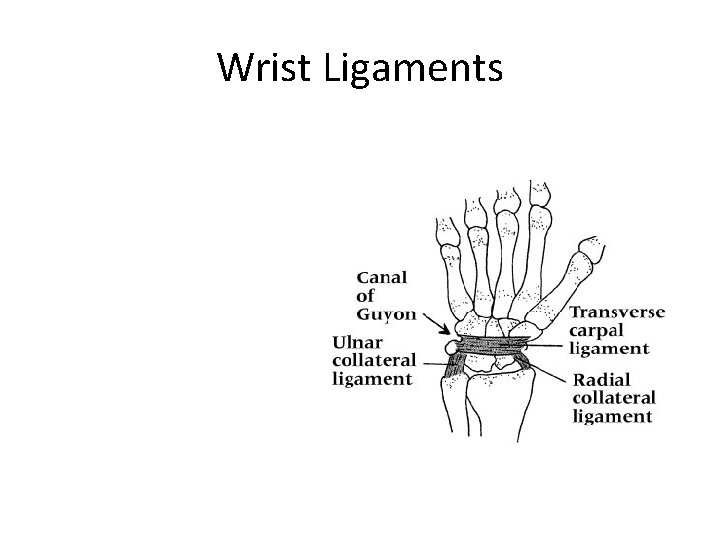
Wrist Ligaments
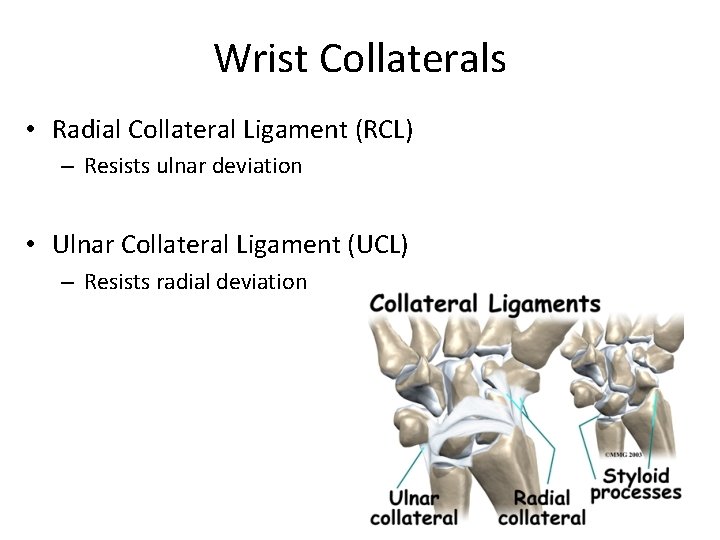
Wrist Collaterals • Radial Collateral Ligament (RCL) – Resists ulnar deviation • Ulnar Collateral Ligament (UCL) – Resists radial deviation
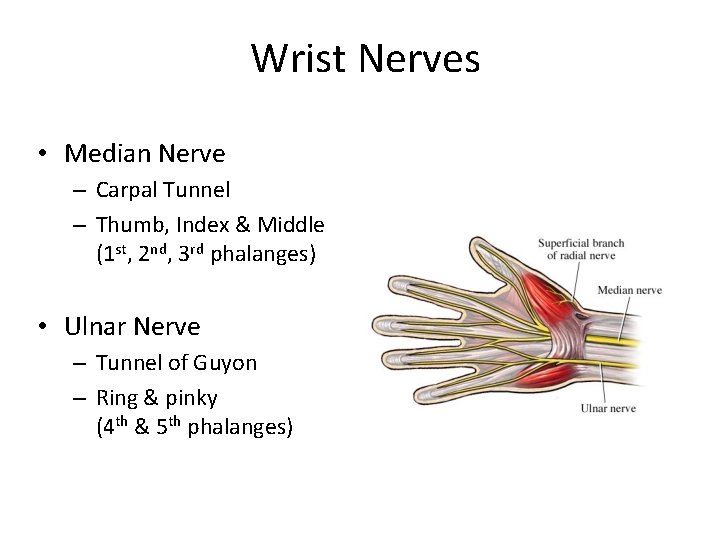
Wrist Nerves • Median Nerve – Carpal Tunnel – Thumb, Index & Middle (1 st, 2 nd, 3 rd phalanges) • Ulnar Nerve – Tunnel of Guyon – Ring & pinky (4 th & 5 th phalanges)
Terms • • • Palmar = palm side/anterior side Dorsal = back of the hand/posterior side Pollicis= thumb (1 st) Digitorium = 2 st – 4 th phalanges Digiti minimi = 5 th phalange (little finger)
Muscles of the Forearm • Anterior – Flexors – Pronators • Posterior – Extensors – Supinators
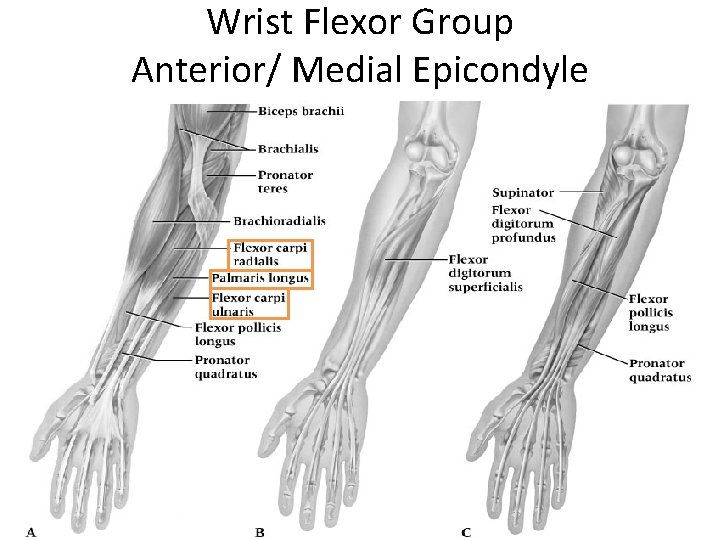
Wrist Flexor Group Anterior/ Medial Epicondyle
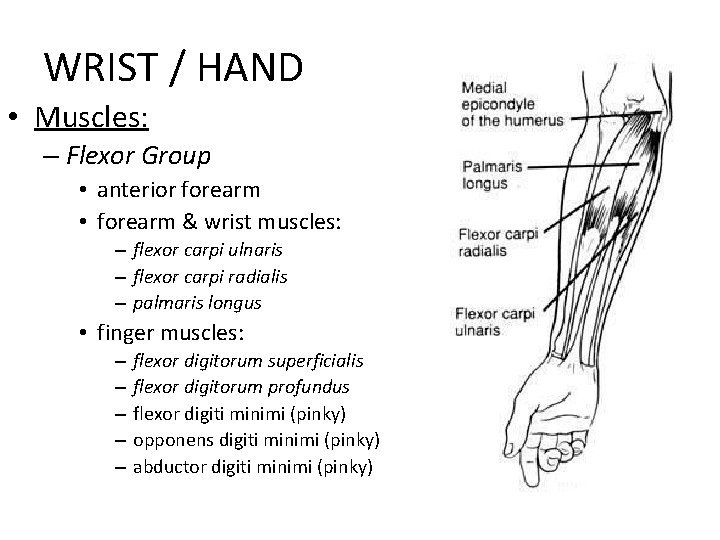
WRIST / HAND • Muscles: – Flexor Group • anterior forearm • forearm & wrist muscles: – flexor carpi ulnaris – flexor carpi radialis – palmaris longus • finger muscles: – – – flexor digitorum superficialis flexor digitorum profundus flexor digiti minimi (pinky) opponens digiti minimi (pinky) abductor digiti minimi (pinky)
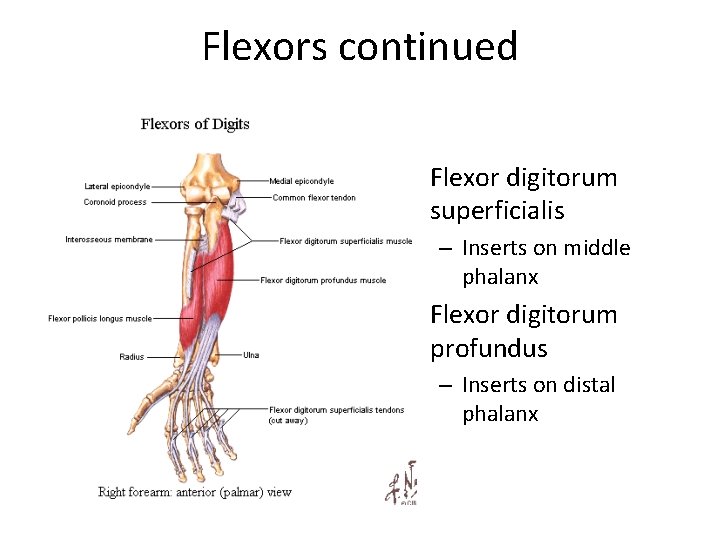
Flexors continued • Flexor digitorum superficialis – Inserts on middle phalanx • Flexor digitorum profundus – Inserts on distal phalanx
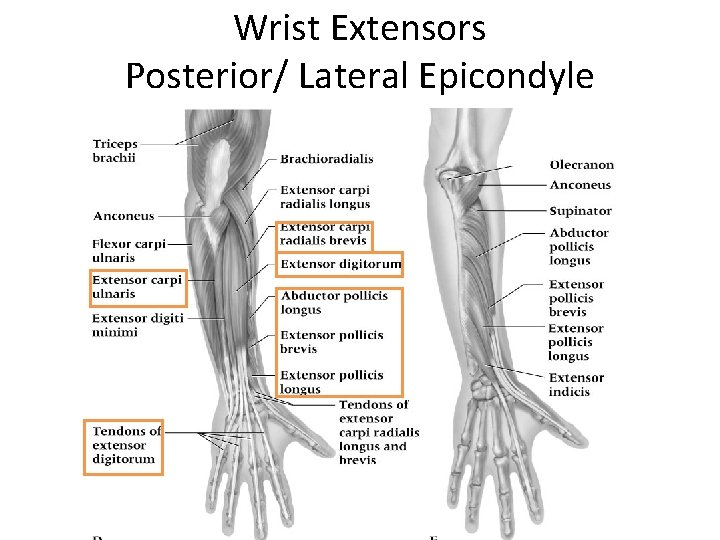
Wrist Extensors Posterior/ Lateral Epicondyle
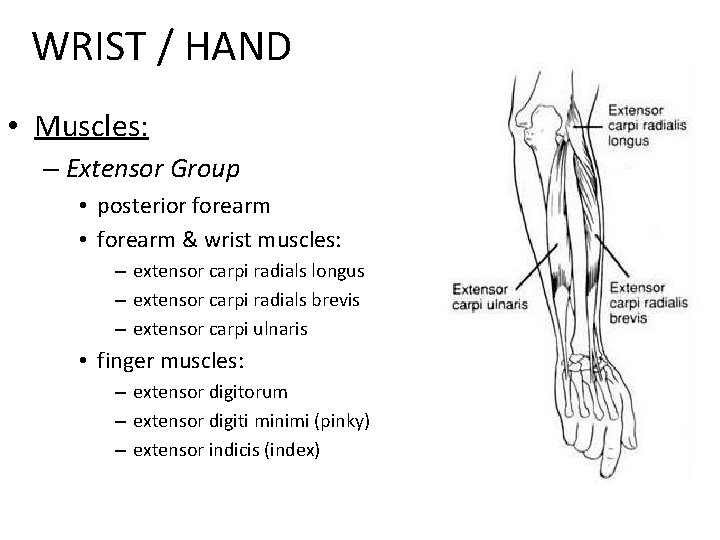
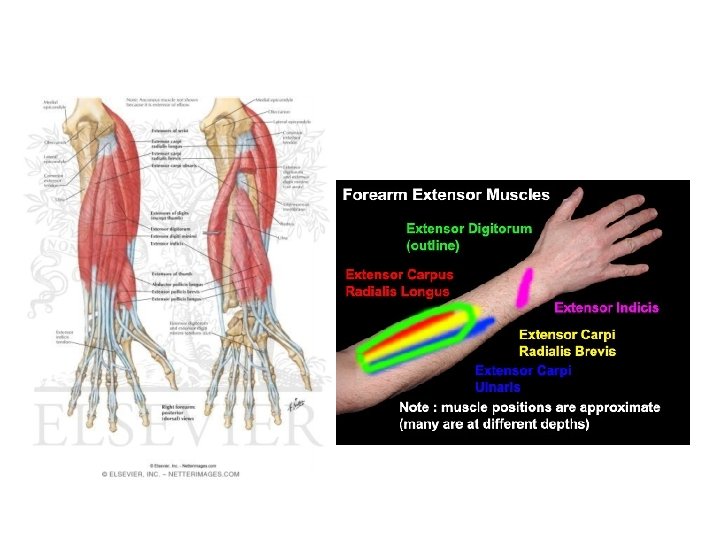
WRIST / HAND • Muscles: – Extensor Group • posterior forearm • forearm & wrist muscles: – extensor carpi radials longus – extensor carpi radials brevis – extensor carpi ulnaris • finger muscles: – extensor digitorum – extensor digiti minimi (pinky) – extensor indicis (index)

WRIST / HAND • Muscles: – Thumb (Pollicis) • anterior forearm – – – flexor pollicis longus flexor pollicis brevis abductor pollicis opponens pollicis • posterior forearm – abductor pollicis longus – extensor pollicis brevis – extensor pollicis longus
WRIST / HAND • Muscles: – Many muscles make up the wrist & hands movement. – Realize that the forearm flexor & extensor muscles insert into the hand. • these muscles are responsible for moving the wrist & fingers
WRIST / HAND • Movements: – Wrist • flexion & extension • radial deviation – towards radius • ulnar deviation – towards ulna – Fingers & Thumb • flexion • extension • ABD / ADD
WRIST / HAND • Ligaments: – There a lot of small ligaments that connect each carpal, metacarpal & each phalanx. • Tendons: – Each forearm muscle turns into a tendon as it enters the hand. • We’re not going to study these.
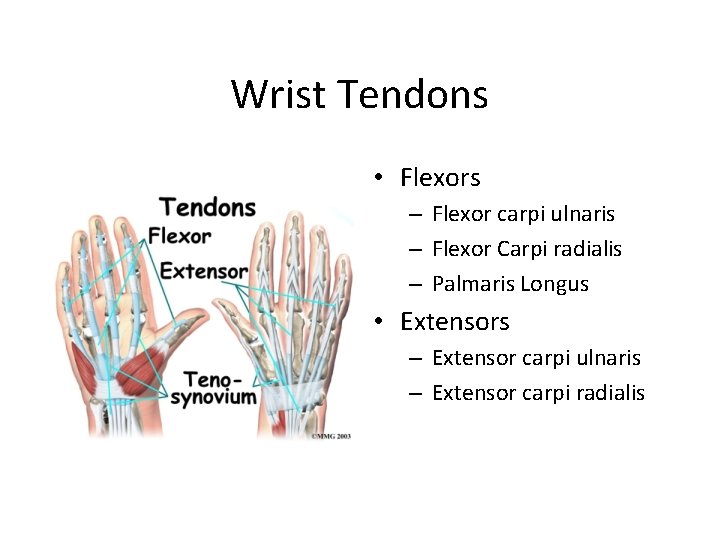
Wrist Tendons • Flexors – Flexor carpi ulnaris – Flexor Carpi radialis – Palmaris Longus • Extensors – Extensor carpi ulnaris – Extensor carpi radialis
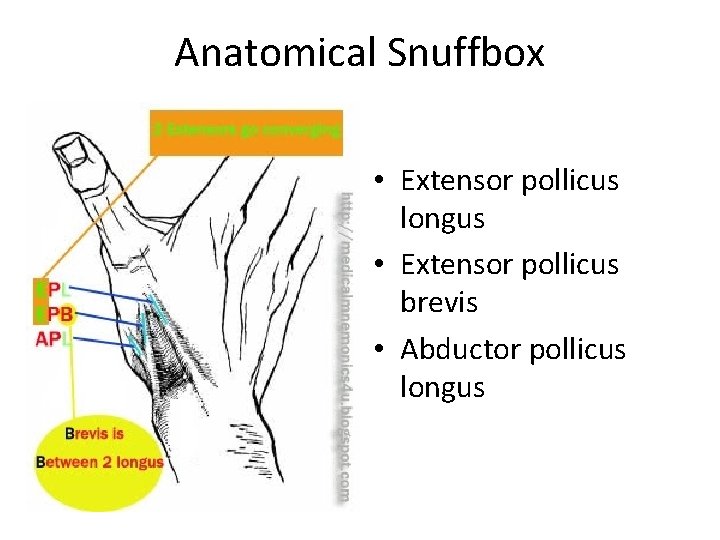
Anatomical Snuffbox • Extensor pollicus longus • Extensor pollicus brevis • Abductor pollicus longus
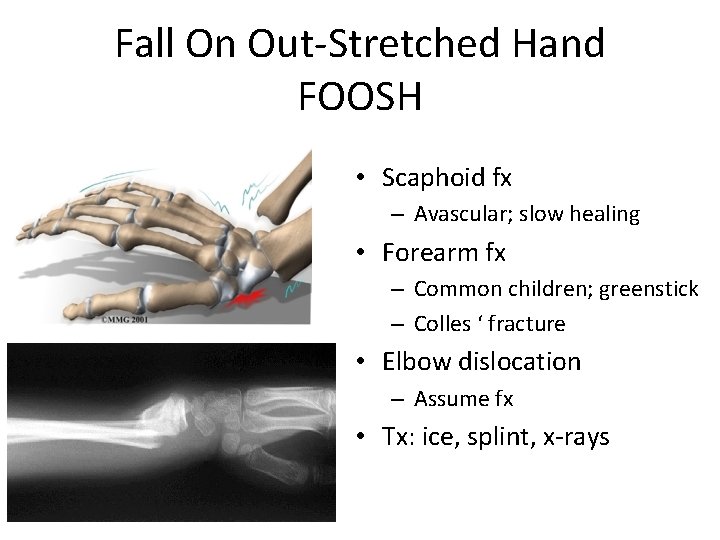
Fall On Out-Stretched Hand FOOSH • Scaphoid fx – Avascular; slow healing • Forearm fx – Common children; greenstick – Colles ‘ fracture • Elbow dislocation – Assume fx • Tx: ice, splint, x-rays
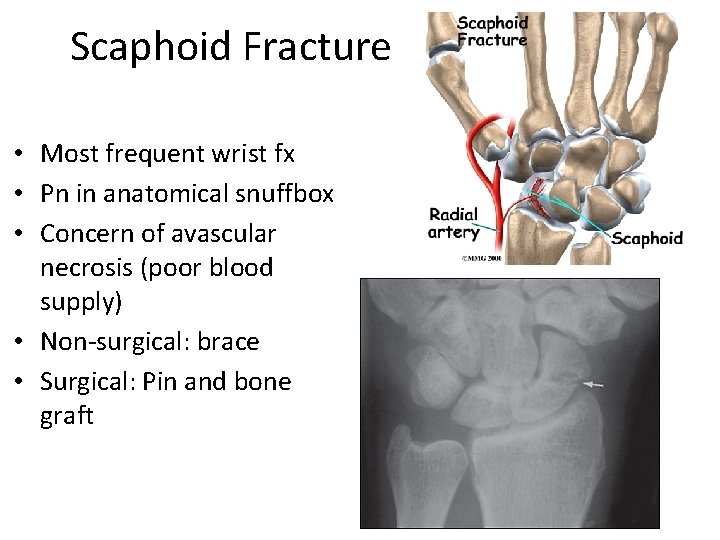
Scaphoid Fracture • Most frequent wrist fx • Pn in anatomical snuffbox • Concern of avascular necrosis (poor blood supply) • Non-surgical: brace • Surgical: Pin and bone graft
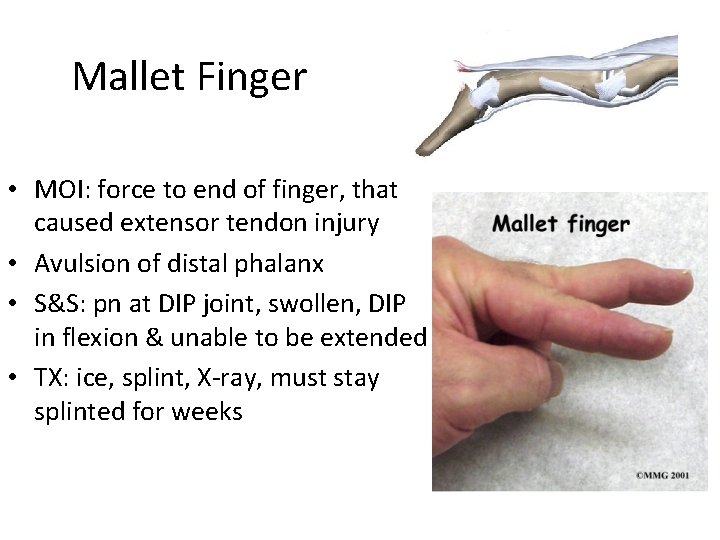
Mallet Finger • MOI: force to end of finger, that caused extensor tendon injury • Avulsion of distal phalanx • S&S: pn at DIP joint, swollen, DIP in flexion & unable to be extended • TX: ice, splint, X-ray, must stay splinted for weeks
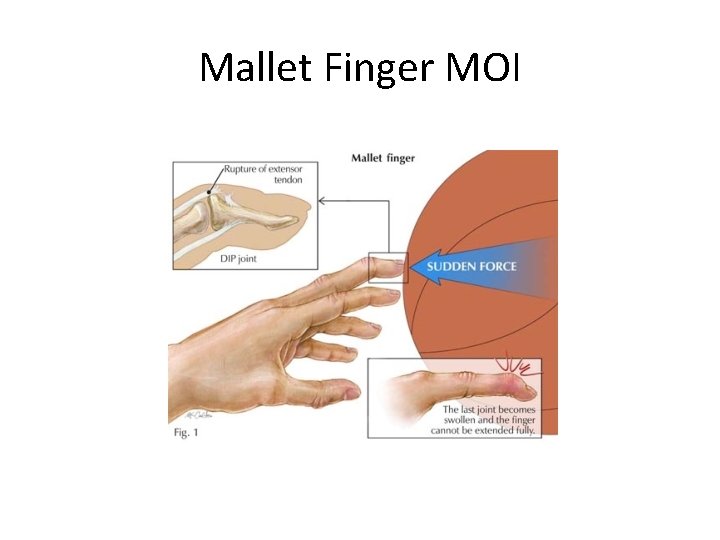
Mallet Finger MOI
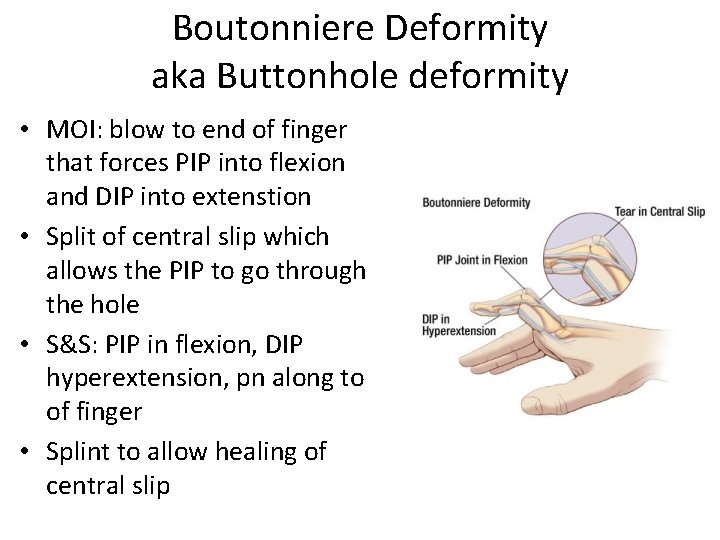
Boutonniere Deformity aka Buttonhole deformity • MOI: blow to end of finger that forces PIP into flexion and DIP into extenstion • Split of central slip which allows the PIP to go through the hole • S&S: PIP in flexion, DIP hyperextension, pn along to of finger • Splint to allow healing of central slip
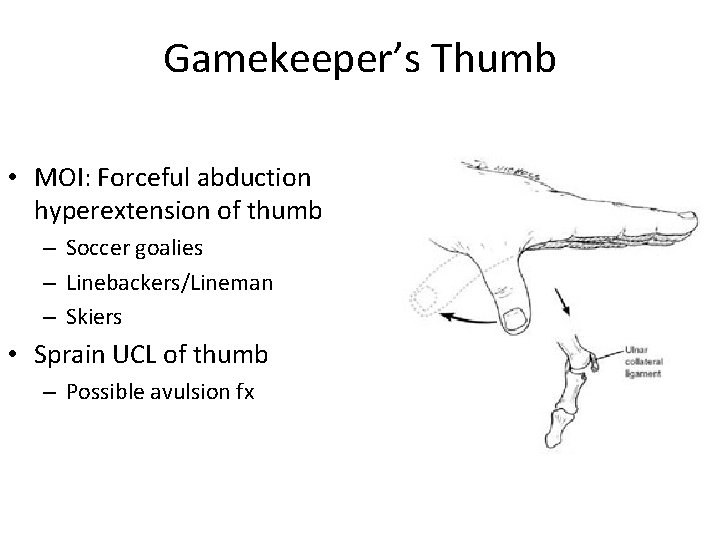
Gamekeeper’s Thumb • MOI: Forceful abduction hyperextension of thumb – Soccer goalies – Linebackers/Lineman – Skiers • Sprain UCL of thumb – Possible avulsion fx
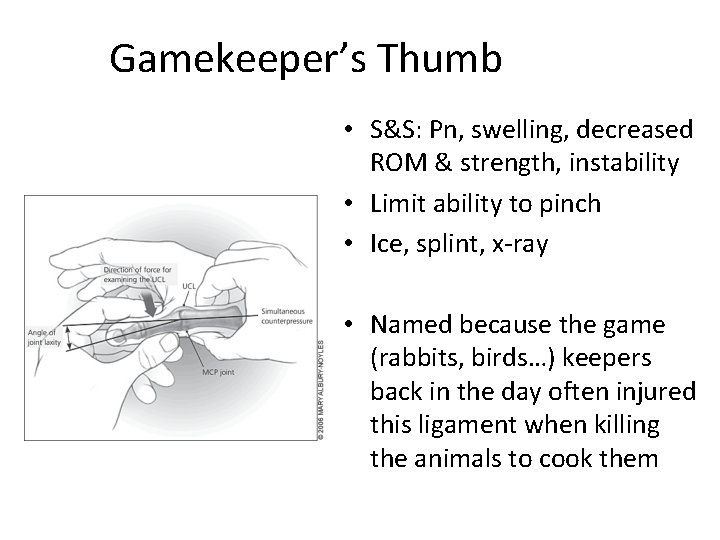
Gamekeeper’s Thumb • S&S: Pn, swelling, decreased ROM & strength, instability • Limit ability to pinch • Ice, splint, x-ray • Named because the game (rabbits, birds…) keepers back in the day often injured this ligament when killing the animals to cook them
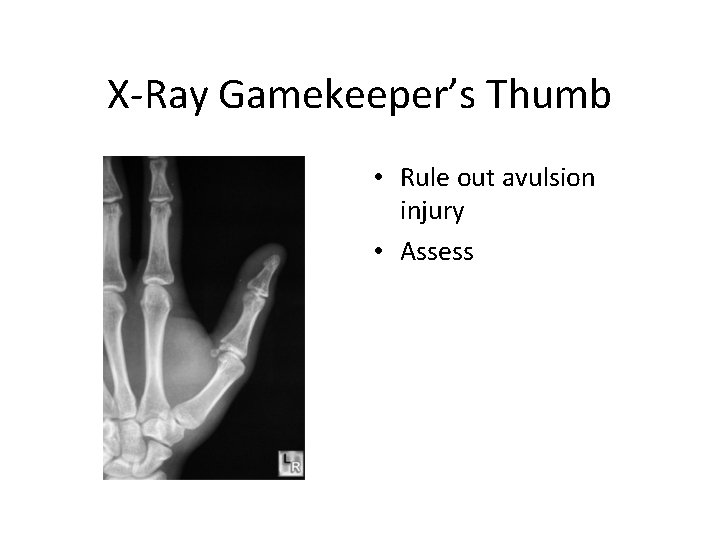
X-Ray Gamekeeper’s Thumb • Rule out avulsion injury • Assess

Subungual Hematoma • Contusion or crushing to distal phalanx • Accumulation of blood under fingernail • Confined space = Increase of pressure • Extreme pain • Possible Nail Loss • Tx: ice, possibly drill through nail to release pressure
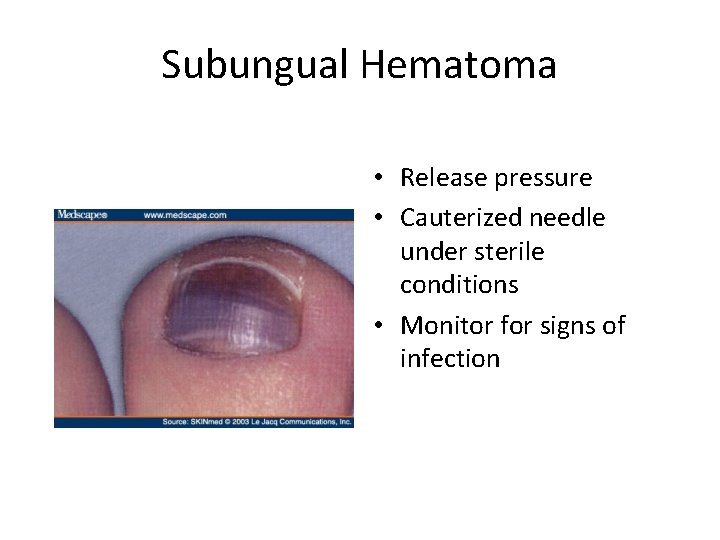
Subungual Hematoma • Release pressure • Cauterized needle under sterile conditions • Monitor for signs of infection
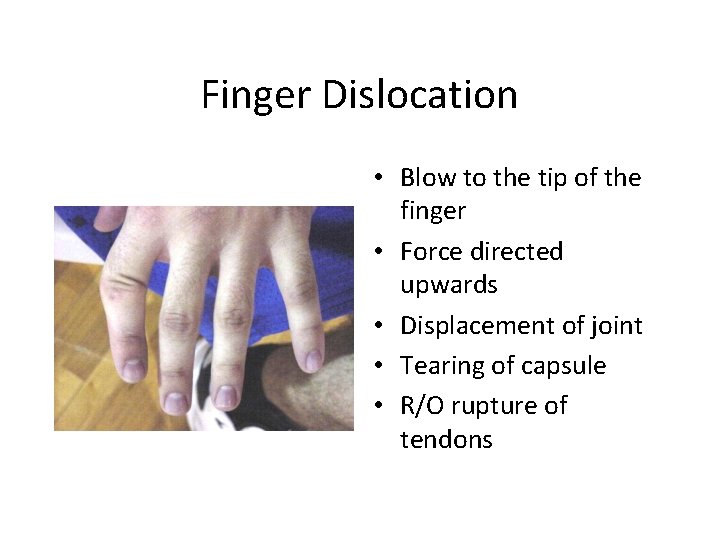
Finger Dislocation • Blow to the tip of the finger • Force directed upwards • Displacement of joint • Tearing of capsule • R/O rupture of tendons
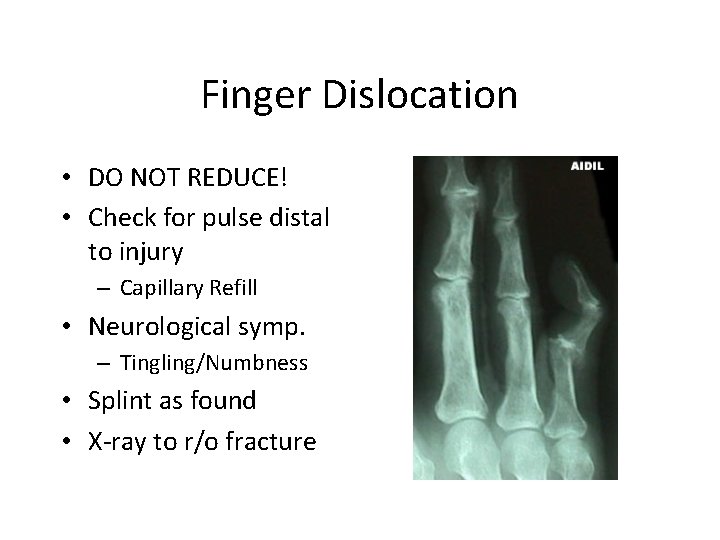
Finger Dislocation • DO NOT REDUCE! • Check for pulse distal to injury – Capillary Refill • Neurological symp. – Tingling/Numbness • Splint as found • X-ray to r/o fracture
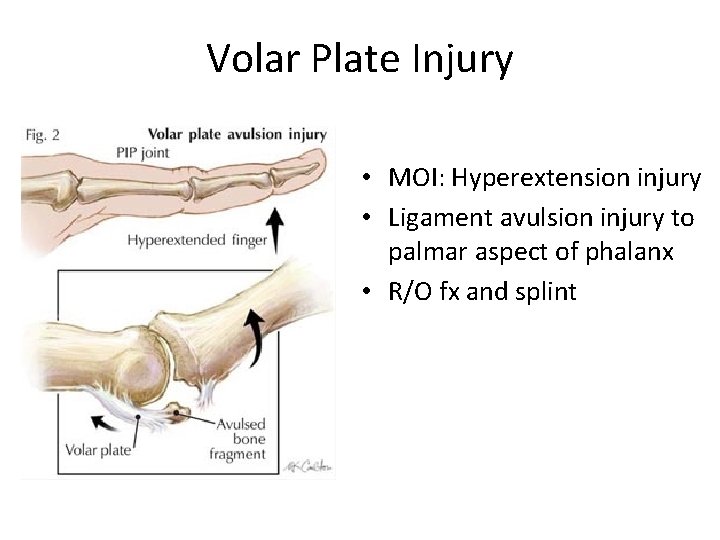
Volar Plate Injury • MOI: Hyperextension injury • Ligament avulsion injury to palmar aspect of phalanx • R/O fx and splint
- Slides: 41