
Forces The Movement of Physics Forces A FORCE
- Slides: 36
Forces The Movement of Physics
Forces • A FORCE is a push or a pull • Forces are at work all around us • Forces cause all motion, or change in motion.
Forces • There are only 3 types of motion: • At rest • Constant Speed • Acceleration
Forces • There are many types of forces strong nuclear weak nuclear electromagnetic gravity Gravity is the weakest of these forces
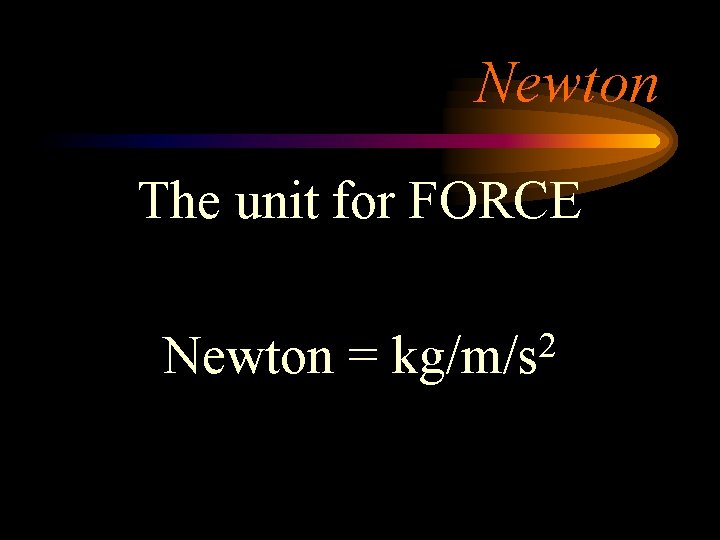
Newton The unit for FORCE Newton = 2 kg/m/s
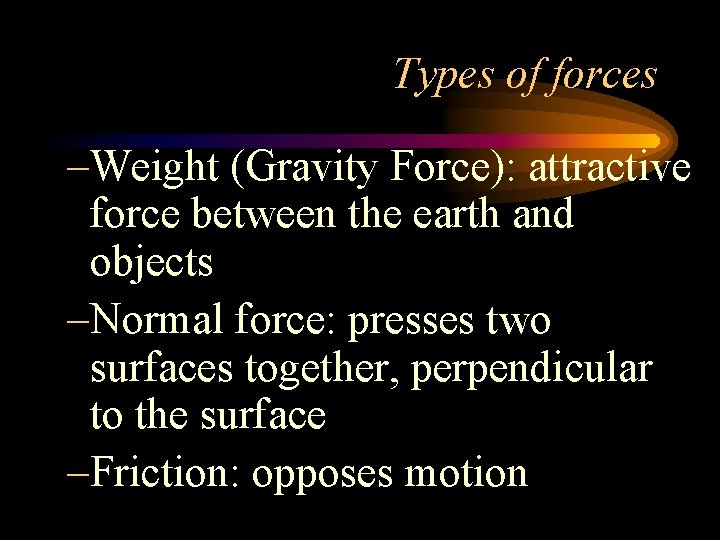
Types of forces –Weight (Gravity Force): attractive force between the earth and objects –Normal force: presses two surfaces together, perpendicular to the surface –Friction: opposes motion
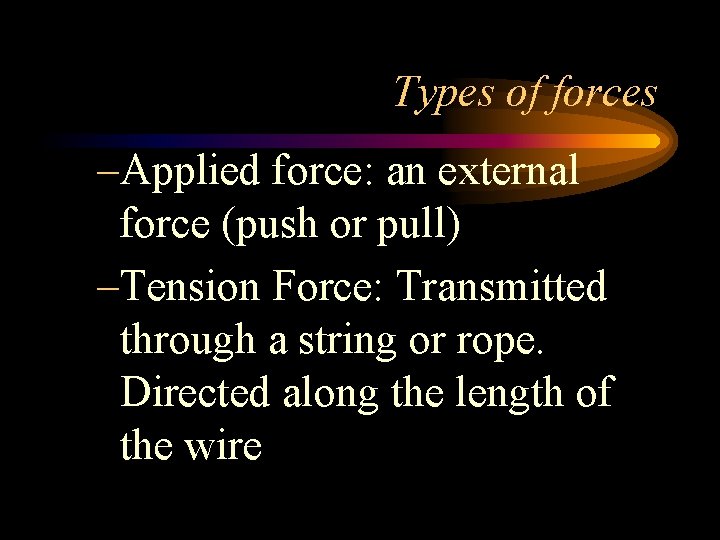
Types of forces –Applied force: an external force (push or pull) –Tension Force: Transmitted through a string or rope. Directed along the length of the wire
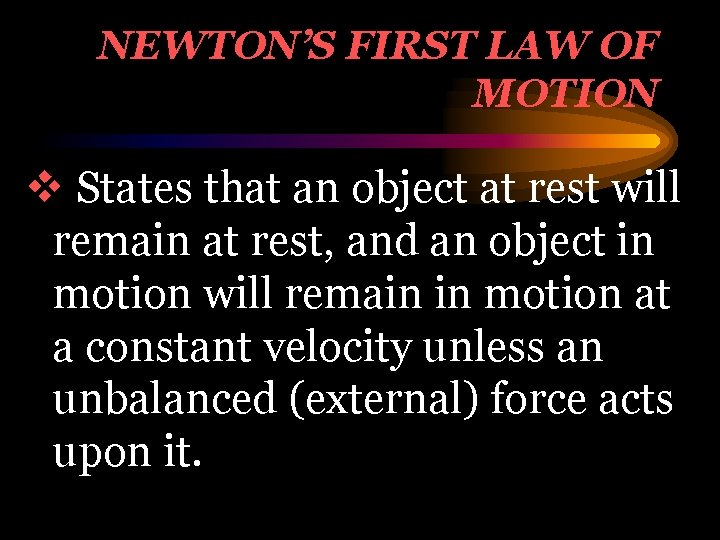
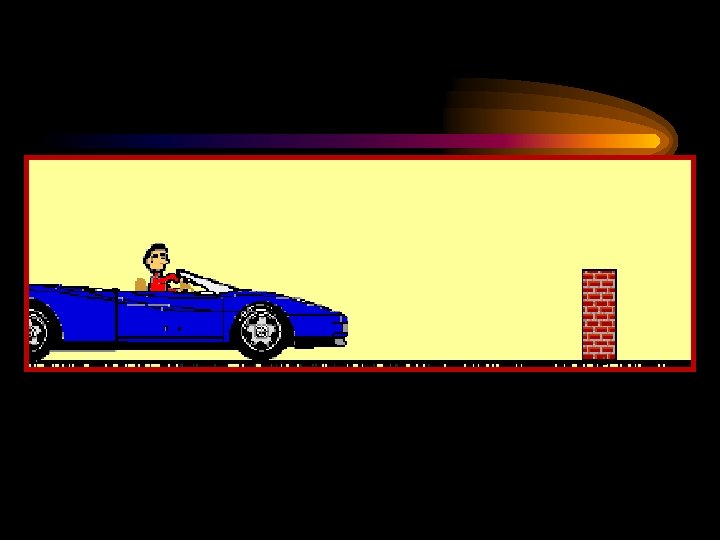
NEWTON’S FIRST LAW OF MOTION v States that an object at rest will remain at rest, and an object in motion will remain in motion at a constant velocity unless an unbalanced (external) force acts upon it.
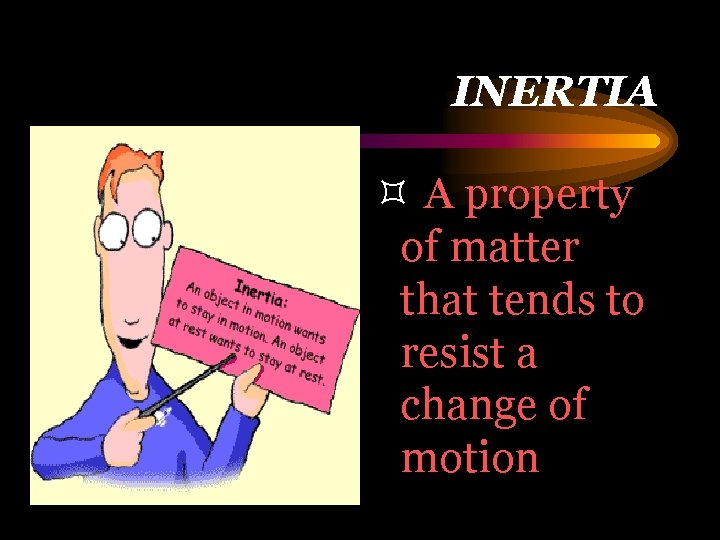
INERTIA ³ A property of matter that tends to resist a change of motion
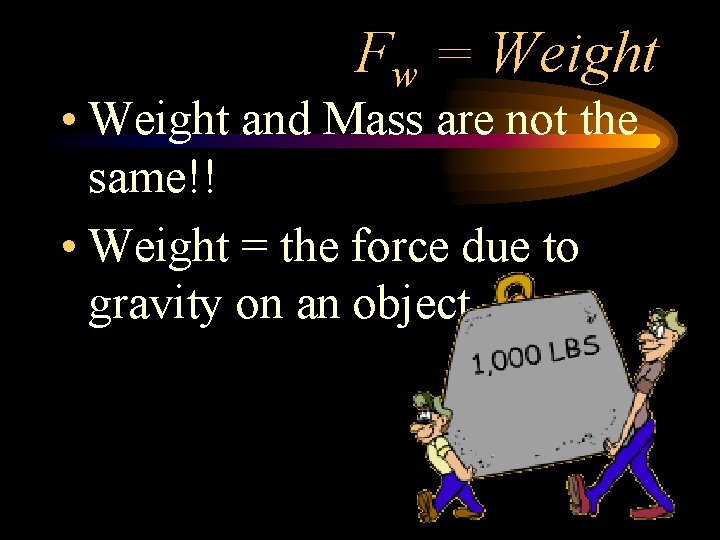
Fw = Weight • Weight and Mass are not the same!! • Weight = the force due to gravity on an object
MASS ¯ Is the amount of MATTER in an object ¯ All matter has MASS ¯The unit for measuring mass is the KILOGRAM.
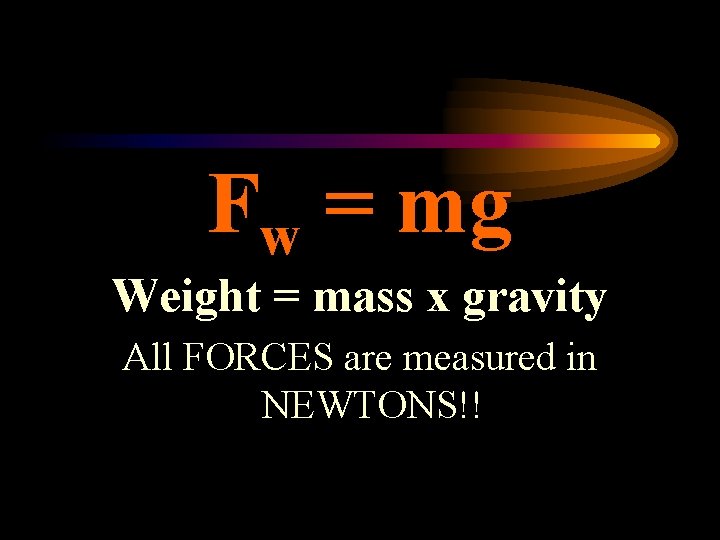
Fw = mg Weight = mass x gravity All FORCES are measured in NEWTONS!!
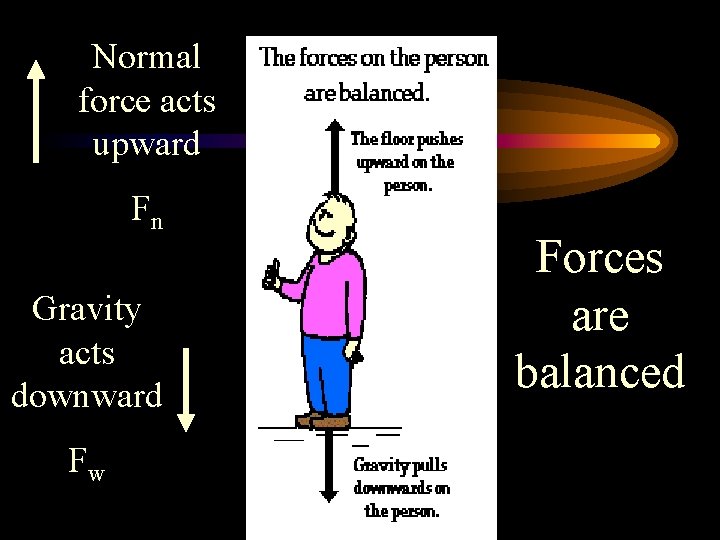
Fn = Normal Force • Presses two surfaces together • Is always perpendicular to the surface of an object • Also called the SUPPORT force
Normal force acts upward Fn Gravity acts downward Fw Forces are balanced
Fa = Applied • Force applied to a person • Commonly known as a push or a pull • Direction of the motion
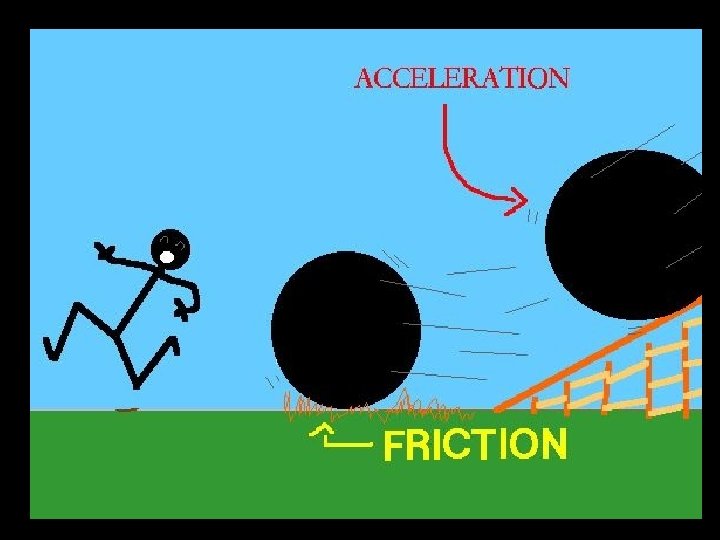
Ff = Friction • Opposes motion • Acts between any two surfaces that touch • When friction is present an EXTERNAL force is required to keep an object moving
Fnet = Net Force • The combination of all forces acting on an object
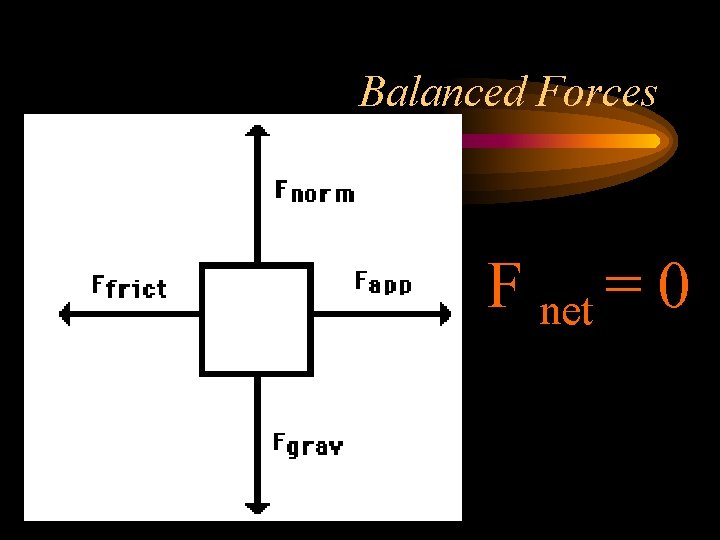
Balanced Forces F net = 0
• When Fnet = 0 there can be no change in motion • When Fnet is greater than ZERO, an object has ACCELERATION
NEWTON’S SECOND LAW OF MOTION Demonstrates the relationship between force, mass, and acceleration. Describes motion when unbalanced forces act on an object
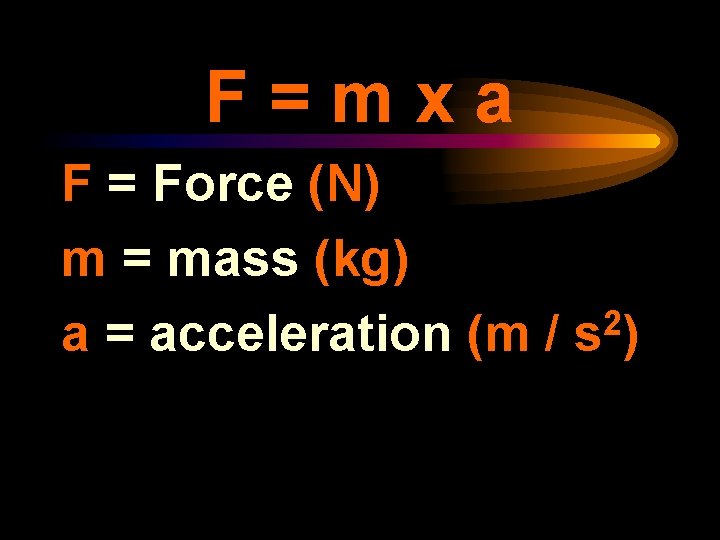
F=mxa F = Force (N) m = mass (kg) 2 a = acceleration (m / s )
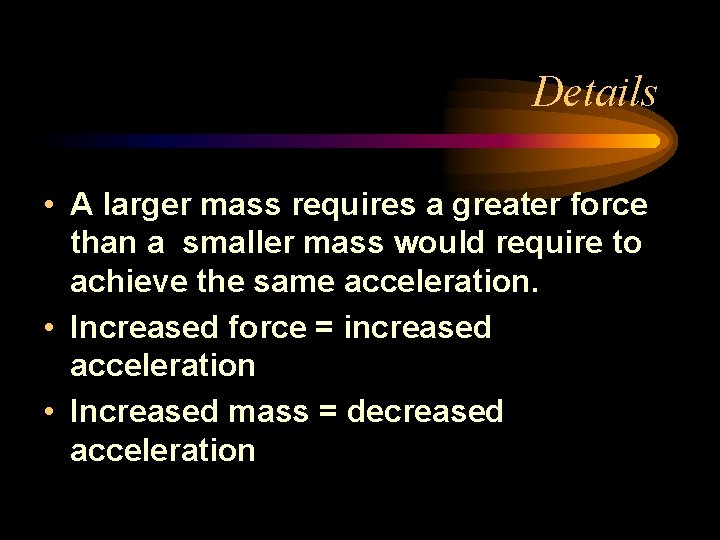
Details • A larger mass requires a greater force than a smaller mass would require to achieve the same acceleration. • Increased force = increased acceleration • Increased mass = decreased acceleration
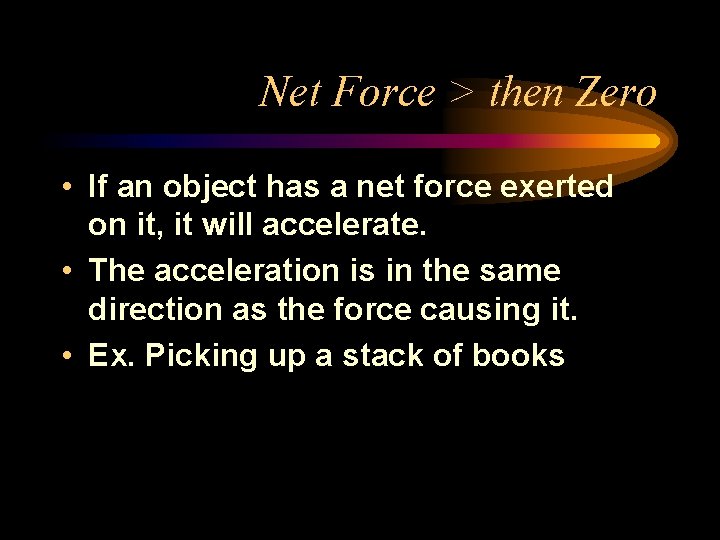
Net Force > then Zero • If an object has a net force exerted on it, it will accelerate. • The acceleration is in the same direction as the force causing it. • Ex. Picking up a stack of books
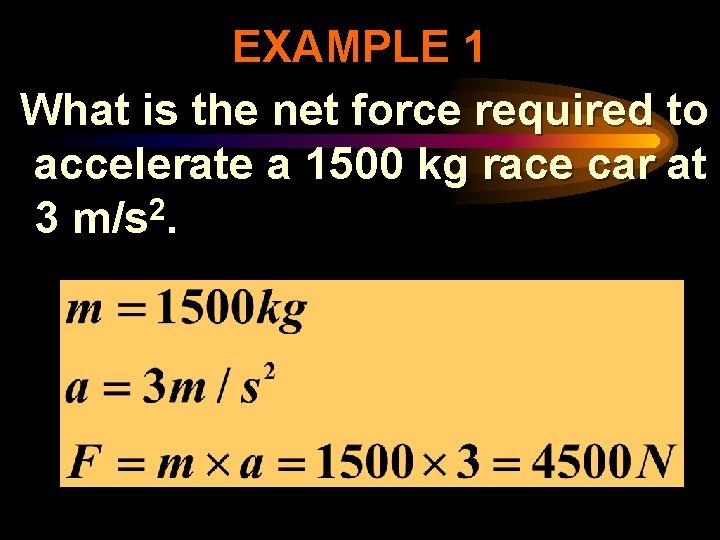
EXAMPLE 1 What is the net force required to accelerate a 1500 kg race car at 2 3 m/s.
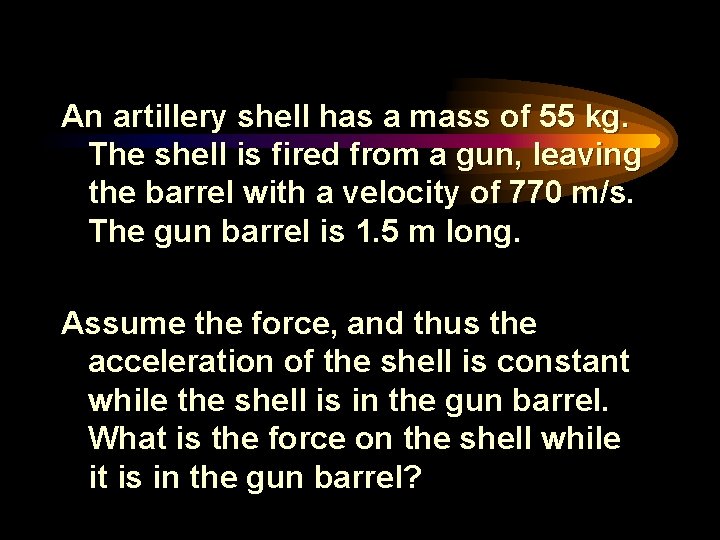
An artillery shell has a mass of 55 kg. The shell is fired from a gun, leaving the barrel with a velocity of 770 m/s. The gun barrel is 1. 5 m long. Assume the force, and thus the acceleration of the shell is constant while the shell is in the gun barrel. What is the force on the shell while it is in the gun barrel?
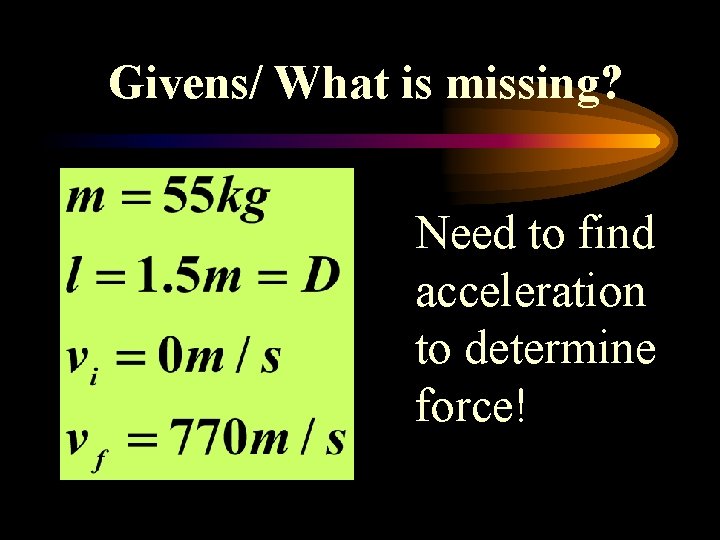
Givens/ What is missing? Need to find acceleration to determine force!
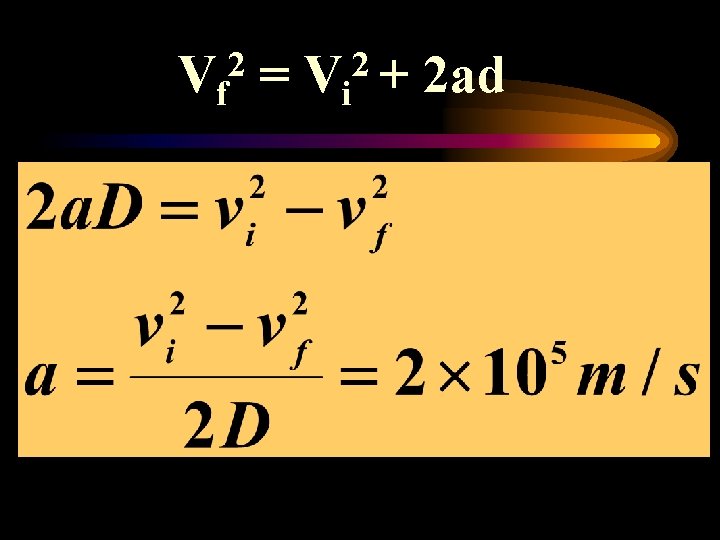
Vf = 2 2 Vi + 2 ad
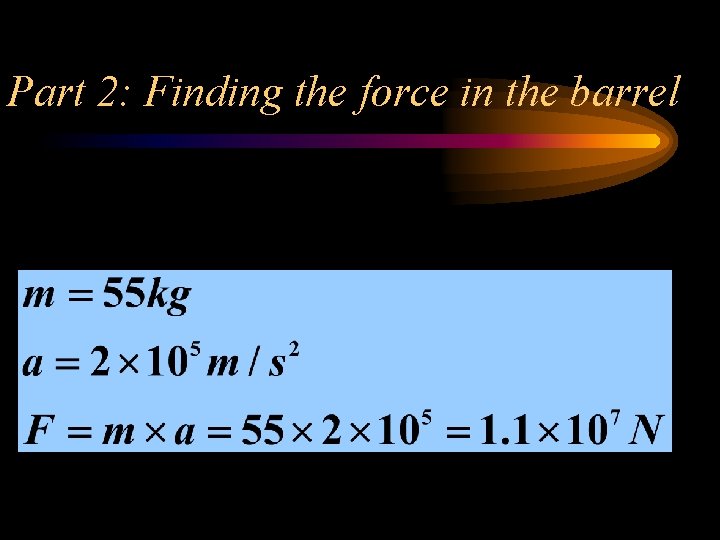
Part 2: Finding the force in the barrel
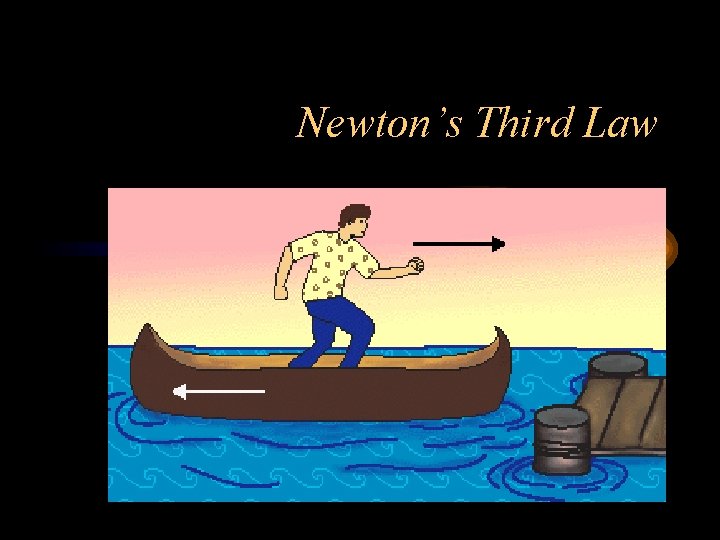
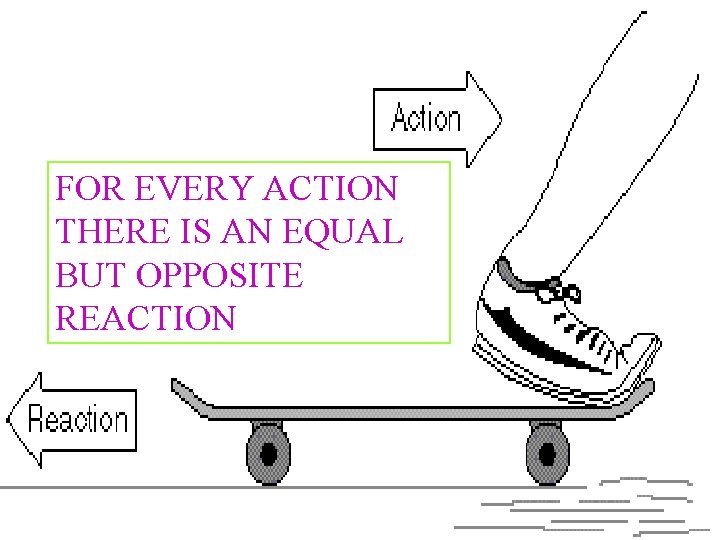
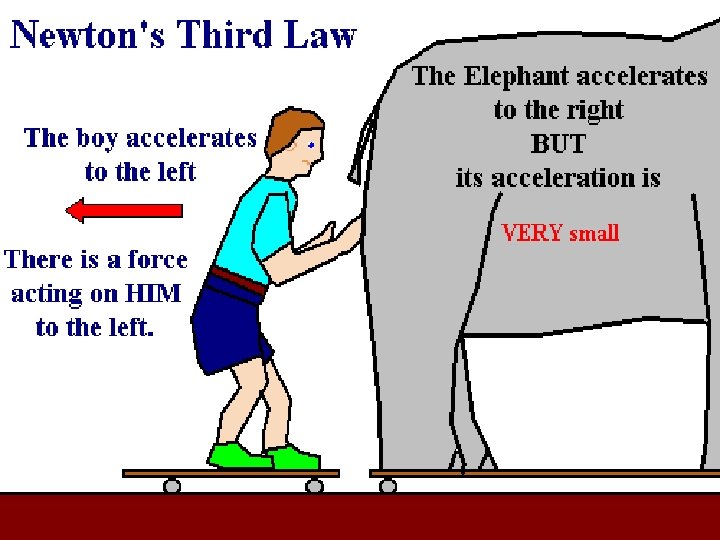
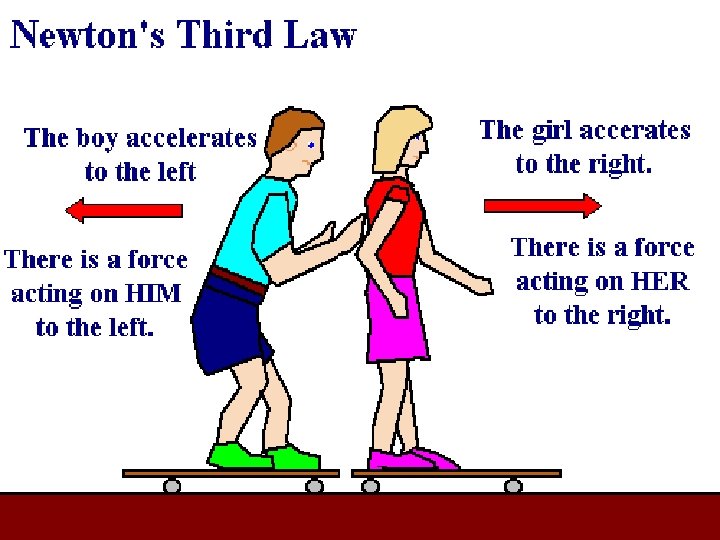
Newton’s Third Law
FOR EVERY ACTION THERE IS AN EQUAL BUT OPPOSITE REACTION