
FORCES OF MOTION What Makes Things Move Who
- Slides: 9
FORCES OF MOTION
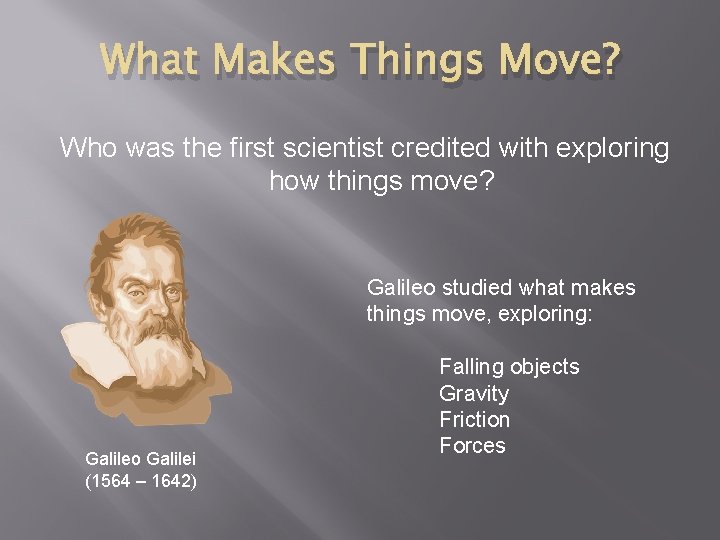
What Makes Things Move? Who was the first scientist credited with exploring how things move? Galileo studied what makes things move, exploring: Galileo Galilei (1564 – 1642) Falling objects Gravity Friction Forces
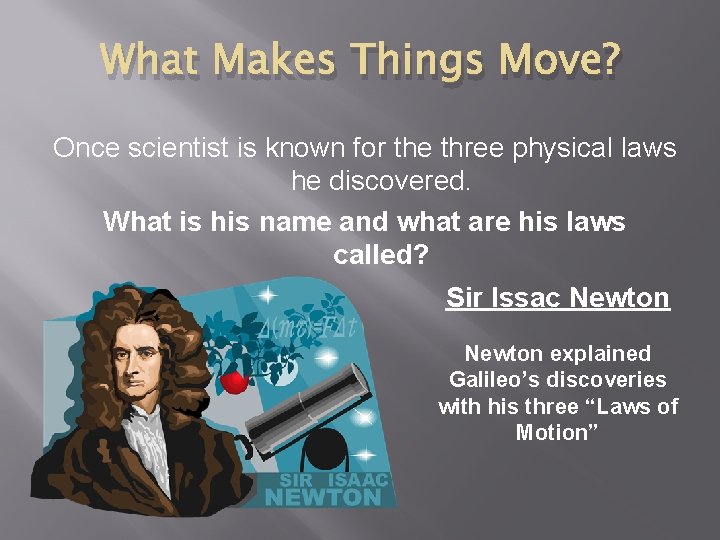
What Makes Things Move? Once scientist is known for the three physical laws he discovered. What is his name and what are his laws called? Sir Issac Newton explained Galileo’s discoveries with his three “Laws of Motion”
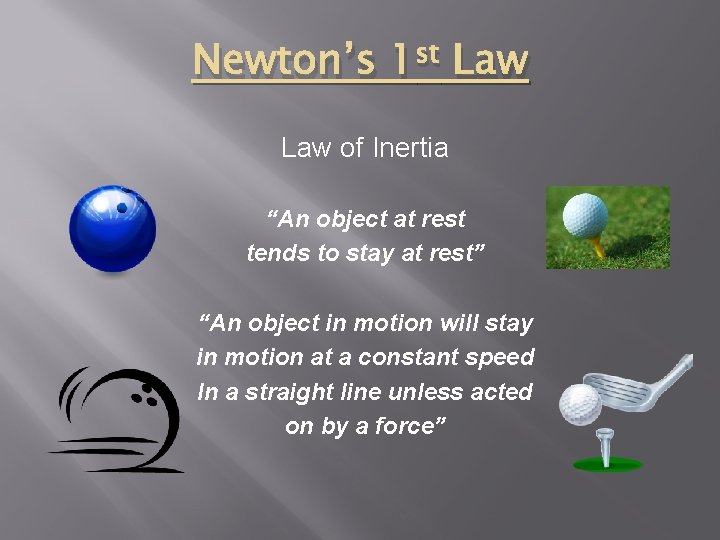
Newton’s 1 st Law of Inertia “An object at rest tends to stay at rest” “An object in motion will stay in motion at a constant speed In a straight line unless acted on by a force”
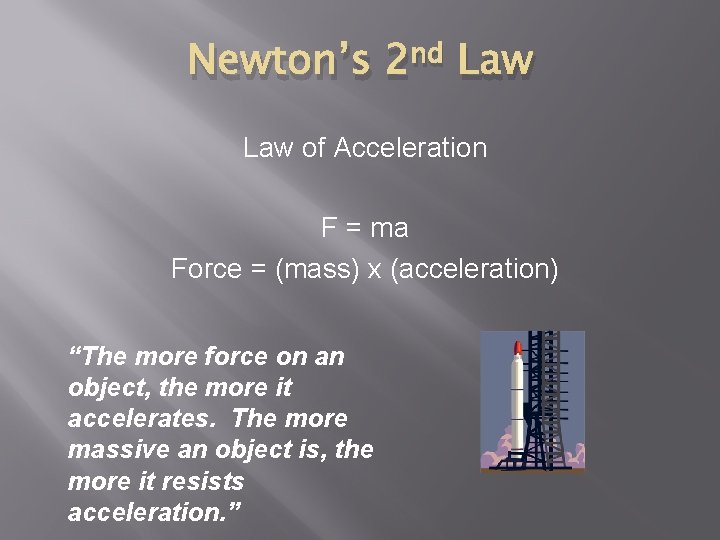
Newton’s 2 nd Law of Acceleration F = ma Force = (mass) x (acceleration) “The more force on an object, the more it accelerates. The more massive an object is, the more it resists acceleration. ”
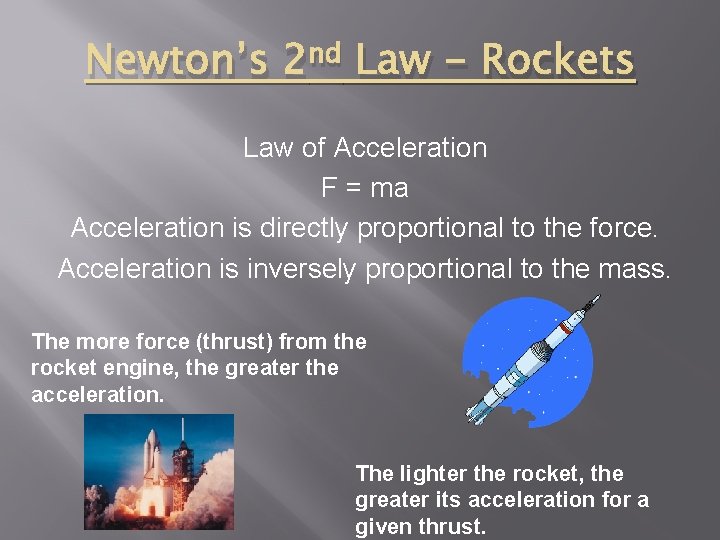
Newton’s 2 nd Law - Rockets Law of Acceleration F = ma Acceleration is directly proportional to the force. Acceleration is inversely proportional to the mass. The more force (thrust) from the rocket engine, the greater the acceleration. The lighter the rocket, the greater its acceleration for a given thrust.
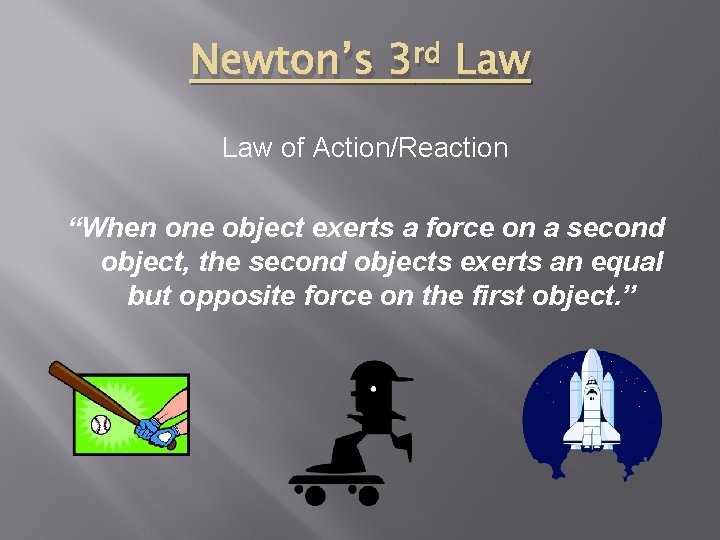
Newton’s 3 rd Law of Action/Reaction “When one object exerts a force on a second object, the second objects exerts an equal but opposite force on the first object. ”
Forces acting on a Rocket
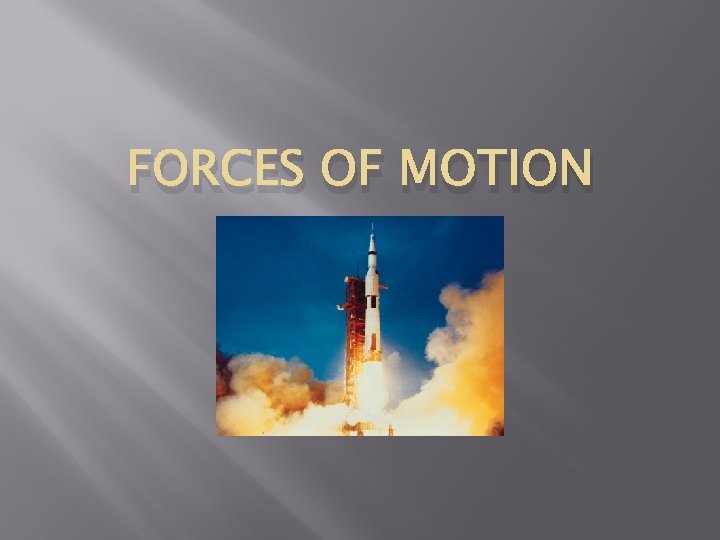
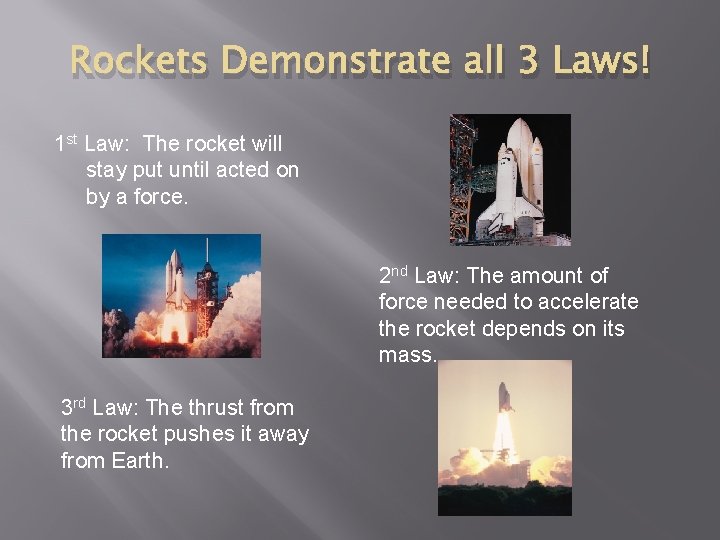
Rockets Demonstrate all 3 Laws! 1 st Law: The rocket will stay put until acted on by a force. 2 nd Law: The amount of force needed to accelerate the rocket depends on its mass. 3 rd Law: The thrust from the rocket pushes it away from Earth.