
Forces of evolution migration and drift How can
- Slides: 30
Forces of evolution: migration and drift How can unfavourable alleles become common in a population? PKU: hypothesis 3
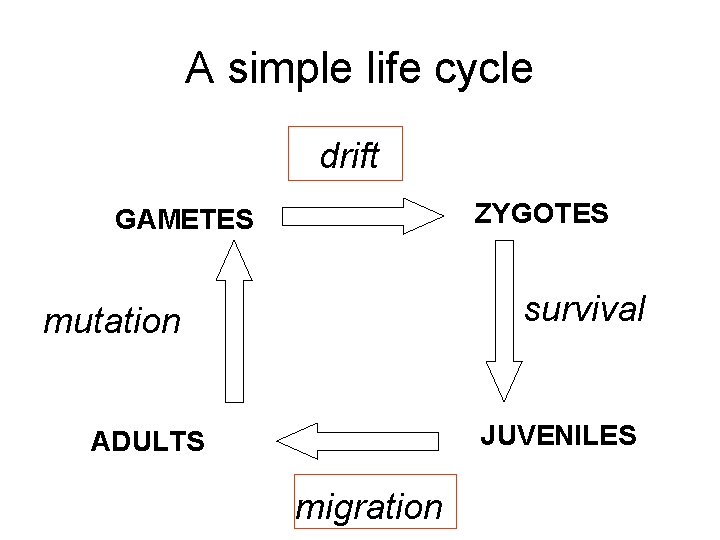
A simple life cycle drift ZYGOTES GAMETES survival mutation JUVENILES ADULTS migration
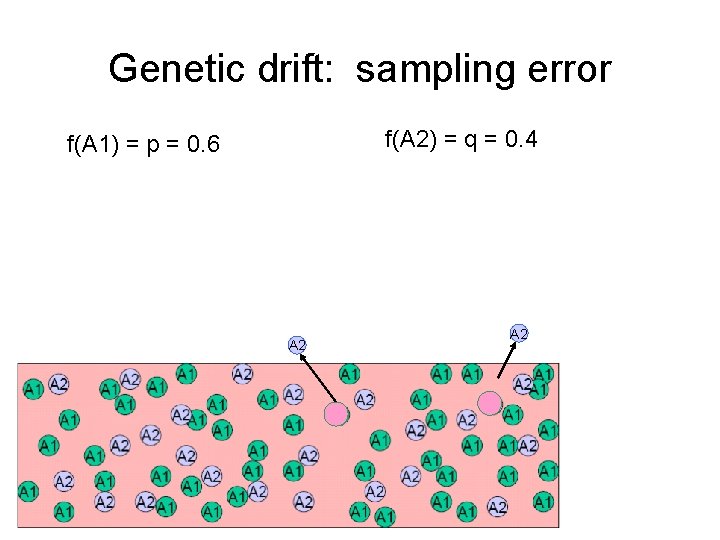
Genetic drift: sampling error f(A 2) = q = 0. 4 f(A 1) = p = 0. 6 A 2 adults A 2 juveniles
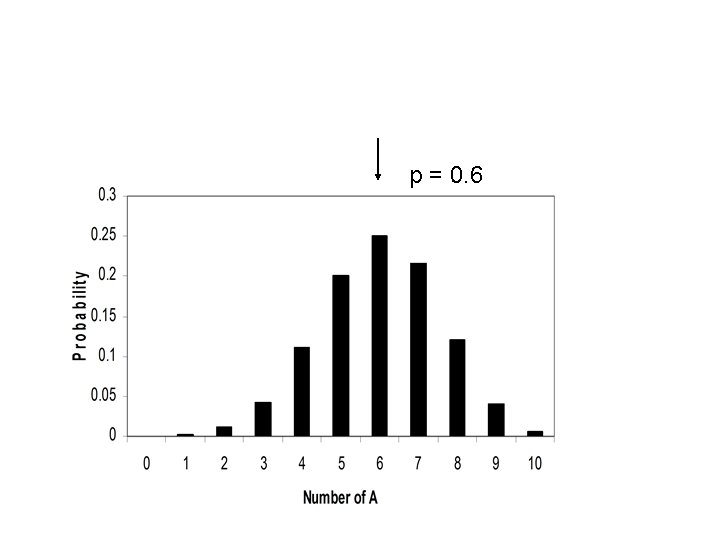
p = 0. 6
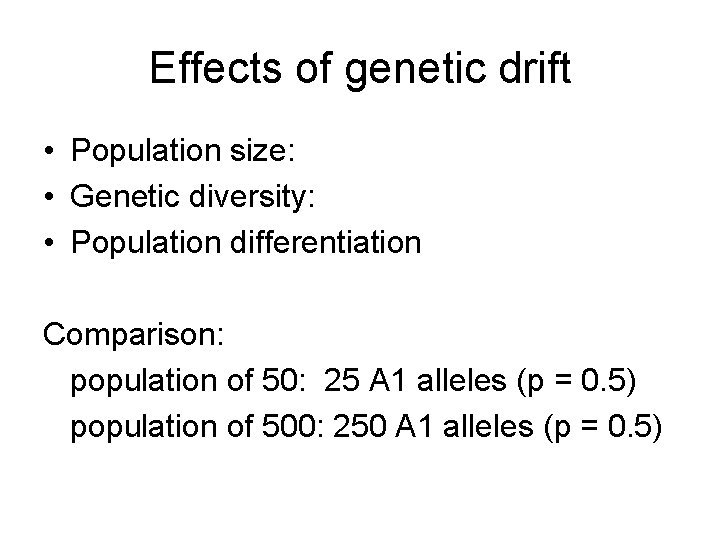
Effects of genetic drift • Population size: • Genetic diversity: • Population differentiation Comparison: population of 50: 25 A 1 alleles (p = 0. 5) population of 500: 250 A 1 alleles (p = 0. 5)
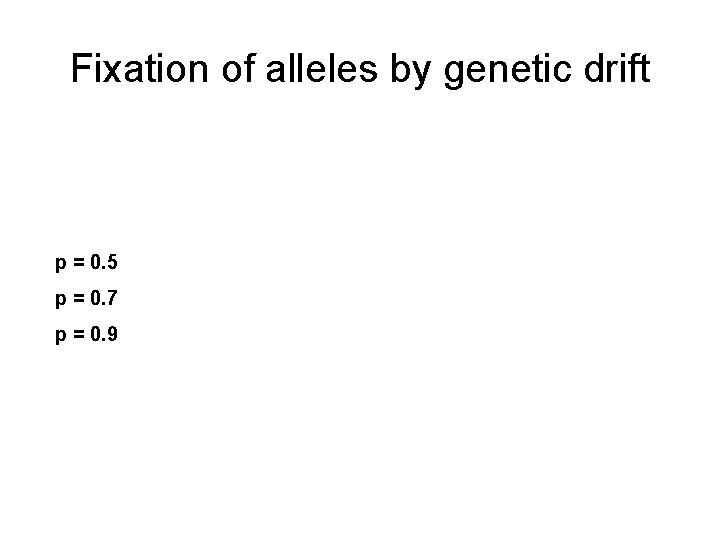
Fixation of alleles by genetic drift p = 0. 5 p = 0. 7 p = 0. 9
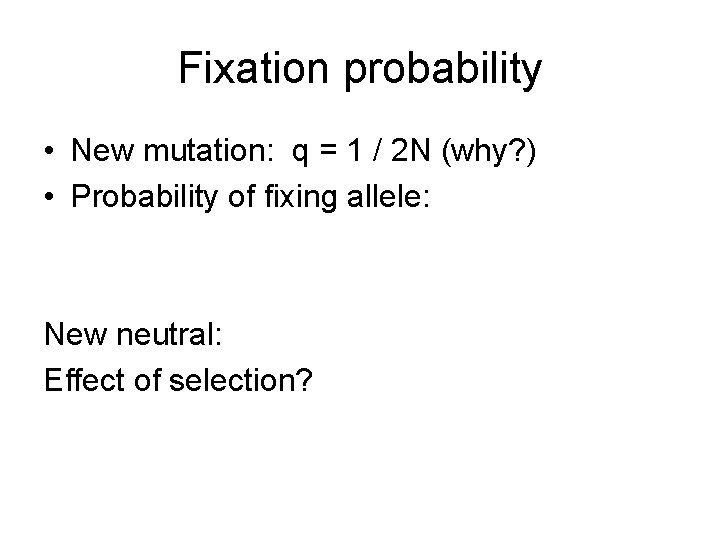
Fixation probability • New mutation: q = 1 / 2 N (why? ) • Probability of fixing allele: New neutral: Effect of selection?
Extreme case of drift: founder effects • Pingelap:
Drift and heterozygosity • Heterozygosity:
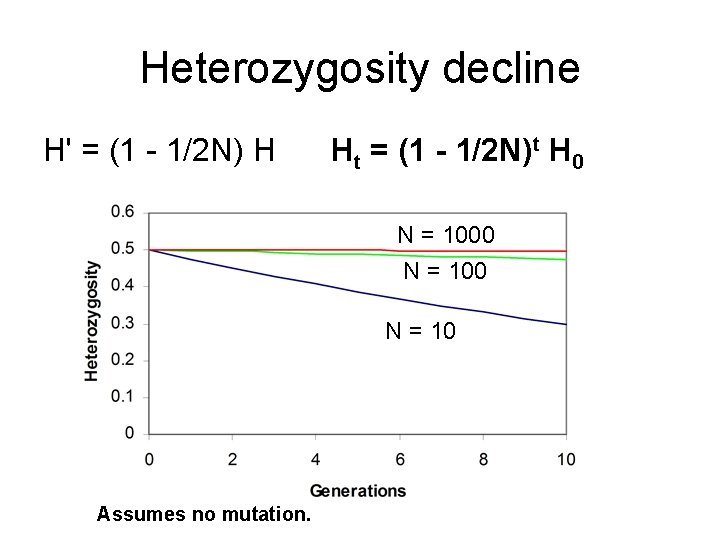
Heterozygosity decline H' = (1 - 1/2 N) H Ht = (1 - 1/2 N)t H 0 N = 100 N = 10 Assumes no mutation.
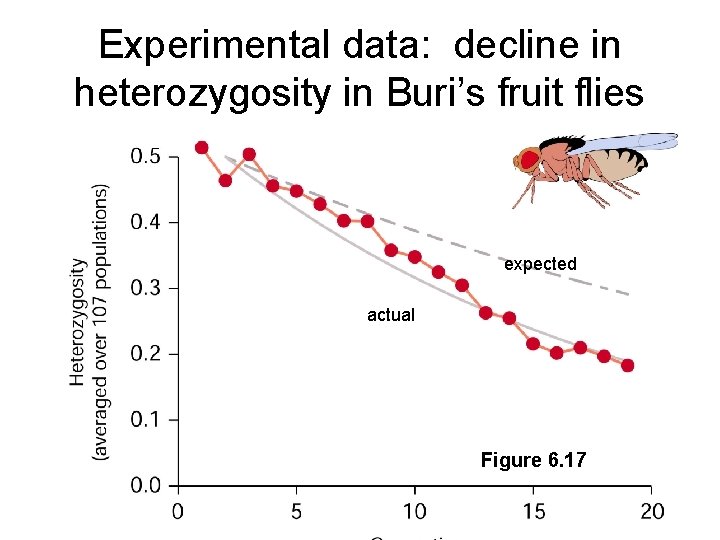
Experimental data: decline in heterozygosity in Buri’s fruit flies expected actual Figure 6. 17
Low-heterozygous populations and effective population size (Ne)
Why is the effective population size lower than the census population size? I. Example: N = 20, 50, 2000, 20000.
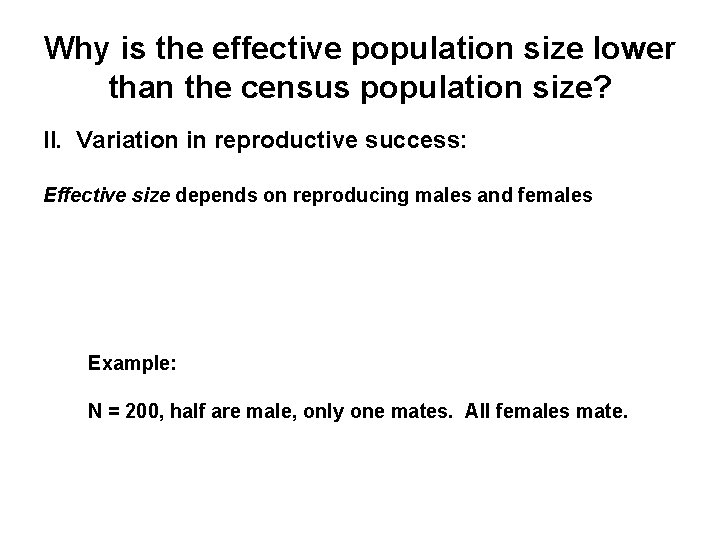
Why is the effective population size lower than the census population size? II. Variation in reproductive success: Effective size depends on reproducing males and females Example: N = 200, half are male, only one mates. All females mate.
2 nd Problem for small populations: inbreeding
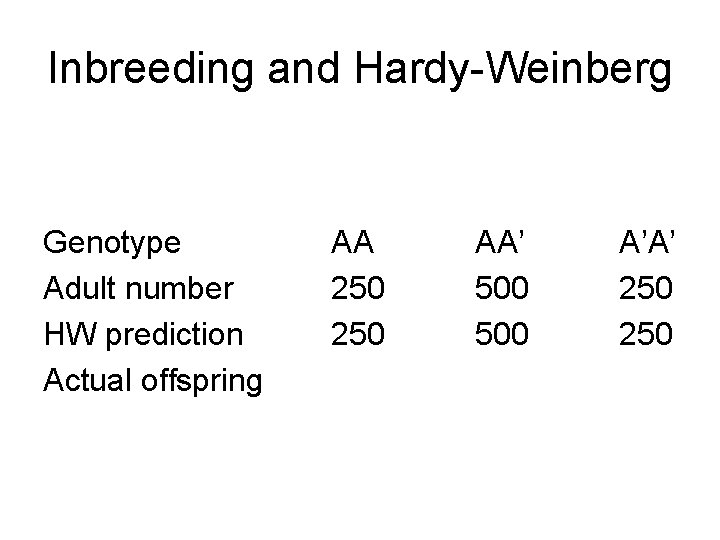
Inbreeding and Hardy-Weinberg Genotype Adult number HW prediction Actual offspring AA 250 AA’ 500 A’A’ 250
Outcome of inbreeding: inbreeding depression
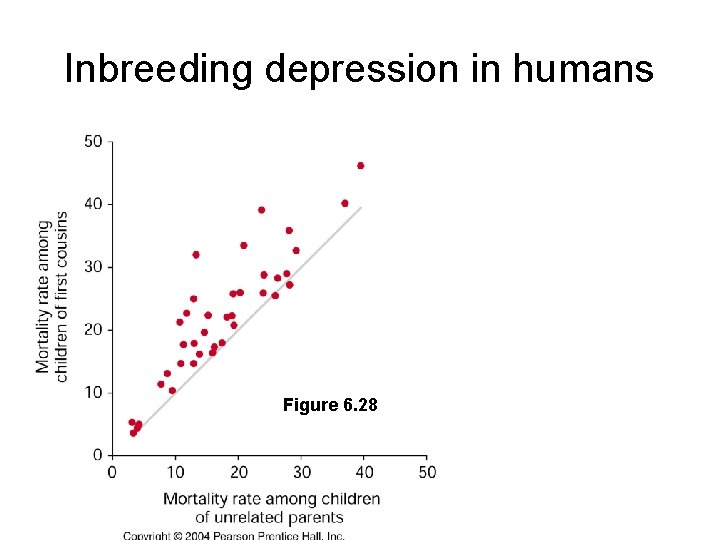
Inbreeding depression in humans Figure 6. 28
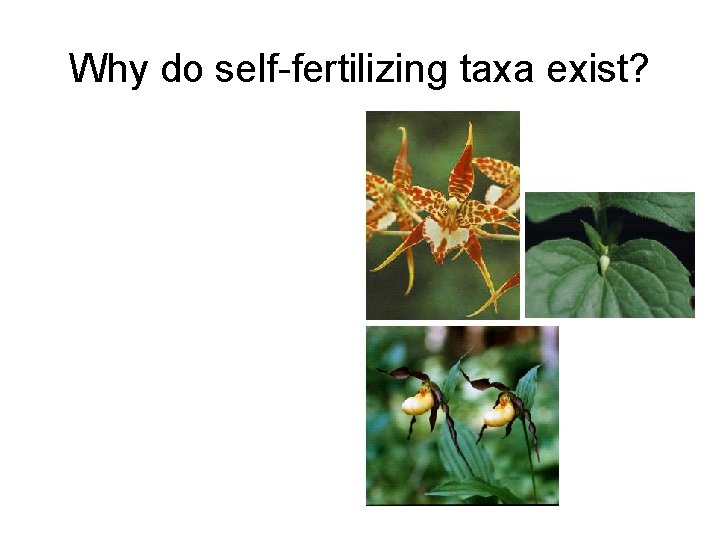
Why do self-fertilizing taxa exist?
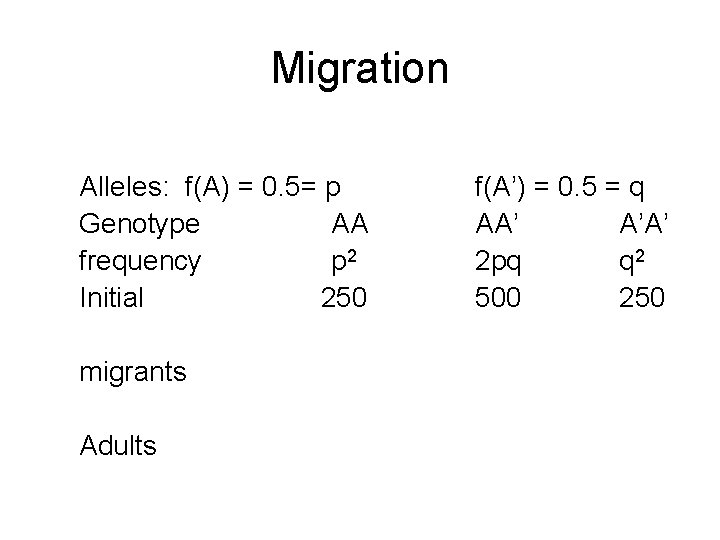
Migration Alleles: f(A) = 0. 5= p Genotype AA frequency p 2 Initial 250 migrants Adults f(A’) = 0. 5 = q AA’ A’A’ 2 pq q 2 500 250
Migration and selection: • Imagine one species in two different environments • Effect of different selection pressures? • Effect of migration?
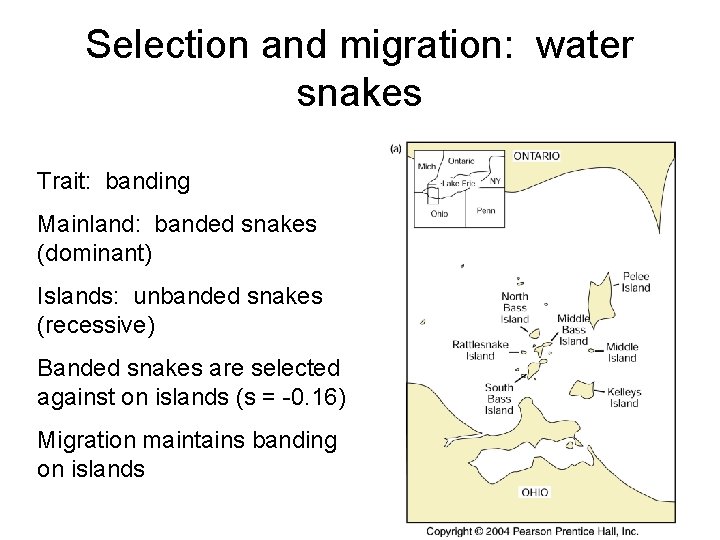
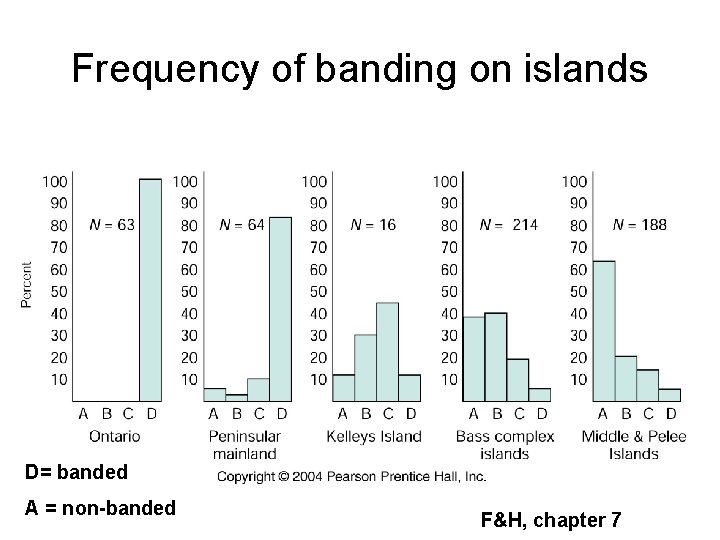
Selection and migration: water snakes Trait: banding Mainland: banded snakes (dominant) Islands: unbanded snakes (recessive) Banded snakes are selected against on islands (s = -0. 16) Migration maintains banding on islands
Frequency of banding on islands D= banded A = non-banded F&H, chapter 7
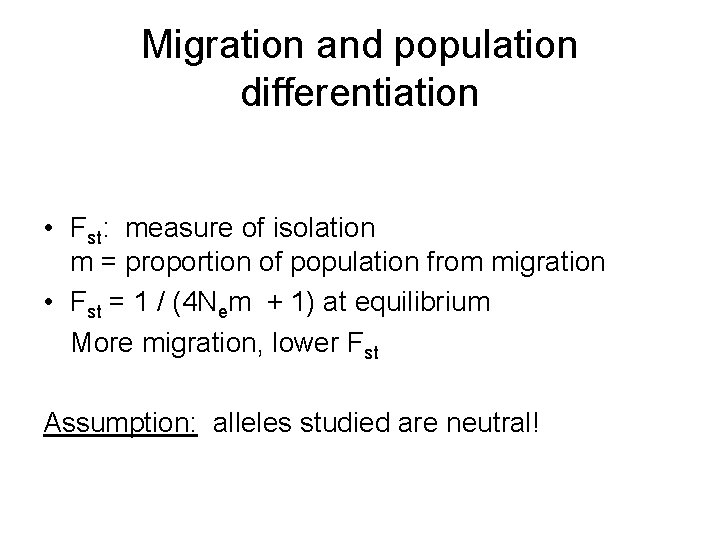
Migration and population differentiation • Fst: measure of isolation m = proportion of population from migration • Fst = 1 / (4 Nem + 1) at equilibrium More migration, lower Fst Assumption: alleles studied are neutral!
A few migrants homogenize things nicely • FST – measure of genetic population differentiation
Selection and drift: new mutations Pop. G
Selection and drift: new mutations Pop. G
Summary • Migration: – – changes allele frequencies in a population can increase genetic diversity decreases differences between populations can work against selection to maintain unfavorable alleles • Drift – decreases genetic diversity – more important in small populations – can lead to loss of beneficial mutations or fixation of deleterious mutations – increases differences between populations
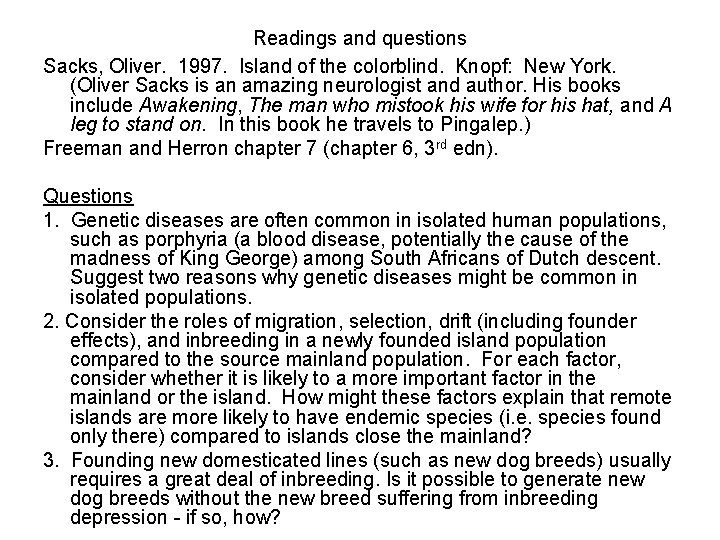
Readings and questions Sacks, Oliver. 1997. Island of the colorblind. Knopf: New York. (Oliver Sacks is an amazing neurologist and author. His books include Awakening, The man who mistook his wife for his hat, and A leg to stand on. In this book he travels to Pingalep. ) Freeman and Herron chapter 7 (chapter 6, 3 rd edn). Questions 1. Genetic diseases are often common in isolated human populations, such as porphyria (a blood disease, potentially the cause of the madness of King George) among South Africans of Dutch descent. Suggest two reasons why genetic diseases might be common in isolated populations. 2. Consider the roles of migration, selection, drift (including founder effects), and inbreeding in a newly founded island population compared to the source mainland population. For each factor, consider whether it is likely to a more important factor in the mainland or the island. How might these factors explain that remote islands are more likely to have endemic species (i. e. species found only there) compared to islands close the mainland? 3. Founding new domesticated lines (such as new dog breeds) usually requires a great deal of inbreeding. Is it possible to generate new dog breeds without the new breed suffering from inbreeding depression - if so, how?
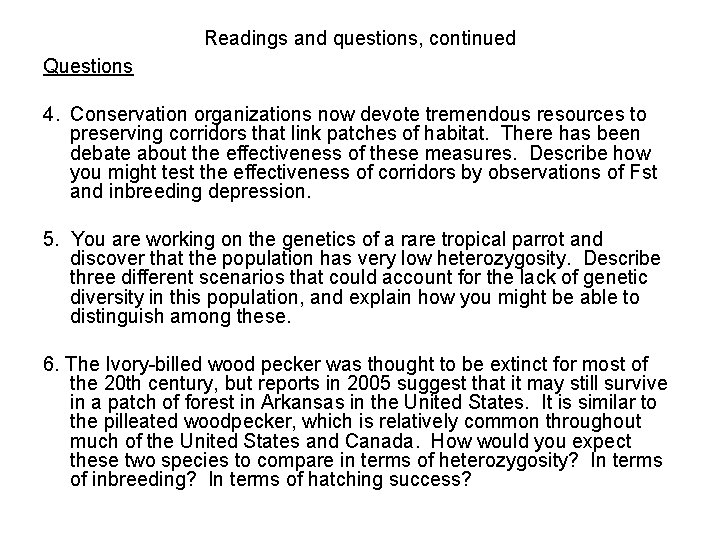
Readings and questions, continued Questions 4. Conservation organizations now devote tremendous resources to preserving corridors that link patches of habitat. There has been debate about the effectiveness of these measures. Describe how you might test the effectiveness of corridors by observations of Fst and inbreeding depression. 5. You are working on the genetics of a rare tropical parrot and discover that the population has very low heterozygosity. Describe three different scenarios that could account for the lack of genetic diversity in this population, and explain how you might be able to distinguish among these. 6. The Ivory-billed wood pecker was thought to be extinct for most of the 20 th century, but reports in 2005 suggest that it may still survive in a patch of forest in Arkansas in the United States. It is similar to the pilleated woodpecker, which is relatively common throughout much of the United States and Canada. How would you expect these two species to compare in terms of heterozygosity? In terms of inbreeding? In terms of hatching success?