
Forces Notes 4 Fundamental Forces Gravity attraction of


- Slides: 30
Forces Notes
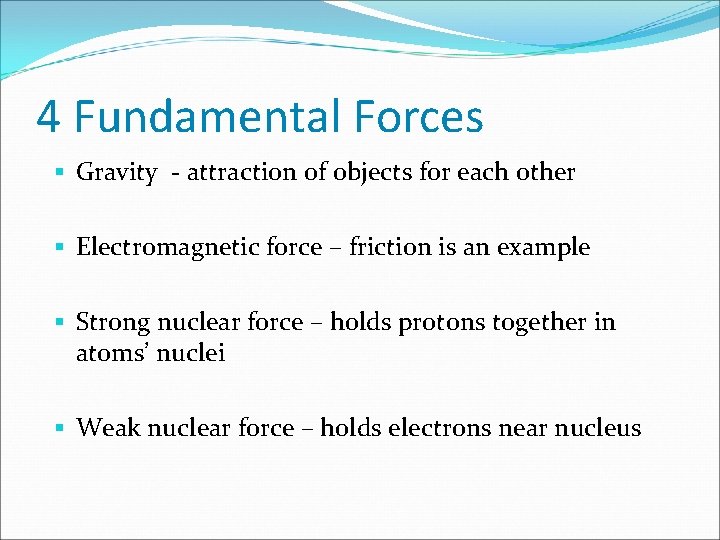
4 Fundamental Forces Gravity - attraction of objects for each other Electromagnetic force – friction is an example Strong nuclear force – holds protons together in atoms’ nuclei Weak nuclear force – holds electrons near nucleus
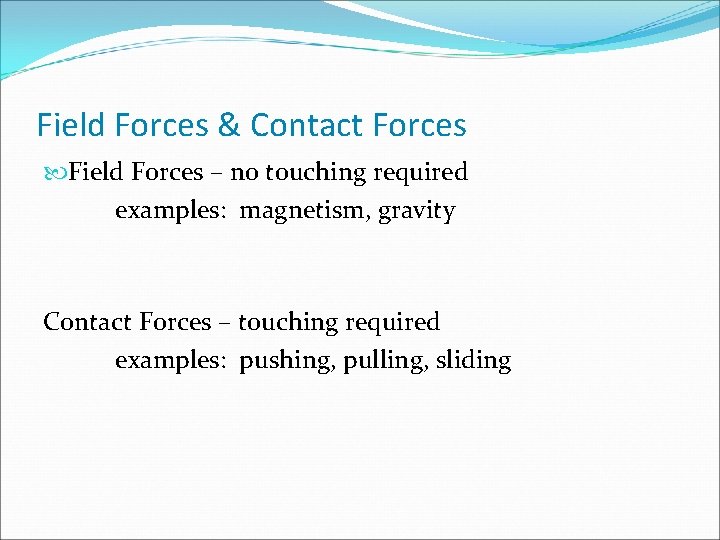
Field Forces & Contact Forces Field Forces – no touching required examples: magnetism, gravity Contact Forces – touching required examples: pushing, pulling, sliding
Field Forces – Mag. Lev Trains
Maglev http: //www. youtube. com/watch? v=we. Wm. Tldr. Oyo
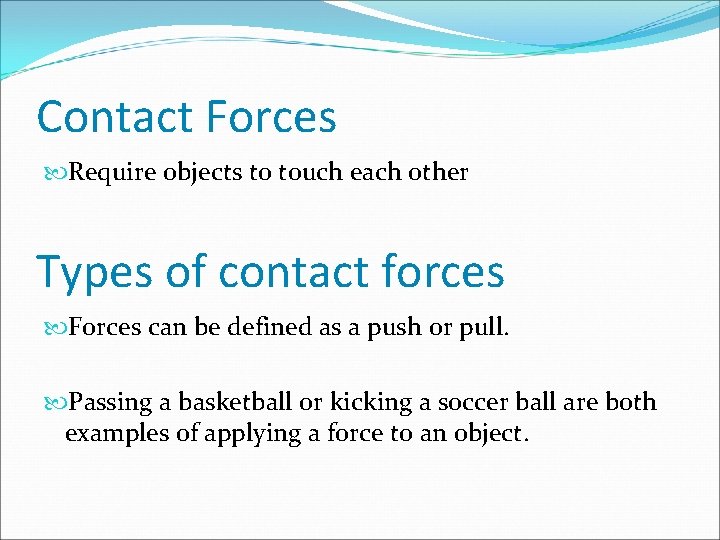
Contact Forces Require objects to touch each other Types of contact forces Forces can be defined as a push or pull. Passing a basketball or kicking a soccer ball are both examples of applying a force to an object.
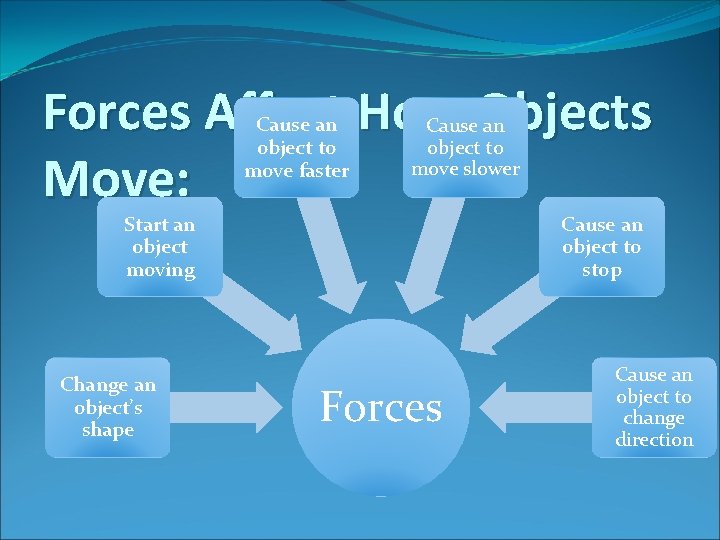
Forces Affect How Objects Move: Cause an object to move faster Cause an object to move slower Start an object moving Change an object’s shape Cause an object to stop Forces Cause an object to change direction
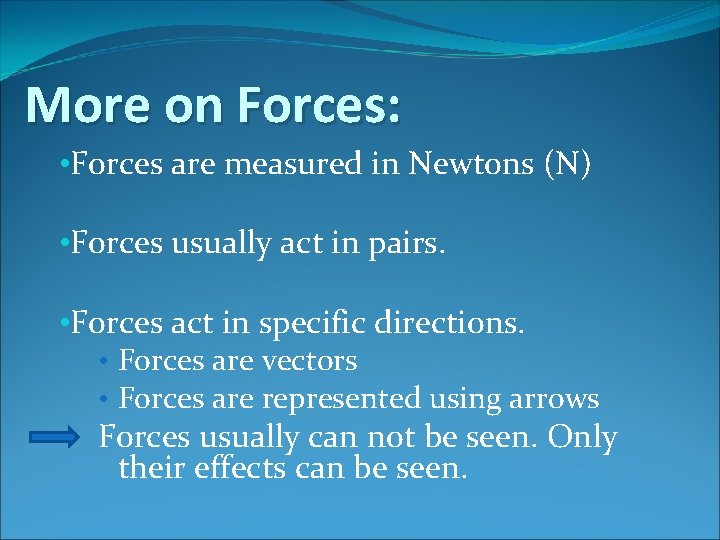
More on Forces: • Forces are measured in Newtons (N) • Forces usually act in pairs. • Forces act in specific directions. • Forces are vectors • Forces are represented using arrows Forces usually can not be seen. Only their effects can be seen.
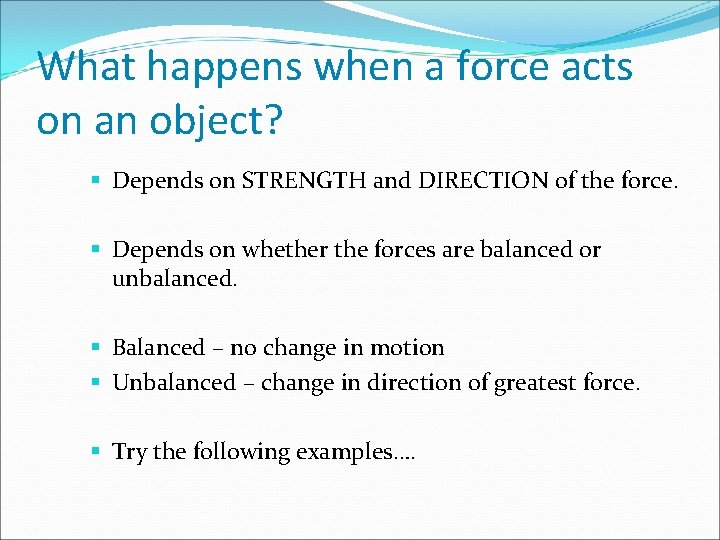
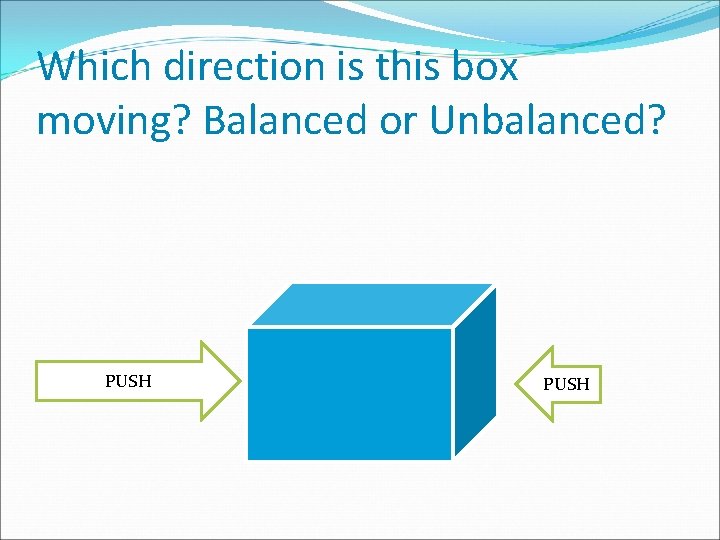
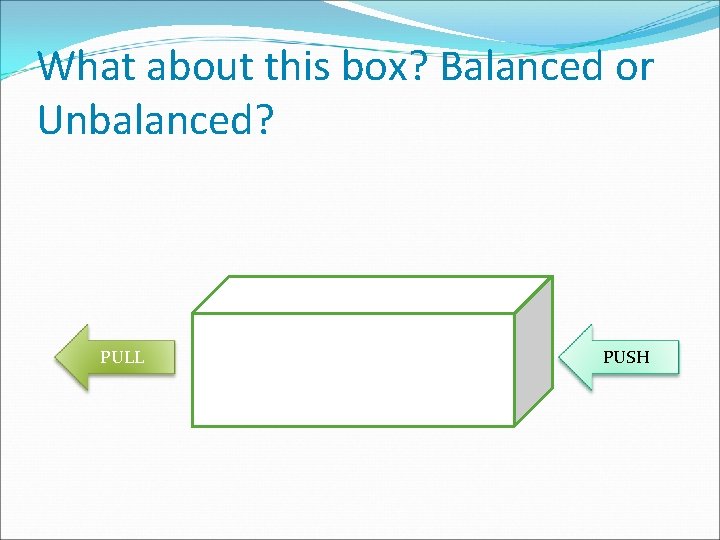
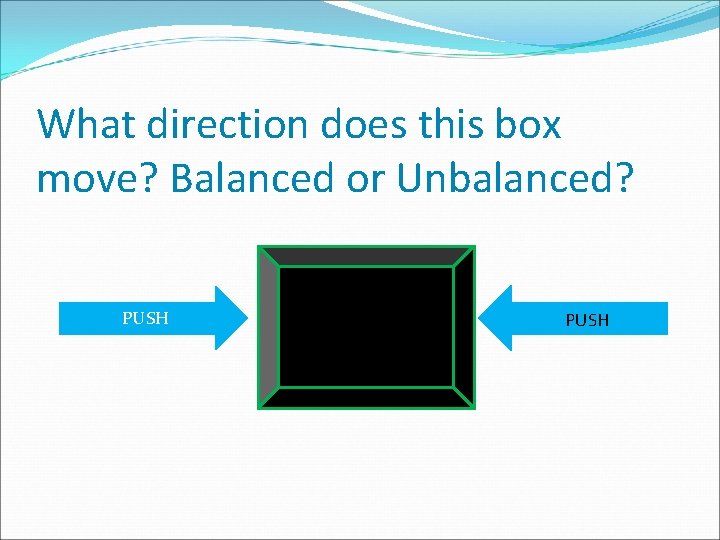
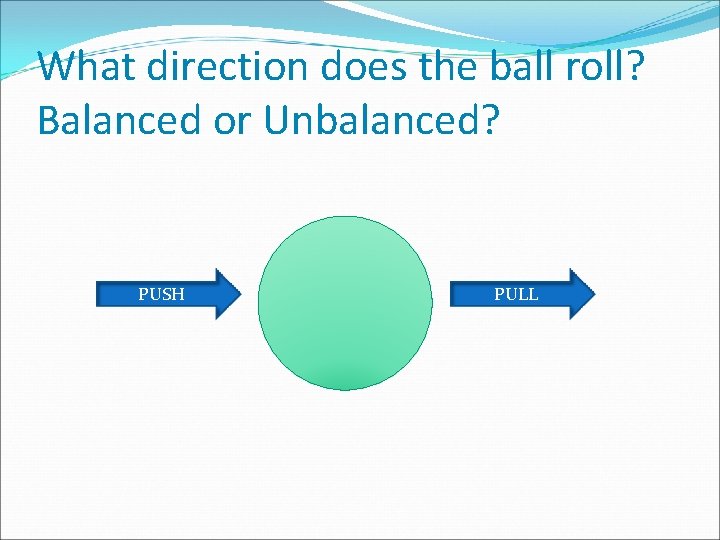
What happens when a force acts on an object? Depends on STRENGTH and DIRECTION of the force. Depends on whether the forces are balanced or unbalanced. Balanced – no change in motion Unbalanced – change in direction of greatest force. Try the following examples….
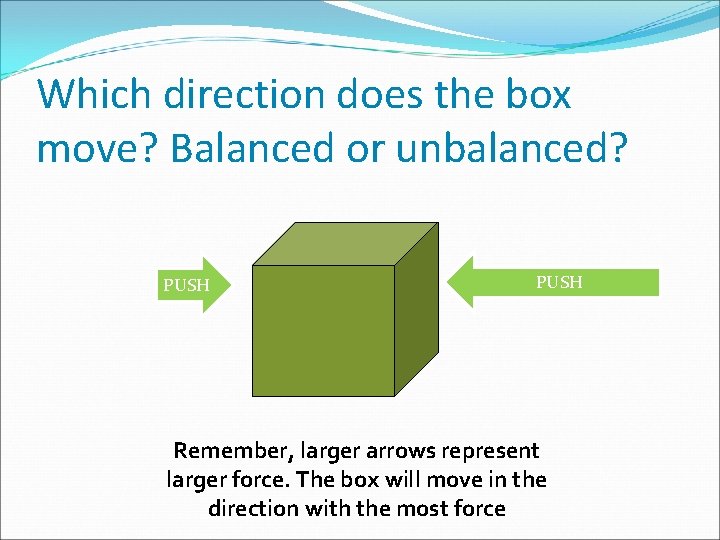
Which direction does the box move? Balanced or unbalanced? PUSH Remember, larger arrows represent larger force. The box will move in the direction with the most force
Which direction is this box moving? Balanced or Unbalanced? PUSH
What about this box? Balanced or Unbalanced? PULL PUSH
What direction does this box move? Balanced or Unbalanced? PUSH
What direction does the ball roll? Balanced or Unbalanced? PUSH PULL
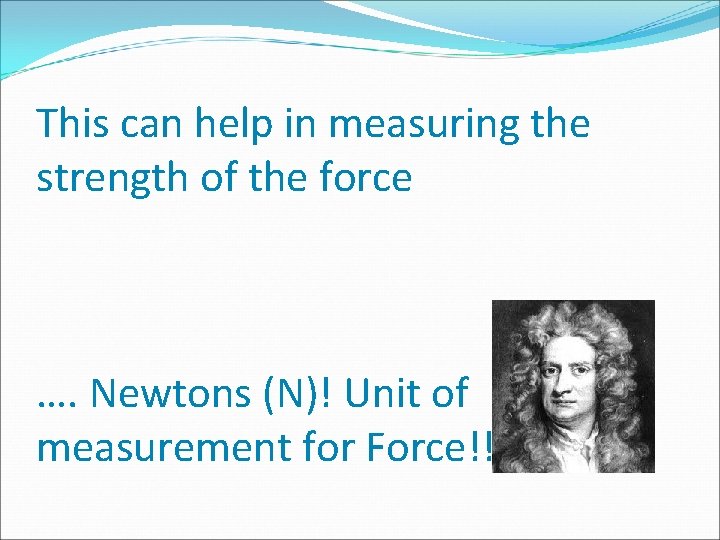
This can help in measuring the strength of the force …. Newtons (N)! Unit of measurement for Force!!
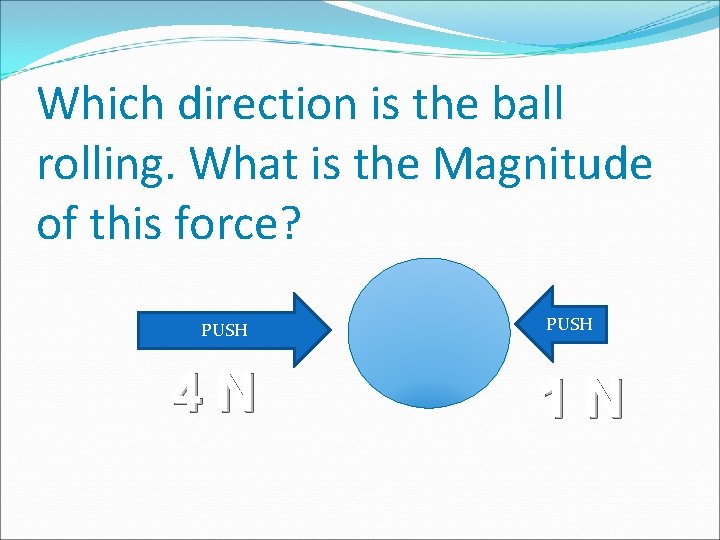
Which direction is the ball rolling. What is the Magnitude of this force? PUSH 4 N PUSH 1 N
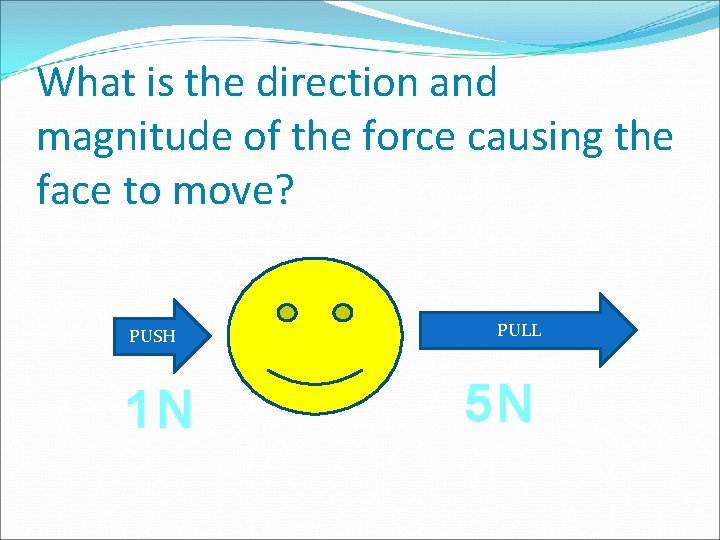
What is the direction and magnitude of the force causing the face to move? PUSH 1 N PULL 5 N
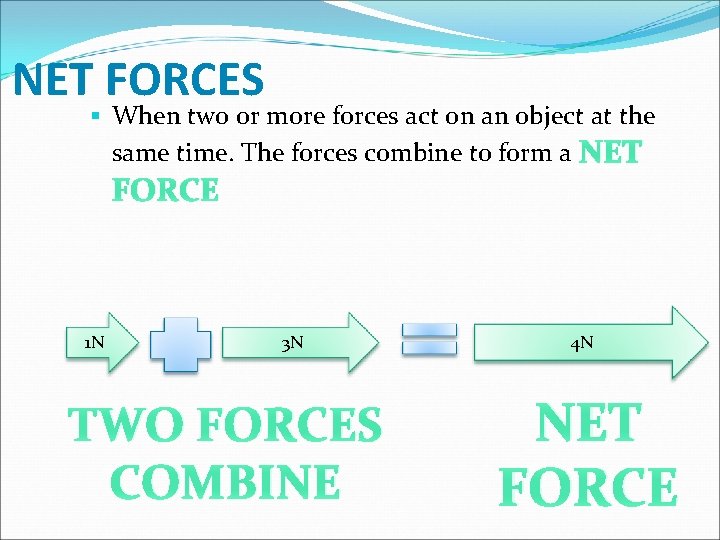
NET FORCES When two or more forces act on an object at the same time. The forces combine to form a NET FORCE 1 N 3 N TWO FORCES COMBINE 4 N NET FORCE
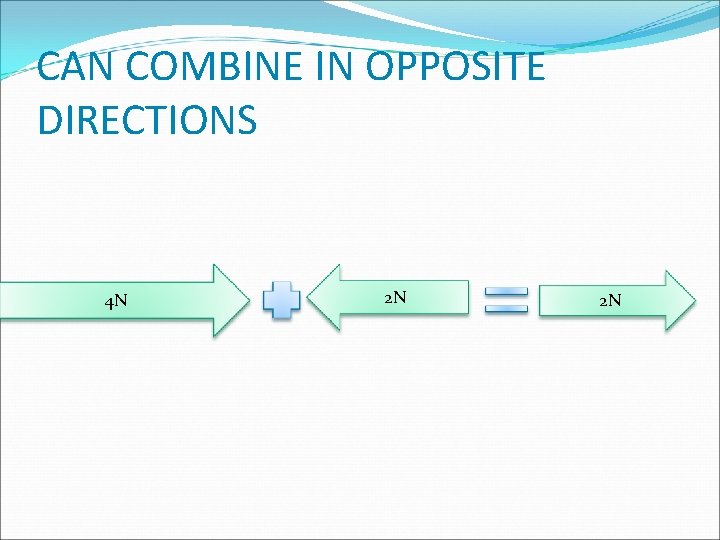
CAN COMBINE IN OPPOSITE DIRECTIONS 4 N 2 N 2 N
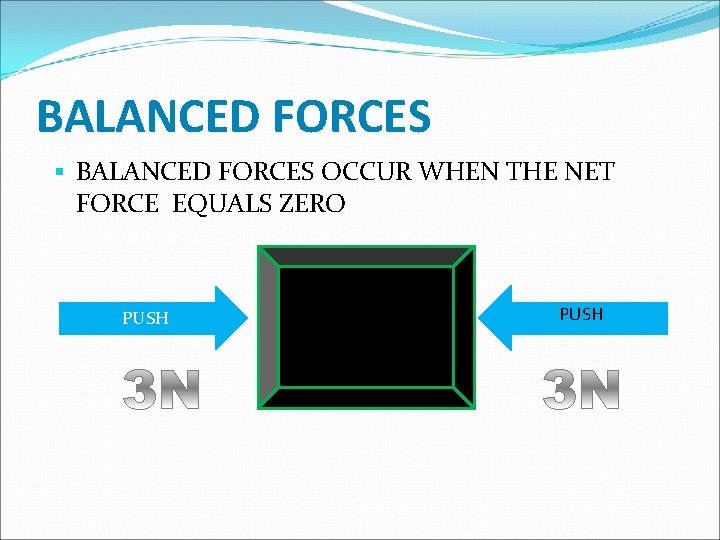
BALANCED FORCES OCCUR WHEN THE NET FORCE EQUALS ZERO PUSH
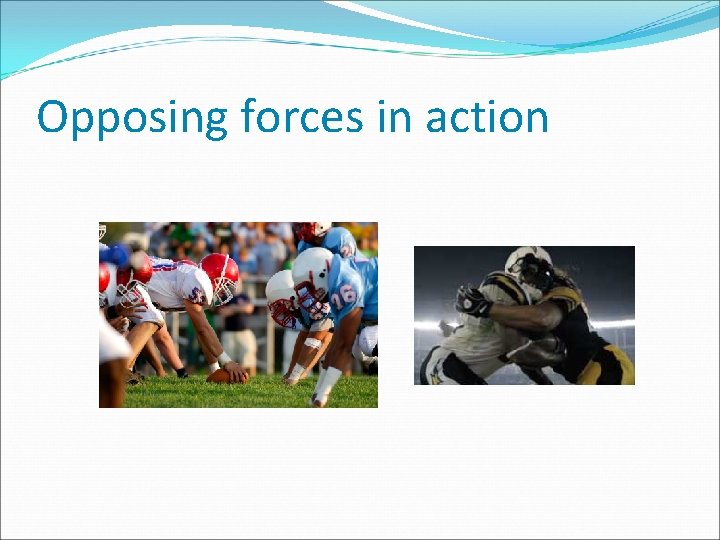
Opposing forces in action
Newton’s Laws of Motion First Law: “An object at rest remains at rest and an object in motion maintains its velocity unless it experiences a net force. ” An object at rest tends to stay at rest. An object in motion tends to stay in motion unless acted on by a net force http: //www. youtube. com/watch? v=cu. G 8 s. Ii. V 8 i. Q&featur e=fvwrel
The First Law and Inertia – the tendency of an object to resist a change in motion unless an outside force acts on the object. Example: Riding in a car, driver slams on the brake, purse on the seat slides to the floor. http: //youtu. be/8 zs. E 3 mp. Z 6 Hw
Newton’s Second Law “The unbalanced force acting on an object equals the object’s mass times its acceleration. ” The unbalanced force on an object determines how much an object speeds up or slows down. Force = mass x acceleration f=ma
F=ma in action http: //www. youtube. com/watch? v=iw. P 4 he. WDhvw
So. . . For equal forces, a larger mass accelerates less. The yellow ball went farther and faster than the red one. It’s easier to push a Smart Car than an Escalade.
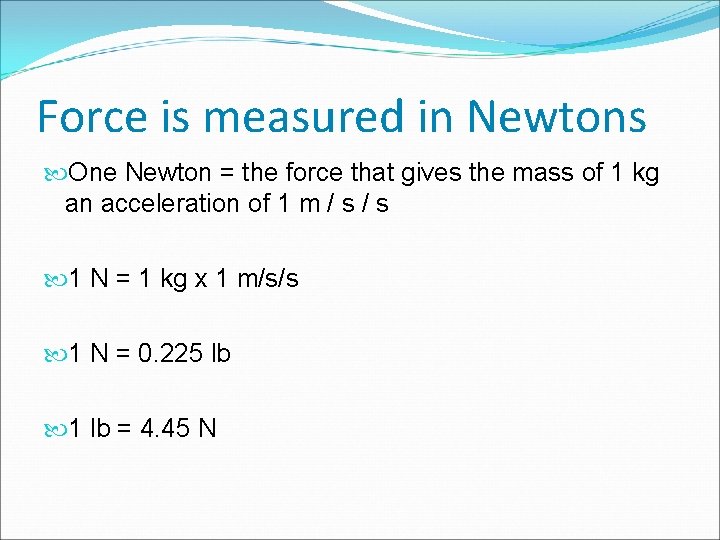
Force is measured in Newtons One Newton = the force that gives the mass of 1 kg an acceleration of 1 m / s 1 N = 1 kg x 1 m/s/s 1 N = 0. 225 lb 1 lb = 4. 45 N
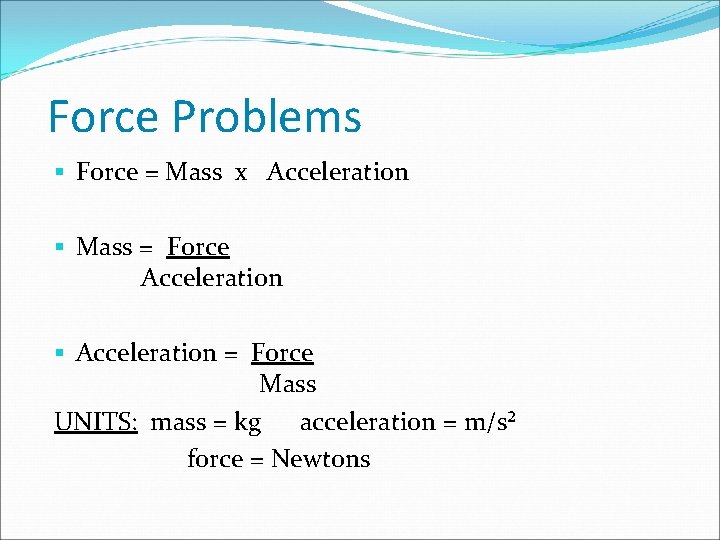
Force Problems Force = Mass x Acceleration Mass = Force Acceleration = Force Mass UNITS: mass = kg acceleration = m/s² force = Newtons
Or instead of learning all three types of problems… just do a triangle!
Now Try Practice Problems