
Forces Introduction Intersections smart car crash stopping distance
- Slides: 31
Forces Introduction • • Intersections smart car crash stopping distance Crash investigation
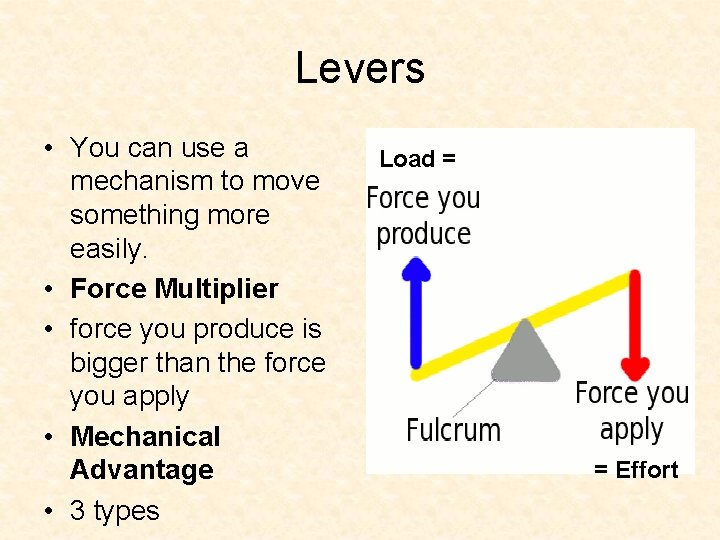
Levers • You can use a mechanism to move something more easily. • Force Multiplier • force you produce is bigger than the force you apply • Mechanical Advantage • 3 types Load = = Effort
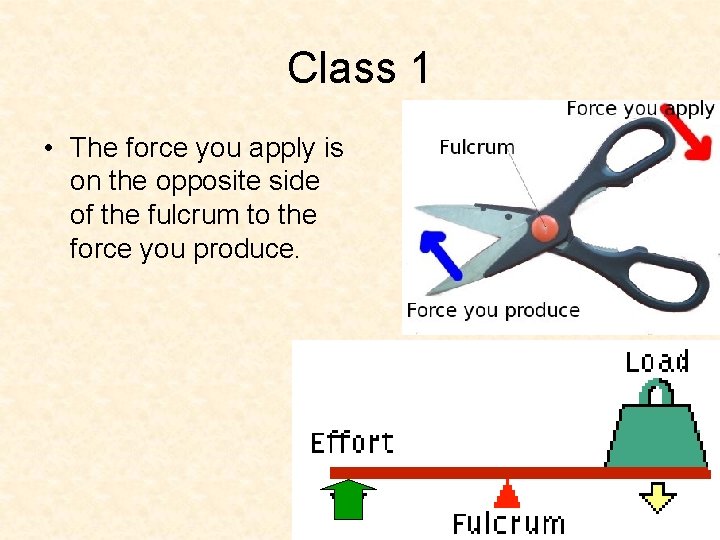
Class 1 • The force you apply is on the opposite side of the fulcrum to the force you produce.
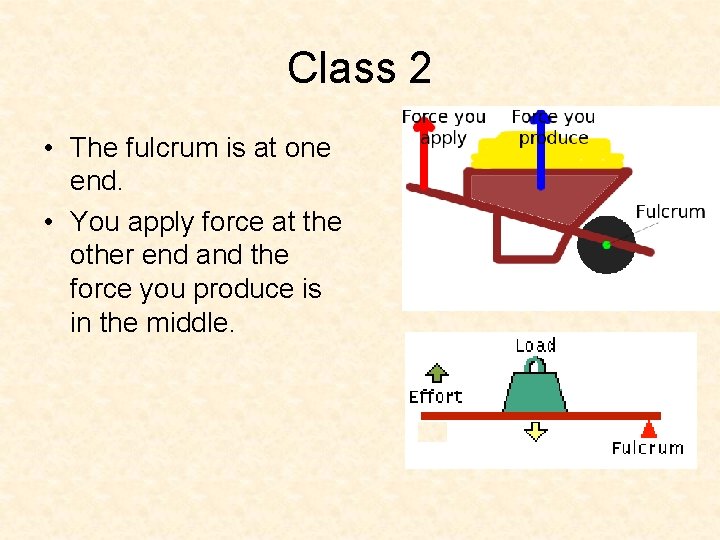
Class 2 • The fulcrum is at one end. • You apply force at the other end and the force you produce is in the middle.
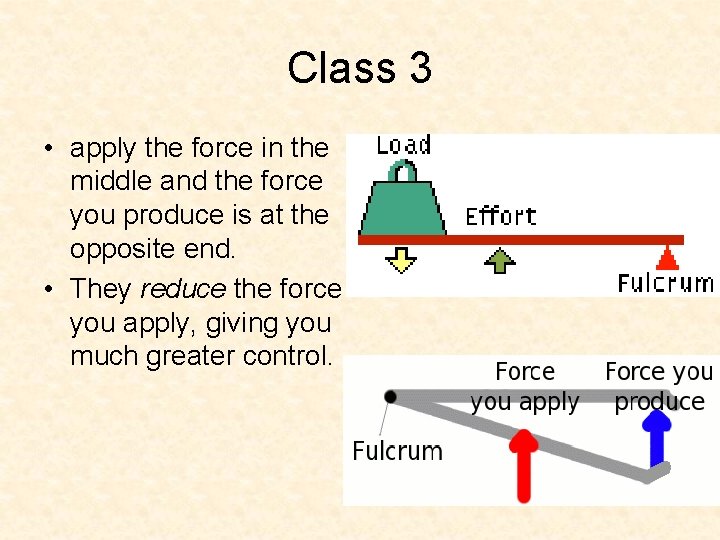
Class 3 • apply the force in the middle and the force you produce is at the opposite end. • They reduce the force you apply, giving you much greater control.
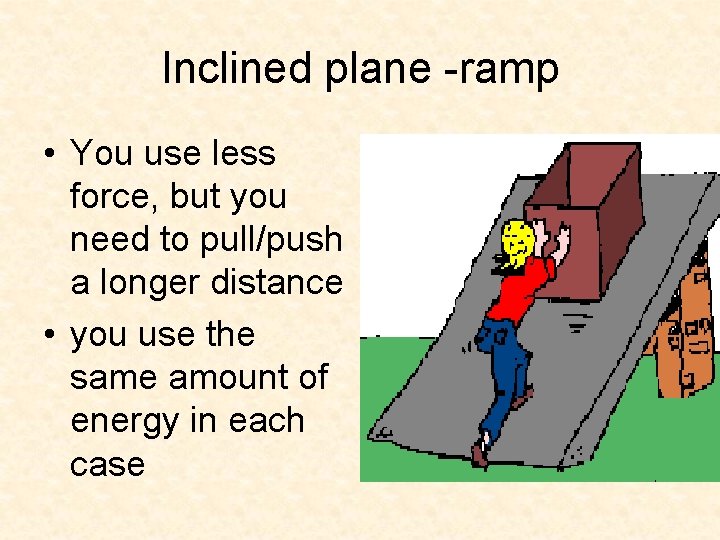
Inclined plane -ramp • You use less force, but you need to pull/push a longer distance • you use the same amount of energy in each case
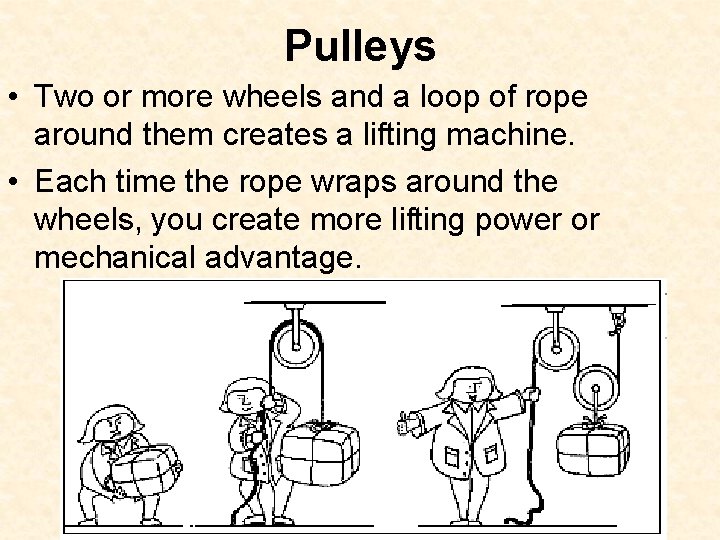
Pulleys • Two or more wheels and a loop of rope around them creates a lifting machine. • Each time the rope wraps around the wheels, you create more lifting power or mechanical advantage.
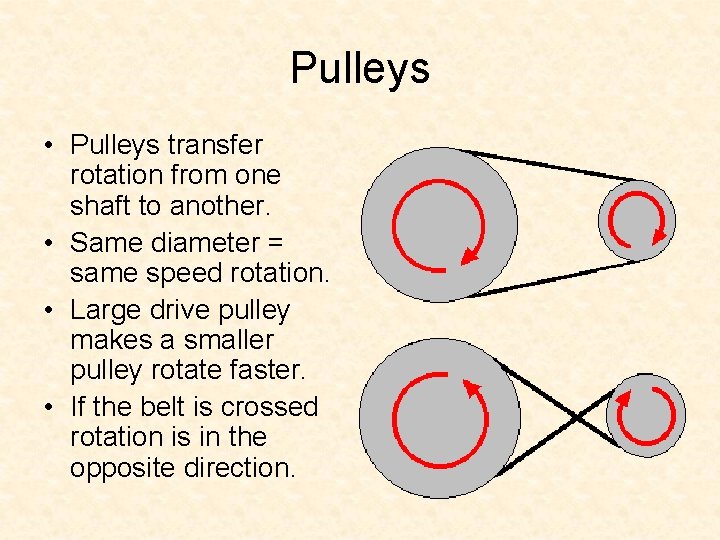
Pulleys • Pulleys transfer rotation from one shaft to another. • Same diameter = same speed rotation. • Large drive pulley makes a smaller pulley rotate faster. • If the belt is crossed rotation is in the opposite direction.
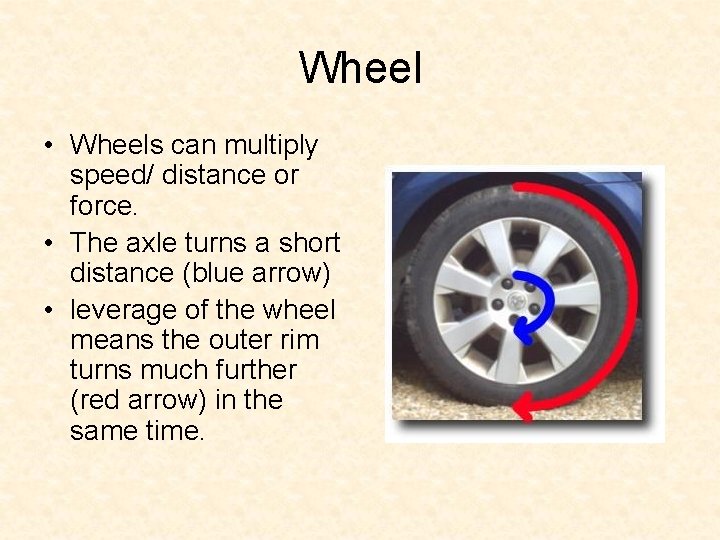
Wheel • Wheels can multiply speed/ distance or force. • The axle turns a short distance (blue arrow) • leverage of the wheel means the outer rim turns much further (red arrow) in the same time.
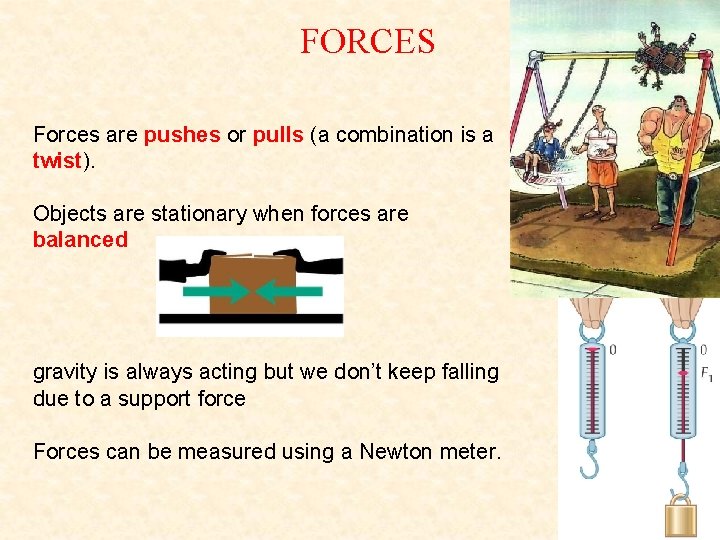
FORCES Forces are pushes or pulls (a combination is a twist). Objects are stationary when forces are balanced gravity is always acting but we don’t keep falling due to a support force Forces can be measured using a Newton meter.
BALANCED FORCES An unbalanced forces cause changes to objects motion (speed or direction), or shape. If a force acts on a stationary object and causes motion, the object has gained kinetic (movement) energy. Friction will stop the object moving. Types of force: Gravity Friction – the force that opposes motion Magnetism Tension – the force in rope, etc Electrostatic Support Lift – in the air (planes/birds) Bouyancy – in the water
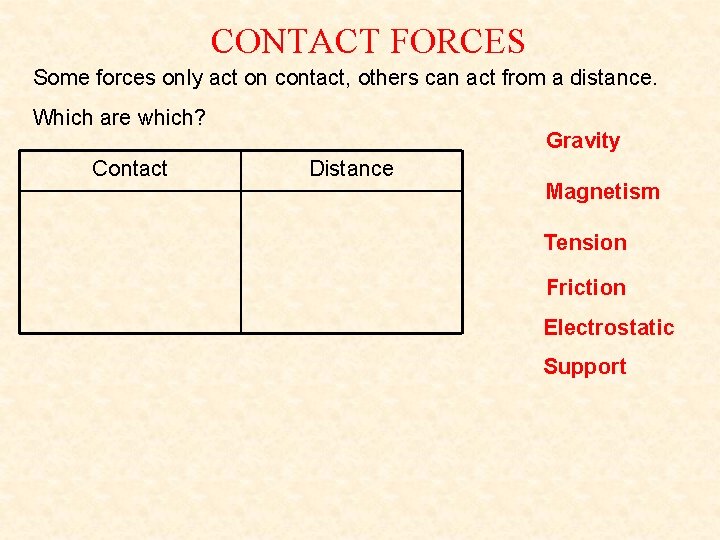
CONTACT FORCES Some forces only act on contact, others can act from a distance. Which are which? Contact Gravity Distance Magnetism Tension Friction Electrostatic Support
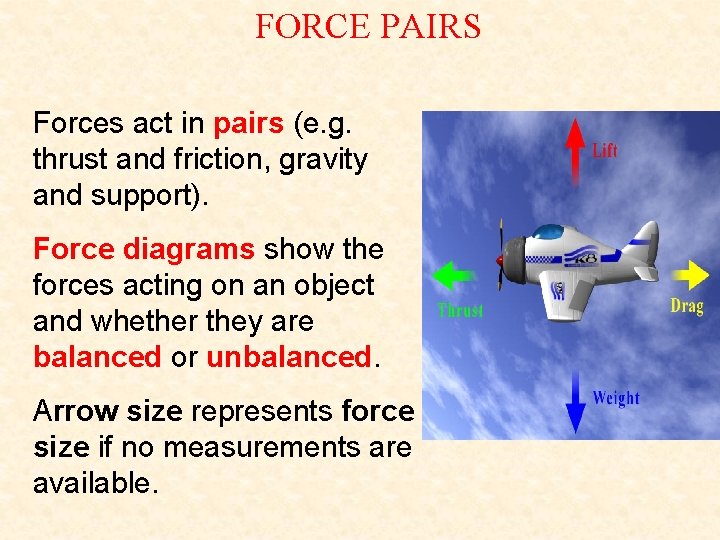
FORCE PAIRS Forces act in pairs (e. g. thrust and friction, gravity and support). Force diagrams show the forces acting on an object and whether they are balanced or unbalanced. Arrow size represents force size if no measurements are available.
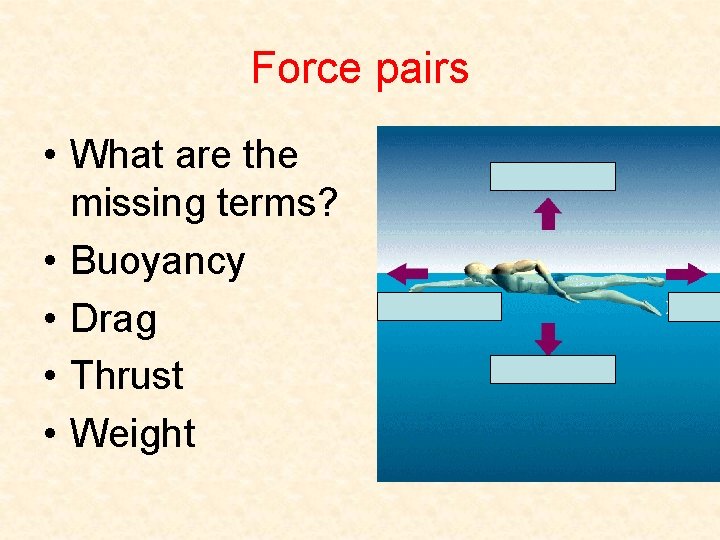
Force pairs • What are the missing terms? • Buoyancy • Drag • Thrust • Weight
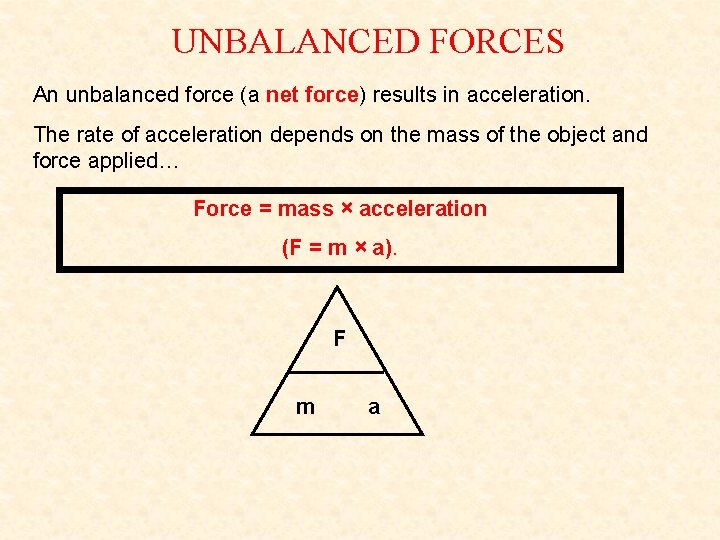
UNBALANCED FORCES An unbalanced force (a net force) results in acceleration. The rate of acceleration depends on the mass of the object and force applied… Force = mass × acceleration (F = m × a). F m a
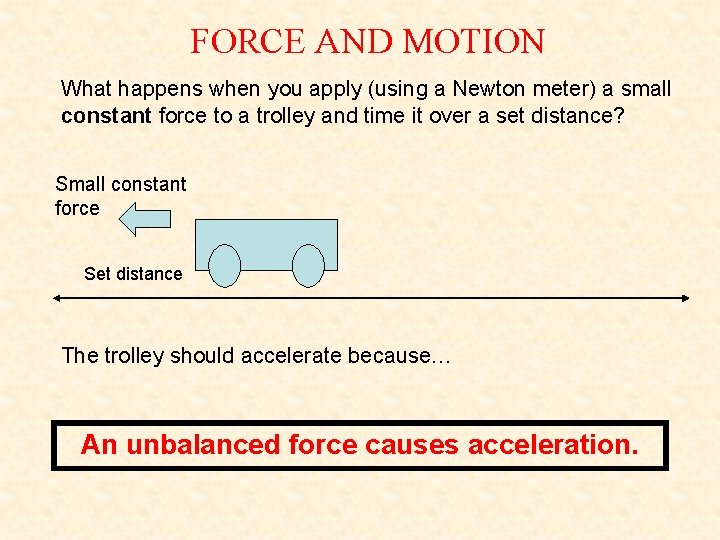
FORCE AND MOTION What happens when you apply (using a Newton meter) a small constant force to a trolley and time it over a set distance? Small constant force Set distance The trolley should accelerate because… An unbalanced force causes acceleration.
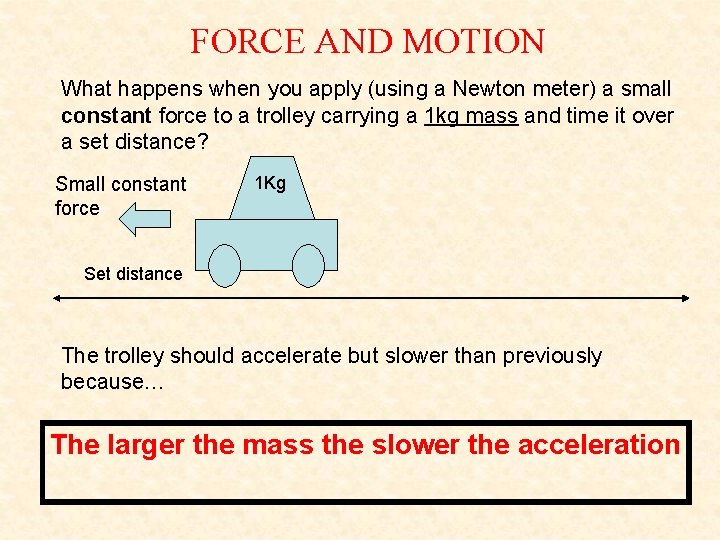
FORCE AND MOTION What happens when you apply (using a Newton meter) a small constant force to a trolley carrying a 1 kg mass and time it over a set distance? Small constant force 1 Kg Set distance The trolley should accelerate but slower than previously because… The larger the mass the slower the acceleration
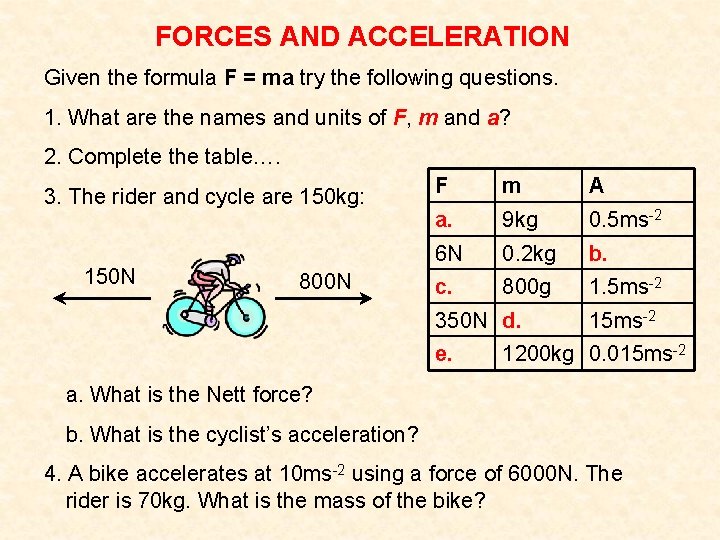
FORCES AND ACCELERATION Given the formula F = ma try the following questions. 1. What are the names and units of F, m and a? 2. Complete the table…. 3. The rider and cycle are 150 kg: 150 N 800 N F m A a. 9 kg 0. 5 ms-2 6 N 0. 2 kg b. c. 800 g 1. 5 ms-2 350 N d. e. 15 ms-2 1200 kg 0. 015 ms-2 a. What is the Nett force? b. What is the cyclist’s acceleration? 4. A bike accelerates at 10 ms-2 using a force of 6000 N. The rider is 70 kg. What is the mass of the bike?
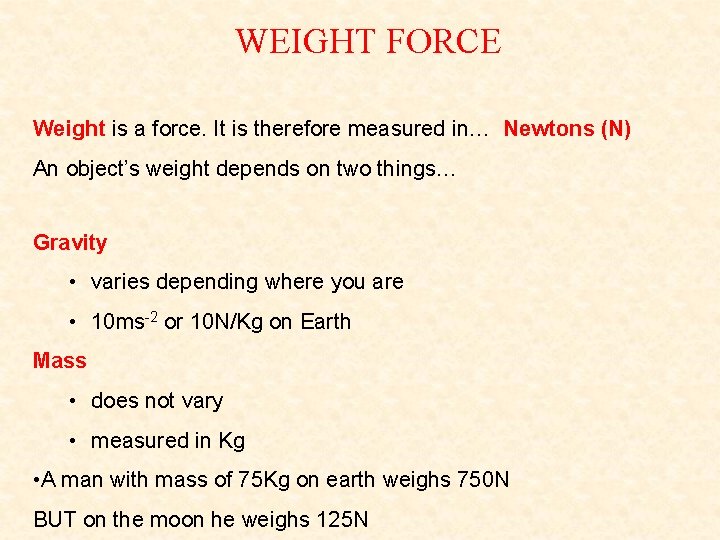
WEIGHT FORCE Weight is a force. It is therefore measured in… Newtons (N) An object’s weight depends on two things… Gravity • varies depending where you are • 10 ms-2 or 10 N/Kg on Earth Mass • does not vary • measured in Kg • A man with mass of 75 Kg on earth weighs 750 N BUT on the moon he weighs 125 N
MASS AND WEIGHT 1. a. What is mass? b. What is it’s unit? 2. a. What is Weight? b. What is it’s unit? 3. ON EARTH: 1 N = kg 1 kg = 4. How would your mass and weight change if you went to Jupiter? N
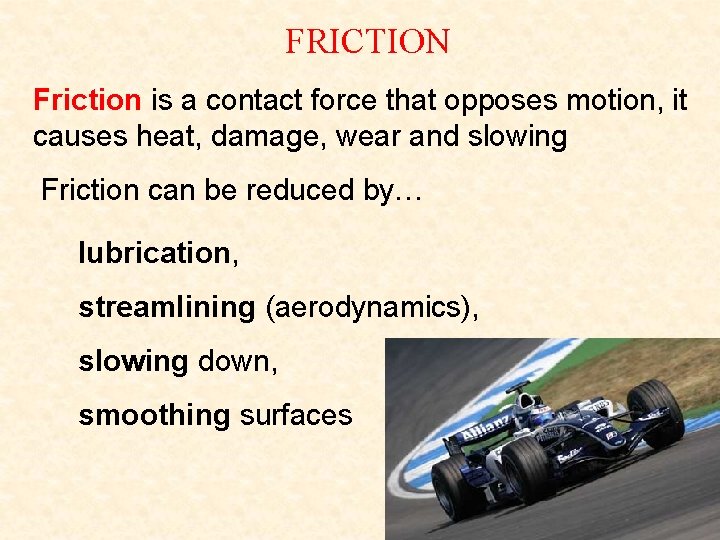
FRICTION Friction is a contact force that opposes motion, it causes heat, damage, wear and slowing Friction can be reduced by… lubrication, streamlining (aerodynamics), slowing down, smoothing surfaces
Reaction Times • Game • http: //www. bbc. co. uk/science/humanbody/ sleep/sheep/reaction_version 5. swf
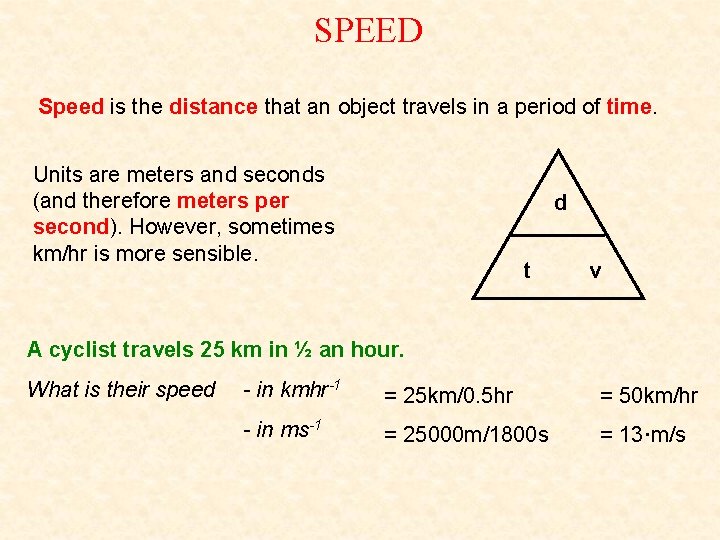
SPEED Speed is the distance that an object travels in a period of time. Units are meters and seconds (and therefore meters per second). However, sometimes km/hr is more sensible. d t v A cyclist travels 25 km in ½ an hour. What is their speed - in kmhr-1 = 25 km/0. 5 hr = 50 km/hr - in ms-1 = 25000 m/1800 s = 13 m/s
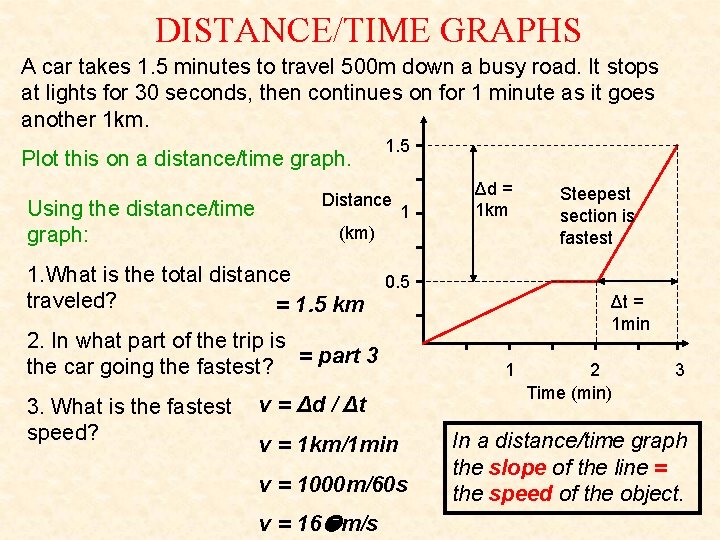
DISTANCE/TIME GRAPHS A car takes 1. 5 minutes to travel 500 m down a busy road. It stops at lights for 30 seconds, then continues on for 1 minute as it goes another 1 km. Plot this on a distance/time graph. Using the distance/time graph: 1. 5 Distance (km) 1. What is the total distance traveled? = 1. 5 km 1 v = Δd / Δt v = 1 km/1 min v = 1000 m/60 s v = 16 m/s Steepest section is fastest 0. 5 2. In what part of the trip is = part 3 the car going the fastest? 3. What is the fastest speed? Δd = 1 km Δt = 1 min 1 2 Time (min) 3 In a distance/time graph the slope of the line = the speed of the object.
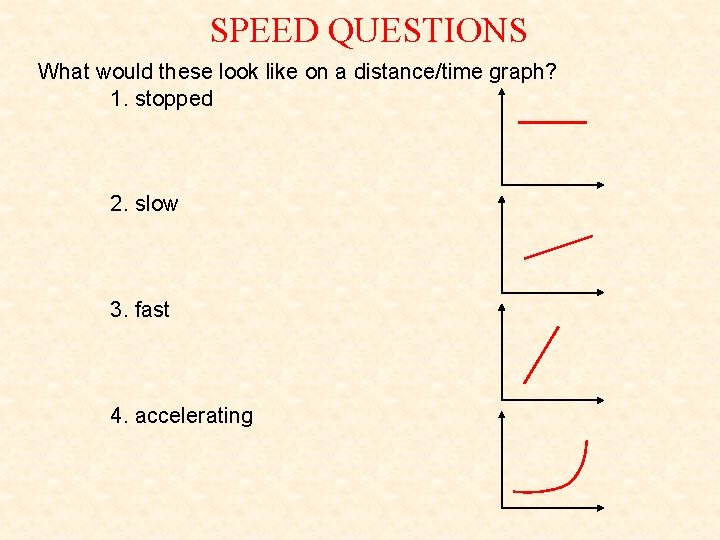
SPEED QUESTIONS What would these look like on a distance/time graph? 1. stopped 2. slow 3. fast 4. accelerating
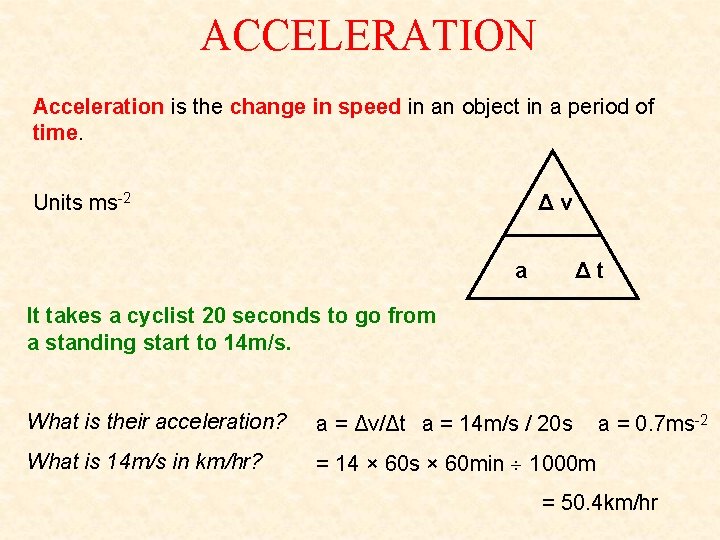
ACCELERATION Acceleration is the change in speed in an object in a period of time. Δv Units ms-2 a Δt It takes a cyclist 20 seconds to go from a standing start to 14 m/s. What is their acceleration? a = Δv/Δt a = 14 m/s / 20 s What is 14 m/s in km/hr? = 14 × 60 s × 60 min 1000 m a = 0. 7 ms-2 = 50. 4 km/hr
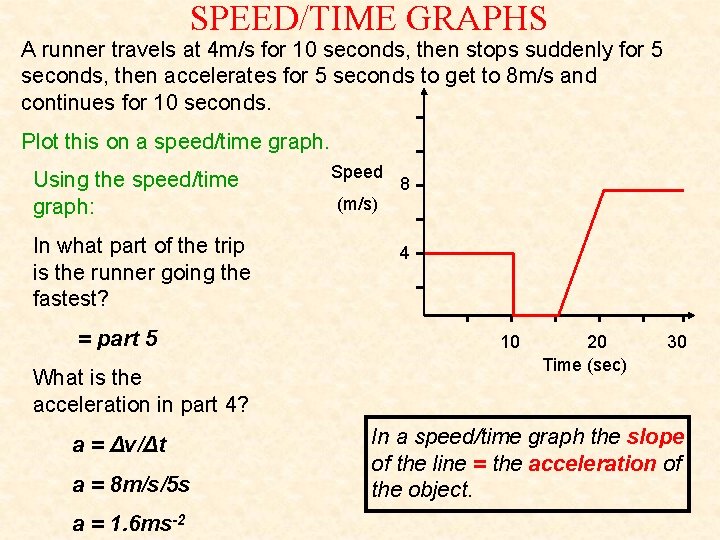
SPEED/TIME GRAPHS A runner travels at 4 m/s for 10 seconds, then stops suddenly for 5 seconds, then accelerates for 5 seconds to get to 8 m/s and continues for 10 seconds. Plot this on a speed/time graph. Using the speed/time graph: In what part of the trip is the runner going the fastest? = part 5 What is the acceleration in part 4? a = Δv/Δt a = 8 m/s/5 s a = 1. 6 ms-2 Speed (m/s) 8 4 10 20 Time (sec) 30 In a speed/time graph the slope of the line = the acceleration of the object.
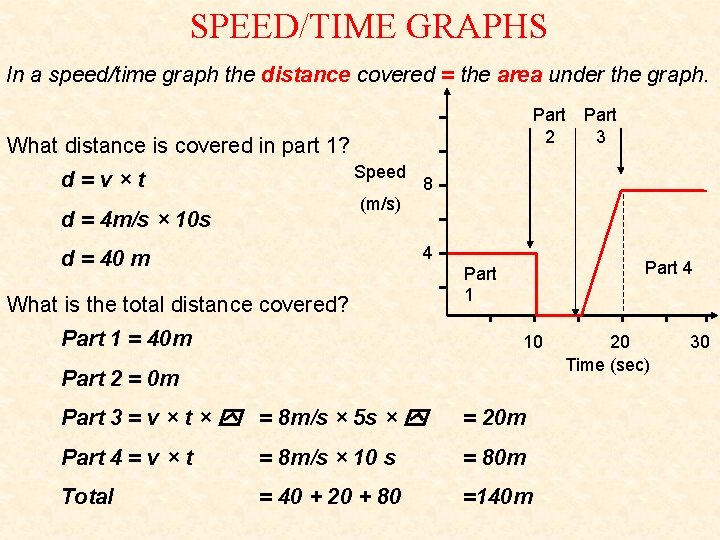
SPEED/TIME GRAPHS In a speed/time graph the distance covered = the area under the graph. Part 2 What distance is covered in part 1? Speed d=v×t (m/s) d = 4 m/s × 10 s 8 4 d = 40 m Part 3 What is the total distance covered? Part 1 = 40 m Part 4 Part 1 10 Part 2 = 0 m Part 3 = v × t × = 8 m/s × 5 s × = 20 m Part 4 = v × t = 8 m/s × 10 s = 80 m Total = 40 + 20 + 80 =140 m 20 Time (sec) 30
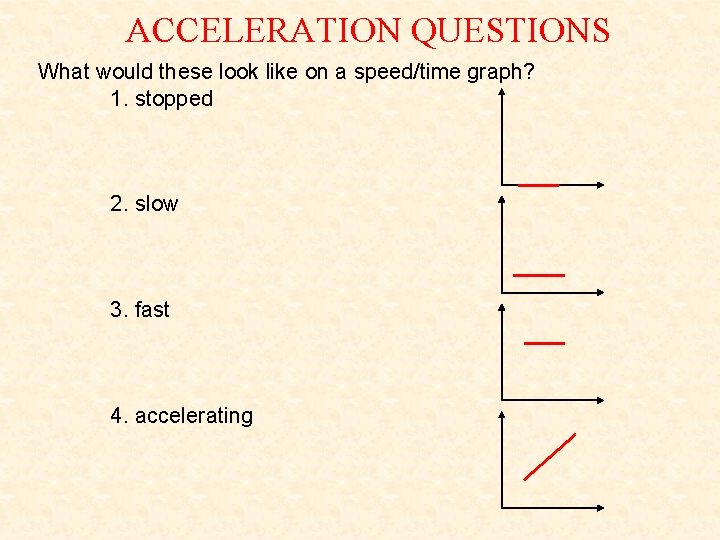
ACCELERATION QUESTIONS What would these look like on a speed/time graph? 1. stopped 2. slow 3. fast 4. accelerating
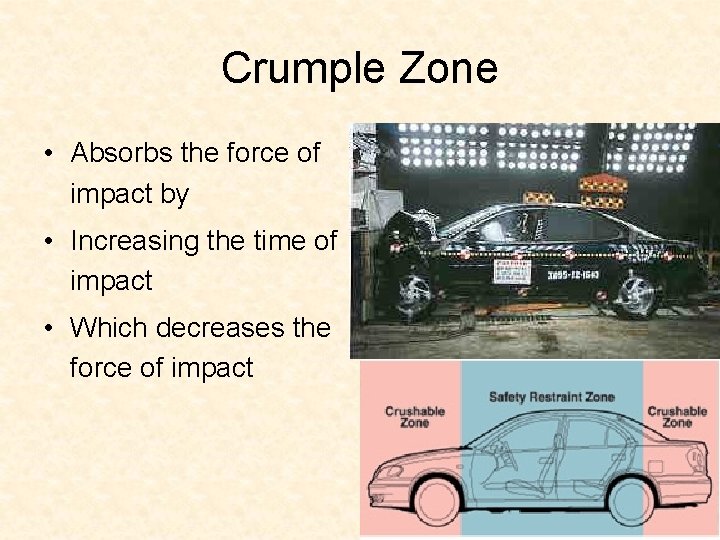
Crumple Zone • Absorbs the force of impact by • Increasing the time of impact • Which decreases the force of impact
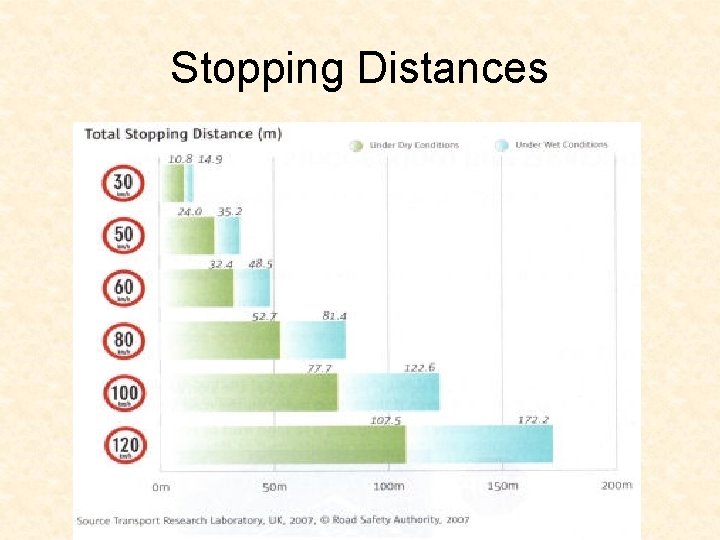
Stopping Distances