
FORCES IN TWO DIMENSIONS Vector Addition Review Force

- Slides: 10
FORCES IN TWO DIMENSIONS Vector Addition Review
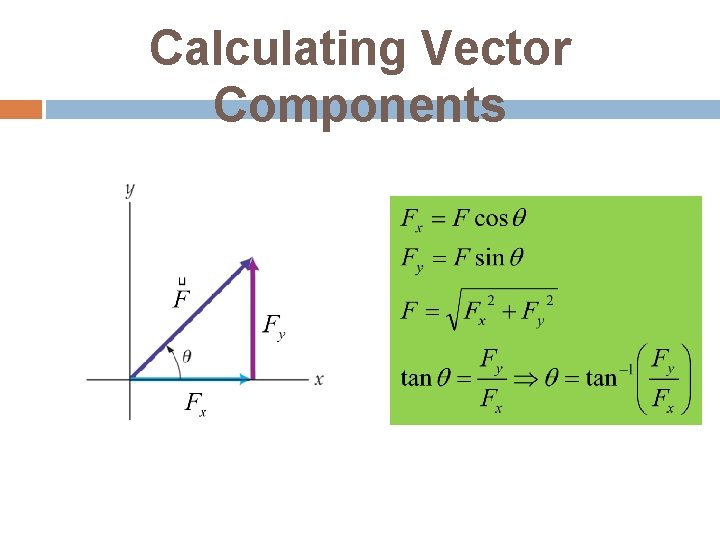
Force Vector Components Every force vector can be “broken down” into its x- and ycomponents Components: the horizontal and vertical legs of a right triangle The original force is the hypotenuse of the right triangle!
Calculating Vector Components
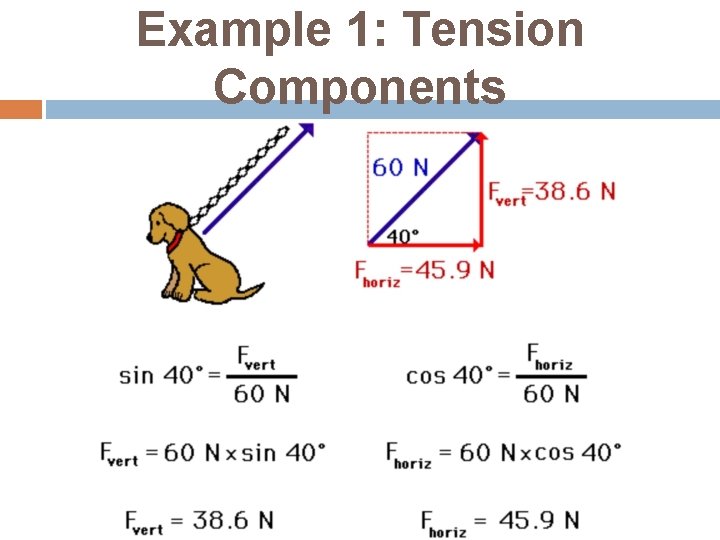
Example 1: Tension Components
Equilibrium A system is in equilibrium if and only if the net force acting on it is equal to zero. �Static Equilibrium: Fnet = 0 N and the system is at rest �Dynamic Equilibrium: Fnet = 0 N and the system is moving at a constant velocity
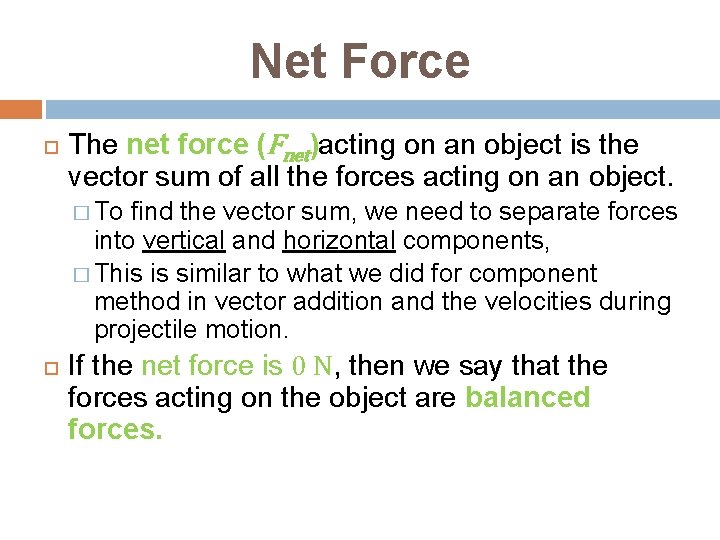
Net Force The net force (Fnet)acting on an object is the vector sum of all the forces acting on an object. � To find the vector sum, we need to separate forces into vertical and horizontal components, � This is similar to what we did for component method in vector addition and the velocities during projectile motion. If the net force is 0 N, then we say that the forces acting on the object are balanced forces.
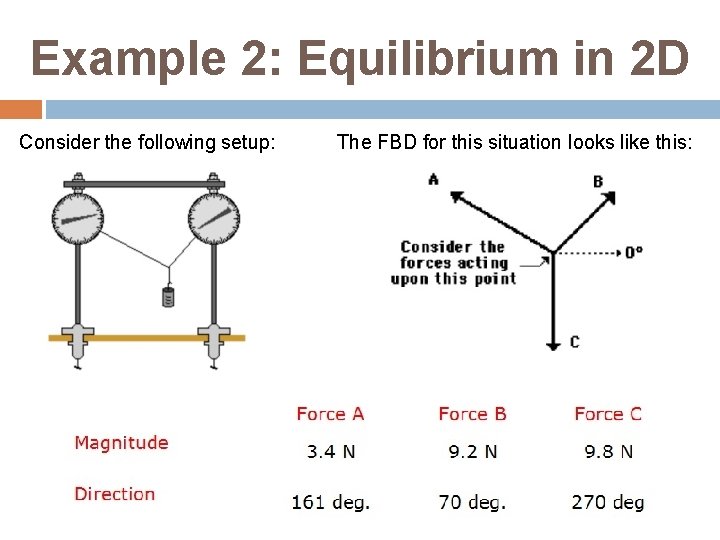
Example 2: Equilibrium in 2 D Consider the following setup: The FBD for this situation looks like this:
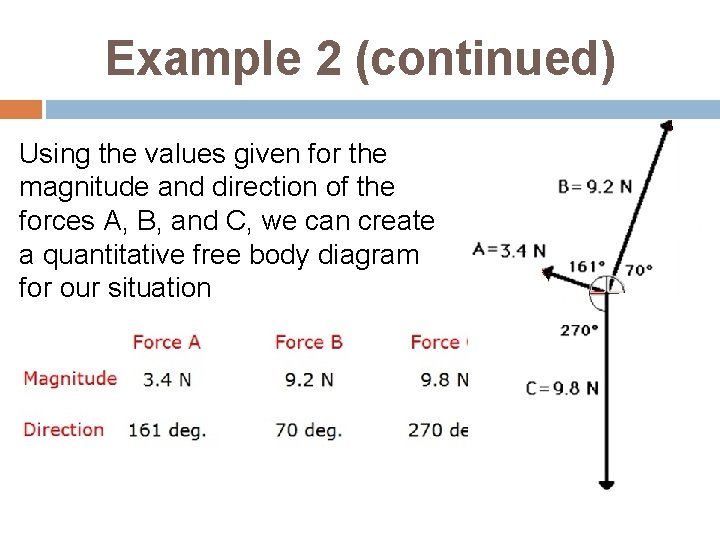
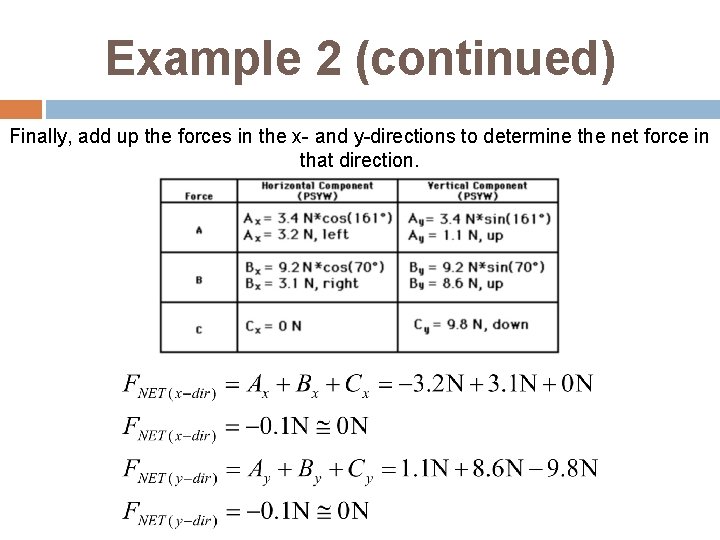
Example 2 (continued) Using the values given for the magnitude and direction of the forces A, B, and C, we can create a quantitative free body diagram for our situation
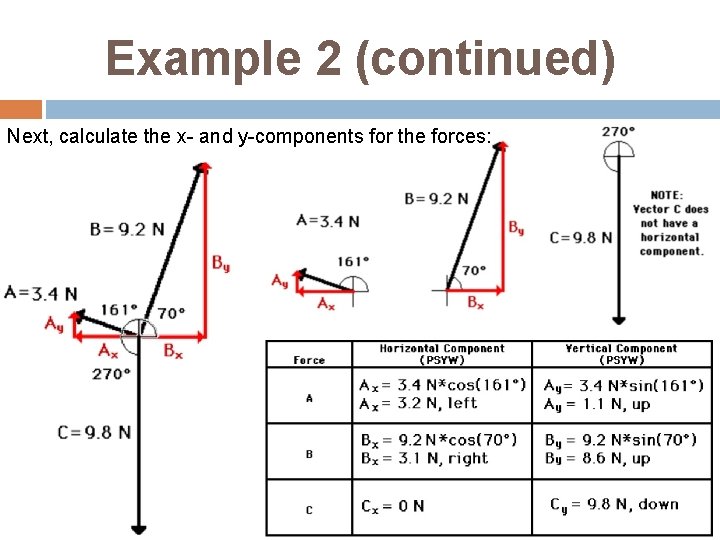
Example 2 (continued) Next, calculate the x- and y-components for the forces:
Example 2 (continued) Finally, add up the forces in the x- and y-directions to determine the net force in that direction.