
Forces and Motion Everyday Forces Gravitation Magnetism Friction

- Slides: 28
Forces and Motion
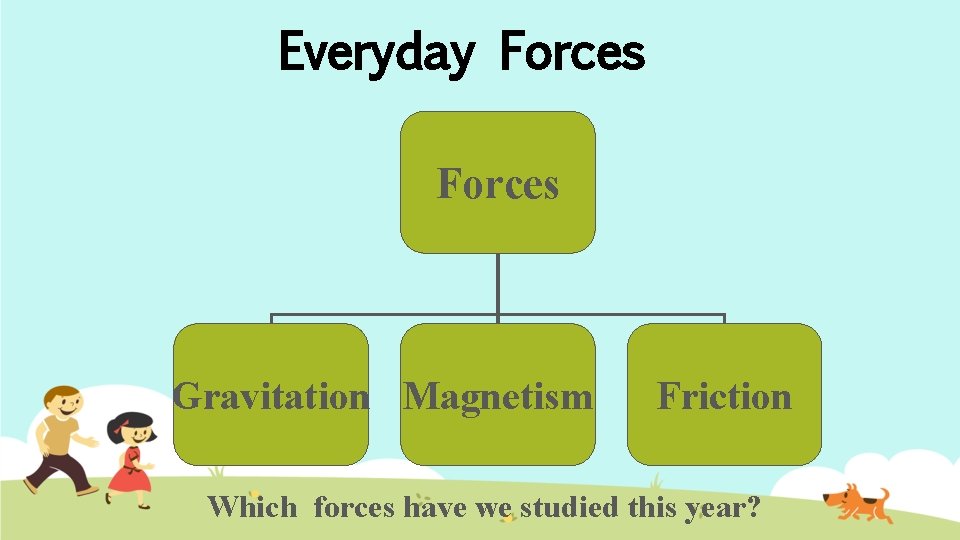
Everyday Forces Gravitation Magnetism Friction Which forces have we studied this year?
Forces
Force § 1. Earth and everything on it are affected by FORCES. § 2. A force is a PUSH OR A PULL that causes an object to move, STOP, change direction, SPEED up, or slow down. It is measured in units called NEWTONS (N) after Sir Isaac Newton. § 3. There are three forces on Earth every day that affect motion: friction, MAGNETISM, and gravity.
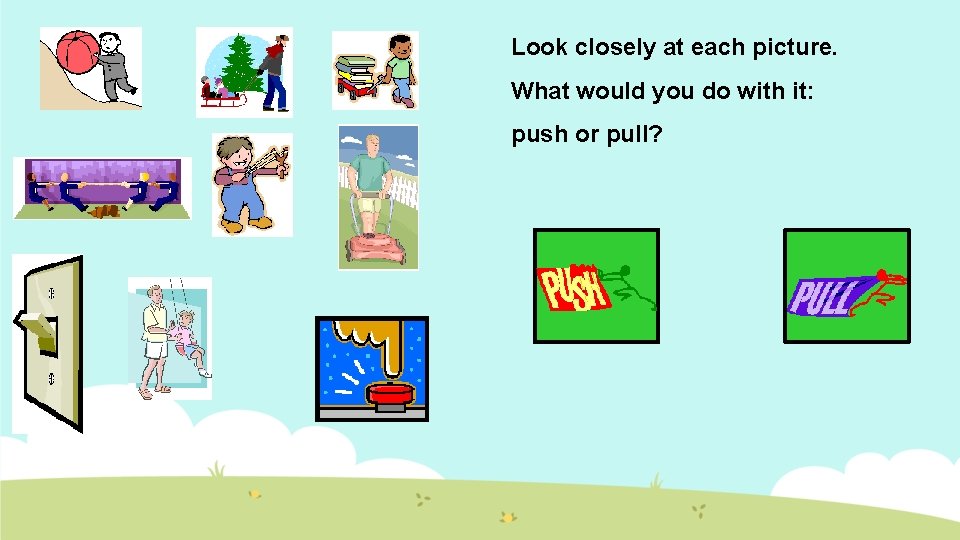
Look closely at each picture. What would you do with it: push or pull?
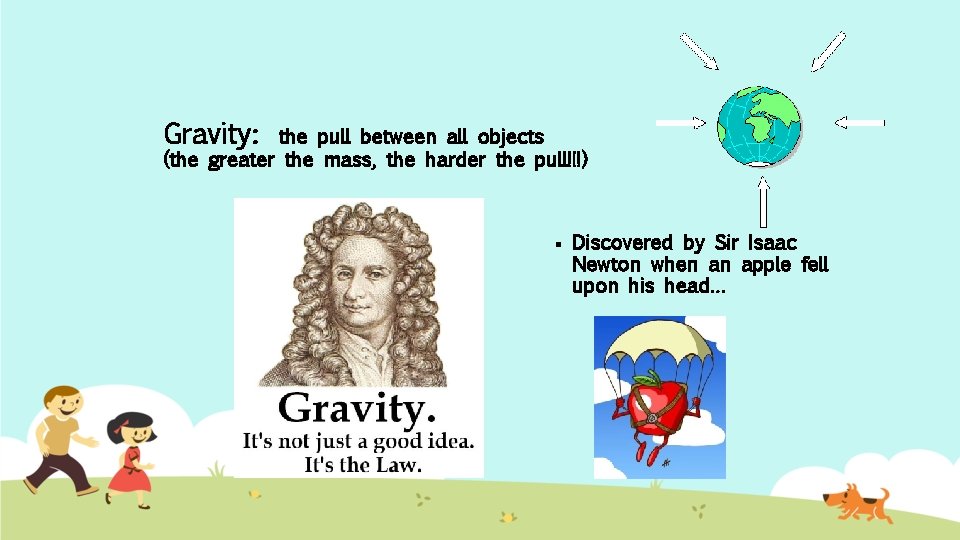
Gravity: the pull between all objects (the greater the mass, the harder the pull!!!) § Discovered by Sir Isaac Newton when an apple fell upon his head…
Gravity affects objects on Earth all the time. ·It hold things to the SURFACE of the Earth. ·It pulls objects (big or small) TOWARDS each other. ·Gravity is WEAKER between smaller objects and larger for objects of greater mass. ·The CLOSER objects are to each other, the greater the force of gravity.
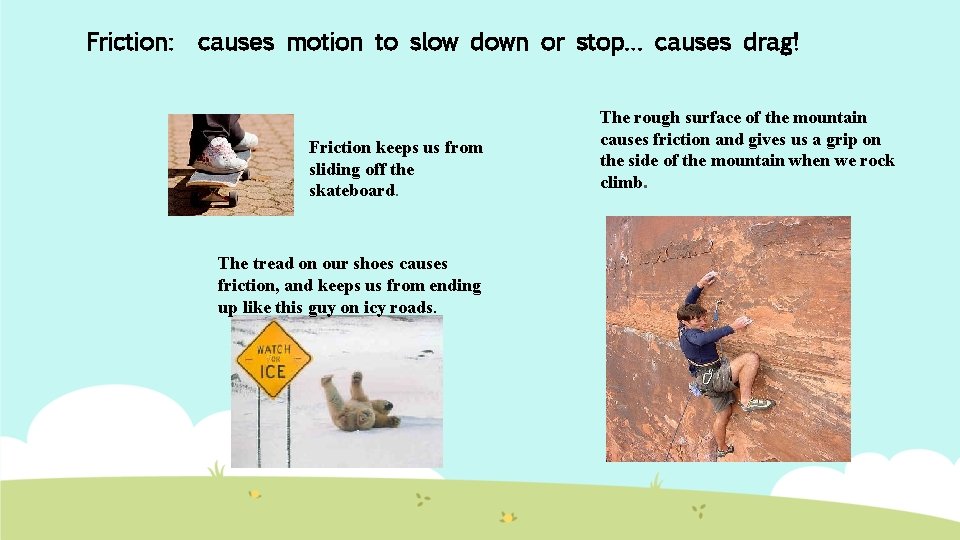
Friction: causes motion to slow down or stop… causes drag! Friction keeps us from sliding off the skateboard. The tread on our shoes causes friction, and keeps us from ending up like this guy on icy roads. The rough surface of the mountain causes friction and gives us a grip on the side of the mountain when we rock climb.
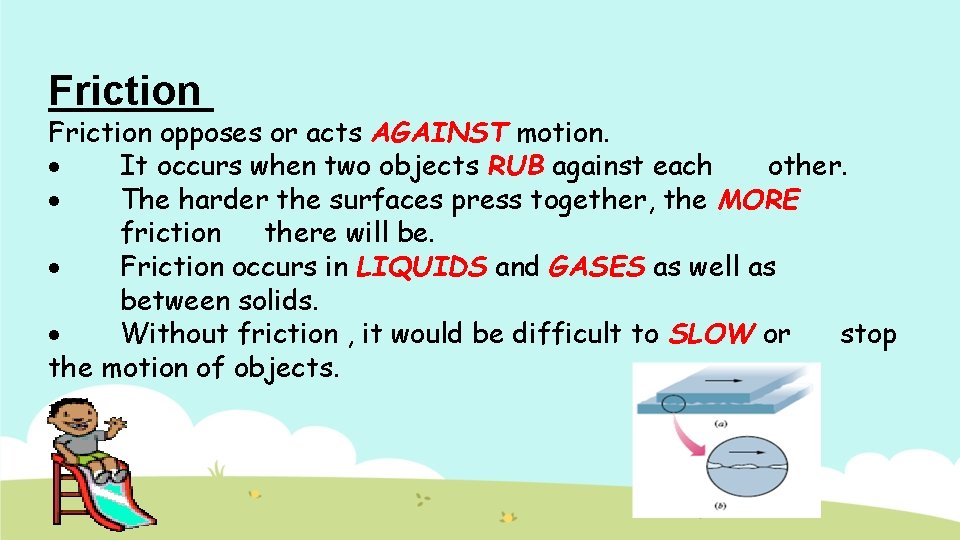
Friction opposes or acts AGAINST motion. · It occurs when two objects RUB against each other. · The harder the surfaces press together, the MORE friction there will be. · Friction occurs in LIQUIDS and GASES as well as between solids. · Without friction , it would be difficult to SLOW or stop the motion of objects.
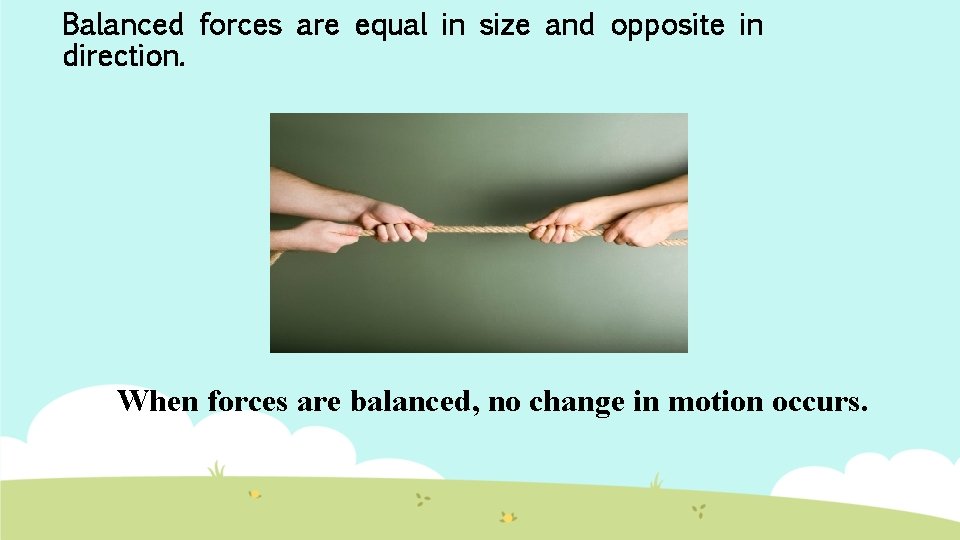
Balanced forces are equal in size and opposite in direction. When forces are balanced, no change in motion occurs.
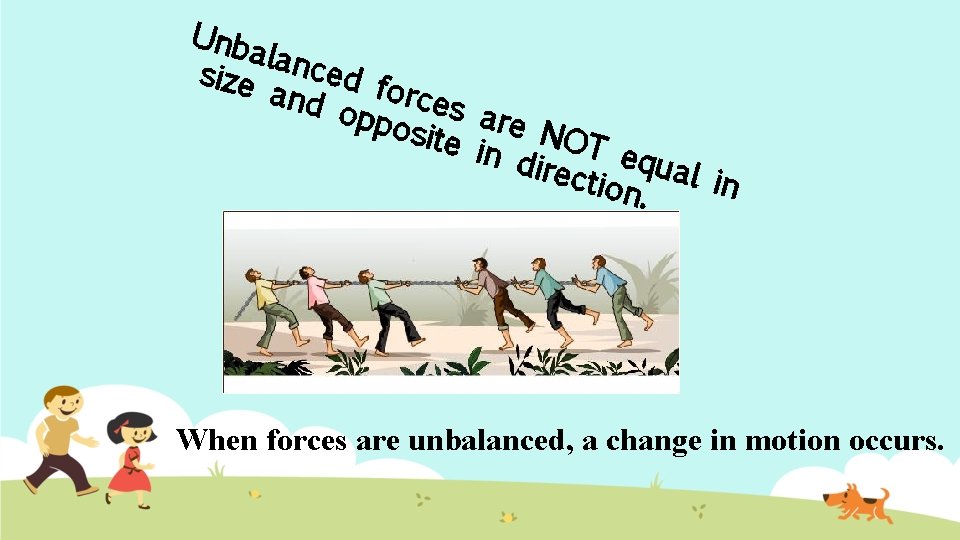
Unb alan ced size force and oppo s are site NOT in d irect equal i n ion. When forces are unbalanced, a change in motion occurs.
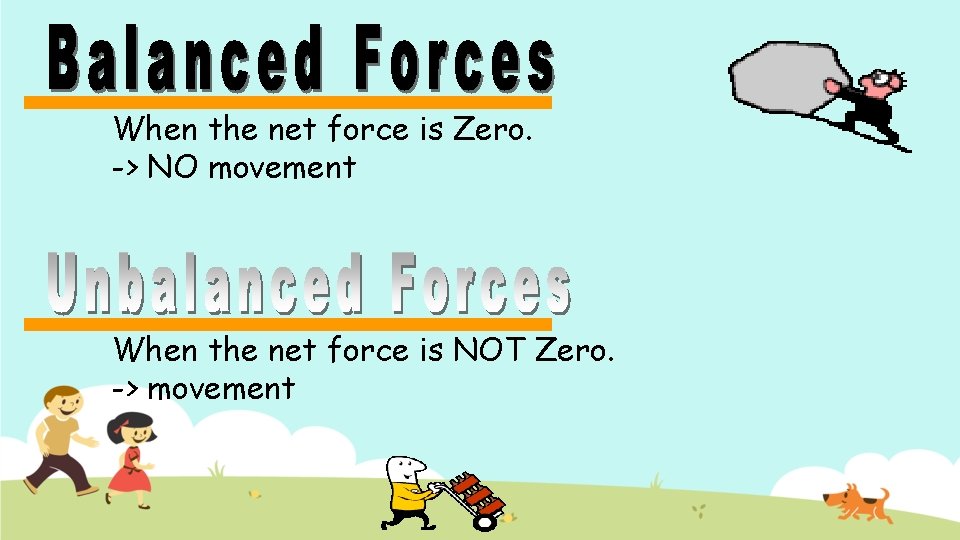
When the net force is Zero. -> NO movement When the net force is NOT Zero. -> movement
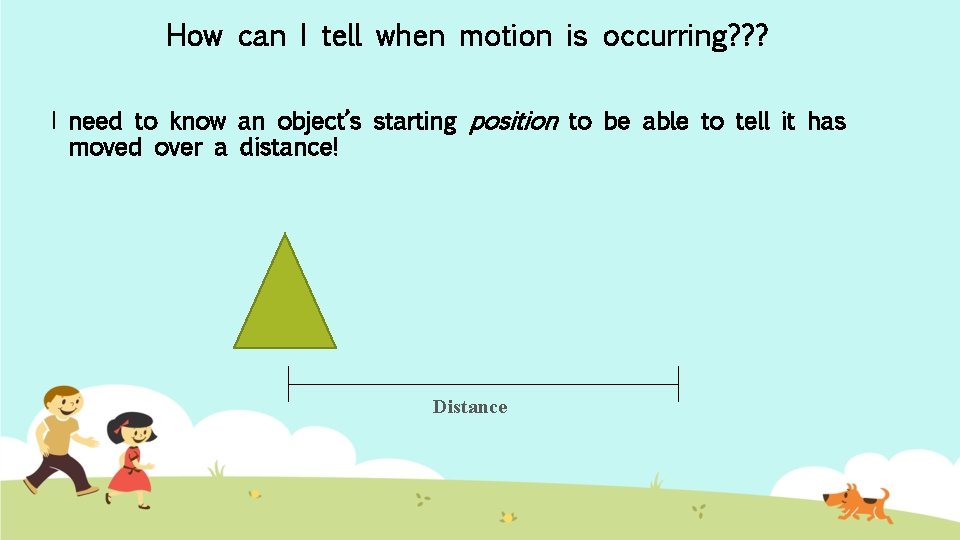
How can I tell when motion is occurring? ? ? I need to know an object’s starting position to be able to tell it has moved over a distance! Distance
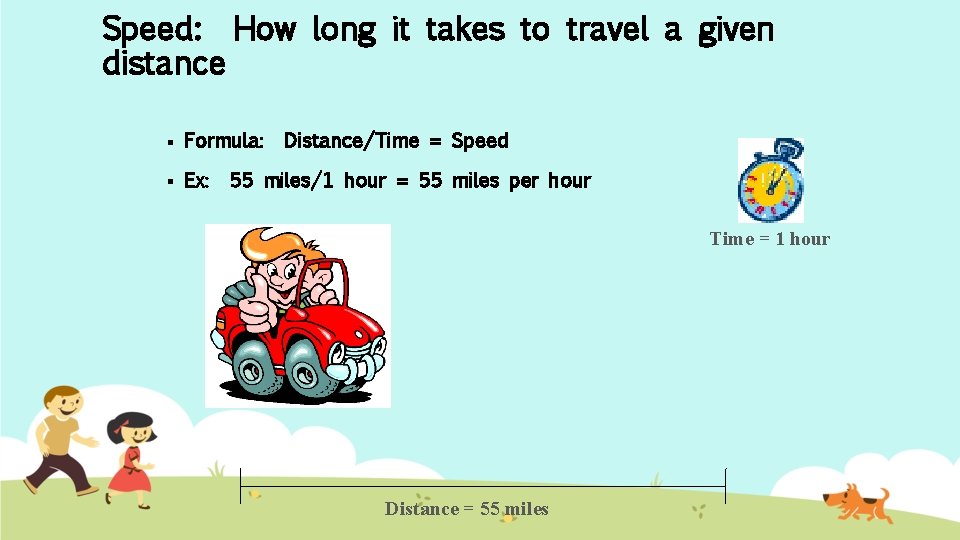
Speed: How long it takes to travel a given distance § Formula: § Ex: Distance/Time = Speed 55 miles/1 hour = 55 miles per hour Time = 1 hour Distance = 55 miles
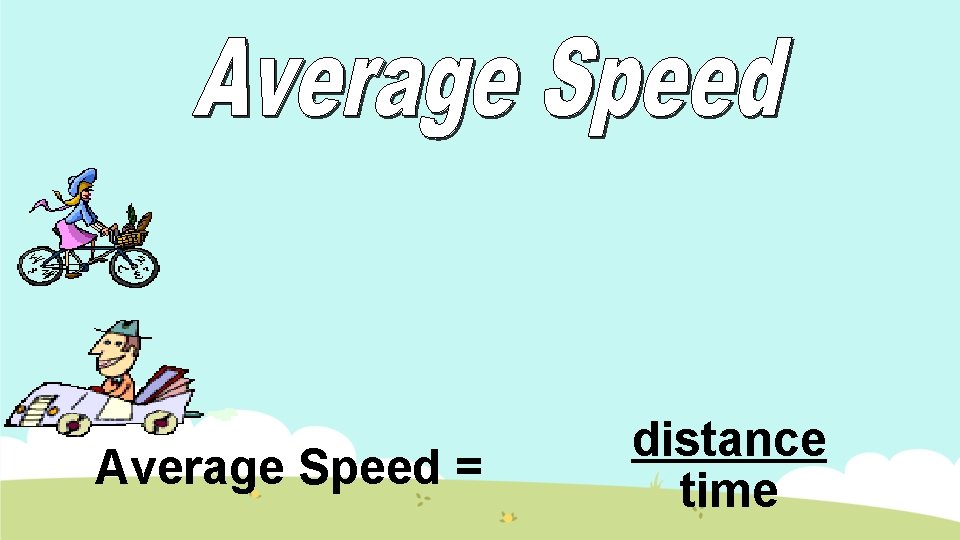
Average Speed = distance time
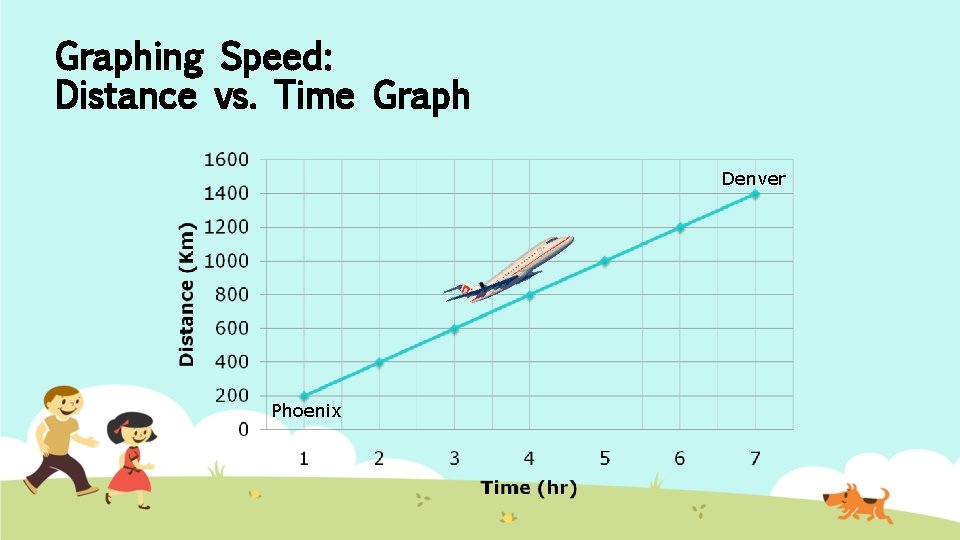
Graphing Speed: Distance vs. Time Graph Denver Phoenix
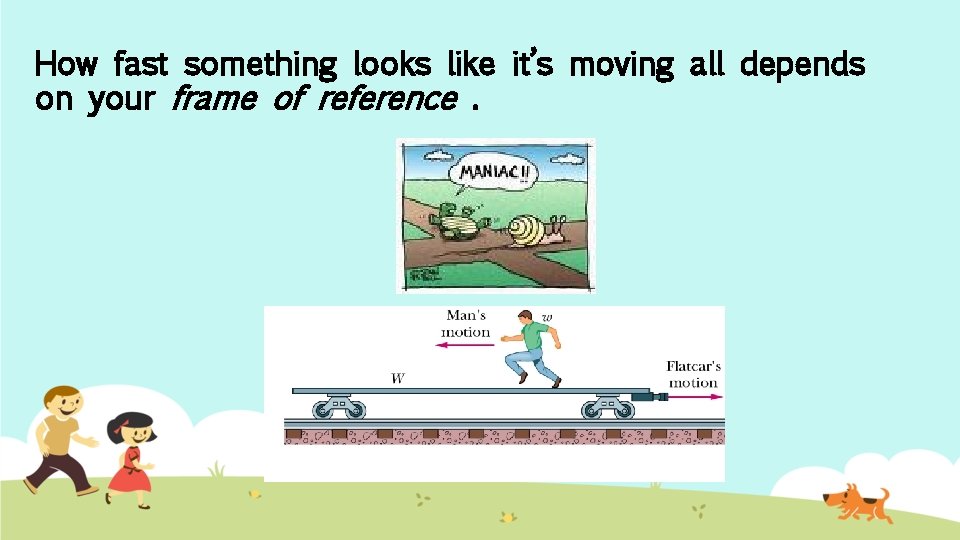
How fast something looks like it’s moving all depends on your frame of reference.
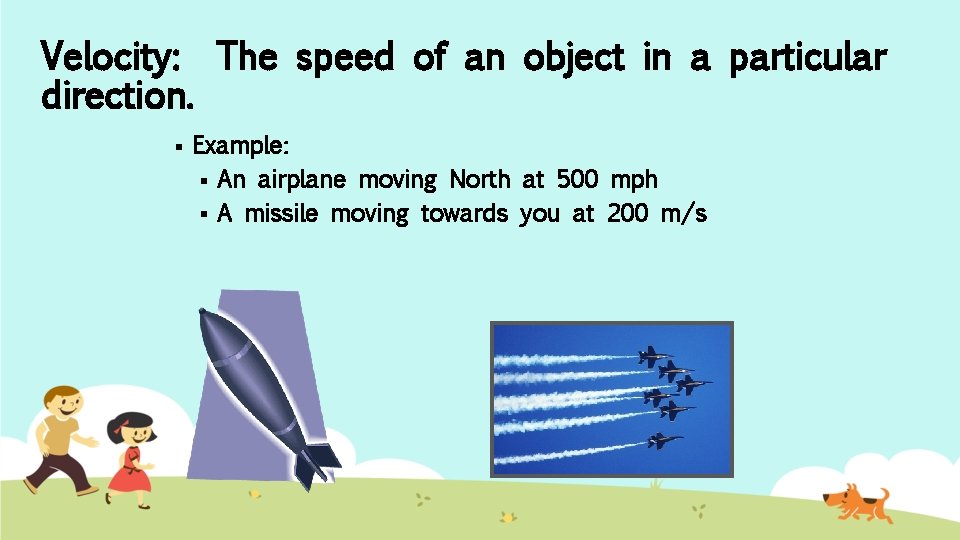
Velocity: The speed of an object in a particular direction. § Example: § An airplane moving North at 500 mph § A missile moving towards you at 200 m/s
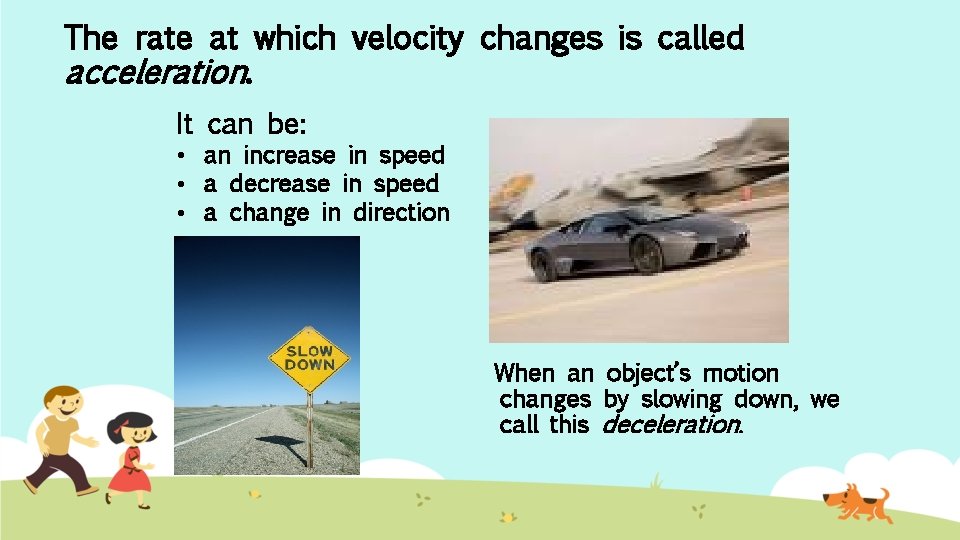
The rate at which velocity changes is called acceleration. It can be: • an increase in speed • a decrease in speed • a change in direction When an object’s motion changes by slowing down, we call this deceleration.
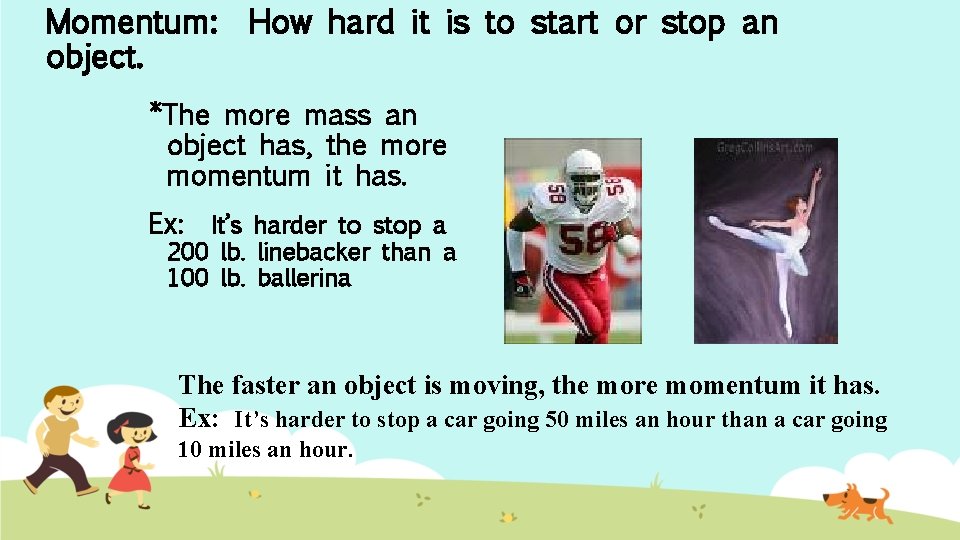
Momentum: object. How hard it is to start or stop an *The more mass an object has, the more momentum it has. Ex: It’s harder to stop a 200 lb. linebacker than a 100 lb. ballerina The faster an object is moving, the more momentum it has. Ex: It’s harder to stop a car going 50 miles an hour than a car going 10 miles an hour.
Newton's law
Newton’s Laws of Motion § Law #1: Law of Inertia § Law #2 : F= m § Law #3 : Action / Reaction x a
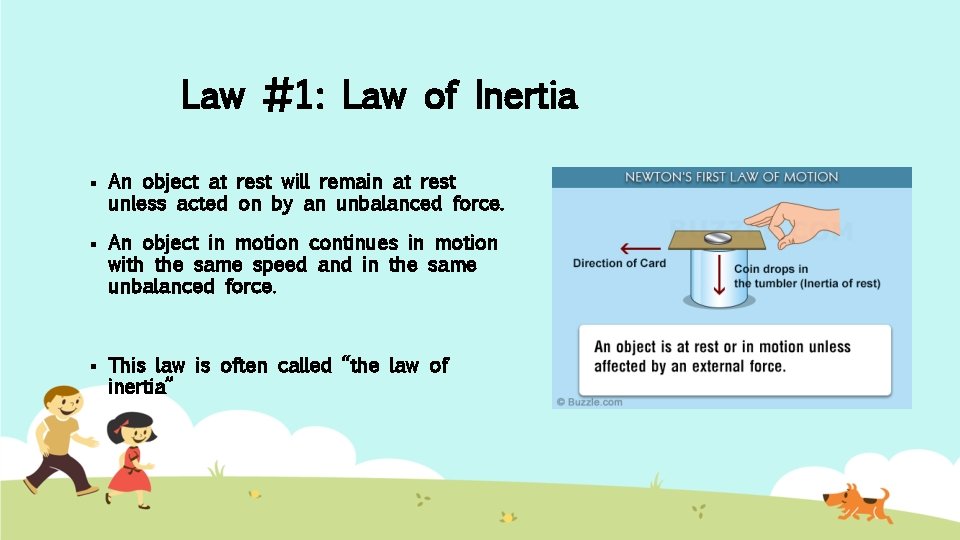
Law #1: Law of Inertia § An object at rest will remain at rest unless acted on by an unbalanced force. § An object in motion continues in motion with the same speed and in the same unbalanced force. § This law is often called “the law of inertia”
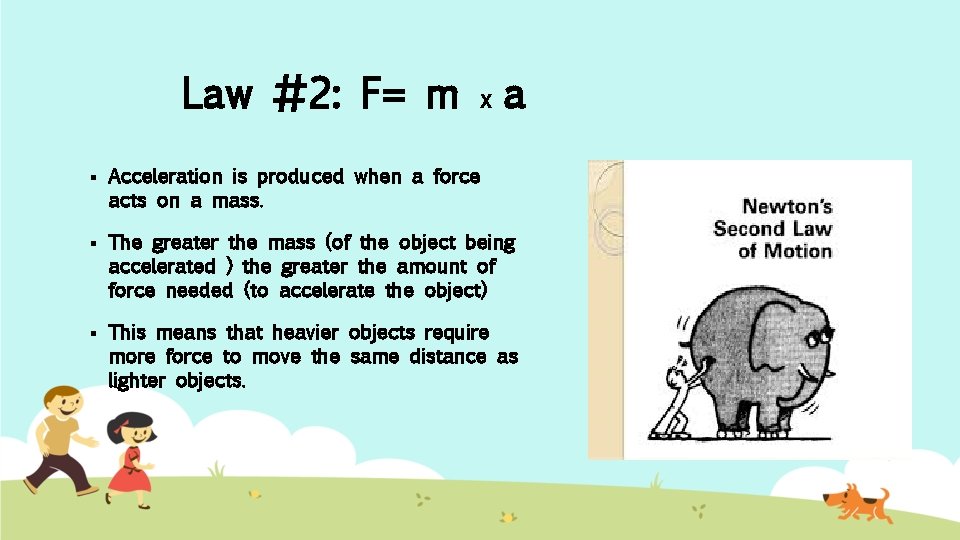
Law #2: F= m x a § Acceleration is produced when a force acts on a mass. § The greater the mass (of the object being accelerated ) the greater the amount of force needed (to accelerate the object) § This means that heavier objects require more force to move the same distance as lighter objects.
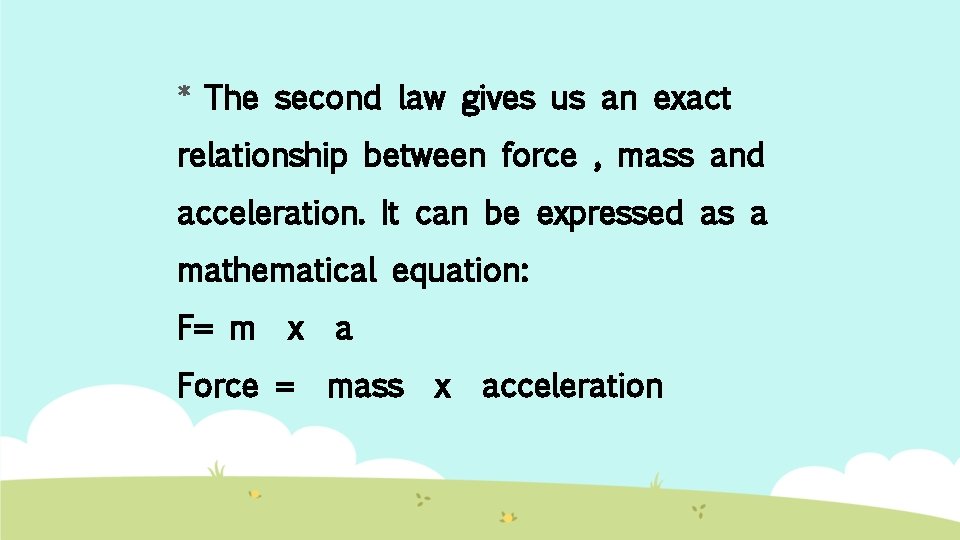
* The second law gives us an exact relationship between force , mass and acceleration. It can be expressed as a mathematical equation: F= m x Force = a mass x acceleration
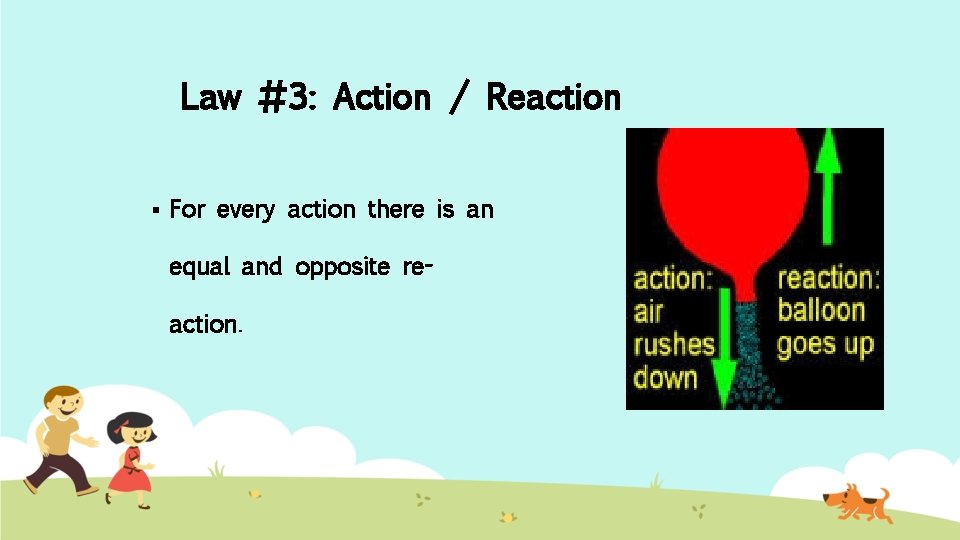
Law #3: Action / Reaction § For every action there is an equal and opposite reaction.
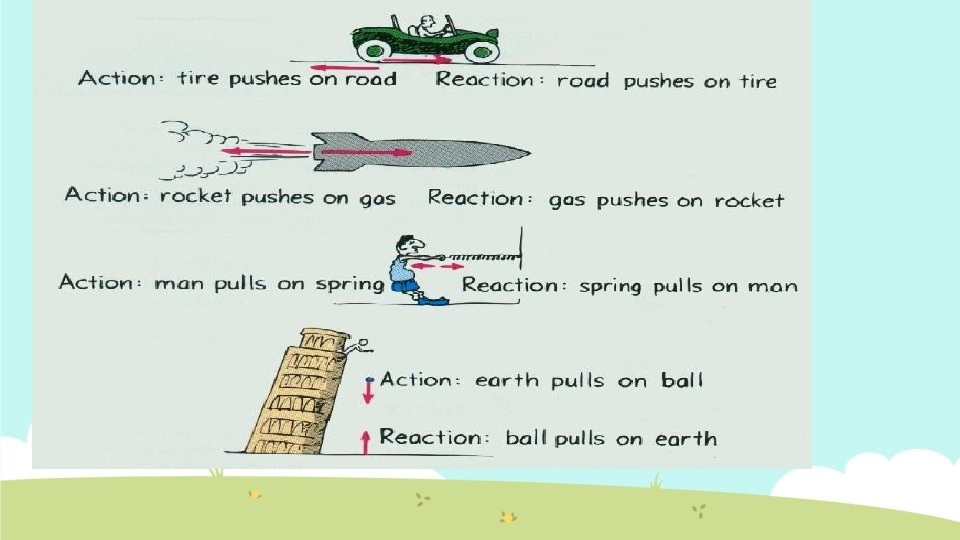
rd 3 § law of Newton This law means that for every force there is a reation force that is equal in size, but opposite in direction. That is to say that whenever an object pushes another object pushed back in the opposite direction equally hard. it gets