
Forces Acting on an Aircraft For an airplane
- Slides: 17
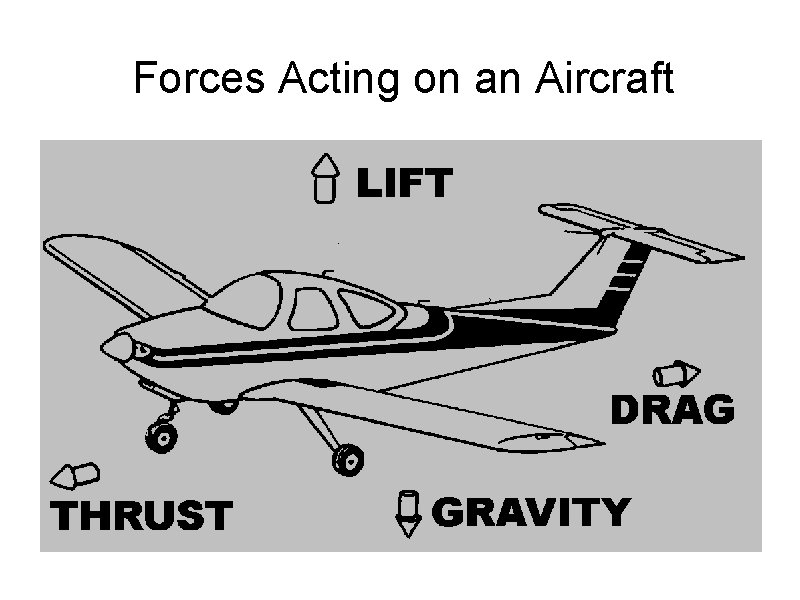
Forces Acting on an Aircraft ●For an airplane to fly, it must always engage in a tug of war between the opposing forces of lift versus weight and thrust versus drag.
Forces Acting on an Aircraft
Forces Acting on an Aircraft ●Lift and Drag are considered aerodynamic forces because they exist due to the movement of the aircraft through the air. ●The weight pulls down on the plane opposing the lift created by air flowing over the wing.
Forces Acting on an Aircraft ●Thrust is generated by the motive force (the engine) and opposes drag caused by air resistance to the frontal area of the airplane. ●During take off, thrust must overcome drag and lift must overcome the weight before the airplane can become airborne.
Forces Acting on an Aircraft ●In level flight at constant speed, thrust exactly equals drag and lift exactly equals the weight or gravity force. ●For landings thrust must be reduced below the level of drag and lift below the level of the gravity force or weight.
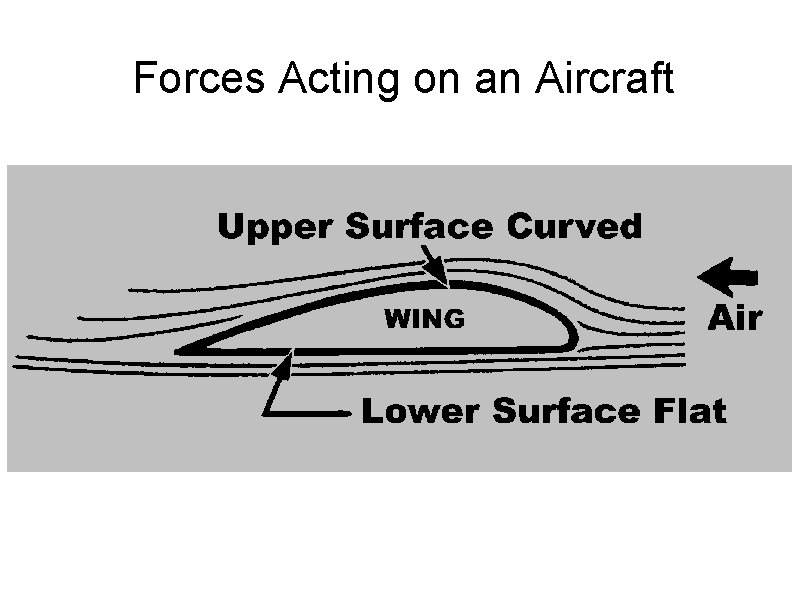
Forces Acting on an Aircraft ●Lift is produced by a lower pressure created on the upper surface of an airplane's wing compared to the pressure on the wing's lower surface, causing the wing to be "lifted" upward.
Forces Acting on an Aircraft ●The special shape of the airplane wing (airfoil) is designed so that air flowing over it will have to travel a greater distance faster, resulting in a lower pressure area (see illustration) thus lifting the wing upward. ●Lift is that force which opposes the force of gravity (or weight).
Forces Acting on an Aircraft
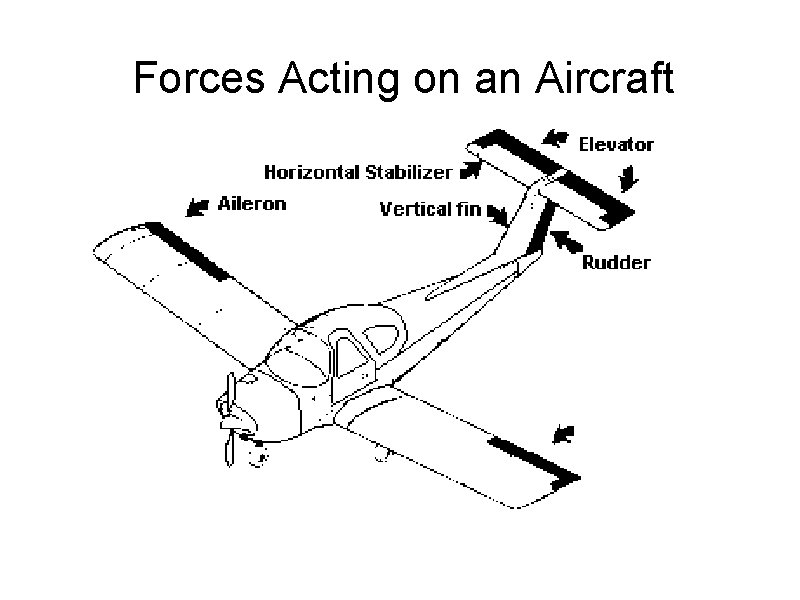
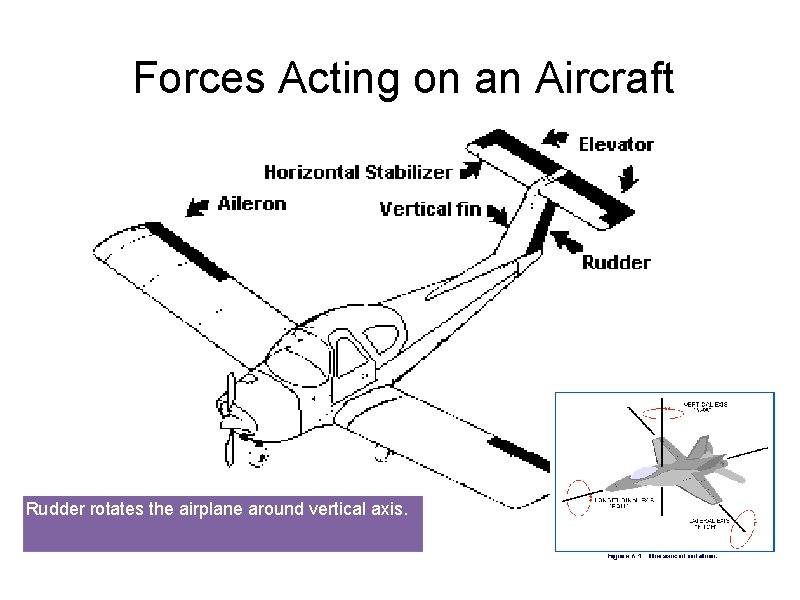
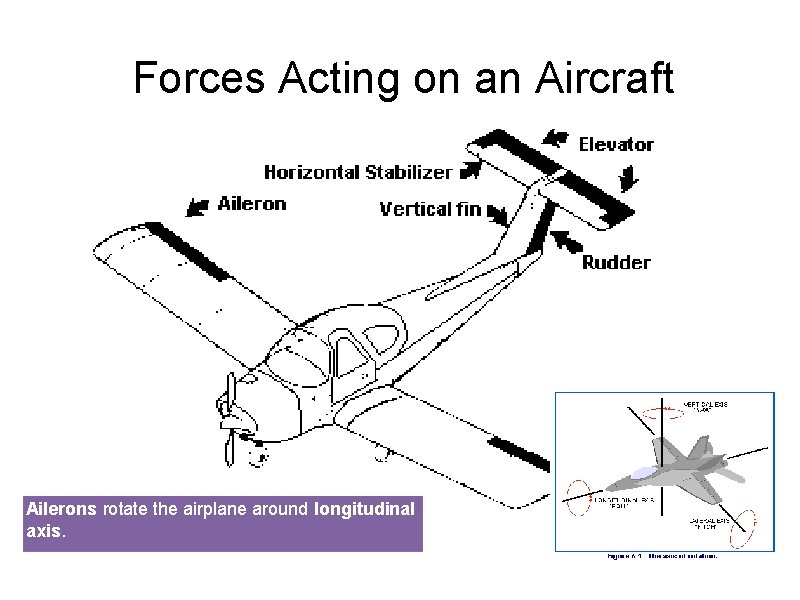
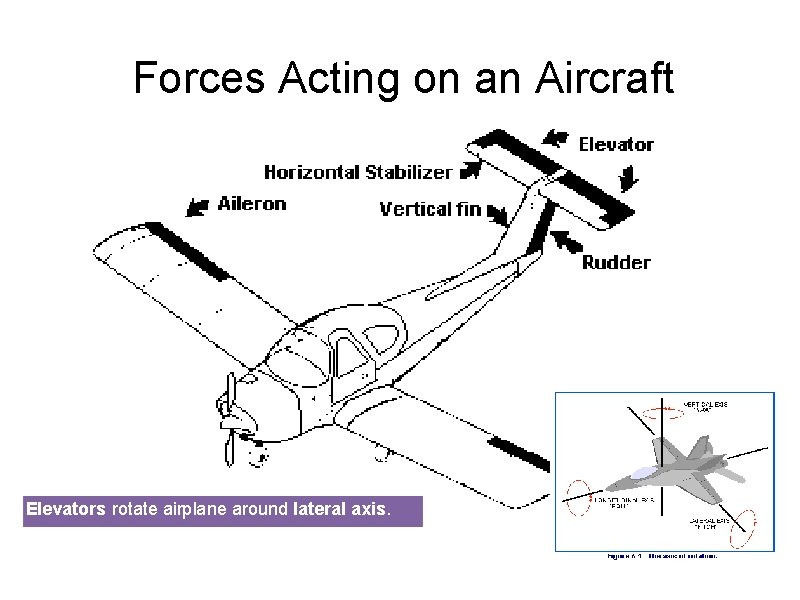
Control of an Aircraft ●Real planes have segments called ailerons inserted in the wings and segments called rudders and elevators inserted respectively in the vertical fin and horizontal stabilizer. ●When they move them in the airstream, they cause the plane to react to air pressure. ●They are used to go right or left and also up and down.
Forces Acting on an Aircraft
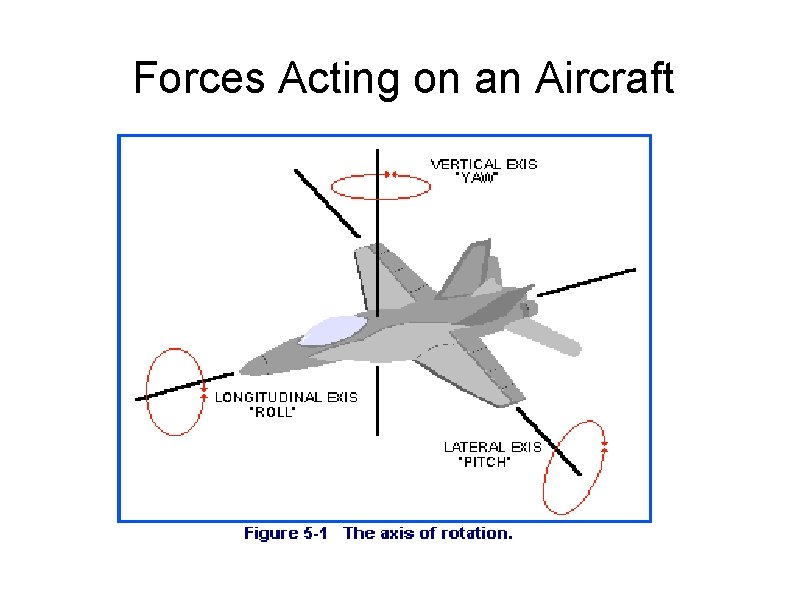
Control of an Aircraft ●An airplane in flight changes direction by movement around one or more of its three axes of rotation: lateral axis, vertical axis, and longitudinal axis. ●These axes are imaginary lines that run perpendicularly to each other through the exact weight center of the airplane.
Forces Acting on an Aircraft
Forces Acting on an Aircraft Rudder rotates the airplane around vertical axis.
Forces Acting on an Aircraft Ailerons rotate the airplane around longitudinal axis.
Forces Acting on an Aircraft Elevators rotate airplane around lateral axis.
Bernoulli Principle ●http: //www. fizik. si/index. php? view=video&id=90 %3 Abernoullijevprincip&option=com_jomtube&lang=en ●http: //www. fizik. si/index. php? view=video&id=39 %3 Abernoulli-2 -&option=com_jomtube&lang=en
Bernoulli Principle ●So to create a lifting force, we can take advantage of the Bernoulli Principle by moving air (the fluid) over the top of the wing creating a lifting force. ●Rather than causing the air to move over the wing, we will let the air remain stationary and move the wing through the air (thrust).