
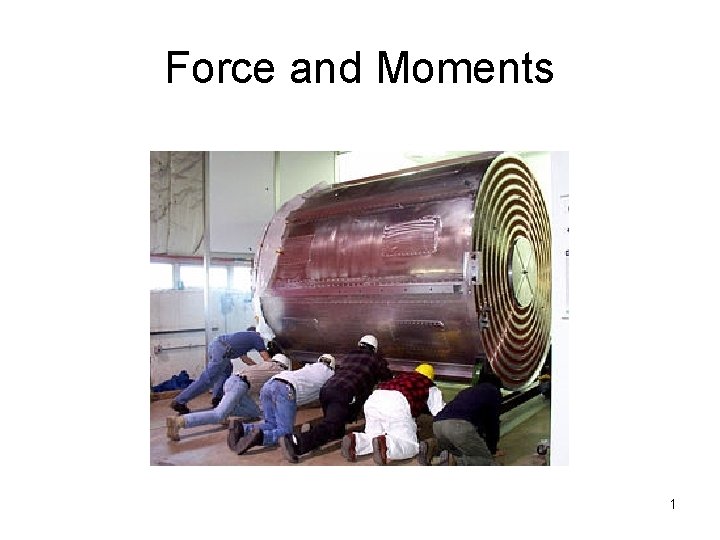
Force and Moments 1 Plan for Section Lesson
- Slides: 37
Force and Moments 1
Plan for Section • Lesson 1 - OP 4 – understand the concept of force – recall that the Newton is the unit of force – describe forces and their effects • Lesson 2 - OP 5 – investigate examples of friction and the effect of lubrication 2
• Lesson 3 - OP 7 – understand that weight is the force of gravity and that weight varies with location – recall that mass in kilograms multiplied by 10 is approximately equal to weight in Newtons on the surface of the earth • Lesson 4 - OP 6 – investigate the relationship between the extension of a spring and the applied force 3
• Lesson 5 - OP 9 – investigate the law of the lever – recall two everyday applications of levers • Lesson 6 - OP 8 – find the centre of gravity of a thin lamina • Lesson 7 - OP 8 – investigate the role of centre of gravity in design for stability and equilibrium • Lesson 8 – Assessment !!! 4
Lesson 1 • OP 4 – understand the concept of force – recall that the newton is the unit of force – describe forces and their effects 5
What is a Force? • A force is anything which causes an object to accelerate, i. e to change its velocity. • Force is measured in newtons (N) 6
Examples of forces • A push or a pull • Weight (the pull of gravity) • Friction (a force between sliding surfaces) • Electric (force between electric charges) • Magnetic (force between magnets) 7
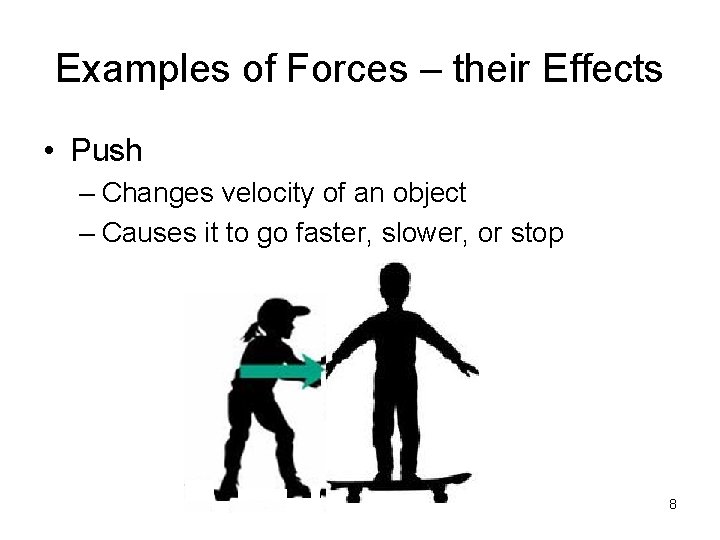
Examples of Forces – their Effects • Push – Changes velocity of an object – Causes it to go faster, slower, or stop 8
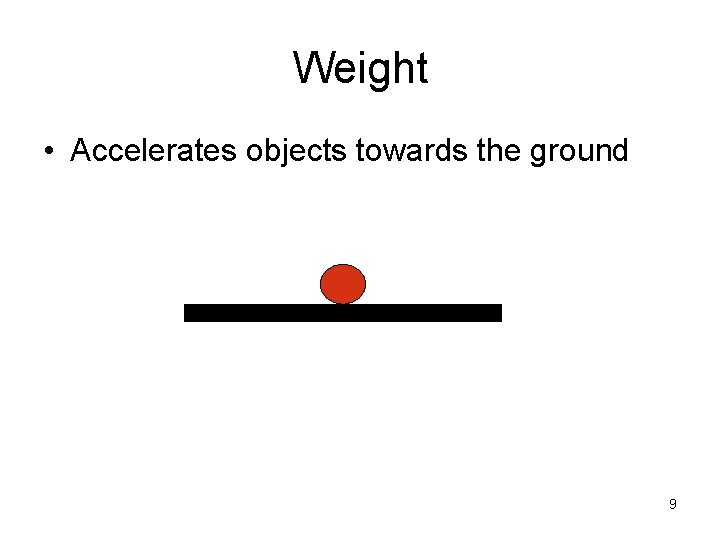
Weight • Accelerates objects towards the ground 9
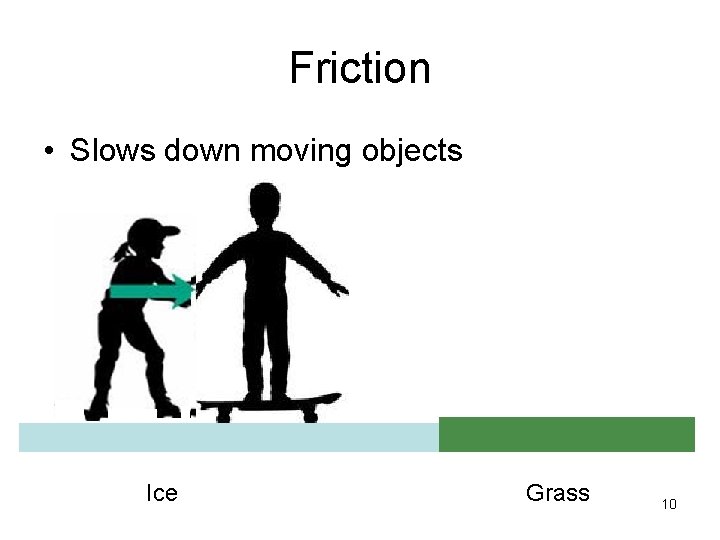
Friction • Slows down moving objects Ice Grass 10
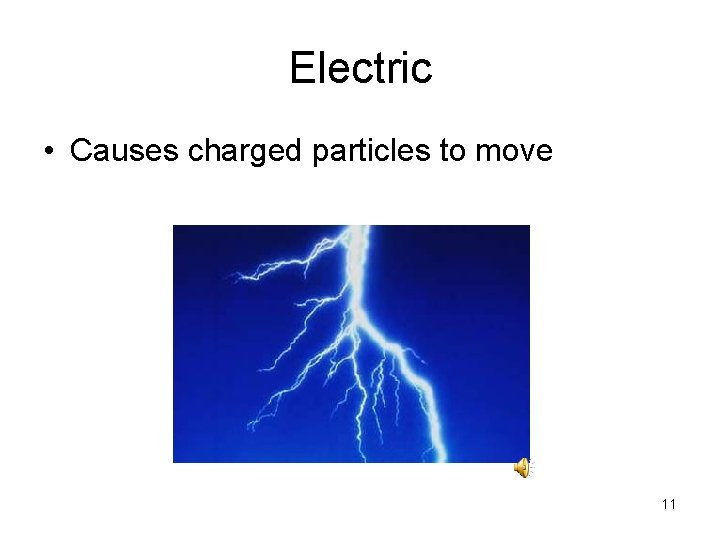
Electric • Causes charged particles to move 11
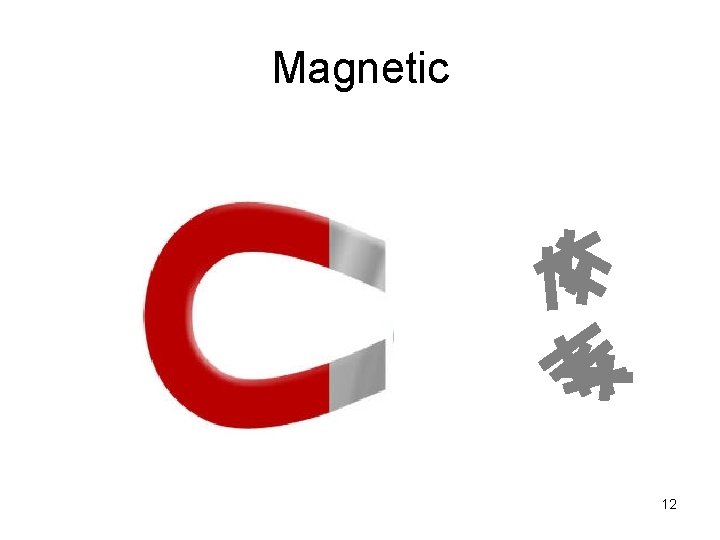
Magnetic 12
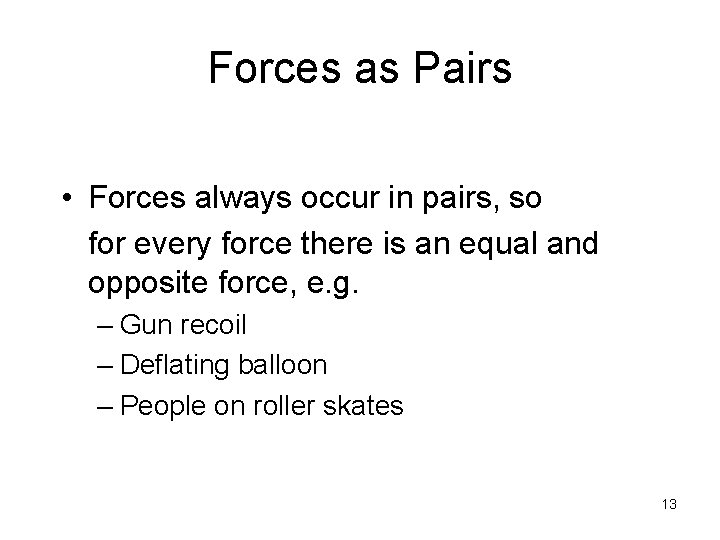
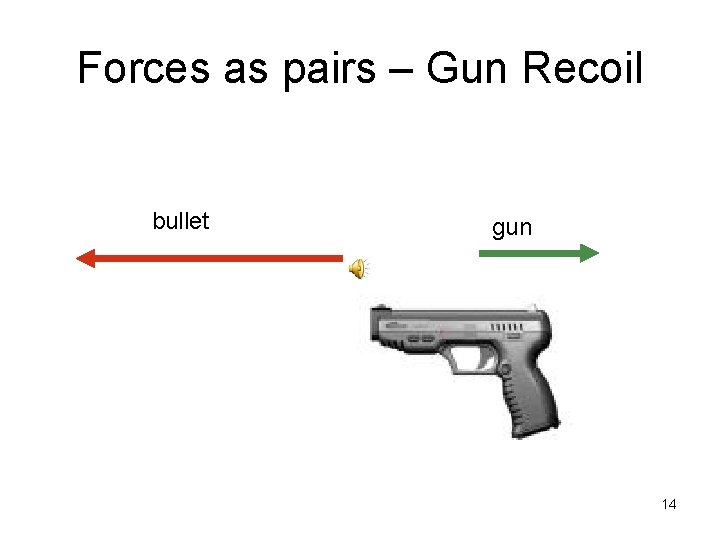
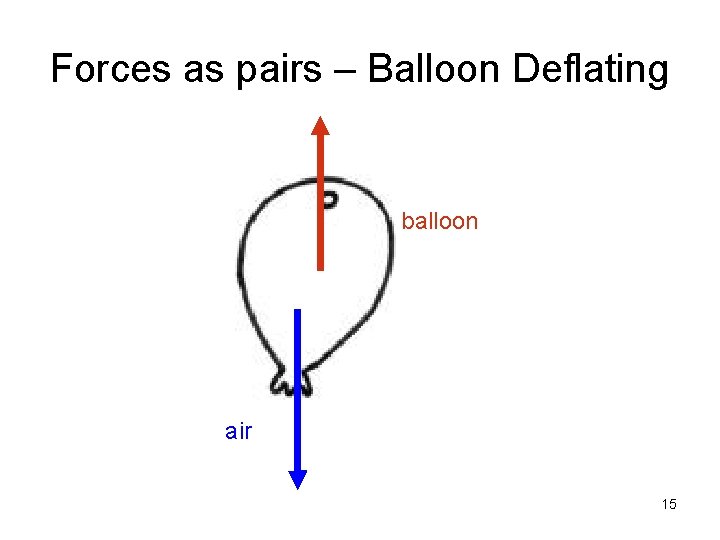
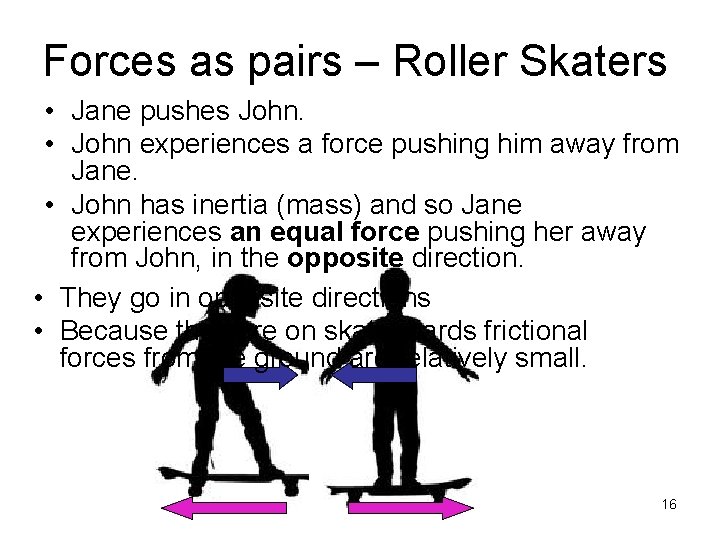
Forces as Pairs • Forces always occur in pairs, so for every force there is an equal and opposite force, e. g. – Gun recoil – Deflating balloon – People on roller skates 13
Forces as pairs – Gun Recoil bullet gun 14
Forces as pairs – Balloon Deflating balloon air 15
Forces as pairs – Roller Skaters • Jane pushes John. • John experiences a force pushing him away from Jane. • John has inertia (mass) and so Jane experiences an equal force pushing her away from John, in the opposite direction. • They go in opposite directions • Because they are on skateboards frictional forces from the ground are relatively small. 16
Lesson 2 • OP 5 – investigate examples of friction and the effect of lubrication 17
What is friction? • Friction is – the force that opposes sliding motion between two surfaces • Friction slows down motion of objects sliding over surfaces. 18
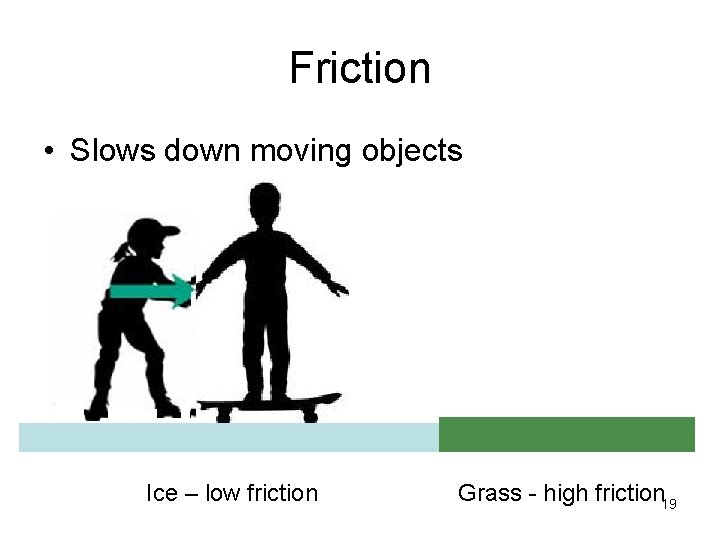
Friction • Slows down moving objects Ice – low friction Grass - high friction 19
Note • Friction is a property associated with TWO surfaces that can slide over one another.
Examples of friction • High friction – Car tyres on tarmac – Rubber on glass – Rubber soled shoes on cement – Glass on damp glass Low friction – Car tyres on ice – Steel on steel (smooth) – Glass on glass (very dry or very wet) – Polythene on polythene 21
Lubricants • How do we reduce friction? • We introduce a lubricant – we lubricate the surfaces causing friction • Examples of lubricants are: – Oil – Grease 22
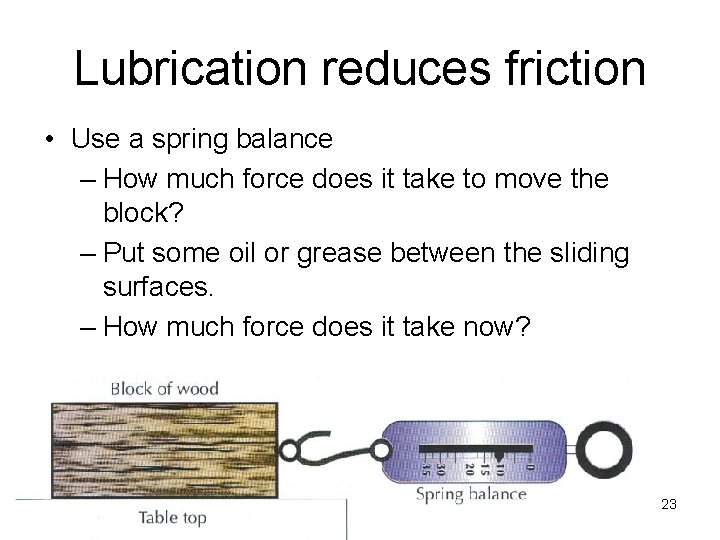
Lubrication reduces friction • Use a spring balance – How much force does it take to move the block? – Put some oil or grease between the sliding surfaces. – How much force does it take now? 23
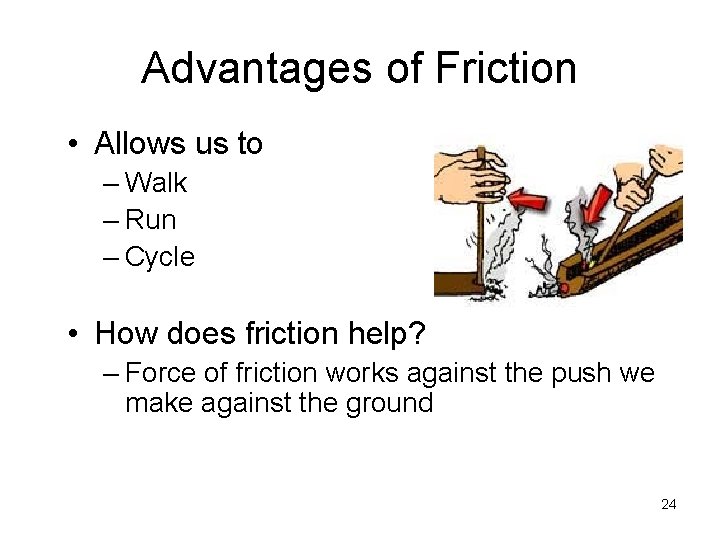
Advantages of Friction • Allows us to – Walk – Run – Cycle • How does friction help? – Force of friction works against the push we make against the ground 24
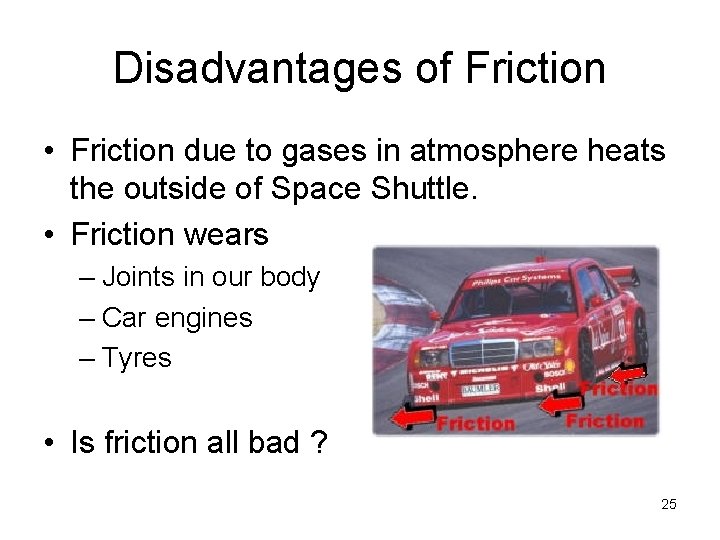
Disadvantages of Friction • Friction due to gases in atmosphere heats the outside of Space Shuttle. • Friction wears – Joints in our body – Car engines – Tyres • Is friction all bad ? 25
Lesson 3 • OP 7 – understand that weight is the force of gravity and that weight varies with location – recall that mass in kilograms multiplied by 10 is approximately equal to weight in newtons on the surface of the earth 26
Weight • The weight of an object is the force with which it is pulled towards the Earth. • It is due to the attraction between the Earth and a body. • Weight is a force, so it is measured in newtons (N). 27
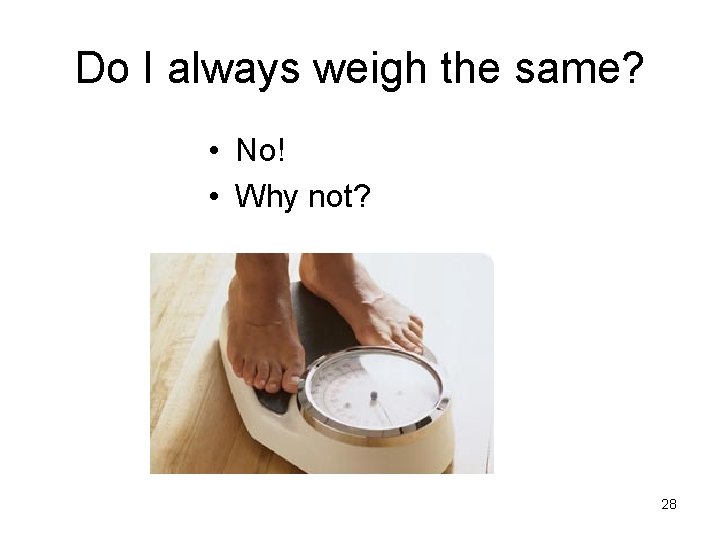
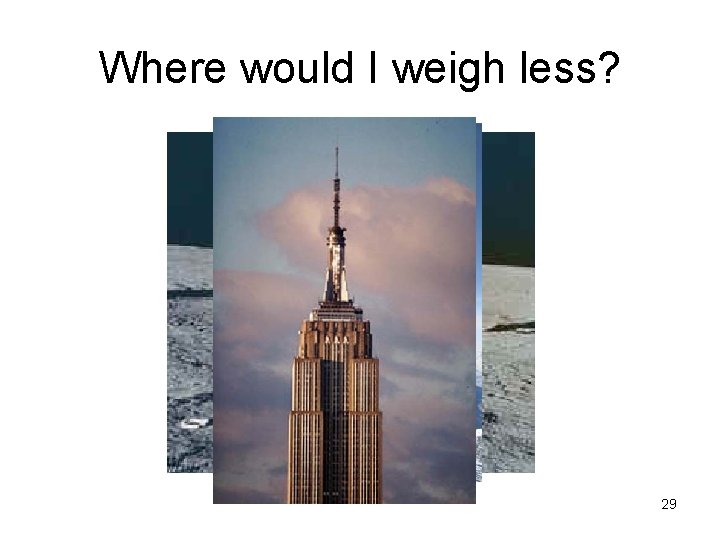
Do I always weigh the same? • No! • Why not? 28
Where would I weigh less? 29
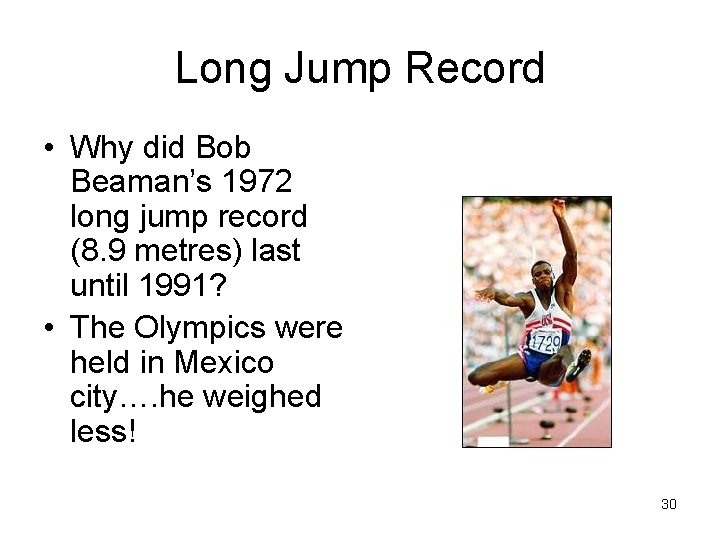
Long Jump Record • Why did Bob Beaman’s 1972 long jump record (8. 9 metres) last until 1991? • The Olympics were held in Mexico city…. he weighed less! 30
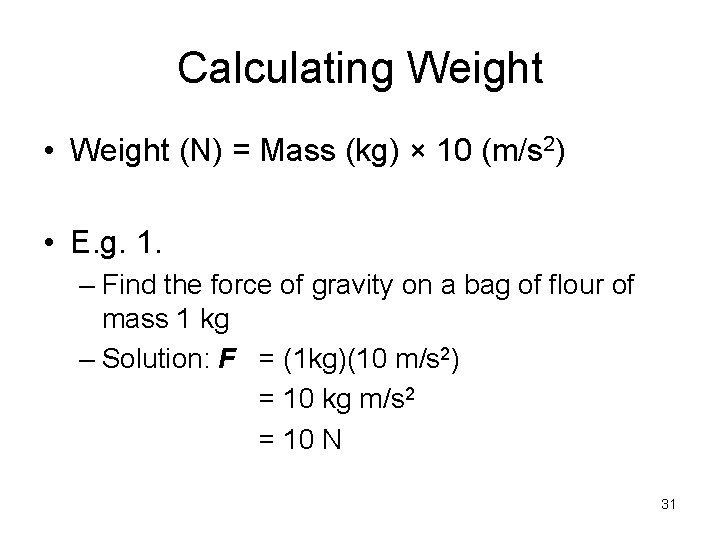
Calculating Weight • Weight (N) = Mass (kg) × 10 (m/s 2) • E. g. 1. – Find the force of gravity on a bag of flour of mass 1 kg – Solution: F = (1 kg)(10 m/s 2) = 10 kg m/s 2 = 10 N 31
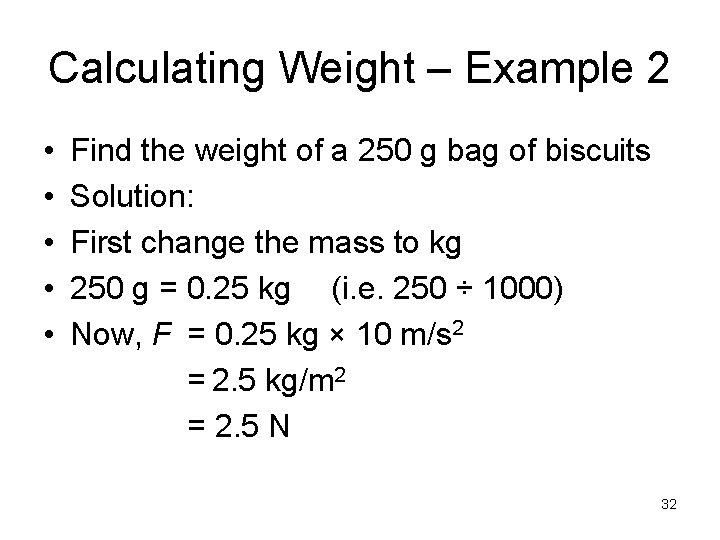
Calculating Weight – Example 2 • • • Find the weight of a 250 g bag of biscuits Solution: First change the mass to kg 250 g = 0. 25 kg (i. e. 250 ÷ 1000) Now, F = 0. 25 kg × 10 m/s 2 = 2. 5 kg/m 2 = 2. 5 N 32
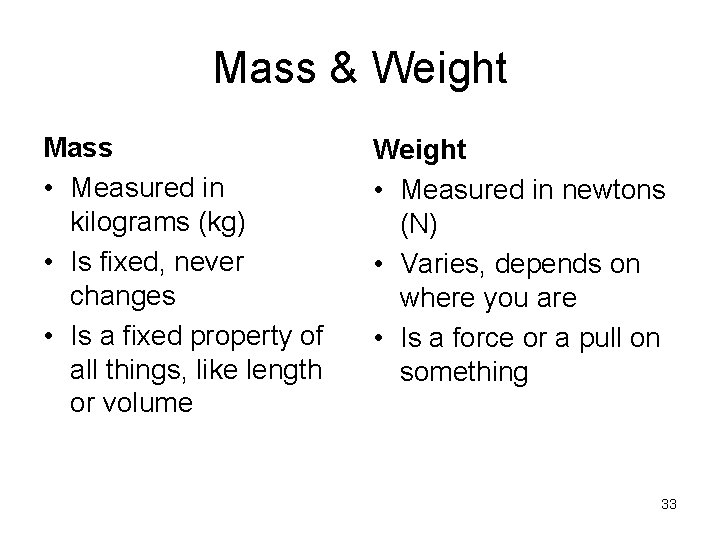
Mass & Weight Mass • Measured in kilograms (kg) • Is fixed, never changes • Is a fixed property of all things, like length or volume Weight • Measured in newtons (N) • Varies, depends on where you are • Is a force or a pull on something 33
Lesson 4 • OP 6 – investigate the relationship between the extension of a spring and the applied force 34
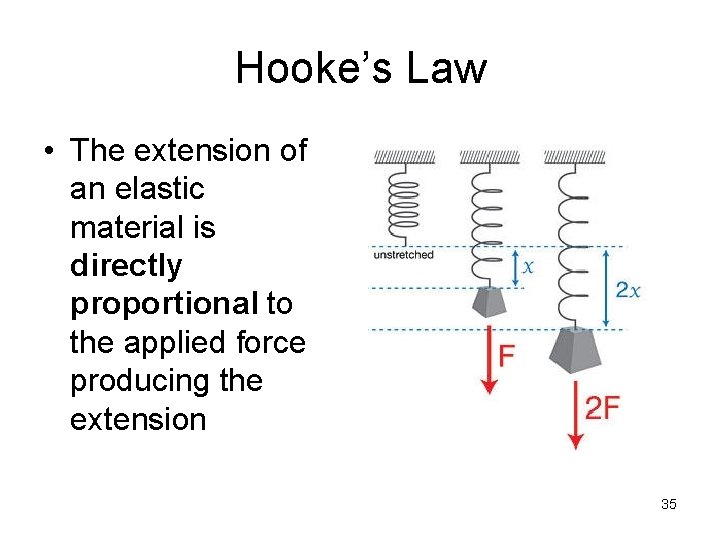
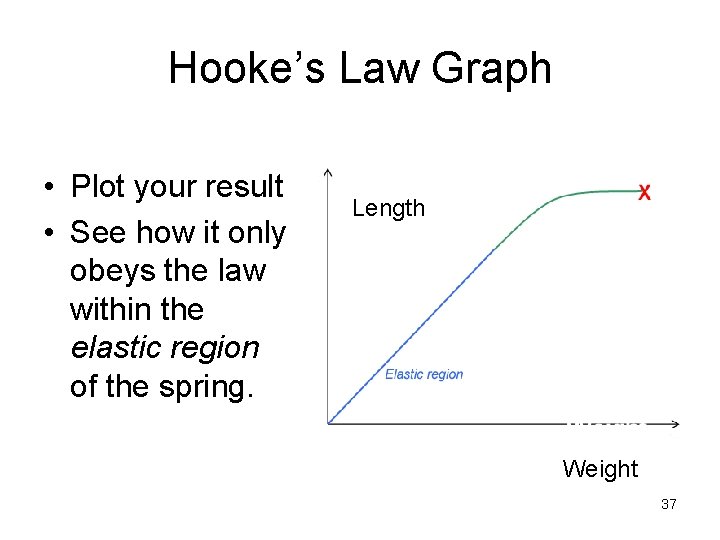
Hooke’s Law • The extension of an elastic material is directly proportional to the applied force producing the extension 35
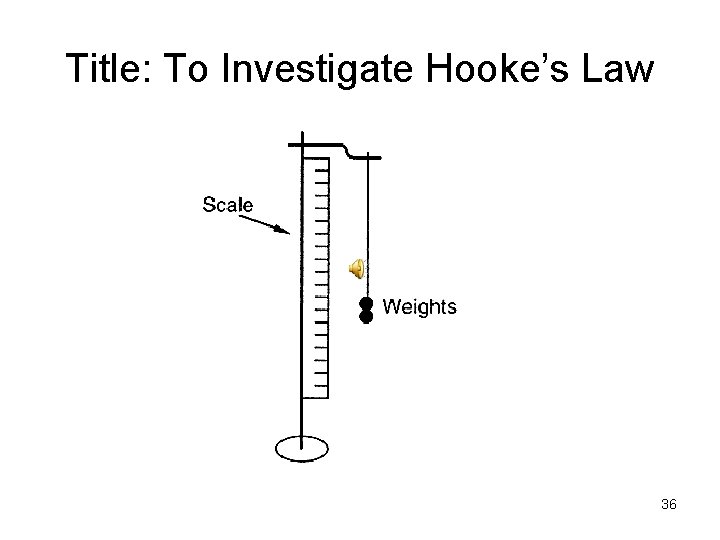
Title: To Investigate Hooke’s Law 36
Hooke’s Law Graph • Plot your result • See how it only obeys the law within the elastic region of the spring. Length Weight 37