
Foraminifera Marcelle Bou DagherFadel What are Foraminifera singlecelled
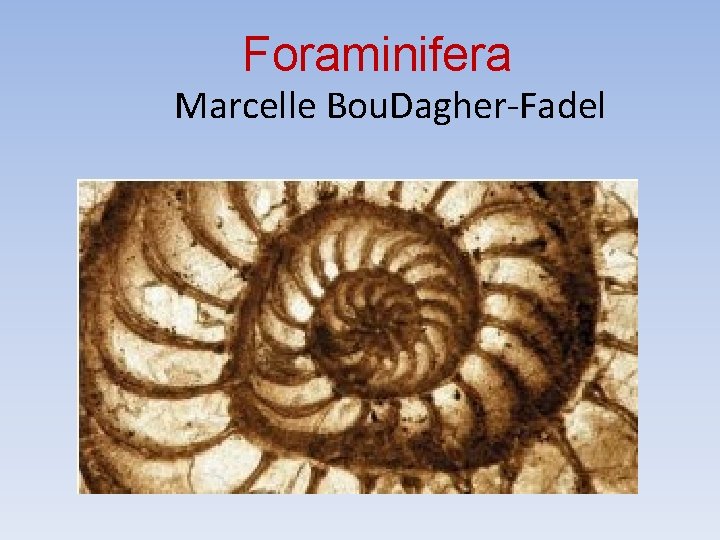
Foraminifera Marcelle Bou. Dagher-Fadel
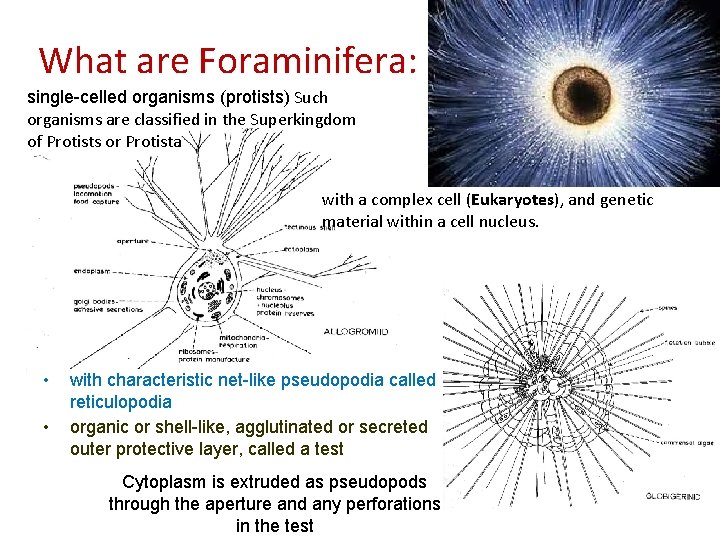
What are Foraminifera: single-celled organisms (protists) Such organisms are classified in the Superkingdom of Protists or Protista with a complex cell (Eukaryotes), and genetic material within a cell nucleus. • • with characteristic net-like pseudopodia called reticulopodia organic or shell-like, agglutinated or secreted outer protective layer, called a test Cytoplasm is extruded as pseudopods through the aperture and any perforations in the test
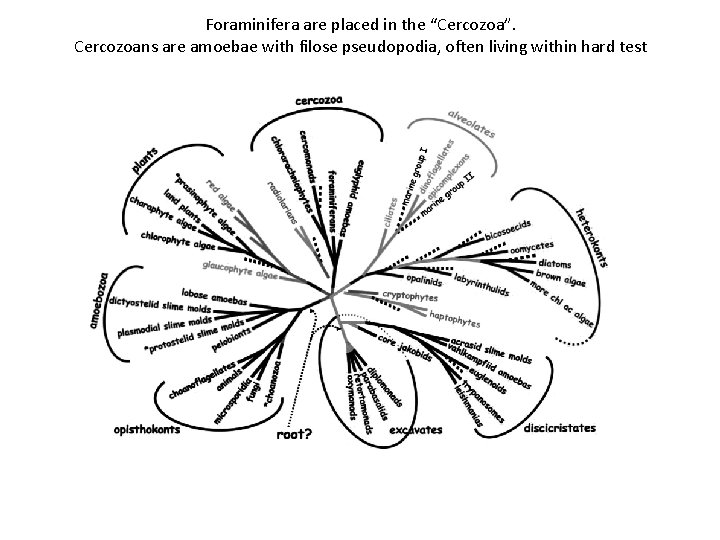
Foraminifera are placed in the “Cercozoa”. Cercozoans are amoebae with filose pseudopodia, often living within hard test
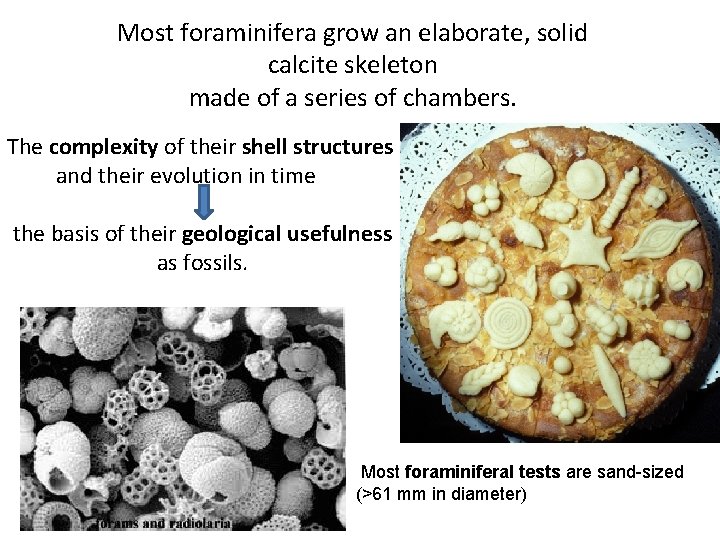
Most foraminifera grow an elaborate, solid calcite skeleton made of a series of chambers. The complexity of their shell structures and their evolution in time the basis of their geological usefulness as fossils. Most foraminiferal tests are sand-sized (>61 mm in diameter)
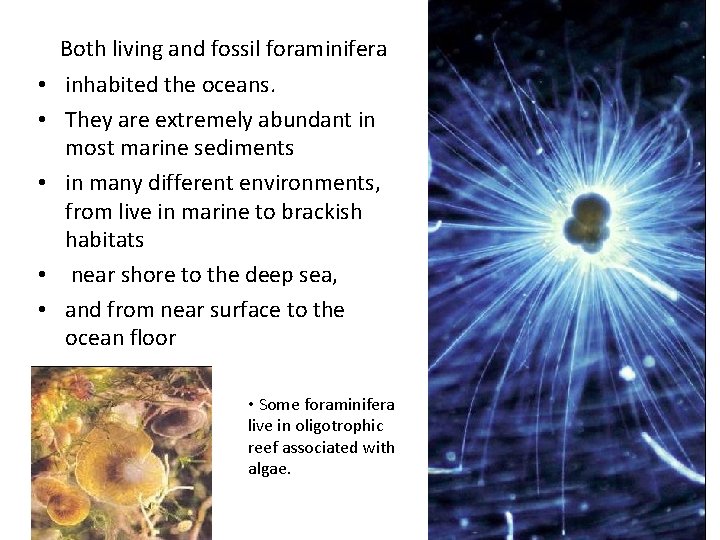
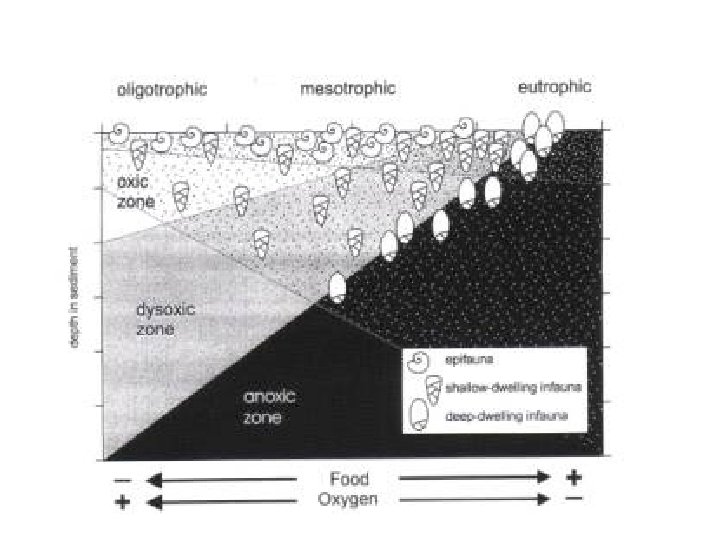
• • • Both living and fossil foraminifera inhabited the oceans. They are extremely abundant in most marine sediments in many different environments, from live in marine to brackish habitats near shore to the deep sea, and from near surface to the ocean floor • Some foraminifera live in oligotrophic reef associated with algae.
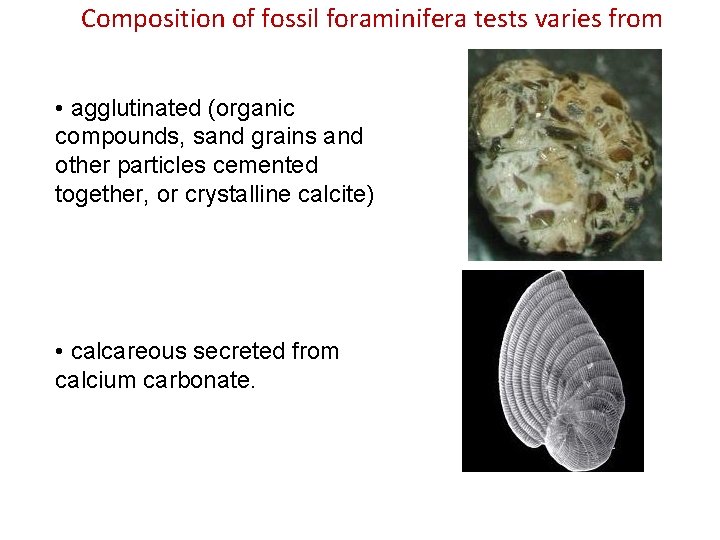
Composition of fossil foraminifera tests varies from • agglutinated (organic compounds, sand grains and other particles cemented together, or crystalline calcite) • calcareous secreted from calcium carbonate.
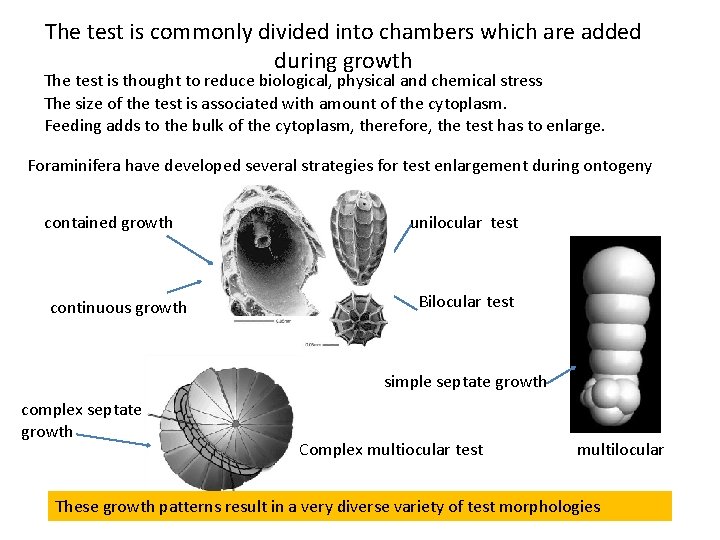
The test is commonly divided into chambers which are added during growth The test is thought to reduce biological, physical and chemical stress The size of the test is associated with amount of the cytoplasm. Feeding adds to the bulk of the cytoplasm, therefore, the test has to enlarge. Foraminifera have developed several strategies for test enlargement during ontogeny contained growth continuous growth unilocular test Bilocular test simple septate growth complex septate growth Complex multiocular test multilocular These growth patterns result in a very diverse variety of test morphologies
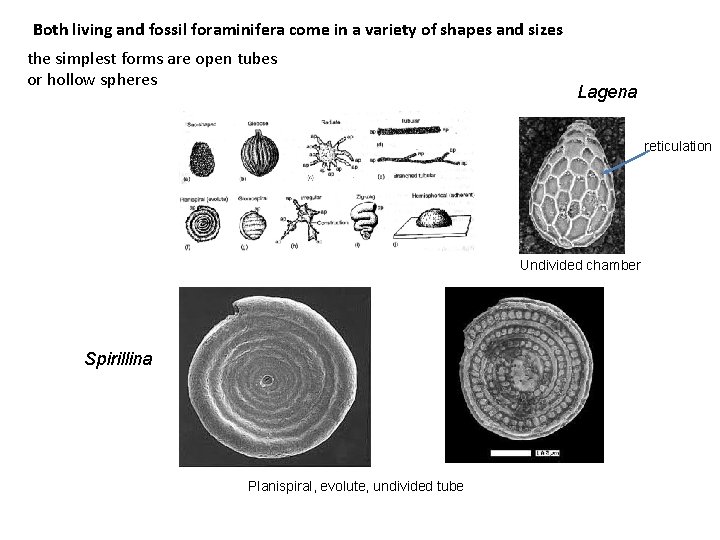
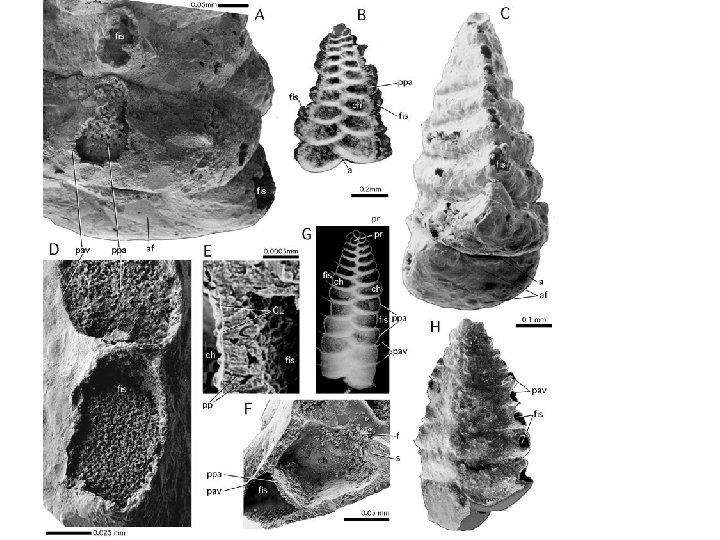
Both living and fossil foraminifera come in a variety of shapes and sizes the simplest forms are open tubes or hollow spheres Lagena reticulation Undivided chamber Spirillina Planispiral, evolute, undivided tube
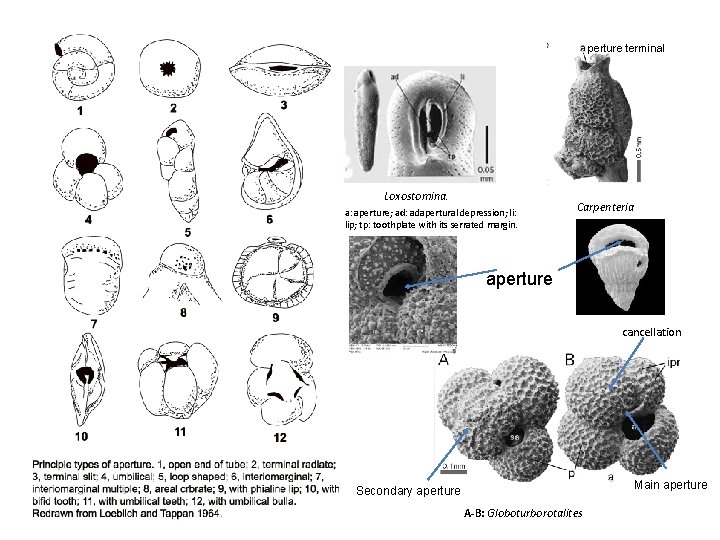
perture terminal Loxostomina. a: aperture; ad: adapertural depression; li: lip; tp: toothplate with its serrated margin. Carpenteria aperture cancellation Main aperture Secondary aperture A-B: Globoturborotalites
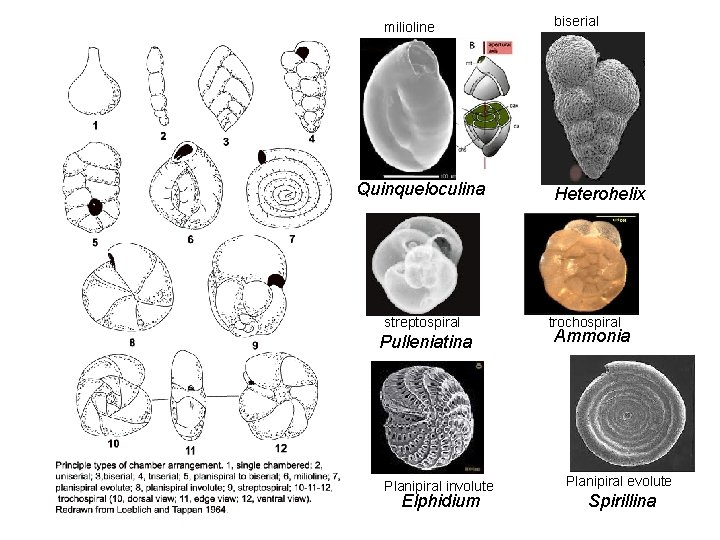
milioline Quinqueloculina streptospiral Pulleniatina Planipiral involute Elphidium biserial Heterohelix trochospiral Ammonia Planipiral evolute Spirillina
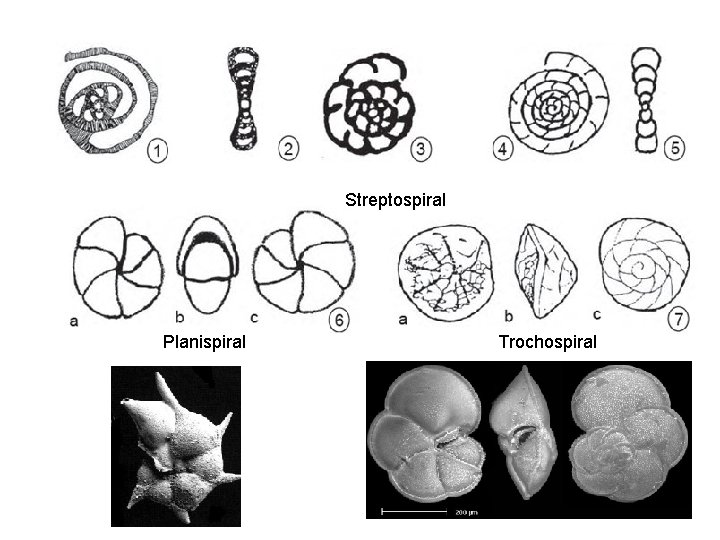
Streptospiral Planispiral Trochospiral
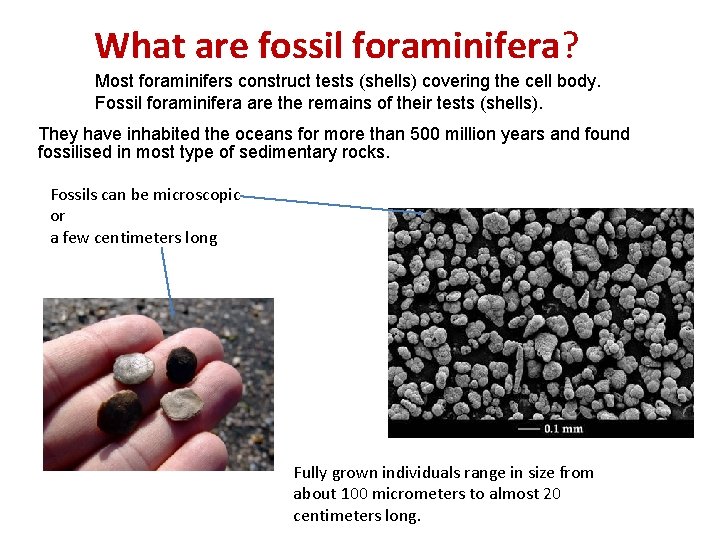
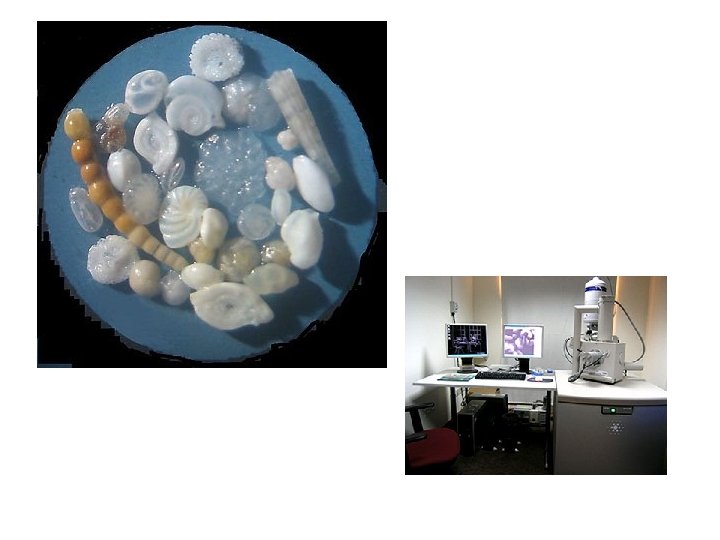
What are fossil foraminifera? Most foraminifers construct tests (shells) covering the cell body. Fossil foraminifera are the remains of their tests (shells). They have inhabited the oceans for more than 500 million years and found fossilised in most type of sedimentary rocks. Fossils can be microscopic or a few centimeters long Fully grown individuals range in size from about 100 micrometers to almost 20 centimeters long.
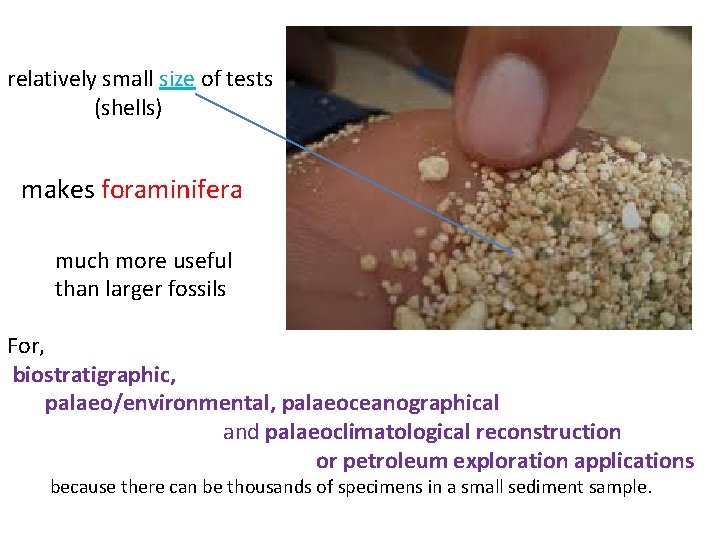
relatively small size of tests (shells) makes foraminifera much more useful than larger fossils For, biostratigraphic, palaeo/environmental, palaeoceanographical and palaeoclimatological reconstruction or petroleum exploration applications because there can be thousands of specimens in a small sediment sample.
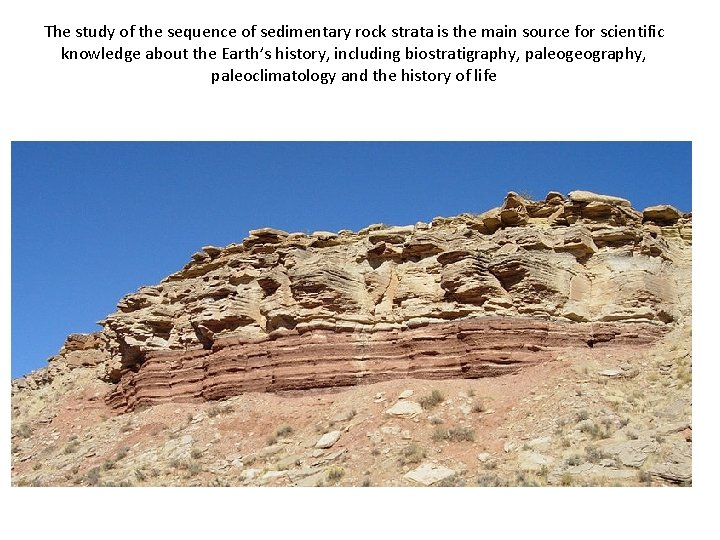
The study of the sequence of sedimentary rock strata is the main source for scientific knowledge about the Earth’s history, including biostratigraphy, paleogeography, paleoclimatology and the history of life
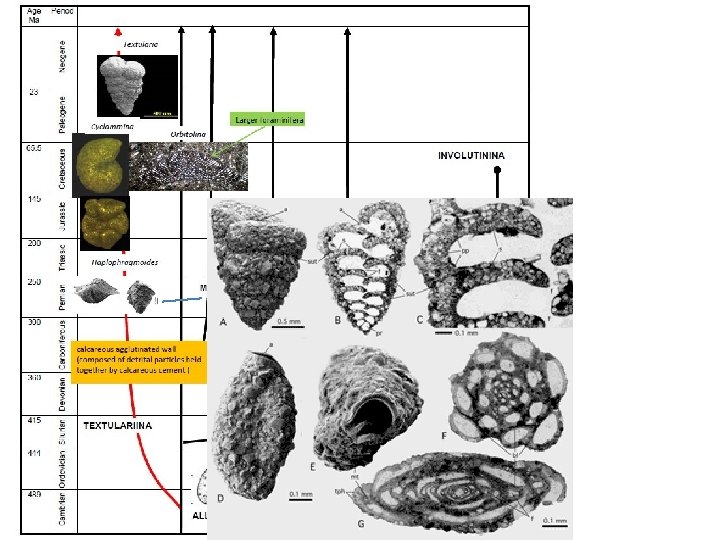
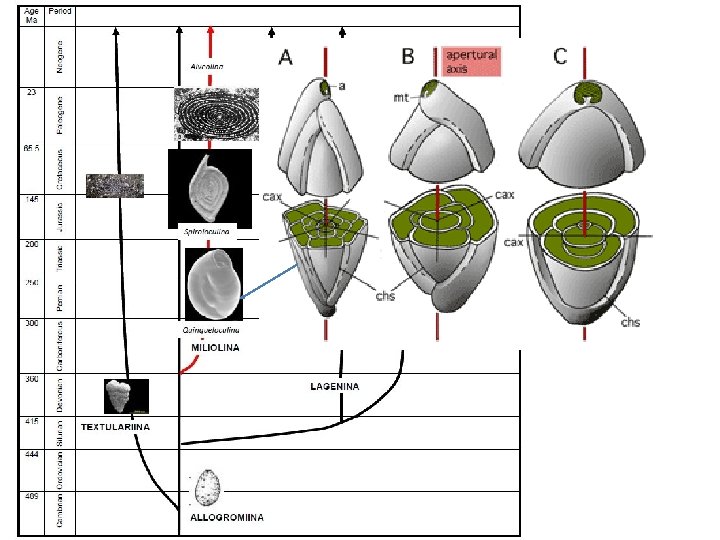
• • • • • Orders of foraminifera (underlined include larger foraminifera (see Bou. Dagher-Fadel, 2008). In red includes planktonic foraminifera) ALLOGROMIDA: organic wall, usually 1 chamber; Cambrian-Recent ASTRORHIZIDA: agglutinated, organic cement, usually 1 chamber or branching tube; Cambrian. Recent LITUOLIDA: agglutinated, organic cement, many chambers, usually planispiral; Cambrian. Recent TROCHAMMINIDA: agglutinated; organic cement, many chambers, usually trochospiral; Cambrian. TEXTULARIIDA: agglutinated, low Mg-calcite cement; Cambrian-Recent FUSULINIDA: microgranular calcite; many complex chambers; Silurian-Permian MILIOLIDA: high Mg calcite, imperforate, many chambers (porcellaneous, no pores); miliolid chamber arrangment; Carboniferous-Recent CARTERINIDA: low Mg calcite, hyaline, pores or no pores; spicules, plani- or trochospiral; Tertiary. Recent (? ) SPIRILLINIDA: low Mg calcite; hyaline; single crystal; spiral; Jurassic-Recent LAGENIDA: low Mg calcite, hyaline; pores, 1 or many chambers, uniserial or planispiral; monolamellar; Carboniferous-Recent BULIMINIDA: low Mg calcite; hyaline; pores; many chambers; bilamellar; toothplate; Triassic? -Recent ROTALIIDA: low Mg calcite; hyaline; pores; many chambers; bilamellar; trocho- or planispiral, annular, irregular; Triassic-Recent GLOBIGERINIDA: low Mg calcite (aragonite in few extinct forms); pores; many chambers; bilamellar; radial crystals (PLANKTON); Jurassic-Recent INVOLUTINIDA: aragonite; 2 chambers - 2 nd tube ROBERTINIDA: aragonite; pores; many chambers; trochospiral; Triassic-Recent SILICOLOCULINIDA: opaline silica, no pores; chamber arrangements as in miliolids; Miocene-Recent Genetic evidence suggests strongly that Allogromida (‘naked’) and Astrorhizida (agglutinated) are one order.
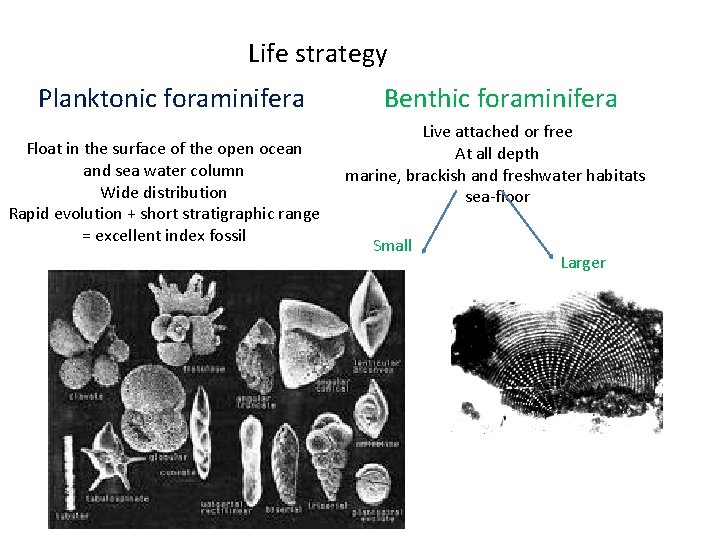
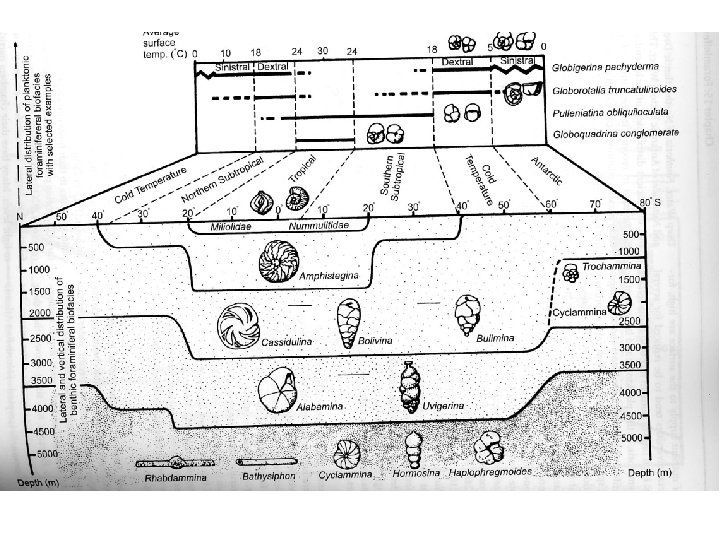
Life strategy Planktonic foraminifera Float in the surface of the open ocean and sea water column Wide distribution Rapid evolution + short stratigraphic range = excellent index fossil Benthic foraminifera Live attached or free At all depth marine, brackish and freshwater habitats sea-floor Small Larger
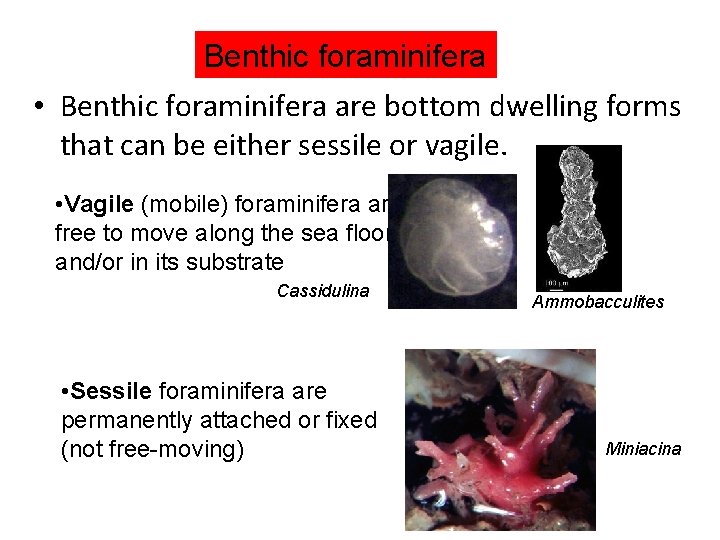
Benthic foraminifera • Benthic foraminifera are bottom dwelling forms that can be either sessile or vagile. • Vagile (mobile) foraminifera are free to move along the sea floor and/or in its substrate Cassidulina • Sessile foraminifera are permanently attached or fixed (not free-moving) Ammobacculites Miniacina
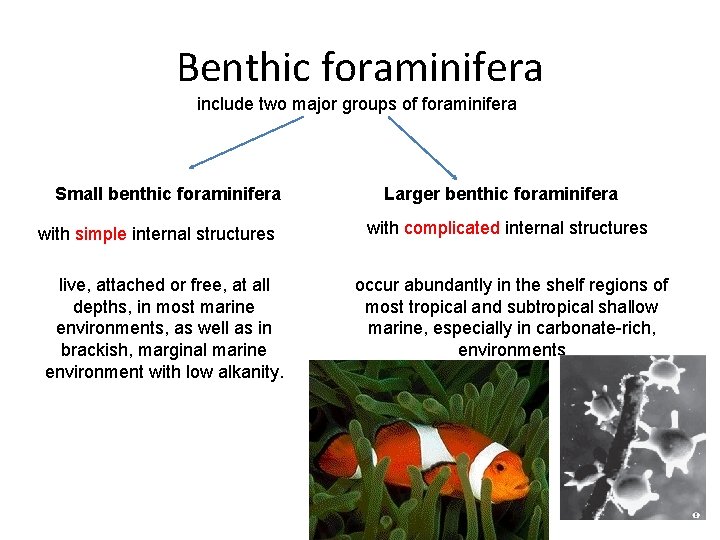
Benthic foraminifera include two major groups of foraminifera Small benthic foraminifera with simple internal structures live, attached or free, at all depths, in most marine environments, as well as in brackish, marginal marine environment with low alkanity. Larger benthic foraminifera with complicated internal structures occur abundantly in the shelf regions of most tropical and subtropical shallow marine, especially in carbonate-rich, environments
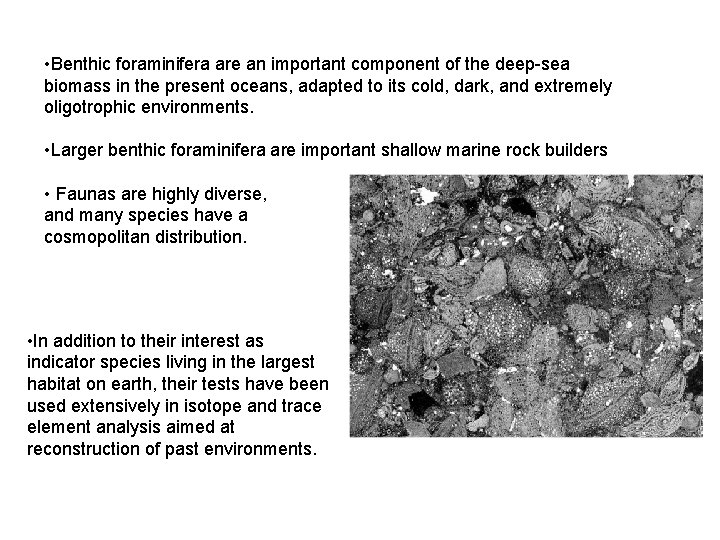
• Benthic foraminifera are an important component of the deep-sea biomass in the present oceans, adapted to its cold, dark, and extremely oligotrophic environments. • Larger benthic foraminifera are important shallow marine rock builders • Faunas are highly diverse, and many species have a cosmopolitan distribution. • In addition to their interest as indicator species living in the largest habitat on earth, their tests have been used extensively in isotope and trace element analysis aimed at reconstruction of past environments.
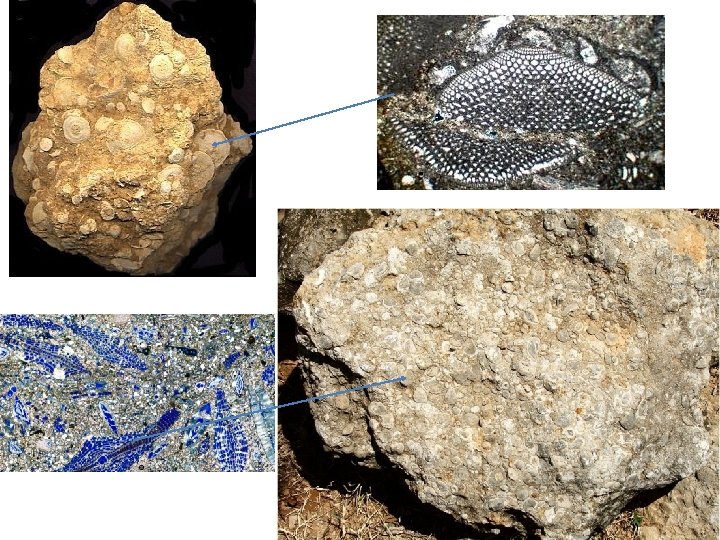
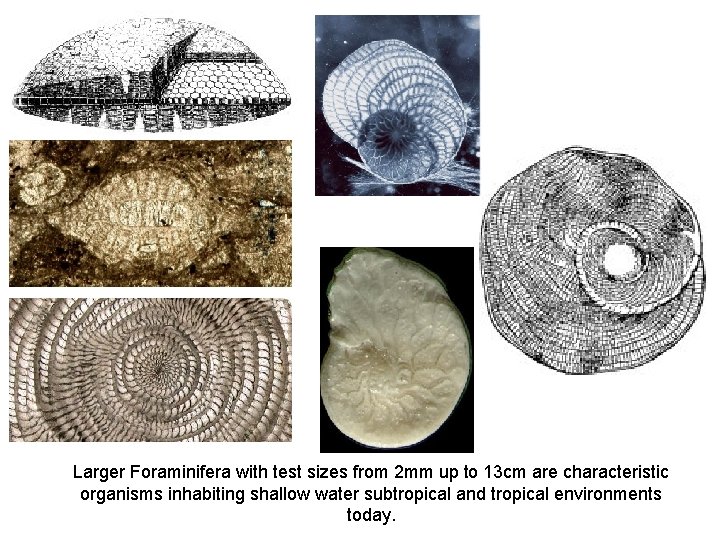
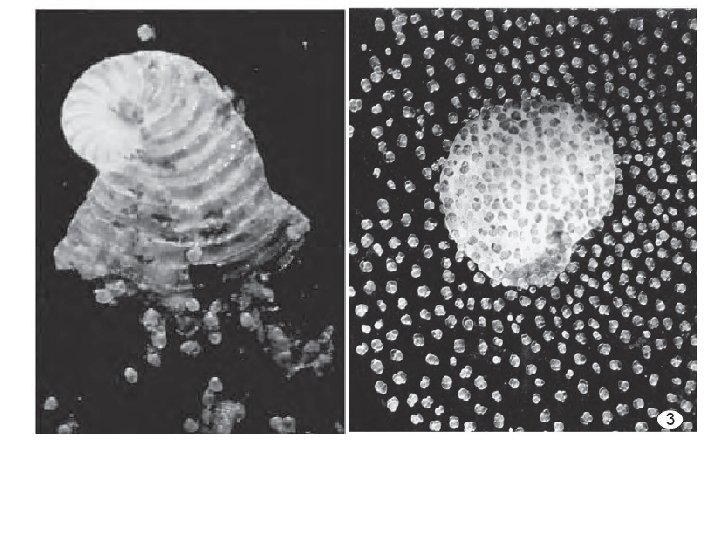
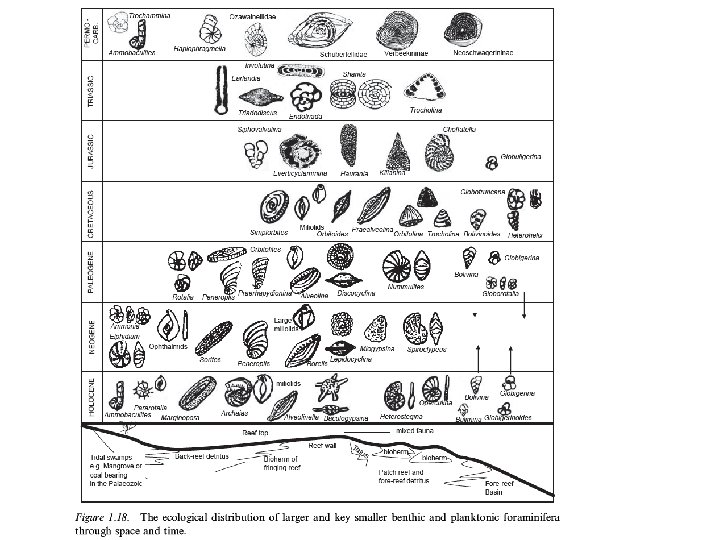
Larger Foraminifera with test sizes from 2 mm up to 13 cm are characteristic organisms inhabiting shallow water subtropical and tropical environments today.
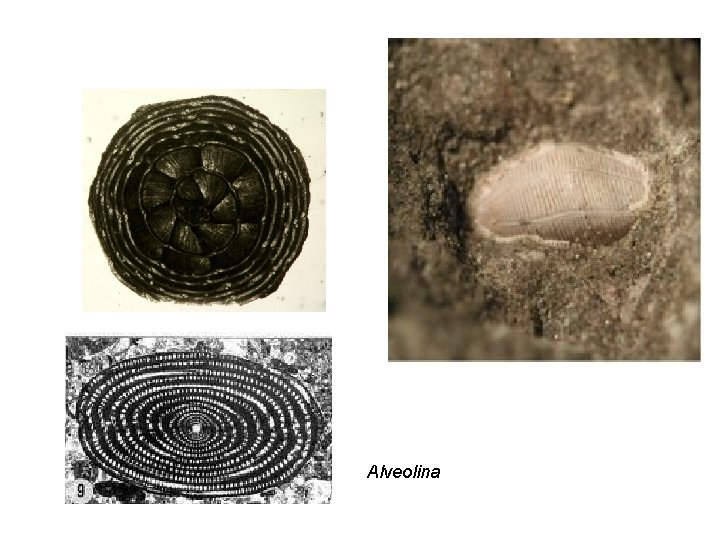
Alveolina
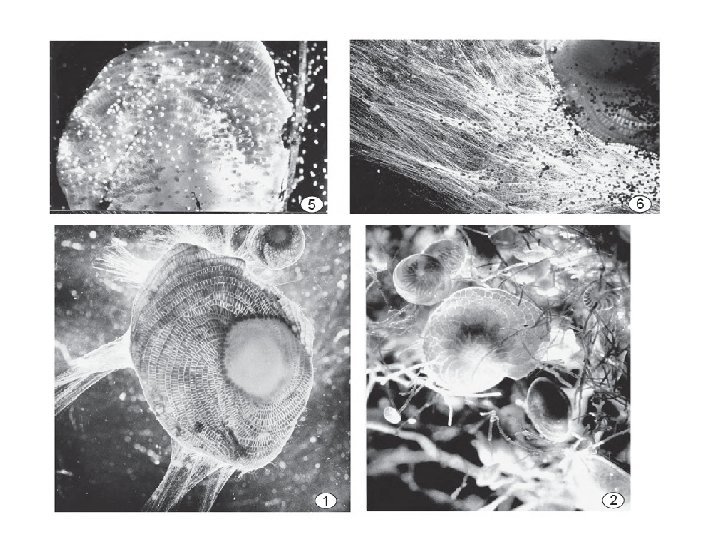
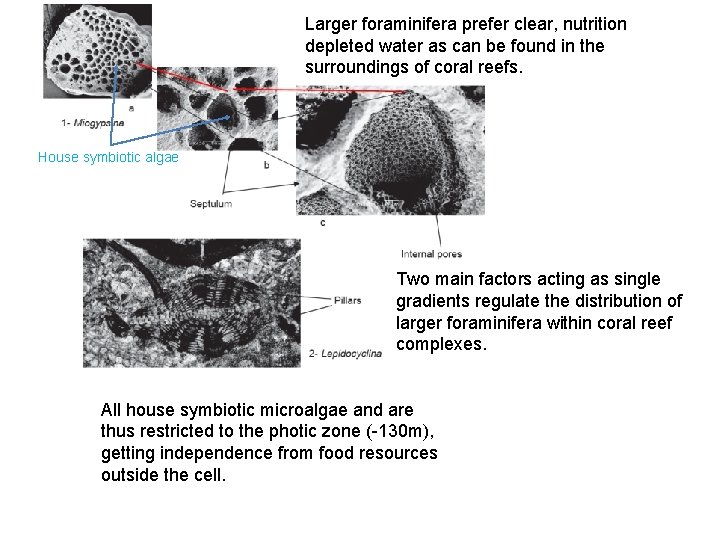
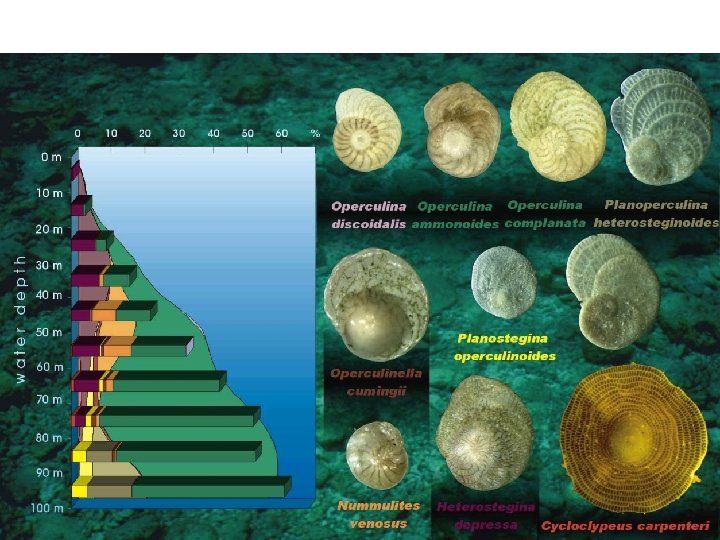
Larger foraminifera prefer clear, nutrition depleted water as can be found in the surroundings of coral reefs. House symbiotic algae Two main factors acting as single gradients regulate the distribution of larger foraminifera within coral reef complexes. All house symbiotic microalgae and are thus restricted to the photic zone (-130 m), getting independence from food resources outside the cell.
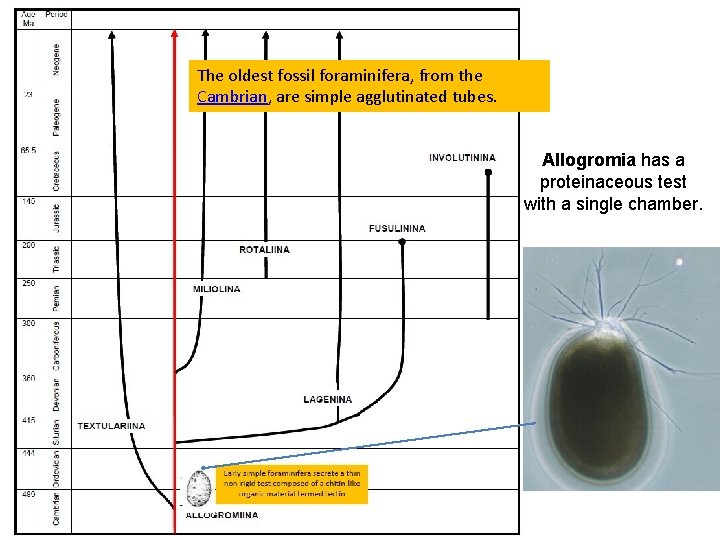
The oldest fossil foraminifera, from the Cambrian, are simple agglutinated tubes. Allogromia has a proteinaceous test with a single chamber.
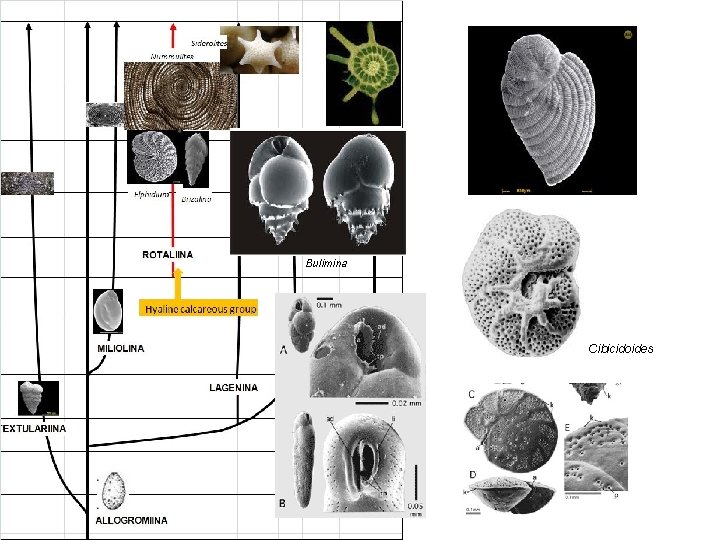
Bulimina Cibicidoides
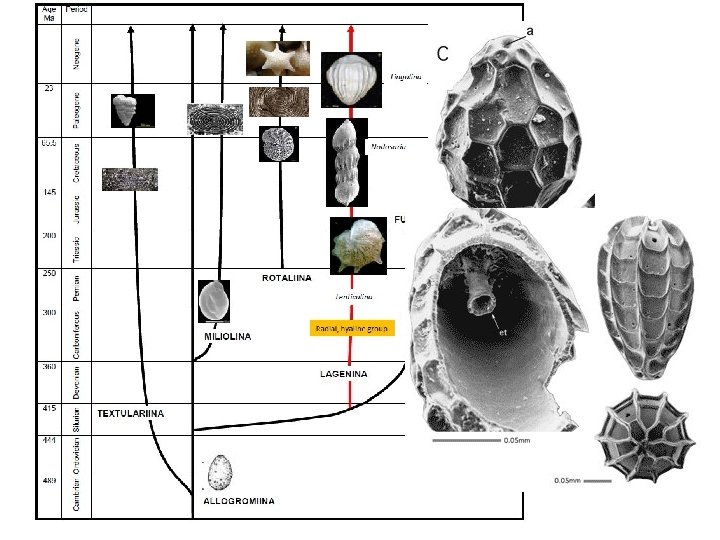
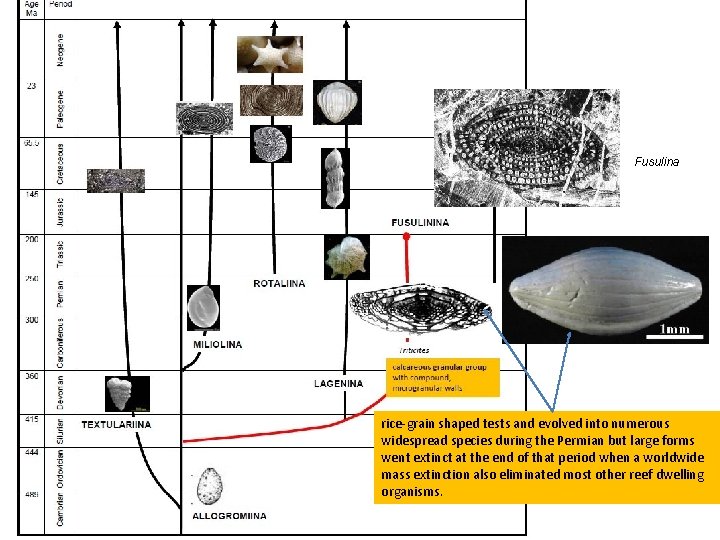
Fusulina rice-grain shaped tests and evolved into numerous widespread species during the Permian but large forms went extinct at the end of that period when a worldwide mass extinction also eliminated most other reef dwelling organisms.
Bou. Dagher-Fadel, M. K. , 2008. Evolution and Geological Significance of Larger Benthic Foraminifera, Developments in Palaeontology and Stratigraphy, 21, Elsevier, Amsterdam, pp 544. Haynes, J. R. , 1981. Foraminifera. Mac. Millan, London, pp 433.
- Slides: 42