
For internal use only EC proposal for the
- Slides: 20
For internal use only EC proposal for the next MFF/smart specialisation Marek Przeor Team Leader - Smart Growth G 1 Smart & Sustainable Policy Unit DG Regional and Urban Policy 25 October 2018 #Cohesion. Policy #EUinmy. Region
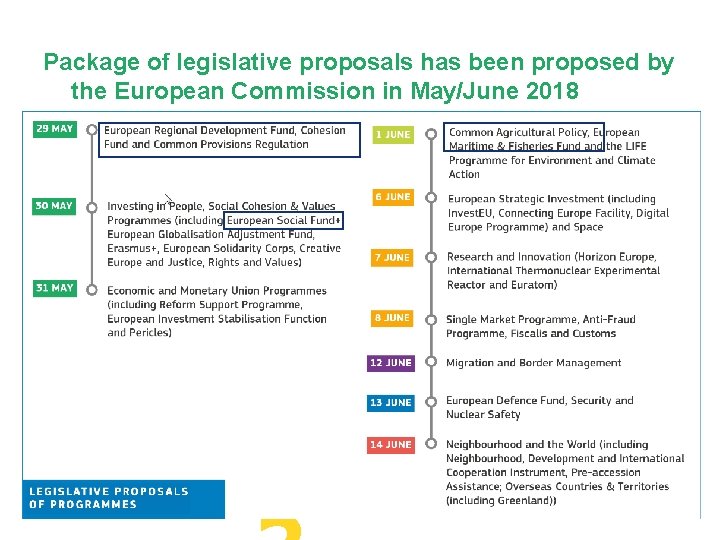
Package of legislative proposals has been proposed by the European Commission in May/June 2018
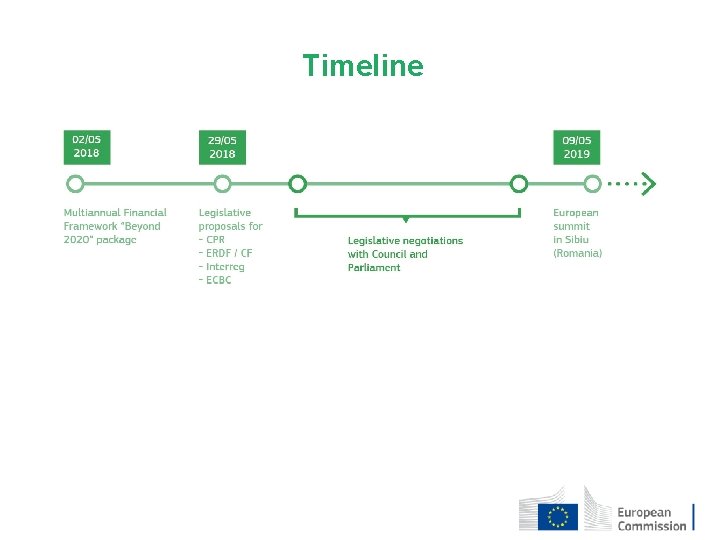
Timeline
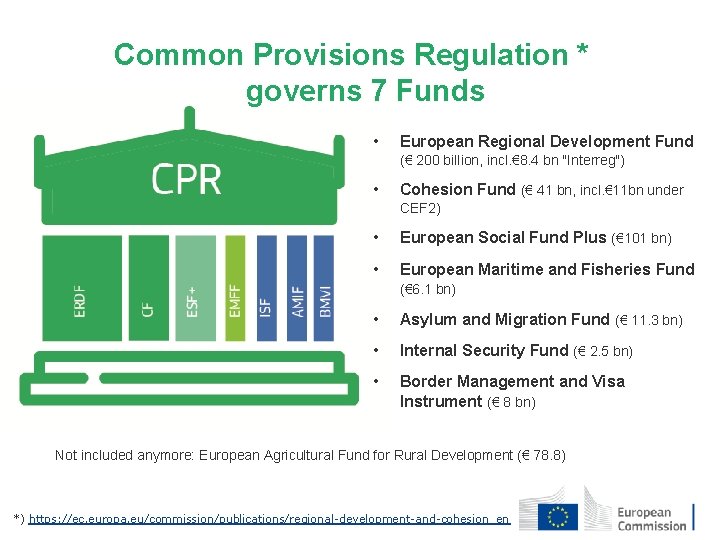
Common Provisions Regulation * governs 7 Funds • European Regional Development Fund (€ 200 billion, incl. € 8. 4 bn "Interreg") • Cohesion Fund (€ 41 bn, incl. € 11 bn under CEF 2) • European Social Fund Plus (€ 101 bn) • European Maritime and Fisheries Fund (€ 6. 1 bn) • Asylum and Migration Fund (€ 11. 3 bn) • Internal Security Fund (€ 2. 5 bn) • Border Management and Visa Instrument (€ 8 bn) Not included anymore: European Agricultural Fund for Rural Development (€ 78. 8) *) https: //ec. europa. eu/commission/publications/regional-development-and-cohesion_en
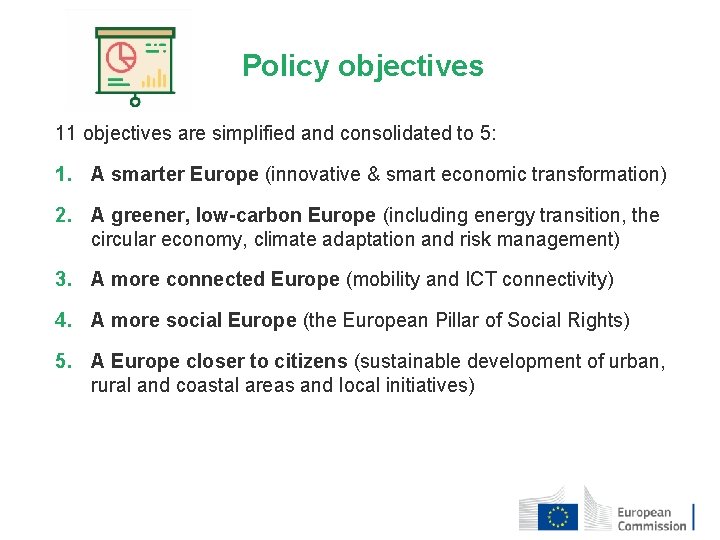
Policy objectives 11 objectives are simplified and consolidated to 5: 1. A smarter Europe (innovative & smart economic transformation) 2. A greener, low-carbon Europe (including energy transition, the circular economy, climate adaptation and risk management) 3. A more connected Europe (mobility and ICT connectivity) 4. A more social Europe (the European Pillar of Social Rights) 5. A Europe closer to citizens (sustainable development of urban, rural and coastal areas and local initiatives)
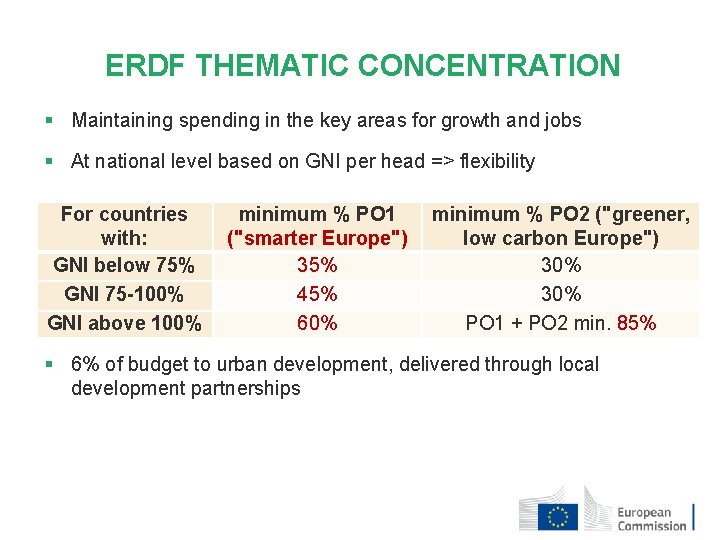
ERDF THEMATIC CONCENTRATION § Maintaining spending in the key areas for growth and jobs § At national level based on GNI per head => flexibility For countries with: GNI below 75% GNI 75 -100% GNI above 100% minimum % PO 1 ("smarter Europe") 35% 45% 60% minimum % PO 2 ("greener, low carbon Europe") 30% PO 1 + PO 2 min. 85% § 6% of budget to urban development, delivered through local development partnerships
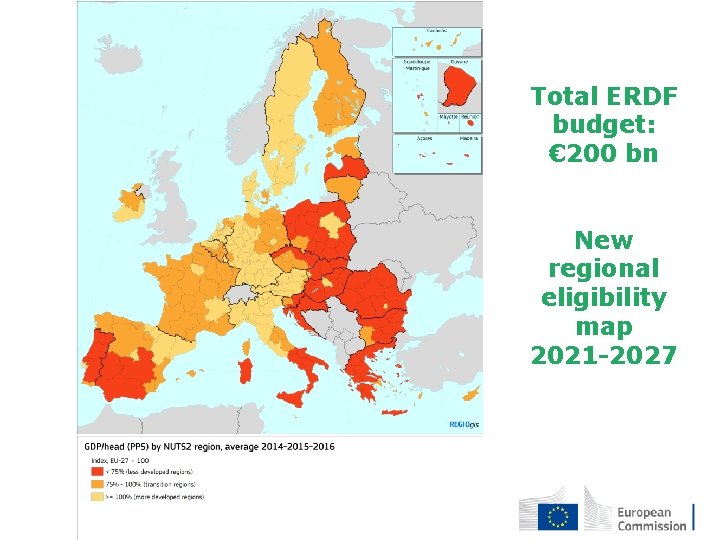
Total ERDF budget: € 200 bn New regional eligibility map 2021 -2027
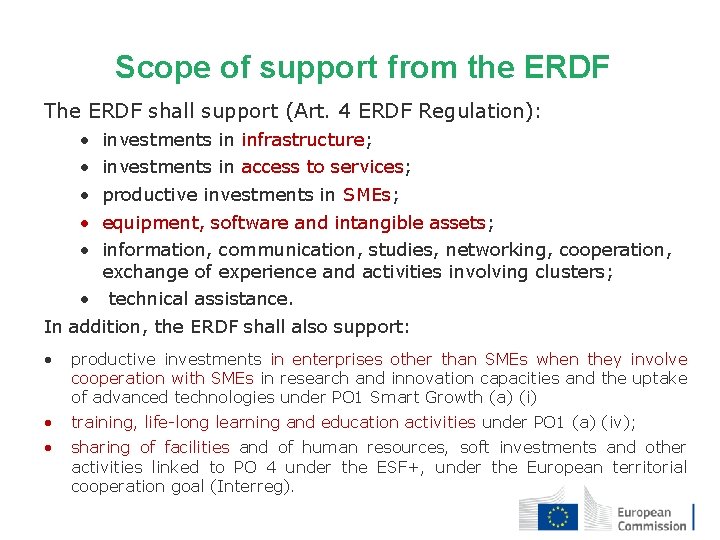
Scope of support from the ERDF The ERDF shall support (Art. 4 ERDF Regulation): • • • investments in infrastructure; investments in access to services; productive investments in SMEs; equipment, software and intangible assets; information, communication, studies, networking, cooperation, exchange of experience and activities involving clusters; • technical assistance. In addition, the ERDF shall also support: • productive investments in enterprises other than SMEs when they involve cooperation with SMEs in research and innovation capacities and the uptake of advanced technologies under PO 1 Smart Growth (a) (i) • training, life-long learning and education activities under PO 1 (a) (iv); • sharing of facilities and of human resources, soft investments and other activities linked to PO 4 under the ESF+, under the European territorial cooperation goal (Interreg).
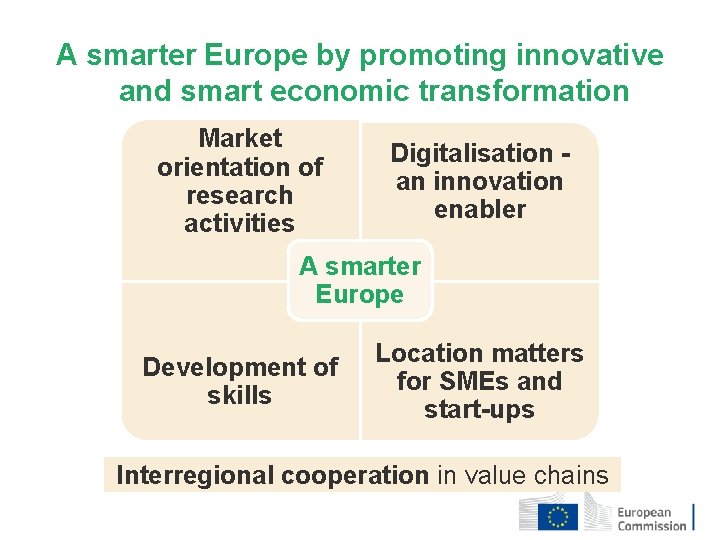
A smarter Europe by promoting innovative and smart economic transformation Market orientation of research activities Digitalisation an innovation enabler A smarter Europe Development of skills Location matters for SMEs and start-ups Interregional cooperation in value chains
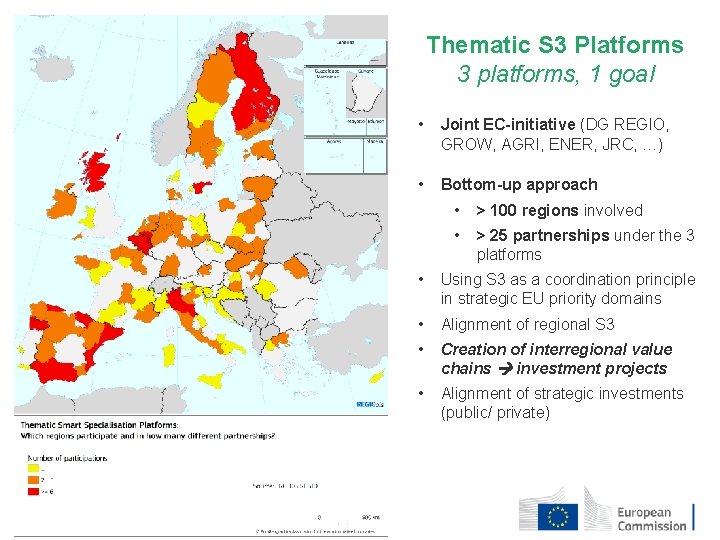
Thematic S 3 Platforms 3 platforms, 1 goal • Joint EC-initiative (DG REGIO, GROW, AGRI, ENER, JRC, …) • Bottom-up approach • > 100 regions involved • > 25 partnerships under the 3 platforms • Using S 3 as a coordination principle in strategic EU priority domains • Alignment of regional S 3 • Creation of interregional value chains investment projects • Alignment of strategic investments (public/ private)
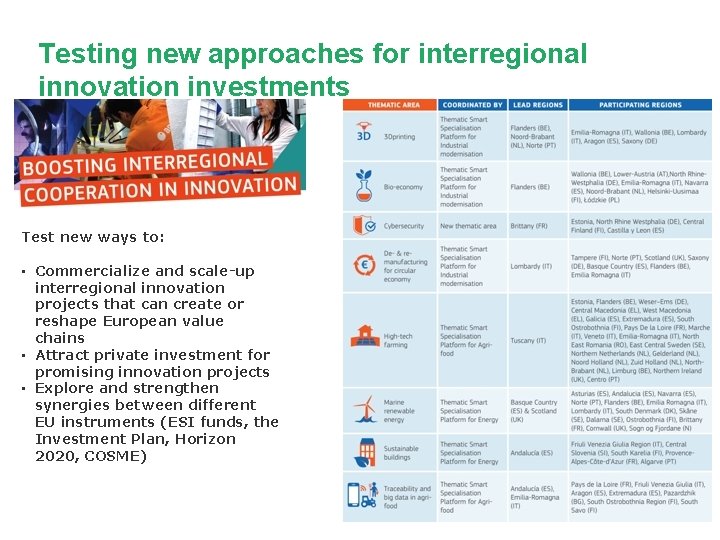
Testing new approaches for interregional innovation investments Test new ways to: • Commercialize and scale-up interregional innovation projects that can create or reshape European value chains • Attract private investment for promising innovation projects • Explore and strengthen synergies between different EU instruments (ESI funds, the Investment Plan, Horizon 2020, COSME)
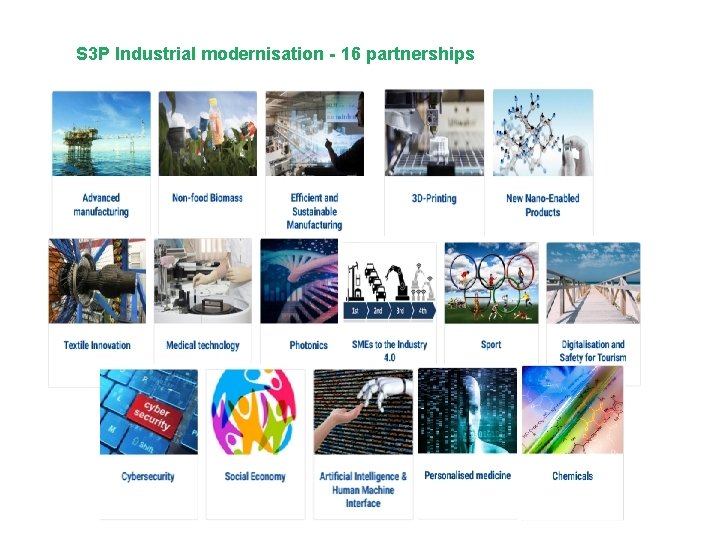
S 3 P Industrial modernisation - 16 partnerships
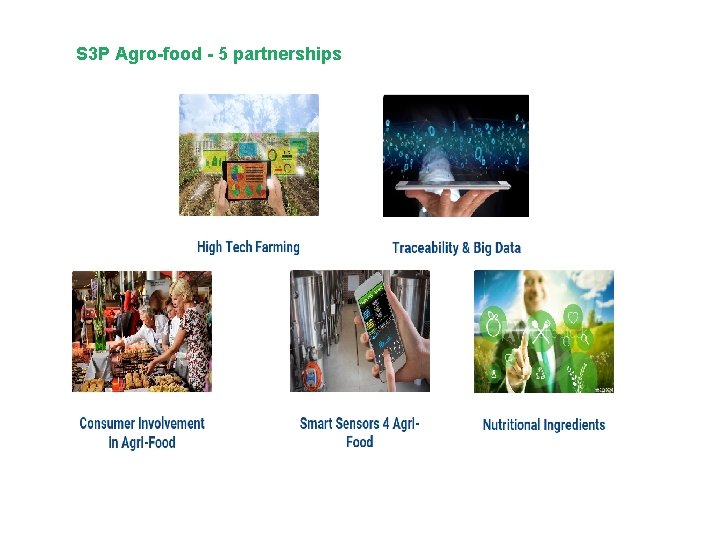
S 3 P Agro-food - 5 partnerships
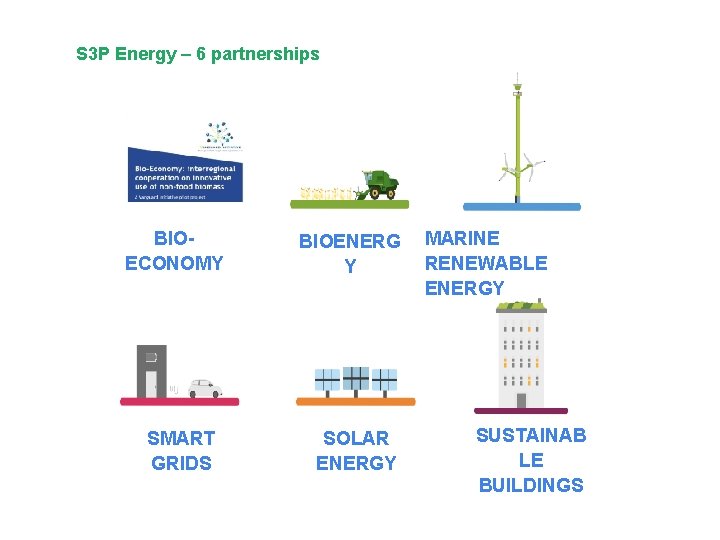
S 3 P Energy – 6 partnerships BIOECONOMY SMART GRIDS BIOENERG Y SOLAR ENERGY MARINE RENEWABLE ENERGY SUSTAINAB LE BUILDINGS
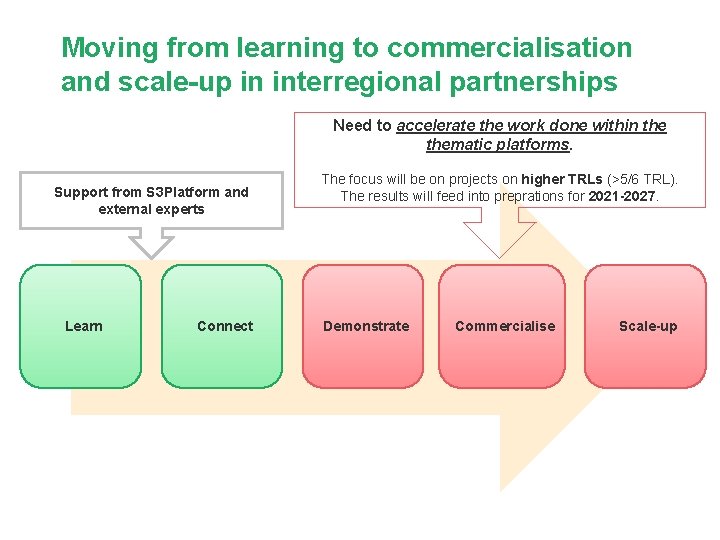
Moving from learning to commercialisation and scale-up in interregional partnerships Need to accelerate the work done within thematic platforms. Support from S 3 Platform and external experts Learn Connect The focus will be on projects on higher TRLs (>5/6 TRL). The results will feed into preprations for 2021 -2027. Demonstrate Commercialise Scale-up
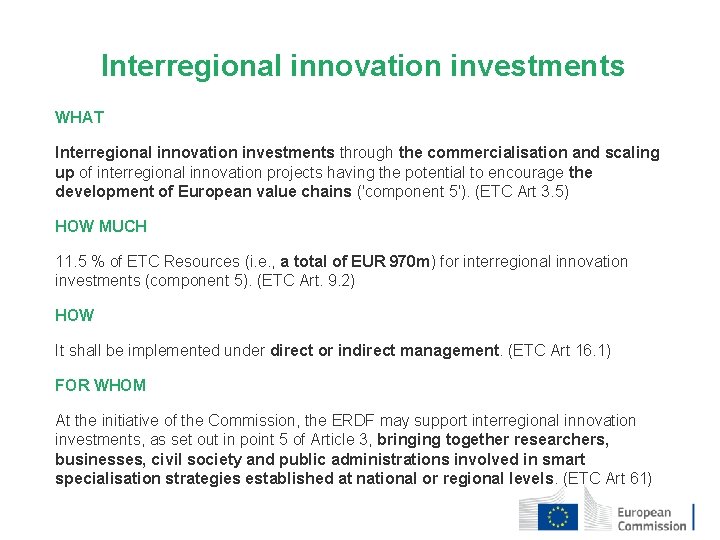
Interregional innovation investments WHAT Interregional innovation investments through the commercialisation and scaling up of interregional innovation projects having the potential to encourage the development of European value chains ('component 5'). (ETC Art 3. 5) HOW MUCH 11. 5 % of ETC Resources (i. e. , a total of EUR 970 m) for interregional innovation investments (component 5). (ETC Art. 9. 2) HOW It shall be implemented under direct or indirect management. (ETC Art 16. 1) FOR WHOM At the initiative of the Commission, the ERDF may support interregional innovation investments, as set out in point 5 of Article 3, bringing together researchers, businesses, civil society and public administrations involved in smart specialisation strategies established at national or regional levels. (ETC Art 61)
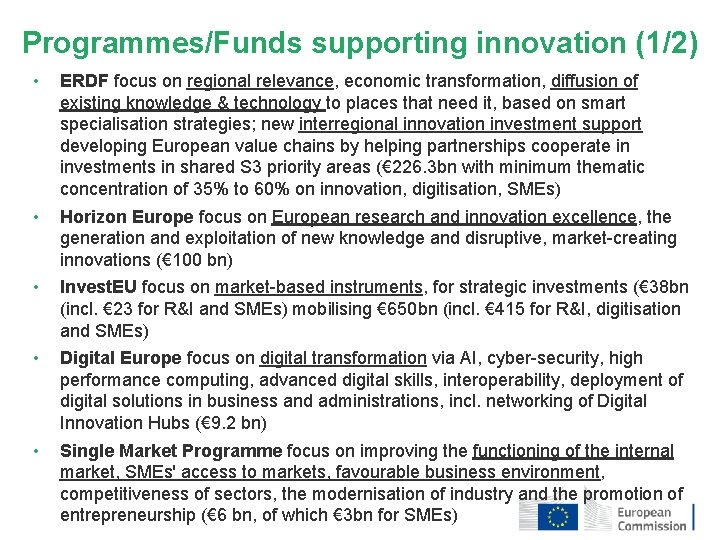
Programmes/Funds supporting innovation (1/2) • ERDF focus on regional relevance, economic transformation, diffusion of existing knowledge & technology to places that need it, based on smart specialisation strategies; new interregional innovation investment support developing European value chains by helping partnerships cooperate in investments in shared S 3 priority areas (€ 226. 3 bn with minimum thematic concentration of 35% to 60% on innovation, digitisation, SMEs) • Horizon Europe focus on European research and innovation excellence, the generation and exploitation of new knowledge and disruptive, market-creating innovations (€ 100 bn) • Invest. EU focus on market-based instruments, for strategic investments (€ 38 bn (incl. € 23 for R&I and SMEs) mobilising € 650 bn (incl. € 415 for R&I, digitisation and SMEs) • Digital Europe focus on digital transformation via AI, cyber-security, high performance computing, advanced digital skills, interoperability, deployment of digital solutions in business and administrations, incl. networking of Digital Innovation Hubs (€ 9. 2 bn) • Single Market Programme focus on improving the functioning of the internal market, SMEs' access to markets, favourable business environment, competitiveness of sectors, the modernisation of industry and the promotion of entrepreneurship (€ 6 bn, of which € 3 bn for SMEs)
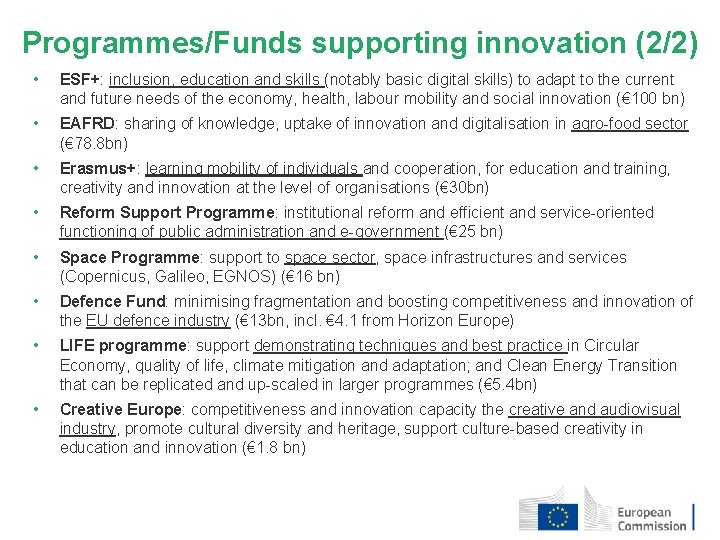
Programmes/Funds supporting innovation (2/2) • ESF+: inclusion, education and skills (notably basic digital skills) to adapt to the current and future needs of the economy, health, labour mobility and social innovation (€ 100 bn) • EAFRD: sharing of knowledge, uptake of innovation and digitalisation in agro-food sector (€ 78. 8 bn) • Erasmus+: learning mobility of individuals and cooperation, for education and training, creativity and innovation at the level of organisations (€ 30 bn) • Reform Support Programme: institutional reform and efficient and service-oriented functioning of public administration and e-government (€ 25 bn) • Space Programme: support to space sector, space infrastructures and services (Copernicus, Galileo, EGNOS) (€ 16 bn) • Defence Fund: minimising fragmentation and boosting competitiveness and innovation of the EU defence industry (€ 13 bn, incl. € 4. 1 from Horizon Europe) • LIFE programme: support demonstrating techniques and best practice in Circular Economy, quality of life, climate mitigation and adaptation; and Clean Energy Transition that can be replicated and up-scaled in larger programmes (€ 5. 4 bn) • Creative Europe: competitiveness and innovation capacity the creative and audiovisual industry, promote cultural diversity and heritage, support culture-based creativity in education and innovation (€ 1. 8 bn)
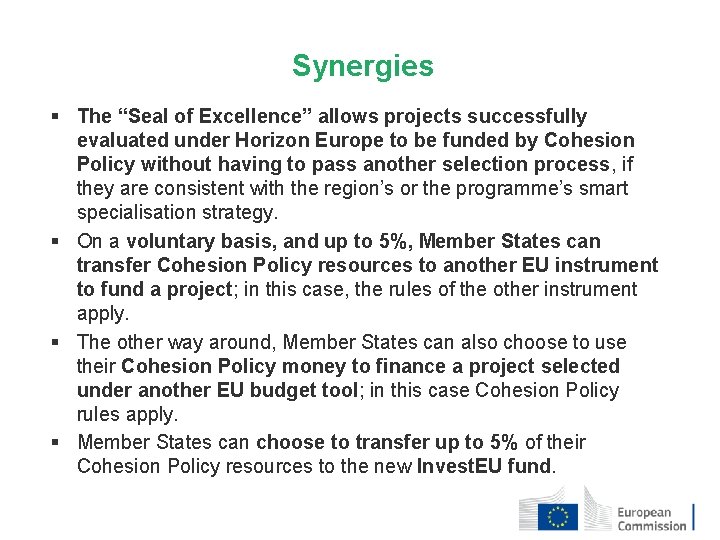
Synergies § The “Seal of Excellence” allows projects successfully evaluated under Horizon Europe to be funded by Cohesion Policy without having to pass another selection process, if they are consistent with the region’s or the programme’s smart specialisation strategy. § On a voluntary basis, and up to 5%, Member States can transfer Cohesion Policy resources to another EU instrument to fund a project; in this case, the rules of the other instrument apply. § The other way around, Member States can also choose to use their Cohesion Policy money to finance a project selected under another EU budget tool; in this case Cohesion Policy rules apply. § Member States can choose to transfer up to 5% of their Cohesion Policy resources to the new Invest. EU fund.
Thank you!