
Foot Ankle Lower Leg Injuries Great Toe Sprain


- Slides: 20
Foot, Ankle, & Lower Leg Injuries
Great Toe Sprain u At the 1 st Metatarsal-phalangeal joint u Hyper extension or hyper flexion u Pain, tenderness, and/or swelling is on dorsal or plantar surface of MTP joint
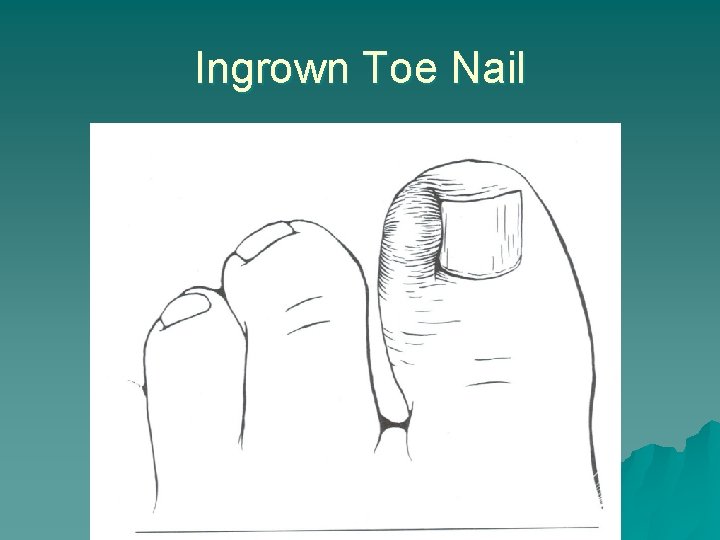
Ingrown Toe Nail
Ingrown Toe Nail u Nail grows into surrounding tissue u Cause : poor trimming of toe nails; rounded instead of straight; or too short
Inversion Ankle Sprain Lateral ligaments usually injured due to stretching mechanism 85% of ankle sprains are inversion Fibula prevents severe eversion Deltoid ligament is stronger
Inversion Ankle Sprain u Deformities u Swelling, discoloration, pain & point tenderness u ROM decreased u Strength decreased u Orthopedic Test : Anterior Drawer Test – Grade I, III
Inversion Ankle Sprain
Ankle Sprains u So What structures are normally injured? – Grade 1: Anterior Talofibular – Grade 2: ATF & Calcaneofibular – Grade 3: ATF, CF, & Posterior Talofibular
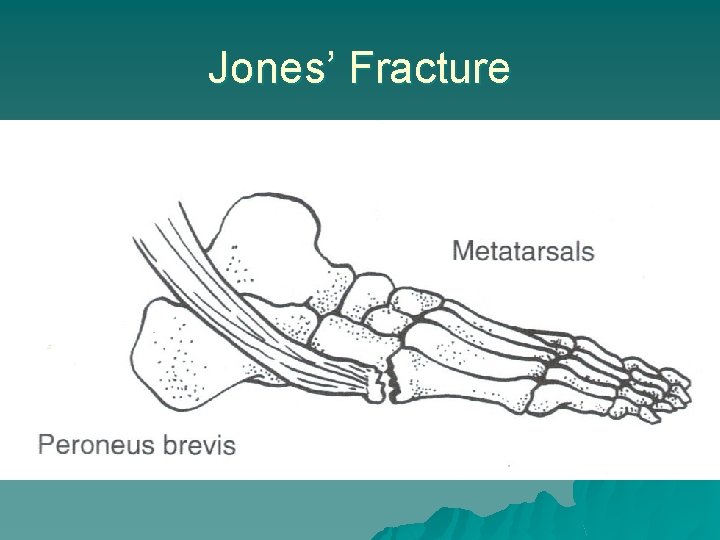
Jones’ Fracture
Jones’ Fracture u Avulsion fracture of the 5 th metatarsal head in inversion sprain u Xrays needed to rule out fracture if suspected
Achilles Tendonitis u Irritation or inflammation of the Achilles Tendon u Swelling, tenderness, heat, crepitus (crunchiness), pain u If worsens, can lead to complete tear
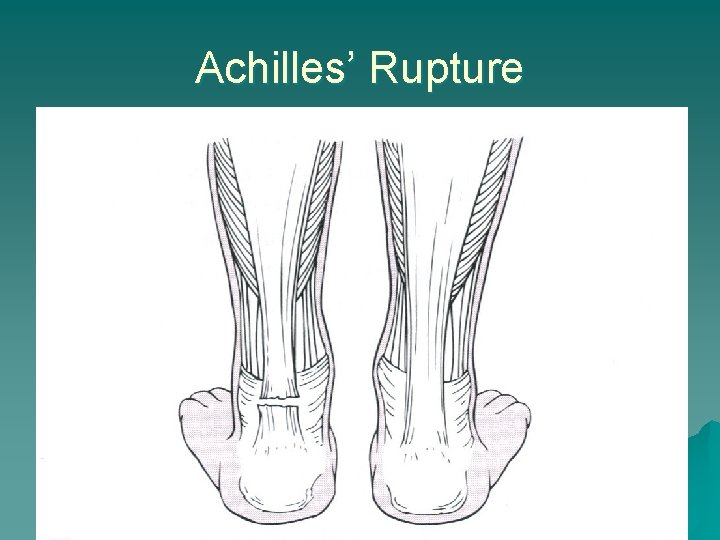
Achilles’ Rupture
Achilles Tendon Rupture u Athlete usually falls, grabbing leg in pain u Feels as if they were shot in the back of their leg u Extreme pain, swelling, deformity or depression, weakness or complete loss of plantar flexion u Orthopedic Test: Thompson’s Test
Thompson’s Test
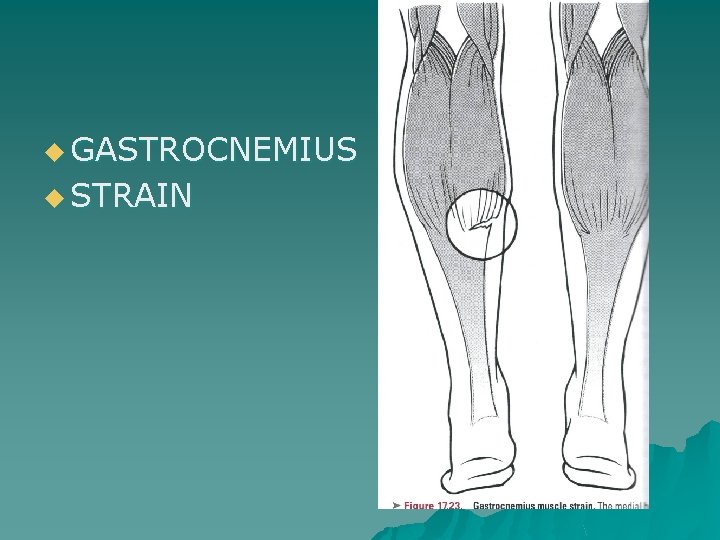
u GASTROCNEMIUS u STRAIN
Shin Splints u Called Medial Tibial Stress Syndrome u It is inflammation of the periosteum lining of the tibia u Caused from the Soleus muscle insertion – Pronation – Out of shape or overuse – Change in running distance, surface, footwear, or form
Shin Splints (cont. ) u Dull achy pain, can be present before, during, and after activity u Point tender on medial border of tibia u Pain with resisted plantar flexion (due to Soleus) involvement
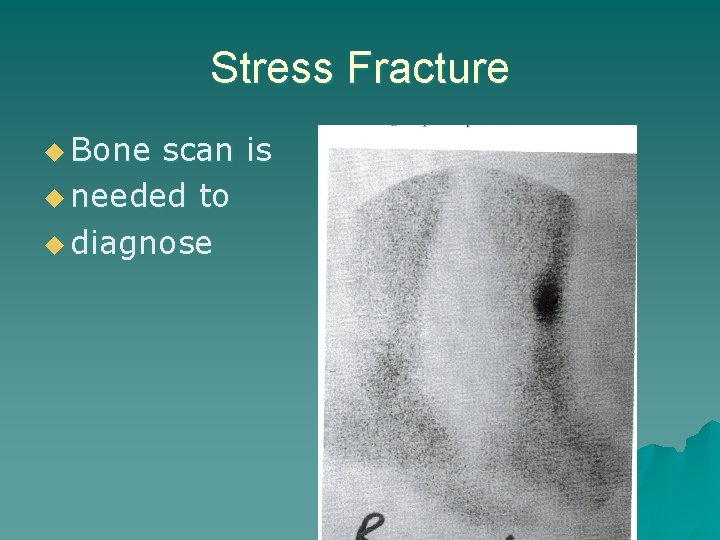
Stress Fractures u Caused by repetitive stress u Usually to tibia, fibula, and metatarsals (but can occur in any bone) u Complain of most intense pain after activity and during night u Pain and swelling on bone at fracture site
Stress Fracture u Bone scan is u needed to u diagnose
Using those X-ray Eyes u Percussion u Bump test u Squeeze Test u Vibration (tuning fork) u Compression/Distraction