
FOOT AND ANKLE JOINTS PALPATIONS ROM JOINTS A

- Slides: 19
FOOT AND ANKLE JOINTS, PALPATIONS, & ROM
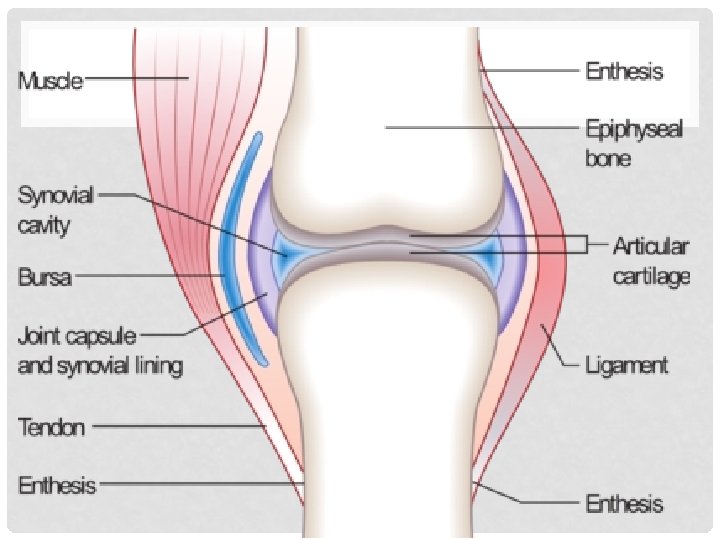
JOINTS: • A synovial joint, also known as a diarthrosis , is the most common and most movable type of joint in the body • Other types: Fibruous and Cartlaginous • Main structural differences between synovial and fibrous joints are capsules surrounding the articulating surfaces of a synovial joint and the presence of lubricating synovial fluid within those capsules (synovial cavities).
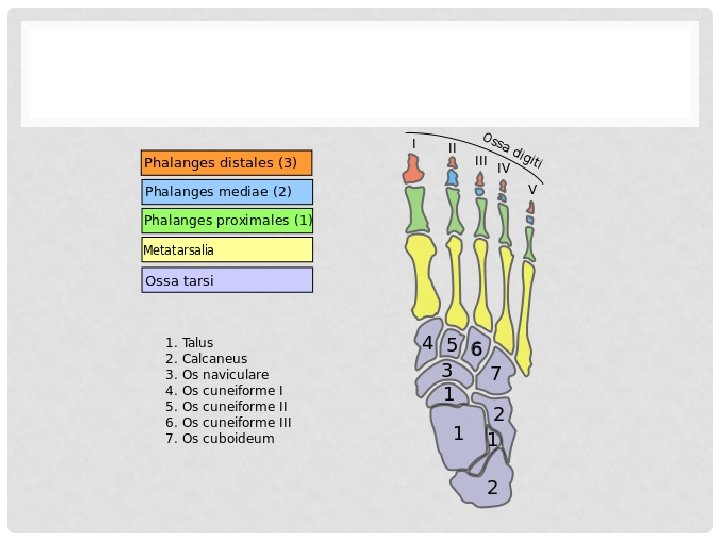
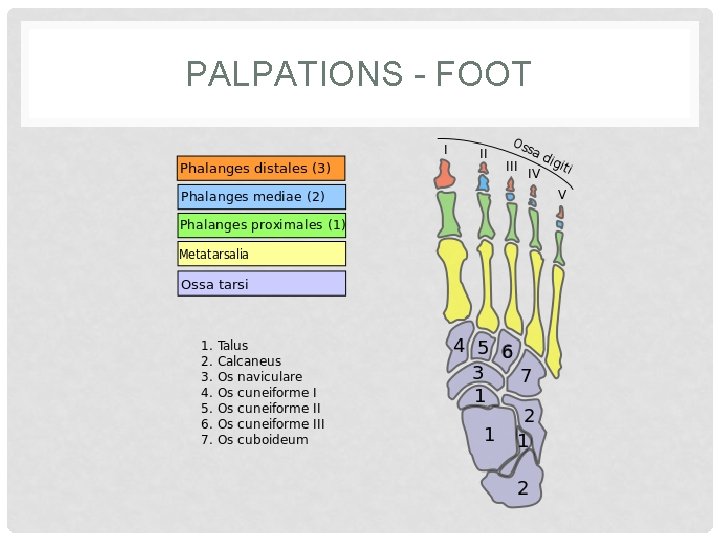
JOINTS • Toes and Metatarsals: • Interphalangeal joints: These joints connect the phalanges. They’re synovial joints strengthened by collateral and plantar ligaments, and they let you flex and extend your toes. • Metatarsophalangeal joints: They allow you to flex and extend your toes as well as move them apart and closer together. • Intermetatarsal joints • Tarsometatarsal joints • Cuboideonavicular joints
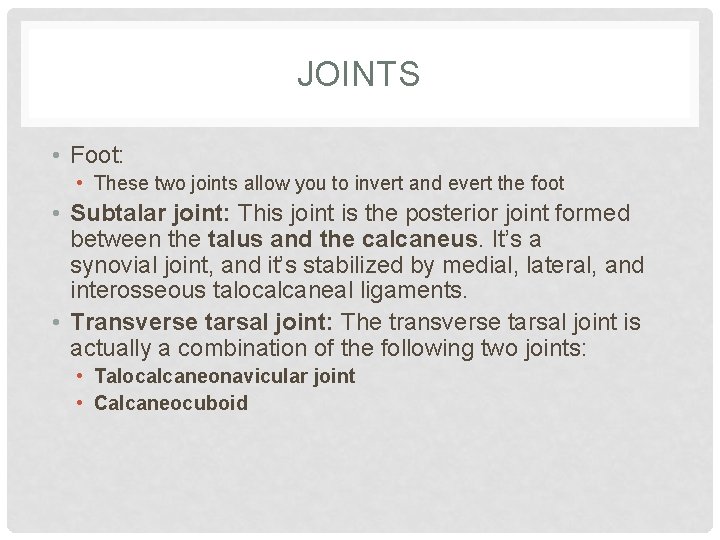
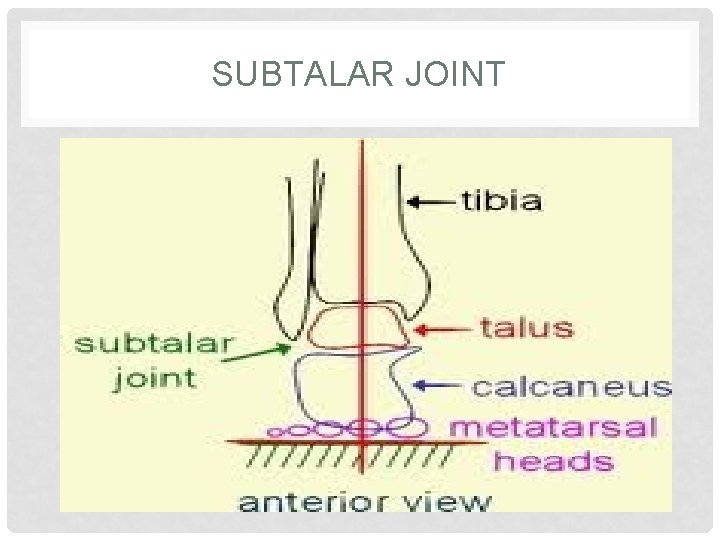
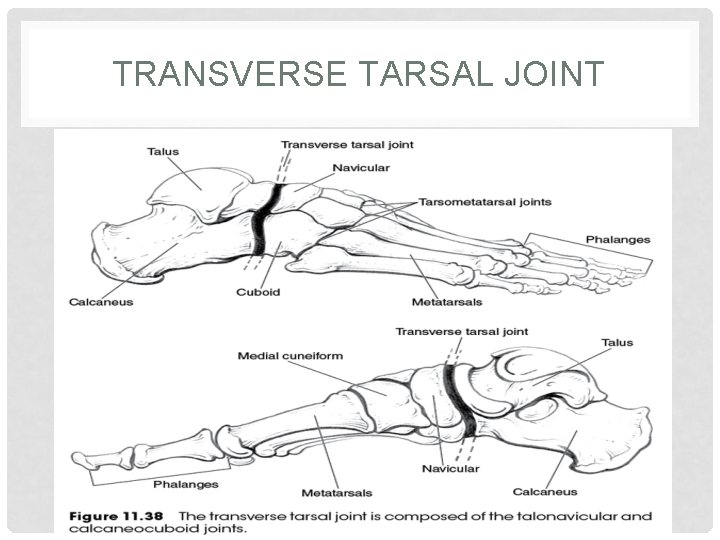
JOINTS • Foot: • These two joints allow you to invert and evert the foot • Subtalar joint: This joint is the posterior joint formed between the talus and the calcaneus. It’s a synovial joint, and it’s stabilized by medial, lateral, and interosseous talocalcaneal ligaments. • Transverse tarsal joint: The transverse tarsal joint is actually a combination of the following two joints: • Talocalcaneonavicular joint • Calcaneocuboid
SUBTALAR JOINT
TRANSVERSE TARSAL JOINT
JOINTS • Ankle: • The ankle joint is a synovial hinge joint, so you can plantarflex and dorsiflex • The ankle joint is made up of distal ends of the tibia and fibula
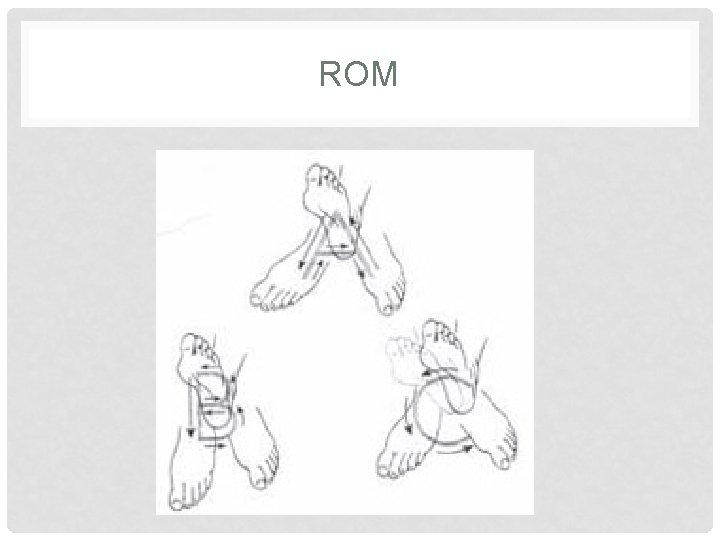
ROM • Toes • Flexion/extension • Abduction/Adduction • Ankle • Dorsiflexion/plantarflexion • Inversion/eversion • Circumduction
ROM
WHAT TO PALPATE – BONY LANDMARKS From distal to proximal: • Distal Phalangeals • Heads of the Metatarsals • Styloid process of fifth metatarsal • Sinus Tarsi - soft tissue depression just anterior to the lateral malleolus. (Sinus Tarsi is filled with EDB & fat pad) • Medial and Lateral Malleoli • Head of the Talus • Calcaneous • Shaft of the Tibia and Fibula • Head of the fibula • Tibial Tuberosity
WHAT TO PALPATE – MUSCLES AND TENDONS • • Gastrocnemius Soleus Achilles Tendon Tibialis Anterior Extensor Digitorum Longus Flexor Digitorum Longus Peroneus Longus
PALPATIONS - FOOT
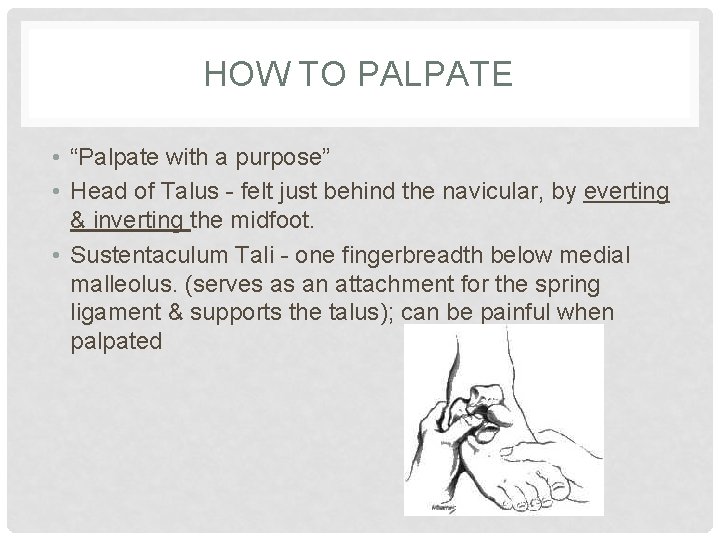
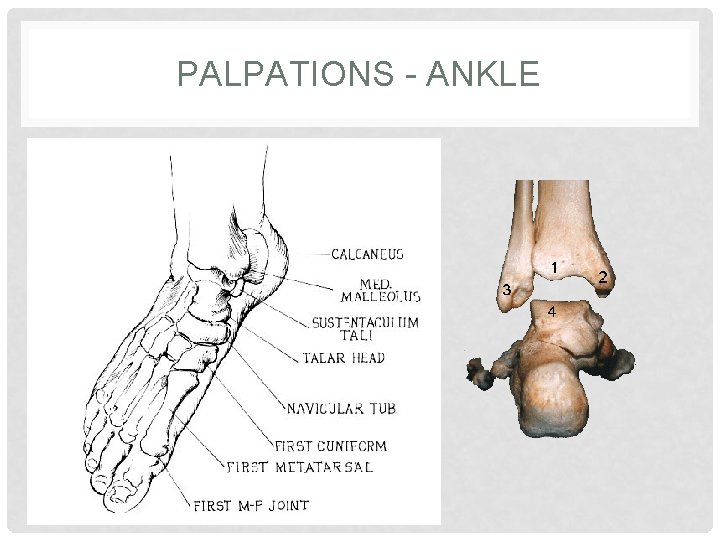
HOW TO PALPATE • “Palpate with a purpose” • Head of Talus - felt just behind the navicular, by everting & inverting the midfoot. • Sustentaculum Tali - one fingerbreadth below medial malleolus. (serves as an attachment for the spring ligament & supports the talus); can be painful when palpated
PALPATIONS - ANKLE
IN CLASS… • Pair off and palpate 3 different people’s foot and ankle • Identify bones and ligaments • Continue to work on foot diagram if needed
WHAT YOU NEED TO KNOW FOR THE EXAM • Where to Palpate specific bones/ligaments • ALL ROM
HOMEWORK • Color pages 4 and 5 in the packet