
Foods Dairy Notes You should have 3 cups

- Slides: 12
Foods Dairy Notes
You should have 3 cups of milk a day! One ounce of cheese = one cup serving of milk. n Many dairy products are fortified with Vitamin D and are naturally a good source of Vitamin A. n Light will destroy the riboflavin in milk. That is why milk is packaged in plastic colored containers. n
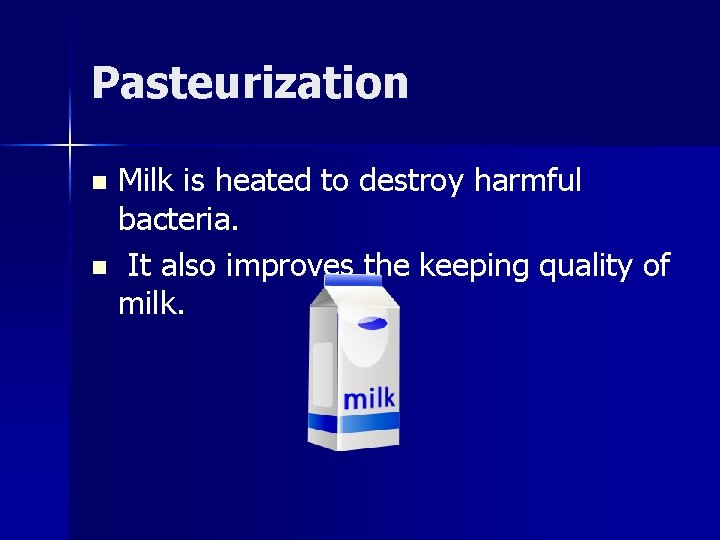
Pasteurization Milk is heated to destroy harmful bacteria. n It also improves the keeping quality of milk. n
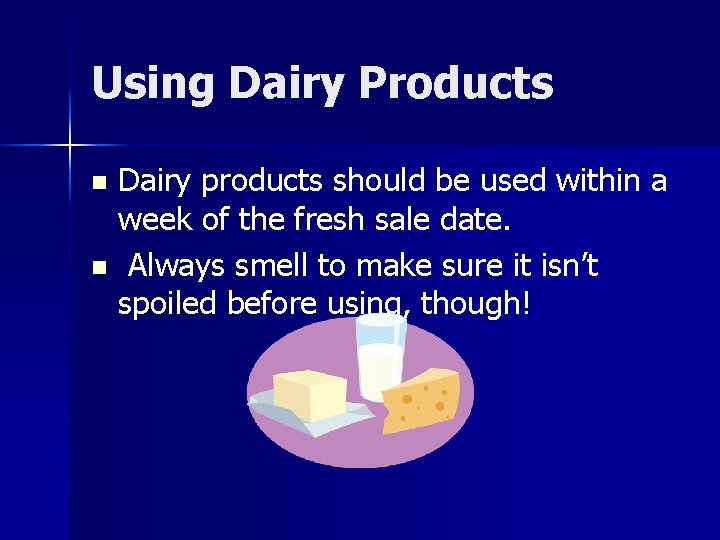
Using Dairy Products Dairy products should be used within a week of the fresh sale date. n Always smell to make sure it isn’t spoiled before using, though! n
Fat Content If a product is labeled low fat, the fat content per serving must be 3 grams or less. n Yogurt is a low fat alternative to sour cream and mayonnaise. It also has less fat than evaporated milk and half n’ half. n Skim milk has fewer calories per cup than ice cream, sour cream, or frozen yogurt. n
Sherbet—made of fruit juice, milk, and sugar. n Evaporated milk—has some of the water removed. n To make sweetened whipped cream, gradually add sugar after the cream is already thick. n
Curdling When milk products coagulate and form lumps. n It is caused by the actions of acids, tannins, enzymes, and salts. n To avoid this, milk should be cooked with low heat. n
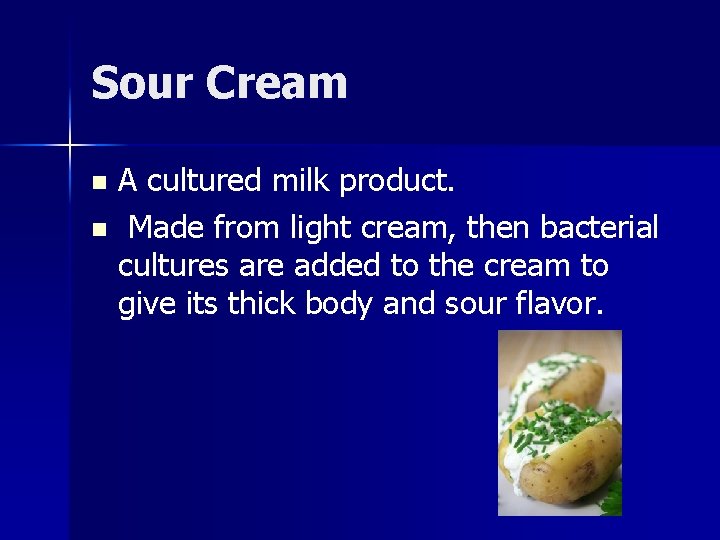
Sour Cream A cultured milk product. n Made from light cream, then bacterial cultures are added to the cream to give its thick body and sour flavor. n
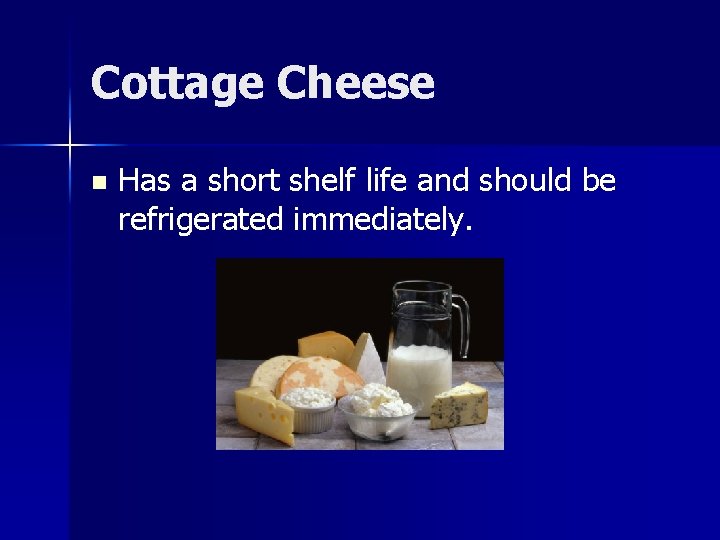
Cottage Cheese n Has a short shelf life and should be refrigerated immediately.
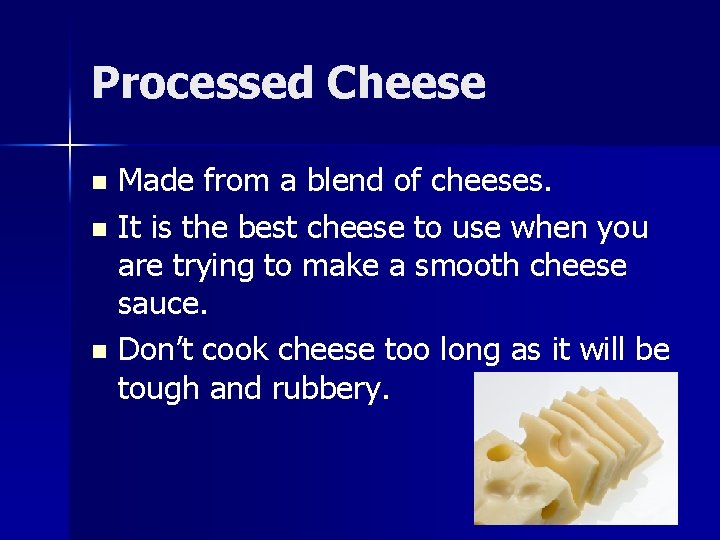
Processed Cheese Made from a blend of cheeses. n It is the best cheese to use when you are trying to make a smooth cheese sauce. n Don’t cook cheese too long as it will be tough and rubbery. n
Skum (or skin) Formation Skum—the solid layer that often forms on the surface of milk during heating. n It is made up of protein and fat. n Remove skum as it forms. Stirring milk or covering the pan can help prevent it. n Example: skum can form on hot cocoa if you let it simmer in an uncovered container n
Scorching Burning that results in a color and taste change. n Prevent this by using low heat or a double boiler. n