
Foodborne gastroenteritis caused by Campylobacter Characters Campylobacter C
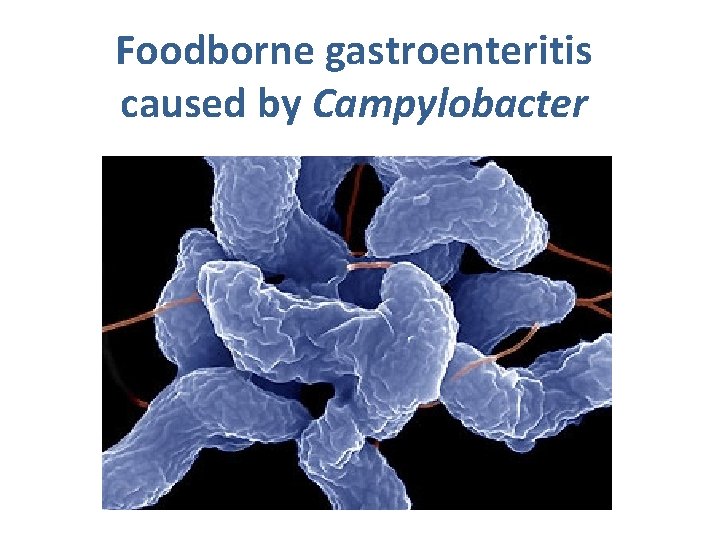
Foodborne gastroenteritis caused by Campylobacter
Characters • Campylobacter - C. jejuni and C. coli - bacterial gastroenteritis in humans • Gram negative curved rods, motile with single polar flagella at one or both ends • C. jejuni - intestinal tract of warm-blooded animals; present in foods of animal origin through fecal contamination during processing • Unable to grow well and survive outside the animal host’s environment, but ingestion of very low numbers can cause human illness
• C. jejuni - microaerophilic organism requiring low levels of oxygen for growth • Growth is inhibited at oxygen concentration of less than 3% and more than 10 -5%, with best growth at 5% • Grows within a narrow temperature of 30 - 470 C; optimum temperature - 42 -450 C • Survives refrigerator temperature and is sensitive to freezing temperatures • Campylobacter - invasive and highly virulent requiring ingestion of only a few cells to cause illness • They are known to produce heat sensitive enterotoxins
Symptoms of illness: • Campylobacter infections - consumption of foods of animal origin and contaminated milk, bakery products, clams and water • Symptoms of illness - abdominal pain, nausea, vomiting, cramps, diarrhoea, headache, fever and occasional bloody stools • The onset of illness varies from 1 to 10 days, and illness may persist for from 1 day to few weeks • Campylobacter enteritis is self limiting in most cases and resolve within few days of onset of symptoms
Prevention of outbreak: • Proper cooking of food prior to consumption. • Preventing cross contamination from raw meats to cooked foods. • Chilling food rapidly. • Following good sanitary measures while handling and processing of foods.

- Slides: 6