
Food Why do living things need food 1
- Slides: 27
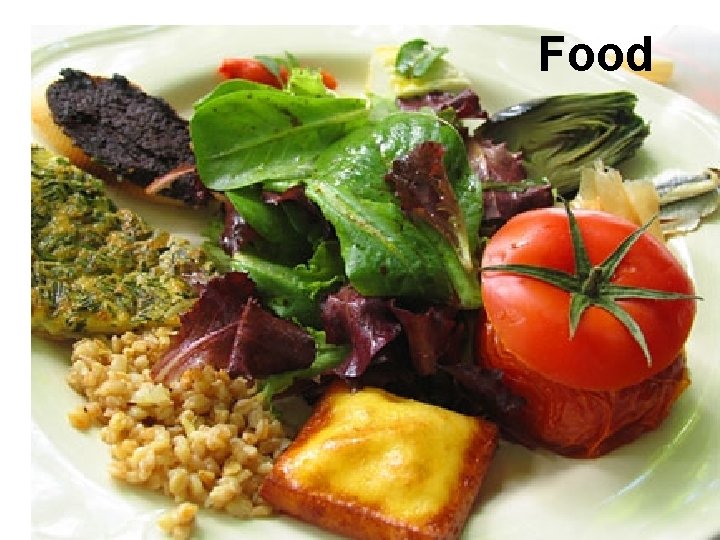
Food
Why do living things need food? 1. As a material for growth 2. To give us energy
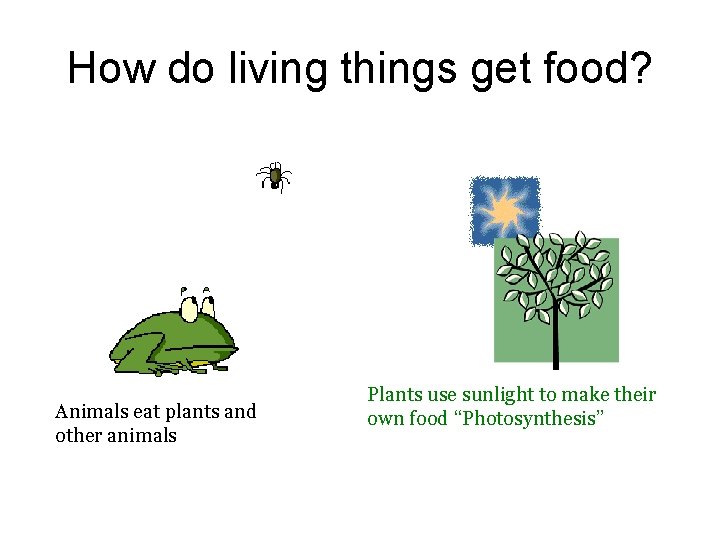
How do living things get food? Animals eat plants and other animals Plants use sunlight to make their own food “Photosynthesis”
A balanced diet has six constituents 1. Carbohydrates 2. Proteins 3. Fats 4. Vitamins 5. Minerals 6. Water They all have different functions so we need them all, but in different amounts
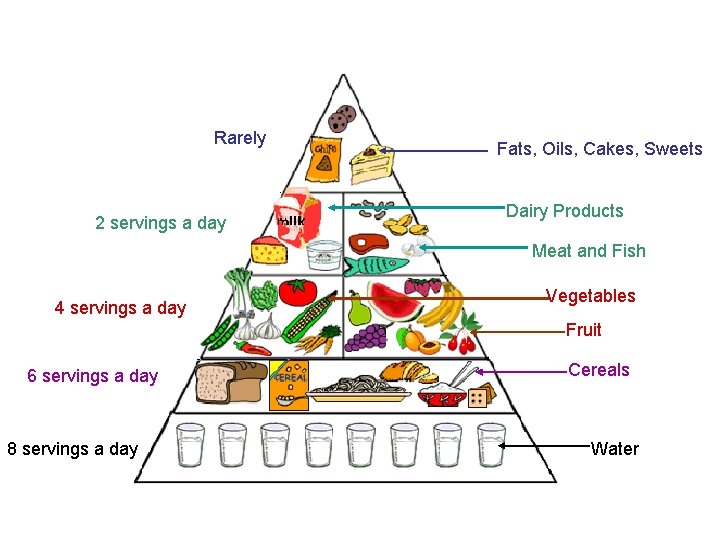
A Food pyramid tells us the number of servings of each of the food groups that we should eat each day
Rarely 2 servings a day Fats, Oils, Cakes, Sweets Dairy Products Meat and Fish 4 servings a day Vegetables Fruit 6 servings a day 8 servings a day Cereals Water
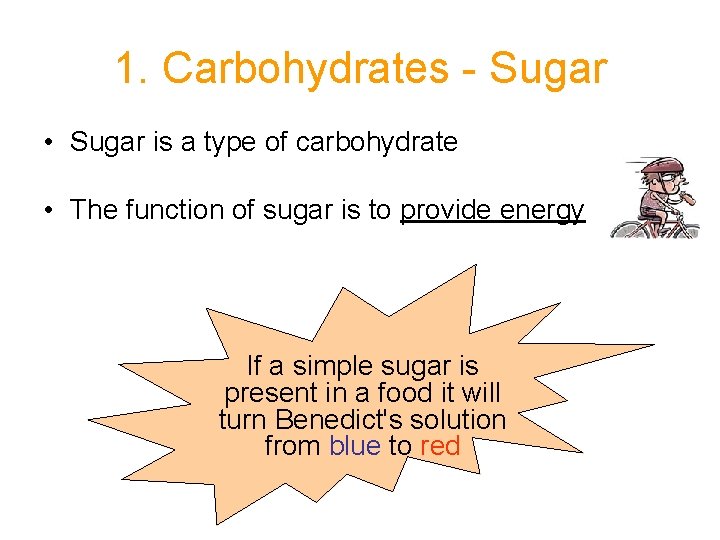
1. Carbohydrates - Sugar • Sugar is a type of carbohydrate • The function of sugar is to provide energy If a simple sugar is present in a food it will turn Benedict's solution from blue to red
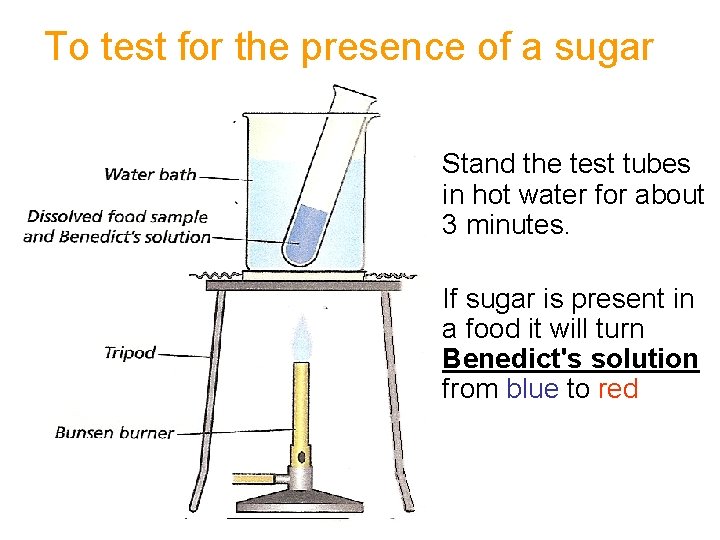
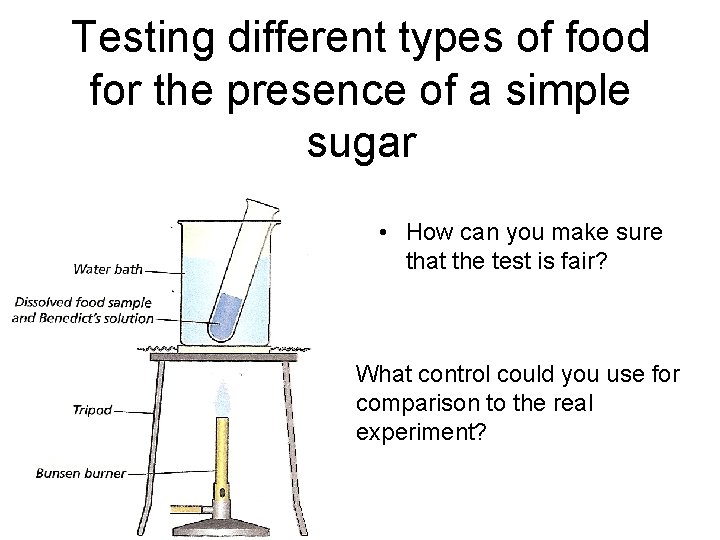
To test for the presence of a sugar • Stand the test tubes in hot water for about 3 minutes. • If sugar is present in a food it will turn Benedict's solution from blue to red
Testing different types of food for the presence of a simple sugar • How can you make sure that the test is fair? What control could you use for comparison to the real experiment?
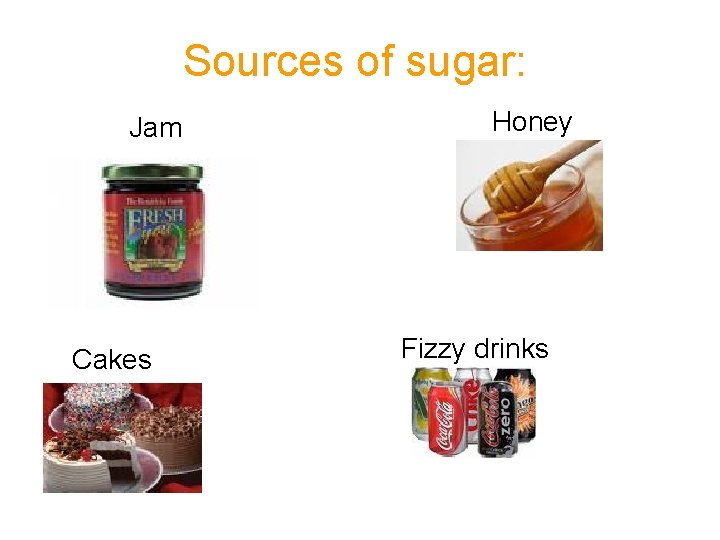
Sources of sugar: Jam Cakes Honey Fizzy drinks
2. Carbohydrate - Starch • Starch is a type of carbohydrate • The function of starch is to provide energy Starch will change iodine from a brown/yellow colour to a blue colour
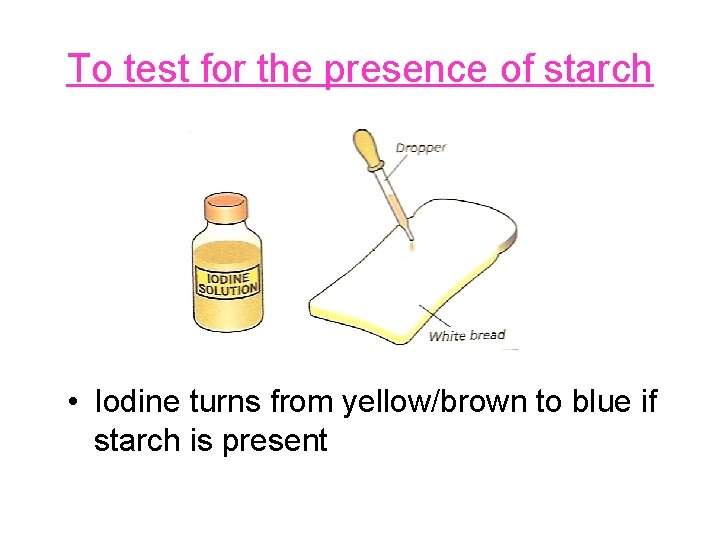
To test for the presence of starch • Iodine turns from yellow/brown to blue if starch is present
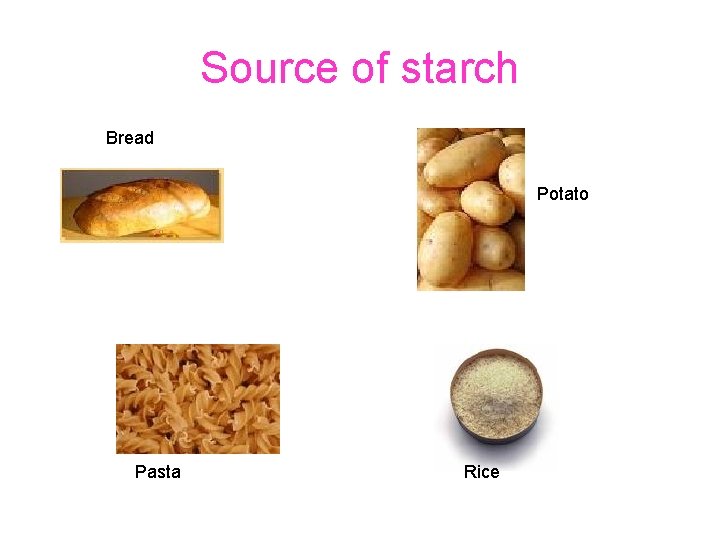
Source of starch Bread Potato Pasta Rice
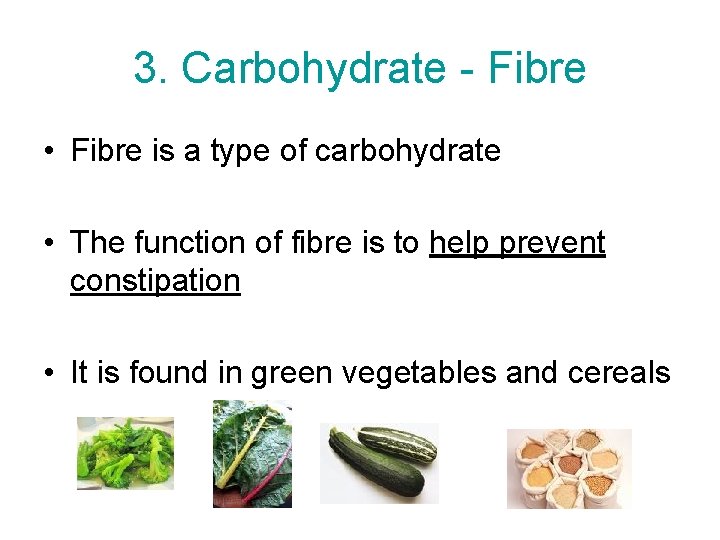
3. Carbohydrate - Fibre • Fibre is a type of carbohydrate • The function of fibre is to help prevent constipation • It is found in green vegetables and cereals
Fat The function of fat is in our diet is to: • Provide us with energy • Store energy • Provide us with insulation
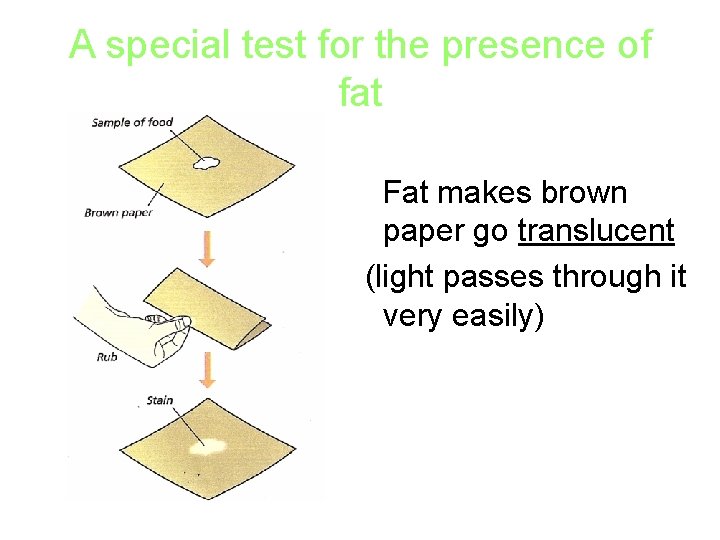
A special test for the presence of fat Fat makes brown paper go translucent (light passes through it very easily)
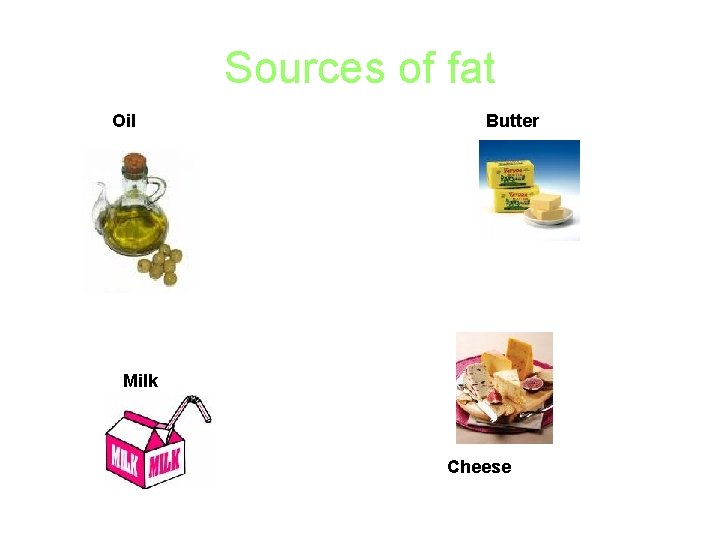
Sources of fat Oil Butter Milk Cheese
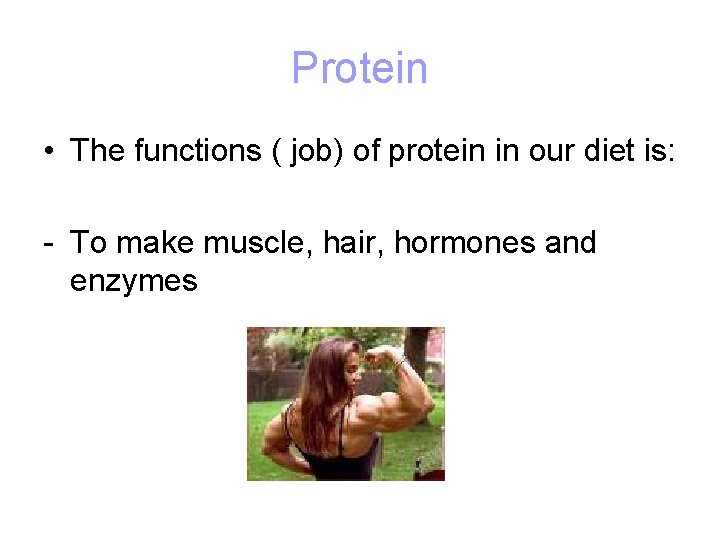
Protein • The functions ( job) of protein in our diet is: - To make muscle, hair, hormones and enzymes
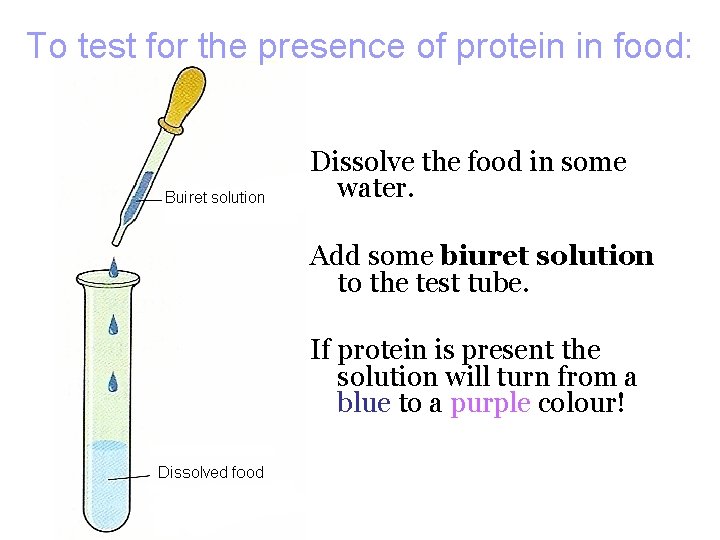
To test for the presence of protein in food: Dissolve the food in some water. Add some biuret solution to the test tube. If protein is present the solution will turn from a blue to a purple colour!
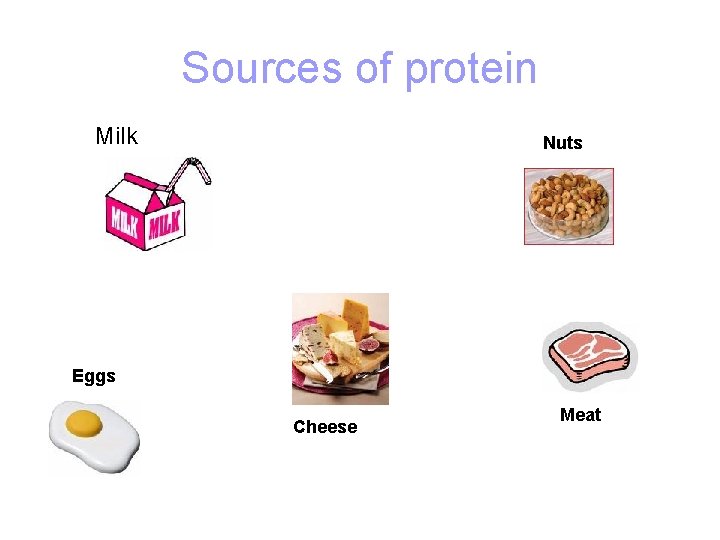
Sources of protein Milk Nuts Eggs Cheese Meat
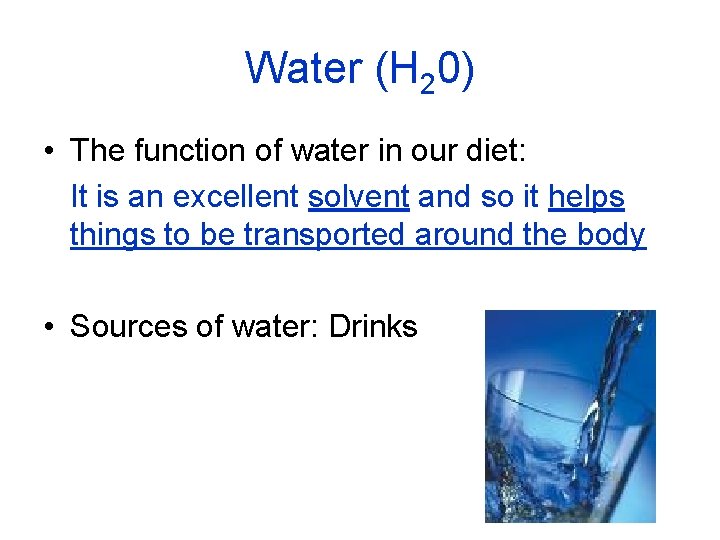
Water (H 20) • The function of water in our diet: It is an excellent solvent and so it helps things to be transported around the body • Sources of water: Drinks
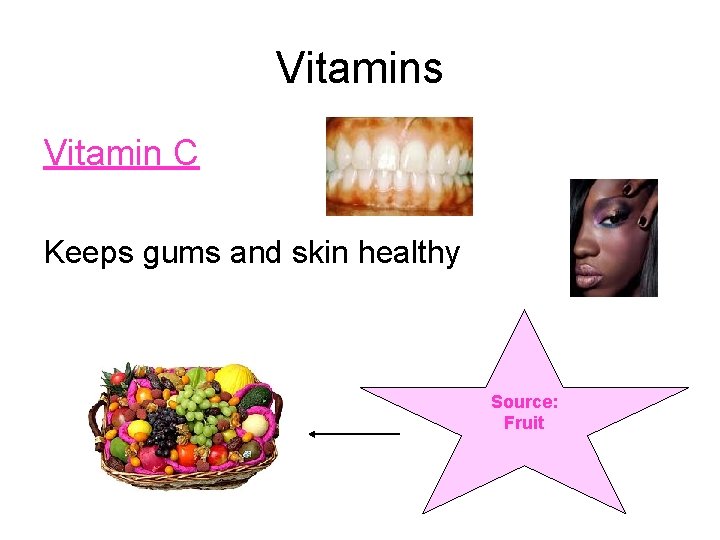
Vitamins Vitamin C Keeps gums and skin healthy Source: Fruit
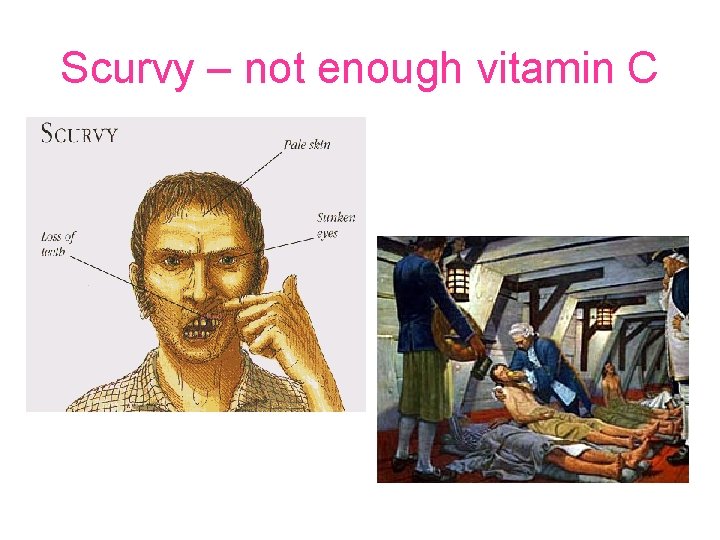
Scurvy – not enough vitamin C
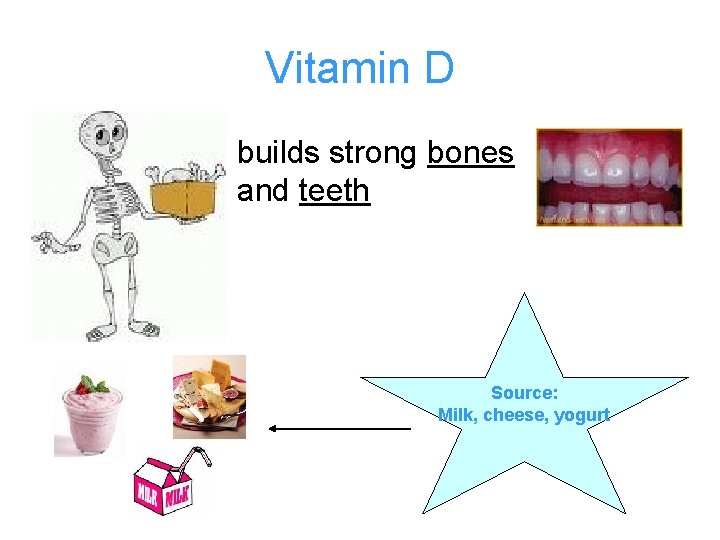
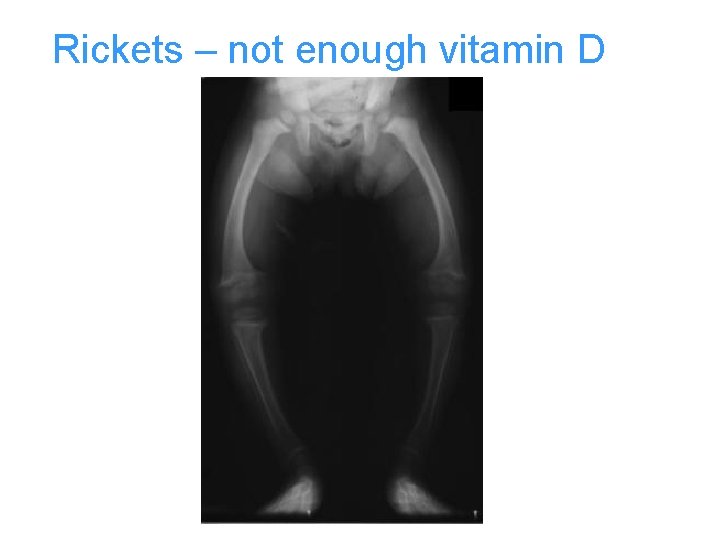
Vitamin D builds strong bones and teeth Source: Milk, cheese, yogurt
Rickets – not enough vitamin D
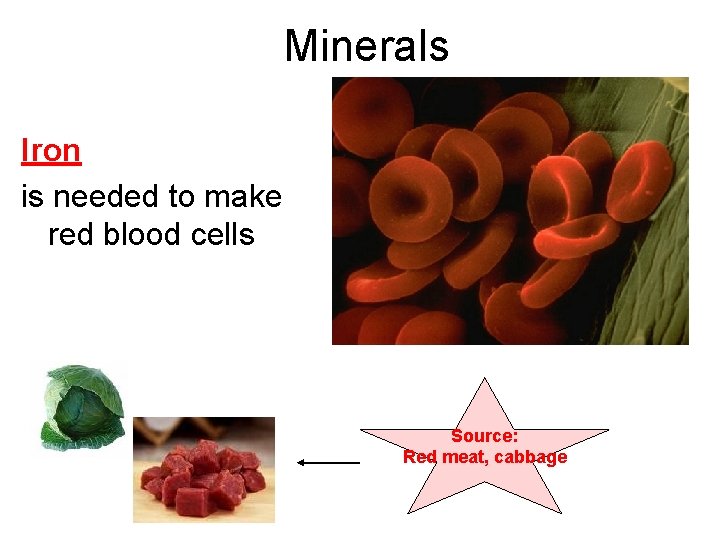
Minerals Iron is needed to make red blood cells Source: Red meat, cabbage
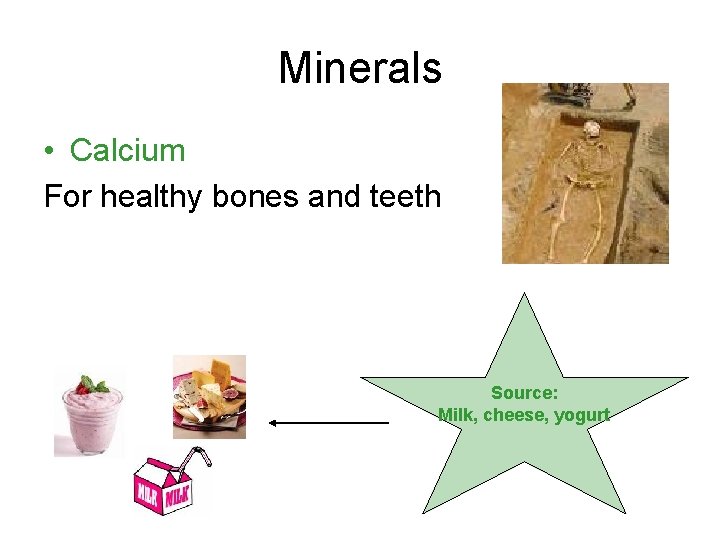
Minerals • Calcium For healthy bones and teeth Source: Milk, cheese, yogurt