
FOOD WEBS Key Vocabulary Autotroph Heterotroph Producer Consumer
FOOD WEBS Key Vocabulary: -Autotroph -Heterotroph -Producer -Consumer -Decomposer

A decrease in the grass population would most immediately decrease the energy available for A. Mouse B. Hawk C. Snake D. Frog

How are autotrophs different than the Autotroph- an organism power of that used solar energy to heterotrophs? make chemical energy (i. e palm tree, tulips, algae) Heterotroph- an organism the gets chemical energy from consuming other organisms.
How do changes in one population impact another? An increase in a population leads to an increase in the population that consume the organism and a decrease in the organisms food source population.
How do changes in one population impact another? A decrease in a population leads to an decrease in the population that consume the organism and a increase in the organisms food source population.
Lesson Learning Strategy Quick Quizzes
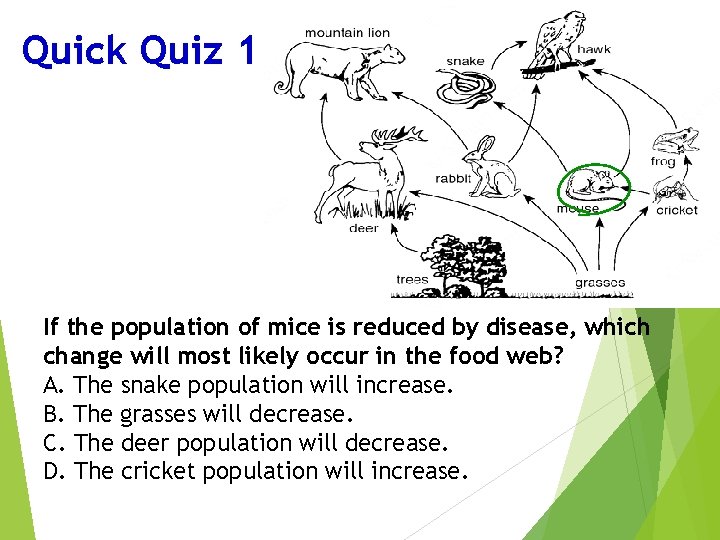
Quick Quiz 1 If the population of mice is reduced by disease, which change will most likely occur in the food web? A. The snake population will increase. B. The grasses will decrease. C. The deer population will decrease. D. The cricket population will increase.
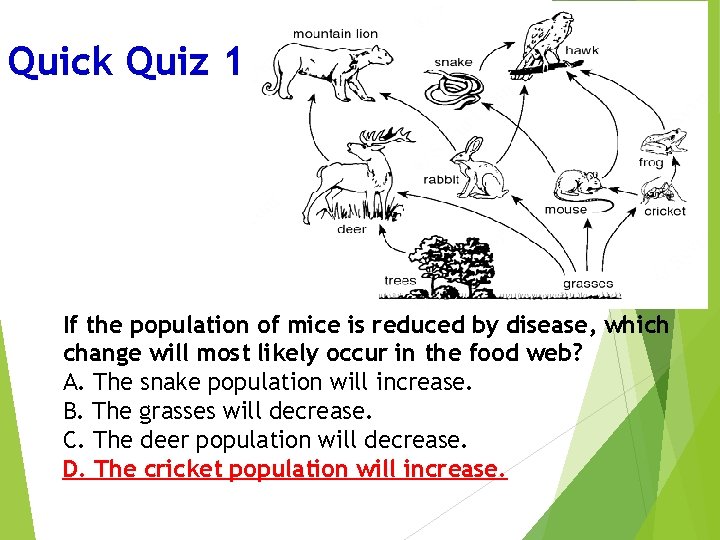
Quick Quiz 1 If the population of mice is reduced by disease, which change will most likely occur in the food web? A. The snake population will increase. B. The grasses will decrease. C. The deer population will decrease. D. The cricket population will increase.
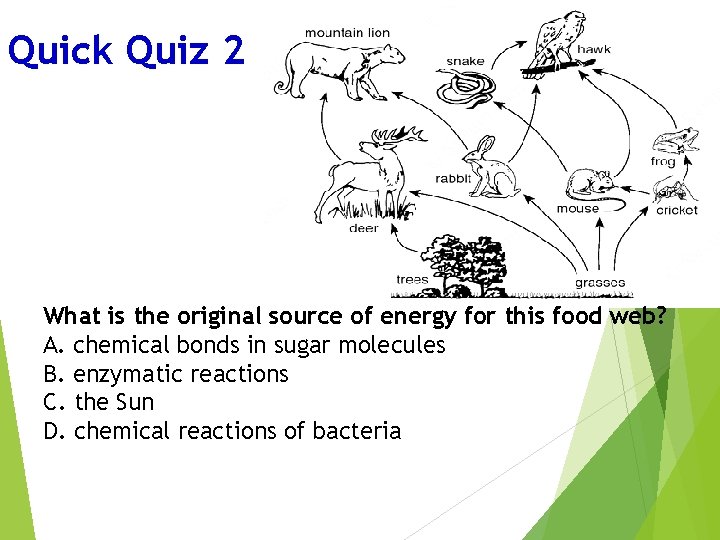
Quick Quiz 2 What is the original source of energy for this food web? A. chemical bonds in sugar molecules B. enzymatic reactions C. the Sun D. chemical reactions of bacteria
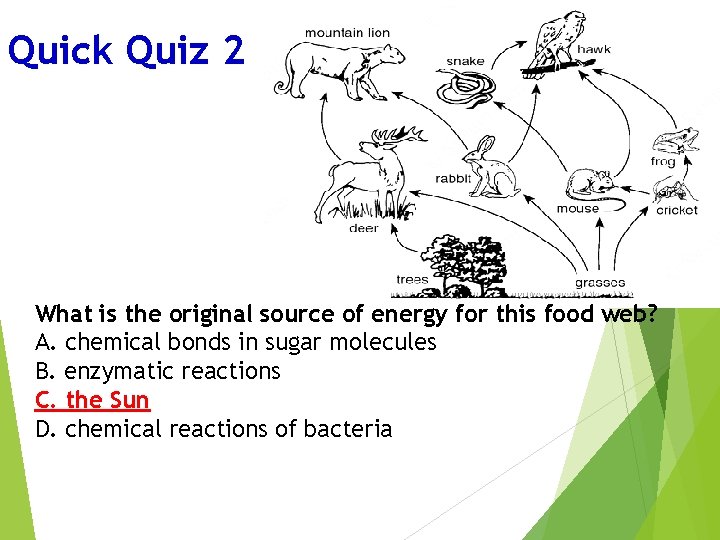
Quick Quiz 2 What is the original source of energy for this food web? A. chemical bonds in sugar molecules B. enzymatic reactions C. the Sun D. chemical reactions of bacteria
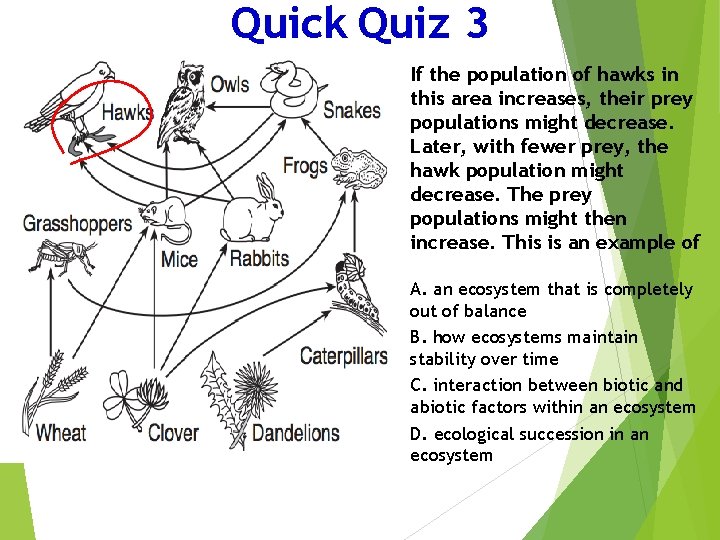
Quick Quiz 3 If the population of hawks in this area increases, their prey populations might decrease. Later, with fewer prey, the hawk population might decrease. The prey populations might then increase. This is an example of A. an ecosystem that is completely out of balance B. how ecosystems maintain stability over time C. interaction between biotic and abiotic factors within an ecosystem D. ecological succession in an ecosystem
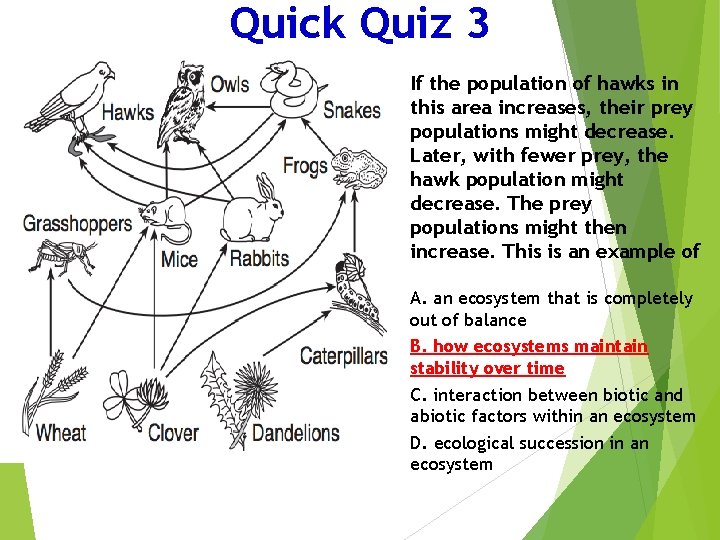
Quick Quiz 3 If the population of hawks in this area increases, their prey populations might decrease. Later, with fewer prey, the hawk population might decrease. The prey populations might then increase. This is an example of A. an ecosystem that is completely out of balance B. how ecosystems maintain stability over time C. interaction between biotic and abiotic factors within an ecosystem D. ecological succession in an ecosystem

What are the pieces of a food web? Producer- an organism that makes all of the energy Consumer- an organism that must eat other organisms to get energy Decomposer- eat dead and decaying matter https: //www. sheppardsoftware. com/content/animals/kidscorner/games/producersconsumersgame. htm
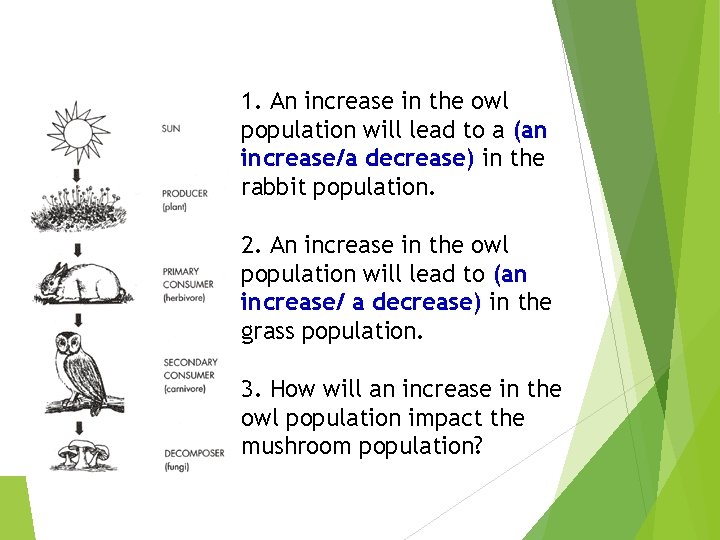
1. An increase in the owl population will lead to a (an increase/a decrease) in the rabbit population. 2. An increase in the owl population will lead to (an increase/ a decrease) in the grass population. 3. How will an increase in the owl population impact the mushroom population?
Autotrophs are organisms that use solar energy to make chemical energy. Heterotrophs are organisms the get chemical energy from consuming other organisms. Changes in a one organisms population impacts the rest of the community. An increase in a population leads to an increase in the population that consume the organism and a decrease in the organisms food source population. An decrease in a population leads to an decrease in the population that consume the organism and a increase in the organisms food source population.

A decrease in the grass population would most immediately decrease the energy available for A. Mouse B. Hawk C. Snake D. Frog
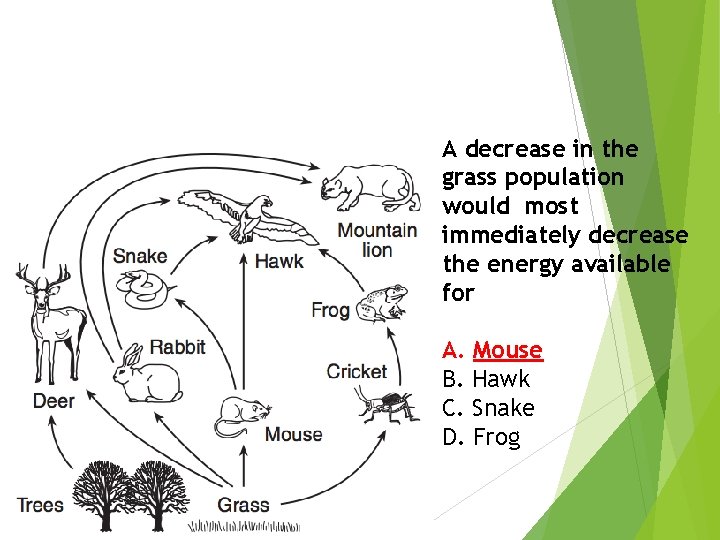
A decrease in the grass population would most immediately decrease the energy available for A. Mouse B. Hawk C. Snake D. Frog
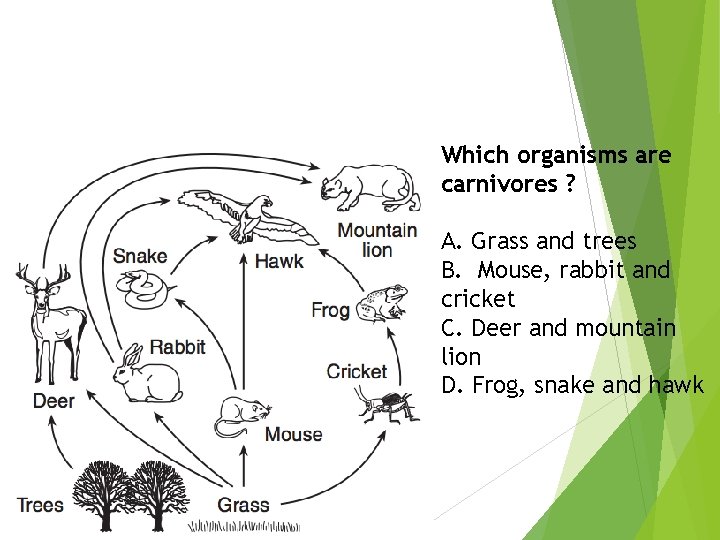
Which organisms are carnivores ? A. Grass and trees B. Mouse, rabbit and cricket C. Deer and mountain lion D. Frog, snake and hawk
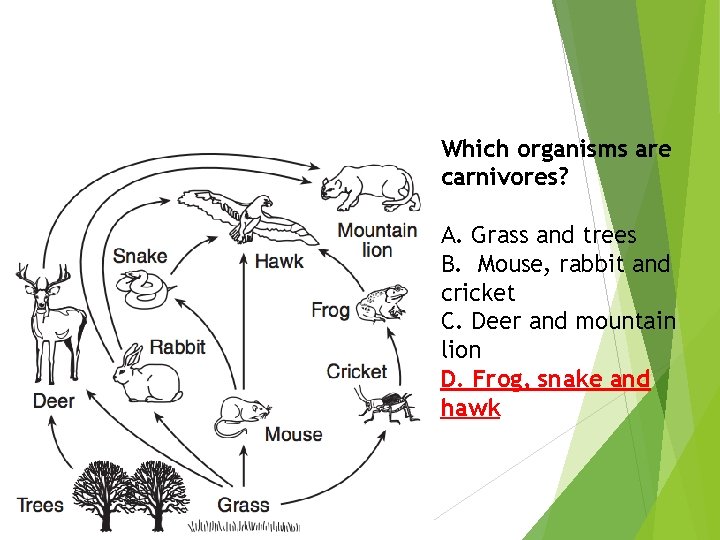
Which organisms are carnivores? A. Grass and trees B. Mouse, rabbit and cricket C. Deer and mountain lion D. Frog, snake and hawk
- Slides: 19