
Food Webs and Pyramids Feeding Interactions Terms AutotrophProducers

Food Webs and Pyramids
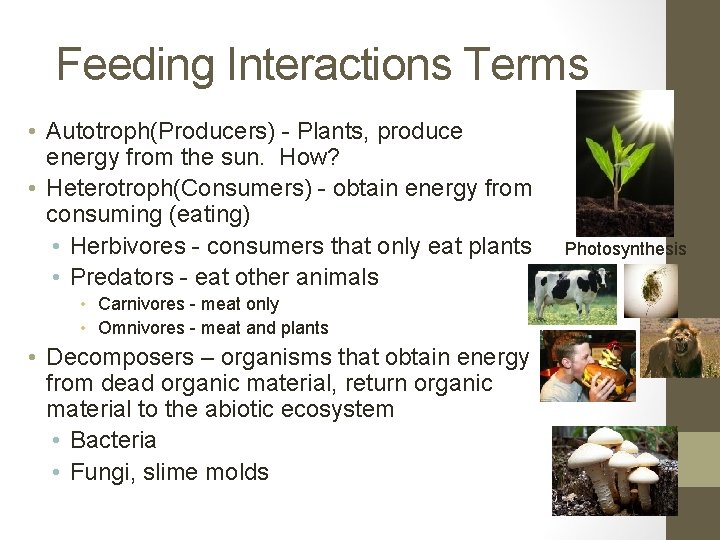
Feeding Interactions Terms • Autotroph(Producers) - Plants, produce energy from the sun. How? • Heterotroph(Consumers) - obtain energy from consuming (eating) • Herbivores - consumers that only eat plants • Predators - eat other animals • Carnivores - meat only • Omnivores - meat and plants • Decomposers – organisms that obtain energy from dead organic material, return organic material to the abiotic ecosystem • Bacteria • Fungi, slime molds Photosynthesis

Food Chain • Shows energy movement through a single feeding interaction in an Ecosystem. • Arrows represent energy movement Grass Producer Grasshopper Frog Snake Red tailed Hawk Primary Consumer Secondary Consumer Tertiary Consumer Top-level Consumer Herbivore Predator

Food Web • Shows all the feeding relationships in an community. • Arrows show the movement of energy
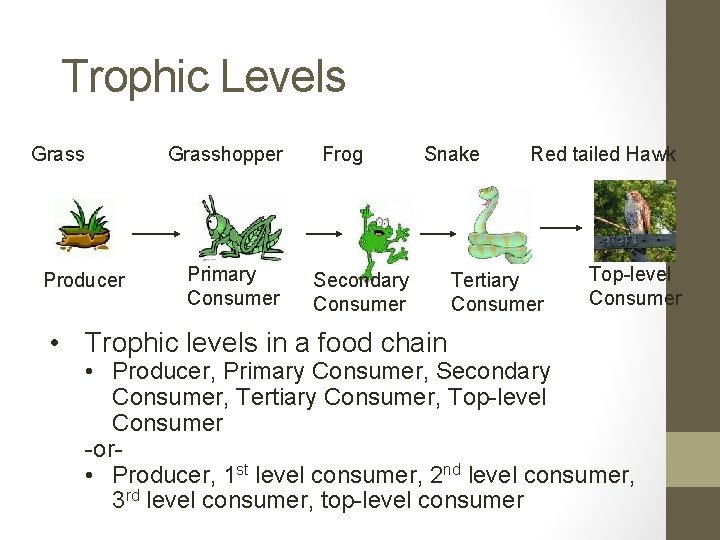
Trophic Levels Grasshopper Producer Primary Consumer Frog Snake Secondary Consumer • Trophic levels in a food chain Red tailed Hawk Tertiary Consumer Top-level Consumer • Producer, Primary Consumer, Secondary Consumer, Tertiary Consumer, Top-level Consumer -or • Producer, 1 st level consumer, 2 nd level consumer, 3 rd level consumer, top-level consumer

Trophic Levels – Food Web • Organisms can play multiple roles in an ecosystem • Ex. The Bat is both a primary consumer and a secondary consumer
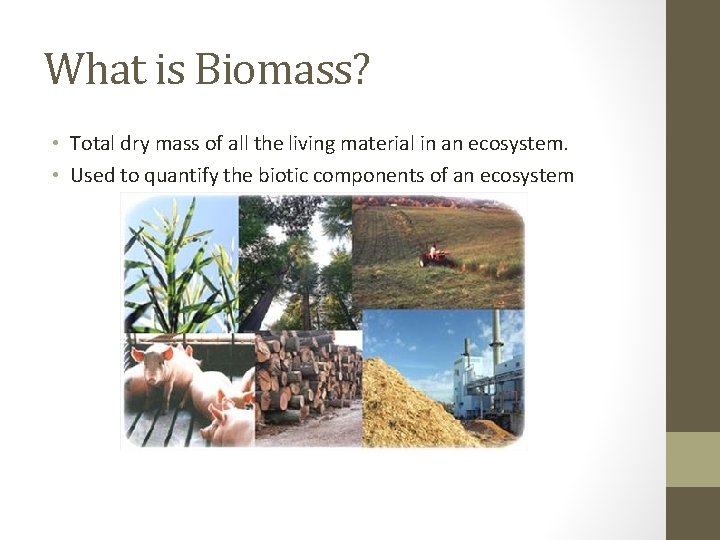
What is Biomass? • Total dry mass of all the living material in an ecosystem. • Used to quantify the biotic components of an ecosystem

Ecological Pyramids • Diagrams that display a feeding relationship in an ecosystem and another aspect of that feeding relationship, such as… • Energy at each trophic level • Biomass at each trophic level • Population at each trophic level
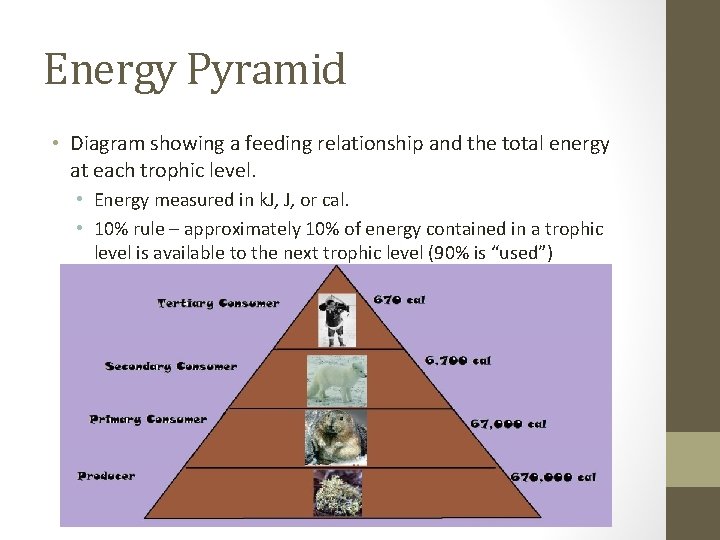
Energy Pyramid • Diagram showing a feeding relationship and the total energy at each trophic level. • Energy measured in k. J, J, or cal. • 10% rule – approximately 10% of energy contained in a trophic level is available to the next trophic level (90% is “used”)
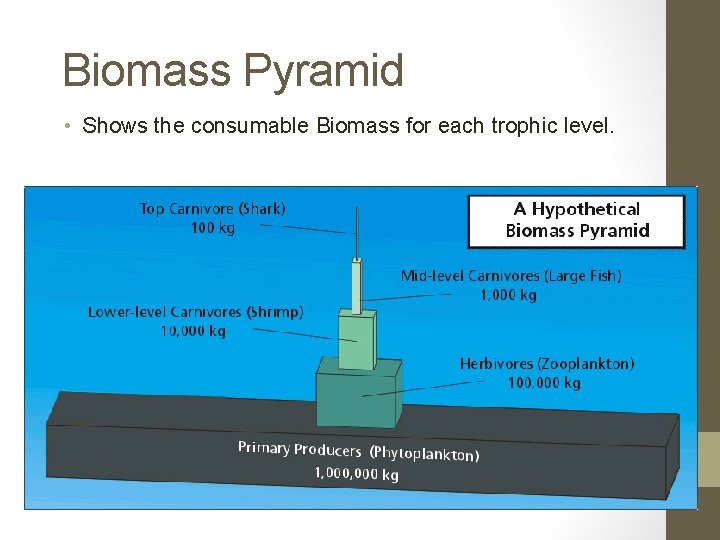
Biomass Pyramid • Shows the consumable Biomass for each trophic level.
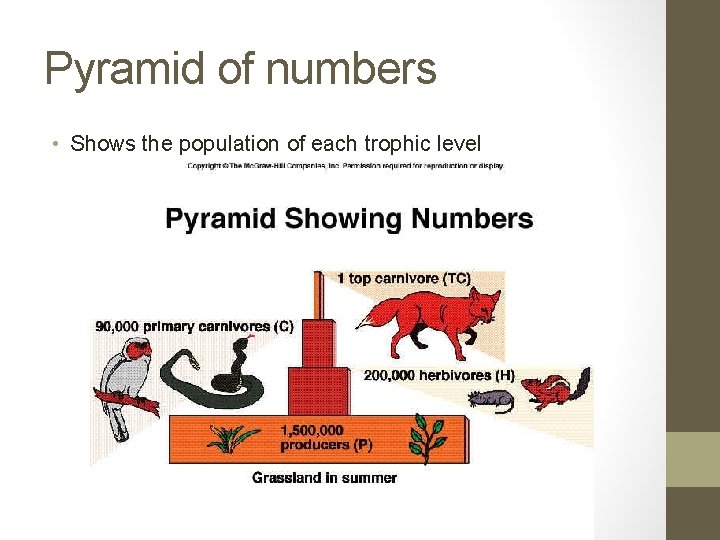
Pyramid of numbers • Shows the population of each trophic level
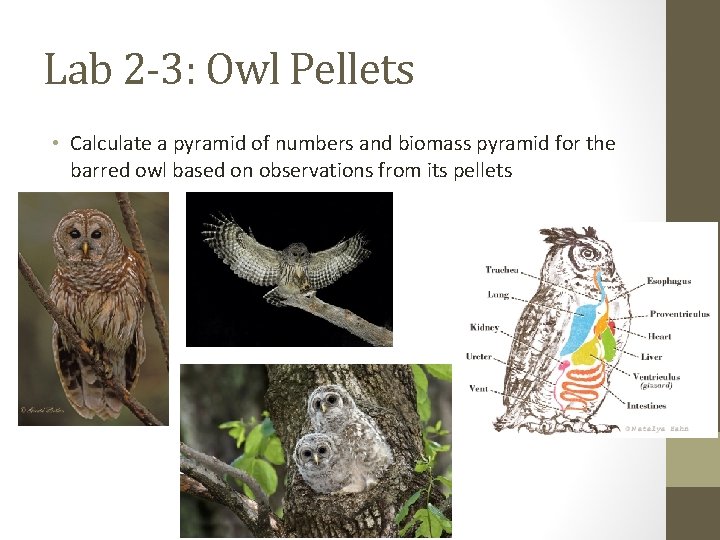
Lab 2 -3: Owl Pellets • Calculate a pyramid of numbers and biomass pyramid for the barred owl based on observations from its pellets
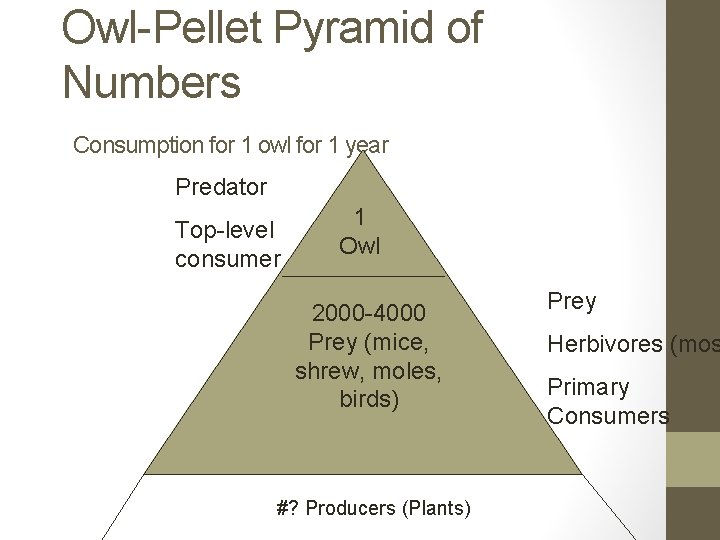
Owl-Pellet Pyramid of Numbers Consumption for 1 owl for 1 year Predator Top-level consumer 1 Owl 2000 -4000 Prey (mice, shrew, moles, birds) #? Producers (Plants) Prey Herbivores (mos Primary Consumers
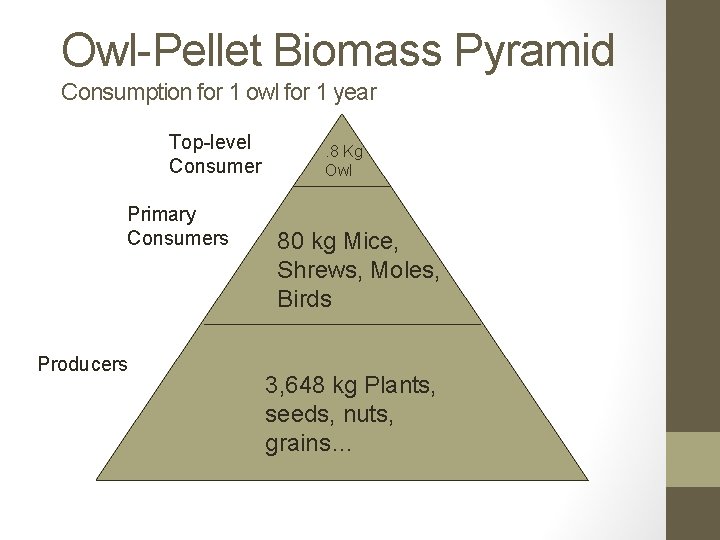
Owl-Pellet Biomass Pyramid Consumption for 1 owl for 1 year Top-level Consumer Primary Consumers Producers . 8 Kg Owl 80 kg Mice, Shrews, Moles, Birds 3, 648 kg Plants, seeds, nuts, grains…
- Slides: 14