
Food Waste Reduction Alliance GMA Staff Lead Meghan
- Slides: 12
Food Waste Reduction Alliance GMA Staff Lead: Meghan Stasz, mstasz@gmaonline. org FMI Staff Lead: Jeanne Von. Zastrow, jvonzastrow@FMI. org NRA Staff Lead: Sue Hensley, shensley@restaurant. org
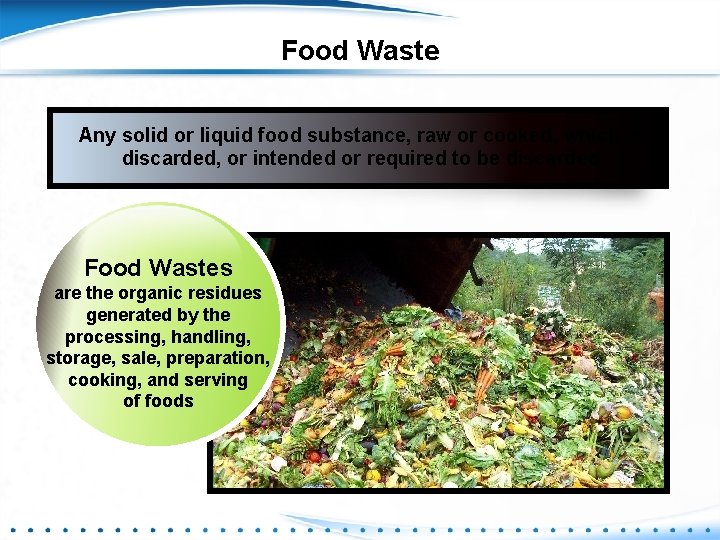
Food Waste Any solid or liquid food substance, raw or cooked, which is discarded, or intended or required to be discarded Food Wastes are the organic residues generated by the processing, handling, storage, sale, preparation, cooking, and serving of foods
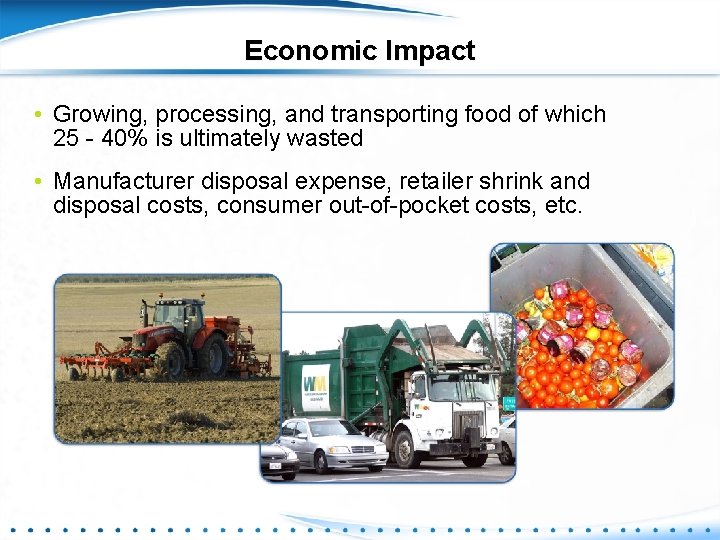
Economic Impact • Growing, processing, and transporting food of which 25 - 40% is ultimately wasted • Manufacturer disposal expense, retailer shrink and disposal costs, consumer out-of-pocket costs, etc.
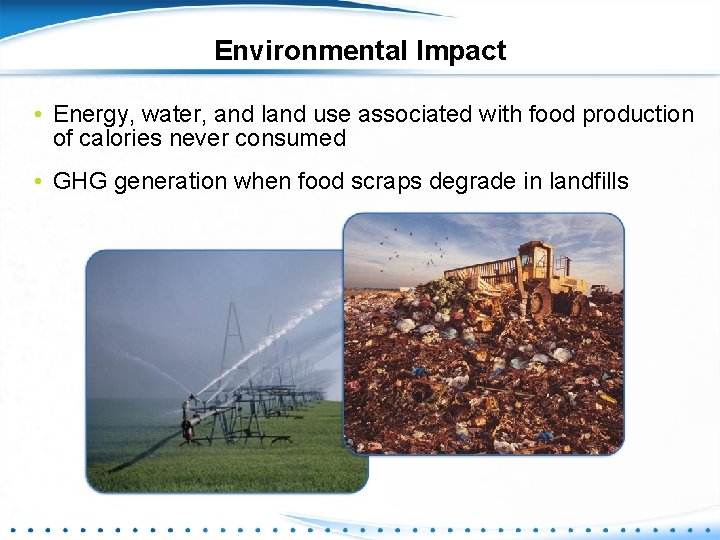
Environmental Impact • Energy, water, and land use associated with food production of calories never consumed • GHG generation when food scraps degrade in landfills
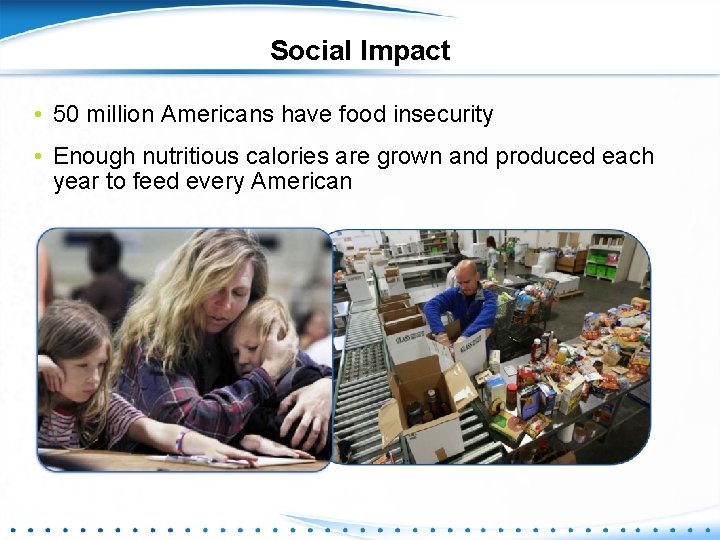
Social Impact • 50 million Americans have food insecurity • Enough nutritious calories are grown and produced each year to feed every American
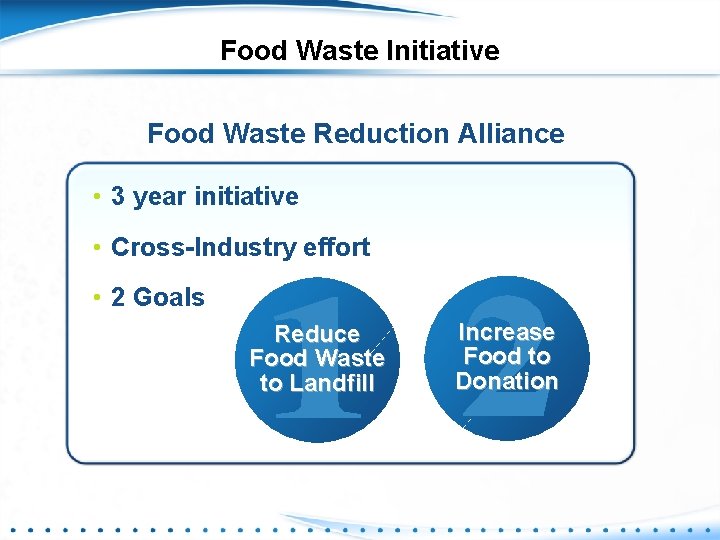
Food Waste Initiative Food Waste Reduction Alliance • 3 year initiative • Cross-Industry effort • 2 Goals Reduce Food Waste to Landfill Increase Food to Donation
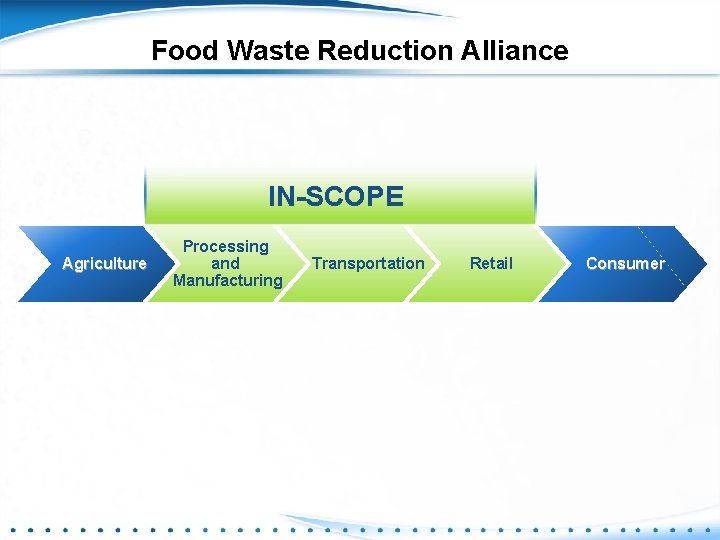
Food Waste Reduction Alliance IN-SCOPE Agriculture Processing and Manufacturing Transportation Retail Consumer
Food Waste Reduction Alliance
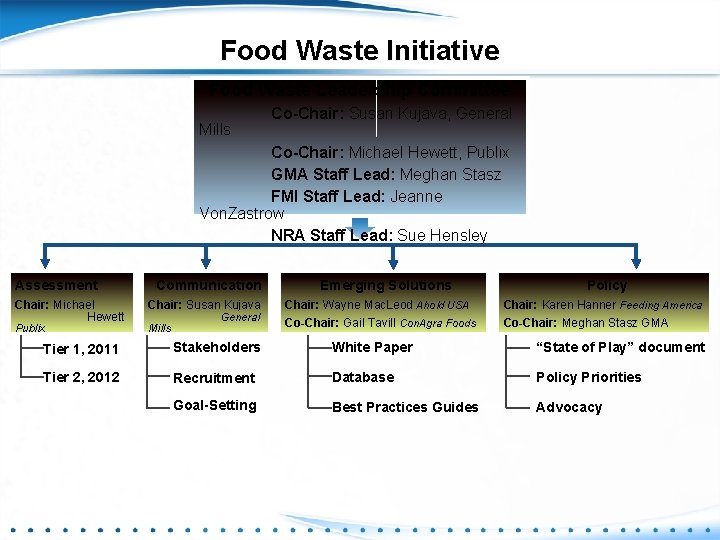
Food Waste Initiative Food Waste Leadership Committee Mills Co-Chair: Susan Kujava, General Co-Chair: Michael Hewett, Publix GMA Staff Lead: Meghan Stasz FMI Staff Lead: Jeanne Von. Zastrow NRA Staff Lead: Sue Hensley Assessment Chair: Michael Hewett Publix Communication Emerging Solutions Policy Chair: Susan Kujava Chair: Wayne Mac. Leod Ahold USA Chair: Karen Hanner Feeding America Mills Co-Chair: Gail Tavill Con. Agra Foods Co-Chair: Meghan Stasz GMA General Tier 1, 2011 Stakeholders White Paper “State of Play” document Tier 2, 2012 Recruitment Database Policy Priorities Goal-Setting Best Practices Guides Advocacy
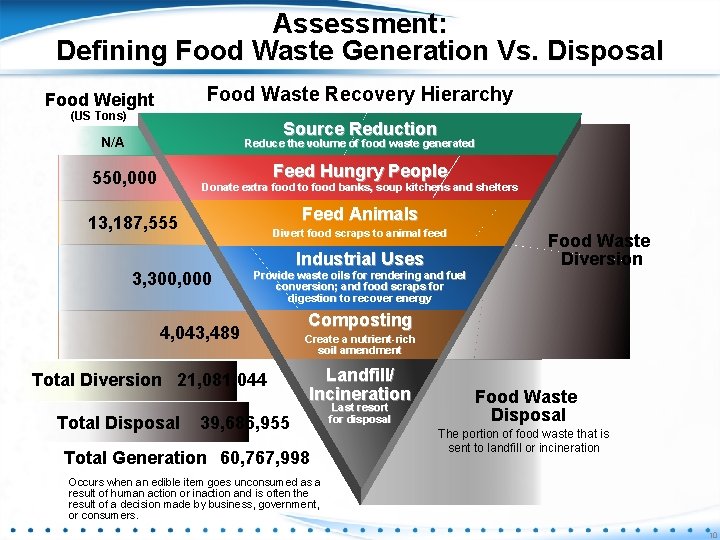
Assessment: Defining Food Waste Generation Vs. Disposal Food Waste Recovery Hierarchy Food Weight (US Tons) Source Reduction N/A Reduce the volume of food waste generated Feed Hungry People 550, 000 Donate extra food to food banks, soup kitchens and shelters Feed Animals 13, 187, 555 Divert food scraps to animal feed 3, 300, 000 Provide waste oils for rendering and fuel conversion; and food scraps for digestion to recover energy 4, 043, 489 Total Diversion 21, 081, 044 Total Disposal Industrial Uses Food Waste Diversion Composting Create a nutrient-rich soil amendment Landfill/ Incineration 39, 686, 955 Total Generation 60, 767, 998 Last resort for disposal Food Waste Disposal The portion of food waste that is sent to landfill or incineration Occurs when an edible item goes unconsumed as a result of human action or inaction and is often the result of a decision made by business, government, or consumers. 10
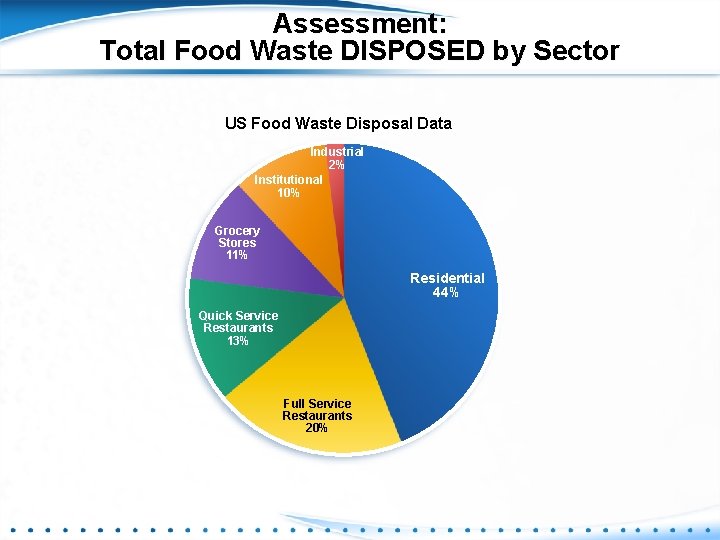
Assessment: Total Food Waste DISPOSED by Sector US Food Waste Disposal Data Industrial 2% Institutional 10% Grocery Stores 11% Residential 44% Quick Service Restaurants 13% Full Service Restaurants 20%
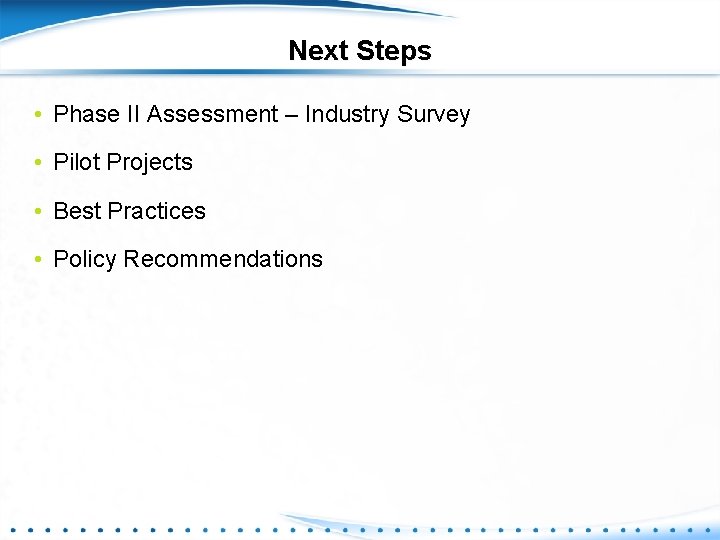
Next Steps • Phase II Assessment – Industry Survey • Pilot Projects • Best Practices • Policy Recommendations