
Food tests Learning objectives Practical investigate food samples
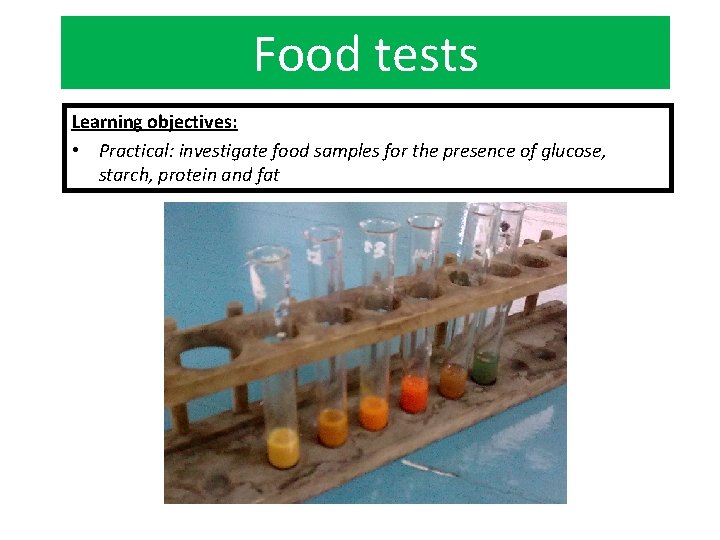
Food tests Learning objectives: • Practical: investigate food samples for the presence of glucose, starch, protein and fat
Food tests Task: You have to create an instruction booklet for how to test samples of food for the following: • Starch • Reducing sugars (such as glucose) • Protein • Lipids (fats and oils) Criteria: - List of equipment and specialised substances required for each test (4) - Correct method for each test (4) - A diagram to demonstrate each test (4) - Correct statement of negative result for each test (4) - Correct statement of positive result for each test (4) - Aesthetically pleasing (1) Total 21 marks
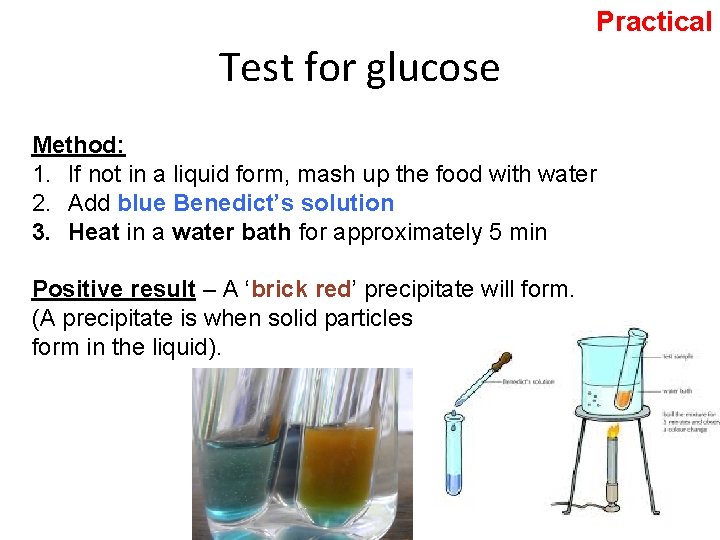
Practical Test for glucose Method: 1. If not in a liquid form, mash up the food with water 2. Add blue Benedict’s solution 3. Heat in a water bath for approximately 5 min Positive result – A ‘brick red’ precipitate will form. (A precipitate is when solid particles form in the liquid).
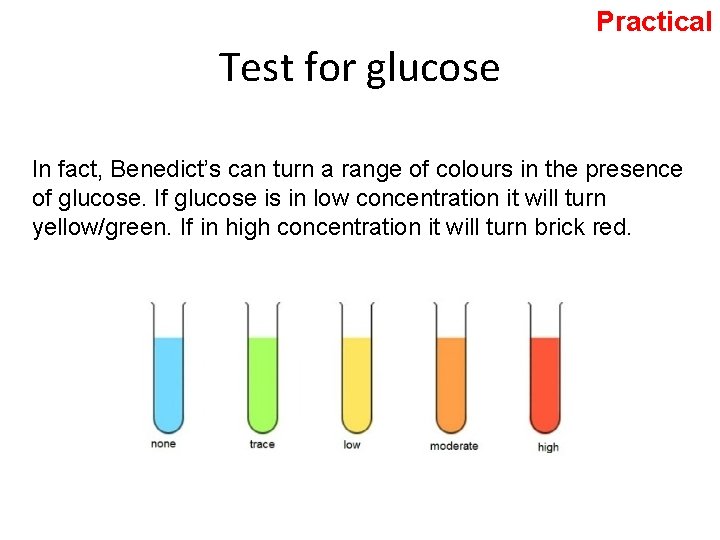
Practical Test for glucose In fact, Benedict’s can turn a range of colours in the presence of glucose. If glucose is in low concentration it will turn yellow/green. If in high concentration it will turn brick red.
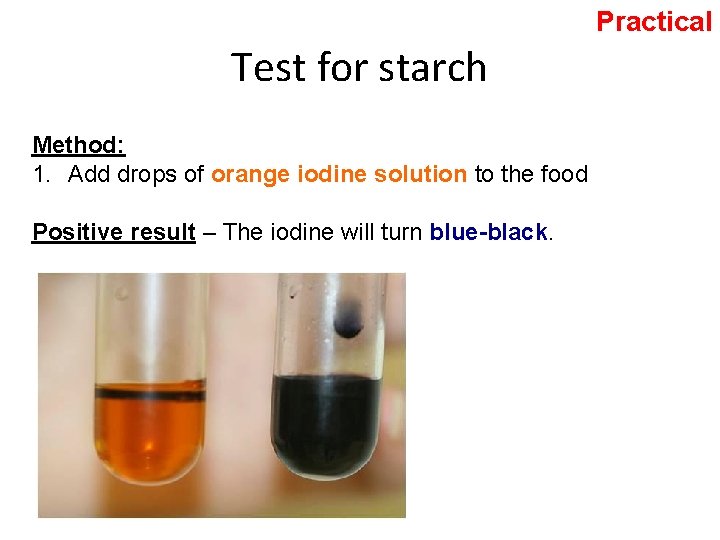
Practical Test for starch Method: 1. Add drops of orange iodine solution to the food Positive result – The iodine will turn blue-black.
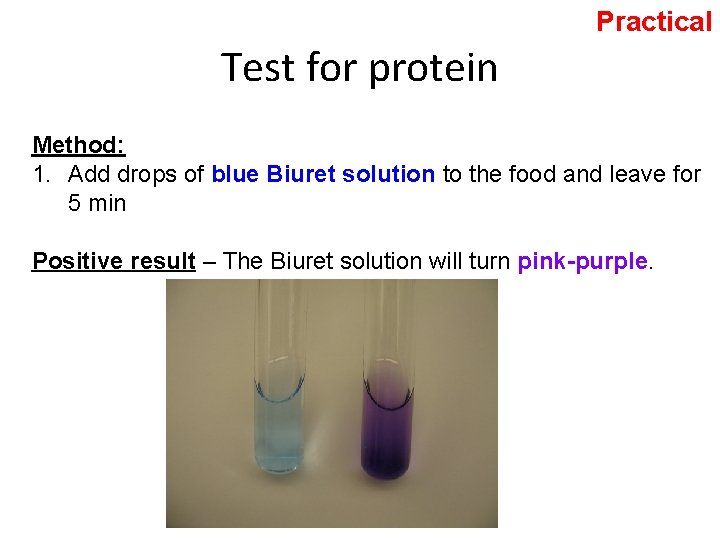
Practical Test for protein Method: 1. Add drops of blue Biuret solution to the food and leave for 5 min Positive result – The Biuret solution will turn pink-purple.
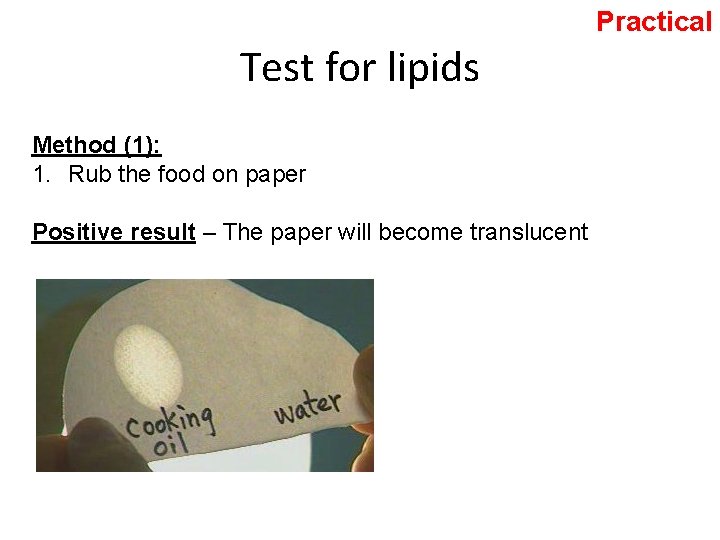
Practical Test for lipids Method (1): 1. Rub the food on paper Positive result – The paper will become translucent
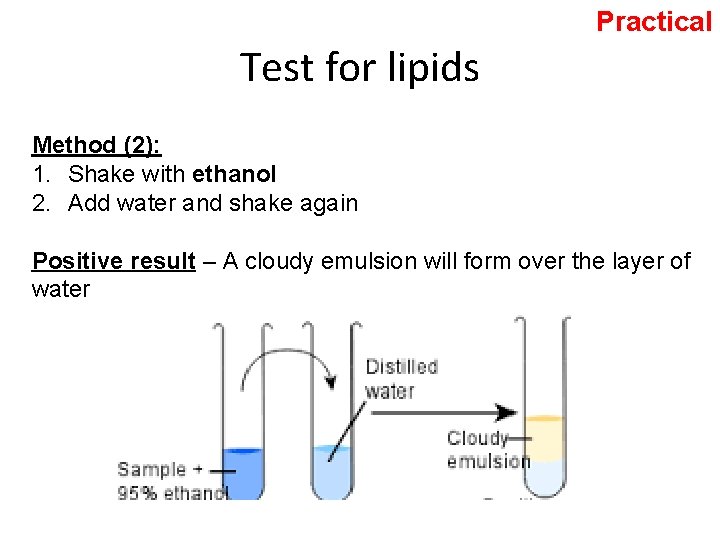
Practical Test for lipids Method (2): 1. Shake with ethanol 2. Add water and shake again Positive result – A cloudy emulsion will form over the layer of water
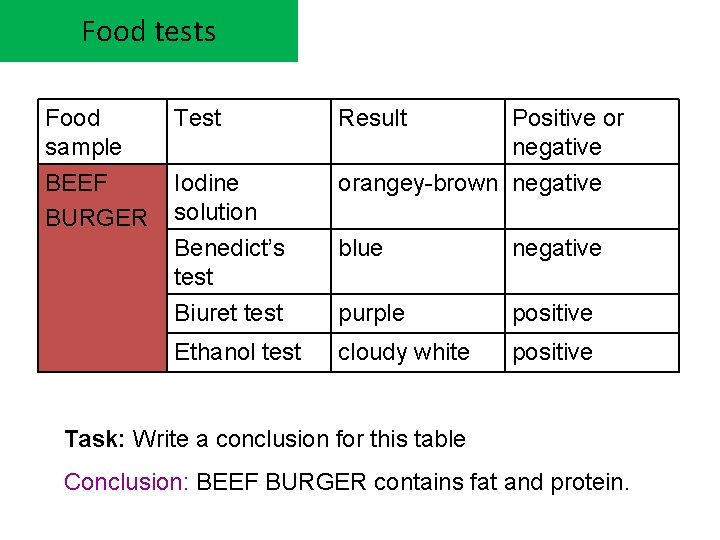
Food tests Food sample BEEF BURGER Test Result Iodine solution Benedict’s test Biuret test blue negative purple positive cloudy white positive Ethanol test Positive or negative orangey-brown negative Task: Write a conclusion for this table Conclusion: BEEF BURGER contains fat and protein.
Thumbs up or down Learning objectives: • Practical: investigate food samples for the presence of glucose, starch, protein and fat
- Slides: 10