
Food Security Collaboration between University and Community Karen
Food Security: Collaboration between University and Community Karen W. R. Lin, MD, MS, FAAFP Assistant Dean, Global Health Family Medicine and Community Health Robert Wood Johnson Medical School
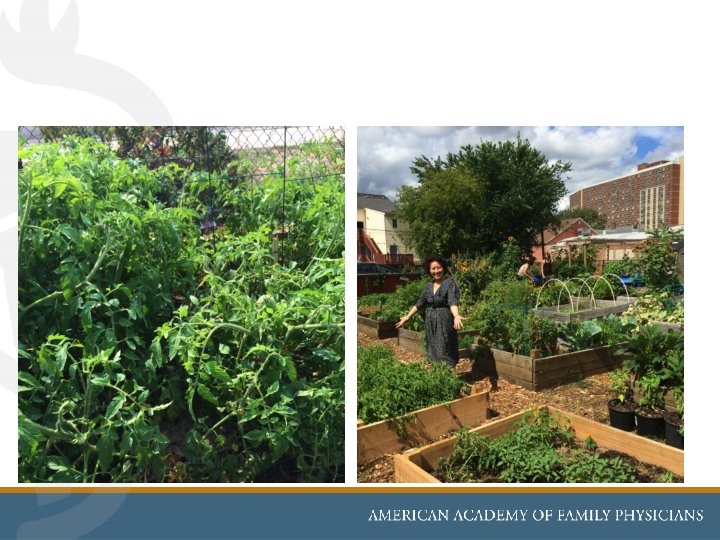
Healthy Garden and Healthy Living • A creative intervention to integrate mental health into primary care for those who suffer illness from food insecure, poor diet and inconsistent access.
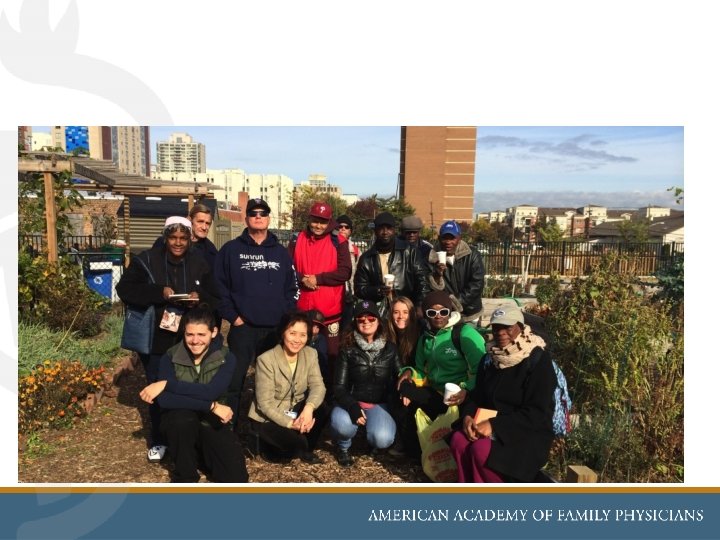
Collaboration Partners – University partners: Rutgers University • Family Medicine and Community Health: – faculty and students • Landscape Architecture: – faculty and students – Community Partners: Elijah’s Promise • Clients who are homeless and eat at Soup Kitchen • Gardening instructor of Community Garden Coalition & Food Alliance • Bee hives instructor
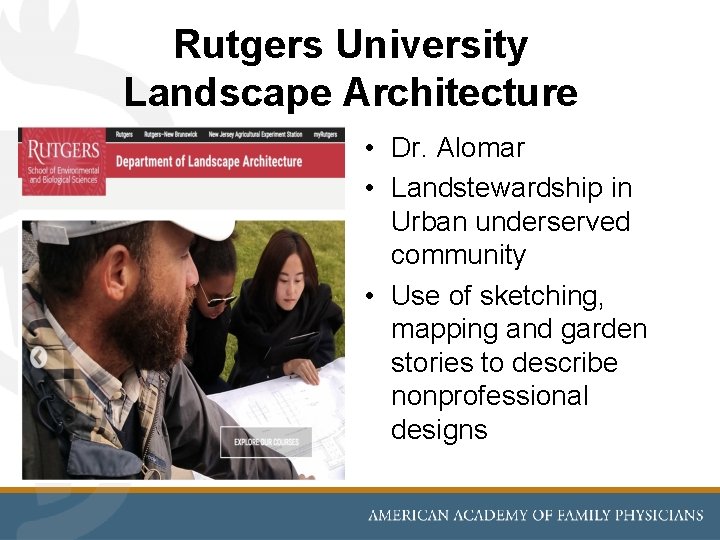
Rutgers University Landscape Architecture • Dr. Alomar • Landstewardship in Urban underserved community • Use of sketching, mapping and garden stories to describe nonprofessional designs
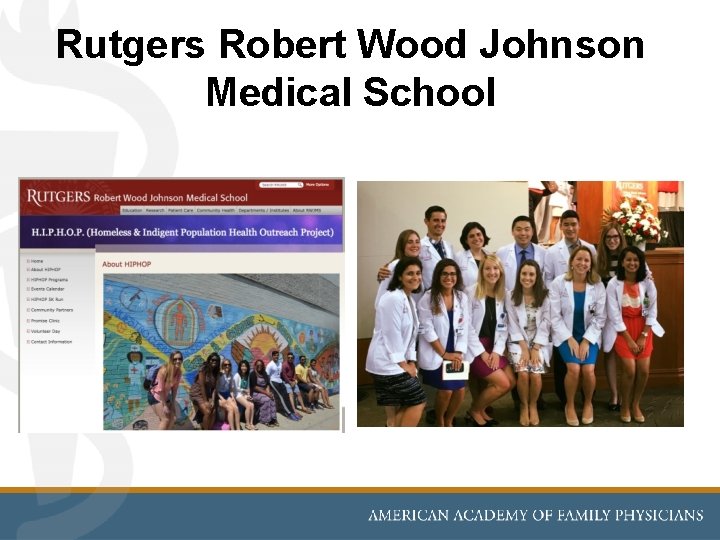
Rutgers Robert Wood Johnson Medical School
Elijah’s Promise • • • Empowering Lives Inviting Justice Alleviating Hunger
Protocol • Purpose: – Understand the relationship between participation in a community garden and improvement of health outcomes for a population in New Brunswick – Promote community-based health, and benefit students’ learning. • Question: • Will creative learning opportunities foster positive physical, emotional and social health outcomes?
Hypothesis – The measureable body height, weight, body mass index, waist circumference, blood pressure and mood will improve with 16 weeks of gardening activities. – the sketching is an embodied exercise that improves attitudes, cognition and memory.
Measuring outcomes • Pre- participating assessment • Post- participating assessment • Measurement – weight, height, basic body index – Waist circumferences – blood pressure – PHQ-9 (patient health questions for depression) – Written /drawing reflections
IRB Institutional Review Board application • • Protocol Consent form Outreach flyers – recruitment of clients Pre-project assessment Post-project assessment PHQ-9 forms All bilingual documents, English and Spanish. Budget
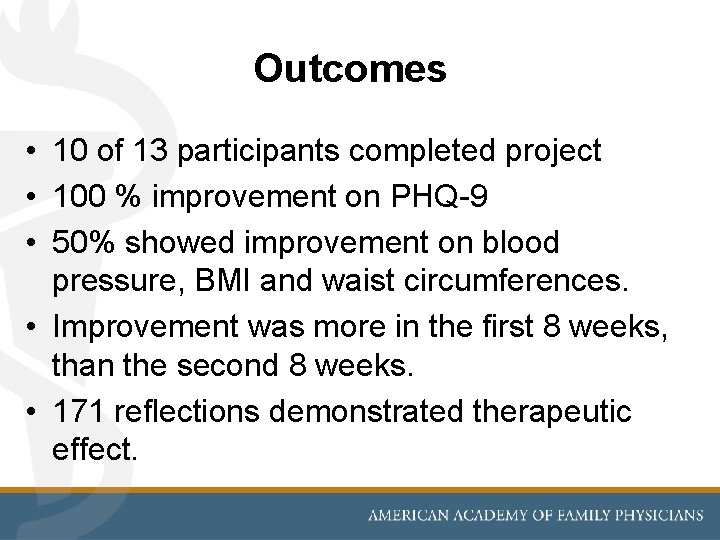
Outcomes • 10 of 13 participants completed project • 100 % improvement on PHQ-9 • 50% showed improvement on blood pressure, BMI and waist circumferences. • Improvement was more in the first 8 weeks, than the second 8 weeks. • 171 reflections demonstrated therapeutic effect.
Interpretation • The project helps to re-discover selfconfidence, talent, mutual respect and responsibility. • Creative learning and support can impact positively on physical, mental and social health outcomes.
Lesson learned • Funding – own backyard, sustainability • IRB challenges – timing, process, communication between different IRB offices of schools. • University policy and community expectation • Fund transfer from grant office to host department to partners • Client expectation of Stipend payment • Nature of the garden project is limited by weather: – extremely hot in July, very cold in October,
- Slides: 15