
Food Safety Sanitation What TO DO and what
- Slides: 29
Food Safety & Sanitation What TO DO and what NOT to do in the kitchen!
Tips to Prevent Falls n Clean up spills – Do not walk on a wet floor – Spray cooking spray over the sink or trash n Wear slip-resistant, closed-toe* shoes n Use a stepstool n Close drawers and doors
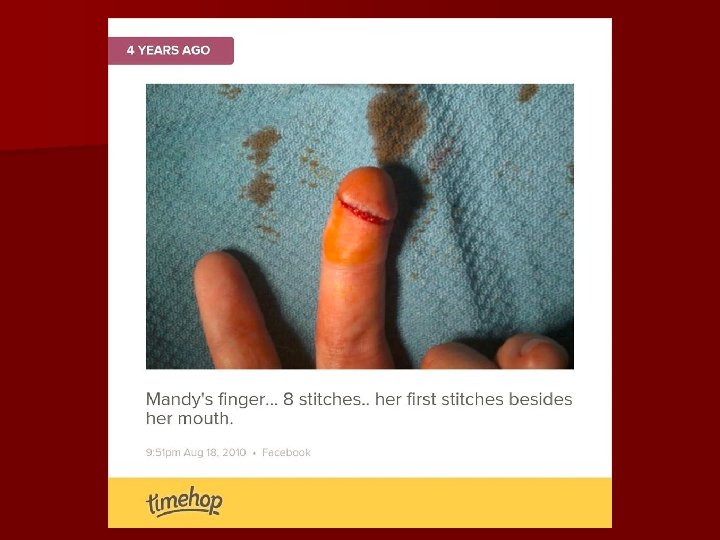
Preventing Cuts n Always use a cutting board n Use knuckles as a guide – Know where your fingers & blade are! n Keep knives sharp n Wash knives separately – Don’t soak n Sweep broken glass with a broom n Use knives only for cutting…
Burns & Fires Don’t wear loose fitting clothes* n Microwave n – Still a heat source; use potholder – Do NOT put metal in microwave!! Why? n Stovetop – – – n Tilt covers away from you Turn pan handles toward the center Keep flammable materials away Oven – – – Stand to the side of the oven Use a potholder/oven mitt Turn off the oven right after using!!
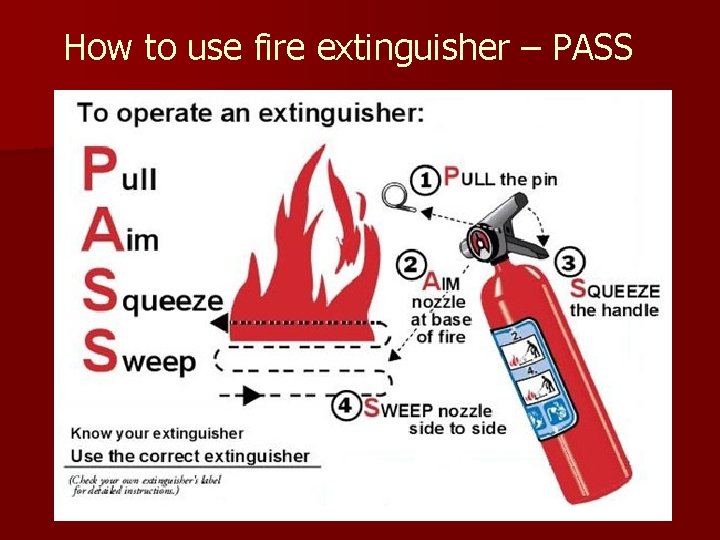
How to use fire extinguisher – PASS
Grease Fires n Never… – Pour water on a grease fire – Move the pan n Always… – Turn heat off immediately & safely – Smother pan with the lid OR pour salt OR baking soda over flames – Use fire extinguisher, if necessary – If fire is out of control, evacuate
Fire Safety n Check out this video… http: //www. youtube. com/watch? v=Lik. HTt. EL Ko 8
What did she do wrong? n A. left the pan unattended n B. walked across the kitchen with a pan on fire n C. ran the fire under the water n D. all of the above
What should she have done? n A. fanned the fire with a dishcloth n B. smothered the fire n C. brought water over to dump on the fire
Electricity n Water conducts electricity – Keep appliances away from wet surfaces n Turn off before unplugging/plugging n Unplug before putting utensils in appliance n Cord safety n Don’t plug too many in one outlet
Toxic Chemicals n Drinking, breathing, and absorption n Read labels – know what the product is n Follow suggested use directions n NEVER mix chemicals n Store properly n Dispose properly
Other Safety Basics n Grilling – Clean grill often – Safe location § Carbon monoxide – Proper tools n Children – Never leave alone in kitchen – Model safe behavior Focus* n Control Clutter* n
Emergencies n Keep fire extinguisher & first aid nearby n Know Heimlich maneuver & CPR n Stay calm n Focus
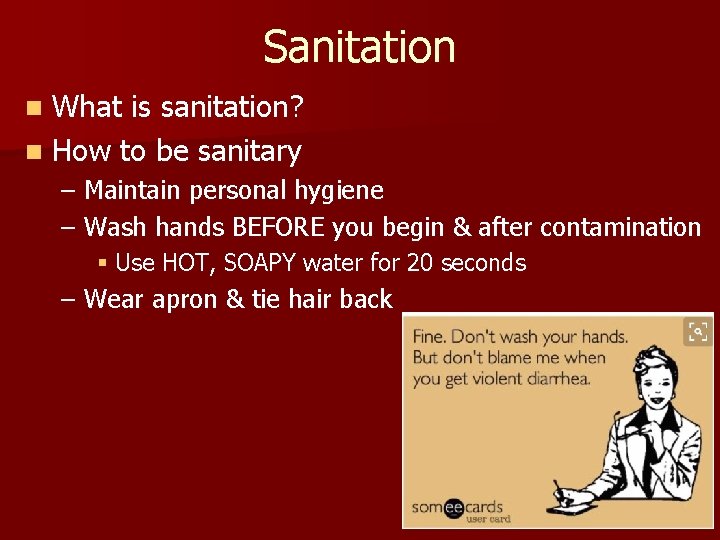
Sanitation What is sanitation? n How to be sanitary n – Maintain personal hygiene – Wash hands BEFORE you begin & after contamination § Use HOT, SOAPY water for 20 seconds – Wear apron & tie hair back
Sanitation n Keep kitchen & contents – Pest control – Clean-up / clean as you go n clean No double dipping – Taste food as you cook, but use clean utensil each time
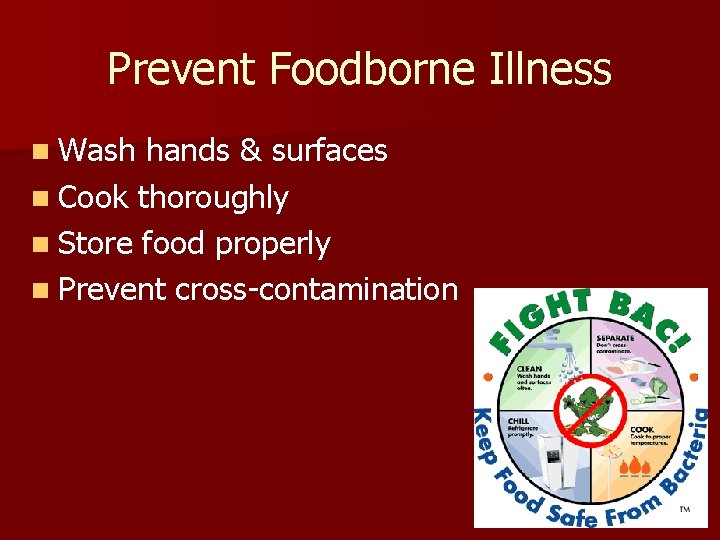
Prevent Foodborne Illness n Wash hands & surfaces n Cook thoroughly n Store food properly n Prevent cross-contamination
Cross-Contamination n Transfer of bacteria from one product to another n When working with raw meat, poultry, fish, or eggs… – Wash equipment & utensils used thoroughly before using again – Wash counters, cutting boards, and hands with hot, soapy water
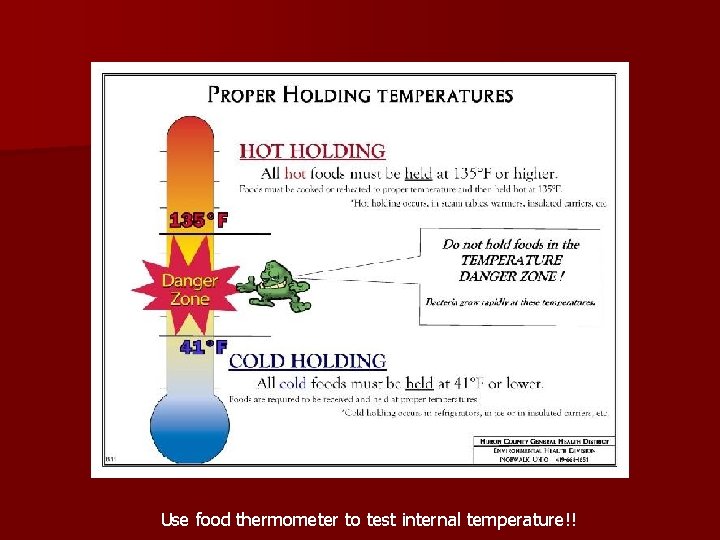
Proper Food Temperatures n Serve HOT food HOT (140 °F or more) n Keep COLD food COLD (40 °F or less) n 2 -hour rule – Never let food sit at room temp n Thawing frozen food… – Never at room temperature! – Safe: Refrigerator, cold water, microwave n ALWAYS cook food thoroughly!
Use food thermometer to test internal temperature!!
Safety & Sanitation n On a blank piece of paper, list what this person does that is NOT safe or sanitary. n http: //www. youtube. com/watch? v=IA 8 IW 5 ab. QTg
Food Storage n Refrigerator – Temperature: 32° to 40° – Short-term storage for perishable foods – First in, first out n Freezer – Temperature: 0° or below – Wrap in airtight wrapping n Dry Storage – Should be in cool, dry, clean space, such as a cabinet or shelves
Preserving Food n 3 ways to preserve food – Canning / pickling – Freezing – Drying n Why Preserve? – Saves money – Enjoy fresh herbs, vegetables, and fruit all year – Know what is in your food (fewer preservatives)
Freezing n 0°F or below n Freeze most fruits and vegetables except… – High water content foods (ex: salad greens, celery) – Citrus fruits or tomatoes are fine for sauce but not to eat raw – Some fruits may need citric acid n Blanching – Brief cooking in boiling water before freezing n Headspace – Room left in a container food to expand
Freezing Methods n Sugar-pack method – Toss fruit in sugar before freezing – Sugar & fruit juice forms syrup and helps retain fruit’s color and texture n Syrup-pack method – Dissolve sugar in water to make a syrup, then add fruit and freeze
Freezing Methods n Tray-pack method – Place fruit on a tray (or baking sheet), cover and freeze until frozen then pack into containers n Dry-pack method – Freeze directly in freezer containers
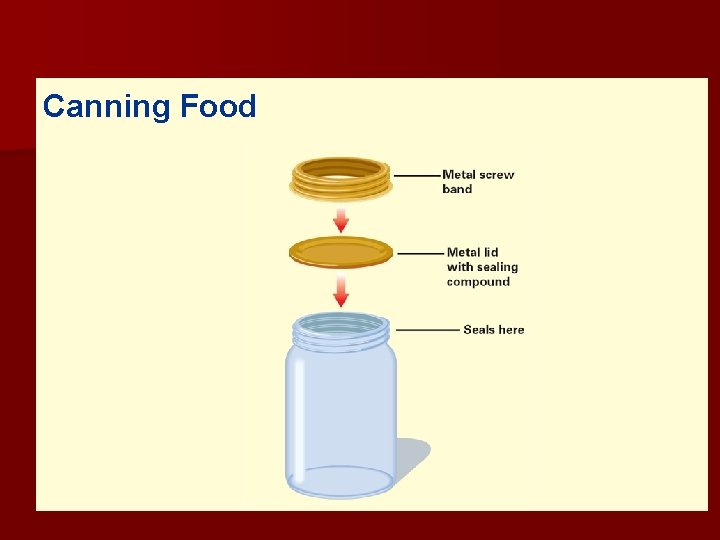
Canning Food
Packing Methods n Raw-pack methods – Technique of canning raw foods – Put prepared raw food into jars and pour in hot liquid n Hot-pack methods – Technique of canning simmered foods – Light cooking “preshrinks” foods to limit air in the jar, which increase the vacuum effect
Processing Methods n Boiling-Water Bath – Necessary when canning high-acid foods – Boil jars in large pot of water, enough to cover jars n Pressure Canning – Used with low acid foods – Must have pressure canner/cooker – Processed in steam under pressure