
Food Safety Regulations and Standards Standard 5 Students
- Slides: 12
Food Safety Regulations and Standards Standard 5: Students will demonstrate and practice correct sanitation as it refers to a modern commercial kitchen.
Objective of a Food Service Inspection Program • All establishments serving the public must provide safe food and are subject to inspection. • Inspection evaluates whether the establishment is meeting minimum food safety standards. • A written report notes deficiencies that will help bring your establishment into compliance.
Government Regulatory System for Food • Federal Level ▫ U. S. Department of Agriculture �Responsible for quality grading meat, meat products, poultry, dairy, eggs, fruits and veggies ▫ Food and Drug Administration �Issues the FDA Food Code �Inspects foodservice operations that cross state boarders because they overlap the jurisdictions of two or more states.
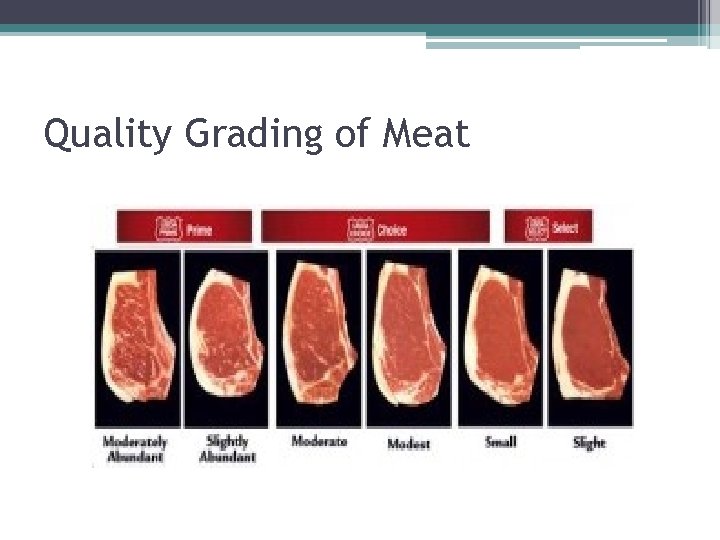
Quality Grading of Meat
Government Regulatory System for Food • State Level ▫ In the U. S. most food regulations affecting restaurant and foodservice operations are written at the state level. • Local Level ▫ State regulations maybe enforced by state or local health departments ▫ Health inspectors also know as sanitarians, health officials, or environmental health specialists. The conduct restaurant and foodservice inspections in most states.
FDA Code • The FDA Food Code lists the government’s recommendations for foodservice regulations. • They are updated every two years. • FDA Food Code covers the following areas; ▫ ▫ ▫ ▫ Foodhandling and Preparation Personnel Equipment and Utensils Cleaning and Sanitizing Utilities and Services Construction and Maintenance Foodservice units Compliance procedures
Inspection Process • Inspection Frequency • Steps in the inspection process • Closure
Inspections Frequency • • Size and complexity of the operation And establishment’s inspection history Clientele’s susceptibility to foodborne illness Workload of the local health department and the number of inspectors available.
Steps in the Inspection Process • • • Ask for identification Cooperate Take notes Keep the relationship professional Be prepared to provide records requested by the inspector • Discuss violations and time frames for correction with inspectors • Act on all deficiencies noted in the report
Closure • Significant lack of refrigeration • Backup of sewage into the establishment or its water supply • Emergency, such as a building fire or flood • Significant infestation of insects or rodents • Clear evidence of a foodborne-illness outbreak related to the establishment
Self-Inspection • Benefits of a Self-Inspection ▫ Safer food ▫ Improved quality ▫ Cleaner environments for employees and customers ▫ Higher inspection rates
Federal Regulatory Agencies • Centers for Disease Control and Prevention (CDC) • Environmental protection Agency (EPA) • National Marine Fisheries Service (NMFS)